
GOQii

Blog

  • HOME
  • HEALTHY LIVING
  • FITNESS
  • HEALTHY RECIPES
  • USER STORIES
  • KARMA
  • BUY GOQii

August 26, 2024 By Ravishankar Balasubramanian 3 Comments

How to Create a Better and Healthy India

women's healthA young woman, who seemed slightly on the heavier side, approached me on the walking track at the Coimbatore-Race Course. She asked for tips on health management and weight reduction, even suggesting that I create a group to help with these goals. This encounter inspired me to share my thoughts in this blog.

Creating awareness among women about the importance of staying physically fit is the first step towards building a healthier India. In my opinion, healthy women are the cornerstone of healthy societies. Health and fitness are two sides of the same coin, both essential for living a healthy and happy life.

While women excel in many areas, taking care of their health is often not one of them. The reality is that women are more likely than men to neglect preventive health care. My conversations with women reveal that fitness is one of their top wellness challenges. But why is that?

Following are the commonly cited reasons by women as barriers to exercise:

  1. Women are too busy taking care of others to focus on themselves. Their dedication to family creates significant time and logistical barriers to being physically active. Many women juggle household responsibilities and jobs, leaving little time for their health or self-care.
  2. They may not have access to resources such as parks and gyms, and they often lack motivation and confidence to exercise.
  3. Reasons for weight gain may be attributed to the inheritance of genetic predisposition or caesarean sections undergone by them.
  4. Lack of energy is yet another factor as fatigue is a by-product of a tiring lifestyle and women are often tired.
  5. Women with low incomes are less likely to exercise regularly.  They do not realize that not all exercises require expensive clothes or a gym membership. One of the most beneficial forms of exercise is free – brisk walking!
  6. Mindset is yet another factor, as women feel that going outside for a walk or to hit the gym is not necessary for them.
  7. Breaking the laziness barrier is the main hurdle for most people irrespective of gender.
  8. Women feel that they are constantly being looked at by others when walking in public. They are reluctant and shy to wear jogging suits and walk with their cellulite jiggling appearance, as they feel that they will be laughed at. This is true especially among South Indian women as cultural factors play a major role in this part of India. The fear of judgement is greater than the women’s self-confidence.
  9. Women who believe that child-rearing and domestic chores are ‘women’s work’ are less likely to take time to exercise – perhaps they feel guilty taking time out for themselves. Sexism proves to be one of the barriers.
  10. Some others think that to be useful, exercise must be painful, sweaty and gruelling, which of course is not true.

How Can Women Improve Their Health?

Women, as health managers or promoters within their families, have a significant role in influencing overall family health. It’s time for women to prioritize their well-being and adopt a healthy lifestyle.

  • Lose weight if you are overweight, start with just 15 minutes of walking a day.
  • Eat a balanced diet. Cook healthy meals for yourself and your family instead of relying on takeout or processed foods.
  • Eat the right food in correct proportions at the right time as women have the habit of delaying their meal timings owing to the pressure of work.
  • Create time for walking as walking is considered the king of exercises. It offers numerous benefits without risking injury or stress on the body.
  • Regular Brisk Walking can help you maintain a healthy weight. It prevents and/or manages various medical conditions, including heart disease, high blood pressure and type 2 diabetes.
  • Find a walking partner if you are not motivated to walk alone. For instance, your husband, parents, friends, relatives or your children. You can even join a local walking group.

Delaying simple aerobic exercise can lead to obesity and various health issues. Without proper awareness, women may feel lost when it comes to maintaining their health. By overcoming initial reluctance, women can adopt a balanced approach to fitness, directly influencing the well-being of their families. Women are the backbone of India, and their health is crucial to the nation’s well-being.

We hope this article encourages you to prioritize your health. If it did, share your thoughts in the comments below! For more tips on fitness and nutrition, explore our Healthy Reads. Ready to take charge of your health? Get personalized guidance from GOQii’s health experts by subscribing here.

#BeTheForce for a healthier you!

June 5, 2024 By Trishala Chopra 17 Comments

Is DOMS stopping you from workout?

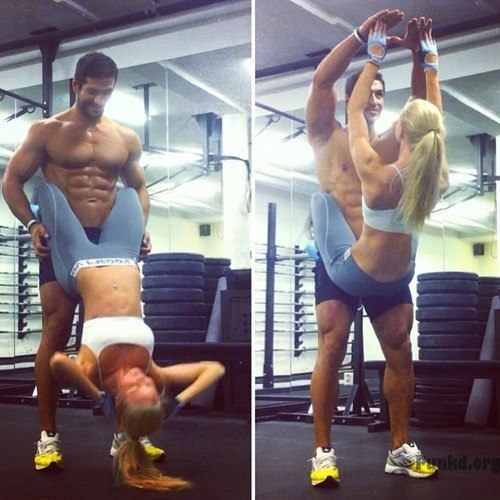
powercouple_rotatorThe moment I recommend intense workout to my players, they start saying this:-

“My body is paining, the workout which we did yesterday was not for me”

“I guess I did wrong workout, my body is paining today”

“I guess I pushed it beyond my capacity, is that the way it should be?”

In none of the above cases my players said, let me workout today and see if it is still there. Everyone says that I just cannot do the workout today, I need a break. So a question arises here is, should you workout with so called post workout pain?

Let me clear out some facts!

Technically, Soreness is of 2 types:-

(1) Acute muscle soreness

– Which is felt shortly after the workout but it disappears in few hours.

(2) The pain or the numbness which you feel post workout is not a pain. It is DOMS!

DOMS – Delayed onset muscle soreness.

– DOMS is typically begins within 12-24 hours after exercise and it can last up to 72 hours.

couple-workout

What happens during DOMS?

DOMS develop as a result of microscopic damage to muscle fibers which are involved in the type of exercise you are doing.

This damage can be because of the excess stress on particular part of the body during the exercise regime. DOMS is basically a side effect because of damage to the repairing process of the body.

Does lactic acid play an important role in DOMS?

Well, I have heard this quite often that the pain in my body is because of lactic acid accumulation. Just to get the facts out lactic acid does have an important role in acute soreness but not DOMS.

It has absolutely nothing to with your DOMS.

What causes DOMS?

Activities which leads to lengthening of muscles with excessive force leads to DOMS.

These are the most common examples of activities causing DOMS :-

– Jumping exercises

– Aerobic exercises

– Jogging

– Crossfit

– Strength training exercises

– High intensity interval training

Severity of DOMS completely depends upon the type and intensity of force applied on that muscle during that activity. Higher number of repetitions causes more DOMS then lower number of repetitions.

Can DOMS occur to everyone?

Well, yes DOMS can occur to everyone who is exercising. It is a myth that DOMS can occur to only those people who are new to exercises.

It can happen to people who are working out since ages as well but, the only difference will be the severity of DOMS.

If you are exercising since long time, your body gets adapted to it as a result your performance will not be affected completely.

If you keep training yourself for the same activity for years, you become less susceptible to DOMS in that particular exercise or activity.

Is soreness the only cause of DOMS?

Well no. Here are some most common symptoms of DOMS other than soreness:-

– Swelling in the area of extreme pain

– Stiffness of joints

– Tenderness

– Reduced strength

Should you workout the next day with soreness?

Most of players say, they just can’t workout because of the pain. If the pain is extreme and unbearable it is okay not to do extreme exercise but, it completely okay to do some light workouts or something as simple as stretching.

If you try and workout the next day, the symptoms of DOMS will start vanishing while you are performing the activity but there are chances that they might reoccur post workout (In your recovery process).

Don’t work out on the same muscle groups after DOMS. For example, if you are having severe soreness post jogging then you can workout on your upper body the next day. There is absolutely no need for – NO WORKOUT!

If the symptoms are extremely unbearable and excruciating then yes, do not workout.

How to ease DOMS?

  • To reduce the symptoms, apply ice pack on the area where it is paining
  • Gentle massage

These are just to reduce the symptoms but the complete healing can take place only after the exact diagnosis.

How to prevent DOMS?

If you undergo severe DOMS on your first day of your workout you probably have might done something wrong.

Check for these points before doing your next workout:-

* Proper form:- You need to be extremely careful while doing exercises especially the one with weights.

* Progression should be extremely personalised:- It should always be started at a slow pace and it should be light with least repetitions (2 different people cannot do the same intensity exercises – It should be personalised)

* Intensity plays a very important role:- It should be started with low intensity depending upon the muscle strength and then it should be gradually increased.

Once you start taking care about these points and train yourself, your body will start preparing itself for the same exercise in future.

Remember the old adage that says there is NO GAIN, WITHOUT PAIN!

DOMS cannot be completely avoided but, the severity can be reduced by taking care about the points mentioned above!

– Light pain cannot stop you from working out.

– Sometimes working out the next day makes you to recover faster!

So the crux of this entire article is, please do not skip workouts because of your soreness! Go ahead and do some light exercises or target a different set of exercises!

We hope this article helps you better understand DOMS and how to manage it. Do you have any tips for dealing with post-workout soreness? Let us know in the comments below. For more interesting tips on fitness and recovery, check out Healthy Reads or speak to a certified expert by subscribing to GOQii’s Personalised Health Coaching here.

#BeTheForce

March 16, 2024 By Anusha Subramanian 3 Comments

10 simple tips for Running everyday

Running every day can get boring sometimes. It happened to me there was a point in time when I got bored of running and started cycling more often. I had been running for over 15 years. Running every day is not for everybody if you have never run before. Running requires a lot of patience and practice. You have to beat it to be able to make it your daily routine.

Lots of us have to keep going back to square one to pull it off. Newbies should be especially careful because lack of training and/or lack of adequate preparation can easily result in injury. Having said the above, running is very doable and the key to keeping yourself motivated to run is finding the right balance between the quantity and the quality of your runs.

Here are a few simple tips that one can follow. This is applicable to both the new first time runners and those who have been running but once in a way get bored

Start Easy: Do not go all out the first time. Start easy and gradually progress if you are a beginner and new to the concept of running.

Keep short distances: Learn to start running by keeping short distances. Do not start with sprinting. That is not running. I always find people when they start running they start sprinting. Sprinting tires you within seconds of the start. More so when you have never ever run in your life. Jogging is the way to start.

Time train instead of distance train: Ideally it is better to train with time rather than with distance. You can start with a 1-minute run and 3 minutes of walk, to begin with. Most find it difficult to run for even 5 minutes continuously if you are just starting to run. Increase the 1-minute run to 5 minutes and walk for a minute. Try to run for 20 minutes a day for a month in this order and gradually increase to 3 km a day next month.

Do not overdo: If you realize that you are breathing hard or rather panting it means that you are overdoing it. Give your body enough time to get adapted to your routine. Human bodies are very quick to adapt to certain physiological stresses provided you allow it enough time. For instance, if you feel you can increase your time from 20 minutes to 45 minutes with a 5-minute break after every 20 minutes, then walk for 5 minutes. There is nothing wrong with it. Moderation is a key whenever you are starting a new physical activity.

Prepare a schedule: Just do not randomly run whenever you want to. Prepare a daily routine. If you have a trainer or a coach sit with him/her and chalk out a proper schedule for running.

Your schedule should also include good rest periods. For instance, if you ran at 6 am the day before, consider running at 5 pm or 6 pm the day after or aim for (at least) a 24-hour rest period between runs. If you want to shorten your distance do that. Do what is comfortable. Run a km or a mile on some days. Have 3 days in a week with real easy runs when you start out and be cautious. If you need an extra day of rest. Take it. 

Pace yourself better. Try and do the long slow distance pace. You will only become better at doing something when you’re able to understand how well your body is reacting and how you have been performing over time. Slow and steady progress is good progress.

Proper nutrition and rest are important: Make sure that the schedule includes proper exercises, nutrition inputs and rest as 3 important components. If you just run without proper pre-workout and post-work meal, stretching and strength training exercises and proper rest all the effort that you are putting to run will be of no use. Go for a balanced diet with simple and complex carbohydrates and protein. Not to mention, getting enough sleep is just as important.

To keep yourself interested run with a partner: There are chances that you are kicked about going running every day but you can easily get bored of your routine. So to tread that path go running with a friend who is equally interested in running or get yourself a trainer who can motivate you every day.

Set a goal to do a long run within 3 months of starting of Aim to run 5 km after 3 months of starting off. Also, set a time goal for completion of this run. Register for a run. Eventually, this will help you bring about a change in your routine and above all, it will give you a chance to look forward to something eventful.

Reward yourself: Last but not the least reward yourself after a good long run. It will not cost much to get a good massage or visit a spa after a long run to feel good about yourself. 

Finally, I would like to end by saying that most of us out there run for varied reasons. Some run to just stay fit and because they enjoy running, some run to get over the runner block that they may have. Some run for a cause so they are motivated to run every day. Whatever the reason may be, run every day or at least 3 days a week because it will keep you healthy. It’s a great addition to have! For further information or guidance, reach out to our certified experts by subscribing to GOQii’s Personalised Health Coaching here.

#BeTheForce

February 13, 2024 By Trishala Chopra 2 Comments

Strength Training for Runners: A Comprehensive Guide

Strength training

Dear marathoners/runners, I am sure this blog is going to catch your attention! Do read the article, and I would be happy to answer your questions!

Well, not just runners though! Whether you are a runner or cyclist or if you plan any endurance sport, strength training becomes very important. Everybody wants to be good at the sport they play, so this article will help give you some insights about various topics with regard to strength training.

 In this blog, I shall take you through four main aspects namely

  • What is an endurance sport?
  • Why is strength training and its importance for an endurance sport?
  • If strength training is important, how much is too much or how much is ideal?
  • Which exercises should be included in strength training protocol?

All I knew was running is endurance. I knew of more examples but what exactly is endurance I couldn’t really get through. It’s over time that I learnt what endurance training means. Endurance training uses your aerobic system as opposed to your anaerobic system.

Aerobic system:- Body uses oxygen to produces energy

Anaerobic system:- Body does not use oxygen to produce energy

So why is strength training important for any endurance sport?

I come across runners who say, “I run 5k, 10k and 21k which takes a lot of energy, why should I put exact PRESSURE on my body?”

Here are 3 benefits of doing strength training from runners’ perspective!

  • Your pace will improve, you can run faster!

Your speed matters a lot when it comes to any marathons! What determines your speed?

  • Stride length
  • Stride Frequency

If you are a runner, it is important for you to know that stride length means how long is your step and stride frequency relates to how many steps you take per minute/second.

So the technical formula here is,

 Speed= Stride length x Stride frequency.

But, what does this have to do with strength training? Well, to improve your speed/pace you have to take longer strides and of course faster strides

How to take longer strides?

  • Forcing your legs to the ground.

How to put more force?

  • For this, your legs should be strong.

How to make your legs stronger?

  • By doing strength training.

 So, this shows that strength training is required to help runners run faster!

(2)  With Strength training, your endurance will get better!

“How can strength training make endurance better? Endurance training will make endurance better right?” Well, the answer is that strength training and endurance training both are required and helps in increasing the endurance but the mechanism used is different.

Let me take you through some technicalities but in a way, you will understand. Are you aware of maximal aerobic capacity? Maximal aerobic capacity means the maximum rate of inhaling oxygen by your body during any exercise. Maximal aerobic capacity is also called as VO2max.

Your VO2max is made up of 2 components: Central and peripheral

Central component= Heart

Peripheral component= Muscle

  VO2max = Q x (a – Vo2 difference)

Here is the complete breakup

Q is the Cardiac output

The cardiac output means how much blood your heart is able to pump per minute. This covers your central component

(a – Vo2 difference) where a is arteries and v is veins and this means that the difference between the oxygen in your arteries and veins.

Smaller the difference, more the endurance!

In simple words, it is the ability of your body to extract the oxygen from the blood. This covers your peripheral component

The reason why I have discussed this in depth is, because endurance training works on the central component which is the heart but the peripheral component which are the muscles is ignored. To get the maximum endurance it is important for your peripheral component to be strong and strength training here helps. High repetitions (reps) helps in pumping your peripheral component.

Hence, to improve your endurance you should do strength training.

(3) Strength training helps reduce injury risks!

Runners, I am sure you can relate to this! More kms to run, more risk of injuries! When I say injuries here I am talking about overuse injuries.

What is overuse injuries?

  • Your muscles, tendons and bones have a restriction to work.
  • When you cross that restriction, you tend to injure your muscles, tendons and bones.
  • Then post injury either you take a break from your routine or you do some other exercises.

Once the injury is done, we cannot do much about it but as the old adage goes – ‘Prevention is better than cure! Strength training helps in increasing the tolerance of your tissues to work which reduces the risk of overuse injuries and helps you train better

If strength training is important, how much is too much or how much is ideal?

There are 3 main points here which everyone should understand. Strength training of runners completely depends upon,

  • Distance
  • The phase of training (current phases and upcoming phases)
  • Goal

 (1) Distance

  • Greater the distance to be covered, shorter is the strength training requirement.
  • For e.g., if you are running for 5k you need to do more strength training then someone who runs a 21k.
  • Goal strength training of a runner and the adaptability of the stress is completely different from all the other sports/events
  • A 5K runner needs about 65% of endurance training and 35% of strength training and for a runner who is planning to run 21k needs about 80% of endurance training and 20% of strength training.

Just because the proportion of strength training is less, it does not mean that we can skip it. As discussed above, strength training is equally important too.

(2) Phase of training (current phases and upcoming phases)

  • Training phase depends on your competition date
  • For example, your endurance training is lesser when your competition is about 3 months away which is the perfect time to concentrate on strength training.
  • Closer the competition, higher is the endurance training.

For example,

When competition is far away then do 2-4 sets 2-3 times per week

When competition is near then do 1-2 sets 1-2 times per week

Variations in between are always accepted.

(3) Goal

Every runner has a period where there are no marathons. This is called as “off-season”. You might be running very little so this gives you a chance to recover the lost muscle during the endurance period.

Most people are of the notion that strength training is only done to gain muscle mass or get those big biceps, chest and arms but that’s not true. I have mentioned above that strength training for everyone depends upon the goal they want to achieve.

Runners might be thinking that strength training will make them gain weight which will make it difficult for them to run but that’s not true at all. Protocol for runners’ strength training only depends upon their goal and not a generic plan which is followed.

When I talk about a goal for runners, during their off-season phase strength training can be done 3-4 times per week. Whenever the competition period comes near, strength training can be done 1-2 times per week and strength training will only be used to minimize muscle loss.

During endurance training, muscle loss is bound to happen but when you strength train the muscle loss will be reduced. The focus of adding strength training is, to only slow down the process of muscle loss or maintain muscle during the competition phase.

How does this muscle loss happen?

As I mentioned, your body has limited capacity to adapt to things. Either it can be endurance training or strength training. For an endurance athlete, adapting to endurance training is more important than strength training but a blend of both of these is important. Cardio and strength training are 2 opposite goals. While in cardio you burn muscles, strength training helps in building muscles. More endurance means more muscle loss, strength training helps in maintaining those muscles

Finally, which exercises should be included in strength training protocol?

I have been with athletes for a year now where I have seen that maximum of my athletes don’t train their legs or they avoid doing them. They often tell me that running in itself is a good exercise for legs so why should we add additional training?

Well, most of the runners have them but that’s not true. Runners have good endurance in their legs but that doesn’t mean that they are strong.

We have covered a lot of endurance and strength training. Now let me come to exercises that are important. Runners you don’t need to do lots of exercises but few major ones are important.

Focus on these lower body exercises first-

  • Level 1 Squats
  • Level 2 Lunges
  • Level 3 can be with deadlifts

Just as lower body exercises are a must, upper body exercises are also a must and should not be ignored. Well, your upper body counter-balances your lower body.

I am not sure if anybody has noticed but when you move your right leg ahead, your left arm goes ahead. If your upper body is not having enough strength then it can reduce the lower body force to coordinate with your upper body. Your lower body is definitely stronger than your upper body but if the imbalance increases, the performance of runners can be affected.

Focus on these upper body exercises first,

  • Level 1 pushups
  • Level 2 pull-ups
  • Head press

We hope this comprehensive guide empowers you to enhance your running performance through effective strength training. Share your thoughts or ask your questions in the comments below. For personalised guidance, speak to a certified expert by subscribing to GOQii’s Personalised Health Coaching here.

#BeTheForce

  • « Previous Page
  • 1
  • 2
  • 3
  • 4
  • 5
  • …
  • 9
  • Next Page »

Search

Recent Posts

  • India Leads in Longevity: GOQii Sanjeevini Named Top 40 in $101M XPRIZE
  • The Importance Of Knowing If You’re Thirsty Or Hungry
  • Best Foods To Alleviate Irritable Bowel Syndrome
  • ALL ABOUT VERTIGO!
  • PCOS and Anxiety: Discover Relief with the 54321 Technique

Stay Updated

Archives

  • December 2025 (8)
  • November 2025 (15)
  • October 2025 (20)
  • September 2025 (6)
  • August 2025 (6)
  • July 2025 (12)
  • June 2025 (18)
  • May 2025 (16)
  • April 2025 (23)
  • March 2025 (23)
  • February 2025 (22)
  • January 2025 (26)
  • December 2024 (26)
  • November 2024 (25)
  • October 2024 (22)
  • September 2024 (24)
  • August 2024 (31)
  • July 2024 (21)
  • June 2024 (26)
  • May 2024 (31)
  • April 2024 (27)
  • March 2024 (29)
  • February 2024 (26)
  • January 2024 (25)
  • December 2023 (15)
  • November 2023 (11)
  • October 2023 (20)
  • September 2023 (22)
  • August 2023 (20)
  • July 2023 (22)
  • June 2023 (24)
  • May 2023 (24)
  • April 2023 (24)
  • March 2023 (23)
  • February 2023 (20)
  • January 2023 (16)
  • December 2022 (12)
  • November 2022 (15)
  • October 2022 (15)
  • September 2022 (12)
  • August 2022 (10)
  • July 2022 (17)
  • June 2022 (11)
  • May 2022 (10)
  • April 2022 (6)
  • March 2022 (6)
  • February 2022 (13)
  • January 2022 (12)
  • December 2021 (7)
  • November 2021 (3)
  • October 2021 (6)
  • September 2021 (3)
  • August 2021 (8)
  • July 2021 (7)
  • June 2021 (15)
  • May 2021 (16)
  • April 2021 (10)
  • March 2021 (7)
  • February 2021 (4)
  • January 2021 (4)
  • December 2020 (3)
  • November 2020 (4)
  • October 2020 (10)
  • September 2020 (3)
  • August 2020 (3)
  • July 2020 (2)
  • June 2020 (4)
  • May 2020 (10)
  • April 2020 (12)
  • March 2020 (10)
  • February 2020 (4)
  • January 2020 (4)
  • December 2019 (3)
  • November 2019 (7)
  • October 2019 (5)
  • September 2019 (4)
  • August 2019 (9)
  • July 2019 (9)
  • June 2019 (11)
  • May 2019 (4)
  • April 2019 (9)
  • March 2019 (8)
  • February 2019 (9)
  • January 2019 (8)
  • December 2018 (9)
  • November 2018 (3)
  • October 2018 (3)
  • September 2018 (5)
  • August 2018 (10)
  • July 2018 (6)
  • June 2018 (13)
  • May 2018 (8)
  • April 2018 (18)
  • March 2018 (9)
  • February 2018 (8)
  • January 2018 (15)
  • December 2017 (12)
  • November 2017 (19)
  • October 2017 (13)
  • September 2017 (15)
  • August 2017 (4)
  • July 2017 (8)
  • June 2017 (7)
  • May 2017 (6)
  • April 2017 (8)
  • March 2017 (6)
  • February 2017 (7)
  • January 2017 (9)
  • December 2016 (10)
  • November 2016 (7)
  • October 2016 (7)
  • September 2016 (7)
  • August 2016 (11)
  • July 2016 (9)
  • June 2016 (9)
  • May 2016 (12)
  • April 2016 (17)
  • March 2016 (17)
  • February 2016 (8)
  • January 2016 (6)
  • December 2015 (2)
  • November 2015 (9)
  • October 2015 (7)
  • September 2015 (9)
  • August 2015 (11)
  • July 2015 (9)
  • June 2015 (12)
  • May 2015 (9)
  • April 2015 (13)
  • March 2015 (8)
  • February 2015 (5)
  • January 2015 (12)
  • December 2014 (14)
  • November 2014 (11)
  • October 2014 (6)
  • September 2014 (13)
  • August 2014 (12)
  • July 2014 (6)
  • June 2014 (2)
  • May 2014 (7)
  • April 2014 (5)

From “Laddu Nawin” to Fit and Fierce: How a 25-Year-Old Insurance Advisor Shed 20 Kilos and Gained His Life Back

When 25-year-old Nawin Yadav from Hyderabad walked into his office every morning, he carried more than just his files and policy papers. He had the weight of fatigue, sluggish energy, and an ever-growing belly that was becoming the butt of jokes. “People … [Read More...]

“I’ve Challenged Myself to Live 100 Years” – The Story of Chandubhai Savani’s Second Chance at Life

At 67, most people start slowing down. Not Chandubhai Savani. A resident of Surat, Chandubhai, thought life was on track. “My life was going well till I had my bypass surgery,” he says. That surgery, back in 2021, was a wake-up call.  Medication was routine, but exercise wasn’t. His diet? What he calls ‘normal.’ “I […]

From Shimla’s Slopes to Chandigarh’s Sidewalks: Surinder Kaur Bhalla’s Journey from Chaos to Control

Some journeys start with a plan. Others begin with a stumble literally. Surinder Bhalla, a government professional, born and raised in the scenic hill town of Shimla, had always lived a life of movement. “In Shimla, you walked everywhere,” she reflects. “Walking was never an exercise. It was just life.” But after shifting to Chandigarh, […]

Ananda Mukherjee Health Story

From Terminal Illness To Complete Wellness! Ananda Mukherjee Health Story

As we observe World Cancer Day under the powerful theme ‘United by Unique’ (2025-2027)**, we are reminded that every individual’s journey with cancer is distinct, yet united by shared resilience, hope, and the collective fight against this disease. This theme places people at the centre of care and their stories at the heart of the […]

  • HOME
  • HEALTHY LIVING
  • FITNESS
  • HEALTHY RECIPES
  • USER STORIES
  • KARMA
  • BUY GOQii

Copyright ©2016 GOQii