GOQii

Blog

  • HOME
  • HEALTHY LIVING
  • FITNESS
  • HEALTHY RECIPES
  • USER STORIES
  • KARMA
  • BUY GOQii

Search Results for: weight

May 31, 2025 By GOQii Leave a Comment

Enabling Choices: How GLP-1 is Transforming Weight and Well-being Globally

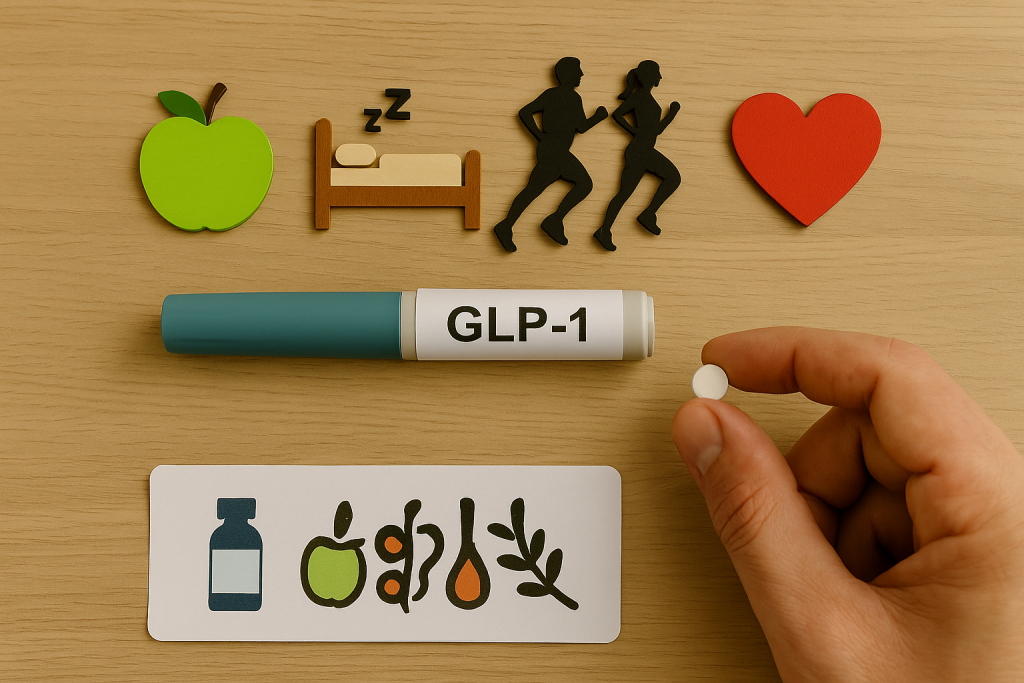
A flat lay of wellness essentials including a GLP-1 medication pen, healthy food, water, sleep mask, and fitness tracker — symbolising holistic support for weight and health management.A Science-Based Shift from Shame to Strength

Let’s talk about weight — not as a number on the scale, but as a story we’ve been telling, often with shame, judgement, and whispered critiques. Across cultures, weight has been more than just about health; it’s been tangled up in expectations, appearances, and societal pressure.

For women, it’s long been linked to worth, desirability, and social acceptance. For men, mockery often comes disguised as humour, while lifestyle stress quietly takes its toll.

But a new story is emerging. And this time, it’s backed by science.

From Willpower to Biology: A Paradigm Shift

For decades, the weight-loss conversation has been stuck in a simplistic formula: eat less, move more. If you didn’t succeed, the blame fell on your discipline — or supposed lack of it.

But modern science tells a different story.

Weight is not just about willpower — it’s deeply influenced by how our brains regulate hunger, how our hormones respond to food, and how our bodies manage insulin.

Enter GLP-1 (glucagon-like peptide-1) receptor agonists — a class of medications initially developed to treat type 2 diabetes. Drugs like semaglutide and liraglutide work by mimicking the action of the natural GLP-1 hormone, helping to regulate appetite, glucose levels, and feelings of fullness.

What doctors began to notice was that many patients weren’t just managing their diabetes better — they were also losing weight, sustainably and safely.

Endocrinologists noted that this was science supporting the body to function as it was meant to — managing hunger cues, curbing intense cravings, and balancing metabolism.

A Tool, Not a Shortcut

Let’s be clear: GLP-1 therapies are not miracle pills. They’re tools — and remarkably effective ones — but they work best when used alongside healthy lifestyle habits like balanced nutrition, regular physical activity, good sleep, and mental well-being.

This isn’t about chasing an ideal body image. It’s about improving metabolic health, enhancing insulin sensitivity, reducing cardiovascular risk, boosting energy, and improving long-term quality of life.

For many people who have tried everything — from extreme diets to punishing fitness routines — GLP-1 treatment has been the first time they’ve felt in control.

Hunger is no longer all-consuming. Eating becomes mindful, not guilt-ridden. Their bodies start responding, not resisting.

Language Matters: From Fat Loss to Health Gain

It’s time to change the way we talk about weight and wellness.

Let’s move away from phrases like “fat loss” and instead centre conversations around “health gain.” Let’s talk about hormone balance, liver health, and emotional regulation — not just waistlines.

When we reduce health to aesthetics, we risk turning a deeply personal and biological journey into a beauty contest. GLP-1 therapies remind us that health isn’t about being thinner — it’s about being stronger, more balanced, and more in tune with your body.

A Personal Journey, Backed by Science

GLP-1 therapy is not a shortcut — it is a signal of a larger shift. From blame to understanding. From shame to support. It’s a tool that gives people their agency back.

For too long, the message has been: You need to try harder.
Now, science says: You deserve better tools.

Whether you’re navigating weight challenges, prediabetes, or simply trying to feel better in your body, know this:

You are not broken.
You are not weak.
You are not alone.

You’re human — and now, finally, the science is humanising your struggle.

The future of wellness isn’t about perfection.
It’s about empowerment, equity, and informed choice.
And with tools like GLP-1, we’re not just transforming bodies —
we’re transforming the very conversation around health.

#BeTheForce

Disclaimer: The information provided in this blog is for general awareness and educational purposes only. It is not intended to replace professional medical advice, diagnosis, or treatment. Always consult a qualified healthcare provider for personalised medical guidance or concerns related to your health. Images shown are for representation purposes only and may not depict the exact recommendations or outcomes.
March 24, 2025 By GOQii Leave a Comment

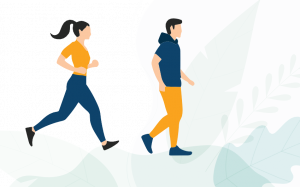
YOUR STRENGTH TRAINING EXERCISE GUIDE – Understand how strength training helps preserve muscle during weight loss

Understanding weight loss and muscle protection

During weight loss with GLP-1 RA medications, it is common to lose both fat and some muscle mass. Engaging in regular physical activity, especially strength training, is essential because it helps protect your muscle mass while you shed body fat.

The good news is that muscle loss can be reduced with the right approach. Regular physical activity, especially resistance exercises, helps protect your muscle mass while you lose body fat.

Think of this phase as reshaping your body, not just losing weight, but becoming stronger and healthier.

Planning your exercise routine with the FITT principle

A simple way to organise your exercise plan is by using the FITT principle. This helps you understand how often, how hard, how long, and what type of activity to perform.

  • Frequency: Aim to be physically active on most days of the week.
  • Intensity: Choose moderate-intensity activity. You can use the “talk test” to guide you. During moderate activity, you should be able to talk comfortably, but not sing. This means your heart rate is increased, but you are not overexerting yourself.
  • Time: Set a specific duration for each session, such as 30 minutes.
  • Type: Choose activities you enjoy that keep your body moving.

As your strength and stamina improve, gradually increase the duration or intensity. This steady increase is called progression and helps your body continue adapting safely.

Building your aerobic fitness foundation

Aerobic exercises improve body composition and cardiovascular fitness. These include rhythmic movements like brisk walking, jogging, or swimming.

Weekly goal: Aim for at least 150 minutes of moderate-intensity aerobic activity per week (about 30 minutes on 5 days).

Advanced goal: For better weight loss results, aim to increase your total activity to 300 minutes per week.

Consistency: Each session should last at least 10 minutes to provide cardiovascular benefits.

Strength training : Protecting your muscles

Strength training is necessary to protect your muscle mass during weight loss. It involves using resistance to challenge your muscles.

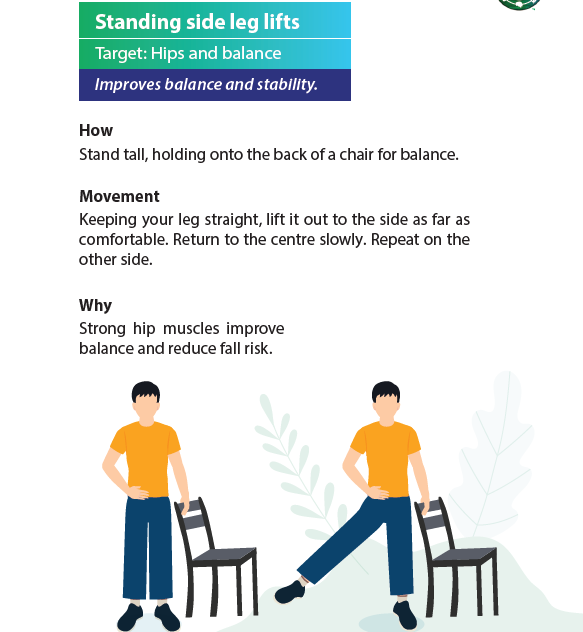
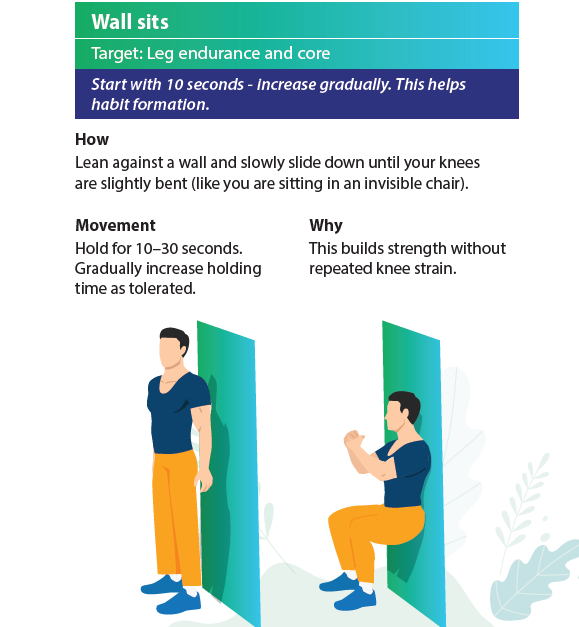
Target all areas: Ensure your routine includes exercises for your legs, hips, back, chest, stomach, shoulders, and arms.

Challenge yourself: Use a level of resistance that feels moderate to heavy.

As you get stronger, gradually increase repetitions or resistance, to keep your muscles adapting and growing.

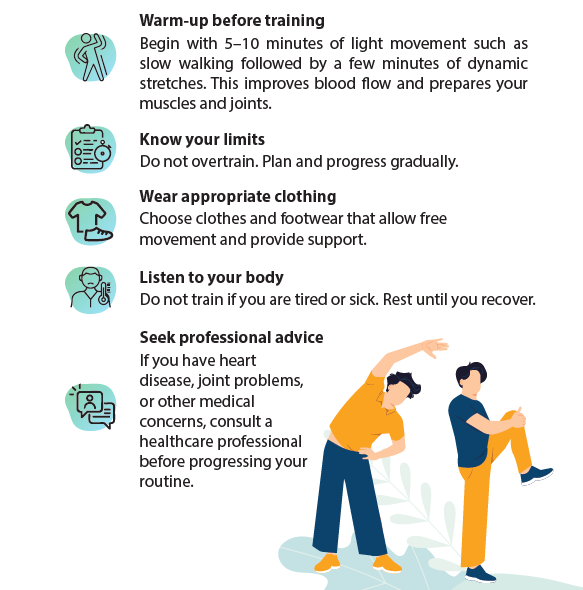
Before you begin

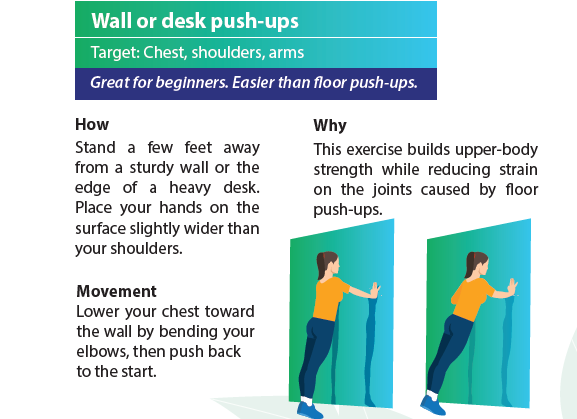
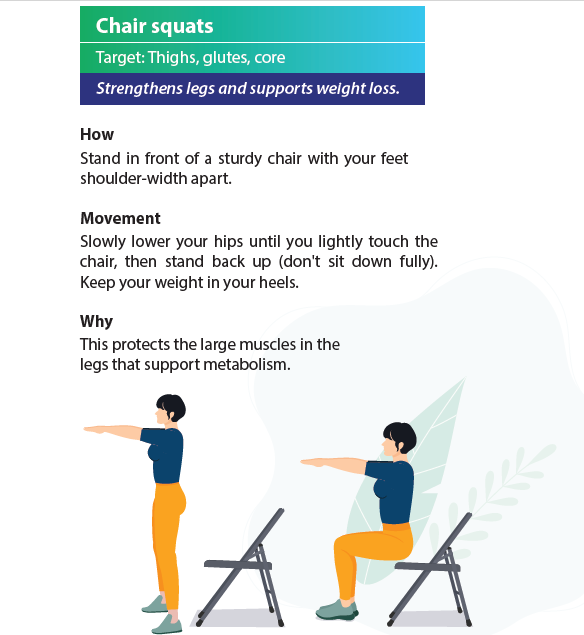
Home-based strength exercises

Here are some simple resistance exercises you can perform at home using easily available equipment, without the need for a gym. It is recommended to do these exercises at least two days per week.

Start with 1 set and gradually progress to 2–3 sets as your strength improves.

Begin with a comfortable number of repetitions and slowly increase to 10–15 repetitions.

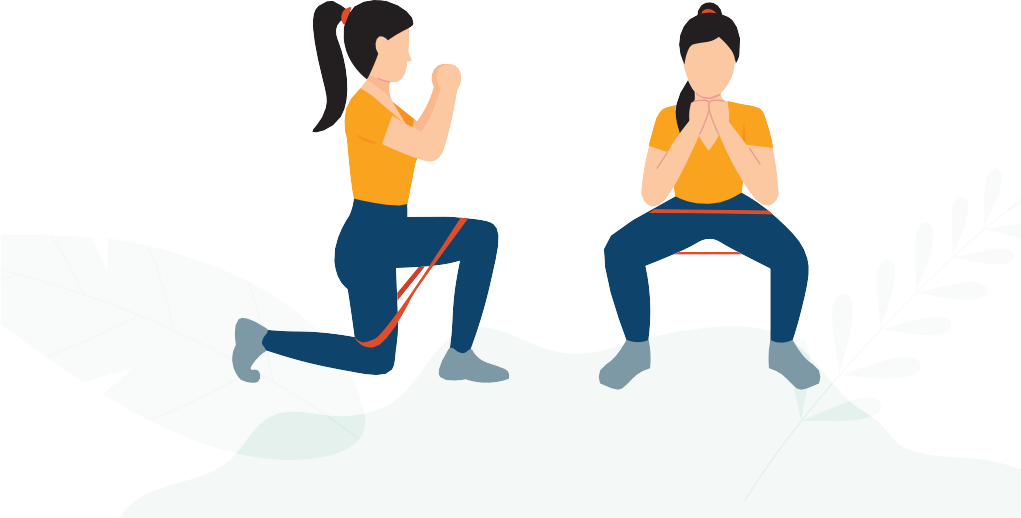
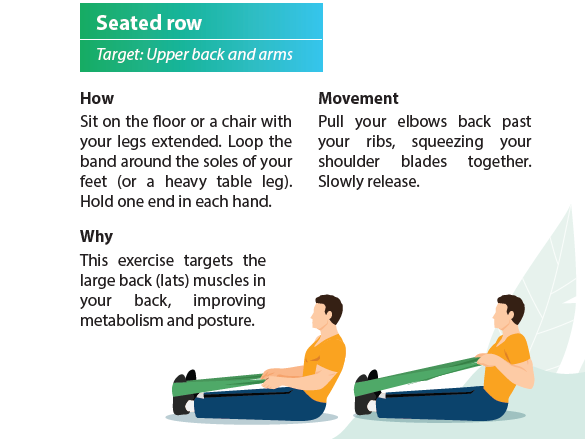
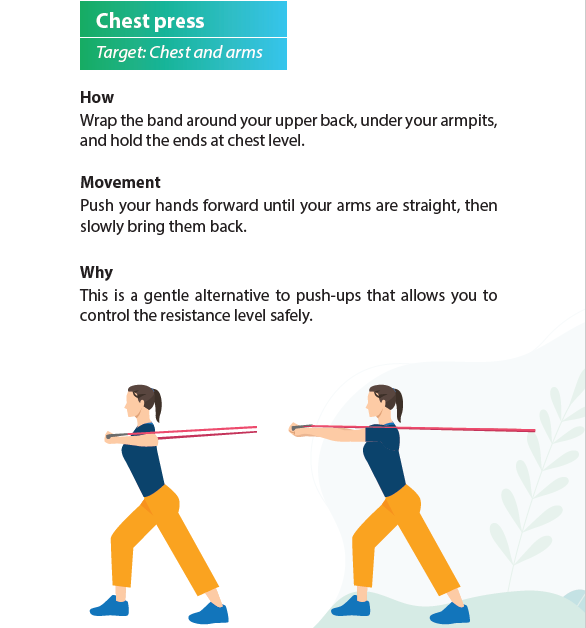
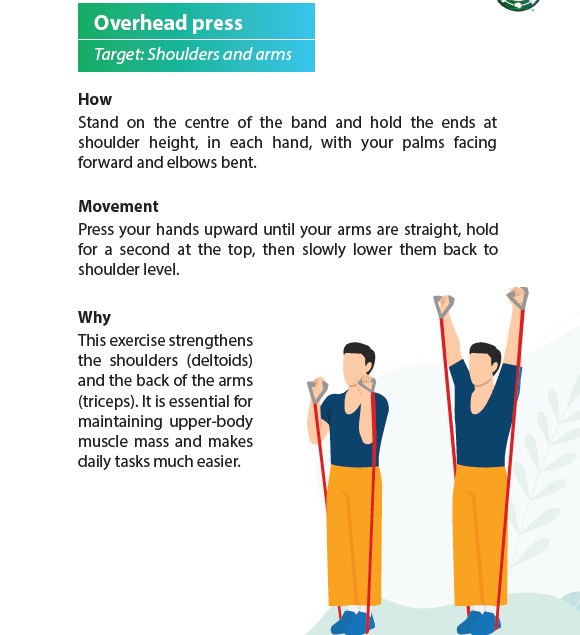
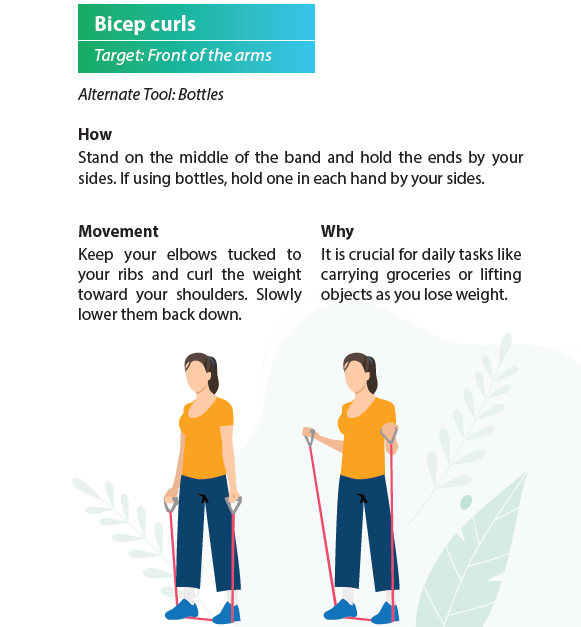
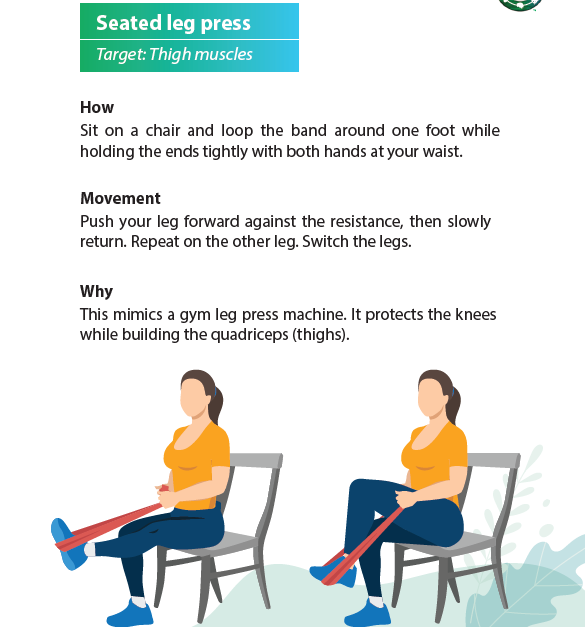
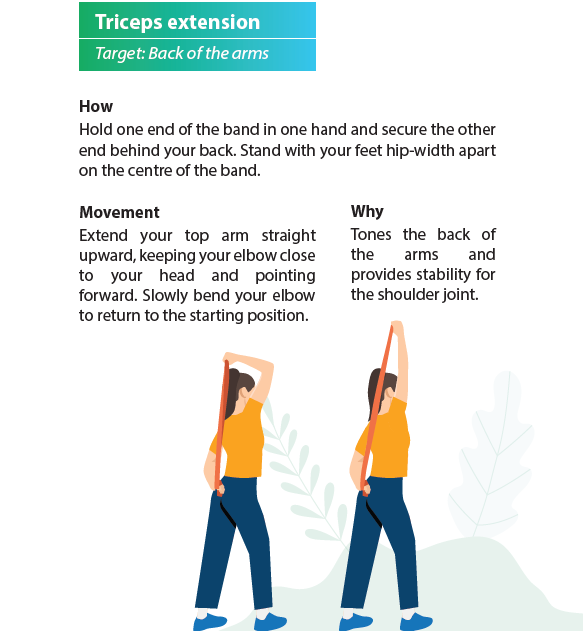
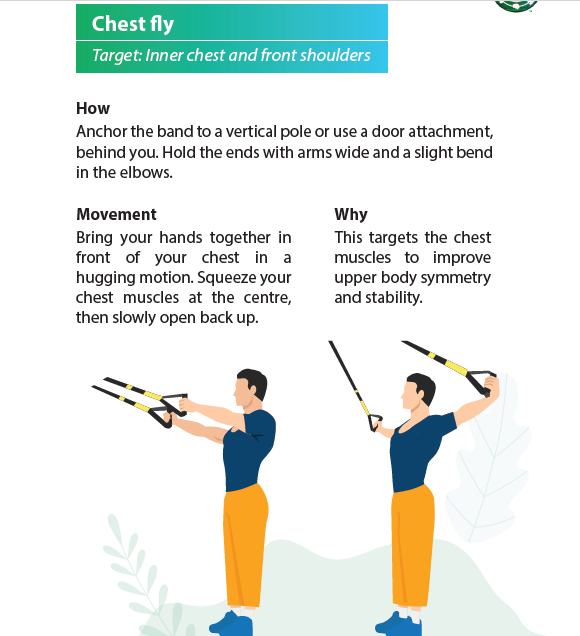
Resistance band exercises

You do not need a gym to build strength.

Resistance bands are simple and safe tools that help strengthen your muscles. They provide gentle resistance and can be adjusted according to your comfort level.

Start with 1 set and gradually increase to 2–3 sets. Aim for 10–15 repetitions for each exercise as tolerated.

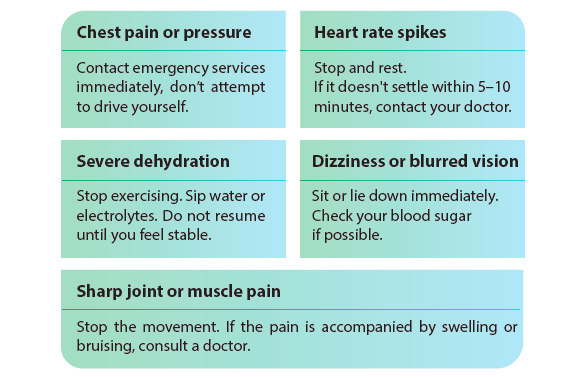
Exercise safety and when to stop

Most people can exercise safely. However, stop if you experience:

Movement is your partner in the USEMA journey

Exercise is an important part of your treatment plan. Along with balanced nutrition, adequate sleep, and stress
management, regular movement helps your body adapt positively to weight loss. Aim for consistency rather than
perfection. Even light activity done regularly can make a meaningful didifference in protecting muscle and supporting metabolic health.

#BeTheForce

References:
1. Codella R, Senesi P, Luzi L. GLP-1 agonists and exercise: the future of lifestyle prioritization. Frontiers in Clinical Diabetes and Healthcare 2025;6:1720794. https://doi.org/10.3389/fcdhc.2025.1720794
2. Boulé NG, Prud’homme D. Canadian Adult Obesity Clinical Practice Guidelines: Physical Activity in ObesityManagement. Available from: https://obesitycanada.ca/guidelines/physicalactivity
3. Centre for Health Protection: Exercise Prescription Doctor’s Handbook. Available from:https://www.chp.gov.hk/archive/epp/les/DoctorsHanbook_fullversion.pdf

Disclaimer: The information provided herein is only intended to bring general awareness among the patients and the same shall not be considered as a substitute for medical advice. Patients shall consult their registered medical practitioners before taking any drug or practicing any exercises or other recommendations. USV Private Limited does not promote use of any drug nor validated the studies referred herein and disclaim all the liabilities arising from use of the information. Copying, circulation and distribution of this content is strictly prohibited.

March 18, 2025 By GOQii Leave a Comment

Obesity & Its Impact on Your Health: Why It’s More Than Just Weight

Obesity is often seen as just a number on the scales, but in reality, it’s far more than that. It’s a complex health condition that affects every aspect of your well-being, from your heart to your mental health. In a world where fast food is abundant, sedentary lifestyles are the norm, and stress levels are constantly high, obesity has become a growing global concern.

But here’s the good news—it’s preventable and reversible with the right lifestyle changes. Let’s explore how obesity affects your health, what causes it, and, most importantly, how you can take control of your body and well-being.

What is Obesity?

Obesity is defined as having an excess amount of body fat that poses health risks. A common way to measure it is the Body Mass Index (BMI), which calculates weight in relation to height:

BMI Categories:

  • Healthy weight: 18.5 – 24.9
  • Overweight: 25 – 29.9
  • Obese: 30 or above

However, BMI doesn’t tell the full story—where the fat is stored matters too. Visceral fat (fat around the organs) is more harmful than subcutaneous fat (under the skin), increasing the risk of serious diseases.

How Obesity Impacts Your Health

Carrying excess weight isn’t just about appearance—it’s about how your body functions. Here’s how obesity can impact your health:

  1. Increases the Risk of Chronic Diseases

Obesity is linked to some of the most serious health conditions, including:

  • Heart Disease & High Blood Pressure – Excess fat increases strain on the heart, leading to hypertension and an increased risk of heart attacks and strokes.
  • Type 2 Diabetes – Obesity is a key driver of insulin resistance, making blood sugar levels harder to control.
  • Liver Disease (Fatty Liver) – Excess fat can accumulate in the liver, leading to inflammation and scarring (cirrhosis).
  • Certain Cancers – Studies show obesity is linked to an increased risk of cancers, including breast, colon, and liver cancer.
  1. Impacts Mental Health & Well-being

Obesity isn’t just about physical health—it affects mental and emotional well-being too. Many individuals with obesity experience:

  • Low self-esteem & body image concerns
  • Increased risk of anxiety & depression
  • Social stigma & discrimination

The mind-body connection is real, and feeling good about yourself plays a huge role in overall health.

  1. Affects Joint & Bone Health

Excess weight puts extra pressure on your joints, particularly in the knees, hips, and lower back, increasing the risk of:

  • Osteoarthritis (joint wear and tear)
  • Chronic back pain
  • Reduced mobility & flexibility
  1. Disrupts Sleep & Increases Fatigue

Obesity is a leading cause of sleep apnoea, a condition where breathing repeatedly stops and starts during sleep. This can lead to:

  • Poor-quality sleep & daytime fatigue
  • Increased risk of heart disease
  • Difficulty concentrating & lower productivity

Quality sleep is essential for energy levels, brain function, and overall health.

What Causes Obesity?

While diet and lack of exercise play major roles, obesity is often a combination of multiple factors:

  1. Poor Diet Choices – High-calorie, processed, and sugary foods contribute to weight gain.
  2. Lack of Physical Activity – A sedentary lifestyle means fewer calories burned, leading to excess fat storage.
  3. Genetics & Metabolism – Some individuals are genetically predisposed to store fat more easily.
  4. Hormonal Imbalances – Conditions like hypothyroidism & PCOS can make weight management harder.
  5. Stress & Emotional Eating – Many people turn to food as a way to cope with stress, boredom, or emotions.

Understanding these factors is key to making sustainable lifestyle changes.

How to Prevent & Manage Obesity

The best approach to tackling obesity is a holistic lifestyle change—not just crash diets or quick fixes. Here’s how to take control of your health:

  1. Eat Mindfully & Nutrient-Dense Foods 🍏
    • Swap processed foods for whole, natural foods.
    • Focus on lean proteins, healthy fats, and fibre-rich foods.
    • Reduce sugar & refined carbs—they spike insulin and lead to fat storage.
    • Practise portion control and avoid emotional eating.
  1. Move More, Sit Less 🏃‍♀️
    • Aim for 30-45 minutes of movement daily—it doesn’t have to be intense! Walking, cycling, yoga, or swimming all help.
    • Strength training boosts metabolism and burns fat long after exercise.
    • Take the stairs, stand more, and find ways to be active throughout the day.
  1. Prioritise Sleep & Stress Management 😴
    • Get 7-9 hours of quality sleep—it helps regulate hunger hormones.
    • Practise relaxation techniques like meditation, deep breathing, or journaling.
    • Avoid late-night snacking—it often leads to unnecessary calorie intake.
  1. Stay Hydrated 💧
    • Drinking enough water helps digestion, metabolism, and fat loss.
    • Sometimes, thirst is mistaken for hunger—stay hydrated to avoid overeating.
  1. Seek Professional Support If Needed
    • A nutritionist, doctor, or health coach can create a personalised plan.
    • Mental health support can help with emotional eating and motivation.
    • Consider a buddy system—staying accountable makes a difference!

Obesity isn’t just about weight—it’s about long-term health, energy, and well-being. The good news is that even small lifestyle changes can make a big difference.

✅ Start with one healthy habit at a time.
✅ Focus on progress, not perfection.
✅ Remember—your body is capable of amazing things!

💬 Have you made changes to improve your health? Share your journey in the comments!

#BeTheForce

Disclaimer: The information provided in this blog is for general awareness and educational purposes only. It is not intended to replace professional medical advice, diagnosis, or treatment. Always consult a qualified healthcare provider for personalised medical guidance or concerns related to your health.

June 20, 2024 By Tasneem Jawadwala 16 Comments

Healthy Weight Gain Tips

Weight Gain

We’ve heard one too many instances of people having great success with weight loss! In fact, every time I visit the gym, I come across many such success stories. However, I can’t help this sinking feeling that the real strugglers are the ones who want to gain weight and build muscles.

Are you one of them? Ever wondered what you’re doing wrong despite indulging in healthy food, doing every possible workout, and trying to increase your appetite? Let’s see how you can gain healthy weight. But before that…

Let’s See What You’re Doing Wrong

1. Protein: Gym trainers and dieticians often suggest including more protein, some in the form of powders and others suggest natural sources such as eggs, Sattu, curd, cottage cheese, and the likes. However, calculating the right amount of protein required is often missed. One requires around 1.25g/kg ideal body weight proteins to build up muscles. For example, if you are 60kg, then the required amount of protein required by you on a daily basis to build muscles is 75g.

If you aren’t having enough or the required amount of protein, you will not see a difference. Hence, take some time out and consult professionals who can help you calculate. To gain healthy weight and build muscles, you also need to watch your carbs, antioxidants, and workouts.

2. Carbohydrates: I’ve noticed this as a trend. Most people place so much emphasis on proteins that they forget about carbs. Did you know that if approximately 60% of your diet isn’t from carbohydrate sources, your body will utilize protein to supply energy? Which means your body will not have enough proteins for tissue building.

3. Antioxidants: Fruits and salads are often flawed to be used as a weight-loss diet. Vegetables and fruits are the best source of antioxidants that help in tissue repairs, prevent injuries and inflammation. So, include vegetables and fruits with Selenium, Zinc, Vitamin C, and Vitamin E in your diet on a daily basis.

4. Workout: Your workout should focus more on strength training; however, ensure that you still do some cardio. Cardio will help your heart and lungs function better, which in turn will prevent you from falling ill during your program.

Foods That Help in Healthy Weight Gain and Muscle Building

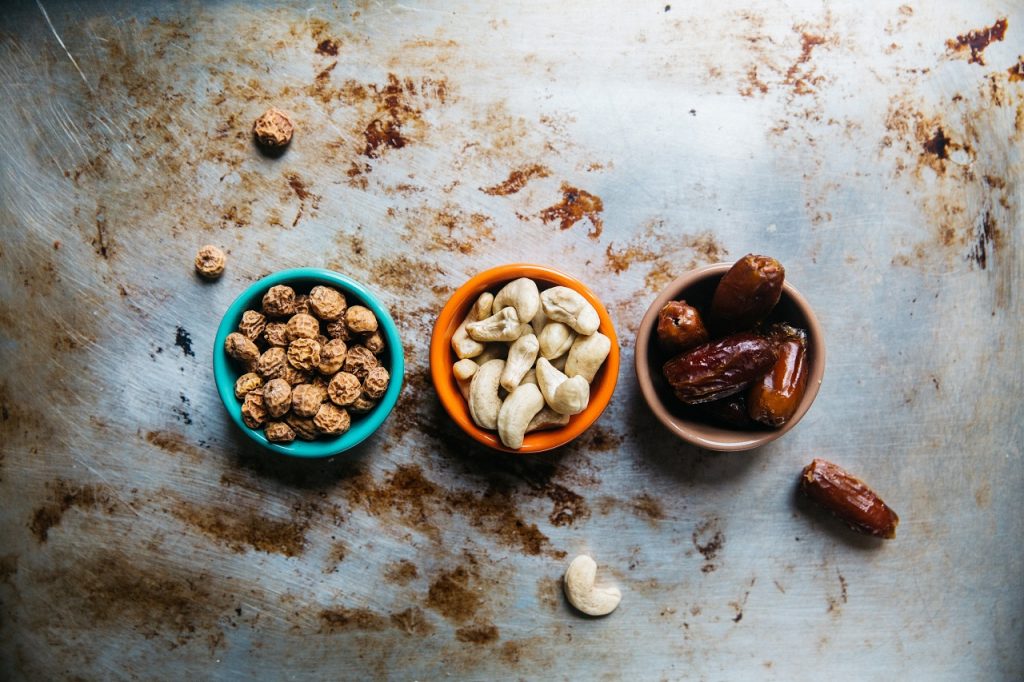
  • Dates: They are loaded with iron, natural sugar and antioxidants. Eat 4-5 dates before your workout as dates provide you with instant energy and prevent muscle damage.
  • Sweet Nuts or Pulse balls (Chikkis): This is a sweet dish made up of pulses, nuts or seeds. It is nothing but roasted whole gram, peanuts or sesame seeds and jaggery. It’s a perfect combination of proteins and carbohydrates. Munching on them as mid-meal snacks work as an energy booster.
  • Nut Shakes: A big serving of dry fruits is difficult to consume at a time, but having them in a powdered form with milk will supply your body with good amounts of protein.
  • Fruit Smoothie: Eating fruits with curd will help add some antioxidants to your protein dose. This is probably the tastiest and most delicious way to consume fruits!
  • Combination of Cereals and Pulses: Just eating a pulse at a time will really not help as it doesn’t provide us with good quality proteins. But, when combined with a cereal, it will provide the benefits of both protein and carbohydrates. Options like Dal Paratha (Pulse Flat Breads), Puranpoli (Sweet Jaggery Flat Breads), Khichdi (mix of pulses, rice and vegetables cooked together), and Idli (steamed rice pan cakes) should be considered.
  • Adding Vegetables to Meat: Eating a separate serving of vegetable becomes difficult. The meal size may exceed if we have 1 serving of vegetable for vitamins & minerals and 1 serving of non-veg preparation for proteins. The best option in my opinion is to combine a non-vegetarian source with vegetables. For instance, Spinach (Palak) Chicken, Tomato Omelet, and Capsicum Stuffed with Mince.
  • Peanut Butter: People often go overboard with regular butter and get major changes in lipid profile but no change in weight. Ideally, one should apply peanut butter on their bread slices for the right fats and protein combination.

The key rule for healthy weight gain is to go for nutrient-dense meals. These healthy compact meals do not require an extreme appetite boost. Focus on healthy weight gain and be patient while you are in a weight gain program as it’s easy to cut on fats but takes time to add on muscles. Remember, it took 9 months to give you around 3kg of weight at birth. Stay at it and be patient.

We hope this article helps you! For more, check out Healthy Reads or you can speak to a GOQii Coach directly for expert guidance and motivation. Subscribe for Personalised Health Coaching here.

#BeTheForce

  • « Previous Page
  • 1
  • …
  • 4
  • 5
  • 6
  • 7
  • 8
  • …
  • 283
  • Next Page »

Search

Recent Posts

  • PCOS: diet, exercise and the myths to stop believing
  • Cholesterol numbers explained: LDL, HDL and triglycerides
  • International Men’s Day 2026: why men’s health is everyone’s business
  • World COPD Day 2026: Short of Breath? Think COPD – Why Early Diagnosis Matters
  • National Epilepsy Day 2026: Seizure First Aid – What to Do (and Not Do) When Someone Has a Seizure

Stay Updated

Archives

  • November 2026 (20)
  • October 2026 (23)
  • September 2026 (5)
  • August 2026 (8)
  • July 2026 (24)
  • June 2026 (22)
  • May 2026 (20)
  • April 2026 (24)
  • March 2026 (18)
  • February 2026 (14)
  • January 2026 (14)
  • December 2025 (19)
  • November 2025 (14)
  • October 2025 (17)
  • September 2025 (6)
  • August 2025 (5)
  • July 2025 (9)
  • June 2025 (18)
  • May 2025 (16)
  • April 2025 (22)
  • March 2025 (25)
  • February 2025 (21)
  • January 2025 (25)
  • December 2024 (21)
  • November 2024 (21)
  • October 2024 (15)
  • September 2024 (22)
  • August 2024 (27)
  • July 2024 (14)
  • June 2024 (23)
  • May 2024 (26)
  • April 2024 (27)
  • March 2024 (27)
  • February 2024 (23)
  • January 2024 (21)
  • December 2023 (14)
  • November 2023 (10)
  • October 2023 (18)
  • September 2023 (20)
  • August 2023 (16)
  • July 2023 (16)
  • June 2023 (21)
  • May 2023 (20)
  • April 2023 (19)
  • March 2023 (23)
  • February 2023 (19)
  • January 2023 (15)
  • December 2022 (11)
  • November 2022 (15)
  • October 2022 (15)
  • September 2022 (12)
  • August 2022 (9)
  • July 2022 (17)
  • June 2022 (11)
  • May 2022 (10)
  • April 2022 (6)
  • March 2022 (6)
  • February 2022 (13)
  • January 2022 (11)
  • December 2021 (7)
  • November 2021 (3)
  • October 2021 (6)
  • September 2021 (3)
  • August 2021 (8)
  • July 2021 (7)
  • June 2021 (15)
  • May 2021 (16)
  • April 2021 (10)
  • March 2021 (7)
  • February 2021 (4)
  • January 2021 (4)
  • December 2020 (3)
  • November 2020 (4)
  • October 2020 (10)
  • September 2020 (3)
  • August 2020 (3)
  • July 2020 (2)
  • June 2020 (4)
  • May 2020 (10)
  • April 2020 (12)
  • March 2020 (10)
  • February 2020 (4)
  • January 2020 (4)
  • December 2019 (3)
  • November 2019 (7)
  • October 2019 (5)
  • September 2019 (4)
  • August 2019 (9)
  • July 2019 (9)
  • June 2019 (11)
  • May 2019 (4)
  • April 2019 (8)
  • March 2019 (8)
  • February 2019 (9)
  • January 2019 (8)
  • December 2018 (9)
  • November 2018 (3)
  • October 2018 (3)
  • September 2018 (5)
  • August 2018 (10)
  • July 2018 (6)
  • June 2018 (13)
  • May 2018 (8)
  • April 2018 (17)
  • March 2018 (9)
  • February 2018 (8)
  • January 2018 (15)
  • December 2017 (12)
  • November 2017 (19)
  • October 2017 (13)
  • September 2017 (15)
  • August 2017 (4)
  • July 2017 (8)
  • June 2017 (7)
  • May 2017 (6)
  • April 2017 (8)
  • March 2017 (6)
  • February 2017 (7)
  • January 2017 (9)
  • December 2016 (10)
  • November 2016 (7)
  • October 2016 (7)
  • September 2016 (7)
  • August 2016 (11)
  • July 2016 (9)
  • June 2016 (9)
  • May 2016 (12)
  • April 2016 (17)
  • March 2016 (17)
  • February 2016 (8)
  • January 2016 (6)
  • December 2015 (2)
  • November 2015 (9)
  • October 2015 (7)
  • September 2015 (9)
  • August 2015 (11)
  • July 2015 (9)
  • June 2015 (11)
  • May 2015 (9)
  • April 2015 (13)
  • March 2015 (8)
  • February 2015 (5)
  • January 2015 (12)
  • December 2014 (14)
  • November 2014 (11)
  • October 2014 (6)
  • September 2014 (13)
  • August 2014 (12)
  • July 2014 (6)
  • June 2014 (2)
  • May 2014 (7)
  • April 2014 (4)

From Burnout to Balance: How Dr. Ranjit Reclaimed His Health

Dr Ranjit Bhatt has spent years tending to others. A practising doctor in Odisha, his days were packed with patients, surgeries, and emergencies. From the outside, it looked like a life lived in service. But on the inside, something wasn’t right. “I had no … [Read More...]

From Shimla’s Slopes to Chandigarh’s Sidewalks: Surinder Kaur Bhalla’s Journey from Chaos to Control

Some journeys start with a plan. Others begin with a stumble literally. Surinder Bhalla, a government professional, born and raised in the scenic hill town of Shimla, had always lived a life of movement. “In Shimla, you walked everywhere,” she reflects. “Walking was never an exercise. It was just life.” But after shifting to Chandigarh, […]

“I’ve Challenged Myself to Live 100 Years” – The Story of Chandubhai Savani’s Second Chance at Life

At 67, most people start slowing down. Not Chandubhai Savani. A resident of Surat, Chandubhai, thought life was on track. “My life was going well till I had my bypass surgery,” he says. That surgery, back in 2021, was a wake-up call.  Medication was routine, but exercise wasn’t. His diet? What he calls ‘normal.’ “I […]

Ananda Mukherjee Health Story

From Terminal Illness To Complete Wellness! Ananda Mukherjee Health Story

As we observe World Cancer Day under the powerful theme ‘United by Unique’ (2025-2027)**, we are reminded that every individual’s journey with cancer is distinct, yet united by shared resilience, hope, and the collective fight against this disease. This theme places people at the centre of care and their stories at the heart of the […]

  • HOME
  • HEALTHY LIVING
  • FITNESS
  • HEALTHY RECIPES
  • USER STORIES
  • KARMA
  • BUY GOQii

Copyright ©2016 GOQii