 Sleep is one of the important pillars for good health. To understand how well Indians are sleeping, we collected data from over 1 lakh GOQii users and shared it through our latest GOQii IndiaFit Report 2022 – 2023.
How Many Hours Are People Sleeping For?
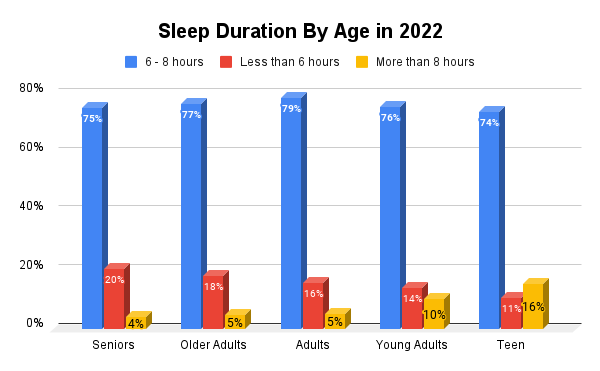
Among the age groups that we surveyed, we found that most people across the age groups, namely Seniors (60+ years), Older Adults (45-59 years), Adults (30-44 years), Young Adults (20-29 years) and Teens (Below 19) are getting the adequate amount of rest i.e. an average of 6-8 hours a day.
Among the age groups, 79% of Adults are sleeping for 6-8 hours followed by 77% of Older Adults. 20% of Seniors sleep for less than 6 hours. We also found that 16% of Teens sleep for more than 8 hours a day.
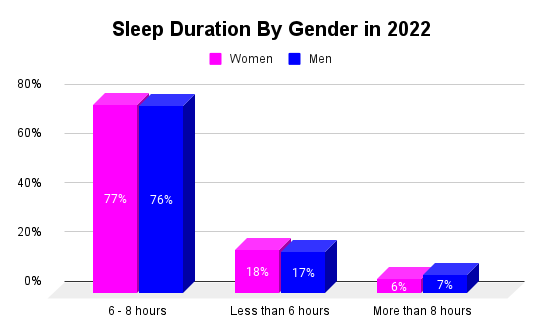
In a gender-wise study, we found that 77% of women and 76% of men are sleeping for an average of 6-8 hours a day. 18% of women and 17% of men sleep for less than 6 hours a day.
Although, from the above data we can see that we are getting the adequate amount of sleep, the question is, how well are we sleeping?
Sleep Quality Analysis
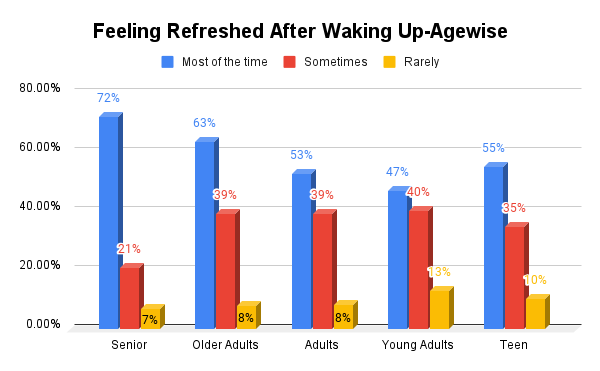
In the survey for the GOQii IndiaFit Report, we asked people about how well they are sleeping. 72% of Seniors reported that they sleep well and wake up feeling refreshed. Among this age group, 21% reported feeling refreshed only sometimes. 63% Older Adults also reported sleeping well.
Among the age groups, we see less than 50% of Young Adults sleeping well. Only 47% claimed that they feel refreshed after waking up, and another 40% say that they only feel refresh sometimes. 13% of Young Adults reported not sleeping well at all. Teens on the other hand, are sleeping better than Young Adults and Adults.
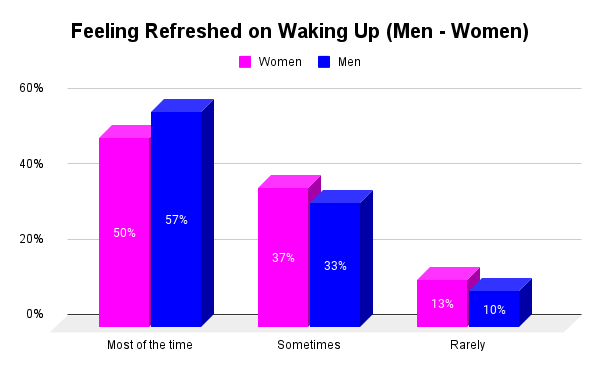
57% of men said that they wake up fresh and have sound sleep compared to 50% of the women surveyed. There’s been a drop in sleep quality among women since 2021 where 58% had reported to have slept soundly.
Bhubaneswar Is Getting The Most Sleep!
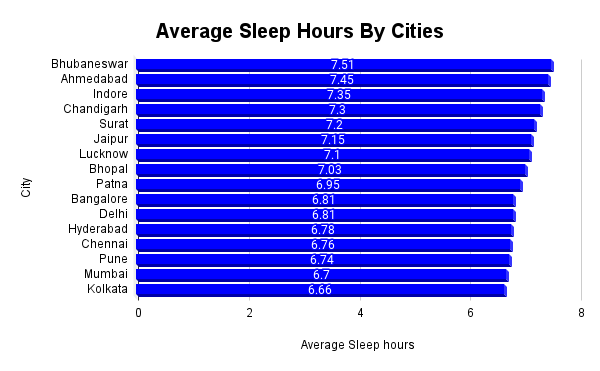
From the cities surveyed, we observed that Bhubaneswar gets an average of 7.51 hours of sleep – that’s the highest among all the cities surveyed. They are closely followed by Ahmedabad at an average of 7.45 hours of sleep and Indore with an average of 7.35 hours of sleep. Mumbai (6.7) and Kolkata (6.66) have the least average sleep hours among the cities.
Overall Average Sleep Hours Have Dropped!
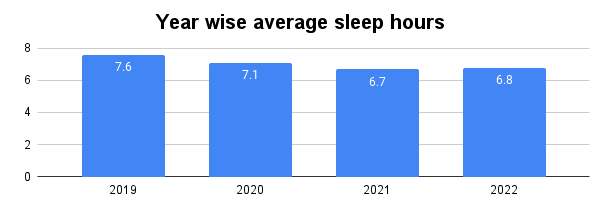
Since the onset of the pandemic, we have also noticed a drop in the overall sleeping hours of India. While on an average, we used to get an average of 7.6 hours of sleep, this number has dropped to an average of 6.8 hours in 2022.
While we are sleeping for 6-8 hours a day, sleep quality is also essential. Your quality of sleep determines how well you’ve rested. If you want to track your sleep quality, you can browse from our range of trackers that help you measure sleep quality and make any necessary changes to your sleep pattern. The devices come with 3 months of Personalised Health Coaching.
If you need help with sleep or need to browse through more articles on sleep, click here. You can also explore the other health parameters we’ve covered in the GOQii IndiaFit Report here.
#BeTheForce

 The rising mercury can leave you quite tired and dehydrated. While water can help you avoid dehydration, turning to some healthy drinks can help you replenish the essential nutrients you need to beat the heat!