GOQii

Blog

  • HOME
  • HEALTHY LIVING
  • FITNESS
  • HEALTHY RECIPES
  • USER STORIES
  • KARMA
  • BUY GOQii

Search Results for: muscle

August 6, 2024 By Trupti Hingad 2 Comments

Learn about your Poop and Gut Health

bowel-health

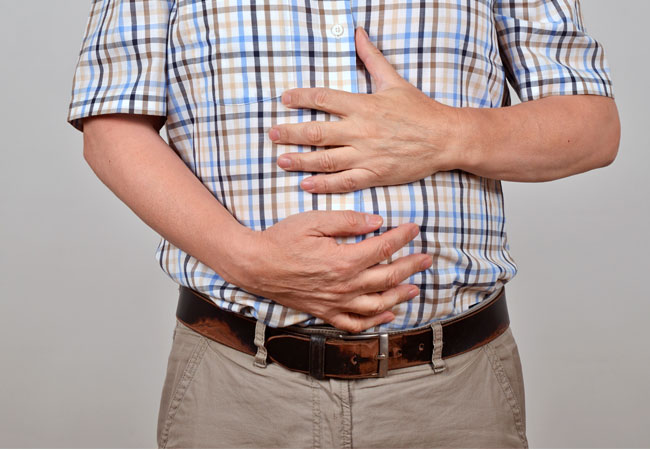
Most of us wake up and proceed to the loo. Over a period of time, this becomes a habit and we just do it blindly!

Have you ever noticed or given a thought about how is your bowel movement?

What does your poop say about your health? This may sound like a joke, but you can actually learn a lot about your health from your daily poop.

Hippocrates says…ALL DISEASE BEGINS IN THE GUT. So, we want to be sure that what’s coming out of the gut looks good.

Let’s understand more about it.

Three things to look for:

  1. FREQUENCY
  2. FORM
  3. COLOR

Frequency: Best bowel movement: It’s best to have at least one complete bowel movement a day. This should leave you feeling like you’ve fully emptied your bowels.

If you are having 2-3 bowel movements in the day then you may have a faster metabolism or good robust bacteria or it depends on the quantity of food you eat.

Going to the bathroom more than three times a day may suggest you’re approaching the diarrhoea zone.

So, having a clear bowel movement once a day daily is must as it’s one of our body’s greatest ways to eliminate toxins, acids and other stuff.

FORM: When our poops are properly formed, it ensures that we have digested and assimilated the nutrients from our food and are eliminating acids and toxins properly.

The BRISTOL CHART helps to categorize and gauge our bowel movements well:

Bristol-Stool-Chart-What-Your-Poop-Says-About-Your-Health-Mama-Natural-1024x576

Image Credit: mamanatural-mamanatural.netdna-ssl.com

Type 1: Separate hard lumps, like little balls (hard to pass)

Type 2: Sausage-shaped, but lumpy (lack of fibre and hydration)

Type 3: Like a sausage but with cracks on its surface

Type 4: Like a sausage or snake, smooth and soft

Type 5: Soft blobs with clear cut edges (passed easily)

Type 6: Fluffy pieces with ragged edges, a mushy stool

Type 7: Watery, no solid pieces. Entirely liquid

Where do you fall on this chart?

If you are between 1-3 then it shows that your diet lacks the right amount of fibre, bacteria are missing and there is nothing to retain water. This is a sign of constipation. The lumps are hard and abrasive and may sometimes lead to anorectal bleeding.

If you are at Type 4, then you are right, It’s nice tubular shape. Think long bananas that don’t break apart when you flush. The Perfect poop comes out with ease, smells more like super-ripe fruit than something terrible and you barely need to wipe.

If you are between 5-7—then you have diarrhoea. This may also give rise to malabsorption as there is no proper assimilation of nutrients.

If your stool is too LOOSE, SOFT, watery, MUSHY then – it indicates a lack of fibre and thus you can go for BRAT Diet.(Banana, rice, apple and toast). These foods have qualities like tannins that can actually help firm up a stool for better bowel movements.

If you find your stool is TOO HARD or infrequent, add more of soluble fibre and add magnesium-rich foods to your diet. Magnesium draws water into the bowel, making the stool softer and easier to eliminate. It also relaxes the muscles in the intestinal wall, which helps with constipation.

Apples and Pears are also wonderful – two a day will keep things moving. Yoga and abdominal massage are great tools. Another trick you can try is to drop 1 drop of Peppermint essential oil into your toilet and sit down. It will stimulate your bowels and often result in a movement.

If your poop…Floats instead of sinks- You have excess gas in your digestive tract. “If you’ve been eating lots of beans, sprouts, cabbage, or very large meals, it’s perfectly normal for stool to float because of gas, and it’s not a cause for concern. However, if floaters become more common for you or you spot an oil-slick appearance, it could mean something is preventing your body’s ability to absorb fats from food. For instance, inflammation or an infection in your pancreas could prevent you from producing enough digestive enzymes. A food allergy or infection could be damaging the lining of your intestines that’s affecting absorption, too.

What does Colour indicate?

Believe it or not, colour matters!  We want our stool to be a nice medium – to dark-brown colour (Think milk chocolate). Poop is normally brown. The colour is the result of what you eat and how much bile is in your stool. Bile is a fluid your liver makes to digest fats. It starts out as a yellowish green colour. But as the pigments that give bile its colour travel through your digestive system, they go through chemical changes and turn brown.

Black Poop: If your stool is black, it could be a sign of blood in your upper GI tract.

Yellow poop: This shade is also normal for many people. It’s common for babies, especially those who breastfeed. But if you have yellow poop that looks greasy and smells very bad, it may have too much fat. That could be a sign your body isn’t digesting food properly.

Green poop: If you have green poop for many days, the colour of your food may not be to blame. It’s likely that your meal moved through your gut too quickly, so the fat digesting bile didn’t have time to turn brown. It could be from fat malabsorption or liver or gallbladder stress.

PS NOTE: Keep in mind if you eat certain foods or food dyes your stool colour may change. For example, if you eat lots of beets, your stools could take on a reddish hue. And eating tonnes of leafy greens may explain why your poop is green but this colour change is temporary.

White Poop: Medicines for diarrhoea like bismuth sub-salicylate can sometimes cause pale or clay coloured poop. A more serious cause is a lack of bile in your stool. As bile gives its brown colour

Bright red: If it’s bright red, the blood likely comes from the lower part of your digestive tract. It could be due to inflammation in the colon, haemorrhoids, diverticular disease or tumour.

So, where do your poops fall on the Bristol Stool Chart? Do you have an to oy tips or practices to optimise your daily poop? Share them in the comments below. For more health-related content, explore Healthy Reads or for further guidance speak to a certified expert by subscribing to GOQii’s Personalised Health Coaching here.

#BeTheForce

Disclaimer: The information provided in this blog is for general awareness and educational purposes only. It is not intended to replace professional medical advice, diagnosis, or treatment. Always consult a qualified healthcare provider for personalised medical guidance or concerns related to your health.
August 5, 2024 By Palak Mittal Leave a Comment

8 Incredible Health Benefits Of Sun Salutations (Surya Namaskar) 

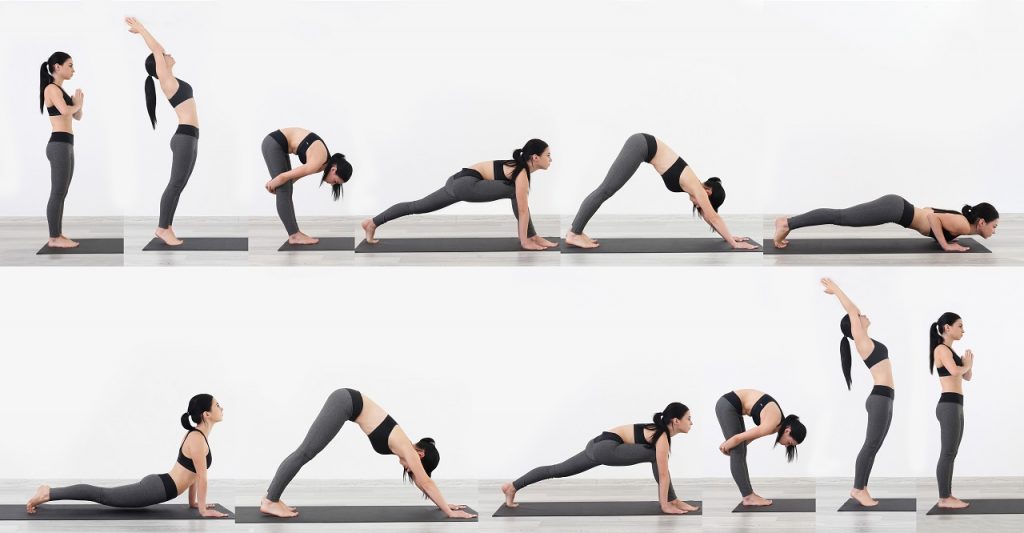
benefits of surya namaskarSurya Namaskar literally means Salutations to the Sun. It is a combination of 12 yoga asanas, where the body, mind, and soul are brought into complete synchrony. They are done in sets, some do 12, some 15, while some 30, depending on their endurance. Scientifically too, there are multiple benefits of Sun Salutations (Surya Namaskar). Let’s explore them in detail!

The Benefits of Sun Salutations (Surya Namaskar)

  1. Stretching and flexibility: The 12 asanas which are part of the Sun Salutations (Surya Namaskar) ensure that every part of the body is exercised. The flexibility that comes with it needs to be experienced to be believed. This is extremely beneficial for the bones, joints, and ligaments of the entire body and spine.
  2. Improves internal organ functioning: The various stretches increase blood flow to the organs and improve their functioning. The result is a better functioning digestive system and kidneys, which help in better absorption of nutrients from food and thorough elimination of metabolic waste. Detox happens naturally, with the release of trapped gasses and improved enzyme secretion.
  3. Weight loss: One of the best-proven ways to lose weight is to do Sun Salutations (Surya Namaskar) on a daily basis. It is a perfect workout involving the complete body and is great for losing weight around the belly. It also is proven to improve the thyroid gland functioning, which plays a significant role in metabolism.
  4. Bone health: Traditionally, it is done during the early morning hours, at sunrise, which ensures the body gets the required amount of Vitamin D. This is essential for good bone health.
  5. Stress buster: Stress release happens in multiple ways. Deep focused breathing is one of them. While performing the asanas, control over breathing is very essential and so, stress control is ensured. Various muscles and bones get tense with stress, and thorough stretching helps relieve the stress buildup. The mind is also calm during the workout, and so stress relief is further enhanced.
  6. Relief from insomnia: People who are not able to sleep should perform Sun Salutations (Surya Namaskar) on a regular basis. Both stress relief and the perfect workout ensure good sleep.
  7. Helpful in menstrual cycles: Women who have cramps during their menstrual cycles have shown very good improvement with the inclusion of this exercise. It is also shown to benefit people with irregular menstruation thanks to the improved blood circulation. Pregnant women performing Sun Salutations (Surya Namaskar) are more likely to have a normal delivery.
  8. Glowing Skin: With the release of toxins and stress, glowing skin is a natural affair!

We hope these 8 benefits of Sun Salutations (Surya Namaskar) urge you to make it a part of your daily routine. For more on how yoga can help you lead a healthy and fulfilling life, check out Healthy Reads or ask a GOQii Coach by subscribing for Personalised Health Coaching here.

#BeTheForce

Disclaimer: The information provided in this blog is for general awareness and educational purposes only. It is not intended to replace professional medical advice, diagnosis, or treatment. Always consult a qualified healthcare provider for personalised medical guidance or concerns related to your health.

August 1, 2024 By Saba Mirza 2 Comments

6 Ways To Keep Your Kids From Falling Sick During Monsoon

keep kids from falling sick

You can’t deny the fact that children love the monsoon. The sheer joy of getting drenched or playing a game of football on a mucky field is an out of the world experience for them. Whereas for parents, it brings in a little worry. How can you keep your kids from falling sick during monsoons?

During this season, you can often find an increased rush at a pediatrician’s clinic and pharmacies while attendance at school slowly drops. Many new parents aren’t aware that with a few disciplinary measures and conscious effort, we can keep our kids from falling sick and enjoy the monsoon to the fullest.

Tips To Keep Kids From Falling Sick During Monsoon

Here are a few simple yet effective measures and home remedies to help you keep your kids from falling sick.

1. Keep Them Hydrated

Frequent intake of water is needed to flush the toxins accumulated in the body out. Ensure that your kids are drinking clean, filtered water. Contaminated water is the most common reason for monsoon infections. Keep their sippers and water bottles ready with boiled or filtered water well within their reach. If the weather is cold, encourage them to drink lukewarm water as cold water can cause mucosal spam in the respiratory muscles which can make it prone to various respiratory disorders like throat infections, cold, cough, etc.

2. Appropriate Clothing and Footwear

Plan their outfits according to the weather. For instance, during humid days, make them wear loose cotton clothes. This will help their skin breathe without obstructing sweat glands. On cold, rainy days, warm clothing is a must. For a rainy outing, apart from an umbrella and a raincoat, don’t forget to make them wear knee or calf-length gumboots which can prevent their feet from catching infections from collected rainwater on the road or the park.

3. Keep Your House Free of Mosquitoes

Along with netting your windows and doors, ensure that you avoid any kind of water logging or storage in and around your house. This includes swimming pools, flowerpots, coolers, etc. Accumulated water is the most common breeding ground for mosquitoes. This can help your kid steer clear of dengue and malaria which are common during monsoons.

4. Nutritious, Well-Balanced Meals and Healthy Snacks

Restrict the intake of street food as much as possible. Not just street food but also ordering from restaurants as rampant incorporation of infected vegetables or infected water are very high during this season. These are primary sources of illnesses during monsoon. Give your kids fresh home-cooked food and nutritious monsoon snacks such as steamy masala corn, roasted groundnuts, sandwiches, etc. You can also opt for healthy snacking options designed specifically for kids from the GOQii Health Store within the GOQii App.

5. Maintain Personal Hygiene

Regular baths, cutting nails, keeping yourself as well as the kids dry and cleaning/washing the hands before eating are basics. Apart from that, keep the house clean and sanitized at all times. These small measures go a long way in keeping monsoon bacteria and viruses away!

6. Boost Immunity With Superfoods

Include Vitamin C rich food daily in your kid’s routine. Squeeze a lemon in their curries or snacks. Give them steamed/stir-fried sprouted pulses as snacks. Make their meals and snacks vibrant i.e. colourful veggies such as cucumber, carrot, tomatoes and seasonal fruits for antioxidant power! Antioxidants in these will help destroy harmful toxins accumulated in the body. More colour in food means higher detoxification rate and a stronger defense against infections.

Instead of getting attracted towards commercial probiotics, look for the richest probiotic in your kitchen. Give them curd along with meals. Blend it to make Lassi or a smoothie with fruits. Don’t forget to incorporate Turmeric Milk before bed-time as Turmeric is an effective anti-inflammatory agent and an immunity booster.

Ginger, a naturally potent antibiotic and antiviral, is very effective in fighting the infections of the gut such as Typhoid. Give it mixed with honey or boiled in water with Tulsi (Holy Basil) and mint leaves. Asafoetida (Hing) is also very effective in strengthening gut health and treating different gastrointestinal infections. Add it to Pulses (Dal), curries or while cooking vegetables.

We hope these tips to keep your kids from falling sick this monsoon were helpful! Do you have special remedies you use to help your kids recover or stay healthy? Share your thoughts in the comments below!

To help your child get healthier and monitor their vitals on the go, you can opt for the GOQii Smart Vital Junior. It helps you track their vitals, step count, sleep patterns, etc. and you also get a personal coach who can monitor these activities and suggest changes. Explore all the features of the Smart Vital Junior here.

#BeTheForce

July 31, 2024 By Anusha Subramanian 3 Comments

How to choose proper footwear?

footwear

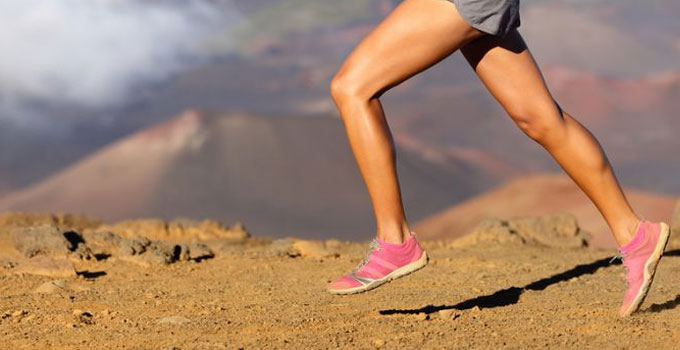
One of the most common questions asked by people before starting any type of workout regime is what shoes do we get? Imagine walking 100 km or running 42 km or hiking or trekking without proper shoes. It could just be disastrous. And history is a witness that most people back out from such challenges midway not because of lack of motivation or because they are tired. But give up largely due to foot injuries caused due to bad shoes.

Why it is important to choose the right footwear?… A very Important aspect of workout which is often neglected.

A good workout is achieved with good footwear. Bad shoes can derail all the efforts that you have put into your workouts and bring your fitness to a standstill due to injury. Strenuous outdoor workout or long distance running puts increased amount of pressure on your feet and therefore wearing the right shoes are important to prevent injury.

According to University of Illinois’ McKinley Health Centre’s note on foot type and proper footwear, foot problems are one of the most common health complaints. The high incidence of foot problems is understandable given the fact that there are 26 bones, 33 joints, 112 ligaments, and tendons, nerves, and blood vessels in the foot. It’s even more understandable when the weight of the body is considered. The force of the body weight borne by the foot increases roughly 1½ times during walking and up to 3-4 times during running. Add in 10,000 steps during a typical day while wearing ill-fitted shoes possibly, and it’s a wonder one’s feet are willing to get out of bed the next day.

A condition called Plantar Fasciitis i.e. damage and inflammation to Plantar Fascia (a connective tissue on the sole of foot forming the inner arch) is caused due to repetitive activity creating a strain on the plantar fascia.

Another common condition often faced by people is Achilles Tendonitis i.e. tissue damage and pain to Achilles Tendon caused during the contraction of the calf muscles. When the calf muscles contract some amount of tension is created on the Achilles Tendon and Wrong footwear further adds to that stress.

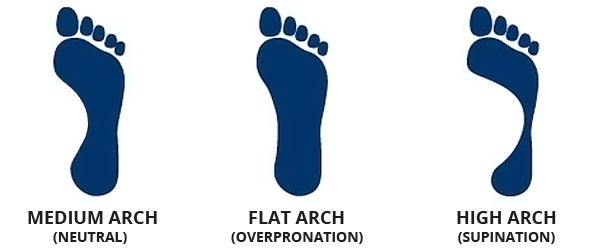
Let us now understand the three main categories of foot types :

1: Normal (Medium) Arch: If you see about half of your arch region filled in, you have the most common foot type. Usually, this means you have an arch that naturally supports your bodyweight and pronates normally under load. Some pronation or “rolling in” of the foot is desirable and acts as a natural shock absorber. Most runners with this pattern can wear just about any shoe.

2: Flat Floot (Absent curve): If the arch of your footprint is filled in, it’s likely that your foot collapses inward when you run. This acts as a shock absorber, but the additional rolling in of your foot may stress your feet and knees, adding to your injury risk. Usually, it is recommended that shoes with more stability, such as internal wedges that build up the arch side, dual-density midsoles, and supportive “posts,” or wider, more substantial midsoles be used.

3: More or High Arch: If your footprint shows little or no contact along the outside edge and you see just your heel and the ball of your foot, you have a “high” arch. Your foot may not roll in much when you run, but it doesn’t absorb much shock. We would usually recommend you use a well-cushioned shoe with little or no arch support or stability features.

three main categories of foot


Here are a few basics to keep in mind

  1. A good shoe must be very comfortable and must provide good cushion
  2. Good grip on the floor to avoid sliding or skidding
  3. It is important to understand your foot type. Visit a store that specializes in all kinds of sporting and athletic footwear. The associates there can help you find a shoe that’s appropriate for your foot type, the way you walk, and your sport.
  4. The right time to buy a shoe is in the evening when your feet are tired and there is more swelling in the feet.
  5. For Sportspersons variety of shoes are available depending on the type of sport.
  6. Running shoes have inbuilt shock absorbers, walking shoes are light weight and for Hiking one can choose low, mid or high cut shoes. High cut shoes or commonly known as Ankle shoes protects the ankles and provides more protection. And, finally, there are the cross training shoes which are suitable if you do more than one type of workouts.
  7.  One size larger than your usual shoe size is better in terms of trekking and trail running shoes.

A good shoe must support your foot, front and back and provide protection, stability, and good shock absorption.

We hope this article helps you choose the right footwear for your activities. Is there an interesting way you select your workout shoes? Let us know in the comments below. For more tips on fitness and health, check out Healthy Reads or speak to a certified expert by subscribing to GOQii’s Personalised Health Coaching here.

#BeTheForce

Disclaimer: The information provided in this blog is for general awareness and educational purposes only. It is not intended to replace professional medical advice, diagnosis, or treatment. Always consult a qualified healthcare provider for personalised medical guidance or concerns related to your health.

  • « Previous Page
  • 1
  • …
  • 25
  • 26
  • 27
  • 28
  • 29
  • …
  • 113
  • Next Page »

Search

Recent Posts

  • How to Survive Festive Celebrations Without the Extra Pounds: A Low-Carb Guide for Healthier Living
  • How to Use Mounjaro: Essential Guidelines for Your Weekly Dose
  • Water Intake Pre, During and Post Workout
  • India Leads in Longevity: GOQii Sanjeevini Named Top 40 in $101M XPRIZE
  • The Importance Of Knowing If You’re Thirsty Or Hungry

Stay Updated

Archives

  • December 2025 (11)
  • November 2025 (15)
  • October 2025 (20)
  • September 2025 (6)
  • August 2025 (6)
  • July 2025 (12)
  • June 2025 (18)
  • May 2025 (16)
  • April 2025 (22)
  • March 2025 (23)
  • February 2025 (22)
  • January 2025 (26)
  • December 2024 (24)
  • November 2024 (25)
  • October 2024 (22)
  • September 2024 (24)
  • August 2024 (31)
  • July 2024 (21)
  • June 2024 (26)
  • May 2024 (31)
  • April 2024 (27)
  • March 2024 (29)
  • February 2024 (26)
  • January 2024 (25)
  • December 2023 (15)
  • November 2023 (11)
  • October 2023 (20)
  • September 2023 (22)
  • August 2023 (20)
  • July 2023 (22)
  • June 2023 (24)
  • May 2023 (24)
  • April 2023 (24)
  • March 2023 (23)
  • February 2023 (20)
  • January 2023 (16)
  • December 2022 (12)
  • November 2022 (15)
  • October 2022 (15)
  • September 2022 (12)
  • August 2022 (10)
  • July 2022 (17)
  • June 2022 (11)
  • May 2022 (10)
  • April 2022 (6)
  • March 2022 (6)
  • February 2022 (13)
  • January 2022 (12)
  • December 2021 (7)
  • November 2021 (3)
  • October 2021 (6)
  • September 2021 (3)
  • August 2021 (8)
  • July 2021 (7)
  • June 2021 (15)
  • May 2021 (16)
  • April 2021 (10)
  • March 2021 (7)
  • February 2021 (4)
  • January 2021 (4)
  • December 2020 (3)
  • November 2020 (4)
  • October 2020 (10)
  • September 2020 (3)
  • August 2020 (3)
  • July 2020 (2)
  • June 2020 (4)
  • May 2020 (10)
  • April 2020 (12)
  • March 2020 (10)
  • February 2020 (4)
  • January 2020 (4)
  • December 2019 (3)
  • November 2019 (7)
  • October 2019 (5)
  • September 2019 (4)
  • August 2019 (9)
  • July 2019 (9)
  • June 2019 (11)
  • May 2019 (4)
  • April 2019 (9)
  • March 2019 (8)
  • February 2019 (9)
  • January 2019 (8)
  • December 2018 (9)
  • November 2018 (3)
  • October 2018 (3)
  • September 2018 (5)
  • August 2018 (10)
  • July 2018 (6)
  • June 2018 (13)
  • May 2018 (8)
  • April 2018 (18)
  • March 2018 (9)
  • February 2018 (8)
  • January 2018 (15)
  • December 2017 (12)
  • November 2017 (19)
  • October 2017 (13)
  • September 2017 (15)
  • August 2017 (4)
  • July 2017 (8)
  • June 2017 (7)
  • May 2017 (6)
  • April 2017 (8)
  • March 2017 (6)
  • February 2017 (7)
  • January 2017 (9)
  • December 2016 (10)
  • November 2016 (7)
  • October 2016 (7)
  • September 2016 (7)
  • August 2016 (11)
  • July 2016 (9)
  • June 2016 (9)
  • May 2016 (12)
  • April 2016 (17)
  • March 2016 (17)
  • February 2016 (8)
  • January 2016 (6)
  • December 2015 (2)
  • November 2015 (9)
  • October 2015 (7)
  • September 2015 (9)
  • August 2015 (11)
  • July 2015 (9)
  • June 2015 (12)
  • May 2015 (9)
  • April 2015 (13)
  • March 2015 (8)
  • February 2015 (5)
  • January 2015 (12)
  • December 2014 (14)
  • November 2014 (11)
  • October 2014 (6)
  • September 2014 (13)
  • August 2014 (12)
  • July 2014 (6)
  • June 2014 (2)
  • May 2014 (7)
  • April 2014 (5)

From “Laddu Nawin” to Fit and Fierce: How a 25-Year-Old Insurance Advisor Shed 20 Kilos and Gained His Life Back

When 25-year-old Nawin Yadav from Hyderabad walked into his office every morning, he carried more than just his files and policy papers. He had the weight of fatigue, sluggish energy, and an ever-growing belly that was becoming the butt of jokes. “People … [Read More...]

“I’ve Challenged Myself to Live 100 Years” – The Story of Chandubhai Savani’s Second Chance at Life

At 67, most people start slowing down. Not Chandubhai Savani. A resident of Surat, Chandubhai, thought life was on track. “My life was going well till I had my bypass surgery,” he says. That surgery, back in 2021, was a wake-up call.  Medication was routine, but exercise wasn’t. His diet? What he calls ‘normal.’ “I […]

From Shimla’s Slopes to Chandigarh’s Sidewalks: Surinder Kaur Bhalla’s Journey from Chaos to Control

Some journeys start with a plan. Others begin with a stumble literally. Surinder Bhalla, a government professional, born and raised in the scenic hill town of Shimla, had always lived a life of movement. “In Shimla, you walked everywhere,” she reflects. “Walking was never an exercise. It was just life.” But after shifting to Chandigarh, […]

Ananda Mukherjee Health Story

From Terminal Illness To Complete Wellness! Ananda Mukherjee Health Story

As we observe World Cancer Day under the powerful theme ‘United by Unique’ (2025-2027)**, we are reminded that every individual’s journey with cancer is distinct, yet united by shared resilience, hope, and the collective fight against this disease. This theme places people at the centre of care and their stories at the heart of the […]

  • HOME
  • HEALTHY LIVING
  • FITNESS
  • HEALTHY RECIPES
  • USER STORIES
  • KARMA
  • BUY GOQii

Copyright ©2016 GOQii



