
GOQii

Blog

  • HOME
  • HEALTHY LIVING
  • FITNESS
  • HEALTHY RECIPES
  • USER STORIES
  • KARMA
  • BUY GOQii

Search Results for: liver

February 7, 2024 By Trupti Hingad 3 Comments

The connection between Sleep and Liver!

Improve sleep and sleep qualitySleep can never be categorised as a boring topic to discuss. 8 out of 10 people love to sleep at any time of the day. For some sleeping is one of the best relaxation techniques.

An old adage says ‘Early to bed, Early to rise, Make a man healthy, wealthy and wise’. How true is this phrase? Is it alright to sleep late and wake up late?

In this digital world the bedtime for most people has changed drastically. Mobile phones, laptop, work pressure, deadlines and online markets have captured most of the sleep time leading to sleep issues for most. I have many clients who have everything in life but not good sleep.

We all know good sleep is very necessary for good health and to live long years. Lack of sleep or sleeping late can reduce your cognitive power, ages your skin faster, leads to weight gain, increased risk of death and also impairs judgment and decision making ability.

While sleep requirements vary from person to person, most adults require about 7-8 hours of sleep. Children and teens need even more. But, yes the quality of sleep is more important than quantity of sleep.

We have an amazing biological clock given by nature inside our body. Various functions occur in our body when we are sleeping. The most important function is detoxification which happens during our sleep hours.

So ideally between 11 pm to 3 am most of our blood circulation concentrates in our liver. The liver gets larger when filled with more blood. This is the time when liver undergoes detoxification process. But, if you cannot sleep during this hour, the liver cannot perform its function smoothly.

Later you sleep lesser the body detoxifies and keeps accumulating toxins in the body leading to weight gain, ageing, greying hair, belly fat, low immunity, multiple organ disorders and impure blood too.

Have you ever noticed when you go to bed very late you end up feeling tired and lazy the next day? Why does this happen?

In yoga practice, it is advised to wake up as early as 4 am and 5 am and exercise. Why is that?

Because between 3-5 am, most of the blood circulation is concentrated in the lungs. Breathing fresh air and exercise during this time is good. As per yoga, this is called Brahma Muhurat. During this time, the air is fresh, the mind is calm and stable and there is very less pollution.

Between 5-7 am most of the blood circulation concentrates in the large intestine. This is the right time to Poop. Pass out all unwanted toxins from the body, preparing the body to absorb good nutrients during the rest of the day.

From 7-9 am most of the blood circulation concentrates in the stomach. This is a good time to have breakfast and digest food well. Having healthy breakfast is a great way to start the day.

Have you ever noticed the daily routine of our grandparents? No matter what happens they sleep early and wake up early and carry out their routine work. This is the only reason they are so fresh, energetic and healthier even in the old age as they have followed their biological clock.

If you go against nature, things will turn out bad!

Some helpful tips to support your liver and get a good night sleep.

  1. Drinking lemon water in the morning
  2. Choose cruciferous veggies in the day for their liver supporting properties
  3. Try to express emotions in the best way rather than suppressing it as the liver is somewhere connected to your emotions too
  4. Have a light dinner and keep a gap of 2 hours before bed
  5. Turn off the phone, laptop, Ipad for one hour before bedtime. Use this time as ME time by reading books, meditation, reflection and yes chatting with family members
  6. Avoid stimulants like caffeine and sugar post 5 pm
  7. Practice yoga
  8. Have warm milk at bedtime to get good sleep as it enhances the production of sleep hormone.

In the symphony of health, the link between quality sleep and a thriving liver is undeniable. A commitment to early, restful nights not only enhances detoxification but also rejuvenates our vitality. Embrace the magic of a good night’s sleep for a healthier, more vibrant you. For personalised guidance on optimizing your sleep and liver health, connect with our experts through GOQii’s Personalised Health Coaching here.

#BeTheForce 
October 13, 2021 By Palak Mittal 3 Comments

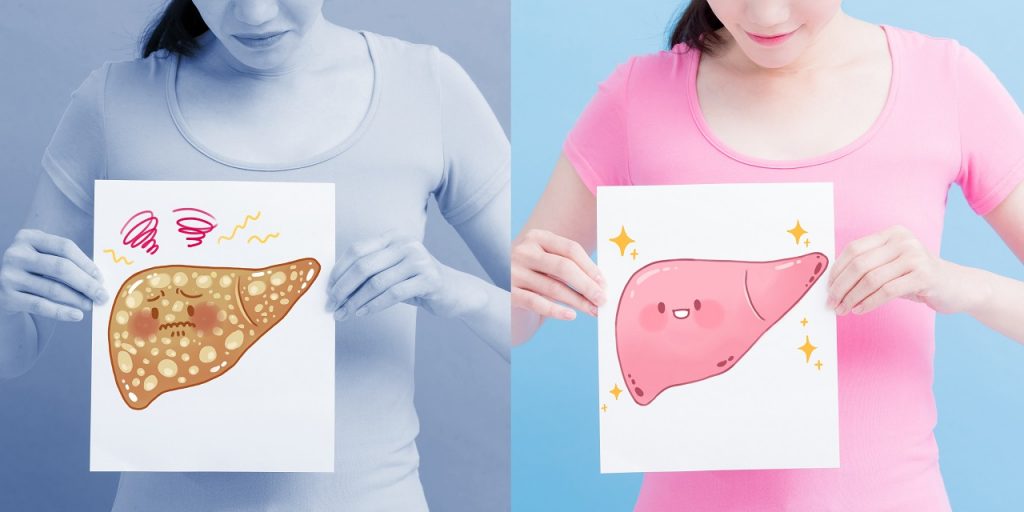
Fatty Liver Disease: What To Eat & What To Avoid

fatty liver disease

Our bodies have a tendency to store extra calories in terms of fat in each and every area to utilise it later for energy, or as a cushion for organs and insulation. The liver being the largest organ in the body, is partially made up of fat. However, if too much fat accumulates around the liver, it leads to Fatty Liver Disease. 

Fatty liver disease is mainly associated with the excess usage of alcohol and is termed as Alcoholic Fatty Liver. However, those who do not drink alcohol at all, can also develop this condition over time and is known as Non Alcoholic Fatty Liver. Excess fat around the liver damages it and makes it difficult for the liver to remove toxins and produce bile for the digestive system. 

The major plan of treatment for Fatty Liver Disease is dietary modifications and regular exercises. If the grade is too high, then one may need to see a doctor. For initial stages, the situation can be reversed completely with a few lifestyle modifications. 

What Causes Non Alcoholic Fatty Liver Disease (NAFLD)? 

  • Obesity: Overeating can cause weight gain which produces a load on the digestive system and the body forces the storage of extra calories in terms of fat, leading to NAFLD.
  • Pre-Diabetes: People with Insulin sensitivity or insulin resistance tend to store more fat in the liver as compared to non diabetics.
  • Over consumption of carbs and simple sugars: is linked with NAFLD as our body utilizes only what is required and rest is going to be stored as fat.
  • Poor Gut Health and genetics are also seen as linked with NAFLD.

Since it is a lifestyle disorder, modifying lifestyle with the right diet helps in controlling, maintaining and reversing both Alcoholic and Non Alcoholic Fatty Liver Disease.

The diet should include:  

  • Lots of fruits and vegetables
  • Reduced processed and packaged food with high salt and sugar
  • High fibre foods and less carbs
  • Whole grains like oats, quinoa, barley and millets
  • Nuts and seeds especially walnuts and flaxseeds as they are high in Omega 3  
  • Vitamin E from Sunflower seeds, almonds, walnuts, olive oil or canola oil
  • Avocados as they are a good source of fat and fiber 
  • Legumes

What Should You Avoid? 

If you’re suffering from this disease, here is a list of foods you should avoid completely. 

  •  Alcohol: As it is completely oxidised by the liver, there is no enzyme present in the body that can digest alcohol.
  • Added or simple sugars like candy, cookies, sodas, and fruit juices. It increases sugar level which increases fat build up.
  • Fried & oily foods due to excess calories and fat.
  • Too much salt makes the body hold on to excess water and can be a reason to gain weight.
  • Simple processed carbs like white bread, rice, and pasta, as they lack fibre and increase blood sugar.
  • Red meat like Beef and mutton are high in saturated fat.

Other Lifestyle Modifications 

  • Shed the extra weight
  • Control sugar levels well
  • Include Cardio and strength training consisting of 30 mins for 5 days a week 
  • Lower down cholesterol especially triglycerides.

We hope these tips help you manage Fatty Liver Disease with ease. Before you begin with any of the foods listed above, do consult your doctor, dietitian or nutritionist. Do let us know your thoughts and queries in the comments below! To learn more about AFLD and NAFLD, speak to a GOQii Coach by subscribing for personalized coaching here: https://goqiiapp.page.link/bsr

#BeTheForce  

October 19, 2020 By Roopa Tandur 3 Comments

Which Foods Are Good For Liver Repair?

liver repair

Liver is the largest endocrine gland located in the right side of the upper abdomen. It has the most important function in the body that includes sorting out: 

  • Which nutrient or medicine should be processed, like proteins into urea
  • Which nutrient should be converted for storage like vitamins and minerals, sugars into glycogen
  • Which nutrient should go to the blood and which ones need to be eliminated through stool.
  • Improving a person’s immunity

Though the liver can regenerate itself, there are many foods which one can consume to keep it healthy and safe. Any damage to the liver can cause metabolic disorder and death. So let’s look at some foods which can help you with liver repair! 

Foods That Help Liver Repair 

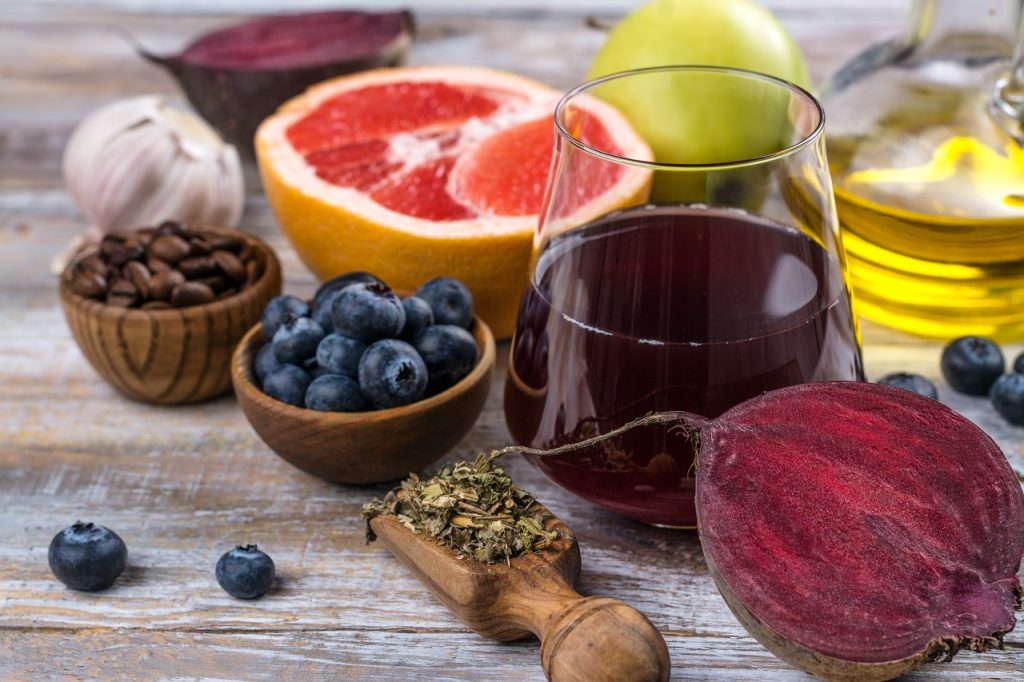
  1. Coffee: Studies prove that coffee drinkers are at less risk of developing liver disease. Caffeine in coffee slows down scarring and helps fight liver cancer especially alcohol related cirrhosis. The acids in coffee can also help fight against the Hepatitis virus.
  2. Green Tea: is high in antioxidants. Hence, it improves liver enzymes and prevents oxidative damage and fat deposition in the liver. Studies prove that green and black tea extracts reverse the negative effect of a high fat diet but the studies also involve large quantities (5-10 cups) of tea so being cautious and consulting a doctor or dietician before deciding on the number of cups per day is a good option.
  3. Berries: Dark coloured berries like blueberries and cranberries contain anthocyanins which give them the dark, deep colour. They help in improving immunity and reduce formation of scar tissues and lesions in the liver. Consuming berries 3-4 times a week also inhibits the growth of cancer cells in the liver.  
  4. Grapefruit: contains antioxidants known as Naringenin and Naringin. Studies have shown that antioxidants Naringenin can reduce development of hepatic fibrosis which is build-up of excessive connective tissue leading to chronic inflammation. These antioxidants decrease the amount of fat build up in liver tissues and increase the amount of fat burning enzymes which prevent excess fat build up in the liver, thereby, reducing inflammation. Antioxidant Naringin improves the liver’s ability to metabolise alcohol and reduce negative effects of alcohol to some extent.
  5. Beetroot: is an excellent food for liver health as it helps breakdown toxic waste which can be excreted but acts well when taken in juice form. It contains nitrates and antioxidants which reduce oxidative damage and inflammation by increasing detoxification enzymes and improving bile. Betaine and Pectin present in beetroot helps in removing toxins from the body and prevent their re-entry.
  6. Cruciferous Vegetables: like broccoli, cauliflower, cabbage and kale have glutathione which triggers enzymes of the liver that help eliminate toxins from the body. They also help prevent non-alcoholic fatty liver disease as they help reduce fat in the organ and inflammation as well. These vegetables have high levels of indole which helps lower inflammation, which is generally present in obese people. 
  7. Nuts: are nutrient dense snacks which contain unsaturated fats, vitamin E and antioxidants and micronutrients (selenium, magnesium, potassium, zinc and many others) which help dilate blood vessels, reduce inflammation, oxidative stress and prevent non-alcoholic fatty liver disease. Eating a handful of nuts regularly helps keep your  liver healthy! 
  8. Fatty Fish: like salmon, tuna, and sardine are rich in Omega 3 fatty acids which help reduce inflammation and prevent build-up of excess fat and maintain enzyme levels in the liver. Try including fatty fish like salmon and herring 2-3 times a week in your diet.
  9. Olive Oil: contains omega 6 fatty acid which helps reduce inflammation. Studies show that olive oil is a good source of triglycerides which are processed outside the liver and hence help reduce deposition of fat cells in the liver. Having 1-3 tsp of olive oil daily in the diet helps clean the liver and supports weight loss. Be sure to balance this oil with other healthy fats.  
  10. Garlic: contains selenium which helps detoxify the liver and activate enzymes that help the body remove toxins. Garlic contains Allicin, which gets activated when crushed. It is a powerful antioxidant, antibiotic and antifungal in nature. The antioxidant compounds in garlic act as a barrier between liver and toxins and keep toxic substances away.
  11. Grapes: especially the red and purple ones contain resveratrol, an antioxidant which helps reduce inflammation and remove toxins, as they contain vitamin C. They also increase antioxidant levels in the body. 

We hope this article helps you with your liver repair. Do leave your thoughts in the comments below. For more information on this subject, check out Healthy Reads or tune in to LIVE sessions by experts on GOQii Play. 

#BeTheForce 

January 28, 2026 By GOQii Leave a Comment

The Hidden Longevity Divide in India: How Urban Health Expectations Are Declining

The life expectancy in India has steadily increased over the years. We live longer lives compared to our past generations, and that is something to be proud of. However, a hidden reality lies beneath these figures.

The years that remain free from illness known as Healthy Life Expectancy haven’t increased at the same rate as our lifespan.

World Health Organisation (WHO) data from 2021 indicates that our healthy life expectancy at birth was approximately 58 years, a slight increase from 54 years in 2000, despite our overall life expectancy rising much faster.

The implication is clear: Urban Indians are living an increasingly larger portion of their lives afflicted by diseases. We aren’t just adding years to life; we are adding years of life with conditions like diabetes, hypertension, and cardiac issues.

To understand the forces creating this hidden divide and how to close it, let’s look at the “Four Horsemen” of urban health.

  1. Pollution: The Invisible Ager

The air pollution problem in India is vast. According to the landmark Global Burden of Disease (GBD) Study, an estimated 1.67 million deaths in India were associated with air pollution.

The effects of breathing toxic air in cities like Delhi, Mumbai, and Kolkata are not restricted to the lungs. It leads to systemic inflammation, accelerating ageing from within. It increases the risk of:

  • Heart attacks and strokes
  • Insulin resistance
  • Metabolic disturbances

Toxic air is an everyday stress factor that your body fights 24/7.

  1. The Urban Plate: Stuffed with Calories, Starved of Nutrients

The food environment in our cities has transformed. Traditional, home-cooked meals are being replaced by ultra-processed foods, sugary drinks, and industrial bakery products.

These foods interfere with your metabolism long before you see changes on the weighing scale. They cause spikes in insulin and inflammation—major drivers of Metabolic Syndrome.

In select cities, over 30% of the adult population faces metabolic syndrome (a combination of obesity, hypertension, and high cholesterol). This isn’t just a statistic; it is a warning that the disease burden looms large.

  1. The “Sitting” Epidemic

Physical inactivity is a public health crisis. Worldwide, almost 31% of adults do not fulfil the lowest standards of physical activity. In India, the urban corporate culture of long commutes and desk jobs exacerbates this.

Inactivity accelerates:

  • Glucose metabolism deterioration
  • Muscle wasting
  • Obesity

A 30-minute workout is great, but it cannot fully reverse the consequences of sitting in a chair for 10 hours. We need to move throughout the day, not just at the gym.

  1. The Reactive Trap: Late Diagnosis

The most devious aspect of this health shift is its timing. Issues like fatty liver or insulin resistance can lie latent for years before symptoms appear.

Most urban Indians visit a doctor only after symptoms develop. This “reactive approach” means we miss the golden window for early intervention and reversal.

Flipping the Script: How Digital Health Can Help

Here is where the picture stops being dark. Digital health isn’t just a tech trend; it is the tool we need to close the longevity gap.

  • Wearables & AI: Continuous Glucose Monitors (CGM) and fitness trackers make invisible patterns visible. You can see exactly how that samosa or that stressful meeting affects your body in real-time.
  • Upstream Care: We need to move from episodic care (hospital visits) to daily awareness. Postponing the progression of diabetes by even a few years can drastically improve your quality of life.

Conclusion: From “Living Longer” to “Living Well”

There is a strong urge to celebrate increased life expectancy, but a lifespan without vitality is not a success. A nation that lives longer but stays sick for longer incurs a heavy cost—both financial and physical.

Closing this gap demands broad changes: cleaner cities, better food choices, and intelligent workplaces. But it also requires you.

India’s hidden longevity divide is not inevitable. It is the consequence of choices we can change. The goal is to ensure your Healthspan (years of health) increases at the same rate as your Lifespan.

That is the point when “to live longer” will finally mean “to live well.”

Ready to close the gap and take control of your healthspan? Reach out to our certified experts by subscribing to GOQii’s Personalised Health Coaching here.

#BeTheForce
Disclaimer: The information provided in this blog is for general awareness and educational purposes only. It is not intended to replace professional medical advice, diagnosis, or treatment. Always consult a qualified healthcare provider for personalised medical guidance or concerns related to your health.

  • « Previous Page
  • 1
  • 2
  • 3
  • 4
  • …
  • 62
  • Next Page »

Search

Recent Posts

  • The Sleep-Metabolism Connection: Why Rest is Your Best GLP-1 Partner
  • Accelerate Action for Your Health: Why Self-Care Matters This International Women’s Day
  • 4 Reasons Why Affirmations Are Not Working For You
  • The Social Side of GLP-1: Navigating “Food Culture” and Peer Pressure
  • Leaky Gut: Symptoms and Causes

Stay Updated

Archives

  • March 2026 (3)
  • February 2026 (14)
  • January 2026 (14)
  • December 2025 (19)
  • November 2025 (15)
  • October 2025 (20)
  • September 2025 (6)
  • August 2025 (6)
  • July 2025 (12)
  • June 2025 (18)
  • May 2025 (16)
  • April 2025 (22)
  • March 2025 (23)
  • February 2025 (22)
  • January 2025 (25)
  • December 2024 (22)
  • November 2024 (23)
  • October 2024 (21)
  • September 2024 (24)
  • August 2024 (30)
  • July 2024 (21)
  • June 2024 (26)
  • May 2024 (31)
  • April 2024 (27)
  • March 2024 (29)
  • February 2024 (25)
  • January 2024 (21)
  • December 2023 (15)
  • November 2023 (11)
  • October 2023 (19)
  • September 2023 (22)
  • August 2023 (18)
  • July 2023 (22)
  • June 2023 (24)
  • May 2023 (24)
  • April 2023 (23)
  • March 2023 (23)
  • February 2023 (19)
  • January 2023 (15)
  • December 2022 (11)
  • November 2022 (15)
  • October 2022 (15)
  • September 2022 (12)
  • August 2022 (10)
  • July 2022 (17)
  • June 2022 (11)
  • May 2022 (10)
  • April 2022 (6)
  • March 2022 (6)
  • February 2022 (13)
  • January 2022 (11)
  • December 2021 (7)
  • November 2021 (3)
  • October 2021 (6)
  • September 2021 (3)
  • August 2021 (8)
  • July 2021 (7)
  • June 2021 (15)
  • May 2021 (16)
  • April 2021 (10)
  • March 2021 (7)
  • February 2021 (4)
  • January 2021 (4)
  • December 2020 (3)
  • November 2020 (4)
  • October 2020 (10)
  • September 2020 (3)
  • August 2020 (3)
  • July 2020 (2)
  • June 2020 (4)
  • May 2020 (10)
  • April 2020 (12)
  • March 2020 (10)
  • February 2020 (4)
  • January 2020 (4)
  • December 2019 (3)
  • November 2019 (7)
  • October 2019 (5)
  • September 2019 (4)
  • August 2019 (9)
  • July 2019 (9)
  • June 2019 (11)
  • May 2019 (4)
  • April 2019 (8)
  • March 2019 (8)
  • February 2019 (9)
  • January 2019 (8)
  • December 2018 (9)
  • November 2018 (3)
  • October 2018 (3)
  • September 2018 (5)
  • August 2018 (10)
  • July 2018 (6)
  • June 2018 (13)
  • May 2018 (8)
  • April 2018 (18)
  • March 2018 (9)
  • February 2018 (8)
  • January 2018 (15)
  • December 2017 (12)
  • November 2017 (19)
  • October 2017 (13)
  • September 2017 (15)
  • August 2017 (4)
  • July 2017 (8)
  • June 2017 (7)
  • May 2017 (6)
  • April 2017 (8)
  • March 2017 (6)
  • February 2017 (7)
  • January 2017 (9)
  • December 2016 (10)
  • November 2016 (7)
  • October 2016 (7)
  • September 2016 (7)
  • August 2016 (11)
  • July 2016 (9)
  • June 2016 (9)
  • May 2016 (12)
  • April 2016 (17)
  • March 2016 (17)
  • February 2016 (8)
  • January 2016 (6)
  • December 2015 (2)
  • November 2015 (9)
  • October 2015 (7)
  • September 2015 (9)
  • August 2015 (11)
  • July 2015 (9)
  • June 2015 (12)
  • May 2015 (9)
  • April 2015 (13)
  • March 2015 (8)
  • February 2015 (5)
  • January 2015 (12)
  • December 2014 (14)
  • November 2014 (11)
  • October 2014 (6)
  • September 2014 (13)
  • August 2014 (12)
  • July 2014 (6)
  • June 2014 (2)
  • May 2014 (7)
  • April 2014 (5)

From “Laddu Nawin” to Fit and Fierce: How a 25-Year-Old Insurance Advisor Shed 20 Kilos and Gained His Life Back

When 25-year-old Nawin Yadav from Hyderabad walked into his office every morning, he carried more than just his files and policy papers. He had the weight of fatigue, sluggish energy, and an ever-growing belly that was becoming the butt of jokes. “People … [Read More...]

“I’ve Challenged Myself to Live 100 Years” – The Story of Chandubhai Savani’s Second Chance at Life

At 67, most people start slowing down. Not Chandubhai Savani. A resident of Surat, Chandubhai, thought life was on track. “My life was going well till I had my bypass surgery,” he says. That surgery, back in 2021, was a wake-up call.  Medication was routine, but exercise wasn’t. His diet? What he calls ‘normal.’ “I […]

From Shimla’s Slopes to Chandigarh’s Sidewalks: Surinder Kaur Bhalla’s Journey from Chaos to Control

Some journeys start with a plan. Others begin with a stumble literally. Surinder Bhalla, a government professional, born and raised in the scenic hill town of Shimla, had always lived a life of movement. “In Shimla, you walked everywhere,” she reflects. “Walking was never an exercise. It was just life.” But after shifting to Chandigarh, […]

Ananda Mukherjee Health Story

From Terminal Illness To Complete Wellness! Ananda Mukherjee Health Story

As we observe World Cancer Day under the powerful theme ‘United by Unique’ (2025-2027)**, we are reminded that every individual’s journey with cancer is distinct, yet united by shared resilience, hope, and the collective fight against this disease. This theme places people at the centre of care and their stories at the heart of the […]

  • HOME
  • HEALTHY LIVING
  • FITNESS
  • HEALTHY RECIPES
  • USER STORIES
  • KARMA
  • BUY GOQii

Copyright ©2016 GOQii