GOQii

Blog

  • HOME
  • HEALTHY LIVING
  • FITNESS
  • HEALTHY RECIPES
  • USER STORIES
  • KARMA
  • BUY GOQii

Search Results for: acid reflux

July 17, 2024 By Vandana Juneja 1 Comment

Effective Ways To Improve Gut Health

How to improve gut healthGut health is a familiar concept, and it’s widely recognized that maintaining a healthy gut is beneficial for our overall well-being. Beyond just aiding digestion, a healthy gut supports our immune system, heart health, brain function, weight management, and numerous other facets of health.

How Do We Know That Our Gut Health Is Optimal?

A healthy gut requires a balanced interaction between beneficial and harmful microbes within our digestive system. Our body’s microbiome, which includes trillions of bacteria, fungi, yeast, and other microbes—with bacteria being the predominant group—is vast. In fact, bacterial cells outnumber our own human cells! It’s accurate to consider the microbiome as an essential organ, critical to maintaining our overall health.

When our gut health suffers, we may experience a variety of symptoms such as indigestion, bloating, constipation, acidity, acid reflux, chronic fatigue, acne, joint inflammation and pain, as well as anxiety and depression. It’s crucial to identify and address the underlying causes of these symptoms instead of merely resorting to temporary solutions.

Effective Ways To Improve Gut Health
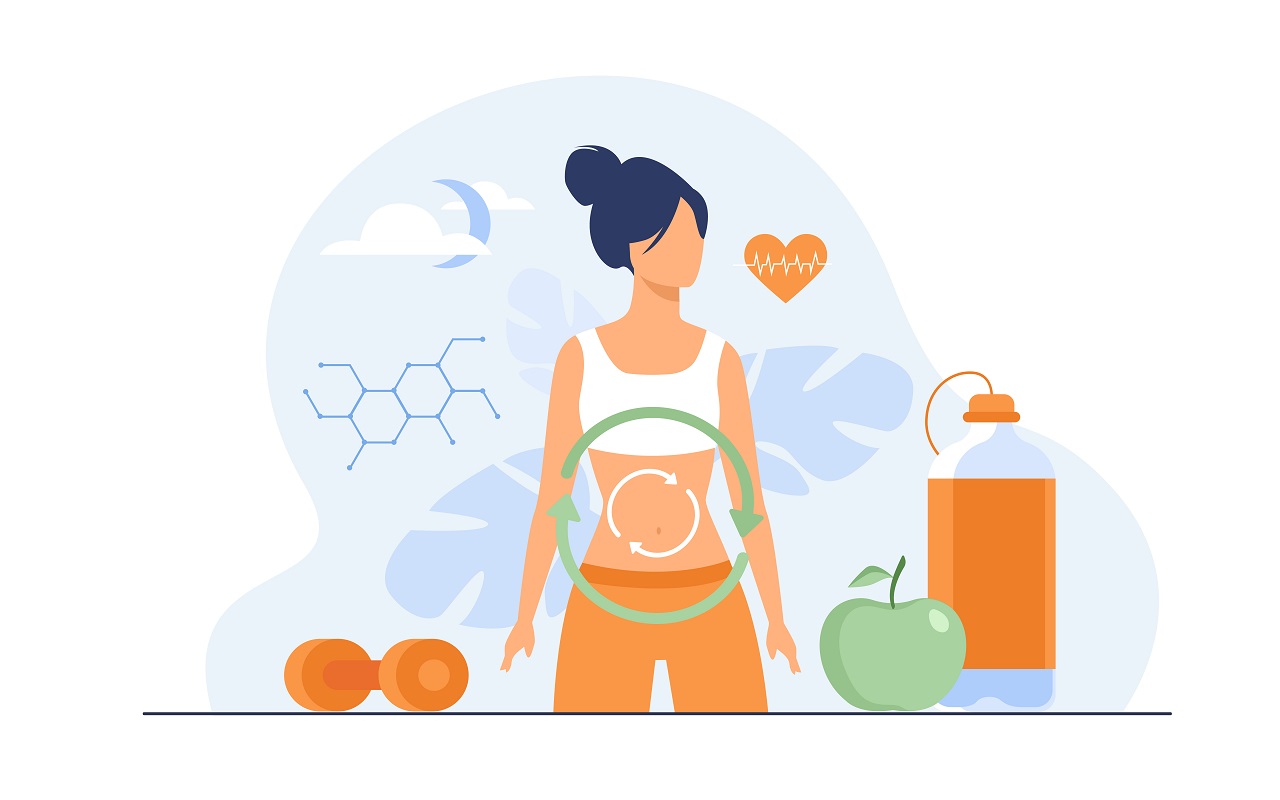
improve gut health

  • Include Fibre in your diet: Fibre helps to regulate bowel movements by absorbing water into the colon, making the stools soft and easy to pass through the intestines. Good sources of fibre include – fresh fruits and vegetables, whole grains, beans and pulses.
  • Have foods rich in Prebiotics: Prebiotics are basically food for the gut microflora that humans cannot digest but keeps the gut bacteria healthy. These include fibre from legumes, beans, oats, banana, berries, asparagus, apples, garlic, onion and leeks.
  • Include Probiotics in your daily diet: Probiotics are live bacteria found in certain foods and supplements. These include Curd, Yogurt, Fermented food items like Kombucha, Kimchi, Sauerkraut, Kefir and Pickles. Before taking probiotic supplements, it is advisable to consult your physician first.
  • Drink plenty of water: Drink eight glasses (about 2 litres) of water each day to keep yourself hydrated during the day. This is a general guideline, the exact water requirement depends on your body weight, activity levels and the environmental condition.
  • Reduce/Manage stress levels: Stress can have a major impact on our gut health because it affects the regulation of hormones and neurotransmitters that control your gastrointestinal function. So, if you are feeling stressed, seek help or try to manage it with meditation, yoga, exercise, pursuing a hobby, talking to family and friends.
  • Avoid Processed/Sugary food items: Sugar feeds bad bacteria in our gut which can cause bloating, discomfort and gas. So avoiding or reducing sugar intake can help promote good bacteria growth. Similarly, processed foods are stripped of the majority of nutrients and are loaded with artificial colours, preservatives, sweeteners, trans fats, all of these increase inflammation in the body and impact gut health.
  • Exercise regularly: Regular exercise is one of the best ways to improve your gut health, as it helps build immunity to fight against viruses and bacterial infections. So, the more active you are, the healthier gut you will have!
  • Sleep well: The quality of your sleep can affect your gut health, so get your 7-8 hours of good quality sleep. Follow a good sleep hygiene, avoid using electronic gadgets before sleep and avoid caffeine late in the day. You can also practice deep breathing or meditation to induce sleep.
  • Antibiotics: Avoid taking antibiotics unnecessarily, as they kill the bad as well as good bacteria in the gut. In case it is unavoidable, do include probiotics in your diet, to replenish the lost good bacteria.
  • Avoid Alcohol: Alcohol causes depletion in the gut bacteria and inflammation, so it is better to avoid or limit your intake.

These simple yet very effective ways will help you keep your gut healthy and contribute to your overall wellbeing. If this article helped you, let us know in the comments below!

For more on maintaining and improving Gut Health, check out Healthy Reads. You can also speak to an expert by subscribing for GOQii’s Personalised Health Coaching here.

#BeTheForce

Disclaimer: The information provided in this blog is for general awareness and educational purposes only. It is not intended to replace professional medical advice, diagnosis, or treatment. Always consult a qualified healthcare provider for personalised medical guidance or concerns related to your health.
July 1, 2024 By Aesha Mehta 1 Comment

7 Foods To Avoid If You Have Asthma

Asthma

Asthma is an ancient Greek word which means “short drawn breath”. It can be quite troublesome as it causes chest tightness, shortness of breath, and coughing. Patients suffering from asthma have more trouble exhaling carbon dioxide than inhaling oxygen because the air passages of the small bronchi become clogged, making it difficult to breathe. Most asthma patients face more difficulty breathing during the night time. 

Modern medicine has not been able to find a cure for this troublesome respiratory disease. Drugs and vaccines help in reducing symptoms and provide temporary relief. Allergy is a major cause of asthma, but it can be managed with a  proper diet and lifestyle, such as eating foods which are easy to digest and adapting lifestyle methods such as yogic kriya – which helps in proper assimilation of food, strengthening of lungs, digestive and circulatory system. 

Which Foods Should You Avoid If You Have Asthma? 

While there are foods which can help you alleviate the symptoms of asthma, here are some which you must avoid at any cost. 

  1. Sugar: Sweet carbonated drinks, candies, cakes, biscuits, and all the foods which are rich in sugar increase coughing and wheezing in children. Sugar attacks the immune system of the airway, causing narrowing of airways and mucous production. Instead of sweets, include jaggery and coconut sugar.
  2. Junk Foods: Foods like burgers, pizza, red meats, fries, etc., which are loved by a large part of the population, worsens asthma symptoms. These foods make one overweight, and the lungs have to work harder, making it difficult to breathe. Include simple, homemade foods instead of junk foods
  3. Alcohol: Sulphites, one of the allergens present in many alcoholic beverages, worsen asthma symptoms. It increases wheezing and breathing difficulty. Include more natural beverages like lemon water and coconut water instead of beer and wine.
  4. Beans: Beans cause gas in our body, putting pressure on the diaphragm and increasing acid reflux. It is better to avoid beans and other foods like cabbage, onion and garlic which are gas forming.
  5. Tea and Coffee: Another allergen, Salicylates, is found in tea and coffee. Though it is rare, some asthmatic patients are allergic to salicylates and find difficulty in breathing. As an alternative, you can include herbal teas like chamomile tea and passionflower tea instead of regular tea and coffee.
  6. Shrimp: Shrimp contains sulphites, which is an allergen. Yes, SULPHITES again! It can worsen asthma symptoms.
  7. Salt: Salt is one of the worst foods for asthma. It can tighten the airways, cause inflammation, and fluid retention, making it a very serious lung complication. Include natural flavouring ingredients like cumin, turmeric and chilli flakes instead of salt. 

We hope this article helps you understand which foods to avoid if you have asthma. By making mindful dietary choices, you can better manage your asthma symptoms and improve your overall well-being. Do leave your thoughts in the comments below.

#BeTheForce 

Disclaimer: The information provided in this blog is for general awareness and educational purposes only. It is not intended to replace professional medical advice, diagnosis, or treatment. Always consult a qualified healthcare provider for personalised medical guidance or concerns related to your health.
May 27, 2024 By Geetika Patni 7 Comments

Mindful Eating: Slow down and enjoy your meal – 2

Untitled-1

In my previous blog, I talked about the concept of Mindful Eating and how often we instead of being mindful become mindless. (https://goqii.com/blog/mindful-eating-the-best-habit-ever/). Mindless eating is when we overeat, eat fast, do some emotional eating while we are not really hungry and disconnect with food. The first blog summarised the fact that it is extremely important to make the ‘connect’ with your food choices. Attempt to learn or acknowledge the ingredients of the dish you are eating, which food group it belongs to, combining it in ways you can enhance (or deplete) it’s nutritional quotient, and most importantly how you truly feel having it. 

Today, I am going to talk about the art of eating slow. Eating is a biologically natural and pleasurable act of nourishment.

More often than not, most of us may not even recall everything that we ate in last few hours, let alone-the sensation associated with it. That is largely because we indulge in other things most times along with eating – working, driving, reading, watching television, surfing the net, social networking or simultaneously feeding a child, a pet or an emotion.

This act of mindless eating –lack of awareness of the food we are consuming- may becontributing to the national obesity epidemic and the lifestyle diseases and disorders prevalent around.

Mindful eating is nothing but, an act of eating our food with attention. Sensing the flavours, recognizing the ingredients and enjoying the dish and thus feeling gratitude towards the meal. Following mindful eating pattern you will not only reverse your weight issues, but also fix them up for life.

chew-slowly

Eating fast is a habit in disorder. If you eat fast, you are just one step away from digestive troubles, weight gain and other metabolic dysfunctions. Here is what happens when you eat fast?

One is you skip the first step of digestion of the food, which happens when enzymes in the saliva break down the morsels when you are chewing them. This Bolus which is softened food morsel is much easier to get digested by the acids of the stomach.

Second – since you are rushing through – large chunks of undigested food is filling up your stomach – too much and too quickly. The stretch receptors of your stomach are slow acting fibres (can’t help -that is how they are made!) so when they can’t match up with the speed, the spill over happens, leading to acid reflux, burn in the chest, food regurgitation, and acid after taste in mouth.

What is supposed to be an act of pleasure turns out to be a painful experience!

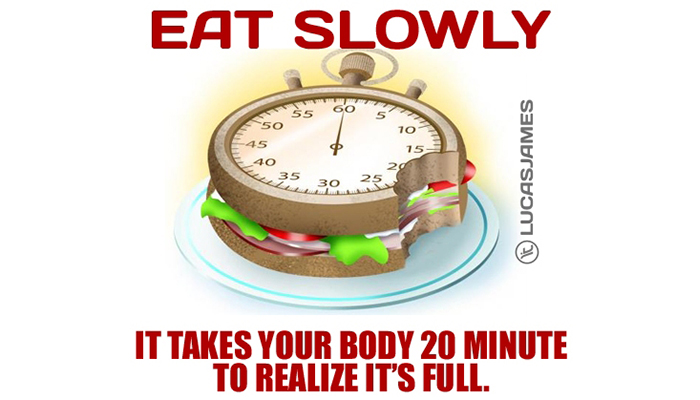
Third – The delicate hormonal cross talk which happens between hunger, satiety and fullness hormones doesn’t happen that smoothly when you are gobbling down your meal, leaving one having more food but yet not satisfied.

That is why adopting slow eating as a good habit for life is necessary, to eliminate the digestive disorders, fix up weight struggles and feel satisfied with our meals, with our life.

In this article, I’ll share ways to build up your innate capability to eat slowly. As you’ll go down the pointers, pick up only one or two that you can follow easily and when you return back to this article, gradually learn more ways to practice slow eating as way of life.

Here are some tips to help you eat slowly 

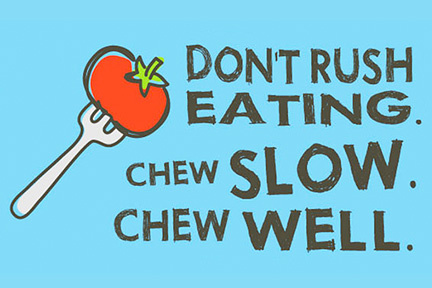
  • Chew well: Digestion of your food begins from the mouth. Gulping down your food will prevent your stomach to match up with your tongue. And, do you also know that you can’t taste your food until its mixed with saliva. Hence chewing your food thoroughly not only improves digestion but enhances perceptibility of the flavor of your food as well.

To practice chewing well and long, take smaller bites and designate number of chew per bite. Anything more than your current number till you reach over 20 is perfect. 20 seconds to every chew is also a wise idea.

  • Engage all your sense while eating: Sniffing the food morsel before putting it in your mouth and appreciating its taste brings in more satisfaction from the food. Also notice colours in your food and feel its texture in your mouth. Chew well then and you’ll find yourself turning into a slow eater automatically.
  • Deep breathe after every few bites: By following this tip, you’ll buy some more time for your tummy to assimilate all the previous morsels. The excess O2 taken in by extra breathing will also aid in better oxidation of the fats in the food.
  • Add fibers to your meal: They take a long time to chew. Crunching salads after every few bites will additionally supply raw enzymes to digest cooked portions of your meals.
  • Take intermission break: Put down your spoon and fork once your done with half your meal. This break can last till you have finished a mini conversation or taken 24-30 breaths.

# Or push away from table, get up for the second helping, take some sips of water in between, to take a break.

  • Pace with a slow eater: Rather than a ferocious one. We unconsciously imitate people we are close to. So eating with a slow eater will also slow you down.
  • Use non dominant hand to eat or use chopsticks for a week: If you make the task difficult it automatically forces you to pace down.
  • Eat with a baby spoon/fork: By law of volume metrics, eating with a baby spoon will put a speed breaker on your food ride.
  • Work up your food: Shell your pistachios or peanuts or seeds and peel your oranges yourself. Shelling, peeling or individual unwrapping of your snack will also help slow you down and reduce the tendency to over consume any snack.
  • Refuel-every 3-4 hours: Keeping long gaps between meals will prevent you from following slow eating, as mind is weak in the knees when we are famished. Hence, eat frequently to prevent over eating and practice slow eating at any meal time.

Practicing slow eating takes time. If you are a super fast eater, and you are trying these methods to change your habit for good, don’t punish yourself if you don’t succeed in the first few weeks. Try and try till you succeed. And, if you still fail, take help of your coach, to make you practice and push towards rewiring your old habit into a new one of slow mindful eating.

In my next blog in this five part series, I will be talking about Portion Control. I shall share some good tricks and hacks which will help you prevent over eating and the need to diet ever.

To be continued …………..

#BeTheForce 

May 17, 2024 By Trupti Hingad 8 Comments

Combat Constipation Naturally: Causes, Symptoms, and Remedies

bowel-movement

After reading my blog on Poop…most of my blog reader’s reaction was Ewww!! Most of us feel the same way when we talk about shit or pee. But we forget that its part of our own body and we are only responsible for how it turns out. In my years of experience. I have noticed that many of them have issue related to clear bowel movement – medically termed as CONSTIPATION and is one of the reason for not losing weight too.

In Bollywood.too….many films are made on this – like Toilet—Ek Prem Katha, Piku, Delhi Belly. The over or under use of toilet is always an issue!

Constipation is defined as lesser than three stools per week and Chronic constipation means once or less per week.

Most of us have gone through this phase sometime or other in our life. Have you ever wondered why? Well, I know this topic is not that which eases our mind but it’s important to know about it.

Constipation can results into symptoms like abdominal discomfort, feeling of incomplete evacuation, hard stools, rectal or anal bleeding.

Constipation occurs where the food in the stomach and intestine is taking an inconsistently long time to be digested. The contractions that push the food forward is called the peristalsis movement. When the chyme (semi-digested food) is not pushed forward but remains in the intestine it starts fermenting, causing gases and bloating to occur. The water content has all been absorbed so it becomes dry and peristalsis becomes even more difficult and even painful at times. 

When we travel our eating, sleeping habits become irregular, bringing with it changes in our digestive system which can sometimes cause constipation. It can also happen due to some medications, low fibre diet, hormonal disorders, stress, pelvic disorder, less water intake. When that happens we must increase our water intake immediately so as to keep the colon well hydrated to make sure that the chyme doesn’t dry out.

Another reason could also be a sedentary lifestyle. It is important to keep up with moderate activity as we grow older our metabolism gradually slows down and with it the digestive process. Our body is like a machine that we need to keep well-oiled in all departments to keep working properly.

Here are Simple solutions that can help to prevent and cure it.

1. Good Fibre: Increase fiber intake so that there is sufficient fibre for bile to mix with and digest the food. Soluble fibre softens the stools and insoluble fibre adds bulk and roughage to the stools. E.g. Legumes, Oats, Rice Bran, Whole Fruits, Green Vegetables, Figs, Nuts and Seeds. etc. Apple and Guava works best as per my personal experience.

2. Adequate hydration is must: Increase your water intake makes possible for the insoluble fibre in the colon to move forward more effectively. Water ensure a good production of digestive juices in the stomach and intestine and smooth passage of food thorough the intestine. It even makes stools softer to ensure they are passed out easily. Drink about 3-3.5 ltrs per day to keep cells hydrated.

Use the bathroom as and when needed. Do not hold back.

3. Regularize lifestyle and eating and sleeping patterns. Have good sound sleep and avoid stress. De-stress yourself with some meditation or deep breathing techniques

4. Avoid all the packaged foods, and foods loaded with refined flour. Trans fat, sodium and other preservatives are low in fibre or lack fibre completely.

5. One of the best home remedy is to soak 2 figs or 4-5 raisins overnight and then have it in the morning with a glass of luke warm water. Prunes also acts as a great laxative.

6. One tbsp of castor oil or cold pressed virgin coconut oil works best if had before going to bed. It helps in smooth passage of stools next morning.

7. Our ancient study says – Triphala powder—one tbsp in glass of luke warm water helps in detoxifying and cleansing the colon and rectum.

8. Exercise about 30-45 min daily. This improves blood circulation which promotes better digestion and hence clear bowel movement. Avoid exercise immediately after meals.

Let me share some basic yoga asanas which can be done daily to regularize your bowel movement. Yoga helps revitalise your body and also increases the flow of blood and oxygen in the system, thereby, improving your digestive system.

Ardha-Matsyendrasana (Sitting Half Spinal Twist Pose)

Half-spinal-twist-Ardha-matsyendrasana-300x232

How to do it:
* Sit down on the ground with your legs extended in front of you; toes pointed toward the ceiling.
* Bend your left leg, under your right one, placing your foot next to your right buttock.
* Place the right foot firm on the ground, near the left knee.
* Extend both your arms, and twist your upper body to the right. Place the right arm on the ground behind the back, and your left hand on the right ankle in front of your body.
* Sustain the pose for at least 30 seconds. Gradually, increase the time to 1 minute.
* Release and repeat on the other side.

Benefits: This pose stimulates the pancreas, liver, spleen, kidneys, stomach, and ascending and descending colons, hence, improving bowel movements and providing relief from constipation.

Pavanmuktasana (Wind-Relieving Pose)

Pavanmuktasana
This is one of the easiest and most effect Yoga pose if you are felling gassy.

How to do it:
* Recline on your back and hug your legs into your chest.
* Pull the head up and try to put your nose in between the knees.
* You may rock gently if you wish too. Release after 10 to 15 seconds.
* Alternatively, you can extend one leg out.

Benefits: As the name suggests, this posture helps release gas from the body, a common trouble of constipation. The posture can help cure several digestive disorders, including dyspepsia. It also helps in relieving acid reflux which is caused by indigestion.

Shishuasana/Balasana (Child Pose)

childs pose
This position means that you crouch down over your knees on the floor, pushing onto your lower abdomen.

How to do it:
* Start by kneeling on your knees, with your knees touching.
* Sit down so your bottom is touching your feet and your hands are on your knees.
* Place your hands on the floor in front of you and slowly start to move them forward, lowering your body down until your stomach is on your knees and your arms are stretched out in front of you. Your hands stay touching the floor or you can take them back to hold your feet.
* Now relax, taking slow deep breaths in and out of your nose.
* Hold for about 30 seconds and let the weight of your body go so that you are relaxed in this pose, and your knees push into the abdomen to provide relief.
* Then slowly work your way back up.

Benefits: Relieve any pain that you may get when constipated.

Malasana (Garland Pose)

malasana1
How to do it:
* Squat down with your feet as close together as possible, and slightly pigeon-toed or pointing outwards.
* Your heels should be on the floor – you can always place a folded towel underneath them if this isn’t possible at first.
* Separate your thighs so that they are slightly wider than your body, and then lean forward between your thighs.
* As you do so, place your elbows on the inside of your knees with your palms together in a prayer position and gently push against your knees, which helps to lengthen the abdomen.
* Hold for 30 seconds, breathing gently through the nose before releasing.

Benefits: This pose will help you to relax and stretch the intestines.

So, in case your bowel movements are irregular stop worrying and start practising! Just give few minutes of your daily time, along with healthy diet and good sleep and you can actually look forward to a healthy digestive system and a happier you!!

If this article helped you, let us know your thoughts in the comments below. You can find more articles like this on Gut Health here. If you want expert advice or further guidance on improving digestive or gut health, speak to a GOQii Coach by subscribing for Personalised Health Coaching here.

#BeTheForce

  • « Previous Page
  • 1
  • 2
  • 3
  • 4
  • 5
  • …
  • 8
  • Next Page »

Search

Recent Posts

  • 10 Everyday Habits That Could Be Hurting Your Health
  • Why Good Nutrition Matters: Benefits of Healthy Eating for a Healthy Life
  • Monsoon Health Tips: How to Boost Your Immunity During Seasonal Changes
  • Yoga for Healthy Ageing: Simple Practices to Add Life to Your Years
  • Calming Your Mind: Breathing Techniques for ADHD

Stay Updated

Archives

  • June 2026 (22)
  • May 2026 (20)
  • April 2026 (24)
  • March 2026 (18)
  • February 2026 (14)
  • January 2026 (14)
  • December 2025 (19)
  • November 2025 (15)
  • October 2025 (20)
  • September 2025 (6)
  • August 2025 (6)
  • July 2025 (11)
  • June 2025 (18)
  • May 2025 (16)
  • April 2025 (22)
  • March 2025 (27)
  • February 2025 (21)
  • January 2025 (25)
  • December 2024 (22)
  • November 2024 (23)
  • October 2024 (20)
  • September 2024 (23)
  • August 2024 (29)
  • July 2024 (20)
  • June 2024 (25)
  • May 2024 (26)
  • April 2024 (27)
  • March 2024 (27)
  • February 2024 (23)
  • January 2024 (21)
  • December 2023 (14)
  • November 2023 (10)
  • October 2023 (19)
  • September 2023 (22)
  • August 2023 (18)
  • July 2023 (21)
  • June 2023 (23)
  • May 2023 (20)
  • April 2023 (19)
  • March 2023 (23)
  • February 2023 (19)
  • January 2023 (15)
  • December 2022 (11)
  • November 2022 (15)
  • October 2022 (15)
  • September 2022 (12)
  • August 2022 (10)
  • July 2022 (17)
  • June 2022 (11)
  • May 2022 (10)
  • April 2022 (6)
  • March 2022 (6)
  • February 2022 (13)
  • January 2022 (11)
  • December 2021 (7)
  • November 2021 (3)
  • October 2021 (6)
  • September 2021 (3)
  • August 2021 (8)
  • July 2021 (7)
  • June 2021 (15)
  • May 2021 (16)
  • April 2021 (10)
  • March 2021 (7)
  • February 2021 (4)
  • January 2021 (4)
  • December 2020 (3)
  • November 2020 (4)
  • October 2020 (10)
  • September 2020 (3)
  • August 2020 (3)
  • July 2020 (2)
  • June 2020 (4)
  • May 2020 (10)
  • April 2020 (12)
  • March 2020 (10)
  • February 2020 (4)
  • January 2020 (4)
  • December 2019 (3)
  • November 2019 (7)
  • October 2019 (5)
  • September 2019 (4)
  • August 2019 (9)
  • July 2019 (9)
  • June 2019 (11)
  • May 2019 (4)
  • April 2019 (8)
  • March 2019 (8)
  • February 2019 (9)
  • January 2019 (8)
  • December 2018 (9)
  • November 2018 (3)
  • October 2018 (3)
  • September 2018 (5)
  • August 2018 (10)
  • July 2018 (6)
  • June 2018 (13)
  • May 2018 (8)
  • April 2018 (18)
  • March 2018 (9)
  • February 2018 (8)
  • January 2018 (15)
  • December 2017 (12)
  • November 2017 (19)
  • October 2017 (13)
  • September 2017 (15)
  • August 2017 (4)
  • July 2017 (8)
  • June 2017 (7)
  • May 2017 (6)
  • April 2017 (8)
  • March 2017 (6)
  • February 2017 (7)
  • January 2017 (9)
  • December 2016 (10)
  • November 2016 (7)
  • October 2016 (7)
  • September 2016 (7)
  • August 2016 (11)
  • July 2016 (9)
  • June 2016 (9)
  • May 2016 (12)
  • April 2016 (17)
  • March 2016 (17)
  • February 2016 (8)
  • January 2016 (6)
  • December 2015 (2)
  • November 2015 (9)
  • October 2015 (7)
  • September 2015 (9)
  • August 2015 (11)
  • July 2015 (9)
  • June 2015 (11)
  • May 2015 (9)
  • April 2015 (13)
  • March 2015 (8)
  • February 2015 (5)
  • January 2015 (12)
  • December 2014 (14)
  • November 2014 (11)
  • October 2014 (6)
  • September 2014 (13)
  • August 2014 (12)
  • July 2014 (6)
  • June 2014 (2)
  • May 2014 (7)
  • April 2014 (4)

From Shimla’s Slopes to Chandigarh’s Sidewalks: Surinder Kaur Bhalla’s Journey from Chaos to Control

Some journeys start with a plan. Others begin with a stumble literally. Surinder Bhalla, a government professional, born and raised in the scenic hill town of Shimla, had always lived a life of movement. “In Shimla, you walked everywhere,” she reflects. … [Read More...]

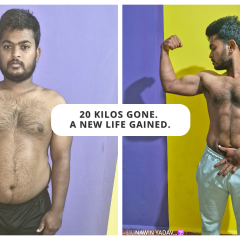
From “Laddu Nawin” to Fit and Fierce: How a 25-Year-Old Insurance Advisor Shed 20 Kilos and Gained His Life Back

When 25-year-old Nawin Yadav from Hyderabad walked into his office every morning, he carried more than just his files and policy papers. He had the weight of fatigue, sluggish energy, and an ever-growing belly that was becoming the butt of jokes. “People had even started calling me Laddu Nawin,” he says with a laugh, but […]

From Burnout to Balance: How Dr. Ranjit Reclaimed His Health

Dr Ranjit Bhatt has spent years tending to others. A practising doctor in Odisha, his days were packed with patients, surgeries, and emergencies. From the outside, it looked like a life lived in service. But on the inside, something wasn’t right. “I had no control over my schedule. I’d sleep late, eat at odd hours, […]

Ananda Mukherjee Health Story

From Terminal Illness To Complete Wellness! Ananda Mukherjee Health Story

As we observe World Cancer Day under the powerful theme ‘United by Unique’ (2025-2027)**, we are reminded that every individual’s journey with cancer is distinct, yet united by shared resilience, hope, and the collective fight against this disease. This theme places people at the centre of care and their stories at the heart of the […]

  • HOME
  • HEALTHY LIVING
  • FITNESS
  • HEALTHY RECIPES
  • USER STORIES
  • KARMA
  • BUY GOQii

Copyright ©2016 GOQii