GOQii

Blog

  • HOME
  • HEALTHY LIVING
  • FITNESS
  • HEALTHY RECIPES
  • USER STORIES
  • KARMA
  • BUY GOQii

November 19, 2025 By Swati Savla Leave a Comment

5 Healthy Winter Vegetables For A Healthier You!

healthy winter vegetables

The chilly winters are here. This season brings us the most colorful fruits and vegetables in the market. All of them are rich in a variety of nutrients and flavors. The major reason for increasing our intake of this fresh produce is to build our immunity against the flu and cold viruses as well as stock our body with enough nutrients to last a few months post winter as well! Here’s my list of the 5 must have healthy winter vegetables! 

Must Have Healthy Winter Vegetables 

1. Mustard Greens
The famous ‘sarson ka saag’ is our go-to-immunity winter dish. Ever thought why? This low calorie, high fiber leafy green is also an excellent source of Vitamins B1, B2, B6, C, E, K, folic acid and minerals like calcium, carotenes, manganese, copper, magnesium, protein, potassium, and iron. This wide variety of Vitamins and Minerals perform many essential functions like blood clotting which makes it heart healthy, improving bone health and thus, reducing the risk of arthritis and osteoporosis. It also improves eyesight. The folic acid content is at par with levels needed for a healthy pregnancy and menopause. Last but not the least, the high fiber aids good bowel movements, easing hemorrhoids and constipation. Some other leafy greens like spinach and methi are also at their best in this season. 

2. Carrots
This crunchy powerfood, especially the red variety available during winter, contains a good amount of vitamins and nutrients such as Vitamin A, B2, B3, C, D, E and K. We all know about it’s benefits for a good eyesight and healthy skin because of it’s beta carotene. Little do we know that it contains high amounts of Lycopene, an antioxidant which helps prevent cancer, diabetes and heart diseases. Eating raw carrots or drinking carrot juice can help regularise blood flow, provide relief from pain and make you feel less fatigued during menstruation days owing to the carotene and iron content – making it a must have healthy winter vegetable. 

3. White Radish
Do you enjoy relishing hot Mooli ke Parathe in winter? Then you’re definitely benefiting from the Vitamins A, B6, C & E and minerals like potassium, phosphorus and zinc present in White Radish. This entire range of Vitamins and minerals gives our whole body an immunity boost. It has shown to have anti-congestive properties, which clear mucus from the throat and respiratory tract due to the common cold and cough in this season. The combination of phosphorus and zinc, helps get rid of dryness, acne and rashes on the skin and the high water content of radish keeps you well hydrated. Don’t forget to use the green leaves of this root vegetable to perk up the health benefits!

4. Beetroot
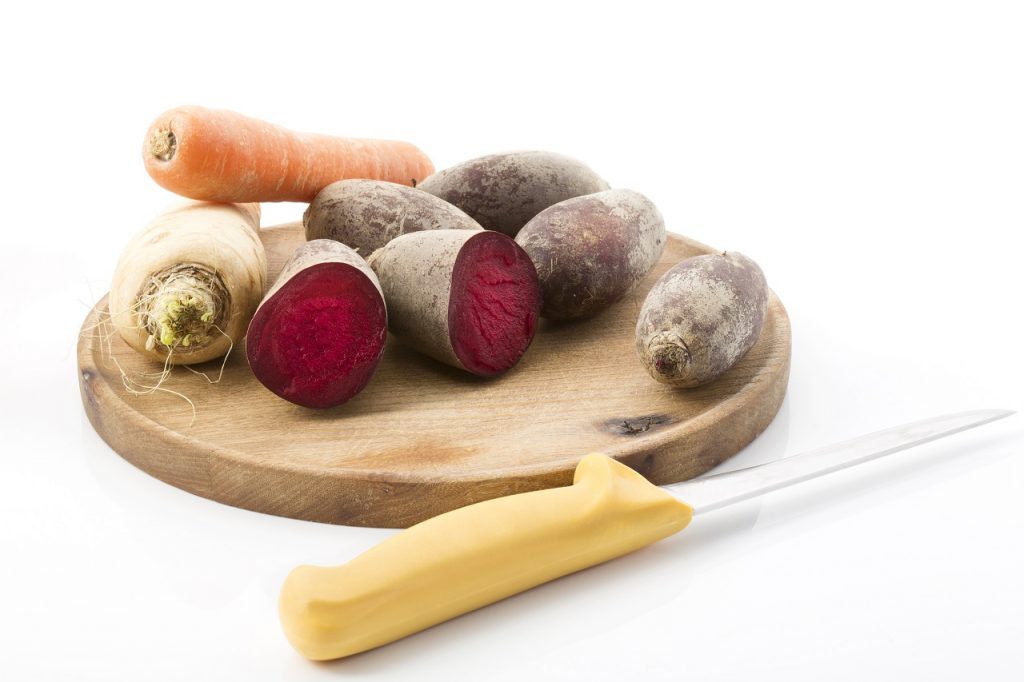
This vibrant and colorful veggie contains essential nutrients like folate (Vitamin B9), manganese, potassium, iron, and Vitamin C.  Plus, they’re one of the most delicious, healthy winter vegetables out there! The red color which indicates the high iron content which helps in improving the total blood count and Vitamin C boosts immunity and improves our WBC’s.

Very importantly, Betaine present in beets can protect the liver from inflammation and damage caused by toxins and chronic alcohol consumption. It helps break down fatty acids in the liver and may help in treating non-alcoholic fatty liver disease. To add to it, they’re completely safe for consumption by diabetics as well! Puzzled? Well, yes. The Glycemic Index of beets is of medium range (61) but the glycemic load they provide is only 5. Which means although they release blood sugar levels slightly fast after consumption, the total carbs present in them are comparatively very low. 

5. Sweet Potato
Winter comes and you get to see hand carts on the streets filled with this excellent and inexpensive food item. These orange-hued delights are loaded with twice the fiber when compared to other types of potatoes. B6 content in it reduces homocysteine which has been linked to heart attacks. Vitamin C and antioxidants protect us from flu viruses and common colds. They also aid in the formation of blood cells. Sweet potatoes contain a good amount of Magnesium, essential for blood pressure regulation and nerve relaxation which in turn helps reduce stress. Plus, since they’re fairly low on the glycemic index, they’re beneficial for diabetics and also great for filling up without getting weighed down. 

We hope these healthy winter vegetables help you level up your health and build immunity during this season! For more on nutrition and winter, check out Healthy Reads or reach out to our certified experts by subscribing to GOQii’s Personalised Health Coaching here.

Eat healthy and #BeTheForce 

Disclaimer: The information provided in this blog is for general awareness and educational purposes only. It is not intended to replace professional medical advice, diagnosis, or treatment. Always consult a qualified healthcare provider for personalised medical guidance or concerns related to your health. Images shown are for representation purposes only and may not depict the exact recommendations or outcomes.
July 30, 2024 By Swati Savla Leave a Comment

Managing Diabetes: Dietary Choices and Lifestyle Adjustments for Controlling Blood Sugar

Diabetes is a chronic metabolic disorder that impairs the body’s ability to regulate blood sugar levels. In recent years, the global prevalence of diabetes has surged, with nearly one in ten people affected, making it one of the fastest-growing lifestyle disorders. It’s also a contributor to other health issues such as heart disease, obesity, retinopathy, and nephropathy. However, with lifestyle modifications like improved diet, increased physical activity, stress management, and proper sleep, along with timely medication, it is possible to reverse this condition.

Let us explore some basic food groups and functional foods that can be integrated into daily meals to help prevent blood sugar spikes:

Whole Grains: Oats, millets, brown rice, buckwheat, and quinoa are rich in fiber and complex carbohydrates, slowing digestion and controlling blood sugar.

First-Class Proteins: Dried beans, lentils, yogurt, non-fat milk, nuts, seeds, eggs, lean meats, and especially fatty fish, which are rich in Omega-3 fatty acids, are excellent sources of high-quality protein. These foods not only help you feel fuller for longer, thus reducing carbohydrate consumption during meals, but the Omega-3 fatty acids they contain also help prevent various heart diseases.

 Fruits: All fruits are suitable for consumption, but it is crucial to control portion sizes and consume them at appropriate times of the day, separate from main meals.

Vegetables: Both starchy and non-starchy types, particularly leafy greens, are low in carbohydrates and ideal for controlling overeating and post-meal sugar spikes.

Healthy Fats: Avocados, olive oil, nuts, fatty fish, flaxseeds, and cold-pressed oils are heart-healthy and help mitigate complications from diabetes.

Key spices from the kitchen also play a vital role in managing blood sugar levels:

Cinnamon: Commonly used in Indian cooking, just 1/4th teaspoon of cinnamon can enhance insulin release and improve insulin sensitivity.

Garlic: Rich in Vitamin B6 and Vitamin C, garlic aids carbohydrate metabolism and acts as a powerful antioxidant to prevent diabetes onset.

Turmeric: Known for its anti-inflammatory properties, turmeric helps reduce the oxidative stress associated with diabetes.

When managing diabetes, consider these three key elements:

Portion Control: Essential in managing intake of the beneficial foods without overindulging.

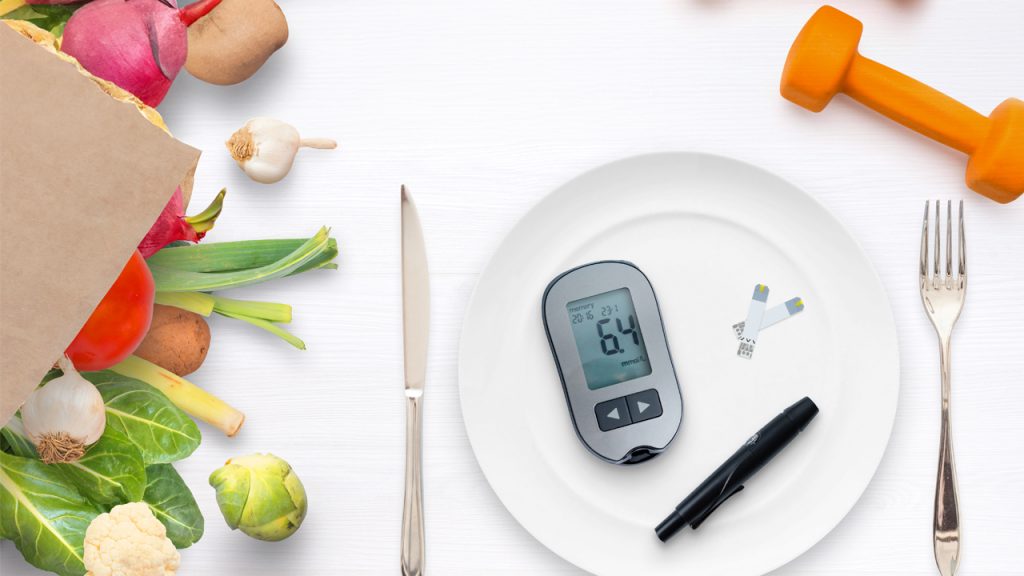
Type of Food: Adhering to the ‘My Plate’ concept, meals should consist of about 50% fiber (vegetables), 25% proteins, 10-15% fats, and minimal carbohydrates.

Meal Frequency and Timing: Spread your daily intake across two or three main meals to maintain consistent energy levels and prevent blood sugar spikes.

Incorporating the right food choices, engaging in daily physical activity, and maintaining a regular sleep schedule are fundamental strategies for preventing and potentially reversing diabetes.

We hope this article helps you. For further information or guidance, reach out to our certified experts by subscribing to GOQii’s Personalised Health Coaching here.

#BeTheForce 

Disclaimer: The information provided in this blog is for general awareness and educational purposes only. It is not intended to replace professional medical advice, diagnosis, or treatment. Always consult a qualified healthcare provider for personalised medical guidance or concerns related to your health.

May 20, 2024 By Swati Savla Leave a Comment

Top 5 Foods To Help You Fight Allergies Naturally

allergiesAllergies can be best explained as an exaggerated response of our immune system. The trigger point could be anything as harmless as particles of dust, pollens, some foods or even cosmetic products which cause symptoms like sneezing, itchy throat, itchiness/rashes on skin or redness of the eyes, etc. 

With the onset of an allergic reaction, we typically resort to taking a corticosteroid (anti-inflammatory) or an Antihistamine (the chemical causing the inflammation), but these anti-allergy medicines have some long-term side effects. So why not think about including certain specific foods which will help us build immunity and manage these allergy symptoms as well?

5 Foods To Help You Fight Allergies 

  1. Star Anise: Among spices, it contains the highest amount of Vit. C and E which are strong antioxidants, essential for reducing inflammation and improving immunity. Polyphenols present in Star Anise possess anti inflammatory properties. They work as a natural decongestant. Flavonoids like Quercetin and Shikimic acid in this spice help in increasing immune cells. Thus, adding 1-2 star anise in a cup of hot tea or bowl of soup will kick out your allergy symptoms like a runny nose, sore throat or congestion. These reasons also contribute to the importance of Star Anise as a part of many medications to treat flu and infections as well.
  2. Pineapple: This seasonal fruit is a powerhouse of many Vitamins and minerals mainly Vitamin C, Manganese and an enzyme called Bromelain. Bromelain has anti-inflammatory properties, which is beneficial to people with asthma or other allergic airway diseases. It’s also effective in alleviation of swelling and congestion associated with chronic Sinusitis. Manganese plays an important role in enzymatic reactions which help break down Histamine, thus controlling immune responses.
  3. Red Onions: have the highest Quercetin levels among all fruits and vegetables even when compared to white onions, which are relatively lower in value. Quercetin is a natural bioflavonoid which stabilizes mast cells (specialized immune cells) to keep them from releasing histamine. It helps in suppression of inflammatory mediators in allergies, asthma, sinusitis and bronchitis.
  4. Almonds: They are rich sources of Magnesium. Magnesium works as a Bronchodilator, as it has a calming effect on the bronchial tubes, which gives allergy relief. It also helps control levels of histamine in the blood. Almonds also contain Vit. E which have antioxidant properties, thus reducing inflammation. Albeit, avoid almonds if you are allergic to nuts. 
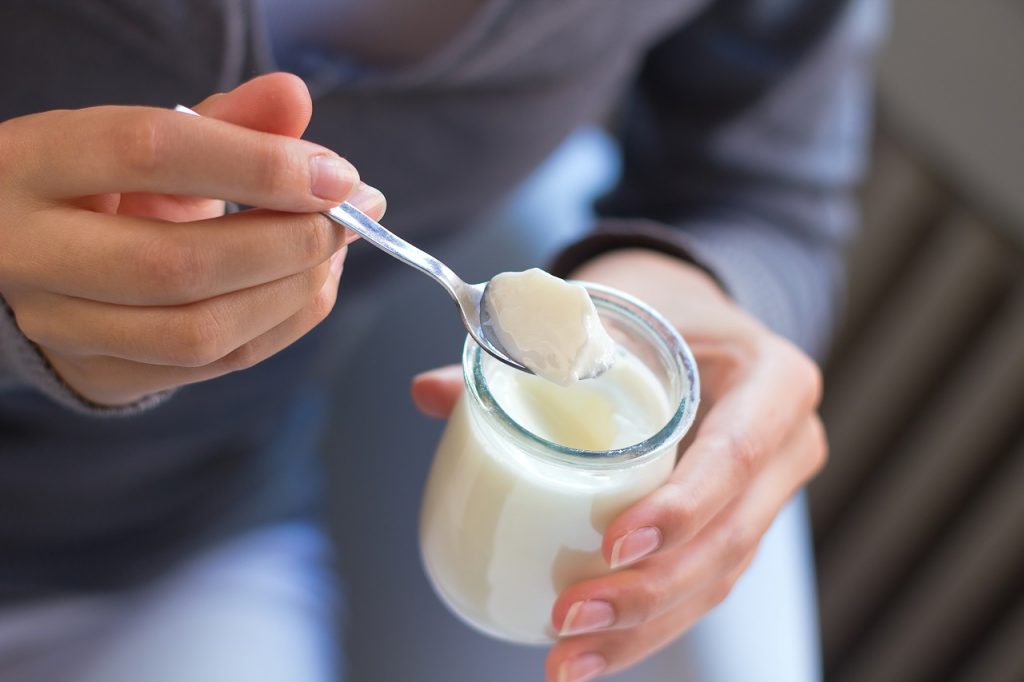
  5. Probiotics: Allergies are the result of an imbalance in the immune system. Probiotics modify the intestinal flora in the gut, support the immune system and can alter the natural course of an allergy. This is an umbrella of foods ranging from curd/yoghurt, Apple Cider Vinegar, Sauerkraut to Kefir. Include any one of them in your regular meals for optimum effects.

We hope this article helps you fight allergies naturally with food. Before trying any of these, do consult with your doctor. For more topics on combating allergies, check out LIVE sessions by experts on GOQii Play. Subscribe now! 

#BeTheForce 

April 27, 2024 By Swati Savla 1 Comment

Top Foods to Increase Hemoglobin Naturally

hemoglobin

Hemoglobin and Iron are two terms that go hand in hand and there’s a simple understanding behind this. 70% of the body’s iron is found in hemoglobin and myoglobin. Hemoglobin is the red colored pigment present in red blood cells which carries oxygen from the lungs to the rest of our body. This released oxygen then permits aerobic respiration to provide energy to power the functions of our body in the process called metabolism. 

That’s not where it’s role ends. It is also a part of other cells which are found in some major organs like lungs, kidneys and the skin. Here, it’s function is that of an antioxidant and regulator of iron metabolism. Finally, it also transports carbon dioxide out of the cells and back to the lungs to be blown out of our body. The expected normal range of Hemoglobin in men is above 13 gm/dL and women is above 12 gm/dL, typically which is not difficult to maintain but still is of major concern if goes below the desired levels, creating a condition called Anemia.

Lack of Folate or B-12, blood loss post surgery, heavy menstrual bleeding or internal bleeding due to ulcers or even inadequate intake are some possible causes of low Hemoglobin levels. All of this explains our symptoms of Anemia like exhaustion, skin paleness, headache to abnormal or rapid heartbeat and chest pain. We’ve read and heard of varied iron supplements which can be taken to replenish extremely low Hemoglobin levels but eating the right kind of foods in the correct combinations can help increase hemoglobin naturally and quickly also. 

What Can You Eat to Increase Hemoglobin? 

When thinking about Hemoglobin, the 1st mineral coming to our mind is Iron but here’s the catch – Iron alone cannot increase your Hb. It has to be in combination with Folate or Vit B12 (depending on the deficiency) and Vit. A & C which act as carriers for it’s better absorption. Combining all the above elements finally gives us this list of foods which can help increase hemoglobin naturally. 

  1. Foods like Shellfish, Sardines, Tuna, Mackerel, Eggs and Meat are high on Heme Iron which is easily absorbed in the body and do not require carriers.
  2. Plant foods like Spinach, Kale, Broccoli, Beetroot, Pumpkin Seeds, and legumes like Soybeans, Chickpeas, Peas, etc. can help as well. 
  3. Vit. A & C rich foods like Tomatoes, Carrots, Lemon, Red Peppers, Oranges, Pomegranates, etc. should be used in combination with above mentioned foods.
  4. Fortified cereals also help as they are high in Folate.

While some elements are carriers, some can act as an hindrance. Phytic acid and Calcium are 2 such elements which make Iron absorption harder. Hence, avoid taking Calcium supplements or very high calcium rich foods along with Iron rich foods or supplements. Before making any changes to your diet, do consult a doctor, nutritionist or your dietitian. 

We hope this article to increase hemoglobin naturally helps you. Do leave your thoughts in the comments below! For more useful information on Hemoglobin and other health-related queries, check out Healthy Reads or speak to a certified expert by subscribing to GOQii’s Personalised Health Coaching here.

#BeTheForce 

  • 1
  • 2
  • Next Page »

Search

Recent Posts

  • Navigating the Maze of Nutrition: Finding Clarity Amidst Confusion
  • Get children active and keep them healthy
  • What Gestational Diabetes Can Do To You & Your Unborn Child
  • Breathing – A Forgotten Art
  • The Incredible Benefits Of Milk You Might Not Know

Stay Updated

Archives

  • December 2025 (3)
  • November 2025 (15)
  • October 2025 (20)
  • September 2025 (6)
  • August 2025 (6)
  • July 2025 (12)
  • June 2025 (18)
  • May 2025 (16)
  • April 2025 (23)
  • March 2025 (23)
  • February 2025 (22)
  • January 2025 (26)
  • December 2024 (26)
  • November 2024 (25)
  • October 2024 (22)
  • September 2024 (24)
  • August 2024 (31)
  • July 2024 (21)
  • June 2024 (26)
  • May 2024 (31)
  • April 2024 (27)
  • March 2024 (29)
  • February 2024 (26)
  • January 2024 (25)
  • December 2023 (15)
  • November 2023 (11)
  • October 2023 (22)
  • September 2023 (22)
  • August 2023 (20)
  • July 2023 (22)
  • June 2023 (24)
  • May 2023 (24)
  • April 2023 (24)
  • March 2023 (23)
  • February 2023 (20)
  • January 2023 (16)
  • December 2022 (12)
  • November 2022 (15)
  • October 2022 (15)
  • September 2022 (12)
  • August 2022 (10)
  • July 2022 (17)
  • June 2022 (11)
  • May 2022 (10)
  • April 2022 (6)
  • March 2022 (6)
  • February 2022 (13)
  • January 2022 (12)
  • December 2021 (7)
  • November 2021 (3)
  • October 2021 (6)
  • September 2021 (3)
  • August 2021 (8)
  • July 2021 (7)
  • June 2021 (15)
  • May 2021 (16)
  • April 2021 (10)
  • March 2021 (7)
  • February 2021 (4)
  • January 2021 (4)
  • December 2020 (3)
  • November 2020 (4)
  • October 2020 (10)
  • September 2020 (3)
  • August 2020 (3)
  • July 2020 (2)
  • June 2020 (4)
  • May 2020 (10)
  • April 2020 (12)
  • March 2020 (10)
  • February 2020 (4)
  • January 2020 (4)
  • December 2019 (3)
  • November 2019 (7)
  • October 2019 (5)
  • September 2019 (4)
  • August 2019 (9)
  • July 2019 (9)
  • June 2019 (11)
  • May 2019 (4)
  • April 2019 (9)
  • March 2019 (8)
  • February 2019 (9)
  • January 2019 (8)
  • December 2018 (9)
  • November 2018 (3)
  • October 2018 (3)
  • September 2018 (5)
  • August 2018 (10)
  • July 2018 (6)
  • June 2018 (13)
  • May 2018 (8)
  • April 2018 (18)
  • March 2018 (9)
  • February 2018 (8)
  • January 2018 (15)
  • December 2017 (12)
  • November 2017 (19)
  • October 2017 (13)
  • September 2017 (15)
  • August 2017 (4)
  • July 2017 (8)
  • June 2017 (7)
  • May 2017 (6)
  • April 2017 (8)
  • March 2017 (6)
  • February 2017 (7)
  • January 2017 (9)
  • December 2016 (10)
  • November 2016 (7)
  • October 2016 (7)
  • September 2016 (7)
  • August 2016 (11)
  • July 2016 (9)
  • June 2016 (9)
  • May 2016 (12)
  • April 2016 (17)
  • March 2016 (17)
  • February 2016 (8)
  • January 2016 (6)
  • December 2015 (2)
  • November 2015 (9)
  • October 2015 (7)
  • September 2015 (9)
  • August 2015 (11)
  • July 2015 (9)
  • June 2015 (12)
  • May 2015 (9)
  • April 2015 (13)
  • March 2015 (8)
  • February 2015 (5)
  • January 2015 (12)
  • December 2014 (14)
  • November 2014 (11)
  • October 2014 (6)
  • September 2014 (13)
  • August 2014 (12)
  • July 2014 (6)
  • June 2014 (2)
  • May 2014 (7)
  • April 2014 (5)

From “Laddu Nawin” to Fit and Fierce: How a 25-Year-Old Insurance Advisor Shed 20 Kilos and Gained His Life Back

When 25-year-old Nawin Yadav from Hyderabad walked into his office every morning, he carried more than just his files and policy papers. He had the weight of fatigue, sluggish energy, and an ever-growing belly that was becoming the butt of jokes. “People … [Read More...]

“I’ve Challenged Myself to Live 100 Years” – The Story of Chandubhai Savani’s Second Chance at Life

At 67, most people start slowing down. Not Chandubhai Savani. A resident of Surat, Chandubhai, thought life was on track. “My life was going well till I had my bypass surgery,” he says. That surgery, back in 2021, was a wake-up call.  Medication was routine, but exercise wasn’t. His diet? What he calls ‘normal.’ “I […]

From Shimla’s Slopes to Chandigarh’s Sidewalks: Surinder Kaur Bhalla’s Journey from Chaos to Control

Some journeys start with a plan. Others begin with a stumble literally. Surinder Bhalla, a government professional, born and raised in the scenic hill town of Shimla, had always lived a life of movement. “In Shimla, you walked everywhere,” she reflects. “Walking was never an exercise. It was just life.” But after shifting to Chandigarh, […]

Ananda Mukherjee Health Story

From Terminal Illness To Complete Wellness! Ananda Mukherjee Health Story

As we observe World Cancer Day under the powerful theme ‘United by Unique’ (2025-2027)**, we are reminded that every individual’s journey with cancer is distinct, yet united by shared resilience, hope, and the collective fight against this disease. This theme places people at the centre of care and their stories at the heart of the […]

  • HOME
  • HEALTHY LIVING
  • FITNESS
  • HEALTHY RECIPES
  • USER STORIES
  • KARMA
  • BUY GOQii

Copyright ©2016 GOQii