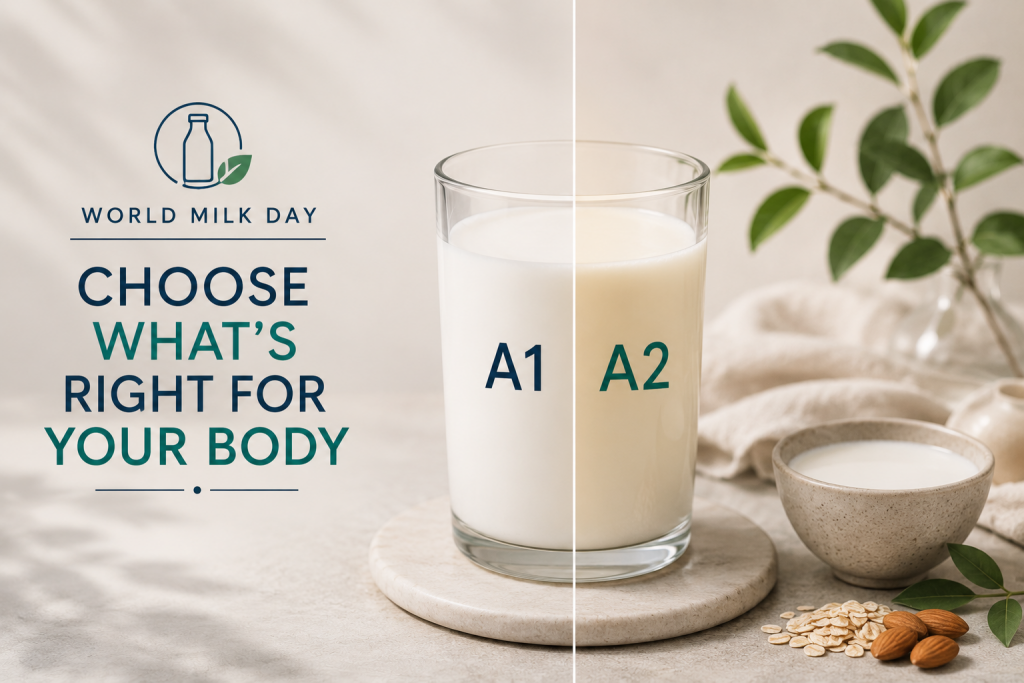
 The Big Question: What is the difference between A1 and A2 milk, and why does conventional dairy cause bloating and inflammation?
World Milk Day is an opportunity to better understand how modern dairy affects individuals differently. While milk remains an important source of protein and calcium, many experience bloating, acne, or inflammation depending on their gut health, lactose tolerance, and the type of dairy consumed. Emerging clinical research around A1 and A2 beta-casein proteins reveals that conventional A1 milk may break down into a peptide (BCM-7) that slows gastric transit and triggers digestive discomfort, while A2 milk or fermented dairy is often digested much more comfortably.
Observed globally on June 1st, World Milk Day was established by the Food and Agriculture Organization (FAO) of the United Nations to recognise the importance of milk as a global food.
In India, dairy is deeply woven into everyday life. From the morning cup of chai to curd with lunch and ghee in traditional cooking, milk has long been associated with strength, nutrition, and bone health.
But a growing number of people today are beginning to notice something unusual: the milk they consume regularly often leaves them feeling bloated, sluggish, fatigued, or uncomfortable after meals. At the same time, conversations around lactose intolerance, gut health, A1 vs A2 milk, and dairy-related inflammation have become increasingly common.
The reality is more nuanced than “milk is healthy” or “milk is harmful.” Dairy is not universally problematic. Many individuals tolerate milk and fermented dairy products well and benefit from their protein, calcium, and probiotic content. However, others may experience digestive discomfort or inflammation depending on individual tolerance, gut health, and the specific type of dairy consumed. World Milk Day is not just an opportunity to celebrate dairy consumption it is an opportunity to better understand how modern dairy affects the body.
Understanding the Difference Between A1 and A2 Milk
Milk contains two major types of protein: casein (around 80%) and whey (around 20%). Within the casein portion is a subtype called beta-casein.
Historically, cows primarily produced the A2 beta-casein protein. However, over time, genetic variations in certain Western dairy breeds led to the emergence of A1 beta-casein. Today, many indigenous Indian breeds (like Gir and Sahiwal) naturally produce predominantly A2 milk, while several commercial Western breeds (like Holstein) commonly produce A1 protein.
This difference matters immensely because the human body digests these two proteins differently.
Why Some People Struggle With Conventional Dairy
During digestion, A1 beta-casein may break down into a peptide called BCM-7 (beta-casomorphin-7). Some researchers believe BCM-7 may contribute to digestive discomfort, slower gut transit, bloating, and systemic inflammation in sensitive individuals.
However, responses vary significantly from person to person. For some people, the issue may be pure lactose intolerance (an inability to break down milk sugars), while for others, protein sensitivity or an existing gut microbiome imbalance plays a larger role. This is why two individuals can react very differently to the exact same dairy product.
A1 vs. A2 Milk: What’s the Difference?
| Feature | A1 Milk (Conventional) | A2 Milk (Indigenous/Desi) |
| Common Source | Western dairy breeds (Holstein, Friesian) | Indigenous/desi breeds (Gir, Sahiwal) |
| Digestion Response | May cause discomfort in sensitive individuals | Often considered easier to digest |
| BCM-7 Formation | Yes | Minimal to None |
| Gut Comfort | Variable; often triggers bloating | Better tolerated by most individuals |
3 Signs Dairy May Not Be Working for You
Not everyone reacts negatively to dairy. But if you regularly experience the following symptoms after consuming milk or certain dairy products, it may be worth paying closer attention.
-
Persistent Bloating or Digestive Discomfort
Feeling unusually heavy, bloated, or uncomfortable after consuming milk, whey-heavy products, or paneer may indicate difficulty digesting lactose or certain milk proteins. In some individuals, chronic digestive irritation may also contribute to gut barrier dysfunction and microbiome imbalance. Supporting good gut health becomes important for improving overall digestive resilience.
-
Skin Flare-Ups and Acne
Some clinical studies suggest dairy consumption may be associated with acne flare-ups in sensitive individuals, potentially due to hormonal signalling pathways like IGF-1 (Insulin-like Growth Factor). However, responses vary significantly between individuals, and dairy is rarely the only contributing factor to skin issues.
-
Fatigue or Brain Fog
Some individuals report feeling lethargic, mentally foggy, or physically sluggish after consuming conventional dairy products. This may be linked to the digestive stress, immune response, or individual food sensitivities triggered by the proteins.
Fermented Dairy May Be Easier to Tolerate
Interestingly, many people who struggle with fluid milk may tolerate curd, yogurt, kefir, or traditional fermented dairy products much more comfortably.
Fermentation introduces beneficial bacteria that partially pre-digest the lactose and support microbiome balance, making digestion significantly easier. This is one reason traditional Indian eating patterns often paired dairy with fermentation and digestive spices like jeera (cumin) or hing (asafoetida).
Not All Dairy Products Affect Health Equally
One important distinction often missed in modern nutrition discussions is the difference between minimally processed dairy and ultra-processed dairy products. Highly processed flavoured yogurts, sweetened milk beverages, and processed cheese often contain added sugars, emulsifiers, stabilisers, and artificial additives. These additives contribute far more to metabolic dysfunction than plain dairy itself.
The Action Step: Finding What Works for Your Body
Instead of blindly eliminating all dairy, focus on understanding your individual tolerance. You can experiment with:
- Switching to A2 milk from local sources.
- Relying strictly on fermented dairy (like curd).
- Eliminating highly processed, sugar-laden dairy products.
- Temporarily eliminating all dairy for 14 days to observe symptom changes.
Unsweetened plant-based alternatives like almond milk, soy milk, or oat milk may also work well for some individuals when chosen carefully without excessive added sugars. Supporting your digestive health and metabolic flexibility is often more important than following extreme food rules.
Pro Tip: Unsure whether dairy is affecting your digestion, skin, or energy levels? Try a simple 14-day food tracking experiment using the GOQii App. Monitor your meals, symptoms, sleep, and recovery patterns while working with your GOQii Personalised Health Coach to identify what works best for your body!
Frequently Asked Questions (FAQs)
- Does boiling milk change A1 or A2 protein?
No. Boiling or pasteurising milk kills harmful bacteria, but it does not change the underlying genetic beta-casein protein structure. A1 milk remains A1 milk even after heavy boiling.
- Is A2 milk healthier for everyone?
Not necessarily. While some individuals find A2 milk easier to digest because it lacks the BCM-7 peptide, tolerance varies from person to person. If you have true lactose intolerance, A2 milk will still cause issues.
- Can lactose intolerance and dairy sensitivity be different?
Yes. Lactose intolerance relates to a lack of the enzyme needed to digest milk sugar (lactose). Dairy sensitivity typically involves an immune or inflammatory reaction to milk proteins (like casein or whey).
- Is ghee easier to tolerate than milk?
Often, yes. Ghee (clarified butter) contains minimal to no lactose and casein compared to whole milk, making it incredibly easy to tolerate for many individuals with mild dairy sensitivities.
#BeTheForce
Disclaimer: This article is intended for educational purposes only. If you suspect a severe dairy allergy, persistent digestive condition, or chronic gastrointestinal symptoms, consult a qualified healthcare professional or clinical nutritionist.




Leave a Reply