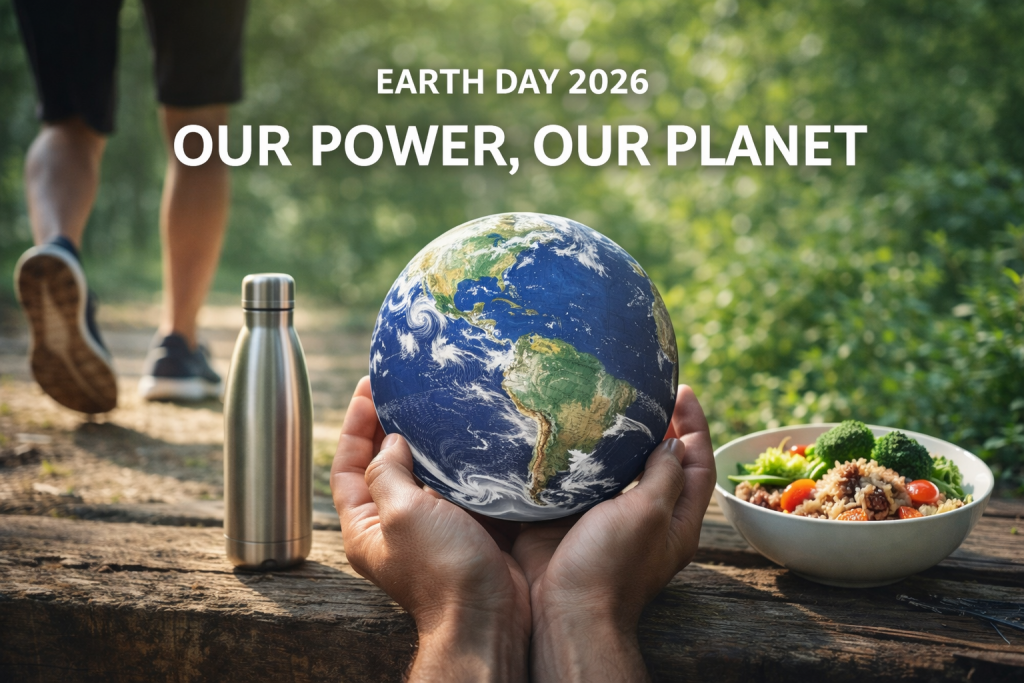
 You cannot build a healthy body on a sick planet. The air we breathe, the water we drink, and the soil that grows our food dictate our physical well-being long before we ever step foot in a gym or track our daily steps.
This year, on April 22nd, the global theme for Earth Day 2026 is “Our Power, Our Planet.” It is a powerful reminder that massive global change does not just come from governments and corporations; it starts with the daily choices of individuals.
At GOQii, we believe in the power of daily habits. Interestingly, the very habits that protect your metabolism, heart, and liver are the exact same habits that reduce your carbon footprint. Here is how taking your power back for your personal health simultaneously heals the planet.
Quick Takeaways: Eco-Friendly Health Habits
- Active Commuting: Swap short drives for walking or cycling to hit your daily steps and cut emissions.
- Plant-Forward Eating: Choose local, seasonal whole foods to boost digestion and reduce agricultural carbon footprints.
- Ditch the Plastic: Use stainless steel or glass water bottles to protect your hormones from microplastics and save the oceans.
- Green Exercise: Take your workouts outdoors to lower cortisol levels and build a deeper appreciation for nature.
-
Active Commuting: Steps for You, Less Smog for the Earth
A sedentary lifestyle is a leading cause of metabolic diseases. At the same time, relying heavily on cars for short distances is a leading cause of urban air pollution. You can solve both problems with one habit: active commuting.
Choosing to walk or cycle to the local grocery store, the gym, or your office is the ultimate win-win. You effortlessly clock in your 10,000 steps, boost your cardiovascular endurance, and actively remove carbon emissions from your community’s air.
-
Sustainable Nutrition: Eat Local, Eat Whole
Ultra-processed foods are not just harsh on your liver and gut microbiome; they are terrible for the environment. They require massive amounts of industrial energy to manufacture, package, and ship globally.
By shifting toward a diet rich in locally sourced, seasonal fruits, vegetables, and whole grains, you are doing your body a massive favor. Plant-forward diets reduce the risk of obesity, MASLD (fatty liver), and heart disease. Simultaneously, eating local reduces the “food miles” (the distance food travels to reach your plate), cutting down on greenhouse gas emissions and plastic packaging.
-
Hydration Without Microplastics
Staying hydrated is a core pillar of preventive health, aiding in everything from kidney function to cellular repair. However, drinking out of single-use plastic bottles introduces microplastics and chemical endocrine disruptors (like BPA) into your bloodstream, which can severely impact your hormonal balance and metabolism.
Switching to a reusable stainless steel, copper, or glass bottle protects your internal health while keeping non-biodegradable plastics out of our oceans and landfills.
-
Eco-Therapy: Mental Health and “Green Spaces”
Mental and emotional health are just as important as physical fitness. Studies show that spending time in natural green spaces whether it is a local park, a forest, or a hiking trail significantly lowers cortisol (the stress hormone), reduces anxiety, and improves sleep quality.
When you make it a habit to exercise outdoors, you naturally develop a deeper appreciation for the environment. You become more invested in protecting your local green spaces because they are actively contributing to your peace of mind.
Reclaim Your Power
The theme “Our Power, Our Planet” reminds us that we are not helpless. Every time you choose to walk instead of drive, eat a whole-food meal, or refill a reusable bottle, you are casting a vote for a healthier you and a greener earth.
To build sustainable, long-term habits that benefit both your body and your environment, connect with our experts by subscribing to GOQii’s Personalised Health Coaching here.
Frequently Asked Questions (FAQs)
- What is the theme for Earth Day 2026?
The theme for Earth Day 2026 is “Our Power, Our Planet.” It focuses on how individual actions, community engagement, and a shift toward sustainable energy can collectively protect and restore the environment. - How does climate change actually affect my health?
Environmental shifts directly impact human health. Poor air quality exacerbates asthma and cardiovascular issues, rising temperatures increase the risk of heat-related illnesses, and plastic pollution introduces hormone-disrupting chemicals into our food and water supply. - What is a “sustainable diet”?
A sustainable diet is one that is healthy for you and has a low environmental impact. It generally involves eating mostly whole, plant-based foods, choosing locally grown and seasonal produce to reduce transportation emissions, and minimizing ultra-processed foods and single-use packaging.
#EarthDay2026 #OurPowerOurPlanet #BeTheForce
Disclaimer: The information provided in this article is for educational and general informational purposes only. Always consult with your physician or a certified GOQii health professional before making any significant changes to your lifestyle or diet.




Leave a Reply