GOQii

Blog

  • HOME
  • HEALTHY LIVING
  • FITNESS
  • HEALTHY RECIPES
  • USER STORIES
  • KARMA
  • BUY GOQii

Archives for August 2024

August 7, 2024 By Urvi Gohil Leave a Comment

Improve Sleep and Sleep Quality with these Lifestyle Changes

Improve sleep and sleep qualityWhile sleep requirements vary slightly from person to person, most healthy adults need between 7-9 hours of sleep per night to function at best. It has been estimated that more than half of the working population in India have experienced some or the other form of sleep deprivation or alteration during their lifetime.

Globally, the prevalence of insomnia ranges from 10-15%.

Sleep deprivation reduces your cognitive processes like thinking, learning, attention, concentration, etc. Chronic sleep deprivation increases the risk of heart disease, high blood pressure, diabetes, irregular heartbeat, etc. Over time, lack of sleep can contribute to symptoms of depression and kills your sex drive. And yes, lack of optimum sleep can make you gain weight.

How to Improve Sleep and Sleep Quality

1. Stay away from gadgets
Using electronic devices before bedtime can be physiologically and psychologically stimulating in ways that can adversely affect your sleep. The more electronic devices a person uses in the evening, the harder it is to fall asleep or stay asleep. Using TV, tablets, smartphones, laptops or other electronic devices before bed delays your body’s internal clock, suppresses the release of sleep-inducing hormones & makes it difficult to fall asleep. Along, with increase in alertness at the time you should sleep, it, in turn, delays the onset of REM (Rapid Eye Movement) sleep and compromises energy levels the next morning. Over time, these effects can add up to a significant chronic deficiency in sleep.

2. Take a Lukewarm Bath Before Bed
Taking a bath or shower before bedtime is a well-known sleep remedy. This is because a warm bath can help us relax. Our body temperature tends to drop after a warm bath, which can induce better sleep. Research suggests that the best time for taking a shower is 1-2 hours before going to bed. The duration of the bath does not need to be longer than 10 min. This will improve blood circulation and stimulate “temperature circadian rhythm” helping you fall asleep, improving sleep and sleep quality.

3. Perform Deep Breathing Before Sleep
Breathing strongly influences physiology and thought processes including moods. By simply focusing your attention on your breathing and without doing anything to change it, you can move in the direction of relaxation. The 4-7-8 breathing exercise also called “the relaxing breath” promotes better sleep. Here are the steps:

  1. Exhale completely through your mouth, making a whoosh sound.
  2. Close your mouth and inhale quietly through your nose to a mental count of four.
  3. Hold your breath for a count of seven.
  4. Exhale completely through your mouth making a whoosh sound to a count of eight.
  5. This is one breath. Repeat 20 times.

4. Sleep Inducing Foods
There are certain foods which can help induce better sleep.

  • A glass of warm milk is a perfect beverage to induce sound sleep. Milk contains tryptophan, an amino acid that converts into serotonin. Serotonin is known to have soothing effects in the brain and helps you sleep well. Adding a pinch of nutmeg, cardamom and some crushed almonds will improve taste and sleep.
  • Chamomile tea: Refreshing, revitalizing and fragrant chamomile tea has soothing effects on nerves and helps induce sleep.
  • Almonds could help you support sound sleep. Almonds also contain tryptophan and magnesium which are helpful in keeping your heart rhythm steady.
  • Avoid tea, coffee, alcohol and other stimulating foods after dusk.

5. Eat Your Dinner Early
When you eat late, you are unable to sleep because of improper digestion. An early dinner is good for digestion, helps in reaching your satiety value earlier and the body is able to utilize the food better and induce sleep. Eating late at night leaves the body on a high alert state which interferes with the circadian rhythm. Minimum 2-3 hours of gap between Dinner and sleep is good.

We hope these tips help you improve sleep and sleep quality! Do leave your thoughts in the comments below.

For more on sleep, check out Healthy Reads or get these tips directly from your GOQii Coach, by subscribing for Personalised Health Coaching here.

#BeTheForce

Disclaimer: The information provided in this blog is for general awareness and educational purposes only. It is not intended to replace professional medical advice, diagnosis, or treatment. Always consult a qualified healthcare provider for personalised medical guidance or concerns related to your health.

August 6, 2024 By Trupti Hingad 2 Comments

Learn about your Poop and Gut Health

bowel-health

Most of us wake up and proceed to the loo. Over a period of time, this becomes a habit and we just do it blindly!

Have you ever noticed or given a thought about how is your bowel movement?

What does your poop say about your health? This may sound like a joke, but you can actually learn a lot about your health from your daily poop.

Hippocrates says…ALL DISEASE BEGINS IN THE GUT. So, we want to be sure that what’s coming out of the gut looks good.

Let’s understand more about it.

Three things to look for:

  1. FREQUENCY
  2. FORM
  3. COLOR

Frequency: Best bowel movement: It’s best to have at least one complete bowel movement a day. This should leave you feeling like you’ve fully emptied your bowels.

If you are having 2-3 bowel movements in the day then you may have a faster metabolism or good robust bacteria or it depends on the quantity of food you eat.

Going to the bathroom more than three times a day may suggest you’re approaching the diarrhoea zone.

So, having a clear bowel movement once a day daily is must as it’s one of our body’s greatest ways to eliminate toxins, acids and other stuff.

FORM: When our poops are properly formed, it ensures that we have digested and assimilated the nutrients from our food and are eliminating acids and toxins properly.

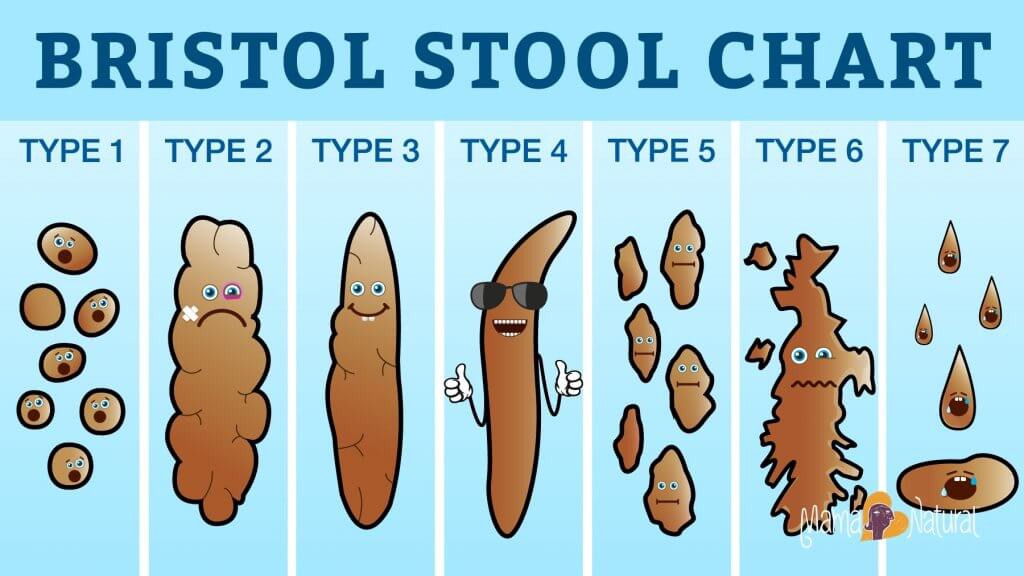
The BRISTOL CHART helps to categorize and gauge our bowel movements well:
Bristol-Stool-Chart-What-Your-Poop-Says-About-Your-Health-Mama-Natural-1024x576

Image Credit: mamanatural-mamanatural.netdna-ssl.com

Type 1: Separate hard lumps, like little balls (hard to pass)

Type 2: Sausage-shaped, but lumpy (lack of fibre and hydration)

Type 3: Like a sausage but with cracks on its surface

Type 4: Like a sausage or snake, smooth and soft

Type 5: Soft blobs with clear cut edges (passed easily)

Type 6: Fluffy pieces with ragged edges, a mushy stool

Type 7: Watery, no solid pieces. Entirely liquid

Where do you fall on this chart?

If you are between 1-3 then it shows that your diet lacks the right amount of fibre, bacteria are missing and there is nothing to retain water. This is a sign of constipation. The lumps are hard and abrasive and may sometimes lead to anorectal bleeding.

If you are at Type 4, then you are right, It’s nice tubular shape. Think long bananas that don’t break apart when you flush. The Perfect poop comes out with ease, smells more like super-ripe fruit than something terrible and you barely need to wipe.

If you are between 5-7—then you have diarrhoea. This may also give rise to malabsorption as there is no proper assimilation of nutrients.

If your stool is too LOOSE, SOFT, watery, MUSHY then – it indicates a lack of fibre and thus you can go for BRAT Diet.(Banana, rice, apple and toast). These foods have qualities like tannins that can actually help firm up a stool for better bowel movements.

If you find your stool is TOO HARD or infrequent, add more of soluble fibre and add magnesium-rich foods to your diet. Magnesium draws water into the bowel, making the stool softer and easier to eliminate. It also relaxes the muscles in the intestinal wall, which helps with constipation.

Apples and Pears are also wonderful – two a day will keep things moving. Yoga and abdominal massage are great tools. Another trick you can try is to drop 1 drop of Peppermint essential oil into your toilet and sit down. It will stimulate your bowels and often result in a movement.

If your poop…Floats instead of sinks- You have excess gas in your digestive tract. “If you’ve been eating lots of beans, sprouts, cabbage, or very large meals, it’s perfectly normal for stool to float because of gas, and it’s not a cause for concern. However, if floaters become more common for you or you spot an oil-slick appearance, it could mean something is preventing your body’s ability to absorb fats from food. For instance, inflammation or an infection in your pancreas could prevent you from producing enough digestive enzymes. A food allergy or infection could be damaging the lining of your intestines that’s affecting absorption, too.

What does Colour indicate?

Believe it or not, colour matters!  We want our stool to be a nice medium – to dark-brown colour (Think milk chocolate). Poop is normally brown. The colour is the result of what you eat and how much bile is in your stool. Bile is a fluid your liver makes to digest fats. It starts out as a yellowish green colour. But as the pigments that give bile its colour travel through your digestive system, they go through chemical changes and turn brown.

Black Poop: If your stool is black, it could be a sign of blood in your upper GI tract.

Yellow poop: This shade is also normal for many people. It’s common for babies, especially those who breastfeed. But if you have yellow poop that looks greasy and smells very bad, it may have too much fat. That could be a sign your body isn’t digesting food properly.

Green poop: If you have green poop for many days, the colour of your food may not be to blame. It’s likely that your meal moved through your gut too quickly, so the fat digesting bile didn’t have time to turn brown. It could be from fat malabsorption or liver or gallbladder stress.

PS NOTE: Keep in mind if you eat certain foods or food dyes your stool colour may change. For example, if you eat lots of beets, your stools could take on a reddish hue. And eating tonnes of leafy greens may explain why your poop is green but this colour change is temporary.

White Poop: Medicines for diarrhoea like bismuth sub-salicylate can sometimes cause pale or clay coloured poop. A more serious cause is a lack of bile in your stool. As bile gives its brown colour

Bright red: If it’s bright red, the blood likely comes from the lower part of your digestive tract. It could be due to inflammation in the colon, haemorrhoids, diverticular disease or tumour.

So, where do your poops fall on the Bristol Stool Chart? Do you have an to oy tips or practices to optimise your daily poop? Share them in the comments below. For more health-related content, explore Healthy Reads or for further guidance speak to a certified expert by subscribing to GOQii’s Personalised Health Coaching here.

#BeTheForce

Disclaimer: The information provided in this blog is for general awareness and educational purposes only. It is not intended to replace professional medical advice, diagnosis, or treatment. Always consult a qualified healthcare provider for personalised medical guidance or concerns related to your health.
August 5, 2024 By Palak Mittal Leave a Comment

8 Incredible Health Benefits Of Sun Salutations (Surya Namaskar) 

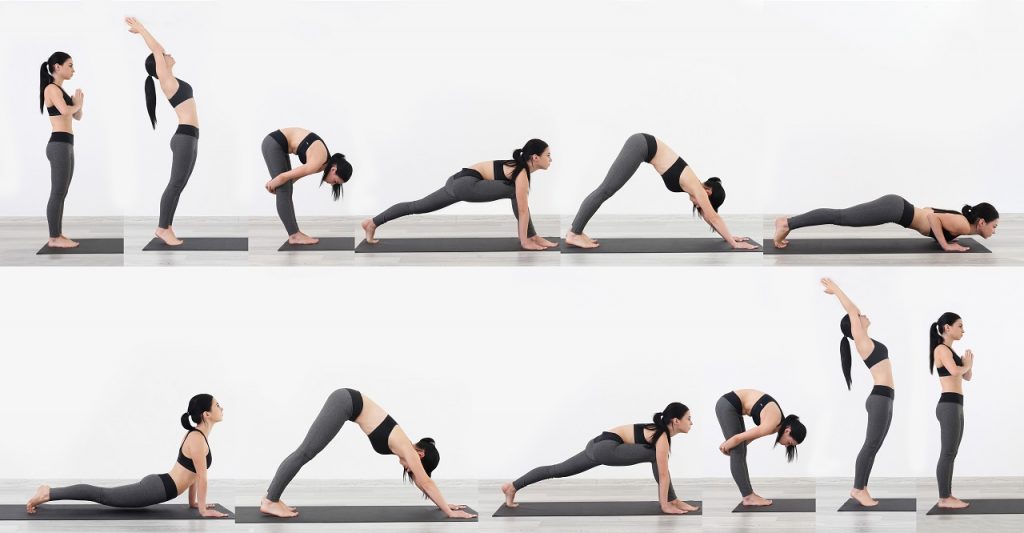
benefits of surya namaskarSurya Namaskar literally means Salutations to the Sun. It is a combination of 12 yoga asanas, where the body, mind, and soul are brought into complete synchrony. They are done in sets, some do 12, some 15, while some 30, depending on their endurance. Scientifically too, there are multiple benefits of Sun Salutations (Surya Namaskar). Let’s explore them in detail!

The Benefits of Sun Salutations (Surya Namaskar)

  1. Stretching and flexibility: The 12 asanas which are part of the Sun Salutations (Surya Namaskar) ensure that every part of the body is exercised. The flexibility that comes with it needs to be experienced to be believed. This is extremely beneficial for the bones, joints, and ligaments of the entire body and spine.
  2. Improves internal organ functioning: The various stretches increase blood flow to the organs and improve their functioning. The result is a better functioning digestive system and kidneys, which help in better absorption of nutrients from food and thorough elimination of metabolic waste. Detox happens naturally, with the release of trapped gasses and improved enzyme secretion.
  3. Weight loss: One of the best-proven ways to lose weight is to do Sun Salutations (Surya Namaskar) on a daily basis. It is a perfect workout involving the complete body and is great for losing weight around the belly. It also is proven to improve the thyroid gland functioning, which plays a significant role in metabolism.
  4. Bone health: Traditionally, it is done during the early morning hours, at sunrise, which ensures the body gets the required amount of Vitamin D. This is essential for good bone health.
  5. Stress buster: Stress release happens in multiple ways. Deep focused breathing is one of them. While performing the asanas, control over breathing is very essential and so, stress control is ensured. Various muscles and bones get tense with stress, and thorough stretching helps relieve the stress buildup. The mind is also calm during the workout, and so stress relief is further enhanced.
  6. Relief from insomnia: People who are not able to sleep should perform Sun Salutations (Surya Namaskar) on a regular basis. Both stress relief and the perfect workout ensure good sleep.
  7. Helpful in menstrual cycles: Women who have cramps during their menstrual cycles have shown very good improvement with the inclusion of this exercise. It is also shown to benefit people with irregular menstruation thanks to the improved blood circulation. Pregnant women performing Sun Salutations (Surya Namaskar) are more likely to have a normal delivery.
  8. Glowing Skin: With the release of toxins and stress, glowing skin is a natural affair!

We hope these 8 benefits of Sun Salutations (Surya Namaskar) urge you to make it a part of your daily routine. For more on how yoga can help you lead a healthy and fulfilling life, check out Healthy Reads or ask a GOQii Coach by subscribing for Personalised Health Coaching here.

#BeTheForce

Disclaimer: The information provided in this blog is for general awareness and educational purposes only. It is not intended to replace professional medical advice, diagnosis, or treatment. Always consult a qualified healthcare provider for personalised medical guidance or concerns related to your health.

August 4, 2024 By Divya Thampi Leave a Comment

Suicidal Thinking: Facts You Must Know To Save a Life!

suicidal thinking“Psychache” – It is a term coined by experts studying suicide. It refers to the unbearable psychological pain experienced by people, who consider suicide. Contrary to popular belief, suicide is less about attention seeking, manipulation or selfishness and more about an attempt to save oneself from excruciating pain (mostly psychological). People in the throes of suicide ideation, engage in such thinking especially when they are flooded by feelings of guilt, shame, worthlessness, inadequacy, social exclusion, anxiety, humiliation and ending their own life seems like the only way to save themselves from what appears to be inescapable suffering.

When feeling this way, the individual’s perception of reality is constricted and sometimes collapsing, thus making it hard for them to access logical thinking and rational consideration of the pros and cons of suicide. This probably answers some of the questions that pop up in our heads about suicide, like – How can people ignore their survival instinct? Why can’t they see that things will get better? What stops them from reaching out for help?

Most people are tempted to argue and attempt to convince a suicidal person that suicide is not a solution to their problems. Unfortunately, the more we argue using cold logic, the more we deny the pain experienced by the person, aggravating the feelings of isolation and hopelessness they experience and thus the argument has the exact opposite effect, almost adding to the person’s conviction that they should go ahead with the suicide.

suicidal thinking

Some Common Myths About Suicidal Thinking

The key to understanding suicide is to understand suicidal thinking. The following myths and facts might help you save a life!

Myth #1: People who say that they are going to suicide are looking for attention.
Fact: Suicide is an extreme step that a person is driven to by deep feelings of helplessness, hopelessness and desolation. If someone says that they plan to suicide, believe them, and do not dismiss it as attention seeking behavior. Threatening suicide is a way of asking for help. Support them by listening and offering to help. The support may prevent them from taking this step.

Myth #2: All suicidal people have some or the other mental illness.
Fact
: Though some people are diagnosed with a mental disorder, concluding that an individual is suicidal because of depression or other mental illnesses, is actually overlooking the real issue. Not all people with mental illnesses attempt suicide and not all who attempt suicide have had a history of mental illness.

Myth #3: The only people who can help a suicidal person are mental health professionals.
Fact: Any person who can listen non-judgmentally and provide support can effectively intervene. Professionals often involve friends and family for interventions.

Myth #4: If a person tells you about their suicidal thinking, you shouldn’t betray their confidence by telling others about it.
Fact: If you become aware that someone is considering suicide, you must inform a family member or friends who care, so that they can provide support. Informing loved ones is an important step in preventing suicides. Knowing that others care for them and that they are valued and wanted, discourages people from taking the extreme step.

Myth #5: If you suspect that a person may be considering suicide, never directly ask them whether they have had suicidal thoughts.
Fact: People worry that asking a person whether they have had suicidal thoughts can plant the idea of suicide in their head. On the contrary, asking to find out whether a person is thinking about suicide may allow the person to share their concerns and worries, and prevent them from deciding to die. It also lets them know that you care and worry about their safety.

Myth #6: Once a person decides to suicide nothing can stop them.
Fact: Most people who consider suicide are unsure about the choice. More than 90% of suicides are preventable. “Should I hang in there for one more day?” is a question that they end up asking themselves often. If one feels supported while feeling suicidal, and gets help in finding therapy or other support services, it can prevent them from taking such a decision now and in the future.

Myth #7: Improvement after a suicidal crisis, is equal to no more suicide risk.
Fact:
The weeks and months that follow a suicidal crisis are the most high-risk period because when the person who attempted suicide starts to feel stronger, they feel more capable of taking actions required to carry through the suicidal intention.

In the next part of this blog, we will help you understand suicidal thinking and ways to provide support to those who need it. Keep your loved ones close!

#BeTheForce

  • « Previous Page
  • 1
  • …
  • 5
  • 6
  • 7
  • 8
  • Next Page »

Search

Recent Posts

  • PCOS and Anxiety: Discover Relief with the 54321 Technique
  • Navigating the Maze of Nutrition: Finding Clarity Amidst Confusion
  • Get children active and keep them healthy
  • What Gestational Diabetes Can Do To You & Your Unborn Child
  • Breathing – A Forgotten Art

Stay Updated

Archives

  • December 2025 (4)
  • November 2025 (15)
  • October 2025 (20)
  • September 2025 (6)
  • August 2025 (6)
  • July 2025 (12)
  • June 2025 (18)
  • May 2025 (16)
  • April 2025 (23)
  • March 2025 (23)
  • February 2025 (22)
  • January 2025 (26)
  • December 2024 (26)
  • November 2024 (25)
  • October 2024 (22)
  • September 2024 (24)
  • August 2024 (31)
  • July 2024 (21)
  • June 2024 (26)
  • May 2024 (31)
  • April 2024 (27)
  • March 2024 (29)
  • February 2024 (26)
  • January 2024 (25)
  • December 2023 (15)
  • November 2023 (11)
  • October 2023 (22)
  • September 2023 (22)
  • August 2023 (20)
  • July 2023 (22)
  • June 2023 (24)
  • May 2023 (24)
  • April 2023 (24)
  • March 2023 (23)
  • February 2023 (20)
  • January 2023 (16)
  • December 2022 (12)
  • November 2022 (15)
  • October 2022 (15)
  • September 2022 (12)
  • August 2022 (10)
  • July 2022 (17)
  • June 2022 (11)
  • May 2022 (10)
  • April 2022 (6)
  • March 2022 (6)
  • February 2022 (13)
  • January 2022 (12)
  • December 2021 (7)
  • November 2021 (3)
  • October 2021 (6)
  • September 2021 (3)
  • August 2021 (8)
  • July 2021 (7)
  • June 2021 (15)
  • May 2021 (16)
  • April 2021 (10)
  • March 2021 (7)
  • February 2021 (4)
  • January 2021 (4)
  • December 2020 (3)
  • November 2020 (4)
  • October 2020 (10)
  • September 2020 (3)
  • August 2020 (3)
  • July 2020 (2)
  • June 2020 (4)
  • May 2020 (10)
  • April 2020 (12)
  • March 2020 (10)
  • February 2020 (4)
  • January 2020 (4)
  • December 2019 (3)
  • November 2019 (7)
  • October 2019 (5)
  • September 2019 (4)
  • August 2019 (9)
  • July 2019 (9)
  • June 2019 (11)
  • May 2019 (4)
  • April 2019 (9)
  • March 2019 (8)
  • February 2019 (9)
  • January 2019 (8)
  • December 2018 (9)
  • November 2018 (3)
  • October 2018 (3)
  • September 2018 (5)
  • August 2018 (10)
  • July 2018 (6)
  • June 2018 (13)
  • May 2018 (8)
  • April 2018 (18)
  • March 2018 (9)
  • February 2018 (8)
  • January 2018 (15)
  • December 2017 (12)
  • November 2017 (19)
  • October 2017 (13)
  • September 2017 (15)
  • August 2017 (4)
  • July 2017 (8)
  • June 2017 (7)
  • May 2017 (6)
  • April 2017 (8)
  • March 2017 (6)
  • February 2017 (7)
  • January 2017 (9)
  • December 2016 (10)
  • November 2016 (7)
  • October 2016 (7)
  • September 2016 (7)
  • August 2016 (11)
  • July 2016 (9)
  • June 2016 (9)
  • May 2016 (12)
  • April 2016 (17)
  • March 2016 (17)
  • February 2016 (8)
  • January 2016 (6)
  • December 2015 (2)
  • November 2015 (9)
  • October 2015 (7)
  • September 2015 (9)
  • August 2015 (11)
  • July 2015 (9)
  • June 2015 (12)
  • May 2015 (9)
  • April 2015 (13)
  • March 2015 (8)
  • February 2015 (5)
  • January 2015 (12)
  • December 2014 (14)
  • November 2014 (11)
  • October 2014 (6)
  • September 2014 (13)
  • August 2014 (12)
  • July 2014 (6)
  • June 2014 (2)
  • May 2014 (7)
  • April 2014 (5)

From “Laddu Nawin” to Fit and Fierce: How a 25-Year-Old Insurance Advisor Shed 20 Kilos and Gained His Life Back

When 25-year-old Nawin Yadav from Hyderabad walked into his office every morning, he carried more than just his files and policy papers. He had the weight of fatigue, sluggish energy, and an ever-growing belly that was becoming the butt of jokes. “People … [Read More...]

“I’ve Challenged Myself to Live 100 Years” – The Story of Chandubhai Savani’s Second Chance at Life

At 67, most people start slowing down. Not Chandubhai Savani. A resident of Surat, Chandubhai, thought life was on track. “My life was going well till I had my bypass surgery,” he says. That surgery, back in 2021, was a wake-up call.  Medication was routine, but exercise wasn’t. His diet? What he calls ‘normal.’ “I […]

From Shimla’s Slopes to Chandigarh’s Sidewalks: Surinder Kaur Bhalla’s Journey from Chaos to Control

Some journeys start with a plan. Others begin with a stumble literally. Surinder Bhalla, a government professional, born and raised in the scenic hill town of Shimla, had always lived a life of movement. “In Shimla, you walked everywhere,” she reflects. “Walking was never an exercise. It was just life.” But after shifting to Chandigarh, […]

Ananda Mukherjee Health Story

From Terminal Illness To Complete Wellness! Ananda Mukherjee Health Story

As we observe World Cancer Day under the powerful theme ‘United by Unique’ (2025-2027)**, we are reminded that every individual’s journey with cancer is distinct, yet united by shared resilience, hope, and the collective fight against this disease. This theme places people at the centre of care and their stories at the heart of the […]

  • HOME
  • HEALTHY LIVING
  • FITNESS
  • HEALTHY RECIPES
  • USER STORIES
  • KARMA
  • BUY GOQii

Copyright ©2016 GOQii



