
At a glance
- Stress eating has a biological basis. Stress that lasts keeps the hormone cortisol raised, and cortisol increases appetite and the drive to eat.
- It changes what you eat as well as how much. Across 54 studies of nearly 120,000 adults, stress nudged people towards less healthy food and away from healthier food.
- The average effect is small, and people differ. Some people react far more strongly than others, and a sudden shock can switch appetite off for a while.
- A pause helps. In one trial, a brisk 15-minute walk lowered cravings for sugary snacks, including after a stress test.
- Strict rules and guilt tend to backfire. Banning every treat can increase cravings. Forgiving a slip and starting fresh works better.
- Sometimes it needs more than self-help. Eating that regularly feels out of control is a reason to speak to a doctor.
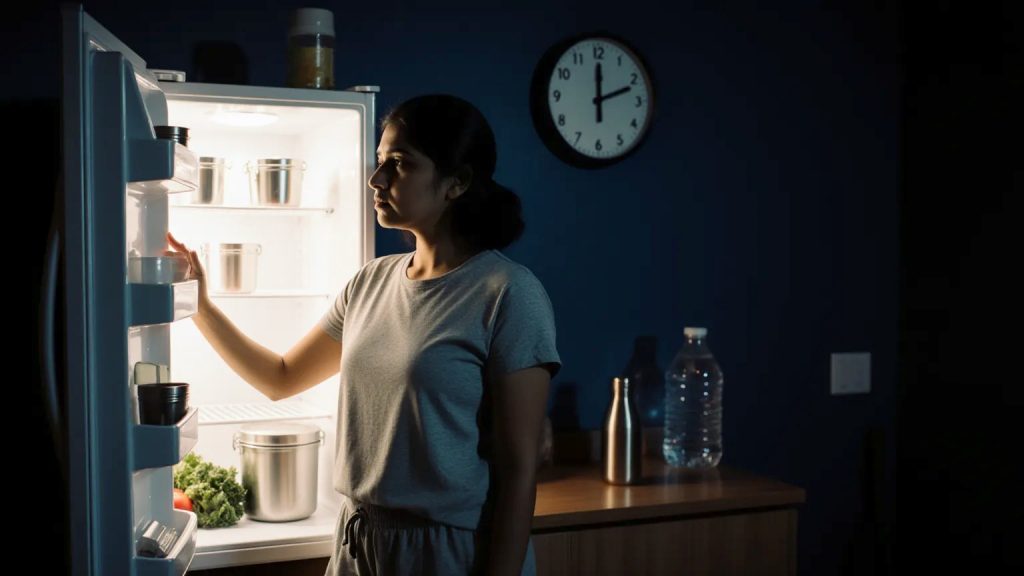
It is 10 pm. The deadline has passed, the inbox is finally quiet, and you are standing at the kitchen counter with a packet of chips you do not remember opening. You were not hungry. You were stressed, and what followed has a name: stress eating.
Stress eating is not a lack of willpower. It follows from the way stress acts on your hormones, your food choices and your daily routine. The effect is real, it varies from person to person, and there are practical ways to interrupt it.
Why does stress make you eat more?
Stress makes many people eat more because of the hormone cortisol. When stress lasts for days or weeks, cortisol stays raised, and it increases both appetite and the motivation to eat.
Stress also changes what you choose. Under pressure, people lean towards food that is high in fat, sugar or both, and eat less of the healthier food they would normally pick. Poor sleep, less movement and more alcohol often come with a stressful period and add to the effect.
What stress does inside your body
Researchers have identified several ways in which stress pushes eating up. They tend to act together.
1. Cortisol turns up your appetite
A sudden fright, like a near miss in traffic, does the opposite of what you might expect. The body releases adrenaline, which Harvard Health describes as putting eating on hold for a while.
Stress that does not let up is different. The adrenal glands release cortisol, which increases appetite. If the stress continues, cortisol can stay raised. Our guide to cortisol and chronic stress explains what else that does to the body.
2. Comfort food does comfort, briefly
Food that is rich in fat and sugar seems to dampen the body’s stress response and the emotions that go with it, according to Harvard Health. Much of this research has been done in animals, so the size of the effect in people is less certain.
The pattern is easy to learn all the same: stress, snack, relief. Repeated often enough, it can become a habit that runs without much thought.
3. Stress tilts your choices towards taste
In a 2015 study from the University of Zurich, 29 people put a hand in ice water for three minutes while being watched and evaluated. Another 22 did not. All of them were trying to maintain a healthy lifestyle.
When they then chose between a tasty, less healthy food and a healthier, less tasty one, the stressed group gave more weight to taste. Brain scans showed weaker connections between regions linked to self-control. The stress was moderate, which matters because moderate stress is far more common than extreme events.
4. Some people react more strongly than others
In a laboratory study of 59 women, those who released the most cortisol under stress ate more calories on the stress day than those who released less. On a calm day, the two groups ate about the same. The high-cortisol group also ate more sweet food.
Harvard Health describes a 2007 British study with a similar finding outside the laboratory. People with a strong cortisol response to stress were more likely to snack in response to everyday hassles.
5. Sleep, movement and alcohol shift too
People under stress tend to sleep less, exercise less and drink more alcohol. Each can add to weight gain. Sleep has the clearest link with eating: in pooled data from 11 trials, people ate about 385 kcal more when their sleep was cut short.
How big is the effect?
Smaller than it feels, on average. A 2022 analysis in Health Psychology Review pooled 54 studies covering 119,820 healthy adults. Stress was linked to eating slightly more overall, to eating more unhealthy food and to eating less healthy food. Each of these effects was small.
Averages hide a lot. Results differed widely from study to study, and the factors the authors tested explained little of that difference. The one that mattered was dietary restraint, meaning how strictly people try to limit what they eat.
Is it hunger, or is it stress?
The first skill is telling the two apart. The Mayo Clinic suggests a quick check: if you ate a few hours ago and your stomach is not rumbling, you are probably not hungry. The table below goes a step further.
| Physical hunger | Emotional hunger | |
| How it starts | Builds gradually | Arrives suddenly |
| What you want | Most foods sound fine | One specific food, usually sweet, salty or fried |
| Where you feel it | In the stomach | In the head, as a craving |
| When it stops | When you are full | Often continues past fullness |
| How you feel after | Satisfied | Guilty or uneasy |
Adapted from HelpGuide. Treat it as a rough guide, not a test.
If the right-hand column fits, food is unlikely to fix the problem. Something else might. Our mindful eating series has more on minding your mood before you eat.
Seven ways to break the cycle
You do not need all seven at once. Pick one or two that fit your day and build from there.
- Eat regular meals. Arriving at the evening very hungry makes cravings harder to manage, so try not to skip lunch on busy days. Meals built around dal, eggs, curd, vegetables and whole grains tend to keep you full for longer.
- Pause and check. When a craving hits, ask whether you are hungry or stressed. If it is stress, give the craving time to pass before you decide.
- Walk for 15 minutes. In a trial of 47 adults with overweight who regularly ate sugary snacks, a brisk 15-minute walk lowered cravings compared with sitting quietly. Cravings also rose less after a stress test.
- Give stress another exit. Meditation, exercise and time with supportive people all help to buffer stress, according to Harvard Health. A review of 14 studies found that mindfulness meditation appeared to reduce emotional eating and binge eating in people prone to them. Its effect on weight was mixed. For where to begin, see our guides to stress management techniques and the benefits of meditation.
- Rearrange your kitchen. Keep fruit, nuts or roasted chana within reach. Put biscuits and namkeen on a high shelf, or leave them out of the weekly shop. Avoid food shopping when you are upset.
- Protect your sleep. Short sleep is linked with eating more. A regular bedtime and wake-up time is the place to start, and our 12 science-backed tips for better sleep cover the rest.
- Sit down and slow down. Eat at a table, away from the phone and the laptop, and take your time. It is easier to notice when you have had enough. Eating too quickly is one of the everyday habits we have linked with weight gain.
Go easy on the rules, and on yourself. Banning every treat can make cravings stronger, the Mayo Clinic notes. In a study of college women, a short exercise in self-compassion reduced overeating after an unhealthy snack among those who restricted their eating most strictly. A slip is one snack. Make the next meal a normal one and move on.
When to ask for help
Occasional stress eating is common and is not a medical problem. It is different from binge eating disorder, a recognised condition that needs proper support. The NHS lists these signs:
- Eating a lot of food in a short time and not being able to stop when full
- Eating when not hungry
- Eating very fast during a binge
- Eating alone or in secret
- Feeling depressed, guilty, ashamed or disgusted afterwards
If these sound familiar, see a doctor as soon as you can. Treatment usually involves guided self-help or cognitive behavioural therapy, and most people recover with the right support. Our article on the difference between emotional eating and binge eating disorder explains more.
Speak to a doctor or mental health professional as well if stress itself feels unmanageable, or if you cannot get emotional eating under control on your own.
The takeaway
Stress will always be part of life. Reaching for food every time it shows up does not have to be. Notice the trigger, pause before you eat, and give your body what it is really asking for: rest, movement, connection or a proper meal. Start with one small change this week.
Pro Tip: Stress eating is easier to change once you can see it. Log your meals, mood, sleep and activity in the GOQii App for two weeks and look for the times and triggers that repeat. A GOQii Personalised Health Coach can help you plan meals around busy days and build other ways to unwind.
#BeTheForce
Frequently asked questions
Why do I eat more when I am stressed?
Ongoing stress keeps the hormone cortisol raised, and cortisol increases appetite and the motivation to eat. Stress also makes rich food more appealing and often disrupts sleep, which adds to the effect.
Why do I crave sweet or fried food when I am stressed?
Food high in fat and sugar appears to dampen the body’s stress response for a short time, so it feels soothing. In one study, people under moderate stress gave more weight to taste than to health when choosing food.
Why do some people lose their appetite under stress?
Sudden, short-term stress releases adrenaline, which puts eating on hold. This fight-or-flight response is temporary. If the stress continues, cortisol stays raised and appetite tends to rise.
Does stress eating cause weight gain?
It can over time, though the evidence varies. Harvard Health reports one study that linked stress with weight gain only in people who were already overweight. A Finnish study of more than 5,000 people linked stress-related eating with obesity in women but not in men.
How can I stop stress eating at night?
Eat regular meals during the day so that you do not reach the evening very hungry. Keep tempting snacks out of sight, and plan another way to unwind, such as a 15-minute walk after dinner.
Is stress eating the same as binge eating disorder?
No. Stress eating is an occasional response to pressure. Binge eating disorder involves regularly eating a lot of food in a short time, feeling unable to stop and feeling distressed afterwards. It is a medical condition, and a doctor can arrange treatment.
Disclaimer: This article is for general information and education only. It is not a substitute for professional medical advice, diagnosis or treatment. If eating feels out of control, if you are worried about your relationship with food, or if stress is affecting your health, please speak to a qualified healthcare professional.
 The Big Question
 The Big Question


