GOQii

Blog

  • HOME
  • HEALTHY LIVING
  • FITNESS
  • HEALTHY RECIPES
  • USER STORIES
  • KARMA
  • BUY GOQii

February 25, 2023 By Navnee Garg 3 Comments

Healthy Fats vs. Unhealthy Fats: Weight Loss, Heart Health & More

healthy fats

“Fat” used to be a bad word in nutrition. Years ago, your doctor might have recommended that you limit or avoid fat in your diet. You will be surprised to know that all fats aren’t bad. In fact, some ‘healthy fats’ lower your cholesterol level and help keep you healthy.

What are Dietary Fats?

Dietary fats are essential to give your body energy and to support cell growth. They also help protect your organs and help keep your body warm. Fats help your body absorb some nutrients and produce important hormones too. Your body definitely needs fat.

Healthy Fats vs Unhealthy Fats

Since fats are an important part of a healthy diet, rather than adopting a low-fat diet, it’s more important to focus on eating more beneficial “good” fats and limiting harmful “bad” fats.

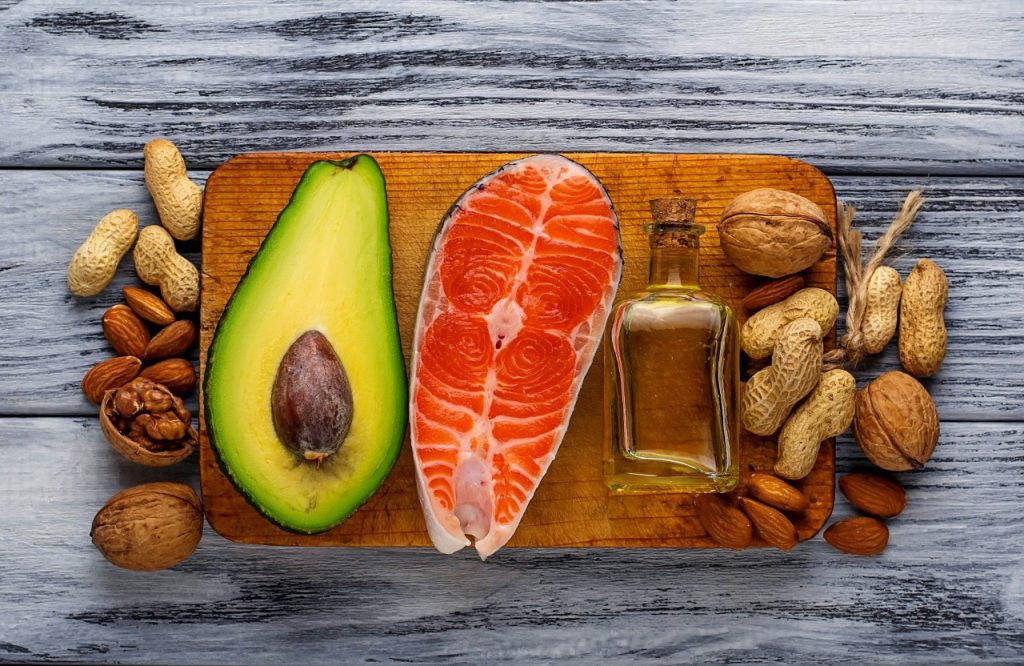
1. Monounsaturated fats and polyunsaturated fats are known as the “good fats” or “healthy fats” because they are good for your heart, your cholesterol, and your overall health. Adding more of these healthy fats to your diet may help to make you feel more satisfied after a meal, reducing hunger and thus promoting weight loss.

Sources: Olives, Avocado, Nuts, Peanut butter, flaxseed, walnut, soymilk, tofu.

2. Unhealthy or “Bad” fat are the Trans Fats. Small amounts of naturally occurring Trans Fats can be found in meat and dairy products but it is artificial Trans Fats that are considered dangerous. This is the worst type of fat since it not only raises bad LDL cholesterol but also lowers good HDL levels.

Sources: Commercially-baked pastries, cookies, doughnuts, muffins, cakes, pizza dough, Fried foods (French fries, fried chicken, chicken nuggets, breaded fish), Anything containing hydrogenated or partially hydrogenated vegetable oil, even if it claims to be “Trans Fat-Free”.

3. Saturated fats, while not as harmful as Trans Fats, can raise bad LDL cholesterol and too much can negatively impact heart health, so it’s best consumed in moderation.

Sources: Red meat, butter, ice cream, chicken skin.

Tips to Add More Healthy Fats to Your Diet

Instead of obsessively counting fat grams, aim for a diet rich in a variety of vegetables, fruit, nuts, and beans, with two or more weekly servings of fatty fish, moderate amounts of dairy, small amounts of red meat, and only occasional fried or processed meals.

  1. Say NO to Trans Fats from your diet. Check food labels for Trans Fats. Limiting commercially-baked goods and fast food can go a long way.
  2. Limit your intake of saturated fats by replacing some of the red meat you eat with beans, nuts, poultry, and fish, and switching from whole milk dairy to lower fat versions.
  3. Prefer Omega-3 Fats: Include a variety of fish sources as well as plant sources such as walnuts, ground flax seeds, flaxseed oil, canola oil, and soybean oil.
  4. Cook With Olive Oil: Use olive oil for stovetop cooking rather than butter, stick margarine, or lard. For baking, try canola oil.
  5. Eat More Avocados: Try them in sandwiches or salads. Along with being loaded with heart- and brain-healthy fats, they make for a filling meal.
  6. Go Nuts: You can add nuts to vegetable dishes, use them instead of breadcrumbs on chicken or fish, or make your own trail mix with nuts, seeds, and dried fruit.
  7. Snack on Olives: Olives are high in healthy monounsaturated fats and make for a low-calorie snack.
  8. Dress Your Own Salad: Commercial salad dressings are often high in unhealthy fat or added sugars. Create your own healthy dressings with olive, flaxseed, or sesame oils.

Want to know some Healthy Fat based recipes? Stay tuned for the next part of the article!

We hope this article helps you make more informed decisions on eating healthy fats. Do leave your thoughts in the comments below. For more on nutrition, check out Healthy Reads or speak to a GOQii Coach by subscribing for Personalised Health Coaching here.

#BeTheForce

February 18, 2023 By GOQii 4 Comments

How Digvijay Singh Reversed Chronic BP Issues & Lost Weight With GOQii

Digvijay Singh

Do you feel that no matter what you do, you’re unable to lose weight? You go for walks, meditate and even eat right but that scale doesn’t budge while lifestyle diseases plague you. Our Player Digvijay Singh was stuck in a similar predicament. 

Life Before GOQii 

Digvijay Singh, a 63 year old retired public sector professional from Nagpur, was always conscious about his health and lifestyle. He took regular walks and even practiced Pranayama but no matter what he did, he could not lose weight. He weighed around 90kg and suffered from chronic blood pressure issues. 

Introduction to GOQii & Making Lifestyle Changes 

During his anniversary in 2016, his daughters gifted him a GOQii device with 3 months of subscription. When he joined, his goal was to reduce weight and control his BP issues. While initially he faced difficulty, there was progress. 

Between 2016-2019, he says that his progress was quite slow. His BP was still high at 140/90 and cholesterol levels were out of range. To help him achieve his goal, his GOQii Coach introduced a few lifestyle changes which included: 

  • Normal walks, interval walks and strength training 
  • Consuming apple cider vinegar and salads to his meals 
  • Early dinner 
  • No processed foods 

Eventually, Digvijay Singh’s cholesterol levels and BP both came down to a normal range. His weight has reduced and has remained constant since then. He has been able to lose 12kg and go from 84 to 72 kg within 8 months. 

Digvijay Singh is happy with the fact that his GOQii journey that started 5 years back, is still continuing. He says that with his GOQii Coach’s advice, his lifestyle has completely changed. He further stated, “Basically what GOQii did was that it disciplined me”. 

His daughters say that he is an inspiration. He is disciplined and follows what his GOQii Coach says. His eating habits have also changed. They said that they are glad about how his health has improved, he has been able to control his BP and looks fitter than before! They said, “Now the entire family (extended) knows about GOQii because of Dada and it is his best gift to anyone he thinks needs it”. 

To understand Digvijay Singh’s journey, check out this session of GOQii Health Talks, where he and his family spoke to our Founder & CEO Vishal Gondal.

What Does Coach Monika Raj Have To Say About Digvijay Singh? 

Digvijay has been a great learner! He always follows the habits I set for him. When we first started, his blood pressure was high at 140/90 and cholesterol levels were out of range. Then slowly, we started with minor lifestyle modifications. In a span of time, his fat percentage ranging from 35% to 40%, came down to 25%. 

We started with walks that ranged from normal walking to interval walks and then strength training. He was so consistent in walking that I had to stop him and make his regime for just 5 days a week so that  he could rest and recover well. Since then  he has been able to maintain it well.

We added salads to his meals and made sure his dinner was light. I also asked him to consume Apple Cider Vinegar before lunch and dinner, less salt in meals and completely avoid processed foods among a few other changes. 

For the past 5 years, he has never missed salads in his meals and has never missed crossing 10k steps. I am really overwhelmed and motivated to see his efforts and consistency.  

Does this story inspire you? Did it sound relatable? Want to make a lifestyle change? If yes, then speak to your GOQii Coach today by subscribing for personalized coaching here: https://goqiiapp.page.link/bsr

To read more inspiring stories, check out Healthy Reads. 

#BeTheForce 

January 30, 2023 By Swati Savla 1 Comment

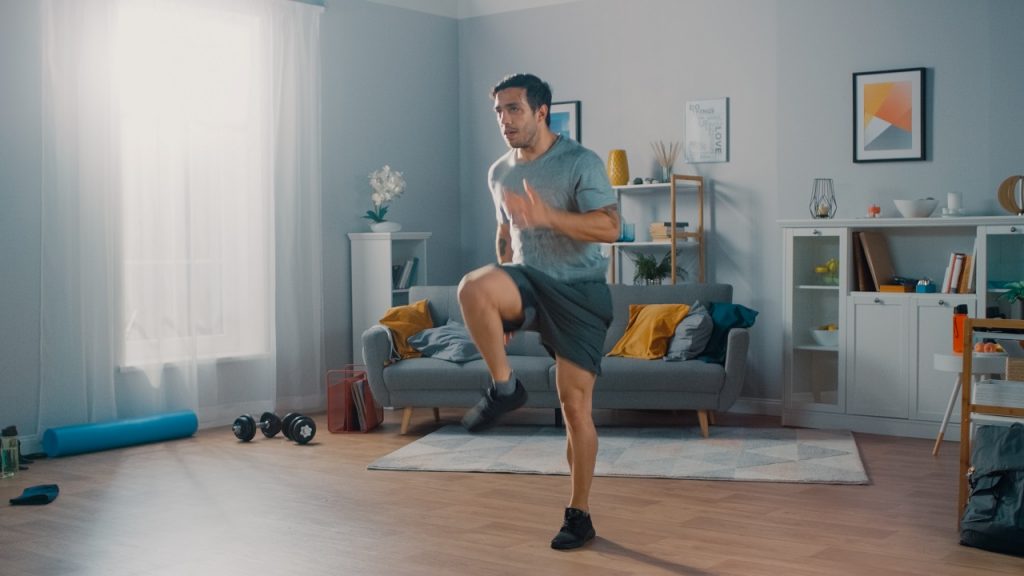
Cardio For Weight Loss: High Intensity vs Low Intensity

cardio for weight loss

We are well aware that Cardio is the best form of exercise to achieve any kind of weight or fat loss. But to understand the intensity required to achieve this, is still a little unclear. While researching, I kept coming back to the same question, what’s better – high-intensity or low-intensity training? There’s just way too much information trying to sway readers without considering their individual goals and needs. 

Don’t worry! We’ve put together a few things you should know about in this article. It will give you a better idea of what low-intensity and high-intensity cardio training mean and will also help you decide which one you should go for! 

Low Intensity Cardio 

This workout encompasses consistent movements anywhere between 30-60 mins. It includes walking, cycling, swimming, light jogging, etc. The intensity is approx 40-60% of your maximum heart rate (your maximum heart rate = 220 – your age). 

Benefits: 

  • Consistent movements help maintain a steady heart rate (one can talk while doing any of these exercises)
  • You use more oxygen in these kind of exercises (hence fat is used as energy source)
  • Helps reduce the risk of cardiovascular disease by promoting good blood circulation
  • Reduces hyperglycemia (elevated blood sugar levels) in people with diabetes
  • Builds muscular endurance 

Disadvantages:

  • Due to the principle of adaptation, the body quickly adapts to become more aerobically efficient. So only doing low intensity training can eventually become counterproductive to your goals, especially if one of your goals is long-term fat loss or when you hit a plateau.
  • To keep up with the body’s quick aerobic adaptation process, a person would need to continually run for longer and longer distances and durations just to burn the same amount of calories they did when they first started.

High Intensity Workouts 

These workouts include quick, intense exercise bouts and short rest periods. Ranging from 4-30 minutes max. These types of workouts include a combination of sprints, burpees, squats, jumping jacks, pushups and an endless variety of other drills using only body weight or sometimes equipment like dumbbells or kettlebells. The intensity varies from 70-90% of maximum heart rate with 60-65% max heart rate in rest periods. 

Benefits: 

  • No equipment or gym needed as it can be done anywhere (great for frequent travelers)
  • Helps build muscle mass
  • Time efficient: energy is burned more quickly and even after exercise
  • Anaerobic exercise, since there is no time for oxygen consumption, the body burns more carbs
  • Because of the oxygen debt created, the body consumes extra oxygen post workout (EPOC- excess post-exercise oxygen consumption) and hence, continues burning fat post workout as well. So it has the dual benefit of carb and fat burning.

Disadvantages:

  • The body requires a day or two post HIIT for recovery, so this form of workout cannot be done daily.
  • It is physically intense! They are also harsh on your joints due to the high impact forces created in exercises like Burpees or Squat Jumps. So, if you’re just starting your fitness journey or have weak joints, HIIT cardio may not be the best place to start.

Which One Should You Choose?

It depends on you, your current level of fitness, your preferences and goals. Low-intensity is a great place to start if you have not worked out for a long time or are recovering from an injury. But if you already have experience and want to switch things up, lose some weight quickly or finally achieve your goal of going faster or further, give intervals a try. Don’t forget to be mindful of your body. Take breaks when you need to, don’t overtrain. Your body needs to rest, heal and progress! 

We hope this article on cardio for weight loss helps you achieve your goals! To learn more, check out Healthy Reads or tune in to live, interactive sessions on GOQii PRO by booking a class via the GOQii App, where you can get one-on-one guidance in real time by certified fitness experts.  

Get active and #BeTheForce 

December 16, 2022 By Urvi Gohil 2 Comments

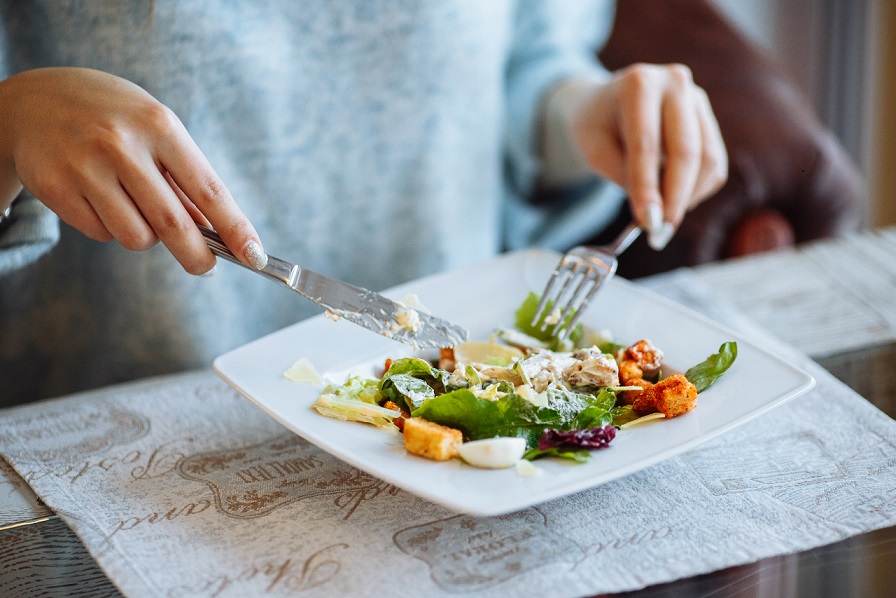
Why You Should Eat Slowly For Good Health & Better Digestion

Eat SlowlyMary Roach, in her book, Gulp: Adventures on the Alimentary Canal describes the digestive system as a highly elaborate inside of the tube that starts at the mouth and ends at the anus.



Let’s address an important facet of pre-digestion: Chewing – a much neglected lifestyle habit.

What Happens When You Eat Slowly?

The chewing process serves as the first step to proper digestion. Two interesting things happen while chewing: Firstly, Ptyalin, which is required for digestion of carbohydrates is secreted. The other thing is that the brain kicks into action and recognizes whether you are chewing proteins, carbohydrates or fats and accordingly tells the stomach to secrete the right enzymes.

It takes approximately 20 minutes from the time you start eating for your brain to send out signals of fullness. When you eat slowly, it allows ample of time to trigger the signal from your brain that you are full. Feeling full translates into eating less.

Speed eating, gorging and binge eating majorly contribute to unhealthy weight gain. Studies confirmed that chewing every bite for a longer period of time helps you lose weight and improve digestion. This is because it provides more time for your brain to receive the signal. Therefore, the slower you chew, the lesser you eat and the more satisfied you are. Eating fast promotes weight gain and makes you feel out of control of your eating habits.

Follow These Simple Steps! 

  • The very first step to mindful eating is to choose the smallest plate in your house. Take that plate and serve your portions and sit
  • Sit down to eat in a calm environment with minimal distractions. It is your time with your food. Don’t eat while driving, watching TV, while texting, etc.
  • Add 1 exchange of raw or cooked vegetables right before the main meal and use a fork to eat it. Try setting a minimum number of chews per bite
  • Look at your plate and see how colorful it is and what good it is going to do to your body. Sense the aroma and question yourself about its nutrition
  • Take a fork or chop stick to eat your meal. If you’re eating roti-sabji, take very small bites of the roti and more vegetables. Chew 30 times or more per bite and gulp it down
  • Set your time to eat. At least 20-30 minutes for each meal and preferably even longer at dinner. This will set your relationship with food
  • When you eat slowly, it improves your health in more ways than one. It leads to better digestion, better absorption, reduced bloating, acidity & constipation as well as aids weight management

So eat slowly, chew properly and live healthy! We hope this article helps you chew your food for better digestion and absorption of all those precious nutrients. Do let us know your thoughts in the comments below!

For more health tips like this, check out Healthy Reads or speak to an expert by subscribing for GOQii’s Personalised Health Coaching here: https://goqiiapp.page.link/bsr

#BeTheForce

  • « Previous Page
  • 1
  • …
  • 17
  • 18
  • 19
  • 20
  • 21
  • …
  • 29
  • Next Page »

Search

Recent Posts

  • Best Foods To Alleviate Irritable Bowel Syndrome
  • ALL ABOUT VERTIGO!
  • PCOS and Anxiety: Discover Relief with the 54321 Technique
  • Navigating the Maze of Nutrition: Finding Clarity Amidst Confusion
  • Get children active and keep them healthy

Stay Updated

Archives

  • December 2025 (6)
  • November 2025 (15)
  • October 2025 (20)
  • September 2025 (6)
  • August 2025 (6)
  • July 2025 (12)
  • June 2025 (18)
  • May 2025 (16)
  • April 2025 (23)
  • March 2025 (23)
  • February 2025 (22)
  • January 2025 (26)
  • December 2024 (26)
  • November 2024 (25)
  • October 2024 (22)
  • September 2024 (24)
  • August 2024 (31)
  • July 2024 (21)
  • June 2024 (26)
  • May 2024 (31)
  • April 2024 (27)
  • March 2024 (29)
  • February 2024 (26)
  • January 2024 (25)
  • December 2023 (15)
  • November 2023 (11)
  • October 2023 (22)
  • September 2023 (22)
  • August 2023 (20)
  • July 2023 (22)
  • June 2023 (24)
  • May 2023 (24)
  • April 2023 (24)
  • March 2023 (23)
  • February 2023 (20)
  • January 2023 (16)
  • December 2022 (12)
  • November 2022 (15)
  • October 2022 (15)
  • September 2022 (12)
  • August 2022 (10)
  • July 2022 (17)
  • June 2022 (11)
  • May 2022 (10)
  • April 2022 (6)
  • March 2022 (6)
  • February 2022 (13)
  • January 2022 (12)
  • December 2021 (7)
  • November 2021 (3)
  • October 2021 (6)
  • September 2021 (3)
  • August 2021 (8)
  • July 2021 (7)
  • June 2021 (15)
  • May 2021 (16)
  • April 2021 (10)
  • March 2021 (7)
  • February 2021 (4)
  • January 2021 (4)
  • December 2020 (3)
  • November 2020 (4)
  • October 2020 (10)
  • September 2020 (3)
  • August 2020 (3)
  • July 2020 (2)
  • June 2020 (4)
  • May 2020 (10)
  • April 2020 (12)
  • March 2020 (10)
  • February 2020 (4)
  • January 2020 (4)
  • December 2019 (3)
  • November 2019 (7)
  • October 2019 (5)
  • September 2019 (4)
  • August 2019 (9)
  • July 2019 (9)
  • June 2019 (11)
  • May 2019 (4)
  • April 2019 (9)
  • March 2019 (8)
  • February 2019 (9)
  • January 2019 (8)
  • December 2018 (9)
  • November 2018 (3)
  • October 2018 (3)
  • September 2018 (5)
  • August 2018 (10)
  • July 2018 (6)
  • June 2018 (13)
  • May 2018 (8)
  • April 2018 (18)
  • March 2018 (9)
  • February 2018 (8)
  • January 2018 (15)
  • December 2017 (12)
  • November 2017 (19)
  • October 2017 (13)
  • September 2017 (15)
  • August 2017 (4)
  • July 2017 (8)
  • June 2017 (7)
  • May 2017 (6)
  • April 2017 (8)
  • March 2017 (6)
  • February 2017 (7)
  • January 2017 (9)
  • December 2016 (10)
  • November 2016 (7)
  • October 2016 (7)
  • September 2016 (7)
  • August 2016 (11)
  • July 2016 (9)
  • June 2016 (9)
  • May 2016 (12)
  • April 2016 (17)
  • March 2016 (17)
  • February 2016 (8)
  • January 2016 (6)
  • December 2015 (2)
  • November 2015 (9)
  • October 2015 (7)
  • September 2015 (9)
  • August 2015 (11)
  • July 2015 (9)
  • June 2015 (12)
  • May 2015 (9)
  • April 2015 (13)
  • March 2015 (8)
  • February 2015 (5)
  • January 2015 (12)
  • December 2014 (14)
  • November 2014 (11)
  • October 2014 (6)
  • September 2014 (13)
  • August 2014 (12)
  • July 2014 (6)
  • June 2014 (2)
  • May 2014 (7)
  • April 2014 (5)

From “Laddu Nawin” to Fit and Fierce: How a 25-Year-Old Insurance Advisor Shed 20 Kilos and Gained His Life Back

When 25-year-old Nawin Yadav from Hyderabad walked into his office every morning, he carried more than just his files and policy papers. He had the weight of fatigue, sluggish energy, and an ever-growing belly that was becoming the butt of jokes. “People … [Read More...]

“I’ve Challenged Myself to Live 100 Years” – The Story of Chandubhai Savani’s Second Chance at Life

At 67, most people start slowing down. Not Chandubhai Savani. A resident of Surat, Chandubhai, thought life was on track. “My life was going well till I had my bypass surgery,” he says. That surgery, back in 2021, was a wake-up call.  Medication was routine, but exercise wasn’t. His diet? What he calls ‘normal.’ “I […]

From Shimla’s Slopes to Chandigarh’s Sidewalks: Surinder Kaur Bhalla’s Journey from Chaos to Control

Some journeys start with a plan. Others begin with a stumble literally. Surinder Bhalla, a government professional, born and raised in the scenic hill town of Shimla, had always lived a life of movement. “In Shimla, you walked everywhere,” she reflects. “Walking was never an exercise. It was just life.” But after shifting to Chandigarh, […]

Ananda Mukherjee Health Story

From Terminal Illness To Complete Wellness! Ananda Mukherjee Health Story

As we observe World Cancer Day under the powerful theme ‘United by Unique’ (2025-2027)**, we are reminded that every individual’s journey with cancer is distinct, yet united by shared resilience, hope, and the collective fight against this disease. This theme places people at the centre of care and their stories at the heart of the […]

  • HOME
  • HEALTHY LIVING
  • FITNESS
  • HEALTHY RECIPES
  • USER STORIES
  • KARMA
  • BUY GOQii

Copyright ©2016 GOQii