GOQii

Blog

  • HOME
  • HEALTHY LIVING
  • FITNESS
  • HEALTHY RECIPES
  • USER STORIES
  • KARMA
  • BUY GOQii

June 7, 2026 By GOQii Leave a Comment

Unmasking the Label: What Hidden Additives May Be Doing to Your Gut

The Big Question: How do highly processed foods and hidden additives affect long-term gut health?

The World Food Safety Day 2026 theme, “From burden to solutions – safe food everywhere,” encourages us to think beyond bacterial food contamination and consider the overall biological quality of the food we eat. While food additives help improve texture, shelf life, and consistency, research suggests that certain chemicals commonly found in ultra-processed foods negatively influence gut health, gut barrier function, and the balance of beneficial bacteria in our digestive system. Understanding food labels and choosing minimally processed foods is the ultimate solution to support long-term digestive health and healthy weight management.

Observed globally on June 7th, World Food Safety Day is led by the World Health Organization (WHO) and the Food and Agriculture Organization (FAO) to raise awareness about safe food practices.

Traditionally, food safety has focused on preventing food-borne illnesses, bacterial contamination, and improper food handling. These remain incredibly important concerns. However, modern food environments present another massive challenge: understanding what is actually inside the packaged foods we consume every day.

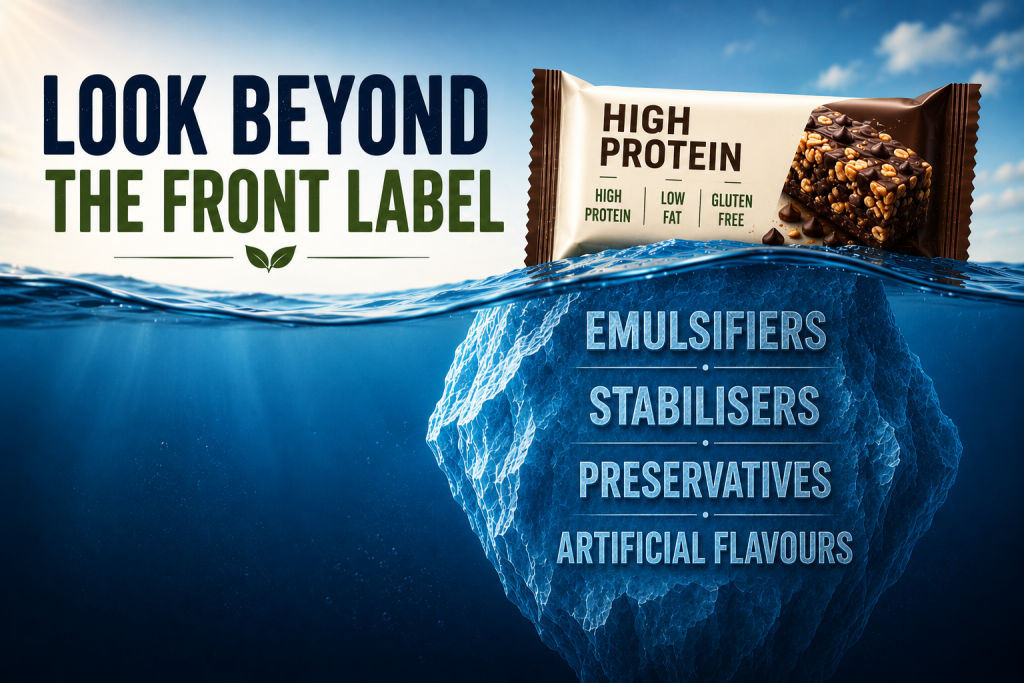
Many products aggressively marketed as “high protein,” “low fat,” “vegan,” “gluten-free,” or simply “healthy” often contain long ingredient lists filled with stabilisers, emulsifiers, sweeteners, preservatives, and flavour enhancers. While this doesn’t automatically make them acutely toxic, it does raise an important biological question regarding how these ultra-processed foods affect our cellular health over decades.

Safe Food Isn’t Just About What You Avoid

Food safety isn’t only about avoiding spoiled or expired food. It is also about proactively choosing foods that support long-term health and wellbeing.

One of the most useful habits you can build is learning to look beyond the slick marketing claims on the front of a package and paying strict attention to the ingredient list on the back. The shorter and more recognisable the ingredient list, the easier it is to understand exactly what you are putting into your body.

Why Reading the Ingredient List Matters

Food manufacturers use various additives to improve texture, appearance, shelf life, and consistency. Some commonly used chemical ingredients include:

  • Polysorbate 80
  • Carboxymethylcellulose (CMC)
  • Carrageenan
  • Xanthan Gum & Guar Gum
  • Maltodextrin

Many of these ingredients have been approved for use within regulatory guidelines. However, researchers continue to study how frequent consumption of certain additives may affect the human microbiome, particularly when they are consumed regularly through highly processed diets. The concern is often not a single ingredient in isolation, but rather the cumulative, compounding effect of consuming large amounts of ultra-processed foods day after day.

Ultra-Processed Foods and Gut Health

Ultra-processed foods (UPFs) are products that typically contain multiple ingredients and chemicals not commonly used in a standard home kitchen. Examples include packaged snacks, flavoured yogurts, ready-to-drink beverages, protein bars, instant meals, and many convenience foods.

Not all packaged foods are unhealthy. The key question is how heavily processed the product is and whether it still biologically resembles real food. Emerging research suggests that diets high in ultra-processed foods may be associated with reduced microbial diversity, increased systemic inflammation, poorer dietary quality, and severe disruptions to normal digestive function.

Supporting your gut becomes increasingly important in a food environment dominated by convenience products.

Understanding Gut Barrier Function

The digestive tract contains a highly protective mucosal lining that acts as a barrier between the contents of the gut and your bloodstream. This barrier helps absorb microscopic nutrients, support immune function, and maintain digestive health.

Researchers are continuing to explore how dietary patterns, chemical food additives, mindful eating habits, and lifestyle factors may influence gut barrier function. When this barrier becomes compromised, people may experience chronic symptoms such as bloating, digestive discomfort, irregular bowel habits, or sudden increased food sensitivities.

Digestive health is rarely influenced by a single food. Instead, it reflects the combined impact of your diet, lifestyle, sleep, stress management, and overall health habits.

The “Healthy” Packaged Food Trap

One of the biggest misconceptions in modern nutrition is assuming that health claims automatically mean a product is nutritious. A food can be high protein, vegan, low fat, or sugar-free while still being heavily, chemically processed.

Rather than focusing solely on marketing labels, ask yourself: How many ingredients are listed? Can I recognise most of them? Does this product still resemble real food?

Packaged Option

What to Watch For (The Additives)   Simpler Alternative
Flavoured Yogurt Added sugars, stabilisers, artificial dyes Plain curd or unsweetened yogurt with fresh fruit
Protein Bars Syrups, maltodextrin, artificial sweeteners Nuts, seeds, fresh fruit, or boiled eggs
Packaged Plant Milks Long ingredient lists, gums, seed oils Unsweetened varieties with minimal ingredients
Ready-Made Dressings Preservatives, emulsifiers, added sugars Olive oil, fresh lemon juice, and herbs

3 Simple Rules for Everyday Food Safety

  1. Prioritise Whole Foods

Foods that look close to their natural form are often easier to evaluate and generally provide far more nutritional value. Examples include fruits, vegetables, legumes, nuts, seeds, eggs, and minimally processed dairy products. Incorporating clean, single-ingredient foods into your healthy meal prep routine is the fastest way to upgrade your health.

  1. Read Beyond the Front Label

Marketing claims tell only part of the story. The ingredient list provides a much clearer, legally accurate picture of what a product actually contains.

  1. Support Your Gut Daily

A healthy gut thrives on fibre-rich foods, diverse plant foods, fermented foods, proper hydration, daily movement, and adequate sleep. Building strong digestive health organically is usually much more effective than chasing quick-fix “detox” solutions.

Food safety is evolving. Today, it isn’t just about avoiding foodborne illness it is also about understanding how modern, ultra-processed food choices influence your long-term cellular health. While research into food additives and gut health continues to develop, one principle remains consistent: the closer food is to its natural form, the easier it is to understand, evaluate, and incorporate into a healthy lifestyle.

This World Food Safety Day, take a closer look at the labels in your kitchen. Because informed food choices are one of the most practical ways to support both your digestive health and natural immunity!

Pro Tip: Use the GOQii App to track your meals and monitor how different foods affect your digestion, energy levels, and overall wellbeing. Your GOQii Personalised Health Coach can help you identify highly processed foods and suggest practical whole-food alternatives that fit seamlessly into your lifestyle.

Frequently Asked Questions (FAQs)

  1. Are all food additives harmful?

No. Many food additives are approved for use and serve important functions such as preserving freshness (like Vitamin C or citric acid) and improving food safety. The concern is generally around the frequent, cumulative consumption of highly synthetic chemicals in ultra-processed foods rather than any single natural additive.

  1. What are ultra-processed foods (UPFs)?

Ultra-processed foods are products that contain multiple ingredients, artificial additives, flavourings, or industrial processing methods not commonly used in home cooking.

  1. Can highly processed foods affect gut health?

Yes. Emerging clinical research suggests that diets high in ultra-processed foods may heavily influence gut microbiome diversity, trigger systemic inflammation, and impair long-term digestive health.

  1. What is the easiest way to improve gut health?

Focus on eating more fibre-rich whole foods, consuming a wide variety of plant foods, staying hydrated, getting enough quality sleep, and actively managing daily stress.

#BeTheForce

Disclaimer: This article is intended for educational purposes only. If you suffer from chronic gastrointestinal issues, severe bloating, or suspect you have a metabolic disorder, please consult a clinical nutritionist or gastroenterologist for personalized dietary intervention.

June 6, 2026 By GOQii 14 Comments

5 Healthy Smoothies to Support Weight Loss: The Power of Fiber

Juices for weight lossThe Big Question: Are liquid blends actually effective for weight loss?
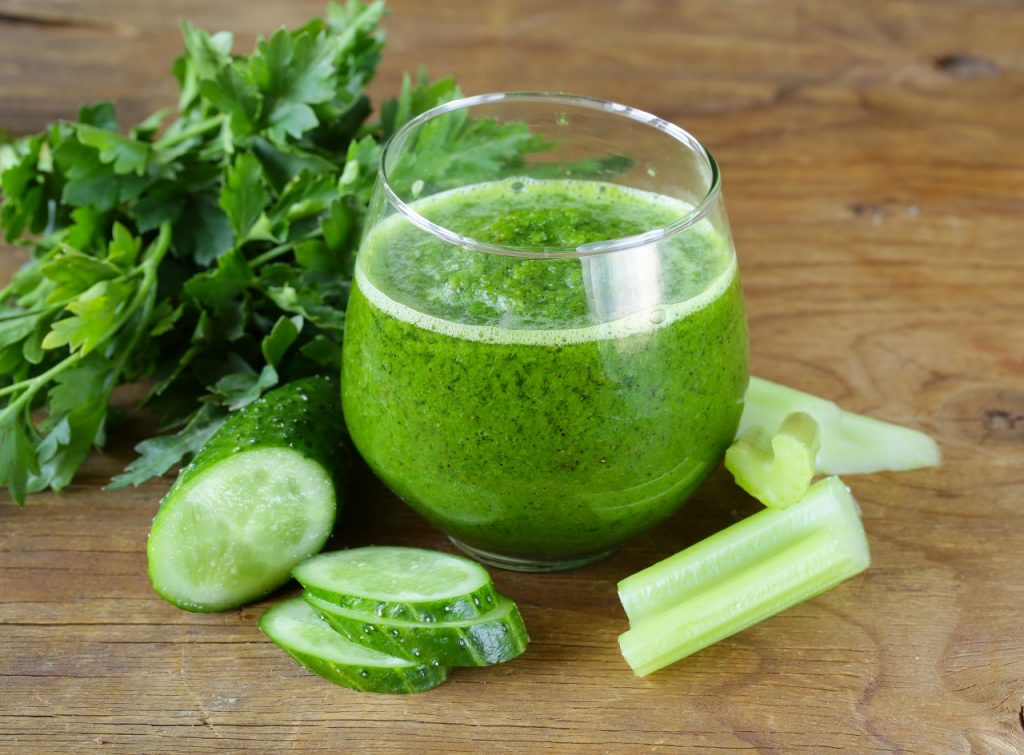
While no single drink can directly cause weight loss, nutrient-dense smoothies are a highly effective tool when used correctly. The key is to blend whole fruits and vegetables rather than juicing them. Blending retains the essential dietary fiber, which prevents rapid blood sugar spikes, promotes early satiety, and supports healthy digestion. When combined with a balanced diet and regular movement, these high-fiber smoothies provide vital hydration and micronutrients while safely supporting a caloric deficit.

One of the absolute simplest ways to increase your daily intake of fresh fruits and vegetables is through homemade smoothies.

However, a common pitfall in many weight-loss journeys is relying heavily on commercially extracted fruit juices. Traditional juicing strips away the fibrous pulp, leaving you with a highly concentrated glass of fructose that can spike your blood sugar and stall your progress.

Smoothies, on the other hand, retain the whole plant. This means you consume all the gut-friendly fiber, keeping you full and stabilizing your energy levels. Here are five nutrient-rich, healthy smoothie recipes that perfectly complement an active lifestyle and support sustainable weight management.

The Smoothie Quick Guide

Smoothie Key Ingredients Primary Health Benefit
1. Clean & Green Kale, Celery, Apple, Basil High fiber; excellent for daily hydration and antioxidants.
2. The Red Engine Beetroot, Carrot, Strawberry Vitamin C boost; provides natural energy for active days.
3. Hydration Station Watermelon, Mint, Kale Highly hydrating; mint adds a refreshing, light finish.
4. Green Lemon Spinach, Lemon, Apple Lemon provides a low-calorie flavor boost alongside essential iron.
5. Kiwi Cooler Kiwi, Cucumber, Lemon High water content; helps you feel fuller for longer.

5 Nutrient-Rich Blends for Your Journey

1. Clean & Green Smoothie

juices for weight lossThis smoothie is packed with fiber, antioxidants, and hydration-supporting ingredients. The apple adds a touch of natural sweetness, while the kale and basil contribute valuable, leafy micronutrients.

Ingredients:

  • 1 Apple
  • 1 cup Kale
  • 1 Celery stalk
  • 1/2 Cucumber
  • A handful of fresh Basil leaves
  • 1/4 cup Water

Method:

  1. Wash and roughly chop the produce.
  2. Add all ingredients to a blender.
  3. Blend on high until completely smooth. Add extra water or ice to adjust the consistency to your liking.

2. Beetroot, Carrot & Strawberry Smoothie

Beetroot and carrots provide excellent dietary fiber and earthy antioxidants, while the strawberries add a burst of Vitamin C and natural sweetness. This brightly colored smoothie is a fantastic, energizing addition to an active lifestyle.

Ingredients:

  • 1 small Beetroot
  • 2 Carrots
  • 5 to 6 Strawberries
  • 1/4 cup Water

Method:

  1. Peel and chop the beetroot and carrots into small pieces to help them blend easily.
  2. Add the chopped root vegetables, strawberries, and water to a blender.
  3. Blend until smooth, adding ice if you prefer a chilled drink.

3. Mint, Watermelon and Kale Smoothie

Watermelon is naturally hydrating and serves as a fantastic, low-calorie liquid base. The mint adds a crisp freshness, while the kale ensures you are sneaking in a serving of dark leafy greens. It is a brilliant, light option for warmer days.

Ingredients:

  • 1.5 to 2 cups Watermelon
  • A handful of fresh Mint leaves
  • 3 Kale leaves
  • 1/4 cup Water

Method:

  1. Wash the kale and mint thoroughly.
  2. Chop the watermelon and remove any hard black seeds.
  3. Blend all ingredients together until perfectly smooth.

4. Green Spinach Lemonade Smoothie

Spinach provides a massive dose of essential nutrients, while the apple (keep the skin on!) adds pectin fiber and natural sweetness. The lemon juice adds a zesty, refreshing flavor without adding any excess calories.

Ingredients:

  • Juice of 1/2 Lemon
  • 1 cup Spinach
  • 1 Apple (with skin)
  • 1/2 cup Water

Method:

  1. Core and chop the apple.
  2. Add the spinach, freshly squeezed lemon juice, apple, and water to the blender.
  3. Blend until smooth, adding extra water if the mixture is too thick.

5. Cucumber Kiwi Smoothie

This smoothie is incredibly light, hydrating, and rich in Vitamin C. Because cucumbers have such a high water content, this blend helps physically fill your stomach, signaling early satiety without breaking your caloric goals.
Ingredients:

  • 2 Kiwis
  • 1 Cucumber
  • Juice of 1/2 Lemon
  • 1/4 cup Water

Method:

  1. Peel and chop both the kiwis and the cucumber.
  2. Place them in a blender along with the fresh lemon juice and water.
  3. Blend until smooth and serve chilled over ice.

Smoothies are a highly convenient way to increase your intake of plant foods, but they work best when combined with a balanced diet, regular exercise, adequate sleep, and healthy stress management. Remember, sustainable weight loss is not about quick fixes or liquid diets, it is about building foundational habits that you can maintain for the long term.

Pro Tip: To make your smoothies more filling and balance your blood sugar, consider adding a source of protein and healthy fats! Dropping in a scoop of Greek yogurt, unsweetened curd, tofu, or a handful of chia seeds and walnuts will drastically improve satiety and support your weight management goals.

Which recipe did you like the most? Leave your thoughts in the comments below! Get more healthy recipes here. To get more tips and guidance on your weight loss journey, speak with a GOQii Coach by subscribing for Personalised Health Coaching here.

Frequently Asked Questions (FAQs)

  1. Is it better to juice or blend my fruits and vegetables?

For weight management and metabolic health, blending is superior. Juicing removes the fibrous pulp, leaving you with concentrated natural sugars that can spike your blood glucose. Blending keeps the whole food intact, providing the dietary fiber necessary to keep you full and support digestion.

  1. When is the best time to drink these smoothies?

These blends are fantastic as a mid-morning snack or an hour before a workout. The natural carbohydrates provide an excellent energy boost, while the fiber keeps you satiated until your next full meal.

  1. Can I use these smoothies as a complete meal replacement?

No. While these specific recipes are highly nutritious, they lack the adequate protein and complex carbohydrates required to constitute a full, balanced meal. If you want to use them as a meal, you must add a substantial protein source (like whey, tofu, or Greek yogurt) and a healthy fat (like almonds or flaxseeds).

#BeTheForce

Disclaimer: This article is intended for educational purposes only. If you have any food allergies, irritable bowel syndrome (IBS), or are managing a metabolic condition like diabetes, please consult your physician or a clinical nutritionist before altering your diet.

June 2, 2026 By GOQii Leave a Comment

The Great Dairy Dilemma: Is Milk Driving Your Chronic Inflammation?

The Big Question: What is the difference between A1 and A2 milk, and why does conventional dairy cause bloating and inflammation?



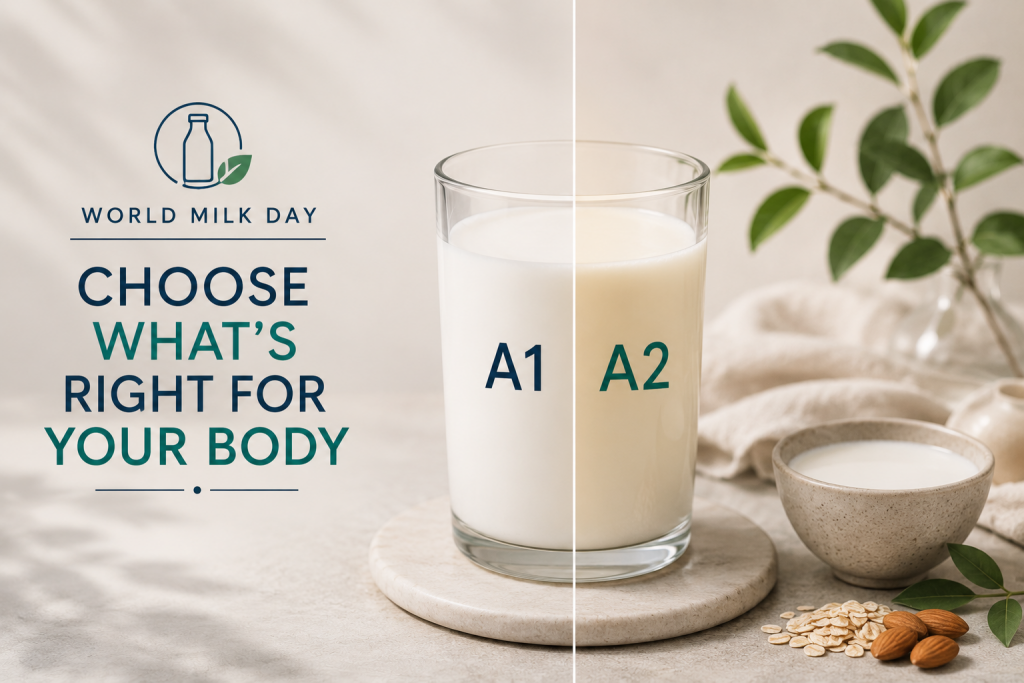
World Milk Day is an opportunity to better understand how modern dairy affects individuals differently. While milk remains an important source of protein and calcium, many experience bloating, acne, or inflammation depending on their gut health, lactose tolerance, and the type of dairy consumed. Emerging clinical research around A1 and A2 beta-casein proteins reveals that conventional A1 milk may break down into a peptide (BCM-7) that slows gastric transit and triggers digestive discomfort, while A2 milk or fermented dairy is often digested much more comfortably.

Observed globally on June 1st, World Milk Day was established by the Food and Agriculture Organization (FAO) of the United Nations to recognise the importance of milk as a global food.

In India, dairy is deeply woven into everyday life. From the morning cup of chai to curd with lunch and ghee in traditional cooking, milk has long been associated with strength, nutrition, and bone health.

But a growing number of people today are beginning to notice something unusual: the milk they consume regularly often leaves them feeling bloated, sluggish, fatigued, or uncomfortable after meals. At the same time, conversations around lactose intolerance, gut health, A1 vs A2 milk, and dairy-related inflammation have become increasingly common.

The reality is more nuanced than “milk is healthy” or “milk is harmful.” Dairy is not universally problematic. Many individuals tolerate milk and fermented dairy products well and benefit from their protein, calcium, and probiotic content. However, others may experience digestive discomfort or inflammation depending on individual tolerance, gut health, and the specific type of dairy consumed. World Milk Day is not just an opportunity to celebrate dairy consumption it is an opportunity to better understand how modern dairy affects the body.

Understanding the Difference Between A1 and A2 Milk

Milk contains two major types of protein: casein (around 80%) and whey (around 20%). Within the casein portion is a subtype called beta-casein.

Historically, cows primarily produced the A2 beta-casein protein. However, over time, genetic variations in certain Western dairy breeds led to the emergence of A1 beta-casein. Today, many indigenous Indian breeds (like Gir and Sahiwal) naturally produce predominantly A2 milk, while several commercial Western breeds (like Holstein) commonly produce A1 protein.

This difference matters immensely because the human body digests these two proteins differently.

Why Some People Struggle With Conventional Dairy

During digestion, A1 beta-casein may break down into a peptide called BCM-7 (beta-casomorphin-7). Some researchers believe BCM-7 may contribute to digestive discomfort, slower gut transit, bloating, and systemic inflammation in sensitive individuals.

However, responses vary significantly from person to person. For some people, the issue may be pure lactose intolerance (an inability to break down milk sugars), while for others, protein sensitivity or an existing gut microbiome imbalance plays a larger role. This is why two individuals can react very differently to the exact same dairy product.

A1 vs. A2 Milk: What’s the Difference?

Feature A1 Milk (Conventional) A2 Milk (Indigenous/Desi)
Common Source Western dairy breeds (Holstein, Friesian) Indigenous/desi breeds (Gir, Sahiwal)
Digestion Response May cause discomfort in sensitive individuals Often considered easier to digest
BCM-7 Formation Yes Minimal to None
Gut Comfort Variable; often triggers bloating Better tolerated by most individuals

3 Signs Dairy May Not Be Working for You

Not everyone reacts negatively to dairy. But if you regularly experience the following symptoms after consuming milk or certain dairy products, it may be worth paying closer attention.

  1. Persistent Bloating or Digestive Discomfort

Feeling unusually heavy, bloated, or uncomfortable after consuming milk, whey-heavy products, or paneer may indicate difficulty digesting lactose or certain milk proteins. In some individuals, chronic digestive irritation may also contribute to gut barrier dysfunction and microbiome imbalance. Supporting good gut health becomes important for improving overall digestive resilience.

  1. Skin Flare-Ups and Acne

Some clinical studies suggest dairy consumption may be associated with acne flare-ups in sensitive individuals, potentially due to hormonal signalling pathways like IGF-1 (Insulin-like Growth Factor). However, responses vary significantly between individuals, and dairy is rarely the only contributing factor to skin issues.

  1. Fatigue or Brain Fog

Some individuals report feeling lethargic, mentally foggy, or physically sluggish after consuming conventional dairy products. This may be linked to the digestive stress, immune response, or individual food sensitivities triggered by the proteins.

Fermented Dairy May Be Easier to Tolerate

Interestingly, many people who struggle with fluid milk may tolerate curd, yogurt, kefir, or traditional fermented dairy products much more comfortably.

Fermentation introduces beneficial bacteria that partially pre-digest the lactose and support microbiome balance, making digestion significantly easier. This is one reason traditional Indian eating patterns often paired dairy with fermentation and digestive spices like jeera (cumin) or hing (asafoetida).

Not All Dairy Products Affect Health Equally

One important distinction often missed in modern nutrition discussions is the difference between minimally processed dairy and ultra-processed dairy products. Highly processed flavoured yogurts, sweetened milk beverages, and processed cheese often contain added sugars, emulsifiers, stabilisers, and artificial additives. These additives contribute far more to metabolic dysfunction than plain dairy itself.

The Action Step: Finding What Works for Your Body

Instead of blindly eliminating all dairy, focus on understanding your individual tolerance. You can experiment with:

  • Switching to A2 milk from local sources.
  • Relying strictly on fermented dairy (like curd).
  • Eliminating highly processed, sugar-laden dairy products.
  • Temporarily eliminating all dairy for 14 days to observe symptom changes.

Unsweetened plant-based alternatives like almond milk, soy milk, or oat milk may also work well for some individuals when chosen carefully without excessive added sugars. Supporting your digestive health and metabolic flexibility is often more important than following extreme food rules.

Pro Tip: Unsure whether dairy is affecting your digestion, skin, or energy levels? Try a simple 14-day food tracking experiment using the GOQii App. Monitor your meals, symptoms, sleep, and recovery patterns while working with your GOQii Personalised Health Coach to identify what works best for your body!

Frequently Asked Questions (FAQs)

  1. Does boiling milk change A1 or A2 protein?

No. Boiling or pasteurising milk kills harmful bacteria, but it does not change the underlying genetic beta-casein protein structure. A1 milk remains A1 milk even after heavy boiling.

  1. Is A2 milk healthier for everyone?

Not necessarily. While some individuals find A2 milk easier to digest because it lacks the BCM-7 peptide, tolerance varies from person to person. If you have true lactose intolerance, A2 milk will still cause issues.

  1. Can lactose intolerance and dairy sensitivity be different?

Yes. Lactose intolerance relates to a lack of the enzyme needed to digest milk sugar (lactose). Dairy sensitivity typically involves an immune or inflammatory reaction to milk proteins (like casein or whey).

  1. Is ghee easier to tolerate than milk?

Often, yes. Ghee (clarified butter) contains minimal to no lactose and casein compared to whole milk, making it incredibly easy to tolerate for many individuals with mild dairy sensitivities.

#BeTheForce

Disclaimer: This article is intended for educational purposes only. If you suspect a severe dairy allergy, persistent digestive condition, or chronic gastrointestinal symptoms, consult a qualified healthcare professional or clinical nutritionist.

Search

Recent Posts

  • Why Good Nutrition Matters: Benefits of Healthy Eating for a Healthy Life
  • Monsoon Health Tips: How to Boost Your Immunity During Seasonal Changes
  • Yoga for Healthy Ageing: Simple Practices to Add Life to Your Years
  • Calming Your Mind: Breathing Techniques for ADHD
  • Healthy Oats & Besan Pancake Recipe for a Nutritious Breakfast

Stay Updated

Archives

  • June 2026 (21)
  • May 2026 (20)
  • April 2026 (24)
  • March 2026 (18)
  • February 2026 (14)
  • January 2026 (14)
  • December 2025 (19)
  • November 2025 (15)
  • October 2025 (20)
  • September 2025 (6)
  • August 2025 (6)
  • July 2025 (11)
  • June 2025 (18)
  • May 2025 (16)
  • April 2025 (22)
  • March 2025 (27)
  • February 2025 (21)
  • January 2025 (25)
  • December 2024 (22)
  • November 2024 (23)
  • October 2024 (20)
  • September 2024 (23)
  • August 2024 (29)
  • July 2024 (20)
  • June 2024 (25)
  • May 2024 (26)
  • April 2024 (27)
  • March 2024 (27)
  • February 2024 (23)
  • January 2024 (21)
  • December 2023 (14)
  • November 2023 (10)
  • October 2023 (19)
  • September 2023 (22)
  • August 2023 (18)
  • July 2023 (21)
  • June 2023 (23)
  • May 2023 (20)
  • April 2023 (19)
  • March 2023 (23)
  • February 2023 (19)
  • January 2023 (15)
  • December 2022 (11)
  • November 2022 (15)
  • October 2022 (15)
  • September 2022 (12)
  • August 2022 (10)
  • July 2022 (17)
  • June 2022 (11)
  • May 2022 (10)
  • April 2022 (6)
  • March 2022 (6)
  • February 2022 (13)
  • January 2022 (11)
  • December 2021 (7)
  • November 2021 (3)
  • October 2021 (6)
  • September 2021 (3)
  • August 2021 (8)
  • July 2021 (7)
  • June 2021 (15)
  • May 2021 (16)
  • April 2021 (10)
  • March 2021 (7)
  • February 2021 (4)
  • January 2021 (4)
  • December 2020 (3)
  • November 2020 (4)
  • October 2020 (10)
  • September 2020 (3)
  • August 2020 (3)
  • July 2020 (2)
  • June 2020 (4)
  • May 2020 (10)
  • April 2020 (12)
  • March 2020 (10)
  • February 2020 (4)
  • January 2020 (4)
  • December 2019 (3)
  • November 2019 (7)
  • October 2019 (5)
  • September 2019 (4)
  • August 2019 (9)
  • July 2019 (9)
  • June 2019 (11)
  • May 2019 (4)
  • April 2019 (8)
  • March 2019 (8)
  • February 2019 (9)
  • January 2019 (8)
  • December 2018 (9)
  • November 2018 (3)
  • October 2018 (3)
  • September 2018 (5)
  • August 2018 (10)
  • July 2018 (6)
  • June 2018 (13)
  • May 2018 (8)
  • April 2018 (18)
  • March 2018 (9)
  • February 2018 (8)
  • January 2018 (15)
  • December 2017 (12)
  • November 2017 (19)
  • October 2017 (13)
  • September 2017 (15)
  • August 2017 (4)
  • July 2017 (8)
  • June 2017 (7)
  • May 2017 (6)
  • April 2017 (8)
  • March 2017 (6)
  • February 2017 (7)
  • January 2017 (9)
  • December 2016 (10)
  • November 2016 (7)
  • October 2016 (7)
  • September 2016 (7)
  • August 2016 (11)
  • July 2016 (9)
  • June 2016 (9)
  • May 2016 (12)
  • April 2016 (17)
  • March 2016 (17)
  • February 2016 (8)
  • January 2016 (6)
  • December 2015 (2)
  • November 2015 (9)
  • October 2015 (7)
  • September 2015 (9)
  • August 2015 (11)
  • July 2015 (9)
  • June 2015 (11)
  • May 2015 (9)
  • April 2015 (13)
  • March 2015 (8)
  • February 2015 (5)
  • January 2015 (12)
  • December 2014 (14)
  • November 2014 (11)
  • October 2014 (6)
  • September 2014 (13)
  • August 2014 (12)
  • July 2014 (6)
  • June 2014 (2)
  • May 2014 (7)
  • April 2014 (4)

From Shimla’s Slopes to Chandigarh’s Sidewalks: Surinder Kaur Bhalla’s Journey from Chaos to Control

Some journeys start with a plan. Others begin with a stumble literally. Surinder Bhalla, a government professional, born and raised in the scenic hill town of Shimla, had always lived a life of movement. “In Shimla, you walked everywhere,” she reflects. … [Read More...]

From “Laddu Nawin” to Fit and Fierce: How a 25-Year-Old Insurance Advisor Shed 20 Kilos and Gained His Life Back

When 25-year-old Nawin Yadav from Hyderabad walked into his office every morning, he carried more than just his files and policy papers. He had the weight of fatigue, sluggish energy, and an ever-growing belly that was becoming the butt of jokes. “People had even started calling me Laddu Nawin,” he says with a laugh, but […]

From Burnout to Balance: How Dr. Ranjit Reclaimed His Health

Dr Ranjit Bhatt has spent years tending to others. A practising doctor in Odisha, his days were packed with patients, surgeries, and emergencies. From the outside, it looked like a life lived in service. But on the inside, something wasn’t right. “I had no control over my schedule. I’d sleep late, eat at odd hours, […]

Ananda Mukherjee Health Story

From Terminal Illness To Complete Wellness! Ananda Mukherjee Health Story

As we observe World Cancer Day under the powerful theme ‘United by Unique’ (2025-2027)**, we are reminded that every individual’s journey with cancer is distinct, yet united by shared resilience, hope, and the collective fight against this disease. This theme places people at the centre of care and their stories at the heart of the […]

  • HOME
  • HEALTHY LIVING
  • FITNESS
  • HEALTHY RECIPES
  • USER STORIES
  • KARMA
  • BUY GOQii

Copyright ©2016 GOQii
