GOQii

Blog

  • HOME
  • HEALTHY LIVING
  • FITNESS
  • HEALTHY RECIPES
  • USER STORIES
  • KARMA
  • BUY GOQii

April 23, 2026 By GOQii Leave a Comment

The GOQii India Fit Report 2026: Why Living Longer Isn’t Enough Anymore

“India is living longer than ever before. That should be a moment of national pride, and it is. But here’s the uncomfortable truth: living longer is not the same as living well. For too many Indians, the last 10 to 12 years of life are spent fighting preventable disease, relying on medication, or depending on family for the simplest daily tasks. That is not the future any of us want.” – Vishal Gondal, Founder & CEO, GOQii

India stands at a pivotal moment in its health journey. In 1975, the average Indian lived to 52. Today, life expectancy has crossed 70, adding nearly two extra decades within a single generation. However, the newly released GOQii India Fit Report 2026 reveals an uncomfortable reality: while lifespan has increased, our “healthspan” the years we live in good physical, mental, and emotional health has not kept pace.

It is time to rethink what healthy ageing actually looks like in modern India.

Quick Takeaways: The Healthspan Gap

  • The 12-Year Deficit: Life expectancy in India is ~70.4 years , but Healthy Life Expectancy (HALE) is only ~59 years. Indians lose almost 12 years of healthy life to chronic illness or disability.
  • The Ageing Population: By 2050, one in five Indians, nearly 300 million people, will be over 60.
  • The True Threat: 63% of deaths in India are from Non-Communicable Diseases (NCDs).
  • The Good News: 80% of premature heart disease and diabetes is entirely preventable.

What is the Healthspan Gap?
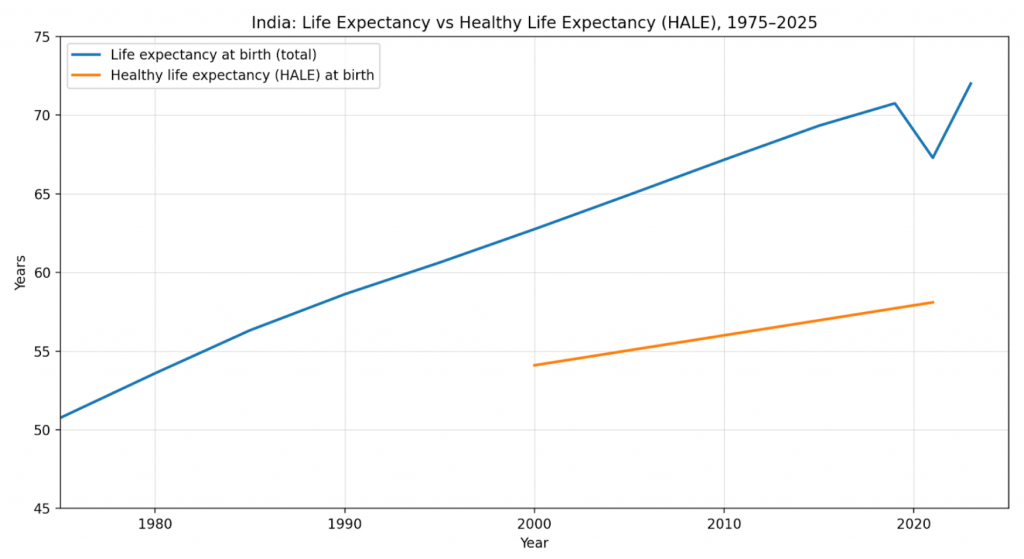
Ageing itself is a sign of progress. The real challenge we face is unhealthy ageing. The healthspan gap is the distance between how long we live and how well we live.

This gap does not happen by accident. We reward productivity and punish rest. Stress, poor sleep, sedentary work, and irregular diets have been completely normalised. Healthcare remains treatment-centric rather than prevention-led.

The Life-Stage Map: Healthspan is Not Built at 60
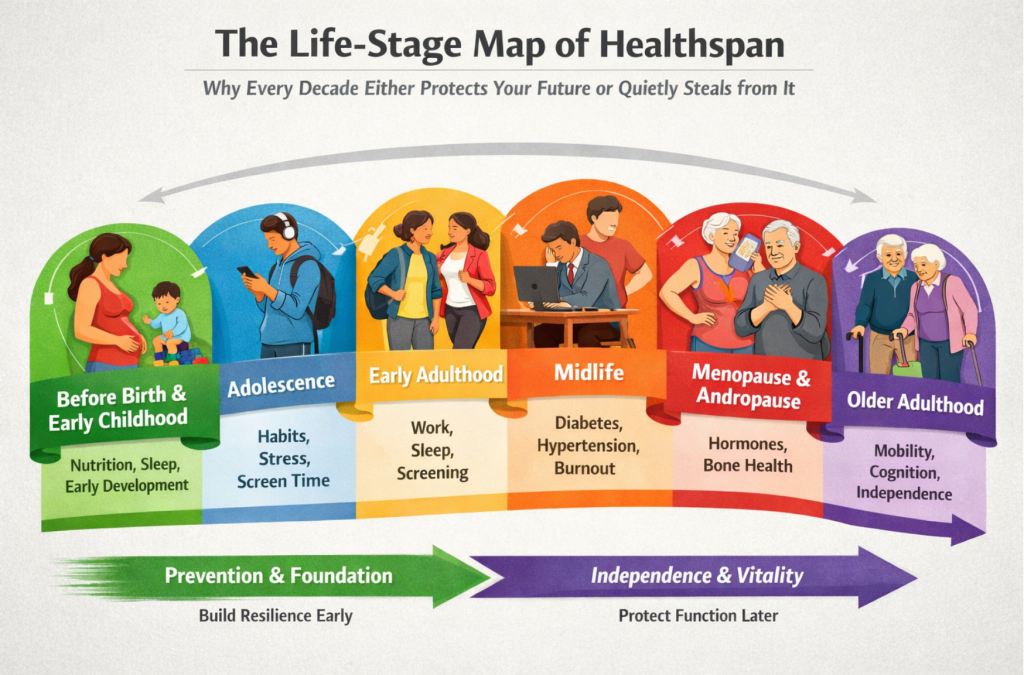
Perhaps the biggest misconception about lifestyle disease is that it is an old-age issue. Healthspan is not built at 60. It is built quietly and cumulatively across decades. Here is how healthspan is won or lost at every stage of life:

  • Adolescence (Where Habits Harden): This is the period when risks like long sedentary time, sleep disruption, poor diets, and emotional stress quietly rise. Health behaviours begin to harden into identity.
  • Early Adulthood (The “I’m Fine” Decade): In our 20s and 30s, weight gain feels manageable and poor sleep feels like a phase. Yet, this is exactly when insulin resistance, rising blood pressure, and inflammation begin to quietly accumulate .
  • Midlife (The Tipping Point): For most Indians, working life is the biggest driver of healthspan loss. Midlife is where silent epidemics like diabetes, hypertension, obesity, and high cholesterol begin to surface.
  • Menopause and Andropause: For women, the menopause transition changes metabolism, muscle mass, bone density, cardiovascular risk, sleep quality, and emotional regulation. Without guidance, it leads to accelerated weight gain and bone loss; with guidance, it can become a powerful health stabiliser.
  • Older Adulthood (Independence is the Goal): Old age does not automatically lead to decline. The most meaningful measures of healthy ageing here are functional: Can you walk independently? Can you climb stairs without fear?

The Rise of “Silent” Epidemics and Multi-Morbidity

The illnesses shortening our healthspan rarely announce themselves with sudden panic. High blood pressure rarely causes discomfort until it damages the heart, kidneys, or brain. High cholesterol builds arterial plaque silently over years.

The true threat is how these conditions compound over time, a process known as multi-morbidity. It follows a predictable chain: Sedentary Lifestyle → Weight Gain, Obesity → Diabetes Risk → Heart Disease. By the time multiple conditions take hold, healthspan shrinks rapidly.

The Hidden Costs of Ignoring Healthspan
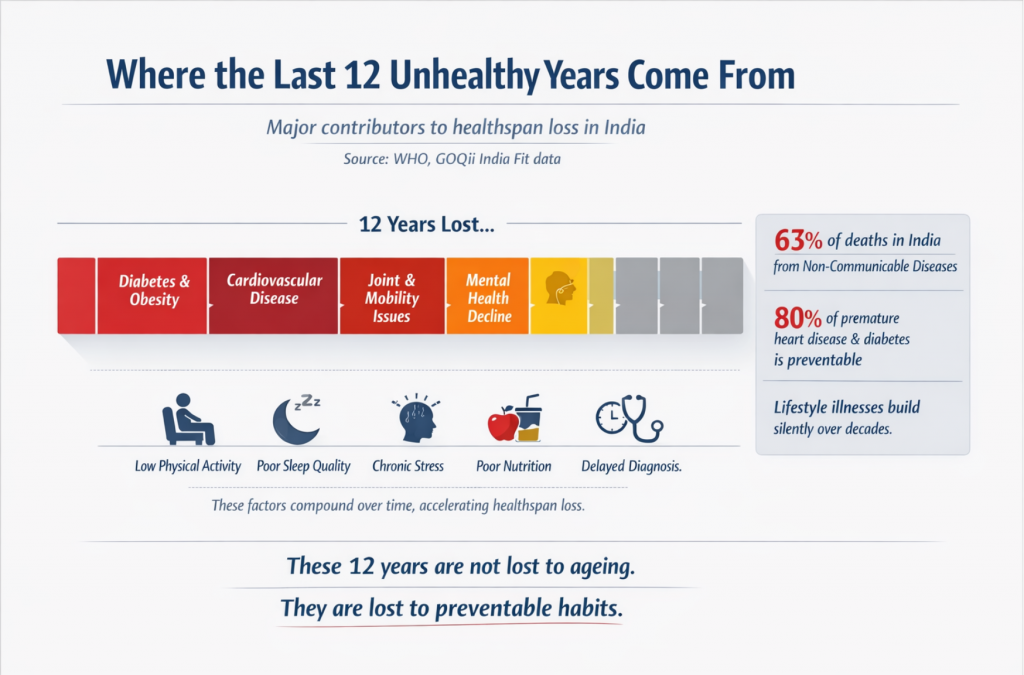
When healthspan is neglected, the costs are borne not just by individuals but by families, workplaces, and the national economy:

  • The Caregiving Burden: Chronic illness in older age often shifts care responsibility to family members, most commonly women. This unpaid caregiving leads to lost income and emotional burnout.
  • Workforce Exits: Early onset of lifestyle diseases forces many adults to exit the workforce years before retirement age.
  • Healthcare Strain: Managing advanced diabetes, heart disease, kidney failure, and stroke consumes far more resources than preventing them.

Reclaim Your Healthspan

The GOQii India Fit Report 2026 calls for a decisive shift: from lifespan as a metric to healthspan as a goal.

Prevention does not require extreme discipline or perfect routines. It requires consistency. Ten minutes of daily movement is more powerful than an hour once a week, and stable sleep routines outperform weekend recovery. Healthspan is shaped by what you do on your most average days.

Are you ready to see where you stand and how you can protect your future?

Click Here to Download the GOQii India Fit Report 2026 to explore the complete data, uncover national trends on stress, sleep, and nutrition, and learn how to take charge of your health today.

Frequently Asked Questions (FAQs)

  1. What is the difference between lifespan and healthspan?

Lifespan refers to the total number of years a person lives. Healthspan refers to the number of those years lived in good physical, mental, and emotional health, free from chronic disease and disability. While India’s life expectancy is ~70.4 years, our healthy life expectancy is only ~59 years.

  1. What are the biggest threats to healthspan in India?

The biggest threats are “silent epidemics” or non-communicable diseases (NCDs) like diabetes, hypertension, obesity, and high cholesterol. These are heavily driven by lifestyle factors such as chronic stress, sedentary behavior, and poor sleep.

  1. When should I start worrying about healthy ageing?

Healthy ageing begins long before retirement. Habits formed in adolescence and early adulthood (like sleep routines and daily movement) dictate your metabolic risk in midlife. The earlier you focus on preventive health, the longer your healthspan will be.

#BeTheForce

Disclaimer: The content provided in this blog, including all statistics, insights, and recommendations, is based on the findings of the GOQii India Fit Report 2026 . This information is intended for educational and general informational purposes only and should not be construed as professional medical advice, diagnosis, or treatment. Every individual’s health journey is unique. Always consult with a qualified healthcare provider or a certified medical professional before making any significant changes to your diet, exercise routine, sleep schedule, or lifestyle, especially if you have pre-existing medical conditions.

April 10, 2026 By GOQii Leave a Comment

Inflammation: The Hidden Fire Behind Most Chronic Disease

Most people track cholesterol.
Many monitor blood sugar.

Very few think about inflammation.

And yet, chronic low-grade inflammation is now recognised as one of the most important underlying drivers of modern disease linking heart disease, diabetes, fatty liver, arthritis and even cognitive decline.

Think of it as a slow, internal fire.
Not something you feel immediately but something that quietly damages tissues over time.

What Is Chronic Inflammation?

Inflammation, in itself, is not the problem.

It is a natural defence mechanism. When you cut your finger or fight an infection, inflammation helps the body heal.

The issue begins when this response does not switch off.

Poor sleep, chronic stress, excess abdominal fat, smoking and diets high in ultra-processed foods can keep the body in a constant low-grade inflammatory state. This is often silent. There are no obvious symptoms.

But over time, the cumulative effect increases the risk of chronic disease.

What Does CRP Actually Tell You?

C-reactive protein (CRP) is a widely used blood marker that reflects inflammation in the body.

A more sensitive version, high-sensitivity CRP (hs-CRP), is commonly used to assess cardiovascular risk.

In general terms:

  • Below 1 mg/L → low risk
  • 1–3 mg/L → moderate risk
  • Above 3 mg/L → higher inflammatory burden

CRP does not diagnose a specific condition.
It indicates that the body is under physiological stress.

For meaningful interpretation, CRP should always be viewed alongside other markers such as blood glucose, lipid profile and body composition not in isolation.

Visceral Fat: More Than Stored Energy

Not all body fat behaves the same way.

Visceral fat- the fat stored deep around internal organs is metabolically active. It releases inflammatory chemicals directly into the bloodstream.

This is why central fat accumulation is strongly associated with:

  • cardiovascular disease
  • insulin resistance
  • type 2 diabetes

Importantly, you do not need to appear overweight to carry excess visceral fat. Even individuals with a “normal” weight may have elevated metabolic risk if they are sedentary or have poor lifestyle habits.

Reducing visceral fat is one of the most effective ways to lower chronic inflammation.

Ultra-Processed Foods and Oxidative Stress

Diet plays a central role in inflammation.

Ultra-processed foods typically high in refined carbohydrates, industrial oils and additives can lead to repeated blood sugar spikes and increased oxidative stress.

Oxidative stress damages cells and perpetuates inflammation.

Frequent consumption of:

  • packaged snacks
  • sugary beverages
  • deep-fried foods

combined with low physical activity creates a cycle that reinforces metabolic dysfunction over time.

Simple, Evidence-Based Ways to Reduce Inflammation

You do not need extreme interventions.
Consistency matters more than intensity.

  1. Walk after meals
    A 10–15 minute walk improves glucose regulation and reduces post-meal metabolic stress.
  2. Strength train regularly
    Resistance training improves insulin sensitivity and helps reduce visceral fat.
  3. Focus on whole foods
    Prioritise vegetables, fruits, lentils, nuts and seeds.
  4. Use traditional anti-inflammatory ingredients
    Turmeric, ginger and garlic offer well-documented benefits.
  5. Include omega-3 fats
    Sources such as fatty fish, flaxseeds and walnuts support both cardiovascular and cognitive health.
  6. Protect your sleep
    Poor sleep is a major driver of inflammation and hormonal imbalance.

Why This Matters

Chronic disease does not develop overnight.
It builds gradually often through processes like inflammation that go unnoticed for years.

Understanding inflammation helps connect the dots between conditions that are often treated separately:

  • heart disease
  • diabetes
  • obesity
  • cognitive decline

In many cases, they share the same underlying mechanisms.

The goal is not to eliminate inflammation entirely that is neither possible nor necessary.

The goal is to reduce the constant internal load.

To lower the heat.
Gradually. Consistently.

Because long-term health is not defined by one decision,
but by the patterns you repeat every day.

We hope this article helps you understand the silent signals your body might be sending. Do you have questions about managing inflammation, or have you noticed positive changes after adopting any of these habits? Drop your thoughts in the comments below! For personalized guidance on interpreting your health markers and building an anti-inflammatory lifestyle, speak to a certified expert by subscribing to GOQii’s Personalised Health Coaching here.

Frequently Asked Questions (FAQs)

1. What are the most common symptoms of chronic inflammation?
Unlike acute inflammation (which shows as visible redness or swelling), chronic inflammation is often “silent” and internal. However, common subtle warning signs include persistent fatigue, unexplained joint or muscle pain, stubborn weight gain (especially visceral fat around the belly), frequent digestive issues like bloating, and brain fog.

2. What is the best blood test to check for inflammation in the body?
The most common and reliable blood marker used by doctors to assess systemic inflammation and cardiovascular risk is the High-sensitivity C-reactive protein (hs-CRP) test. Generally, an hs-CRP level below 1 mg/L indicates low risk, while a level above 3 mg/L suggests a high inflammatory burden.

3. What foods cause the most inflammation?
Ultra-processed foods are the primary dietary drivers of chronic inflammation. This includes items high in refined sugars, high-fructose corn syrup, refined carbohydrates (like white bread and pastries), deep-fried foods, and industrial seed oils. These foods trigger rapid blood sugar spikes and oxidative stress, keeping the body’s inflammatory response constantly active.

4. How fast can you reduce inflammation with diet and lifestyle changes?
While chronic inflammation builds up over years, your body responds quickly to positive changes. Simple interventions—like taking a 15-minute walk after meals to control blood sugar, cutting out sugary beverages, and prioritizing 7-8 hours of sleep—can begin lowering inflammatory markers like hs-CRP within a few weeks to a few months.

5. Can regular exercise help reduce inflammation?
Yes. While intense, over-training can temporarily increase acute stress, regular and moderate exercise is highly anti-inflammatory. Strength training specifically helps burn away metabolically active visceral fat (which actively releases inflammatory chemicals), while daily movement improves insulin sensitivity and circulation.

#BeTheForce

Disclaimer: The information provided in this article is for educational and general informational purposes only and is not intended to serve as professional medical advice, diagnosis, or treatment. Inflammatory markers like hs-CRP must be interpreted by a qualified medical professional in the context of your overall health profile. Always consult with your doctor, physician, or a registered clinical dietitian before making significant changes to your diet, starting a new exercise routine, or if you are experiencing symptoms of chronic illness.

March 19, 2025 By GOQii Leave a Comment

Fatty Liver: Causes, Symptoms & How to Reverse It Naturally

Understanding Fatty Liver

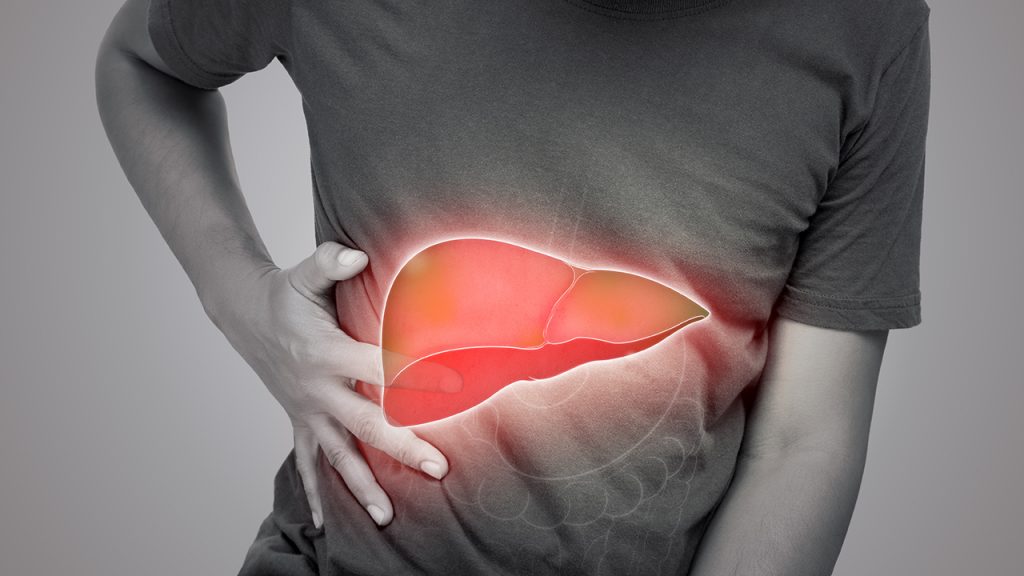
Your liver is a powerhouse—processing nutrients, filtering toxins, and keeping your metabolism running smoothly. But when too much fat builds up in liver cells, it can disrupt its function and lead to fatty liver disease.

Fatty liver is one of the most common liver conditions globally, affecting millions of people. The good news? It’s reversible in its early stages! But left unchecked, it can progress to more serious liver damage.

Let’s break down the causes, symptoms, and best ways to treat and prevent fatty liver disease—so you can take charge of your health before it’s too late.

Types of Fatty Liver Disease

There are two main types of fatty liver disease:

  1. Non-Alcoholic Fatty Liver Disease (NAFLD)
  • Occurs without excessive alcohol consumption.
  • Linked to obesity, diabetes, high cholesterol, and poor diet.
  • Can progress to non-alcoholic steatohepatitis (NASH)—a more severe form causing liver inflammation and scarring.
  1. Alcohol-Related Fatty Liver Disease (AFLD)
  • Caused by excessive alcohol consumption, which damages liver cells.
  • If drinking continues, it can lead to cirrhosis and liver failure.

Both conditions increase the risk of serious liver complications, but lifestyle changes can help prevent or even reverse them in the early stages.

What Causes Fatty Liver?

Several lifestyle and health factors contribute to fatty liver disease:

  • High Sugar & Processed Foods – Sugary drinks, sweets, and refined carbs promote fat accumulation in the liver.
  • Obesity & Insulin Resistance – Excess weight, especially around the abdomen, increases fatty deposits in the liver.
  • Sedentary Lifestyle – Lack of exercise slows metabolism and contributes to fat storage.
  • Excess Alcohol Intake – Alcohol is metabolised in the liver, and excessive intake can lead to fat buildup and inflammation.
  • High Cholesterol & Triglycerides – Poor cholesterol levels contribute to fat accumulation in the liver.
  • Underlying Health Conditions – Diabetes, metabolic syndrome, and PCOS are all linked to fatty liver.
  • Certain Medications – Some steroids, chemotherapy drugs, and painkillers can contribute to liver fat buildup.

Signs & Symptoms of Fatty Liver

In its early stages, fatty liver doesn’t usually cause noticeable symptoms. However, as it progresses, you may experience:

⚠️ Constant fatigue or sluggishness
⚠️ Discomfort or pain in the upper right abdomen
⚠️ Unexplained weight gain or difficulty losing weight
⚠️ Nausea or loss of appetite
⚠️ Jaundice (yellowing of skin/eyes) in severe cases

If left untreated, fatty liver can progress to fibrosis, cirrhosis, or even liver failure.

How to Treat & Reverse Fatty Liver

The best approach to managing and reversing fatty liver is lifestyle modification. Here’s how to take charge of your liver health:

  1. Improve Your Diet
  • Prioritise whole, unprocessed foods—vegetables, lean proteins, and whole grains.
  • Reduce sugar intake—avoid fizzy drinks, sweets, and refined carbs.
  • Eat liver-friendly foods:
    • Leafy greens (spinach, kale) – Detoxifying properties.
    • Berries – Packed with antioxidants to reduce inflammation.
    • Turmeric – Contains curcumin, which helps protect liver cells.
  • Oats & Whole Grains – Rich in fibre to support digestion.

Avoid trans fats, fried foods, and processed snacks—they increase liver inflammation.

  1. Stay Active
  • Regular exercise helps burn excess liver fat—aim for at least 150 minutes per week.
  • Include strength training to improve metabolism and fat-burning capacity.
  • Even small changes—like walking after meals—can significantly improve liver function.
  1. Maintain a Healthy Weight
  • Losing just 5-10% of body weight can reduce liver fat and inflammation.
  • Focus on sustainable, healthy weight loss—crash diets can do more harm than good!
  1. Cut Back on Alcohol
  • Alcohol is one of the leading causes of liver damage—reducing intake can prevent fatty deposits from worsening.
  • If you drink, stick to recommended guidelines—no more than 14 units per week (UK guidelines).
  1. Stay Hydrated
  • Water helps flush out toxins and supports liver function.
  • Aim for at least 2-3 litres per day.
  1. Manage Stress & Sleep
  • Chronic stress can lead to overeating & poor lifestyle habits—practise relaxation techniques like deep breathing and meditation.
  • Prioritise sleep—poor sleep quality is linked to metabolic disorders affecting the liver.
  1. Get Regular Check-ups
  • Monitor liver function through blood tests if you have risk factors like obesity, diabetes, or a history of high alcohol consumption.
  • Consult your doctor if you experience persistent symptoms.

Can Fatty Liver Be Reversed?

Yes! With consistent lifestyle changes, fatty liver can be reversed in its early stages. However, if it progresses to fibrosis or cirrhosis, the damage becomes permanent.

Taking action now can protect your liver and overall well-being.

Fatty liver disease is increasingly common, but the good news is that it can be prevented and even reversed with the right lifestyle choices.

By making simple yet powerful changes to your diet, exercise routine, and daily habits, you can protect your liver and improve overall health.

💬 Have you made lifestyle changes to improve liver health? Share your experience in the comments!

#BeTheForce

Disclaimer: The information provided in this blog is for general awareness and educational purposes only. It is not intended to replace professional medical advice, diagnosis, or treatment. Always consult a qualified healthcare provider for personalised medical guidance or concerns related to your health.

May 20, 2023 By GOQii Leave a Comment

How Ahmad Najib Controlled His Diabetes & Lost Weight With GOQii

Ahmad Najib

It’s a well-established fact that unhealthy eating, lack of physical activity and an overall unhealthy lifestyle can lead to many health issues. To begin with, it is the biggest cause of being overweight, which comes with other issues such as high cholesterol, high blood pressure and even diabetes. While well known, people tend to overlook these aspects. Our Player Ahmad Najib had also found himself in this predicament and when things started to slip, he decided he needed to change his lifestyle. How did he bring about this change? Read on to find out. 

Before Joining GOQii

“My lifestyle was all over the place. There was no routine, I ate an unhealthy diet and ate whenever I wanted and ate whatever I wanted. I never even exercised,” says Ahmad Najib. Owing to his poor eating habits and lack of physical activity, his weight shot up to 108kg. 

His HbA1c levels were as high as 6.7. After his regular yearly checkup, he found that his triglyceride and cholesterol levels were high as well. The problem with sugar and being overweight is hereditary in his family. Keeping this in mind, Ahmad Najib wanted to change his lifestyle for the better.

One day while checking the internet for a solution along with a friend, he came across GOQii. After going through the features, he was attracted by the 3 month coaching subscription and decided this was the way to go! 

Interacting With The Coach & Adopting Healthy Habits 

When he began his coaching subscription, he said that he really liked the way the instructions were simplified for him and the communication was easy. “The interaction was so smooth and easy that I could follow everything my coach shared with me,” he said. The flow of information was continuous between him and his coach. 

6 months before beginning his journey with GOQii, Ahmad Najib said that he had completely cut off from sweets and oily food due to his Diabetes issue. But the daily workout he was doing wasn’t helping him at all. His weight would not budge.

After speaking with his GOQii Coach Farhat Khan, he got a better understanding of his diet and what he should be eating as well as avoiding. His coach suggested some fruits he could eat – which he says benefited him immensely. She also helped him clear any doubts he had regarding his meals and helped him balance them.

He was asked to stay off maida and wheat chapatis. These were replaced with jowar or bajra rotis. He was also instructed to stay off junk food and eating out.  Apart from this, Coach Farhat Khan also introduced him to portion control. She also asked him to take frequent walks – which included walking for 5-7 minutes post a meal. His workout routines were also shuffled frequently. 

Even during the holy month of Ramzan, Ahmad Najib did his best to follow the morning routine, exercises and diet suggested by his coach and avoided eating oily food or ordering in. He says that he has completely stopped eating out. 

How Did These Changes Impact Ahmad Najib? 

The biggest change he witnessed was that his weight was reduced from 108kg to 91kg. Furthermore, his HbA1c levels have reduced from 6.7 to 5.5. “I don’t need tablets for high sugar anymore,” he says. Even his triglycerides and cholesterol levels are now under control.

His Coach Farhat Khan says, “His fat loss is amazing, sugar readings are now under control and his fitness and stamina have also improved.” She further added that, “Ahmad is really dedicated. He never said ‘ye nahin kar paunga’, and was always ready for the tasks given to him – whether it was physical or diet related.” Before, he couldn’t walk even half a km in one go but now, he can cover 3km without feeling tired. 

Looking at his transformation, the people he meets wonder how he pulled it off. With the changes he saw within himself, he recommended GOQii to 2-3 of his acquaintances. He also gifted a GOQii Smartwatch to his sister who has benefited greatly from it. She too lost weight by following instructions from her GOQii Coach.

Overall, he says it’s been a life-changing experience! Currently, along with his coach, he plans on reducing another 8-9kg.

Was this story inspiring? Do you or someone you know wants to make a lifestyle change? Share this article with them and subscribe for GOQii’s Personalised Health Coaching here. 

You can find more inspiring health stories here.

#BeTheForce 

  • 1
  • 2
  • Next Page »

Search

Recent Posts

  • Yoga and Hormonal Health: What the Science Says
  • Are You Overtraining? 6 Signs Your Body Needs More Recovery
  • Cortisol and Chronic Stress: What Your Body Is Trying to Tell You
  • Menopause and Bone Health: How to Prevent Osteoporosis Before It’s Too Late
  • Embracing Tears: The Healing Power of Sadness

Stay Updated

Archives

  • June 2026 (11)
  • May 2026 (20)
  • April 2026 (24)
  • March 2026 (18)
  • February 2026 (14)
  • January 2026 (14)
  • December 2025 (19)
  • November 2025 (15)
  • October 2025 (20)
  • September 2025 (6)
  • August 2025 (6)
  • July 2025 (11)
  • June 2025 (18)
  • May 2025 (16)
  • April 2025 (22)
  • March 2025 (27)
  • February 2025 (21)
  • January 2025 (25)
  • December 2024 (22)
  • November 2024 (23)
  • October 2024 (21)
  • September 2024 (23)
  • August 2024 (30)
  • July 2024 (20)
  • June 2024 (25)
  • May 2024 (28)
  • April 2024 (27)
  • March 2024 (27)
  • February 2024 (23)
  • January 2024 (21)
  • December 2023 (14)
  • November 2023 (10)
  • October 2023 (19)
  • September 2023 (22)
  • August 2023 (18)
  • July 2023 (22)
  • June 2023 (23)
  • May 2023 (20)
  • April 2023 (19)
  • March 2023 (23)
  • February 2023 (19)
  • January 2023 (15)
  • December 2022 (11)
  • November 2022 (15)
  • October 2022 (15)
  • September 2022 (12)
  • August 2022 (10)
  • July 2022 (17)
  • June 2022 (11)
  • May 2022 (10)
  • April 2022 (6)
  • March 2022 (6)
  • February 2022 (13)
  • January 2022 (11)
  • December 2021 (7)
  • November 2021 (3)
  • October 2021 (6)
  • September 2021 (3)
  • August 2021 (8)
  • July 2021 (7)
  • June 2021 (15)
  • May 2021 (16)
  • April 2021 (10)
  • March 2021 (7)
  • February 2021 (4)
  • January 2021 (4)
  • December 2020 (3)
  • November 2020 (4)
  • October 2020 (10)
  • September 2020 (3)
  • August 2020 (3)
  • July 2020 (2)
  • June 2020 (4)
  • May 2020 (10)
  • April 2020 (12)
  • March 2020 (10)
  • February 2020 (4)
  • January 2020 (4)
  • December 2019 (3)
  • November 2019 (7)
  • October 2019 (5)
  • September 2019 (4)
  • August 2019 (9)
  • July 2019 (9)
  • June 2019 (11)
  • May 2019 (4)
  • April 2019 (8)
  • March 2019 (8)
  • February 2019 (9)
  • January 2019 (8)
  • December 2018 (9)
  • November 2018 (3)
  • October 2018 (3)
  • September 2018 (5)
  • August 2018 (10)
  • July 2018 (6)
  • June 2018 (13)
  • May 2018 (8)
  • April 2018 (18)
  • March 2018 (9)
  • February 2018 (8)
  • January 2018 (15)
  • December 2017 (12)
  • November 2017 (19)
  • October 2017 (13)
  • September 2017 (15)
  • August 2017 (4)
  • July 2017 (8)
  • June 2017 (7)
  • May 2017 (6)
  • April 2017 (8)
  • March 2017 (6)
  • February 2017 (7)
  • January 2017 (9)
  • December 2016 (10)
  • November 2016 (7)
  • October 2016 (7)
  • September 2016 (7)
  • August 2016 (11)
  • July 2016 (9)
  • June 2016 (9)
  • May 2016 (12)
  • April 2016 (17)
  • March 2016 (17)
  • February 2016 (8)
  • January 2016 (6)
  • December 2015 (2)
  • November 2015 (9)
  • October 2015 (7)
  • September 2015 (9)
  • August 2015 (11)
  • July 2015 (9)
  • June 2015 (11)
  • May 2015 (9)
  • April 2015 (13)
  • March 2015 (8)
  • February 2015 (5)
  • January 2015 (12)
  • December 2014 (14)
  • November 2014 (11)
  • October 2014 (6)
  • September 2014 (13)
  • August 2014 (12)
  • July 2014 (6)
  • June 2014 (2)
  • May 2014 (7)
  • April 2014 (4)

From “Laddu Nawin” to Fit and Fierce: How a 25-Year-Old Insurance Advisor Shed 20 Kilos and Gained His Life Back

When 25-year-old Nawin Yadav from Hyderabad walked into his office every morning, he carried more than just his files and policy papers. He had the weight of fatigue, sluggish energy, and an ever-growing belly that was becoming the butt of jokes. “People … [Read More...]

“I’ve Challenged Myself to Live 100 Years” – The Story of Chandubhai Savani’s Second Chance at Life

At 67, most people start slowing down. Not Chandubhai Savani. A resident of Surat, Chandubhai, thought life was on track. “My life was going well till I had my bypass surgery,” he says. That surgery, back in 2021, was a wake-up call.  Medication was routine, but exercise wasn’t. His diet? What he calls ‘normal.’ “I […]

Ananda Mukherjee Health Story

From Terminal Illness To Complete Wellness! Ananda Mukherjee Health Story

As we observe World Cancer Day under the powerful theme ‘United by Unique’ (2025-2027)**, we are reminded that every individual’s journey with cancer is distinct, yet united by shared resilience, hope, and the collective fight against this disease. This theme places people at the centre of care and their stories at the heart of the […]

Mayur Sutar Health Transformation

Mayur Sutar’s Journey to a Healthier Life

At 26, Mayur Sutar was deeply entrenched in the corporate whirlwind. His days were a blur of quick, unsatisfying meals, fitful sleep, and relentless deadlines. This vicious cycle was draining him, fueling a constant state of fatigue and frustration. Health had become a forgotten chapter in the book of his life. In every story, however, […]

  • HOME
  • HEALTHY LIVING
  • FITNESS
  • HEALTHY RECIPES
  • USER STORIES
  • KARMA
  • BUY GOQii

Copyright ©2016 GOQii