
GOQii

Blog

  • HOME
  • HEALTHY LIVING
  • FITNESS
  • HEALTHY RECIPES
  • USER STORIES
  • KARMA
  • BUY GOQii

October 10, 2023 By Divya Thampi 5 Comments

Let’s Talk About Mental Health

mental healthIn 2020, we released a study that revealed how 43% Indians are plagued with depression. But surprisingly, even in large metros like Mumbai, awareness of mental health is low, stigma is high and discrimination against people with mental health concerns is a harsh reality. The very recommendation that one should see a therapist or a mental health professional is received with distaste at best and anger at worst.

What is Mental Health?

The world over ‘Mental Health’ week is being observed but do we understand ‘Mental Health’?  It is important that we first understand what “Mental Health” means. It does not just refer to the absence of illness, rather it denotes a state of mind that allows people to believe in their abilities, work productively, cope effectively with day to day stressors, reach out for help when feeling overwhelmed, relate to others, and to work towards their highest potential.

While the mental health condition of a person is established by the individual’s ability to manage his/her thoughts, feelings, actions and interactions with others, mental illnesses and disorders are  often caused by a combination of factors including social discrimination, lack of protective policies, poor working conditions, poverty, lack of education, below average living standards, abuse (verbal, physical and sexual) and absence of familial or/and social support systems. It is true that certain genetics and specific personality attributes can make people more vulnerable to mental health issues, however contrary to popular belief, these are neither the only nor the most significant contributors to mental illnesses or disorders.

According to a survey conducted nationally, in 2018, on the attitudes towards people affected by mental health concerns, the top three attitudes prevalent in India were found to be the following:

  1. People with mental illness should not be given any responsibility
  2. One of the main causes of mental illness is a lack of self-discipline and will-power
  3. Mentally unhealthy people should have their own groups – healthy people need not be contaminated by them.

If one is diagnosed with cancer or with Malaria, would we ask them to get their act together and get better or expect them to use will-power to cure themselves? In terms of its prevalence and the number of people impacted by it, mental health issues are no different to physical health concerns and they need to be addressed with the same care and concern that is adapted to tackle a physical ailment, rather than with disdain and scorn.

With the existing attitudes, it comes as no surprise that the affected people, as well as the families, refrain from talking about their concerns or seeking the support they need due to the fear of being judged or labelled. But there are changes each of us can make that will help in creating an environment that promotes positive mental health.

Here are four steps you could take to do your bit in reducing social stigma attached to mental health concerns:

1. Educate Yourself About Mental Illnesses

General beliefs that people with mental illness are dangerous or are violent are myths which have unfortunately been propagated by movies. Often people with mental illnesses are victims of violence and abuse themselves. Question every stereotype and treat people with respect, irrespective of their diagnoses.

2. Stop Using Labels

Often people say things like ‘she is depressed’ or ‘he is schizophrenic’. The mental illness that someone deals with, is just one aspect of their lives and not their identity. Hence use language that separates the person from the health issue. For example, we could say “she deals with depression” or  “he’s been diagnosed with schizophrenia”. Use language that’s respectful and sensitive.

3. Support People

Remember that people who deal with mental health issues make important contributions to the world. Did you know that Mr. Kjell Magne Bondevik, the ex-Prime Minister of Norway had suffered from a depressive episode in August 1998 while he was still in power? He took some time out to recover and continued as PM till March 2000. Do not judge people to be incompetent or dismiss their capabilities based on a mental health condition they may be suffering from. Treat people with dignity, just like you would like to be treated yourself, had you been in their position. Encourage the actions that your own family members and friends take to overcome mental illness, support their efforts to get well and lead productive lives.

4. Encourage & Initiate Open Discussions

If you yourself have dealt with or are dealing with mental health issues, talk about it. Your courage will help in creating awareness and empower many others. If it is a family member or friend who is dealing with it, talk openly regarding the illness with their permission and in doing so, you will take away the shame attached to it.

The first Director-General of the World Health Organization (WHO), Dr. Brock Chisholm, in 1954, had quite aptly declared that “without mental health, there can be no true physical health.” On this very important day, let’s pledge to do our bit by becoming advocates to reducing the stigma surrounding mental health concerns and promote a world of inclusion and sensitivity.

For more on Mental Health, check out Healthy Reads or tune in to Emotional Wellness Expert Divya Thampi’s classes on GOQii Play.

#BeTheForce

October 1, 2023 By Mohammed Tufail Qureshi 8 Comments

Sleep Your Way to More Muscles

sleep your way to more muscleDid you know you can build muscles even while sleeping? The three aspects of the muscle building pyramid are nutrition, training and rest. Most of us pay close attention to the first two factors but frequently ignore the third and suffer the consequences. Sleep isn’t a luxury for the human body, it’s a genuine necessity. Extended periods of sleep deprivation can lead to amnesia, delusions and hallucinations. Shorter stretches cause forgetfulness, bad moods and irritability.
How Does Sleep Lead To More Muscles? 

If you’re trying to gain strength, sleep becomes even more important because it’s synonymous with recovery. If your body doesn’t get to fully recuperate from a hard workout, there’s no way it will be ready for the next one. Heavy training destroys tissues. In order for the tissue to be repaired, your body needs the proper nutrients and deep sleep. One of the key events that occur during sleep is that the body releases growth hormones which are critical for repairing tissues, maintaining tonus in the muscles and keeping the fat in the cells. Since the body releases growth hormones only during deep sleep, the question is how do you get deep sleep?

Getting enough rest is critical to your overall health. Lack of sleep, even for a single night, can have a huge effect on your immune system. Research has shown that there’s a 20-30% drop in the immune system cells that fight cancer and viruses after just one night of sleeplessness. If sleeplessness continues over several days, the percentage of decreased immune system cells climbs drastically. The good news is that you can bring the number of cells back to normal with a solid night’s sleep.

So How Much Sleep Is Enough?

That depends on individual to individual and it depends on many variables. Ideally, one should aim to get at least 7-8 hours of sound sleep. Sleep is the most critical variable affecting our workouts. How well we have slept the previous night will determine how good a workout you do the next morning.

Work-related stress is one of the many reasons that most suffer from sleep deprivation. One of the best things you can do is slip in to a nap prior to your workout. You don’t want to drop off into the deeper stages of sleep before training because it will make you groggy. 20-30 minutes is plenty before a workout.

How Can You Induce Sleep Quickly? 

Deep sleep at night is very important and here are some of the things we can do to get sleep fast:

  • Read to relax
  • Take a shower or soak in the tub
  • Listen to soothing music
  • Try Chamomile tea
  • Warm turmeric milk will induce melatonin, which is a sleep hormone
  • A light snack can be useful in promoting a more relaxed state, but it’s smart to select foods that contain the amino acid tryptophan, which converts to serotonin in the brain, helping you to feel drowsy. Milk, yogurt, cheese, turkey and fish contain tryptophan.

What to Avoid Before Sleeping 

Now here are some things you should not do if you want to have a good night’s sleep:

  • Don’t overindulge in alcohol
  • Avoid eating large quantities of food. Eating a large meal before bedtime isn’t conducive to sleep as the food will trigger various systems, including the heart, to work harder. Also, the digestive tract may become upset and disrupt sleep even more.
  • Avoid stimulants such as caffeine and nicotine. This includes tea, coffee and soft drinks as well.
  • Avoid any form of strenuous exercise or participating in a competitive sport as it will work against you. Vigorous physical activity stimulates the body, and it takes some time to calm you down.
  • Don’t take your work to bed. If you make your bedroom an extension of your office, you’re sure to carry business problems with you at night. Your bedroom should be a cool, dark, sleep chamber.

You may have to experiment a little to find out what works for you. But if you’re having trouble getting a good night’s rest on a regular basis, make some changes in your lifestyle, quickly. The “magical one-third of your life” is a critical variable in your quest to gain strength, so be mindful of that.

We hope this article on sleep for muscle building helps you. Do leave your thoughts in the comments below. For more on muscles and sleep, check out Healthy Reads or speak with a GOQii Coach by subscribing to our Personalised Health Coaching program here.

#BeTheForce 

September 23, 2023 By Neha Goyal 1 Comment

Healthy Substitutes for Butter

butterHave you ever wondered where butter comes from or how it is made? In short, it is a dairy product made from milk, also known as milk fat. It is composed of about 80 percent fat, which is the part that has been separated from the carbohydrates and protein of the milk.
Butter is a popular spread and baking ingredient. It is widely used as a spread for bread, crackers, and other food items. It also functions as a leavening agent in baked goods. Due to its high concentration of fat, butter has a rich flavor and creamy texture. It works especially well for high-heat cooking like sautéing and pan-frying to help prevent sticking while adding flavor.

Despite its various uses, there are a few reasons why you might want to substitute butter.

Why You May Need to Substitute Butter

  • Milk Allergy: While butter is very low in protein, it still contains a small amount of the milk protein casein, which can be allergenic.
  • Lactose Intolerance: People with lactose intolerance tend to tolerate the small amounts of lactose in butter without adverse reaction. However, some are more sensitive to lactose than others and may have to avoid butter for this reason.
  • Health Reasons: Some individuals avoid butter because it’s high in saturated fat. High intake of saturated fat has been linked to an increased risk of heart disease.
  • Veganism: Some people have made a dietary choice to avoid all animal products including dairy, so they avoid butter.

For whatever reason you may choose to avoid butter, here are a few alternatives that you might want to try.   

Butter Substitutes for Pan Cooking

  • Ghee (Clarified Butter): Having a high smoke point, it is a great alternative commonly used. Some other benefits are an aromatic & nutty taste. It has no casein or lactose, so it is safe for people with milk allergy. Additionally, it has anti-inflammatory properties and contributes to a healthy digestive system.
  • Olive Oil: is better than any other refined oils. Being monounsaturated fat & high in antioxidants, it is good for the skin, heart health & for lowering cholesterol.
  • Coconut Oil: In south India, coconut oil is a part of many recipes. Its delicious to cook with & rich in healthy fats that actually boost fat burning in your body. It also provides quick, sustainable energy to your brain and helps you focus.

Substitutes for Baking Purposes  

Butter functions as a leavening agent in baked goods and provides texture and flavor. It can be replaced by ghee (clarified butter), coconut oil & olive oil in baked goods. However, the ratio of these while substituting butter have to be kept in mind.

There are some more foods that work best as butter replacements in cakes, muffins, cookies, brownies, and quick breads. However replacing butter with foods is often a matter of trial and error.

  • Applesauce: significantly reduces the calorie and fat content of baked goods. Yet, it does add sweetness, so you may want to reduce the amount of sugar in recipes.
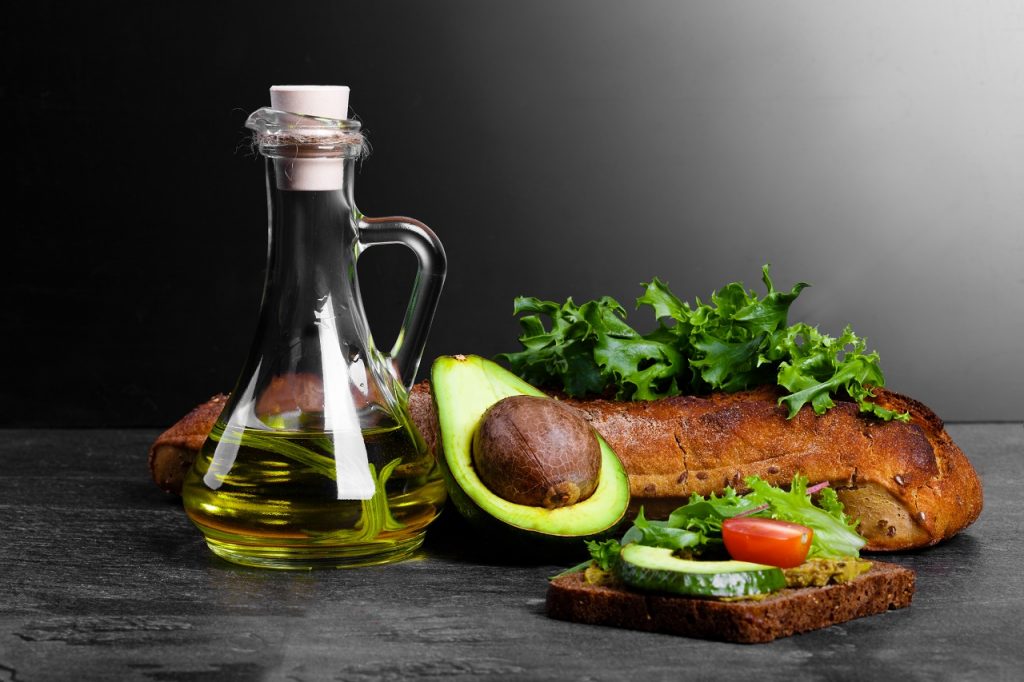
  • Avocados: These add nutrients and healthy fats to your recipes. Use dark ingredients like chocolate to cover up the green tint that may result from using avocados.
  • Mashed Bananas: Using mashed bananas provides extra nutrients and decreases the calorie and fat content. Add bananas slowly to the batter until you achieve the desired consistency.
  • Hung Curd: If dairy is not an issue, using Greek yogurt/hung curd adds protein to your recipes and replaces sweetness with a tangy flavor. Full-fat curd is best for keeping baked goods creamy and tender.
  • Nut Butters: Nut butters infuse baked goods with a nutty taste and tend to make them more dense and heavy. Still, keep in mind that they’re high in fat and calories.
  • Pumpkin Purée: This is a nutrient-rich butter replacement. Use 3/4 the amount of pumpkin purée when substituting for butter.

Substitutes in Spread

Butter is widely used as a spread for bread, crackers, and other food items. The following foods have consistencies that are ideal for spreads, in addition to being tasty and nutritious.

  • Nut Butter: Peanut and almond butter can easily be spread onto toast or crackers. They are delicious as well!
  • Cheese or Hung Curd: Try cottage cheese, cream cheese, or hung curd if you can tolerate dairy. You can also add some herbs & finely chopped veggies to enhance flavor.
  • Avocado: Lightly spread a tablespoon or two of ripe avocado over toast & sprinkle some salt, pepper & dry herbs mix.
  • Hummus: also works great for spreading and dipping.

We hope this article helped you in your quest to substitute butter. Do let us know your thoughts in the comments below! For more on nutrition, check out Healthy Reads or ask an expert by subscribing for GOQii’s Personalised Health Coaching here.

#BeTheForce  

September 18, 2023 By Rashmi Deshpande 2 Comments

Types of Fat and Fat Composition

fat composition“I can’t lose weight no matter how hard I try!” – this sentence is pretty common, isn’t it? Ever wondered why? The answer lies in the extra fat deposition on our bones and organs which become an obstacle for our weight loss journey. The key to slimming down is understanding that fat loss is more important than weight loss. Let’s study about how we gain fat and fat composition in detail!



What is Fat?

Fats are substances that help the body use some vitamins and keep the skin healthy. They also help the body store energy. In food, there are different types of fats such as saturated, unsaturated, polyunsaturated, monounsaturated, and trans fats. Most people consume too much of the wrong kinds of fat, putting their health at risk.

Good Fat vs. Bad Fat

Daily diet contains fat such as different oils (sunflower, peanut, rice bran, olive oil, sesame etc.), ghee (clarified butter), butter, cheese, avocados, eggs, nuts, seeds, milk, curd etc. (these are good fats). All these give us essential fats and 9kcal/g which helps the body function smoothly. They aid joint rotation, absorption of fat soluble Vitamins A, D, E and K. They’re the biggest source of energy.

The questions is where are we going wrong? How are we getting those chubby cheeks, round bellies, heavy arms and bulky thighs?

Do we consider how much fat we’re consuming when eating a 100g pack of chips? One packet of chips contains 100g but in serving portion, the manufacturer will only write 10g calories which amounts to approx. 20-28 pieces of chips which contain 160kcal, 7g fats and 16g carbohydrates. But do we only eat 28 pieces? It’s the same with burgers, pizzas, white paste, 2 minute noodles, biscuits, cookies and more. It has been shown that fat intake of the wrong kind will result in fat gain. As the body typically burns carbs for fuel and uses proteins for repair, it makes sense to cut back on bad fat while increasing good fat.

Different Types of Fat

The word “Fat” is broadly used to describe all body fats but that’s not true. There are several different types. Some fats can have a negative impact on health while others are necessary for good health. They can be stored as essential, subcutaneous or visceral fat. Each type of fat serves a different role. Some promote healthy metabolism and hormone levels, while others contribute to life-threatening diseases, including Type 2 Diabetes, Heart Disease, High Blood Pressure and even Cancer.

  1. Essential Fat: Essential fat is exactly that – essential for life and a healthy body. This fat is found in our brain, bone marrow, nervous system and membranes that protect the organs. Essential fat plays a major role in hormone regulation, including the hormones that control fertility, vitamin absorption, and temperature regulation. Women need at least 10-13% of their body composition to come from essential fat to be in good health, while men require at least 2-5%.
  2. Subcutaneous Fat: This is the fat which is stored under the skin. It covers a major portion of our body fat. This is the fat we can squeeze or pinch on our arms, belly, thighs, and buttocks. We can measure subcutaneous fat as a way of estimating total body fat percentage. A certain amount of subcutaneous fat is normal and healthy, but too much can lead to imbalanced hormone levels and sensitivity.
  3. Visceral Fat: This type is also known as belly fat. It is the white fat that’s stored in your abdomen and around all the major organs such as the liver, kidneys, pancreas, intestines, and heart. High visceral fat levels can increase your risk for diabetes, heart disease, stroke, artery disease, and some cancers.

Body Fat Composition

The proper body fat composition and distribution of fat will protect us from various risk factors and diseases. Women have different sights of fat deposition such as thighs, arms, buttocks, below the belly button, etc. Men experience this on their chest, belly, and waist. This deposition is different because of the varying percentage of testosterone (male hormone) and estrogen (female hormone).

In males, mean percentage body fat ranges from 22.9% at age 16-19 to 30.9% at 60-79 years of age. In females, mean percentage body fat ranges from 32% at age 8-11 to 42.4% at age 60-79. There is a close relation between fat and physical exercise as regular exercises helps you burn stored fat. Exercise helps you turn deposited fat into an energy source.

We hope this article helps you. To know more about fats, check out Healthy Reads or ask a GOQii Coach by subscribing for Personalised Health Coaching here.

#BeTheForce 

  • « Previous Page
  • 1
  • …
  • 51
  • 52
  • 53
  • 54
  • 55
  • …
  • 145
  • Next Page »

Search

Recent Posts

  • Healthy Eating: Vegetable Stuffed Ragi Paratha
  • Sustaining the “GLP-1 Glow”: Nutrition for Skin and Tissue Elasticity
  • Nutritional Deficiencies That Can Cause Hair Loss (And How to Fix Them)
  • The Recovery Gap: Sleep Debt, Overwork and Silent Burnout Are Ageing You Faster
  • Sleep Well, Live Better: Lifestyle Habits That Improve Sleep Quality

Stay Updated

Archives

  • March 2026 (10)
  • February 2026 (14)
  • January 2026 (14)
  • December 2025 (19)
  • November 2025 (15)
  • October 2025 (20)
  • September 2025 (6)
  • August 2025 (6)
  • July 2025 (12)
  • June 2025 (18)
  • May 2025 (16)
  • April 2025 (22)
  • March 2025 (23)
  • February 2025 (22)
  • January 2025 (25)
  • December 2024 (22)
  • November 2024 (23)
  • October 2024 (21)
  • September 2024 (24)
  • August 2024 (30)
  • July 2024 (21)
  • June 2024 (26)
  • May 2024 (31)
  • April 2024 (27)
  • March 2024 (27)
  • February 2024 (25)
  • January 2024 (21)
  • December 2023 (15)
  • November 2023 (11)
  • October 2023 (19)
  • September 2023 (22)
  • August 2023 (18)
  • July 2023 (22)
  • June 2023 (24)
  • May 2023 (24)
  • April 2023 (23)
  • March 2023 (23)
  • February 2023 (19)
  • January 2023 (15)
  • December 2022 (11)
  • November 2022 (15)
  • October 2022 (15)
  • September 2022 (12)
  • August 2022 (10)
  • July 2022 (17)
  • June 2022 (11)
  • May 2022 (10)
  • April 2022 (6)
  • March 2022 (6)
  • February 2022 (13)
  • January 2022 (11)
  • December 2021 (7)
  • November 2021 (3)
  • October 2021 (6)
  • September 2021 (3)
  • August 2021 (8)
  • July 2021 (7)
  • June 2021 (15)
  • May 2021 (16)
  • April 2021 (10)
  • March 2021 (7)
  • February 2021 (4)
  • January 2021 (4)
  • December 2020 (3)
  • November 2020 (4)
  • October 2020 (10)
  • September 2020 (3)
  • August 2020 (3)
  • July 2020 (2)
  • June 2020 (4)
  • May 2020 (10)
  • April 2020 (12)
  • March 2020 (10)
  • February 2020 (4)
  • January 2020 (4)
  • December 2019 (3)
  • November 2019 (7)
  • October 2019 (5)
  • September 2019 (4)
  • August 2019 (9)
  • July 2019 (9)
  • June 2019 (11)
  • May 2019 (4)
  • April 2019 (8)
  • March 2019 (8)
  • February 2019 (9)
  • January 2019 (8)
  • December 2018 (9)
  • November 2018 (3)
  • October 2018 (3)
  • September 2018 (5)
  • August 2018 (10)
  • July 2018 (6)
  • June 2018 (13)
  • May 2018 (8)
  • April 2018 (18)
  • March 2018 (9)
  • February 2018 (8)
  • January 2018 (15)
  • December 2017 (12)
  • November 2017 (19)
  • October 2017 (13)
  • September 2017 (15)
  • August 2017 (4)
  • July 2017 (8)
  • June 2017 (7)
  • May 2017 (6)
  • April 2017 (8)
  • March 2017 (6)
  • February 2017 (7)
  • January 2017 (9)
  • December 2016 (10)
  • November 2016 (7)
  • October 2016 (7)
  • September 2016 (7)
  • August 2016 (11)
  • July 2016 (9)
  • June 2016 (9)
  • May 2016 (12)
  • April 2016 (17)
  • March 2016 (17)
  • February 2016 (8)
  • January 2016 (6)
  • December 2015 (2)
  • November 2015 (9)
  • October 2015 (7)
  • September 2015 (9)
  • August 2015 (11)
  • July 2015 (9)
  • June 2015 (12)
  • May 2015 (9)
  • April 2015 (13)
  • March 2015 (8)
  • February 2015 (5)
  • January 2015 (12)
  • December 2014 (14)
  • November 2014 (11)
  • October 2014 (6)
  • September 2014 (13)
  • August 2014 (12)
  • July 2014 (6)
  • June 2014 (2)
  • May 2014 (7)
  • April 2014 (4)

From “Laddu Nawin” to Fit and Fierce: How a 25-Year-Old Insurance Advisor Shed 20 Kilos and Gained His Life Back

When 25-year-old Nawin Yadav from Hyderabad walked into his office every morning, he carried more than just his files and policy papers. He had the weight of fatigue, sluggish energy, and an ever-growing belly that was becoming the butt of jokes. “People … [Read More...]

“I’ve Challenged Myself to Live 100 Years” – The Story of Chandubhai Savani’s Second Chance at Life

At 67, most people start slowing down. Not Chandubhai Savani. A resident of Surat, Chandubhai, thought life was on track. “My life was going well till I had my bypass surgery,” he says. That surgery, back in 2021, was a wake-up call.  Medication was routine, but exercise wasn’t. His diet? What he calls ‘normal.’ “I […]

From Shimla’s Slopes to Chandigarh’s Sidewalks: Surinder Kaur Bhalla’s Journey from Chaos to Control

Some journeys start with a plan. Others begin with a stumble literally. Surinder Bhalla, a government professional, born and raised in the scenic hill town of Shimla, had always lived a life of movement. “In Shimla, you walked everywhere,” she reflects. “Walking was never an exercise. It was just life.” But after shifting to Chandigarh, […]

Ananda Mukherjee Health Story

From Terminal Illness To Complete Wellness! Ananda Mukherjee Health Story

As we observe World Cancer Day under the powerful theme ‘United by Unique’ (2025-2027)**, we are reminded that every individual’s journey with cancer is distinct, yet united by shared resilience, hope, and the collective fight against this disease. This theme places people at the centre of care and their stories at the heart of the […]

  • HOME
  • HEALTHY LIVING
  • FITNESS
  • HEALTHY RECIPES
  • USER STORIES
  • KARMA
  • BUY GOQii

Copyright ©2016 GOQii
