GOQii

Blog

  • HOME
  • HEALTHY LIVING
  • FITNESS
  • HEALTHY RECIPES
  • USER STORIES
  • KARMA
  • BUY GOQii

June 23, 2024 By Geetika Patni 3 Comments

Mindful Eating: Mind your Mood – part 4

emotional-eating

My previous three blogs discussed the concept of Mindful eating and how mindless eating can be harmful. In my second blog, I talked about why you should eat slowly to enjoy your meal and shared some tips on how to do so here. The third blog covered portion control and how to be wise with it here. Continuing in this 5 part series on Mindful Eating, today, I will take you through how stress eating can be harmful and should be avoided.

Have you noticed why buttered popcorn sells out quickly during a movie intermission? Or why you might empty an entire packet of Oreos or chips when you’re feeling emotional? That’s because certain foods can be emotionally comforting. In most cases, these comfort foods are high in fat and sugar and low in nutrition. They are comforting because they trigger neurons in the brain that create a false perception of well-being.

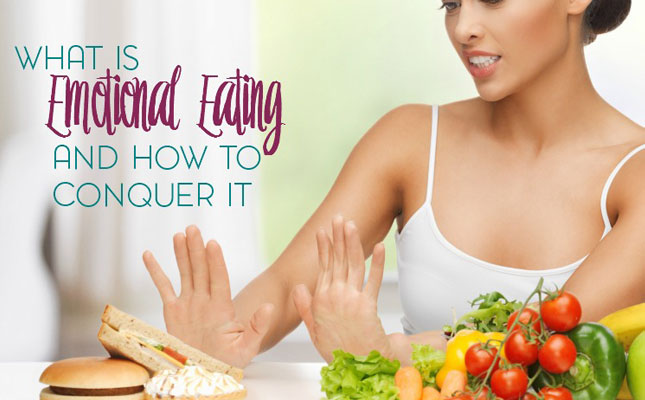
Turning to food to make you feel better is ‘Emotional eating’.
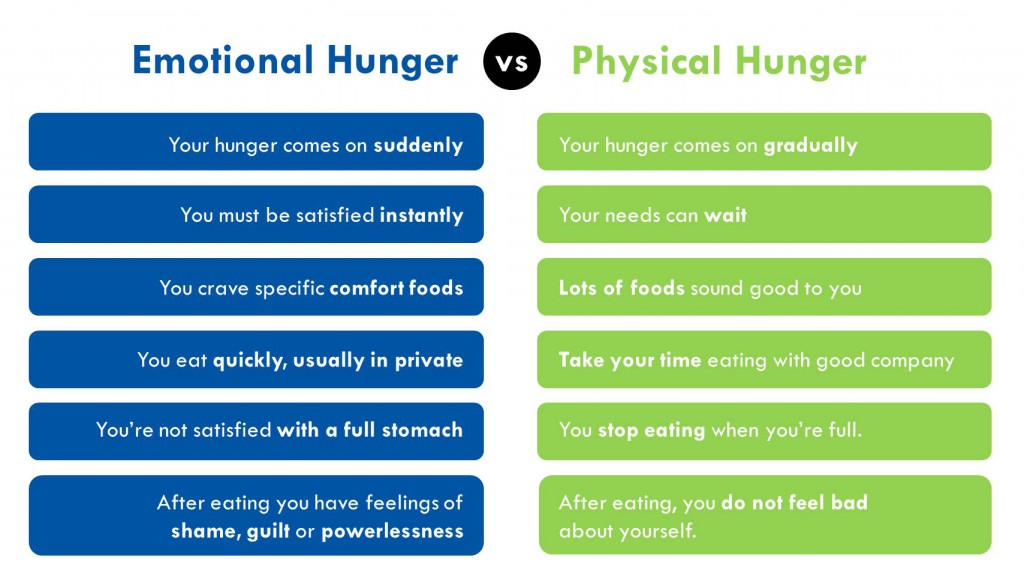
emotional-vs-plysical-hunger

It’s not necessarily bad to eat food from time to time as a pick-me-up meal, a reward treat, or a celebration feast. However, if food becomes your primary coping mechanism for anxiety, loneliness, boredom, anger, frustration, or exhaustion, and your first impulse when upset is to dig into a tub of ice cream, it calls for your attention. Feeding your emotion with food may feel good at the moment but doesn’t resolve the underlying problem. Often, you may end up feeling worse later due to unnecessary calorie bingeing and the physical havoc it wreaks on your metabolism.

The guilt, feeling powerless over emotions, and impulse eating leads to an unhealthy cycle, causing physical and emotional turmoil. Despite the difficulty, it is possible to make a positive change. All it requires is some effort on your part.

To help you break this cycle and mindless eating habit, here are a few pointers that work best when followed in order:

  1. Be Aware: Acknowledge your habit of emotional eating. If your near or dear ones have pointed it out or you know it by yourself, take it seriously! Awareness is the first positive step. Identify the emotions that lead to binge eating. Are they positive like exhilaration, victory, or success? Or negative like frustration, loneliness, anxiety, depression, anger, or boredom? Know your comfort foods, whether sweets, chocolates, ice creams or salty ones like chips, fries or some junk food like pizza, burger, maggi etc. that drive your emotional cravings. You may come up with multiple choices for multiple emotions and it is absolutely okay. You may also notice that your choice of comfort food is entirely different from others. So accept your unique patterns.

Tip: Maintain a food journal to help identify your emotions and associated foods, or use the food log feature in the GOQii app.

  1. Know your Hunger cues: Identify why you wish to eat. Hunger cues can be physical or emotional. If your stomach is growling and it’s been a few hours since your last meal, eating a salad or any other meal will suffice. But if you can postpone your hunger, you are likely to stop once you feel full, without guilt. This is true physical hunger.

Contrarily, if your hunger is sudden, urgent, and you crave specific foods like cookies or chips, or specific types of foods like sweets and fried foods and you are likely to over consume, feeling guilty later, you are about to be snacking out of false hunger, then the head hunger is generated out of emotional cues.

Tip: Next time you reach out for a snack, check if it’s driven by physical or emotional hunger.

  1. Cross check: Once you’ve identified your hunger cue, ask yourself why you are eating. Take a deep breath and get a clear answer. This helps put a check before the binge. If you’re reaching for a snack and unsure if it’s emotional, just ask yourself, “Why am I eating this?” Pause and reflect.

Tip: If it’s justified hunger, grab something healthy-roasted or steamed. If  it’s emotional, respectfully place the dish aside.

  1. Distract: Change your location once you put the dish aside. Go to another room or head outdoors. Find an alternative to food to fulfill your emotions. If lonely, talk to someone. If depressed or frustrated, watch a comic movie. For exhaustion, get a foot massage or take a warm bath. For anger, let it out or write it out. For anxiety, listen to your favorite music. If happy and wanting to reward yourself, indulge in your hobby.

Tip: You can also do some window shopping, reading, walking, exercising, meditating, or taking a nap which will give time to pass off the emotional storm and make you a stronger self- one who has more willpower to cope up with his/her feelings.

  1. Giving In: Emotional eating is an automatic and mindless habit. Sometimes, before you know it, you’ve eaten half a tub of ice cream. If you can pause for a moment when hit with a craving, you can make a different decision next time.

Tip: When you feel the urge to give in, pause and reflect. Don’t shut out the craving. Wait and consider what’s going on in your head and how you feel. Even if you eat afterward, this reflection helps you understand why and prepares you for a better response next time.
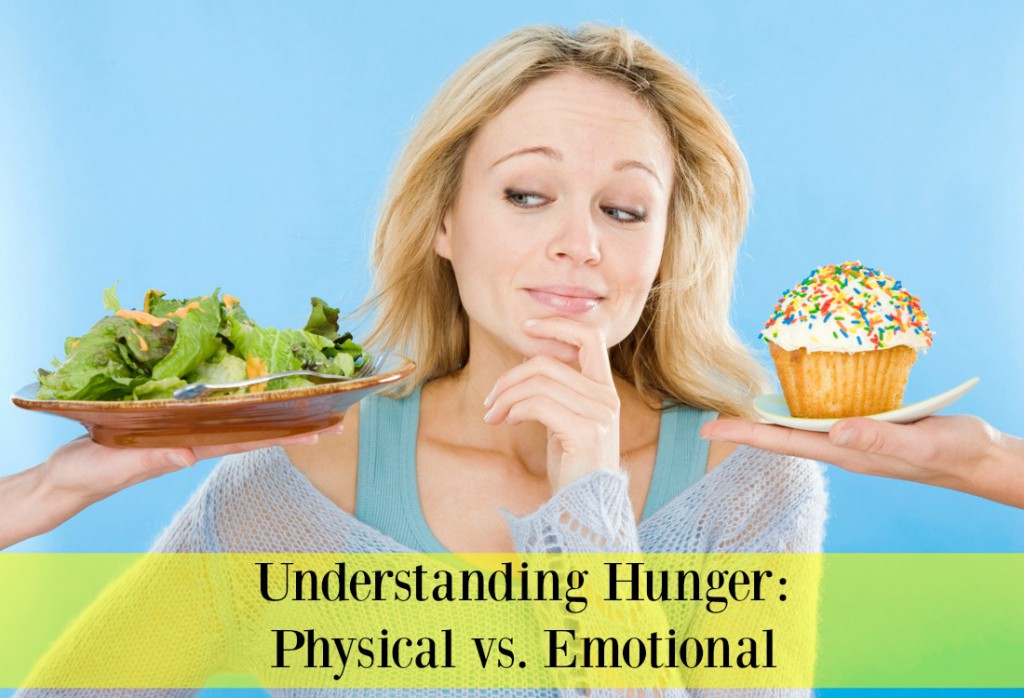
 

Understanding-Hunger-Physical-vs-Emotional
If you approach your feelings with kindness, reining in emotions is not a difficult task.

Listen to your emotions, accept them even if they are negative and when you do so, your body will understand that it doesn’t need to overeat to comfort itself and/or protect itself from powerful feelings.

Learning to mind your mood this way enables you to repair your emotional responses and physical fitness. Seeking help from experts or a personal coach can bring a turning point. Reach out if you need help to enjoy a better physical and mental health.

In the last blog of the 5 part series, I will discuss connecting with your meals and share tips on transforming your relationship with food for the better.

To be continued……………

#BeTheForce
May 27, 2024 By Geetika Patni 7 Comments

Mindful Eating: Slow down and enjoy your meal – 2

Untitled-1

In my previous blog, I talked about the concept of Mindful Eating and how often we instead of being mindful become mindless. (https://goqii.com/blog/mindful-eating-the-best-habit-ever/). Mindless eating is when we overeat, eat fast, do some emotional eating while we are not really hungry and disconnect with food. The first blog summarised the fact that it is extremely important to make the ‘connect’ with your food choices. Attempt to learn or acknowledge the ingredients of the dish you are eating, which food group it belongs to, combining it in ways you can enhance (or deplete) it’s nutritional quotient, and most importantly how you truly feel having it. 

Today, I am going to talk about the art of eating slow. Eating is a biologically natural and pleasurable act of nourishment.

More often than not, most of us may not even recall everything that we ate in last few hours, let alone-the sensation associated with it. That is largely because we indulge in other things most times along with eating – working, driving, reading, watching television, surfing the net, social networking or simultaneously feeding a child, a pet or an emotion.

This act of mindless eating –lack of awareness of the food we are consuming- may becontributing to the national obesity epidemic and the lifestyle diseases and disorders prevalent around.

Mindful eating is nothing but, an act of eating our food with attention. Sensing the flavours, recognizing the ingredients and enjoying the dish and thus feeling gratitude towards the meal. Following mindful eating pattern you will not only reverse your weight issues, but also fix them up for life.

chew-slowly

Eating fast is a habit in disorder. If you eat fast, you are just one step away from digestive troubles, weight gain and other metabolic dysfunctions. Here is what happens when you eat fast?

One is you skip the first step of digestion of the food, which happens when enzymes in the saliva break down the morsels when you are chewing them. This Bolus which is softened food morsel is much easier to get digested by the acids of the stomach.

Second – since you are rushing through – large chunks of undigested food is filling up your stomach – too much and too quickly. The stretch receptors of your stomach are slow acting fibres (can’t help -that is how they are made!) so when they can’t match up with the speed, the spill over happens, leading to acid reflux, burn in the chest, food regurgitation, and acid after taste in mouth.

What is supposed to be an act of pleasure turns out to be a painful experience!

Third – The delicate hormonal cross talk which happens between hunger, satiety and fullness hormones doesn’t happen that smoothly when you are gobbling down your meal, leaving one having more food but yet not satisfied.

That is why adopting slow eating as a good habit for life is necessary, to eliminate the digestive disorders, fix up weight struggles and feel satisfied with our meals, with our life.

In this article, I’ll share ways to build up your innate capability to eat slowly. As you’ll go down the pointers, pick up only one or two that you can follow easily and when you return back to this article, gradually learn more ways to practice slow eating as way of life.

Here are some tips to help you eat slowly 

  • Chew well: Digestion of your food begins from the mouth. Gulping down your food will prevent your stomach to match up with your tongue. And, do you also know that you can’t taste your food until its mixed with saliva. Hence chewing your food thoroughly not only improves digestion but enhances perceptibility of the flavor of your food as well.

To practice chewing well and long, take smaller bites and designate number of chew per bite. Anything more than your current number till you reach over 20 is perfect. 20 seconds to every chew is also a wise idea.

  • Engage all your sense while eating: Sniffing the food morsel before putting it in your mouth and appreciating its taste brings in more satisfaction from the food. Also notice colours in your food and feel its texture in your mouth. Chew well then and you’ll find yourself turning into a slow eater automatically.
  • Deep breathe after every few bites: By following this tip, you’ll buy some more time for your tummy to assimilate all the previous morsels. The excess O2 taken in by extra breathing will also aid in better oxidation of the fats in the food.
  • Add fibers to your meal: They take a long time to chew. Crunching salads after every few bites will additionally supply raw enzymes to digest cooked portions of your meals.
  • Take intermission break: Put down your spoon and fork once your done with half your meal. This break can last till you have finished a mini conversation or taken 24-30 breaths.

# Or push away from table, get up for the second helping, take some sips of water in between, to take a break.

  • Pace with a slow eater: Rather than a ferocious one. We unconsciously imitate people we are close to. So eating with a slow eater will also slow you down.
  • Use non dominant hand to eat or use chopsticks for a week: If you make the task difficult it automatically forces you to pace down.
  • Eat with a baby spoon/fork: By law of volume metrics, eating with a baby spoon will put a speed breaker on your food ride.
  • Work up your food: Shell your pistachios or peanuts or seeds and peel your oranges yourself. Shelling, peeling or individual unwrapping of your snack will also help slow you down and reduce the tendency to over consume any snack.
  • Refuel-every 3-4 hours: Keeping long gaps between meals will prevent you from following slow eating, as mind is weak in the knees when we are famished. Hence, eat frequently to prevent over eating and practice slow eating at any meal time.

Practicing slow eating takes time. If you are a super fast eater, and you are trying these methods to change your habit for good, don’t punish yourself if you don’t succeed in the first few weeks. Try and try till you succeed. And, if you still fail, take help of your coach, to make you practice and push towards rewiring your old habit into a new one of slow mindful eating.

In my next blog in this five part series, I will be talking about Portion Control. I shall share some good tricks and hacks which will help you prevent over eating and the need to diet ever.

To be continued …………..

#BeTheForce 

October 7, 2023 By Payal Choudhury 72 Comments

Healthy Eating Tips for Women at 40

Healthy-eating-tips-for-women-at-40

“Lordy, lordy, look who’s forty!” The big 40—it’s a milestone for sure, signalling a time of transition from young adulthood to middle-age.

This is an important decade for preventing lifestyle diseases such as diabetes, heart disease and many cancers later in life. So, if you’ve been making healthy lifestyle choices, keep it up in your 40s, and if you haven’t, now’s the time to start!

Healthy habits like eating right, exercising regularly, getting enough sleep, and not smoking can help reduce your risk for a number of chronic medical conditions.

Age 40 is a milestone when the risk of many health conditions increases. This makes the 40th birthday a perfect time for taking stock of your health. Today, Forty is considered the new twenty. So if you want to feel young and healthy now is a good time to take stock of the situation. Though there might be other things out there more important, do take a deep breath and feel good and healthy.

Adopting a healthy eating plan is the best preventive measure against disease. It involves both avoiding certain foods and incorporating others in varying proportions, making the transition gradual yet effective.

Good nutrition starts with the basics: a well-rounded diet consisting of whole grains, fresh fruits and vegetables, healthy fats, and lean sources of protein. These kinds of foods provide women with plenty of energy, the means for lifelong weight control, and the key ingredients for looking and feeling great at any age. Our diet has a major effect on our food cravings, stress levels and energy throughout the day.

Applying some simple rules will assist our bodies in maintaining hormonal balance and promoting long-term well-being.

Focus on whole, plant-based foods. Fill most of your plate with fruits and leafy green vegetables. Also include a variety of whole grains, beans, and other legumes to give a filling fiber.

Bone up on calcium. Women are at a greater risk than men of developing osteoporosis, so it’s important to get plenty of calcium to support your bone health. While dairy products are high in calcium, their animal fat and protein can accelerate bone loss. So also consider plant-based sources of calcium like beans, broccoli, kale, brussels sprouts, and collard greens.

Make sure you get enough iron. Many women don’t get enough iron in their diet. On top of that, women lose a lot of this important mineral during menstruation. Boost your intake by eating iron-rich foods such as lean red meat, dark poultry, lentils, spinach, almonds, and iron-fortified cereals.

Cut back on alcohol and caffeine. Women who consume more than two alcoholic drinks a day are at a higher risk of osteoporosis. Caffeine consumption interferes with hormone levels and also increases the loss of calcium. Try to limit alcohol consumption to one glass once in a while and caffeine to one cup a day.

Eat the right type of protein. Protein is an essential part of any healthy diet. Protein at this point in your life will help maximise your current metabolic rate and also prevent the loss of lean muscle mass. Eating too much animal protein can cause calcium loss and lead to a decrease in bone density and osteoporosis. Instead of red meat and processed meat, such as hot dogs, bacon, and salami, opt for fish, skinless chicken and turkey, low-fat dairy, and plant-based protein sources, such as beans, nuts, seeds, peas, tofu.

Some of the healthy tips to be focused on:

Avoid

– Ready made meals and microwaving your food in plastics and cling film.

– Genetically modified foods

– Sugar as much as possible

– Food additives such as MSG (monosodium glutamate or better known as Ajinomoto), Fructose, Glucose-Fructose-Syrup, Corn Syrup, Aspartame, Colourings, and E numbers.

– Cut down on sodium

– Eating any food that is burnt

– Carbonated beverages, especially ‘diet’ varieties

– Margarine and other ‘fake’ butter

All foods labelled ‘diet’ or ‘low calorie’ or ‘fat-free

Highly processed foods

Refined grains (white).

Options that can be included in the meal platter:

Eat plenty of raw organic fruit and vegetables

Eat complex carbohydrates

Eat Essential Fats – oily fish, nuts, & seeds (avoid nuts in cases of acne and allergies)

Include healthy fats such as coconut oil, olive oil and butter

Increase your fiber intake

Drink sufficient clean water every day

Eat good, clean sources of proteins.

Eat vegetarian at least once each day

Thoroughly wash all fruits and vegetables before eating.

Feed your body high-quality fuel, monitor its intake and routinely push your engine’s limits to keep it running smoothly. Remember, you are the captain of your plane. Just reach out and take the controls.

We hope this article equips you with valuable insights for maintaining a healthy and balanced life. If you found this information helpful, we’d love to hear your thoughts in the comments below. Find more articles on Women’s Health here. For further information or guidance, reach out to our certified experts by subscribing to GOQii’s Personalised Health Coaching here.

December 16, 2022 By Urvi Gohil 2 Comments

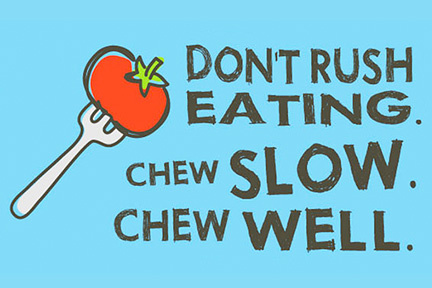
Why You Should Eat Slowly For Good Health & Better Digestion

Eat SlowlyMary Roach, in her book, Gulp: Adventures on the Alimentary Canal describes the digestive system as a highly elaborate inside of the tube that starts at the mouth and ends at the anus.



Let’s address an important facet of pre-digestion: Chewing – a much neglected lifestyle habit.

What Happens When You Eat Slowly?

The chewing process serves as the first step to proper digestion. Two interesting things happen while chewing: Firstly, Ptyalin, which is required for digestion of carbohydrates is secreted. The other thing is that the brain kicks into action and recognizes whether you are chewing proteins, carbohydrates or fats and accordingly tells the stomach to secrete the right enzymes.

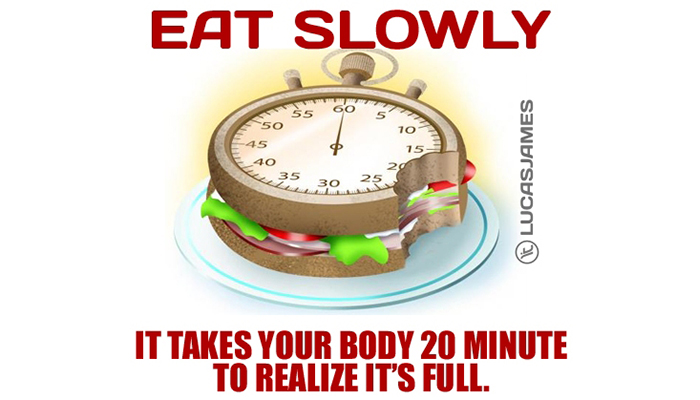
It takes approximately 20 minutes from the time you start eating for your brain to send out signals of fullness. When you eat slowly, it allows ample of time to trigger the signal from your brain that you are full. Feeling full translates into eating less.

Speed eating, gorging and binge eating majorly contribute to unhealthy weight gain. Studies confirmed that chewing every bite for a longer period of time helps you lose weight and improve digestion. This is because it provides more time for your brain to receive the signal. Therefore, the slower you chew, the lesser you eat and the more satisfied you are. Eating fast promotes weight gain and makes you feel out of control of your eating habits.

Follow These Simple Steps! 

  • The very first step to mindful eating is to choose the smallest plate in your house. Take that plate and serve your portions and sit
  • Sit down to eat in a calm environment with minimal distractions. It is your time with your food. Don’t eat while driving, watching TV, while texting, etc.
  • Add 1 exchange of raw or cooked vegetables right before the main meal and use a fork to eat it. Try setting a minimum number of chews per bite
  • Look at your plate and see how colorful it is and what good it is going to do to your body. Sense the aroma and question yourself about its nutrition
  • Take a fork or chop stick to eat your meal. If you’re eating roti-sabji, take very small bites of the roti and more vegetables. Chew 30 times or more per bite and gulp it down
  • Set your time to eat. At least 20-30 minutes for each meal and preferably even longer at dinner. This will set your relationship with food
  • When you eat slowly, it improves your health in more ways than one. It leads to better digestion, better absorption, reduced bloating, acidity & constipation as well as aids weight management

So eat slowly, chew properly and live healthy! We hope this article helps you chew your food for better digestion and absorption of all those precious nutrients. Do let us know your thoughts in the comments below!

For more health tips like this, check out Healthy Reads or speak to an expert by subscribing for GOQii’s Personalised Health Coaching here: https://goqiiapp.page.link/bsr

#BeTheForce

  • « Previous Page
  • 1
  • 2

Search

Recent Posts

  • Water Intake Pre, During and Post Workout
  • India Leads in Longevity: GOQii Sanjeevini Named Top 40 in $101M XPRIZE
  • The Importance Of Knowing If You’re Thirsty Or Hungry
  • Best Foods To Alleviate Irritable Bowel Syndrome
  • ALL ABOUT VERTIGO!

Stay Updated

Archives

  • December 2025 (9)
  • November 2025 (15)
  • October 2025 (20)
  • September 2025 (6)
  • August 2025 (6)
  • July 2025 (12)
  • June 2025 (18)
  • May 2025 (16)
  • April 2025 (23)
  • March 2025 (23)
  • February 2025 (22)
  • January 2025 (26)
  • December 2024 (26)
  • November 2024 (25)
  • October 2024 (22)
  • September 2024 (24)
  • August 2024 (31)
  • July 2024 (21)
  • June 2024 (26)
  • May 2024 (31)
  • April 2024 (27)
  • March 2024 (29)
  • February 2024 (26)
  • January 2024 (25)
  • December 2023 (15)
  • November 2023 (11)
  • October 2023 (20)
  • September 2023 (22)
  • August 2023 (20)
  • July 2023 (22)
  • June 2023 (24)
  • May 2023 (24)
  • April 2023 (24)
  • March 2023 (23)
  • February 2023 (20)
  • January 2023 (16)
  • December 2022 (12)
  • November 2022 (15)
  • October 2022 (15)
  • September 2022 (12)
  • August 2022 (10)
  • July 2022 (17)
  • June 2022 (11)
  • May 2022 (10)
  • April 2022 (6)
  • March 2022 (6)
  • February 2022 (13)
  • January 2022 (12)
  • December 2021 (7)
  • November 2021 (3)
  • October 2021 (6)
  • September 2021 (3)
  • August 2021 (8)
  • July 2021 (7)
  • June 2021 (15)
  • May 2021 (16)
  • April 2021 (10)
  • March 2021 (7)
  • February 2021 (4)
  • January 2021 (4)
  • December 2020 (3)
  • November 2020 (4)
  • October 2020 (10)
  • September 2020 (3)
  • August 2020 (3)
  • July 2020 (2)
  • June 2020 (4)
  • May 2020 (10)
  • April 2020 (12)
  • March 2020 (10)
  • February 2020 (4)
  • January 2020 (4)
  • December 2019 (3)
  • November 2019 (7)
  • October 2019 (5)
  • September 2019 (4)
  • August 2019 (9)
  • July 2019 (9)
  • June 2019 (11)
  • May 2019 (4)
  • April 2019 (9)
  • March 2019 (8)
  • February 2019 (9)
  • January 2019 (8)
  • December 2018 (9)
  • November 2018 (3)
  • October 2018 (3)
  • September 2018 (5)
  • August 2018 (10)
  • July 2018 (6)
  • June 2018 (13)
  • May 2018 (8)
  • April 2018 (18)
  • March 2018 (9)
  • February 2018 (8)
  • January 2018 (15)
  • December 2017 (12)
  • November 2017 (19)
  • October 2017 (13)
  • September 2017 (15)
  • August 2017 (4)
  • July 2017 (8)
  • June 2017 (7)
  • May 2017 (6)
  • April 2017 (8)
  • March 2017 (6)
  • February 2017 (7)
  • January 2017 (9)
  • December 2016 (10)
  • November 2016 (7)
  • October 2016 (7)
  • September 2016 (7)
  • August 2016 (11)
  • July 2016 (9)
  • June 2016 (9)
  • May 2016 (12)
  • April 2016 (17)
  • March 2016 (17)
  • February 2016 (8)
  • January 2016 (6)
  • December 2015 (2)
  • November 2015 (9)
  • October 2015 (7)
  • September 2015 (9)
  • August 2015 (11)
  • July 2015 (9)
  • June 2015 (12)
  • May 2015 (9)
  • April 2015 (13)
  • March 2015 (8)
  • February 2015 (5)
  • January 2015 (12)
  • December 2014 (14)
  • November 2014 (11)
  • October 2014 (6)
  • September 2014 (13)
  • August 2014 (12)
  • July 2014 (6)
  • June 2014 (2)
  • May 2014 (7)
  • April 2014 (5)

From “Laddu Nawin” to Fit and Fierce: How a 25-Year-Old Insurance Advisor Shed 20 Kilos and Gained His Life Back

When 25-year-old Nawin Yadav from Hyderabad walked into his office every morning, he carried more than just his files and policy papers. He had the weight of fatigue, sluggish energy, and an ever-growing belly that was becoming the butt of jokes. “People … [Read More...]

“I’ve Challenged Myself to Live 100 Years” – The Story of Chandubhai Savani’s Second Chance at Life

At 67, most people start slowing down. Not Chandubhai Savani. A resident of Surat, Chandubhai, thought life was on track. “My life was going well till I had my bypass surgery,” he says. That surgery, back in 2021, was a wake-up call.  Medication was routine, but exercise wasn’t. His diet? What he calls ‘normal.’ “I […]

From Shimla’s Slopes to Chandigarh’s Sidewalks: Surinder Kaur Bhalla’s Journey from Chaos to Control

Some journeys start with a plan. Others begin with a stumble literally. Surinder Bhalla, a government professional, born and raised in the scenic hill town of Shimla, had always lived a life of movement. “In Shimla, you walked everywhere,” she reflects. “Walking was never an exercise. It was just life.” But after shifting to Chandigarh, […]

Ananda Mukherjee Health Story

From Terminal Illness To Complete Wellness! Ananda Mukherjee Health Story

As we observe World Cancer Day under the powerful theme ‘United by Unique’ (2025-2027)**, we are reminded that every individual’s journey with cancer is distinct, yet united by shared resilience, hope, and the collective fight against this disease. This theme places people at the centre of care and their stories at the heart of the […]

  • HOME
  • HEALTHY LIVING
  • FITNESS
  • HEALTHY RECIPES
  • USER STORIES
  • KARMA
  • BUY GOQii

Copyright ©2016 GOQii