GOQii

Blog

  • HOME
  • HEALTHY LIVING
  • FITNESS
  • HEALTHY RECIPES
  • USER STORIES
  • KARMA
  • BUY GOQii

November 19, 2024 By Deepanshu Sharma 4 Comments

High Intensity Interval Training and Its Benefits

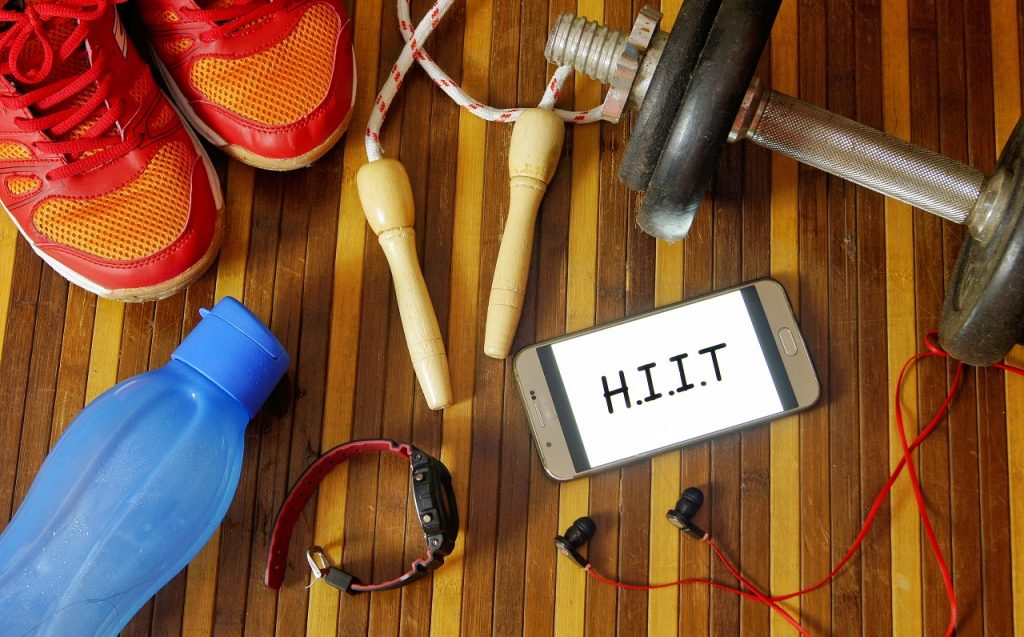
HIIT and its benefitsYou’ve likely come across the term HIIT in recent years. High-Intensity Interval Training is an exercise routine that many people swear by to get optimal results! While there may be some confusion about what HIIT entails and who should do it, we’re here to clear things up!

What is High Intensity Interval Training?

HIIT, or High-Intensity Interval Training—also known as Sprint Interval Training or High-Intensity Intermittent Exercise—is a workout designed to aid in fat loss and increase stamina.

In this routine, a person performs a burst of high-intensity exercise (like sprinting for 30 seconds) followed by a short burst of active rest (like walking or jogging for 30 seconds) for a total of 4-5 minutes. You then take a minute or two of rest and repeat the same pattern with different exercises.

The main focus of this routine is continuous movement, alternating between high and low-intensity exercises. HIIT is suitable for all ages and can be done 4-5 times a week for best results.

It’s advised to start with a 1:1 ratio of high to low intensity—30 seconds of high intensity followed by 30 seconds of low intensity. As you progress, you can increase this ratio to 2:1.

Benefits of HIIT

  1. Quick Workout For Busy Individuals: HIIT workouts can range from 10 to 45 minutes, combining one or multiple exercises. It’s the perfect workout if you’re short on time but still want effective results. You can burn up to 500 calories in a 40-45 minute session, depending on the exercise and ratio chosen.
  2. Fat Loss: HIIT quickly raises your heart rate to the fat-burning zone and keeps it there, as there’s no rest. This provides excellent fat-loss results in a short period compared to traditional cardio, and the results are noticeable.
  3. Increased Endurance: This routine is highly effective for building stamina, even if you start at lower speeds. Many who practice HIIT have noticed they can run longer and faster after consistently following the routine.
  4. Improved Brain Functioning: Research conducted at various institutes has shown that following a HIIT routine for some time can lead to the following changes that enhance brain functionality:
    • Increases neuron count
    • Improves cognitive function
    • Reduces nerve stiffness and inflammation
    • Promotes new blood vessel development in the brain
  1. Better Physical Performance: Research from the University of British Columbia revealed the following benefits of HIIT compared to traditional, moderate-intensity workouts:
    • Enhanced stamina
    • Greater endurance
    • Boosted metabolism
    • Increased speed and agility
    • Higher peak power

As we can see, HIIT is more than just a popular method for fat loss; it also improves essential aspects of both mental and physical performance. You can add HIIT to your current workout or try it instead of your usual cardio routine for a week.

Here is a Quick HIIT Routine You Can Follow  

  • Jumping Jacks – 1 minute
  • Squats – 1 minute
  • Spot Running – 1 minute
  • Squats – 1 minute
  • Jumping Jacks – 1 minute

Rest for 1-2 minutes, then do 2-4 sets depending on your fitness level.

Was this article helpful? Did we miss out on any facts? Let us know in the comments below! For more on fitness and workouts, check out Healthy Reads.

To workout with an expert, you can join our live, interactive, online classes on GOQii PRO, where our certified fitness experts will guide you on the correct form and posture in real time, while making sure that you are well motivated! You can book a class now from the GOQii App.

#BeTheForce 

November 8, 2024 By Aqsa Shaikh Leave a Comment

Effects of Smoking on your Muscles

Quit SmokingIn my fitness carrier so far, I have met many people with all kinds of obsessions. Take my closest friend for example – he’s a fitness and gym enthusiast who wants to develop muscles and also lose fat. However, he had a major misconception: he believed that smoking cigarettes would help him loses fat and that losing fat would automatically lead to muscle gain.

When he approached me to discuss this, I began to wonder—if fat loss were so simple, why would people go through various diets and workouts? Could they simply light a cigarette and shed pounds within weeks? Unfortunately, this is not true.

Some people smoke to appear “cool,” while others believe it will relieve stress and boost happiness. The reality is that none of this happens, and smoking only harms the lungs.

If you’re a smoker, it’s not just your lungs that are at risk; smoking also impacts your strength training. It can make you lethargic. A smoker’s heart beats, on average, 30% faster than that of a non-smoker, which significantly affects exercise outcomes. Since a smoker’s heart works harder to achieve adequate circulation, they expend more energy during workouts.

This increase in heart rate, along with elevated blood pressure, reduces blood flow and hampers the smoker’s performance during the same exercise routine as a non-smoker. If the exercise routine aims at muscle building, a smoker’s reduced performance will yield less muscle compared to a healthy non-smoker.

Testosterone is also vital for muscle building, but smoking may damage the cells within the body that produce testosterone. Low testosterone levels can significantly impact muscle development, endurance, and workout intensity. This may force you to cut down on the workouts needed to make progress in muscle building.

If you’re considering quitting smoking, the health benefits are numerous—from improved muscle development and endurance to better overall fitness. However, if you choose to continue, be aware that the negative effects will likely become apparent sooner rather than later.

Quitting smoking can lead to significant improvements in fitness, endurance, and health. Let us know in the comments if this article helped you! For more insights on fitness and lifestyle, explore Healthy Reads, or for further information or guidance, reach out to our certified experts by subscribing to GOQii’s Personalised Health Coaching here.

#BeTheForce
Disclaimer: The information provided in this blog is for general awareness and educational purposes only. It is not intended to replace professional medical advice, diagnosis, or treatment. Always consult a qualified healthcare provider for personalised medical guidance or concerns related to your health.

November 4, 2024 By GOQii 2 Comments

The Weight Loss Link You May Be Missing – Dietary Minerals

dietary minerals and weight lossThe most challenging case for a Dietitian is perhaps – Weight Loss! Why – because, each case is unique and the most important task is to find out the root cause of weight gain (which, contrary to popular belief, is not always overeating or lack of physical activity). It is prudent that the underlying cause be identified and targeted, not only to ensure sustainable weight loss but also because these reasons are linked to diseases in waiting as well. Genetic predisposition, low BMR, stress, lack of sleep, hormonal disturbance, chronic mild dehydration, lack of certain dietary minerals, etc. are few recognized causes of weight gain.

However, if adjusting your diet, water intake, exercising more and controlling your stress and sleep hasn’t helped you reach a healthy body weight, check your mineral status. Mineral deficiency often happens slowly over time and can be caused by an increased need for one or more dietary minerals, lack of dietary minerals in the diet, or difficulty absorbing minerals from food. You may be suffering from deficiencies because the nutritional value of the produce has been steadily degrading for the last couple of decades. Increased intake of processed foods is another reason which deprives you of not only fiber, but many vitamins and minerals.

4 Major Dietary Minerals Associated With Weight

Since the deficiency symptoms of these minerals are largely general, they go unnoticed and hence get overlooked while diagnosing unexplained weight. Let’s discuss four major dietary minerals (or their deficiencies) that are directly or indirectly associated with your weight.

1. Chromium
It is an essential mineral that regulates insulin action and its effects on metabolism. Insulin is essentially the fat-loss gatekeeper, so anything that improves Insulin efficiency is great for fat loss. Chromium determines the way our body uses Insulin. The Glucose Tolerance Factor (GTF) interacts with Insulin and regulates how much Glucose (sugar) enters a cell. GTF encourages energy production (burns calories) and may also curb feelings of hunger.

Identifying the link between Chromium and weight loss is crucial because someone who is overweight is often at high risk of becoming Insulin Resistant (Diabetic). Chromium is lost in the process of refining foods. For example, when sugarcane is refined into white sugar, 93% of Chromium is lost. Because our soils are depleted of Chromium and because we consume more processed foods nowadays, Chromium deficiency is becoming increasingly prevalent.

2. Iodine
The Thyroid Gland depends on Iodine to manufacture the Thyroid Hormone. The Thyroid’s main function is to manage the body’s metabolism. A shortage of Iodine can cause changes to the Thyroid Gland and an underactive Thyroid Gland slows your metabolism; you thus burn dramatically fewer calories and feel sluggish. Also, an underactive Thyroid Gland promotes excess weight and cellulite by causing water retention.

Inadequate intake of Iodine was once a recognized problem that was solved by universal Iodization of Salt. Salt was fortified with Potassium Iodate to ensure controlled consumption by all sections of society. Once this was done, the obvious symptoms of severe Iodine Deficiency disappeared from view, and little further thought was given to the matter, though sub-clinical symptoms remained. Today’s health conscious consumers have lowered their salt intake and now fail to get even that small amount of Iodine in their diets. Presence of Goitrogens in certain foods is another cause of Iodine deficiency arising from inadequate Iodine utilization.

3. Magnesium
It is needed to extract nutrients from food and for optimal Insulin function. The more nutrients you extract from food, the less you have to eat to feel full. When we aren’t getting what we need from our diet, the body will crave more food in an effort to obtain those vital nutrients. Magnesium is also a vital nutrient for reducing stress, which is one of the most important keys in fighting obesity.

It supports healthy Adrenal Glands that control the release of Adrenaline and Cortisol – two hormones related to stress response. While these hormones are vital to living, too much of them can cause weight gain and other health problems. Magnesium helps regulate these hormones so they are not overproduced.

One of the major causes of Magnesium deficiency is over-medicating with pharmaceutical drugs. They prevent the body from absorbing magnesium.

4. Iron
It is a critical nutrient because it is essential for the synthesis of Hemoglobin – a metalloprotein that carries oxygen from lungs to all the tissues in body. Diminished oxygen carrying capacity can leave you feeling very fatigued, lethargic and irritable. In this state, your body signals you to slow down physical activity and you may find yourself seeking opportunities to sit or lie down, thus leading to weight gain.

Also, low Iron promotes fat storage and cause abnormal blood sugar elevation. Reasons responsible for iron deficiency can be dietary as well as non-dietary. Your excess body weight too can contribute to Iron deficiency. Inflammation associated with excess body weight elevates a hormone Hepcidin, which has the net effect of reducing Iron absorption from digestive tract.

Now, before you finish reading this article and jump to quick fix by googling for these mineral supplements, a word of caution – Overdose of these minerals, especially from synthetic sources, are extremely harmful. Do not take these minerals as supplements without professional guidance. Consult a doctor, nutritionist or a dietitian before making any changes to your diet or taking any supplements.

You may improve your mineral intake by following the golden rule – Go low on processed foods and buy your foods fresh, local and seasonal to remove any possible degradation in nutrient quality. Don’t eat less, eat right and live a healthy and active life!

We hope this article on dietary minerals helps you. For further guidance on nutritional deficiencies and to lose weight in a sustainable manner, reach out to an expert by subscribing for GOQii’s Personalised Health Coaching here.

For more articles on weight loss, check out Healthy Reads.

#BeTheForce

Disclaimer: The information provided in this blog is for general awareness and educational purposes only. It is not intended to replace professional medical advice, diagnosis, or treatment. Always consult a qualified healthcare provider for personalised medical guidance or concerns related to your health.

October 26, 2024 By Kusum Soni 8 Comments

5 Common Habits that Cause Obesity!

obesityYou might have been trying hard to lose that stubborn weight with sincere healthy food habits and sweating hard through physical activities. Despite your efforts, that scale doesn’t seem to budge. You might be wondering why. To understand why, you will need to understand what Obesity is.

What is Obesity?

As per WHO, Obesity is a medical condition in which excess body fat has accumulated to an extent that it may have a negative effect on health. Various studies and meta-analysis have demonstrated that it increases the likelihood of various diseases and conditions, particularly cardiovascular diseases, Type2 diabetes, obstructive sleep-apnea, certain types of cancer, osteoarthritis, and depression. And Obesity is most commonly caused by a combination of excessive food intake, lack of physical activity, and genetic susceptibility.

Here are 5 common habits that eventually lead to obesity.

1. Eating Quickly

How many times have you quickly eaten your food while on a call or before rushing for a meeting or a chore without so much as even tasting the food?

This practice of eating quickly & unmindfully could be making you gain fat. Studies among middle-aged men and women have suggested that eating fast leads to obesity. Eating fast has been associated with childhood, general and abdominal obesity as well as greater consumption of food.

It takes approx. 20 minutes for the satiety signal/hormones to reach the brain from the stomach. And eating hurriedly overrides this mechanism of stimulating the satiety centre in the brain. Thus, eating too quickly makes you overeat, paving the way for obesity and related disorders. Eating slowly helps in portion control, makes you aware of when your stomach gets full and you also know how much to serve yourself and when to stop. Plus, chewing well promotes the release of salivary enzymes in the mouth and digestive juices in the stomach, which in turn starts-off the digestion process. Hence, eating slowly metabolizes food faster and more efficiently.

Be conscious while eating and take smaller bites. Eating slowly is associated with enhanced Postprandial Thermogenic Effect of Food, elevated serum adiponectin (a hormone which increases fatty acid oxidation and inhibition of hepatic glucose production) and suppressed Non Esterified Fatty Acid (major component of triglycerides/body fat). Try planning your meal timings along with the official meetings, not only for yourself but also for your subordinates and colleagues. This will not only improve your health but also the productivity. Be mindful when you eat.

2. Not Drinking Enough Water

I have seen people during my practice, who drink less than 1L of water and are still overweight despite eating healthy and being active throughout the day.

Water is critical to proper physiological and cognitive functioning. An average human adult is approximately 55-60% water by weight, whereas some obese people are as little as 15% water by weight. This is because fat tissues do not retain water as well as lean tissues do. Adipose tissue contains about 10% of water, while muscle tissue contains about 75% water. Plain water helps you have healthy muscle mass which is responsible for improving metabolic rate which eventually helps in fat loss.

Combined with physical activity, drinking water helps increase fat oxidation. Another study establishes the role of drinking 1.5L of excessive water in weight reduction, body fat reduction, and appetite suppression in overweight female participants. This is because water fills you up in zero calories and even suppresses appetite thus it acts as a natural appetite suppressant.

So go for plain water instead of too many milky teas/coffees, fruit juices, soft drinks and other so-called healthy energy drinks. If you find plain water boring, try adding slices of cucumber, lemon or your favourite fruit, any condiments/spices to add a dash of flavour and enjoy the drink.

3. Not Getting Enough Sleep

Sleep deprivation has become a hallmark of modern societies. There are many factors such as frequent travel to different time zones, social and tech changes, internet, social media and so on that contribute to inadequate sleep.

Sleep deprivation increases obesity or weight gain because of the metabolic and endocrine alterations, including decreased glucose tolerance/insulin sensitivity, increased evening concentrations of cortisol, deranged hunger hormones, and the individuals who are awake longer will be exposed to food stimuli resulting in wider waist circumferences, which are proven in various studies.

Good sleep helps you to eat better, exercise better, keeps hormone levels in balance and stay healthier. Try these tips to sleep better.

4. Kitchen Grocery

Have you ever looked at the kind of food you have in your kitchen cabinets? I am sure there you will find all sorts of processed foods in colourful packets of biscuits, cereals, toast, cookies, beverages, fruit juices, etc.

Such food tends to cause major spikes in blood sugar levels, which leads to a subsequent crash in blood sugar which can then trigger hunger and cravings for more high-carb foods. This is the “blood sugar roller coaster” that many people experience. Such foods lack essential nutrients. In other words, they are “empty” calories. The added white sugar is another story altogether, it’s the absolute worst and linked to all sorts of chronic diseases.

Whole foods are loaded with nutrients and fiber, and don’t cause the same spikes and dips in blood sugar levels as the processed food. Remember: A low-fat cookie is still a cookie! So, aim to store whole grains, healthy fats, lean proteins, fruits and vegetables in your kitchen grocery. This would naturally balance out your diet and lower your daily calorie intake.

5. Long Sitting Hours

As per WHO, more than 50% of the world’s population lives in urban areas. Most urban jobs revolve around electronic gadgets/devices which require long sitting hours. Traditionally, obesity has been thought to have been caused by the lack of a healthy diet and physical exercise. However, researchers have found that one hour of intense physical exercise does not make up for the negative effects of inactivity when rest of the hours of the day are spent sitting.

So don’t throw away all that hard work at the gym or park in the morning by hitting the couch for the rest of the day in office or at home. Try to work on your sedentary levels. It makes a big difference by being active throughout the day.  Try these tips to remain active:

  • Stand up and move after every 30 mins for 3 mins or for 5 mins every hour
  • Walk around in your office
  • Walk when you are talking over mobile
  • Use stairs or park your vehicle at a distance from your office
  • Keep water bottle away from your table, so get up every hour to get water
  • Go to your colleagues to discuss something or share a document
  • Swap TV time with hobbies or a sport or household chores

We hope this article helps you understand what causes obesity and take necessary measures to curb it. For more on obesity and how to reduce weight, check out Healthy Reads.

To get the right guidance on how to lose weight and sustain it in a healthy way, speak to a certified expert by subscribing to GOQii’s Personalised Health Coaching here.

#BeTheForce

Disclaimer: The information provided in this blog is for general awareness and educational purposes only. It is not intended to replace professional medical advice, diagnosis, or treatment. Always consult a qualified healthcare provider for personalised medical guidance or concerns related to your health.

  • « Previous Page
  • 1
  • …
  • 4
  • 5
  • 6
  • 7
  • 8
  • …
  • 13
  • Next Page »

Search

Recent Posts

  • ALL ABOUT VERTIGO!
  • PCOS and Anxiety: Discover Relief with the 54321 Technique
  • Navigating the Maze of Nutrition: Finding Clarity Amidst Confusion
  • Get children active and keep them healthy
  • What Gestational Diabetes Can Do To You & Your Unborn Child

Stay Updated

Archives

  • December 2025 (5)
  • November 2025 (15)
  • October 2025 (20)
  • September 2025 (6)
  • August 2025 (6)
  • July 2025 (12)
  • June 2025 (18)
  • May 2025 (16)
  • April 2025 (23)
  • March 2025 (23)
  • February 2025 (22)
  • January 2025 (26)
  • December 2024 (26)
  • November 2024 (25)
  • October 2024 (22)
  • September 2024 (24)
  • August 2024 (31)
  • July 2024 (21)
  • June 2024 (26)
  • May 2024 (31)
  • April 2024 (27)
  • March 2024 (29)
  • February 2024 (26)
  • January 2024 (25)
  • December 2023 (15)
  • November 2023 (11)
  • October 2023 (22)
  • September 2023 (22)
  • August 2023 (20)
  • July 2023 (22)
  • June 2023 (24)
  • May 2023 (24)
  • April 2023 (24)
  • March 2023 (23)
  • February 2023 (20)
  • January 2023 (16)
  • December 2022 (12)
  • November 2022 (15)
  • October 2022 (15)
  • September 2022 (12)
  • August 2022 (10)
  • July 2022 (17)
  • June 2022 (11)
  • May 2022 (10)
  • April 2022 (6)
  • March 2022 (6)
  • February 2022 (13)
  • January 2022 (12)
  • December 2021 (7)
  • November 2021 (3)
  • October 2021 (6)
  • September 2021 (3)
  • August 2021 (8)
  • July 2021 (7)
  • June 2021 (15)
  • May 2021 (16)
  • April 2021 (10)
  • March 2021 (7)
  • February 2021 (4)
  • January 2021 (4)
  • December 2020 (3)
  • November 2020 (4)
  • October 2020 (10)
  • September 2020 (3)
  • August 2020 (3)
  • July 2020 (2)
  • June 2020 (4)
  • May 2020 (10)
  • April 2020 (12)
  • March 2020 (10)
  • February 2020 (4)
  • January 2020 (4)
  • December 2019 (3)
  • November 2019 (7)
  • October 2019 (5)
  • September 2019 (4)
  • August 2019 (9)
  • July 2019 (9)
  • June 2019 (11)
  • May 2019 (4)
  • April 2019 (9)
  • March 2019 (8)
  • February 2019 (9)
  • January 2019 (8)
  • December 2018 (9)
  • November 2018 (3)
  • October 2018 (3)
  • September 2018 (5)
  • August 2018 (10)
  • July 2018 (6)
  • June 2018 (13)
  • May 2018 (8)
  • April 2018 (18)
  • March 2018 (9)
  • February 2018 (8)
  • January 2018 (15)
  • December 2017 (12)
  • November 2017 (19)
  • October 2017 (13)
  • September 2017 (15)
  • August 2017 (4)
  • July 2017 (8)
  • June 2017 (7)
  • May 2017 (6)
  • April 2017 (8)
  • March 2017 (6)
  • February 2017 (7)
  • January 2017 (9)
  • December 2016 (10)
  • November 2016 (7)
  • October 2016 (7)
  • September 2016 (7)
  • August 2016 (11)
  • July 2016 (9)
  • June 2016 (9)
  • May 2016 (12)
  • April 2016 (17)
  • March 2016 (17)
  • February 2016 (8)
  • January 2016 (6)
  • December 2015 (2)
  • November 2015 (9)
  • October 2015 (7)
  • September 2015 (9)
  • August 2015 (11)
  • July 2015 (9)
  • June 2015 (12)
  • May 2015 (9)
  • April 2015 (13)
  • March 2015 (8)
  • February 2015 (5)
  • January 2015 (12)
  • December 2014 (14)
  • November 2014 (11)
  • October 2014 (6)
  • September 2014 (13)
  • August 2014 (12)
  • July 2014 (6)
  • June 2014 (2)
  • May 2014 (7)
  • April 2014 (5)

From “Laddu Nawin” to Fit and Fierce: How a 25-Year-Old Insurance Advisor Shed 20 Kilos and Gained His Life Back

When 25-year-old Nawin Yadav from Hyderabad walked into his office every morning, he carried more than just his files and policy papers. He had the weight of fatigue, sluggish energy, and an ever-growing belly that was becoming the butt of jokes. “People … [Read More...]

“I’ve Challenged Myself to Live 100 Years” – The Story of Chandubhai Savani’s Second Chance at Life

At 67, most people start slowing down. Not Chandubhai Savani. A resident of Surat, Chandubhai, thought life was on track. “My life was going well till I had my bypass surgery,” he says. That surgery, back in 2021, was a wake-up call.  Medication was routine, but exercise wasn’t. His diet? What he calls ‘normal.’ “I […]

From Shimla’s Slopes to Chandigarh’s Sidewalks: Surinder Kaur Bhalla’s Journey from Chaos to Control

Some journeys start with a plan. Others begin with a stumble literally. Surinder Bhalla, a government professional, born and raised in the scenic hill town of Shimla, had always lived a life of movement. “In Shimla, you walked everywhere,” she reflects. “Walking was never an exercise. It was just life.” But after shifting to Chandigarh, […]

Ananda Mukherjee Health Story

From Terminal Illness To Complete Wellness! Ananda Mukherjee Health Story

As we observe World Cancer Day under the powerful theme ‘United by Unique’ (2025-2027)**, we are reminded that every individual’s journey with cancer is distinct, yet united by shared resilience, hope, and the collective fight against this disease. This theme places people at the centre of care and their stories at the heart of the […]

  • HOME
  • HEALTHY LIVING
  • FITNESS
  • HEALTHY RECIPES
  • USER STORIES
  • KARMA
  • BUY GOQii

Copyright ©2016 GOQii