GOQii

Blog

  • HOME
  • HEALTHY LIVING
  • FITNESS
  • HEALTHY RECIPES
  • USER STORIES
  • KARMA
  • BUY GOQii

October 16, 2022 By Vandana Juneja 1 Comment

5 Reasons Why You Need To Focus On Nutrition Over Calorie Counting

Nutrition over calorie counting

It’s funny how in an attempt to lose or gain weight, we begin counting every minute calorie intake, diligently doing the math, when we hated the subject in school. But the math isn’t too complicated, right? To lose weight, you go into a deficit where calories out > calories in, and the exact opposite if you want to bulk up. 

While we’re doing all this math, reading up articles on the internet, browsing through YouTube channels and relying on self-taught nutritionists and dietitians, are we really asking the right questions? Are we using food to only fill in whatever we can in our given calorie budgets? Are we using food to provide the right nutrition to our body? Are we even choosing the right foods while we’re at it?

Why You Shouldn’t Rely On Calorie Counting 

While counting calories to lose/gain weight might be the most popular and followed method, overdoing it may not be the correct one. It’s quite dangerous as it can lead to many nutritional deficiencies. 500 calories could look like 2 big slices of pizza or a plate with rice/roti, a bowl of vegetables or pulses with curd and salad. The goal can be attained with both, but are we making the right choice that’ll help us stay healthier in the long run? So, rather than counting calories, it would make more sense to look at the nutrients on your meal plate.

Why You Need To Choose Nutrition Over Calorie Counting  

Let’s look at a few reasons why the focus should be on nutrition over calorie counting

  1. Food Quality Matters: Calories do not look into the quality of food you are eating. A low-calorie food with well-balanced macro and micronutrients is considered healthier than a high calorie, nutritionally poor food. For instance, an apple may have the same calories as a cookie, but we know which one is healthier.
  2. Nutrient Dense Foods: When you follow calorie counting, one tends to avoid the natural calorie dense foods like nuts, seeds, ghee, oils, and avocados, etc. which are very healthy and important for good metabolism and maintaining healthy weight.
  3. Thermic Effect of Food: The number of calories used to digest our food is different for various food groups, so this can alter the effects of calorie counting to some extent. Food items made of processed and refined products are digested faster and are likely to spike up our sugar levels, than those made of natural and unrefined forms, which will take up more energy to break down and get digested and keep the sugar levels stabilized.
  4. Bioavailable Calories: Recent studies have indicated that many foods have less bioavailable calories than originally thought of. For instance, almonds, peanuts and pistachios all seem to be less completely digested, providing fewer calories, almost 20% less than what is mentioned on the label. This may be true for other foods with tough cell walls. So, calorie counting may not actually be accurate here.
  5. Effect of Food on our Satiety: Different foods have a different effect on our satiety levels, some give us a feeling of fullness for longer than others. So all foods are measured on a scale called the satiety index, which is basically the measure of the ability of the foods to reduce hunger, increase feeling of fullness and reduce calorie intake for the next few hours. Eating foods with a low satiety index will make you hungry faster than foods with a high satiety index. 500 calories from an ice cream/doughnut will make you hungry sooner than 500 calories from sprouts/beans and vegetable salad.

So, the bottom line is to make smart choices with your food and focus more on the nutritional aspect rather than calorie counting. Once you pick nutrition over calorie counting, you will notice more satiety, improved energy levels, reduced inflammation, you’ll be able to maintain healthy weight and witness an overall improvement in your health! 

We hope this article helps you make healthier choices. For more on nutrition, check out Healthy Reads. If you want to know more about what kind of food you should incorporate, based on your weight loss or weight gain goals, speak to an expert by subscribing for GOQii’s Personalised Health Coaching here: https://goqiiapp.page.link/bsr

Do leave your thoughts in the comments below! 

#BeTheForce 

August 8, 2022 By GOQii 10 Comments

Put Your Fat On Flame With Interval Training

Interval TrainingMost of us have this desirable goal of losing fat but, when asked to act on it, we have a fixed set of excuses ready – No time! Too tough for me! Too boring to repeat the same pattern, etc. It’s time to ditch these excuses and rev up workouts which consume less time, can be done easily and are not monotonous. We suggest going for Interval Training!

What Is Interval Training?

Interval training is a workout in which we alternate the bursts of high-intensity exercises with intervals of lighter activity. All that we do here is, we repeatedly challenge our body and then give it shorter breaks to recover, for a massive cardio blast. It helps burn more calories in a short period of time, as compared to a steady-state exercise.

How Does It Work?

When we vary the intensity while working out, it leads to muscle confusion. Our body gets confused and wonders what’s happening! As a regulatory mechanism, our heart rate shoots up and it starts pumping more blood. More the blood, higher the Oxygen and to your surprise, fat combustion occurs more efficiently in the presence of Oxygen.

Ever wondered why a candle stops burning when we put a glass over it and block the Oxygen? That’s exactly the principle. Any burning process requires O2 which is a key to burning fat. And since interval training involves a lot of Oxygen, it’s been gaining fame in the fat loss/inch loss sector.

There are no hard and fast rules in interval training. We can have variations as we want, to make it most enjoyable and keep boredom at bay. We can:

  • Interval walk: Walking fast for 2 minutes, then walking slowly for a minute, again fast, then slow and go on this way as long as we can
  • Interval runs Alternating 2 minutes run with a 1-minute walk
  • Interval swim: Alternating fast-paced swimming moves with slow-paced moves

We can also try this with cycling, dancing, strengthening exercises (Tabata – being the most popular form of High Intensity Interval Training) and the list can go on.

Interval training 2It’s quite possible to take interval training to many levels. The length and speed of each high-intensity interval solely depend upon our strength and capacity. To get better with it, we need to make sure we push our body way past our comfort zone each time we do it. Remember, not to rush into strenuous exercise before our body is ready, to avoid injury. Ensure a good warm-up session before starting with it, and end it with stretches.


If you are a beginner to exercising, We’d say, don’t start with interval training directly. Give your body some time to build the stamina with steady cardio workouts for a few weeks to a month. You can then add interval training to your routine. In fact, you can also add these interval training plans to your gym routine once a week to enhance your speed and cardiovascular endurance.

So what are you waiting for? Jump into your workout shoes and jazz up your workout routine by adding interval training! If you have a chronic health condition (Hypertension or Cardiovascular illness), it’s better to keep away from interval training to avoid any aggravation. You can check with your trainer or coach to take the best course. For further guidance, you can subscribe for GOQii’s personalized health coaching and get the best exercises and habits to meet your weight loss goals.

Additionally, you can also join our online classes on GOQii PRO, where our certified fitness experts will guide you on the correct form and posture in real time, while making sure that you are well motivated! You can book a class now from the GOQii App.

For more on fitness and weight loss, check out Healthy Reads.

Get Active and #BeTheForce 

November 7, 2019 By Varsha Jangid 1 Comment

The Difference Between Keto, Paleo and Atkins

keto, atkins and paleo

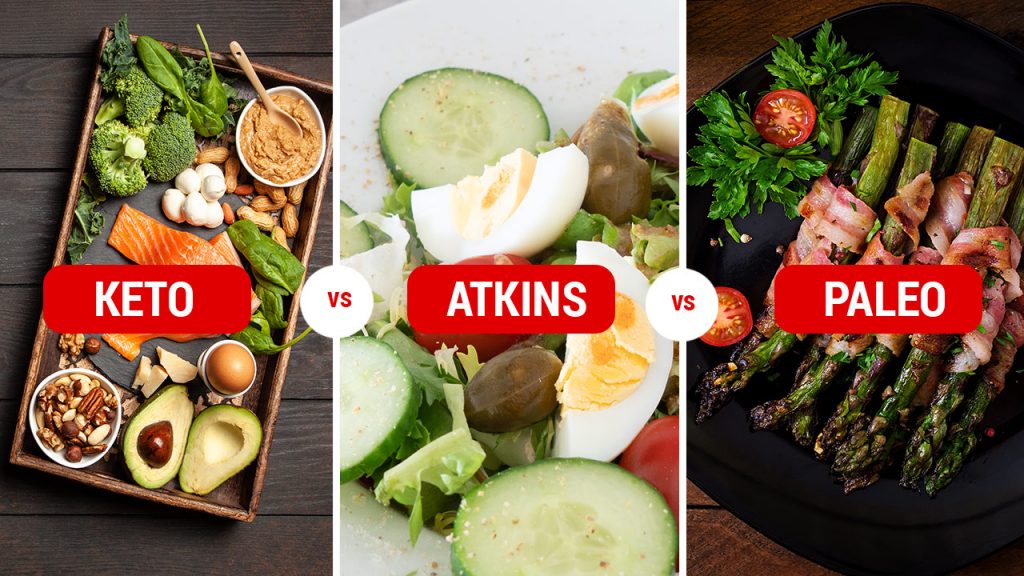
With fad diets running around in full swing, you’re bound to wonder what they are about. To give you a quick gist, Keto, Atkins and Paleo are all low carbohydrate diets that serve different purposes. To understand the difference between them, let’s delve into details first!

1. Ketogenic or Keto Diet

This diet was created in the 1920s as a mode of treating epilepsy. The classic Keto diet requires 90% of the calories coming from fat, 6% from proteins and 4% from carbohydrates. The purpose of this diet is to force the body to go into ketosis, which is a metabolic state that utilizes fat for energy instead of glucose (i.e. from Carbs).

Although the diet is low-carb, its main focus is to be high in fat with some protein. There are no restrictions on the type of fat to be consumed.  So followers can have bacon, avocados, butter, etc.

Pros:

  • High-fat and high-protein foods keep you fuller for longer.
  • You can eat up to four ounces of cheese (For some of us, that’s key).
  • Protein is more limited than on Atkins, so your liver will not end up processing it.
  • Your cholesterol is going to get better as the good cholesterol will go up and the bad triglycerides will go down.
  • It can also help lower blood pressure.
  • The keto diet has been shown, in some studies, to improve the health of women with PCOS (Polycystic ovarian syndrome), reduce cholesterol, decrease seizures in epileptic children, and improve acne.

Cons: 

  • Have you heard of the Keto flu? When you start the diet, you may begin feeling grumpy and foggy while your body and brain adjust to using ketones instead of glucose for fuel. The Keto flu can last from 2 days to 2 weeks.
  • You cannot eat any fruit.
  • As the fiber content in the diet is low, it can cause issues such as constipation.
  • You need to be careful about dehydration.
  • You need to get ketone urine testing strips to confirm you’re in ketosis at regular intervals.
  • If you are accustomed to a high-fiber diet, you might need a supplement.
  • If you are on medication for hypertension, diabetes, or other conditions, you must talk to a doctor before starting the diet.

2. Atkins Diet

This diet is specifically labelled as a low-carb diet. There are 2 versions of Atkins diet: Atkin 20 which is the original diet and Atkin 40, which is a diet created for those looking to lose less than 40 pounds (approx. 18 kg).

The Classic Atkins diet has 4 phases: The 1st phase starts off with having 20-25gms of carbs per day and then slowly progresses to phase 4 in which people are allowed 80-100gms of carbs, which is still considered low-carb.

Atkins focuses on net carb intake. Instead of counting all carbs as the same, this diet takes fiber and sugars into account, whereas Paleo and Keto don’t. So if a food has 10gms of carbs, but 3gms of fiber, and 1gm of sugar, than your net carb intake would be 6gms.

Pros: 

  • You won’t be hungry. You will feel satisfied.
  • Weight comes off quickly, although some of it will be water weight. 
  • The four phases allow you to slowly add some carbs back in, making it somewhat easier to sustain. 
  • Atkins has a line of snack bars, shakes, and frozen meals, which make compliance convenient.
  • There is evidence that the diet helps improve both cholesterol and blood sugar levels.

Cons: 

  • Your initial dramatic weight loss is a whole lot of water — you won’t keep losing at the same level and the minute you eat carbs again it will come back on. 
  • You eat too much protein, which can cause serious liver issues.
  • This can also prevent you from going into ketosis, which means you won’t lose weight. 
  • Eating barely any carbs can, at first, make you feel cranky, lethargic, and even achy — mainly because your brain takes time to adjust from processing glucose to ketones.
  • Being in a state of ketosis causes stinky breath — and since bad breath doesn’t come from your mouth, brushing isn’t going to help.
  • The Atkins line of foods and snacks often contain artificial sweeteners and other processed ingredients.

3. Paleo Diet

The Paleo diet follows the eating pattern followed during the Paleolithic era, 2.6 million years ago, which is basically eating like a hunter- gatherer. It focuses mostly on a high-protein diet with lots of vegetables and fruit. Unlike Keto and Atkins, this diet doesn’t aim to be low-carb. It cuts down the intake of carbs from grains, dairy, legumes, refined and processed foods.

While keto diet doesn’t discriminate between the types of fats that needs to be included, the Paleo diet advises its followers to avoid certain types of oils and trans-fats. Although you can eat all the peanut butter you want to on a keto diet, the paleo diet cuts out the peanut butter because technically peanuts are classified under legumes.

Pros: 

  • The focus of Paleo is on whole, nutrient-dense foods.
  • You can have proteins, fruits and vegetables, and healthy fats (like those from avocado, nuts, and seeds). 
  • Low-glycemic diets have been shown to lower blood sugar and cholesterol and reduce visceral fat. 
  • You don’t have to give up sweets, as long as they are natural (honey, maple syrup, etc.). 
  • People with gut issues may find eliminating wheat, dairy, and processed foods also eliminates digestive discomfort. 
  • It is higher in fiber and other nutrients than Atkins and Keto.

Cons: 

  • The diet is restrictive and difficult to implement. 
  • Be prepared to shop and cook for every meal, because it’s challenging to eat out on Paleo. 
  • This diet might burn a hole in your pockets as grass-fed meats, free-range poultry and organic produce are expensive. 
  • Without dairy, you may need to increase your efforts to consume enough calcium. 
  • Weight loss, if any, may be more gradual than on the other diets.

While GOQii does not advocate, promote or instruct its players to follow fad diets, if you’re still adamant on choosing any one of these, you may want to consult your GOQii Coach within the app, nutritionist or dietician before proceeding as the same diet doesn’t work for everyone. You might even want to check with your doctor in case you have food allergies.

We hope this article helps you! Leave your thoughts in the comments below!

#BeTheForce

  • « Previous Page
  • 1
  • …
  • 4
  • 5
  • 6

Search

Recent Posts

  • India Leads in Longevity: GOQii Sanjeevini Named Top 40 in $101M XPRIZE
  • The Importance Of Knowing If You’re Thirsty Or Hungry
  • Best Foods To Alleviate Irritable Bowel Syndrome
  • ALL ABOUT VERTIGO!
  • PCOS and Anxiety: Discover Relief with the 54321 Technique

Stay Updated

Archives

  • December 2025 (8)
  • November 2025 (15)
  • October 2025 (20)
  • September 2025 (6)
  • August 2025 (6)
  • July 2025 (12)
  • June 2025 (18)
  • May 2025 (16)
  • April 2025 (23)
  • March 2025 (23)
  • February 2025 (22)
  • January 2025 (26)
  • December 2024 (26)
  • November 2024 (25)
  • October 2024 (22)
  • September 2024 (24)
  • August 2024 (31)
  • July 2024 (21)
  • June 2024 (26)
  • May 2024 (31)
  • April 2024 (27)
  • March 2024 (29)
  • February 2024 (26)
  • January 2024 (25)
  • December 2023 (15)
  • November 2023 (11)
  • October 2023 (20)
  • September 2023 (22)
  • August 2023 (20)
  • July 2023 (22)
  • June 2023 (24)
  • May 2023 (24)
  • April 2023 (24)
  • March 2023 (23)
  • February 2023 (20)
  • January 2023 (16)
  • December 2022 (12)
  • November 2022 (15)
  • October 2022 (15)
  • September 2022 (12)
  • August 2022 (10)
  • July 2022 (17)
  • June 2022 (11)
  • May 2022 (10)
  • April 2022 (6)
  • March 2022 (6)
  • February 2022 (13)
  • January 2022 (12)
  • December 2021 (7)
  • November 2021 (3)
  • October 2021 (6)
  • September 2021 (3)
  • August 2021 (8)
  • July 2021 (7)
  • June 2021 (15)
  • May 2021 (16)
  • April 2021 (10)
  • March 2021 (7)
  • February 2021 (4)
  • January 2021 (4)
  • December 2020 (3)
  • November 2020 (4)
  • October 2020 (10)
  • September 2020 (3)
  • August 2020 (3)
  • July 2020 (2)
  • June 2020 (4)
  • May 2020 (10)
  • April 2020 (12)
  • March 2020 (10)
  • February 2020 (4)
  • January 2020 (4)
  • December 2019 (3)
  • November 2019 (7)
  • October 2019 (5)
  • September 2019 (4)
  • August 2019 (9)
  • July 2019 (9)
  • June 2019 (11)
  • May 2019 (4)
  • April 2019 (9)
  • March 2019 (8)
  • February 2019 (9)
  • January 2019 (8)
  • December 2018 (9)
  • November 2018 (3)
  • October 2018 (3)
  • September 2018 (5)
  • August 2018 (10)
  • July 2018 (6)
  • June 2018 (13)
  • May 2018 (8)
  • April 2018 (18)
  • March 2018 (9)
  • February 2018 (8)
  • January 2018 (15)
  • December 2017 (12)
  • November 2017 (19)
  • October 2017 (13)
  • September 2017 (15)
  • August 2017 (4)
  • July 2017 (8)
  • June 2017 (7)
  • May 2017 (6)
  • April 2017 (8)
  • March 2017 (6)
  • February 2017 (7)
  • January 2017 (9)
  • December 2016 (10)
  • November 2016 (7)
  • October 2016 (7)
  • September 2016 (7)
  • August 2016 (11)
  • July 2016 (9)
  • June 2016 (9)
  • May 2016 (12)
  • April 2016 (17)
  • March 2016 (17)
  • February 2016 (8)
  • January 2016 (6)
  • December 2015 (2)
  • November 2015 (9)
  • October 2015 (7)
  • September 2015 (9)
  • August 2015 (11)
  • July 2015 (9)
  • June 2015 (12)
  • May 2015 (9)
  • April 2015 (13)
  • March 2015 (8)
  • February 2015 (5)
  • January 2015 (12)
  • December 2014 (14)
  • November 2014 (11)
  • October 2014 (6)
  • September 2014 (13)
  • August 2014 (12)
  • July 2014 (6)
  • June 2014 (2)
  • May 2014 (7)
  • April 2014 (5)

From “Laddu Nawin” to Fit and Fierce: How a 25-Year-Old Insurance Advisor Shed 20 Kilos and Gained His Life Back

When 25-year-old Nawin Yadav from Hyderabad walked into his office every morning, he carried more than just his files and policy papers. He had the weight of fatigue, sluggish energy, and an ever-growing belly that was becoming the butt of jokes. “People … [Read More...]

“I’ve Challenged Myself to Live 100 Years” – The Story of Chandubhai Savani’s Second Chance at Life

At 67, most people start slowing down. Not Chandubhai Savani. A resident of Surat, Chandubhai, thought life was on track. “My life was going well till I had my bypass surgery,” he says. That surgery, back in 2021, was a wake-up call.  Medication was routine, but exercise wasn’t. His diet? What he calls ‘normal.’ “I […]

From Shimla’s Slopes to Chandigarh’s Sidewalks: Surinder Kaur Bhalla’s Journey from Chaos to Control

Some journeys start with a plan. Others begin with a stumble literally. Surinder Bhalla, a government professional, born and raised in the scenic hill town of Shimla, had always lived a life of movement. “In Shimla, you walked everywhere,” she reflects. “Walking was never an exercise. It was just life.” But after shifting to Chandigarh, […]

Ananda Mukherjee Health Story

From Terminal Illness To Complete Wellness! Ananda Mukherjee Health Story

As we observe World Cancer Day under the powerful theme ‘United by Unique’ (2025-2027)**, we are reminded that every individual’s journey with cancer is distinct, yet united by shared resilience, hope, and the collective fight against this disease. This theme places people at the centre of care and their stories at the heart of the […]

  • HOME
  • HEALTHY LIVING
  • FITNESS
  • HEALTHY RECIPES
  • USER STORIES
  • KARMA
  • BUY GOQii

Copyright ©2016 GOQii

