GOQii

Blog

  • HOME
  • HEALTHY LIVING
  • FITNESS
  • HEALTHY RECIPES
  • USER STORIES
  • KARMA
  • BUY GOQii

June 13, 2025 By Urvi Gohil 3 Comments

5 Fat Loss Mistakes You Might Be Making

fat loss mistakes

The internet can be useful – there’s no denying that. Those fun DIY tricks and tutorials that help you pick up a new skill-set are pretty brilliant, aren’t they? But, like all things, the internet has a downside. While it helps you discover something new every day, it can also lead you down a rabbit hole of misinformation – particularly when it comes to health.

Take for example: Quick Fat Loss Tips or Lose Fat in 10 Days. While these headlines grab attention, they often promote unrealistic, unsustainable, and even harmful methods. So if you’re on a fat loss journey, here are 5 common mistakes you might be making – along with why it’s time to ditch the myths.

1. Starving for Fat Loss 

Research shows that chronic starvation reduces muscle mass and organ size by up to 20%. Weight loss through starvation can also lead to lower bone density, making you more injury-prone.

It doesn’t stop there. Starving slows down your metabolism and hampers overall body function. Worst of all, once you return to eating normally, your body may store more calories as fat—undoing all your efforts.

Golden rule: Eat healthy, balanced meals at the right time. Nourishment, not restriction, is key.

2. No Rest Day 

Think over-training equals faster fat loss? Think again.

Rest days are crucial to avoid muscle overuse and allow your body to recover. Lifting weights causes tiny muscle tears that can only repair – and grow – during rest. Over-training can actually stall fat loss, disturb your hormonal balance, and even cause amenorrhoea (loss of menstrual periods).

Tip: Take one rest day a week. Try light activity like walking, yoga, or deep breathing exercises.

3. Excess Protein Doesn’t Mean Better Fat Loss

Yes, protein helps you feel fuller and supports muscle maintenance – but more is not always better.

A high-protein diet alone won’t do the trick. Too much protein can strain digestion. What you really need is balance – enough fruits, vegetables, and complex carbs alongside your protein to support healthy fat loss.

4. Lack of Optimum Sleep

Getting fewer than six hours of sleep reduces leptin (the satiety hormone) and increases ghrelin (the hunger hormone). Translation? You’ll feel hungrier and less satisfied.

Studies show that people who sleep 7+ hours a night lose more fat and preserve more muscle mass. Lack of sleep also spikes cortisol – body’s stress hormone – which hinders fat breakdown and increases muscle loss.

So if you’re waking up early to squeeze in a workout but skipping sleep, it might be time to rethink your schedule.

5. Keeping Unrealistic Expectations

Setting tangible goals is great – but aiming too high, too soon, can backfire.

Studies show that people with overly ambitious expectations, especially those who are overweight or obese, are more likely to drop out of fat loss programmes within 6–12 months due to disappointment.

Instead: Set modest, achievable goals with the guidance of a certified coach. Progress that’s steady is progress that sticks.

Want to stop guessing and start getting real results? Speak to a GOQii Coach by subscribing to Personalised Health Coaching here.

Did this article help you? Share your thoughts in the comments! And for more tips, check out our Healthy Reads on weight loss here.

#BeTheForce 

Disclaimer: The information provided in this blog is for general awareness and educational purposes only. It is not intended to replace professional medical advice, diagnosis, or treatment. Always consult a qualified healthcare provider for personalised medical guidance or concerns related to your health. Images shown are for representation purposes only and may not depict the exact recommendations or outcomes.
January 27, 2025 By Urvi Gohil 1 Comment

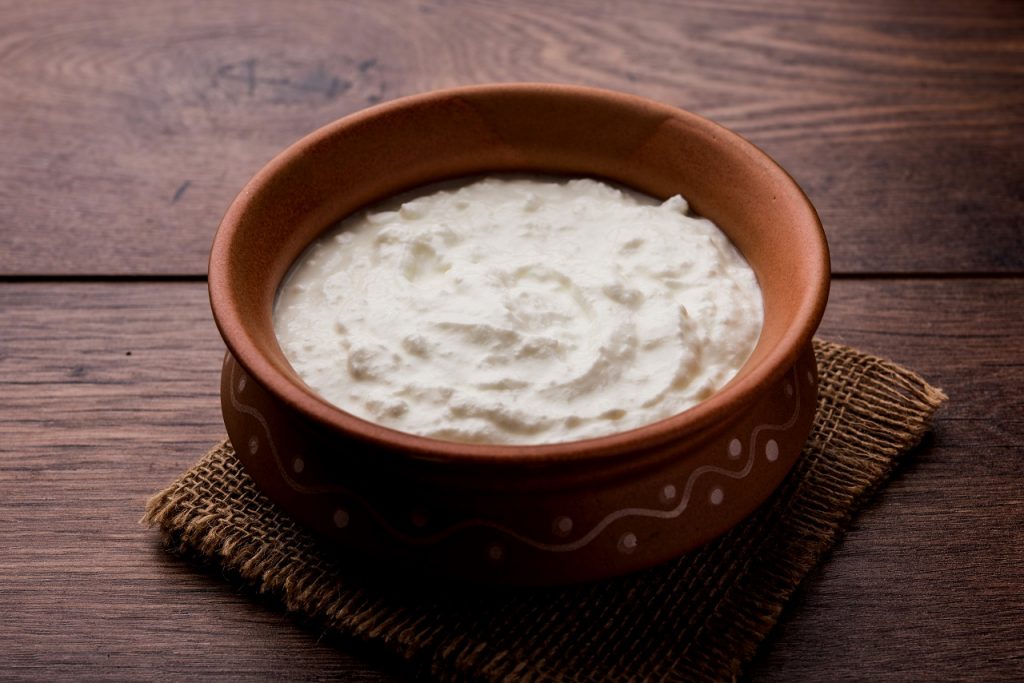
Healthy Eating: How to Prepare Thick Curd At Home

homemade curdWho doesn’t enjoy a bowl of curd? With its many health benefits and the million different ways in which you can consume it, curd is almost irreplaceable. Did you ever wonder how curd came to be discovered? Was it made with intention?
History suggests that curd, like many other fermented milk products, was discovered by accident! It was primarily due to milk being left unattended for a long time which initiated curdling. Basically, the milk began souring as a result of microbial action. A microorganism called Lactobacillus is responsible for the curdling of milk.

Curd is considered to be a superfood as it is rich in proteins, provides the body with Vitamin B and Calcium and is a fantastic Probiotic and is good for the gut. However, there are many who still struggle to make good thick curd at home and dependent on packaged curd.

So let us learn to make thick, perfect curd at home!

What You Will Need

  • Milk – 500 ml
  • Curd – 2 tsp
  • Water – 2 tsp

How to Prepare Thick Curd

  1. In a pan add milk and allow it to boil. Keep stirring it lightly.
  2. After the milk comes to a boil, switch off the flame and let it cool down.
  3. Now take a bowl, add 2 tsp of curd and 2 tsp water & whisk it together.
  4. Once the milk cools down, remove the cream from the milk and strain the milk in a bowl.
  5. In the strained milk, add 2 tsp of curd + water mixture & mix well.
  6. Cover the bowl and keep it in a warm and dry space for 4-5 hours to set.
  7. Refrigerate the curd for an hour before you serve it.

Things to Keep in Mind  

  • Do not use skim milk for making curd, it will be runny.
  • The milk should not be very hot when you add culture in it otherwise the curd will coagulate
  • Never forget to remove cream

Benefits of Homemade Thick Curd

  • Curd which is commercially available is the result of a straining process that removes the liquid whey, resulting in thicker curd.
  • In its traditional form, the curd is far more nutrient-dense and is rich in high-quality protein, beneficial probiotics and cancer-fighting linoleic acid.
  • Poor quality milk is used to produce most commercial curd, which can be a concern.

What if You Do Not Have Starter Curd?

  1. Take boiled milk in a vessel and reheat it a little for making the starter curd. Use lukewarm milk. Now, pour little amount of milk in 3 different bowls for making the starter curd.
  2. In one cup of milk drop 2 green chilies. It is very important to have the stalk attached to the chilies for making the starter curd and make sure it is submerged completely in the milk.
  3. In second cup of milk, add 2 red chilies and submerge it completely.
  4. In third cup of milk, add 1 tbsp. of lemon juice and mix it well.
  5. Cover all the three cups of milk and store in a warm place for 12 hours.

Making starter curd is little time-consuming. Its not as good when compared to Dahi and is only used in making the curd.

Here you go! Try this natural and healthy way to make thick curd at home and don’t rely on packaged curd. Do share your experience in the comments below!

For more healthy recipes, check out Healthy Reads or ask your GOQii Coach directly by subscribing for Personalised Health Coaching here.

#BeTheForce

December 9, 2024 By Neha Goyal 2 Comments

Pistachios – Your Powerful Nutritional Punch!

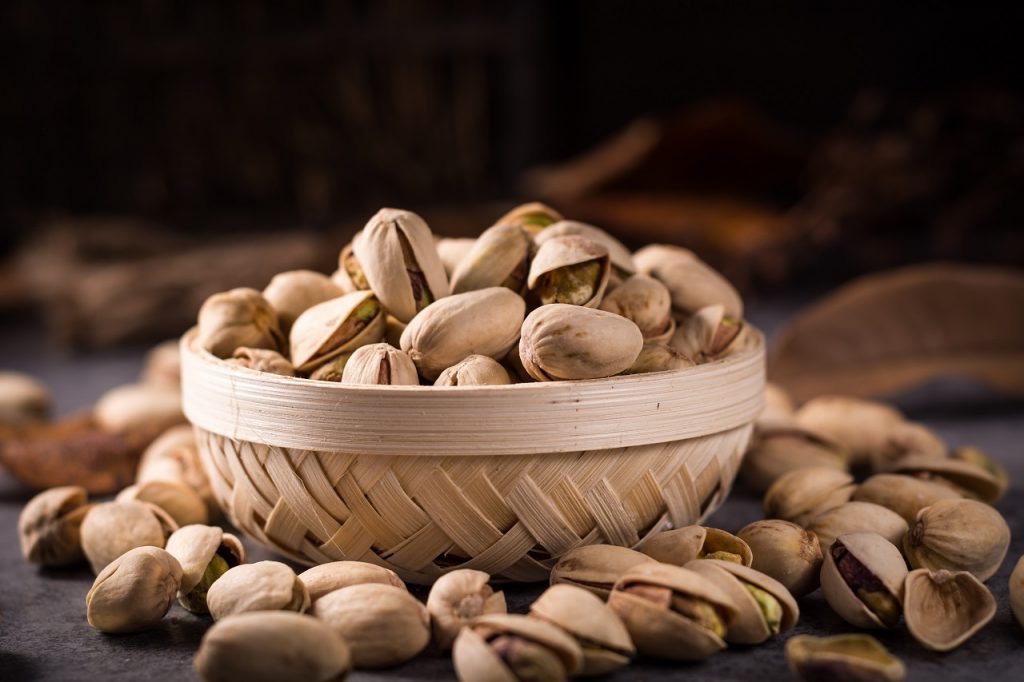
Pistachios - Your Powerful Nutritional Punch!Pistachios are edible seeds of the pistachio tree, member of the cashew family. They are nutrient-packed nuts that can be enjoyed both as a healthy snack or as part of a delicious recipe. Available both in the shell (in-shell) or with their shell already removed (shelled), they’re typically sold roasted and salted, although unsalted options are available, as well as some flavoured varieties, too.

How Does It Give a Powerful Nutritional Punch?

  • Loaded with Vitamins and Minerals: Pistachios are a rich source of protein, dietary fibre, several minerals such as phosphorus, potassium, calcium, iron, magnesium, manganese, zinc, copper, sodium and selenium. It is also a good source of vitamins like vitamin A, K, C, E, B6, B1, B2, B3, B9, and B5.
  • Good Source of Antioxidants: They contain more antioxidants than most nuts and seeds, second only to walnuts and pecans. You can literally “see” the nutrients through the various colours in pistachio. The green and yellow colour of the actual nut comes from lutein and zeaxanthin. The thin purple skin surrounding the nut is loaded with anthocyanins, the same type of antioxidants found in grapes and cranberries.
  • Lowest in Fat: A serving of pistachios has 13 grams of fat, of which about 1.7 grams are saturated, 3.5 grams are polyunsaturated, and 7 grams are monounsaturated fats. Compared to most other tree nuts, pistachios are one of the lowest in fat.
  • Cholesterol-Free: Pistachios have the highest phytosterol content (214 milligrams per 100 grams) amongst nuts. Phytosterols come from plants and because they have a similar structure to cholesterol, they compete with cholesterol for absorption by the body, ultimately limiting the amount of cholesterol absorbed.
  • Compared to other tree nuts, pistachios have a higher essential amino acid ratio and the highest percentage of branched-chain amino acids. Pistachios are a great plant-based protein option for everyone, but especially those eating a vegetarian or vegan diet.

Health Benefits of Eating Pistachios

  1. Heart Health: A number of studies have shown that pistachios significantly reduced total cholesterol and the “bad” LDL-cholesterol levels while increasing the “good” HDL-cholesterol level. They may increase antioxidant concentrations, which is linked to improved dilation of blood vessels as a result of a reduction in inflammation.
  2. Weight Management: It may seem counterintuitive but eating pistachios—a high-fat, calorie-dense food—has actually been associated with weight management. Pistachios are rich in fiber and protein, both of which increase satiety by helping you feel full and eat less .
  3. Gut Health: Pistachios are high in fiber, which moves through our digestive system mostly undigested. But some types of fiber are digested by the good bacteria in your gut, acting as prebiotics. Gut bacteria then ferment the fiber and convert it into inflammation-fighting short-chain fatty acids, & also results in decreased the number of lactic acid bacteria. It also increases the number of butyrate-producing bacteria in the gut more than eating almonds does.
  4. Blood Sugar Control: Despite having a higher carb content than most nuts, pistachios have a low glycemic index, meaning they don’t cause a large spike in your blood sugar. Also rich in fiber and healthy fats, antioxidants, magnesium, carotenoids and phenolic compounds, which are beneficial for blood sugar control.
  5. Good For Eye Health: Pistachios are rich in antioxidants lutein and zeaxanthin, which are essential for eye health, as they reduce the chances of developing eye conditions, including age-related macular degeneration (AMD) and cataracts.
  6. Prevents Cellular Damage: As our cells grow older, they accumulate oxidative damage due to the presence of free radicals, which can cause considerable damage to cells. Pistachios, being rich in antioxidants, including lutein, beta-carotene, and gamma-tocopherol, has oxidative damage-fighting benefits which also play a key role in reducing the risk of disease, such as cancer.

How to Include Pistachios in Your Diet?

One of the simplest ways to enjoy pistachios is as a snack on their own. You can also throw chopped pistachios on your yogurt or morning oatmeal or use them as a crunchy topping for your salads. Pair pistachios with a piece of fruit for your afternoon snack, their fiber, fat and protein will keep you satisfied.

Takeaway

Pistachios are very nutritious. Regularly eating pistachios may be a good way to improve health and wellbeing. But stick to plain, unsalted pistachio nuts in their shells and avoid eating more than 30gm a day. Before you begin eating them, do consult with your doctor, nutritionist or dietitian.

For more on nutrition and healthy eating, check out Healthy Reads or speak to an expert by subscribing for GOQii’s Personalised Health Coaching here.

#BeTheForce 

November 25, 2024 By Tabassum Parveen 2 Comments

Food And Nutritional Guidelines for Healthy Kids

Healthy Food for ChildrenEvery parent, at some point, has faced an issue with food and children. On one hand, children can be quite fussy about the food they eat and on the other, they need the right food and nutrition. How do you bridge the gap? How can you feed your children nutritious food and get them to like it too?



While every child has his/her own preferences, we will share the essential food groups that must be included in your child’s diet as well as food options you can choose to get your child on the right side of healthy!

Carbohydrates and Proteins  

Grains are a good source of carbohydrates. They provide much-needed energy by children to carry out their day to day activities. We can get carbs from oatmeal, quinoa, millet, wheat bread and multigrain roti. This can be mixed with protein sources such as bread with peanut butter or almond butter, upma (cooked Semolina) with peanuts or Poha (flattened rice cooked) with a few dry fruits. Idli (steamed rice cakes) with sambar (vegetable curry) or roti (flat wheat bread) with dal (lentils) or beans or an egg sandwich can be opted for in order to make the meal nourishing.

Since proteins are the building blocks of the body, they promote growth and development. Kids need 1gm of protein for every kilogram he/she weighs. Few other examples of protein sources which you can opt for are peas, chicken, seafood, unsalted nuts and seeds.

Fruits

Fruits either in the morning or evening will give your kids a boost of vitamins, minerals and antioxidants. They will boost your child’s disease-fighting ability not just now but in the future as well. Keeping in line with the old adage, “An apple a day keeps the doctor away”, try to incorporate at least one fruit in their meal.

Although, there are certain rules of eating fruit. It should not be consumed along with a meal or immediately after meals. This is because the fruit might rot when mixed with any food you have eaten. It is safe to consume them at snack time. You can add a few pieces of fruit in his or her lunch box or can give it separately so they can eat it with mini intervals.

Vegetables

Encourage your kids to eat veggies. We understand that it is difficult to get your children to eat vegetables. An option that you could explore is smoothies. Some greens with a dash of any fruit they like, mixed with jaggery or honey can be a delicious treat! You could also make sprouts salad, peanut salad or chicken salad with a few vegetables like corn, tomatoes, peas, carrot or a vegetable liked by your child.

Good Fats

Try to incorporate some good fats. Fats help in the development of the brain, nerves and eyes. Examples of good fat are nuts like almonds, pista, cashew nuts and peanuts. Avoid these if your child is allergic to any nuts. You can also include seeds like chia, basil and mix them with fruit juice. More examples of good fats include avocados, olive oil and canola oil. The best way to consume oils is by sprinkling them on salads and nuts. Seeds can also be sprinkled with the aforementioned oils. You can also add them to any sandwich or toast.

Focus on reducing junk and fast food which are high in sugars, fats and low in important nutrients. They are easily available and tempting but they increase the risk of obesity, juvenile diabetes, asthma and allergies. Always try to make your kid’s plate colourful and attractive.

Dairy

Dairy plays an important role in keeping your little one’s bones strong. To ensure that your child has stronger teeth and bones, add one or two cups of milk to their diet. If your child does not like milk, go for Greek Yogurt which is available in many flavours. In case your child is lactose intolerant, go for almond milk, soy milk or opt for lactose-free milk.

Water Intake

Lastly, keep an eye over your child’s water intake. Water helps in various bodily functions such as absorption and digestion of food as well as excretion. Lack of water may leave your child dehydrated. Do not opt for carbonated beverages. Avoid tea or coffee as they don’t need it at such a tender age. Yes, you can give them tea but ensure that it is herbal like chamomile or green tea. You can also opt for healthier options such as a ginger turmeric drink which will reap positive health benefits for your child.

We hope the food and nutrition guidelines above help you and your growing child. Do leave your queries in the comments below! For more on Children’s Health, check out Healthy Reads or speak to an expert by subscribing for GOQii’s Personalised Health Coaching here.

#BeTheForce

  • 1
  • 2
  • 3
  • …
  • 9
  • Next Page »

Search

Recent Posts

  • The Importance Of Knowing If You’re Thirsty Or Hungry
  • Best Foods To Alleviate Irritable Bowel Syndrome
  • ALL ABOUT VERTIGO!
  • PCOS and Anxiety: Discover Relief with the 54321 Technique
  • Navigating the Maze of Nutrition: Finding Clarity Amidst Confusion

Stay Updated

Archives

  • December 2025 (7)
  • November 2025 (15)
  • October 2025 (20)
  • September 2025 (6)
  • August 2025 (6)
  • July 2025 (12)
  • June 2025 (18)
  • May 2025 (16)
  • April 2025 (23)
  • March 2025 (23)
  • February 2025 (22)
  • January 2025 (26)
  • December 2024 (26)
  • November 2024 (25)
  • October 2024 (22)
  • September 2024 (24)
  • August 2024 (31)
  • July 2024 (21)
  • June 2024 (26)
  • May 2024 (31)
  • April 2024 (27)
  • March 2024 (29)
  • February 2024 (26)
  • January 2024 (25)
  • December 2023 (15)
  • November 2023 (11)
  • October 2023 (20)
  • September 2023 (22)
  • August 2023 (20)
  • July 2023 (22)
  • June 2023 (24)
  • May 2023 (24)
  • April 2023 (24)
  • March 2023 (23)
  • February 2023 (20)
  • January 2023 (16)
  • December 2022 (12)
  • November 2022 (15)
  • October 2022 (15)
  • September 2022 (12)
  • August 2022 (10)
  • July 2022 (17)
  • June 2022 (11)
  • May 2022 (10)
  • April 2022 (6)
  • March 2022 (6)
  • February 2022 (13)
  • January 2022 (12)
  • December 2021 (7)
  • November 2021 (3)
  • October 2021 (6)
  • September 2021 (3)
  • August 2021 (8)
  • July 2021 (7)
  • June 2021 (15)
  • May 2021 (16)
  • April 2021 (10)
  • March 2021 (7)
  • February 2021 (4)
  • January 2021 (4)
  • December 2020 (3)
  • November 2020 (4)
  • October 2020 (10)
  • September 2020 (3)
  • August 2020 (3)
  • July 2020 (2)
  • June 2020 (4)
  • May 2020 (10)
  • April 2020 (12)
  • March 2020 (10)
  • February 2020 (4)
  • January 2020 (4)
  • December 2019 (3)
  • November 2019 (7)
  • October 2019 (5)
  • September 2019 (4)
  • August 2019 (9)
  • July 2019 (9)
  • June 2019 (11)
  • May 2019 (4)
  • April 2019 (9)
  • March 2019 (8)
  • February 2019 (9)
  • January 2019 (8)
  • December 2018 (9)
  • November 2018 (3)
  • October 2018 (3)
  • September 2018 (5)
  • August 2018 (10)
  • July 2018 (6)
  • June 2018 (13)
  • May 2018 (8)
  • April 2018 (18)
  • March 2018 (9)
  • February 2018 (8)
  • January 2018 (15)
  • December 2017 (12)
  • November 2017 (19)
  • October 2017 (13)
  • September 2017 (15)
  • August 2017 (4)
  • July 2017 (8)
  • June 2017 (7)
  • May 2017 (6)
  • April 2017 (8)
  • March 2017 (6)
  • February 2017 (7)
  • January 2017 (9)
  • December 2016 (10)
  • November 2016 (7)
  • October 2016 (7)
  • September 2016 (7)
  • August 2016 (11)
  • July 2016 (9)
  • June 2016 (9)
  • May 2016 (12)
  • April 2016 (17)
  • March 2016 (17)
  • February 2016 (8)
  • January 2016 (6)
  • December 2015 (2)
  • November 2015 (9)
  • October 2015 (7)
  • September 2015 (9)
  • August 2015 (11)
  • July 2015 (9)
  • June 2015 (12)
  • May 2015 (9)
  • April 2015 (13)
  • March 2015 (8)
  • February 2015 (5)
  • January 2015 (12)
  • December 2014 (14)
  • November 2014 (11)
  • October 2014 (6)
  • September 2014 (13)
  • August 2014 (12)
  • July 2014 (6)
  • June 2014 (2)
  • May 2014 (7)
  • April 2014 (5)

From “Laddu Nawin” to Fit and Fierce: How a 25-Year-Old Insurance Advisor Shed 20 Kilos and Gained His Life Back

When 25-year-old Nawin Yadav from Hyderabad walked into his office every morning, he carried more than just his files and policy papers. He had the weight of fatigue, sluggish energy, and an ever-growing belly that was becoming the butt of jokes. “People … [Read More...]

“I’ve Challenged Myself to Live 100 Years” – The Story of Chandubhai Savani’s Second Chance at Life

At 67, most people start slowing down. Not Chandubhai Savani. A resident of Surat, Chandubhai, thought life was on track. “My life was going well till I had my bypass surgery,” he says. That surgery, back in 2021, was a wake-up call.  Medication was routine, but exercise wasn’t. His diet? What he calls ‘normal.’ “I […]

From Shimla’s Slopes to Chandigarh’s Sidewalks: Surinder Kaur Bhalla’s Journey from Chaos to Control

Some journeys start with a plan. Others begin with a stumble literally. Surinder Bhalla, a government professional, born and raised in the scenic hill town of Shimla, had always lived a life of movement. “In Shimla, you walked everywhere,” she reflects. “Walking was never an exercise. It was just life.” But after shifting to Chandigarh, […]

Ananda Mukherjee Health Story

From Terminal Illness To Complete Wellness! Ananda Mukherjee Health Story

As we observe World Cancer Day under the powerful theme ‘United by Unique’ (2025-2027)**, we are reminded that every individual’s journey with cancer is distinct, yet united by shared resilience, hope, and the collective fight against this disease. This theme places people at the centre of care and their stories at the heart of the […]

  • HOME
  • HEALTHY LIVING
  • FITNESS
  • HEALTHY RECIPES
  • USER STORIES
  • KARMA
  • BUY GOQii

Copyright ©2016 GOQii
