GOQii

Blog

  • HOME
  • HEALTHY LIVING
  • FITNESS
  • HEALTHY RECIPES
  • USER STORIES
  • KARMA
  • BUY GOQii

Search Results for: immunity

December 1, 2016 By Dr Manali Rao Leave a Comment

Living Healthy with HIV – Reality or Myth


343101-hiv

Have you seen the latest#CondomEmoji campaign by Durex, the Global Sexual-well-being brand depicting an “Umbrella with Raindrops”? This was the unofficial safe sex emoji launched ahead of World AIDS Day today. It was an interesting campaign to communicate ‘Safe Sex’ among the young adults. The campaign called for putting a safe sex emoji on every smartphone in order to help young people communicate about safe sex. The campaign has trended both on Twitter and Facebook with supporters from over 160 countries backing the movement.

The survey findings noted while more than 60 per cent of young people surveyed admitted to being uncomfortable discussing safe sex, 72 per cent of respondents admitted that they found it easier to express emotions using emojis and more than three quarters admitted that they use emojis to discuss sex and relationships.

Why is this discomfort about talking of sex or sex related diseases such as HIV/Aids even in the 21st Century?
One of my earliest memories of AIDS would be the movie PHILADELPHIA where Tom Hanks sues his Company for being fired from his workspace for being HIV positive.

Whenever we hear the word AIDS or HIV the word itself it creates a lot of fear and makes one judgmental. This is not the case only among the lay man but also is the case equal judgment, not only among general public but also within the medical fraternity. Unfortunately more than a the disease, AIDS is considered to be a social stigma and a taboo.
It’s become imperative to understand why this stigma is attached to HIV/AIDS?

AIDS (Acquired Immunodeficiency Syndrome) as we all know is a syndrome caused by the Human Immunodeficiency Virus (HIV) which directly attacks the immune system of the patient leaving the body vulnerable to a host of infections. Aids is the last stage of HIV infection where the disease progresses and the body can no longer defend itself leading to more severe infections, malignancies and eventually death (if left untreated).
Let me try to look into the ways one can get infected with this Virus which are considered some of the main reasons for fear and stigma.

1. Unprotected sex- with an individual who is infected with HIV is the biggest cause of new HIV cases be it vaginal or anal sex. Oral sex also predisposes one to HIV if there are any cuts, ulcers or sores in the mouth. Wearing a condom is the easiest way to protect yourself and your partner against the disease. Unprotected Sex is more prevalent among young adults.
2. Blood transfusion with infected blood. This is one of the most unfortunate ways to contract the disease as the recipient is unaware of the blood being infected. It is always a good idea to make sure that the blood has been screened for HIV infection.
3. HIV infected mother can pass on the virus to her baby during pregnancy lactation or even delivery. These mothers can now take treatment to protect their babies.
4. Sharing razors or needles with infected people also puts you at risk of contracting the virus like in the case of drug abuse or needle prick in hospital.
In short the virus can be transmitted through infected blood, semen and vaginal fluids. In fact, when the disease first came to light in India, it was the sex workers and their clients who had the maximum prevalence followed by truck drivers.

The latest ‘DIPPER’ at night campaign where the Condom is disguised as the dipper is a great way to create awareness among truck drivers in India to frequent sex workers often.
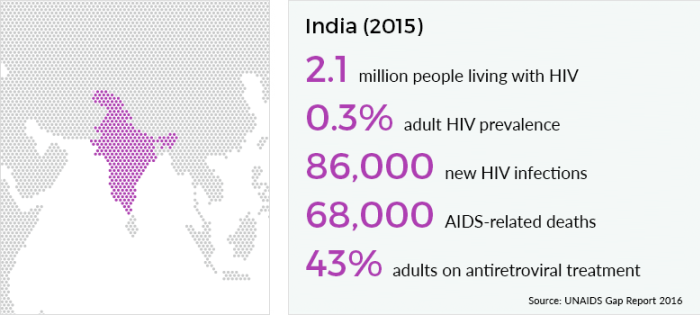
But, honestly it’s not so bad as it’s been made out to be over the years. Currently, experiments are being conducted to find a cure for this disease. The good news in India is that we are seeing an overall reduction in HIV infections among the adult population.

According to more recent National AIDS Control Organisation data, India has demonstrated an overall reduction of 57 percent in estimated annual new HIV infections (among adult population) from 0.274 million in 2000 to 0.116 million in 2011.
HIV-data pic

India has the third largest number of people living with HIV in the world, according WHO.

LIVING WITH HIV / AIDS:

It’s not as bad. One can live with HIV.

The diagnosis is confirmed by a blood test and depending on the extent of severity of the immune deficiency, anti-viral medication is started which improves the number of immune cells which help fight infections and restore near normal life.

The medicines though expensive are distributed free of cost to patients at Government and NGO run clinics.Psychological help for not getting overwhelmed after the diagnosis, is also readily available. Confiding in a trusted person who won’t be judgmental. Judgmental helps in calming your nerves.

One must realize and believe that they can live to their potential  inspite of being HIV positive. Having social and emotional support is very essential, hence patients must not isolate themselves from their near and dear ones and f.amily and friends should also not ostracize the patient.

The Constitution of India prevents any discrimination against anyone having HIV and AIDS and neither is it a legal ground for dismissal from occupational services.

Patients living with HIV must maintain a healthy lifestyle just like diabetics or any other chronic disorders. Having a healthy diet and exercising regularly are a must to boost your immunity along with the medication. Till date HIV and AIDS has no cure but anti-retroviral therapy (ART medicines) are helping people live a healthy and happy life for almost 2 to 3 decades.

Currently, Art drugs have become ‘very good’ at controlling infection but patients need use the medication for life. If they stop the treatment, the virus rapidly replicates, eventually leading to the fatal AIDS disease.

Pregnant mothers have successfully delivered children without HIV with the help of anti-viral medication.
Lot of research by brilliant minds is being done around the globe to find more effective medicines and a cure.
HIV facts to know

• According to the WHO, more than 70 million people have been infected with HIV so far and about 35 million people have died of from the virus.

• In 2015, an estimated 36.7 million people were living with HIV and so far the infection remains incurable.
November 14, 2016 By Dr Ashwin Nanda 2 Comments

DECODING DIABETES

Diabetes-Day

Last month, I had 2 patients on the same day diagnosed with Diabetes- one an overweight 34 year old IT professional and the other a 6-year-old girl. The reason, why this incident comes to my mind today is because they were both diabetics but, had different diabetes and even their course of treatments was different.

But, the first question I was asked in both the cases was whether they will need to be put on insulin injections immediately. Well, this is a common question asked by patients. To understand this condition better, let me try and explain a bit about the different types of diabetes on the basis of which the required treatment is normally recommended.

Diabetes is a group of metabolic disorders in which the person has high blood glucose (blood sugar), either because insulin production is inadequate, or because the body’s cells do not respond properly to insulin or both. Common symptoms of either diabetes are unexplained weight loss, excess hunger, and excess thirst and delayed wound healing.

Today, I would like to take you through specifically 3 major types of diabetes namely, Type 1, Type 2 and gestational Diabetes.

Let’s talk about

Type 1 Diabetes: is caused by a loss or malfunction of the insulin-producing cells in the pancreas, called beta cells. Damage to beta cells results in absence or insufficient production of insulin. Most cases of Type 1 Diabetes have an autoimmune basis in which immune system mistakenly attacks and destroys its own beta cells. These cases are detected either in childhood or teenage years. There are many theories about what causes type 1 diabetes like autoimmune disease, viral infection, genetic predisposition and environmental factors may also play a role.

Whatever be the cause, this missing insulin has to be replaced as insulin is necessary to sustain life. It is responsible for entry of glucose into the body cells from where the glucose is further utilized for energy and other activities. This glucose which is not entering the cells is circulating in the blood which gets detected as high blood sugar. The replacement insulin is administered by injection using a syringe or an insulin pump. Thanks to the invention of Insulin clubbed with a healthy lifestyle, a Type 1 diabetic is able to lead a happy good quality life.

Coming to Type 2 diabetes most often than not your tissues will be resistant to insulin, so the insulin is being produced but unfortunately not being utilized properly. It is the most common form of diabetes worldwide and accounts for 90-95% of the cases.

Insulin resistance in type 2 diabetes means the signal insulin gives to a cell is weakened. This results in less glucose uptake by muscle and fat cells and a reduction in insulin mediated activities inside cells.

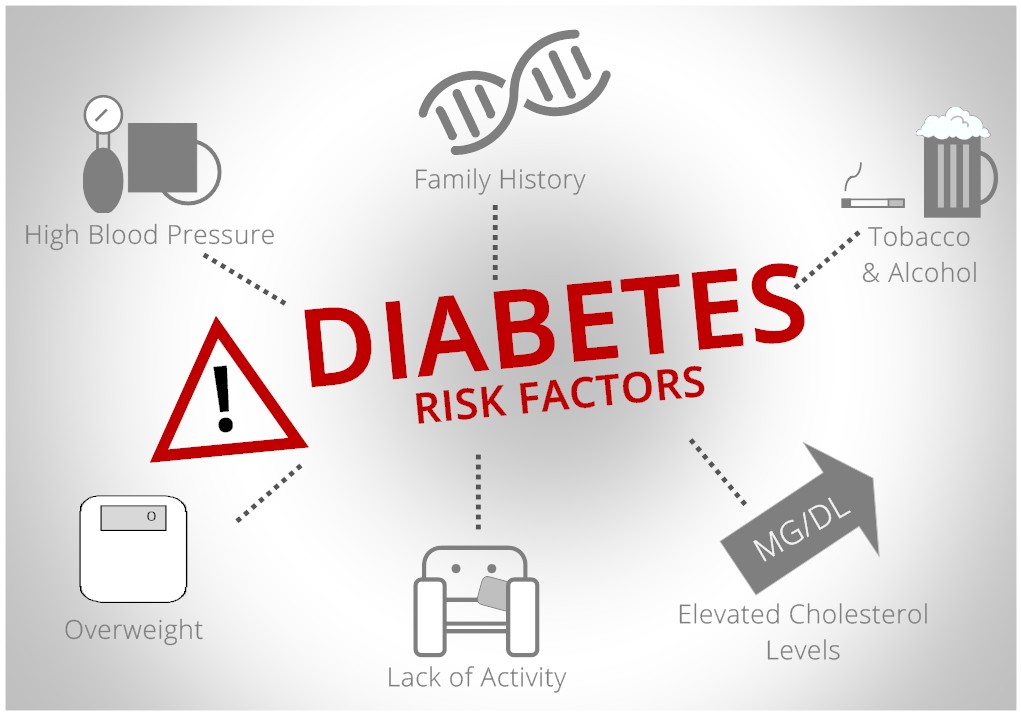
Risk factors for Type 2 Diabetes include an Unhealthy Lifestyle (being physically inactive or less active, erratic food and sleep habits, stress), being overweight or obese and importantly family history of diabetes in close relatives.

Diabetes-Risk

We have ample medicine combinations for type 2 diabetes like tablets which keep the blood sugar under control. But if sufficient sugar control is not achieved in spite of oral medications and a healthy lifestyle, then insulin might be required for further management.

Another type of Diabetes I would like to talk about is Gestational diabetes which basically refers to diabetes diagnosed during pregnancy.

Pregnancy hormones can interfere with the way insulin works in the mother’s body which can lead to elevated blood glucose levels during pregnancy. Women are typically screened for gestational diabetes at 24-28 weeks of pregnancy, however, women who have risk factors may be screened earlier.

Risk factors for developing gestational diabetes include having a family history of diabetes, being overweight, or over 28 years old. Blood glucose control during pregnancy is critical as elevated maternal glucose levels can lead to pregnancy complications and pose risks to the health of the baby. Gestational diabetes is likely to recur during subsequent pregnancies.

Gestational diabetes requires specialized treatment for the rest of the pregnancy. After the pregnancy is over, most women will have normal blood sugars again; however, up to 20-50 % can develop type 2 diabetes within 10 years. Regular screening is recommended.

A study conducted on people at risk of type 2 diabetes, it was seen that those who lost just 7% of their weight and exercised about 30 minutes a day cut their risk of diabetes by nearly 60%. In a nutshell, irrespective of the type of diabetes the best prevention or diabetes management strategy is to eat healthy, stay active and keep a check on your weight.

Reference: University of California, San Francisco – Diabetes online Education website.

November 3, 2016 By Dr Darshana Salve 1 Comment

BE – AWARE: CERVICAL CANCER

503-the-cervical-cancer-isn-t-just-a-young-woman-s-disease

Recently, I received a call from a friend whose aunt complained of post-menopausal bleeding. My first thought was could it be ‘cervical cancer’ but, I did not voice my concern, instead asked her to take her aunt for a PAP SMEAR Test.

Unfortunately, the results indeed matched my concern. She was diagnosed to have Cervical cancer. This was not the first time that I had come across a case of Cervical Cancer as the numbers have been on the rise for the last decade.

According to a study titled Epidemiology of cervical cancer with special focus on India, every year in India 1,22,844 women are diagnosed with cervical cancer and 67,477 die from the disease. India has a population of 432.2 million women aged 15 years and older who are at risk of developing cancer. It is the 2nd most common cancer in women aged 15–44 years.

(https://www.ncbi.nlm.nih.gov/pmc/articles/PMC4404964)

As per world statistics, India’s contribution to cervical cancer cases is 25.4%.  Majority of the Indian women diagnosed with cervical cancer have never been screened for the disease and around 70% of these cases present in advance stages due to absence of any organized cervical cancer screening program. The most important risk factor for development of cervical cancer is persistent infection by a high-risk subset of Human Papilloma Virus (HPV). Cervical cancer being the third most common cancer in the world, very little is known about it among the masses.

What is cervical cancer? 

Cervical cancer is a disease that develops very slowly and begins with the precancerous condition known as dysplasia. Dysplasia is easily detected in a routine pap smear and is treatable.

High risk
1)Sexual history- has had multiple sexual partners OR established sexual relations before the age of 18 OR has a partner who has had sexual contact with a woman with HPV infection.
2) Smoking
3) Weakened Immunity
4) Giving birth at very young age
5) Long-term use of contraceptive pills
6) Family history

You need to look out for these signs

1) Bleeding that occurs between regular menstrual periods.
2) Bleeding after sexual intercourse, douching, or pelvic exam.
3) Menstrual periods that lasts longer and are heavier than before.
4) Bleeding after completingMenopause.
5) Increased vaginal discharge.
6) Pelvic pain

If you have noticed any of these symptoms, kindly consult your Doctor at the earliest.

Prevention:

As we know Prevention is better than Cure especially for any cancer, creating awareness becomes the first step towards that milestone.

Lifestyle plays an important role in the prevention of cervical cancer. Foods that are rich in Flavonoids (apples, black beans, broccoli, cabbage, garlic, onion, soy, and spinach), Folate (Avocados, strawberries, oranges, lentils) and Carotenoids (Carrots, sweet potatoes, pumpkin) are seen to reduce the chances of cervical cancer.

Other than diet make sure you follow the below habits to keep Cervical cancer at bay;

  1. Regular Screening (PAP SMEAR) post the age of 30
  2. HPV vaccine (most effective when administered before start of sexual intercourse)
  3. Practising Safe sex
  4. Avoid Multiple sexual partners
  5. Delaying first sexual intercourse
  6. NoSmoking

There is an HPV Vaccination that is certified by the Indian Academy of Pediatrics (IAP). 2 doses of either of the two HPV vaccines for adolescent/pre-adolescent girls aged 9-14 years is recommended. However, this vaccination is optional. One should consult a Gynaecologist to know more about the vaccine and how it helps.

It is always better to be safe than sorry and as we have now seen. Being safe is the best way to prevent Cervical cancer.

July 25, 2016 By Luke Coutinho 3 Comments

Why eating too healthy is dangerous for your health

Fruit diets, fruit juice diets, banana and milk diets, high protein diets, chia seed infused water, salads, Vegan food, sugarless snacks, low-fat foods, organic foods, fortified foods, innumerable ranges of organic vitamins, supplements etc……

We have it all….We also have more obesity, more cancer, more diabetes, more depression, more mental decay, more medication, more vitamin deficiencies, more time spent with doctors and in hospitals.

In our endeavor to get healthy, we may actually be doing more harm than good, if we don’t understand the physiology of the human body and mind. Too much of a good thing is bad…..even food… Yes, fruits are extremely nutrient dense foods but, it does not mean we constantly eat them.
Protein is needed, it’s good for repair, tone, muscle, recovery but, it does not mean we need more and more of it.

Many fats may be bad, but it does not mean we stop eating fat completely. It’s a very common belief that to be healthy, we need to eat more and more healthy foods.

Pure Ghee on a fresh hot wheat roti? What’s’ worse, the ghee or the roti?

Most people say that Ghee, is a fat and fat causes cholesterol and high cholesterol causes heart attacks… which really isn’t’ the case in most people who have cardiac arrests or strokes. There are many other reasons. I would worry about the roti, the wheat, where has the wheat come from, is it GMO? How processed is it?

Our beliefs about healthy foods need to be balanced with the understanding of what our body really needs and how our body assimilates nutrients from the food we eat.

A fruit diet is not going to do anything but cleansing……

Too much protein intake is going to do more harm than just repair or muscle build. This is when good food turns bad. When we have too much of even a good thing, it ceases to be good, and can in fact cause harm. There is absolutely no doubt that fruits and vegetables are rich in vitamins, minerals and all things good, and that they also contain fibre, which prevents constipation and other gastric problems. But, too much fibre (for instance, when you eat platefuls of raw green leafy vegetables or salads like radish day in and out) can mess things up – big time. Excess fibre often causes bloating, abdominal cramps and gas right away.

In the long term, it can interfere with the absorption of minerals like iron, zinc, calcium, magnesium and phosphorus, causing some serious deficiencies. Fruits also contain natural sugars, no harm in that but, too much is bad…your body only uses what it needs, the rest gets stored as fat or becomes waste and all waste is waste, whether it’s a fruit or a samosa. Waste is toxic.

Insane workouts or working out too much, I have a question for you, is it really working? are you really getting the desired body you have in mind? Or are you using exercise as a way of punishing your body because you ate too much?

It just doesn’t work, your body has a life, so does your bones, your muscles and joints and over exercising will decrease your bone density, deplete vitamins from your body , raise cortisol levels, decrease immunity and leave you with ‘STUBBORN BELLY FAT AND LOVE HANDLES’…

The body needs not more than 30 minutes of smart exercise to stay health and if your fat and you are trying to lose weight, more exercise DOES NOT mean more exercise…it means looking smartly at your food choices, your alcohol intake, your sleep, your stress levels, your sugar and the consistency of your exercise program.

Does your choice of exercise suit your body or are you just following the latest fad ?

The body needs protein to repair and build muscle, but eating excessive amounts won’t do the job better. In fact, in a diet where the protein intake goes beyond 30 per cent of the daily caloric intake, a build-up of toxic ketones in the body may occur, causing the kidneys to go into overdrive in an attempt to flush them out. This may lead to a significant loss of water and calcium from the body, causing dehydration and bone loss.

Symptoms include a feeling of weakness and dizziness, dry skin, loss of hair, low appetite, nausea and bad breath. In the long term, this may strain the kidneys, stretch out the liver and put stress on your heart too.

Weight loss efforts go bust too, as excess protein is converted into fat. Another problem is that while making protein into carbs or fat, the body converts the protein’s nitrogen into urea or uric acid. In large amounts, this can mess up your kidneys, lead to gout (a condition that causes your joints to become inflamed, tender and painful to move) and cause gallstones and kidney stones.”

Be super careful with protein shakes and bars. The body can process only about four to five grams of protein per hour, so the 50 grams you got from that protein bar or shake will take about 10 hours to digest and absorb. Also, when you replace your meals with protein shakes, you run the risk of missing the vitamins and nutrients you get from real food.

The Japanese eat soya and stay healthy and live longer. It is high in protein and has zero cholesterol. So what could be wrong with that?

That’s true, but, what is also true is that most Japanese eat only about 8 to 10g of soy protein a day, and even soya causes problems when eaten in excess. If overeaten, it may promote cancer, dementia, reproductive abnormalities, and osteoporosis and thyroid disorders. Increased consumption could also increase a woman’s total estrogen level, which is a risk factor for breast cancer.

For men, excessive soya can raise the risk of infertility, physical changes, and hormonal havoc.

The body will only use what it needs…anything in excess becomes fat or waste and both are detrimental to your mind-body health.

  • « Previous Page
  • 1
  • …
  • 58
  • 59
  • 60
  • 61
  • 62
  • …
  • 68
  • Next Page »

Search

Recent Posts

  • Sleep Well, Live Better: Lifestyle Habits That Improve Sleep Quality
  • Our Kidneys, Our Planet: How Environmental Health Impacts Your Body
  • Caution: Smoking is Injurious to health!!
  • The Sleep-Metabolism Connection: Why Rest is Your Best GLP-1 Partner
  • Accelerate Action for Your Health: Why Self-Care Matters This International Women’s Day

Stay Updated

Archives

  • March 2026 (6)
  • February 2026 (14)
  • January 2026 (14)
  • December 2025 (19)
  • November 2025 (15)
  • October 2025 (20)
  • September 2025 (6)
  • August 2025 (6)
  • July 2025 (12)
  • June 2025 (18)
  • May 2025 (16)
  • April 2025 (22)
  • March 2025 (23)
  • February 2025 (22)
  • January 2025 (25)
  • December 2024 (22)
  • November 2024 (23)
  • October 2024 (21)
  • September 2024 (24)
  • August 2024 (30)
  • July 2024 (21)
  • June 2024 (26)
  • May 2024 (31)
  • April 2024 (27)
  • March 2024 (29)
  • February 2024 (25)
  • January 2024 (21)
  • December 2023 (15)
  • November 2023 (11)
  • October 2023 (19)
  • September 2023 (22)
  • August 2023 (18)
  • July 2023 (22)
  • June 2023 (24)
  • May 2023 (24)
  • April 2023 (23)
  • March 2023 (23)
  • February 2023 (19)
  • January 2023 (15)
  • December 2022 (11)
  • November 2022 (15)
  • October 2022 (15)
  • September 2022 (12)
  • August 2022 (10)
  • July 2022 (17)
  • June 2022 (11)
  • May 2022 (10)
  • April 2022 (6)
  • March 2022 (6)
  • February 2022 (13)
  • January 2022 (11)
  • December 2021 (7)
  • November 2021 (3)
  • October 2021 (6)
  • September 2021 (3)
  • August 2021 (8)
  • July 2021 (7)
  • June 2021 (15)
  • May 2021 (16)
  • April 2021 (10)
  • March 2021 (7)
  • February 2021 (4)
  • January 2021 (4)
  • December 2020 (3)
  • November 2020 (4)
  • October 2020 (10)
  • September 2020 (3)
  • August 2020 (3)
  • July 2020 (2)
  • June 2020 (4)
  • May 2020 (10)
  • April 2020 (12)
  • March 2020 (10)
  • February 2020 (4)
  • January 2020 (4)
  • December 2019 (3)
  • November 2019 (7)
  • October 2019 (5)
  • September 2019 (4)
  • August 2019 (9)
  • July 2019 (9)
  • June 2019 (11)
  • May 2019 (4)
  • April 2019 (8)
  • March 2019 (8)
  • February 2019 (9)
  • January 2019 (8)
  • December 2018 (9)
  • November 2018 (3)
  • October 2018 (3)
  • September 2018 (5)
  • August 2018 (10)
  • July 2018 (6)
  • June 2018 (13)
  • May 2018 (8)
  • April 2018 (18)
  • March 2018 (9)
  • February 2018 (8)
  • January 2018 (15)
  • December 2017 (12)
  • November 2017 (19)
  • October 2017 (13)
  • September 2017 (15)
  • August 2017 (4)
  • July 2017 (8)
  • June 2017 (7)
  • May 2017 (6)
  • April 2017 (8)
  • March 2017 (6)
  • February 2017 (7)
  • January 2017 (9)
  • December 2016 (10)
  • November 2016 (7)
  • October 2016 (7)
  • September 2016 (7)
  • August 2016 (11)
  • July 2016 (9)
  • June 2016 (9)
  • May 2016 (12)
  • April 2016 (17)
  • March 2016 (17)
  • February 2016 (8)
  • January 2016 (6)
  • December 2015 (2)
  • November 2015 (9)
  • October 2015 (7)
  • September 2015 (9)
  • August 2015 (11)
  • July 2015 (9)
  • June 2015 (12)
  • May 2015 (9)
  • April 2015 (13)
  • March 2015 (8)
  • February 2015 (5)
  • January 2015 (12)
  • December 2014 (14)
  • November 2014 (11)
  • October 2014 (6)
  • September 2014 (13)
  • August 2014 (12)
  • July 2014 (6)
  • June 2014 (2)
  • May 2014 (7)
  • April 2014 (4)

From “Laddu Nawin” to Fit and Fierce: How a 25-Year-Old Insurance Advisor Shed 20 Kilos and Gained His Life Back

When 25-year-old Nawin Yadav from Hyderabad walked into his office every morning, he carried more than just his files and policy papers. He had the weight of fatigue, sluggish energy, and an ever-growing belly that was becoming the butt of jokes. “People … [Read More...]

“I’ve Challenged Myself to Live 100 Years” – The Story of Chandubhai Savani’s Second Chance at Life

At 67, most people start slowing down. Not Chandubhai Savani. A resident of Surat, Chandubhai, thought life was on track. “My life was going well till I had my bypass surgery,” he says. That surgery, back in 2021, was a wake-up call.  Medication was routine, but exercise wasn’t. His diet? What he calls ‘normal.’ “I […]

From Shimla’s Slopes to Chandigarh’s Sidewalks: Surinder Kaur Bhalla’s Journey from Chaos to Control

Some journeys start with a plan. Others begin with a stumble literally. Surinder Bhalla, a government professional, born and raised in the scenic hill town of Shimla, had always lived a life of movement. “In Shimla, you walked everywhere,” she reflects. “Walking was never an exercise. It was just life.” But after shifting to Chandigarh, […]

Ananda Mukherjee Health Story

From Terminal Illness To Complete Wellness! Ananda Mukherjee Health Story

As we observe World Cancer Day under the powerful theme ‘United by Unique’ (2025-2027)**, we are reminded that every individual’s journey with cancer is distinct, yet united by shared resilience, hope, and the collective fight against this disease. This theme places people at the centre of care and their stories at the heart of the […]

  • HOME
  • HEALTHY LIVING
  • FITNESS
  • HEALTHY RECIPES
  • USER STORIES
  • KARMA
  • BUY GOQii

Copyright ©2016 GOQii