GOQii

Blog

  • HOME
  • HEALTHY LIVING
  • FITNESS
  • HEALTHY RECIPES
  • USER STORIES
  • KARMA
  • BUY GOQii

Search Results for: hunger

December 25, 2025 By GOQii Leave a Comment

4 Healthy Recipes For Christmas & New Year Celebrations!

4 Healthy Recipes For Christmas & New Year Celebrations!Festivities always cause a dilemma in terms of what to eat, what to avoid and how much to eat. It’s often hard to resist good food. But if you have health goals to adhere to and are looking for something nutritious, we’ve got you covered! Here are 4 healthy recipes for Christmas and New Year that you can try. They are easy to cook, delicious and absolutely healthy!

Let’s get started!

4 Healthy Recipes For Christmas & New Year

1. Gourmet Almond Eyes (Almond Cookies)

Whether it’s for someone you love, your granny or your family and friends, these nutritious almond, jam-filled cookie bites will show your loved ones how much you care about them and their health.

Ingredients (For about 40 cookies)

  • 1/4 organic lemon
  • 200g (8 oz) all-purpose flour
  • 150g (6 oz) butter
  • 100g (4 oz) sugar
  • 1/2 pack vanilla sugar
  • 1 egg
  • 100g (4 oz) ground almonds
  • 175g (7 oz) jam

Method:

  1. Grate the lemon rind. Knead it with flour, butter, sugar, vanilla sugar, egg and almonds to form a smooth dough.
  2. Pre-heat the oven to 180°C (350°F, gas 4). Roll out the dough thinly in portions between two sheets of grease-proof paper. Cut out the biscuits. Cut out holes in the center of half of them. Bake on a baking tray lined with grease-proof paper for about 12 minutes.
  3. After they cool off, spread jam (e.g. strawberry jam) on those without holes. Place the biscuits with the holes on top. Optionally, sprinkle with icing sugar.

Facts:
Preparation: 45 minutes
Baking: 12 minutes
Calories per cookie: 60 kcal

2. Christmas Apple Cake

Eating an apple a day in winter provides many benefits for our health. The yellowish flesh in apples is rich in bioflavonoids, especially carotenoids. These pigments are antioxidants that can help protect you against cancer and other diseases by reducing the cellular damage caused when the body burns oxygen. The antioxidant in apples, which includes Vitamin A, Vitamin C and beta-carotene can help prevent cancer, including oral cancer.

Apple also aid weight loss – they are low in calorie fruit, making them perfect for people who want to lose weight. They contain fewer calories with no saturated fat, and the fiber in apples suppress hunger.

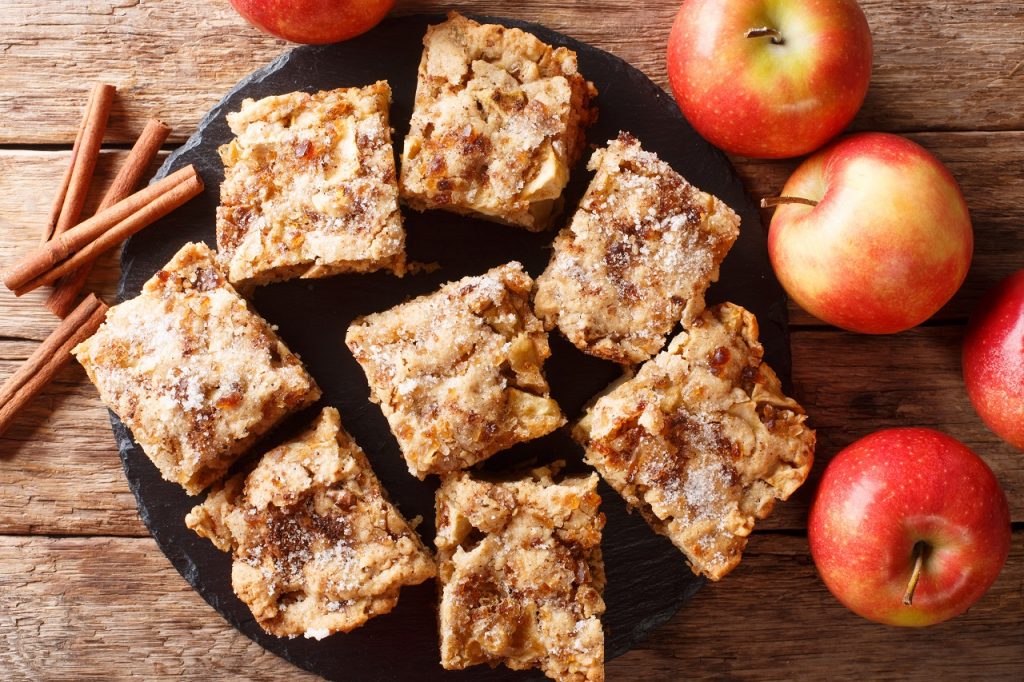
If you are wondering what to make this Christmas or for your New Year’s Eve party, here is a recipe for Apple Cake that is moist, yummy and comes with a rich, sweet butter sauce.

Ingredients:

  • 1/2 cup brown sugar
  • 1/4 teaspoon salt
  • 1 cup sugar
  • 1/2 cup butter
  • 1/2 cup chopped walnuts
  • 1/2 teaspoon ground cinnamon
  • 2 medium tart apples, peeled and grated.
  • 1 teaspoon baking soda
  • 1 teaspoon vanilla extract
  • 1/2 cup cream
  • 1/4 teaspoon ground nutmeg
  • 1 cup all-purpose flour
  • 1 egg

Method:

  1. In a mixing bowl, put cream, butter and sugar and then beat in an egg and vanilla.
  2. Combine the flour, baking soda, cinnamon, salt and nutmeg. Gradually add to the creamed mixture.
  3. Stir in apples and walnuts. Pour into a greased 8-inch square baking dish.
  4. Bake at 350 degrees F for 40-45 minutes or until a toothpick inserted near the center comes out clean.
  5. Meanwhile, in a saucepan, melt butter. Stir in sugars and cream.
  6. Bring to a boil over medium heat, stirring constantly.
  7. Reduce heat and let it simmer, uncovered for 15 minutes, stirring occasionally. Serve over warm cake.

3. Chicken and Bell Pepper Tomato Chilli Stir Fry

Ingredients: 

  • 2 Chicken breast
  • Salt and pepper (as per taste)
  • All-purpose flour (for coating)
  • 1 Red chili pepper
  • 2 teaspoon Vegetable oil
  • 1 tablespoon Vinegar
  • 2 tablespoon Sweet chilli sauce
  • 2 tablespoon Ketchup
  • Bell peppers

Methods: 

  1. Chop the chicken into bite-sized pieces and sprinkle with salt and pepper. Coat the chicken in flour.
  2. Heat a frying pan with vegetable oil, add the red chilli pepper and fry the chicken until golden.
  3. Add vinegar and steam the chicken.
  4. Chop the bell peppers into 2 cm pieces, add to the frying pan and fry.
  5. Season with the sweet chilli sauce and ketchup.

Benefits of Chicken: Chicken is a great low-fat source of protein and the B Vitamin niacin. Protein is essential for maintaining muscle mass and is commonly included in weight-loss diets.

4. Christmas Baked Brown Rice Pudding

Rice pudding is for those who love homemade comfort food!

Ingredients:

  • 1 teaspoon vanilla extract
  • 2 cups milk
  • 3 beaten eggs
  • 1/3 cups raisins
  • 1 cup uncooked brown rice
  • 1/2 cup white sugar
  • 1 pinch ground nutmeg
  • 1/2 teaspoon salt

Method:

  1. Place uncooked rice in a 3-quart saucepan, and add water. Bring to a boil.
  2. Reduce heat and simmer for 25 to 30 minutes.
  3. Preheat the oven to 325 degrees F (165 degrees C).
  4. In a large bowl, combine beaten eggs, milk, sugar, vanilla extract, and salt. Mix well.
  5. Stir in rice and raisins.
  6. Pour into a baking dish. Bake uncovered for 30 minutes. Stir the pudding and sprinkle with nutmeg.
  7. Bake for an additional 30 minutes or until a knife inserted halfway between the edge and the center comes out clean.
  8. Enjoy your warm pudding.

Benefits of brown rice:

  • Lowers the risk of developing diabetes
  • High in fiber
  • Good source of magnesium and selenium
  • Prevents weight gain
  • Lower cholesterol
  • Offers cardiovascular benefits
  • Reduces the risk of childhood asthma
  • Promotes bone health

And that’s all! Do try these healthy recipes for Christmas and New Year’s and share your pictures with us on social media by tagging GOQii. Let us know your thoughts in the comments below. For more healthy recipes, check out Healthy Reads or ask a GOQii Coach by subscribing for Personalised Health Coaching here.

#BeTheForce 

December 18, 2025 By GOQii 1 Comment

The Importance Of Knowing If You’re Thirsty Or Hungry

thirsty or hungryAm I thirsty or hungry? That’s the question I have started asking myself when I get hunger pangs. This has happened to me quite often when I have just had a meal and I feel hungry within an hour. One day, I decided to conduct an experiment on myself wherein I just placed a glass of water and a bowl of almonds in front of me on my work desk and continued working. I had just finished my meal and was waiting for the hunger pang to hit me. I got the pang and before I reached out for the bowl of almonds, I grabbed the glass of water and gulped it down. Thereafter, I did not feel the need to eat the almonds.

Why Do We Confuse Thirst & Hunger? 

What exactly happened? Let’s get into the science behind it. There’s a little part in our brain called the hypothalamus which controls hunger, thirst and many other bodily functions and behaviors. Because hunger and thirst are controlled by the same area of the brain, it so happens that thirst produces a similar reaction in our body as hunger does. For instance, we get those grumbling and growling noises in the stomach or may start feeling dizzy or low on energy. In all probability, when we get the hunger feeling, we may not necessarily be hungry at all but that we’re actually thirsty! In fact, research shows that about 40% of people mistake thirst with hunger.

This confusion causes many people to overeat and put on those extra kilos. Therefore, it’s very essential to react wisely to save yourself from the extra load of calories. The best way to clear the confusion is, when you feel the hunger pangs creeping in an hour after a meal, rather than breaking into some snacks, drink a glass of water and hold on for 15 minutes as it might take that much time for the hypothalamus to send a signal to let the nervous system know that the body was just thirsty and that the thirst has been quenched. Then, you will not feel the need to eat and the growling and grumbling noises or the feeling of dizziness and weakness will be totally shooed away. In this way, you can also cut down on unwanted food intake/or unnecessary snacking which then gets stored as fat. But, if after 15 minutes you still feel hungry, then you ought to eat as you may be actually hungry.

Another interesting trick is that if you stay hydrated through the day, you won’t even get trapped in this cue-confusion dilemma. Because you know you have already satiated your thirst and you can be sure that the signals that you are getting are surely for hunger. I would say you must try both the experiments and check which one works the best for you. You see it’s absolutely essential to differentiate between the dilemma of thirst or hunger before we fall prey to overeating and gain weight.

We hope this article helps you differentiate between thirst or hunger. For more interesting articles on improving your health, check out Healthy Reads or for further guidance, reach out to our certified experts by subscribing to GOQii’s Personalised Health Coaching here.

#BeTheForce 

Disclaimer: The information provided in this blog is for general awareness and educational purposes only. It is not intended to replace professional medical advice, diagnosis, or treatment. Always consult a qualified healthcare provider for personalised medical guidance or concerns related to your health. Images shown are for representation purposes only and may not depict the exact recommendations or outcomes.

November 14, 2025 By Pradnya Shinde Leave a Comment

The Hidden Link Between Diabetes and Mental Health – And How to Break the Cycle

A concerned woman holding a glucose meter with a high blood sugar reading, symbolising the connection between diabetes and mental health.This World Diabetes Day, the theme is “Diabetes across life stages,” with a special focus on “Diabetes and Well-being.” This highlights a crucial truth: managing diabetes isn’t just about blood sugar; it’s a lifelong mental and emotional journey.
Is the fear of diabetes complications weighing you down, leaving you anxious and uncertain about your health?

Living with diabetes can feel like a full-time job. The constant blood sugar checks, meal planning, and insulin management can be overwhelming. However, what often goes unnoticed is how much diabetes affects mental health. Did you know that people with diabetes are 50% more likely to experience depression than those without it? And the connection works both ways, depression can also increase the risk of developing diabetes.

So, what’s the link? And more importantly, what can you do about it?

How Diabetes Affects Your Brain

High blood sugar doesn’t just impact your body, it affects your brain too. The hippocampus, which controls memory and emotions, is particularly vulnerable. Over time, elevated blood sugar levels can shrink brain cells, making it harder to focus, think clearly, or remember things.

But that’s not all. It can also trigger mood swings, anxiety, and even lead to depression or dementia. If you’ve been feeling foggy, forgetful, or just “off,” your blood sugar levels might be playing a bigger role than you realise.

Can Depression Lead to Diabetes?

It’s not just diabetes affecting mental health—mental health can impact diabetes too. Depression makes it harder to stay active, eat well, or take care of yourself. This, in turn, can lead to weight gain and insulin resistance, increasing the risk of type 2 diabetes.

To make things even trickier, some antidepressants can cause weight gain, making it harder to manage blood sugar. It’s a vicious cycle—similar to the classic “chicken or egg” dilemma.

The Role of Stress in All of This

Stress is the common thread linking diabetes and depression. When you’re stressed, your body releases cortisol, the “fight or flight” hormone. While short bursts of cortisol are helpful, chronic stress can raise blood sugar levels and make your body less responsive to insulin.

This is why managing stress is just as important as managing your diet or exercise routine. The good news? There are proven ways to break the diabetes-stress cycle.

Stress Through the Life Stages

This “diabetes-stress cycle” can feel different depending on your stage of life.

  • In Childhood & Teens: The stress often comes from feeling different at school, managing blood sugar during exams, or navigating social events and peer pressure.
  • In Adulthood: The pressure shifts to the workplace. This includes discreetly checking blood sugar in meetings, worrying about a hypo-glycaemic episode during a presentation, or balancing a demanding career with self-care.
  • In Older Age: The anxiety might shift to a greater focus on managing complications or fears about the future.

The good news is that the same mind-body tools can help you take control, no matter your age or environment.

How to Take Control of Your Health (Both Physical & Mental)

The key is a mind-body approach—where you care for your mental well-being just as much as your physical health. Here are two effective strategies:

  1. Move More

Exercise is one of the best natural antidepressants out there. When you work out, your body releases endorphins, the “feel-good” chemicals that boost your mood and lower stress. Plus, exercise improves insulin sensitivity, helping your body use glucose more effectively.

Even 15-30 minutes of movement a day—like walking, dancing, or yoga—can make a huge difference in both diabetes management and mental well-being.

  1. Try Cognitive Behavioural Therapy (CBT)

CBT is a type of therapy that helps you reframe negative thoughts. Studies show that when combined with exercise, CBT is more effective than medication alone for improving mental health—and it has long-term benefits.

Here’s a simple CBT trick:

  • If you find yourself thinking, “I’ll never stick to this diet,” try shifting it to, “I might struggle, but I can take it one step at a time.”
  • Small shifts in mindset can reduce stress and help you stay on track.

CBT usually involves 6 to 18 sessions with a therapist, where you’ll set goals, learn healthy coping skills, and challenge unhelpful thinking patterns. Over time, this can transform how you approach both diabetes and your overall well-being.

Dealing With Emotional Eating

Ever find yourself reaching for food when you’re stressed, bored, or feeling low? You’re not alone. Emotional eating is common—but recognising triggers is the first step in managing it.

Here’s how to keep it under control:

  • Keep healthy snacks nearby – like nuts, yoghurt, or fruit.
  • Stay hydrated – sometimes thirst feels like hunger.
  • Practise mindful eating – focus on your food, chew slowly, and avoid distractions.
  • Find other stress relievers – try deep breathing, a short walk, or listening to music.

Balanced meals with protein, healthy fats, and fibre can also help stabilise mood and reduce cravings.

Breaking the Cycle

Living with diabetes can be overwhelming, but you don’t have to do it alone. By incorporating simple strategies like exercise, CBT, and mindful eating, you can take charge of both your mental and physical health.

It’s not about being perfect—it’s about progress. Small changes, done consistently, can have a huge impact over time.

By addressing both physical and mental health, you can break the diabetes-stress cycle and regain control of your well-being. Whether it’s through movement, therapy, stress management, or better eating habits, the goal is progress—not perfection.

If you’re struggling, reach out for support—you deserve to feel your best.

What has helped you manage stress or mental health while living with diabetes? Share your experience in the comments below!

#BeTheForce

Disclaimer: The information provided in this blog is for general awareness and educational purposes only. It is not intended to replace professional medical advice, diagnosis, or treatment. Always consult a qualified healthcare provider for personalised medical guidance or concerns related to your health.

October 30, 2025 By Priyanka Mangla 3 Comments

The Early Signs & Symptoms of Diabetes

symptoms of diabetesDiabetes has become one of the most common lifestyle disorders affecting both, urban and rural areas alike. You can attribute this to overeating, obesity, stressful, busy and sedentary lifestyles which lead to the early symptoms of diabetes. This also includes lack of proper nutrition which leads to disturbed glucose metabolism. Heredity is also a major factor in the development of the disease. It is usually misunderstood that eating only refined sugar in excess will lead to diabetes but that’s not the case. Excess intake of proteins and fats also leads to development of diabetes because ultimately they are also metabolized and converted to glucose.



Diabetes is characterized by the elevated levels of glucose in the blood and urine. It is of 2 types:

  • Type 1: is present since birth due to complete absence of insulin 
  • Type 2: Develops later in life due to the deficiency of insulin

There are other variants too like gestational diabetes which occur during  pregnancy. Read more about it here: https://goqii.com/blog/what-gestational-diabetes-can-do-to-you-your-unborn-child/ 

Since untreated or uncontrolled diabetes gradually starts affecting the functioning of major organs of the body, like the heart, kidneys, brain, nervous system, eyes, etc. it is important to diagnose and manage diabetes as early as possible.  

How Can You Diagnose It? 

It is diagnosed by a blood test, in which the blood glucose in the fasting state (normal values range between 80-120 mg/100 ml of blood) and 2 hours after having the meal (normal values, 140 mg/100 ml of blood) are measured. Now, even before getting your blood glucose tested, there are certain signs and symptoms which our body shows which indicate the development of diabetes. 

Early Signs and Symptoms of Diabetes

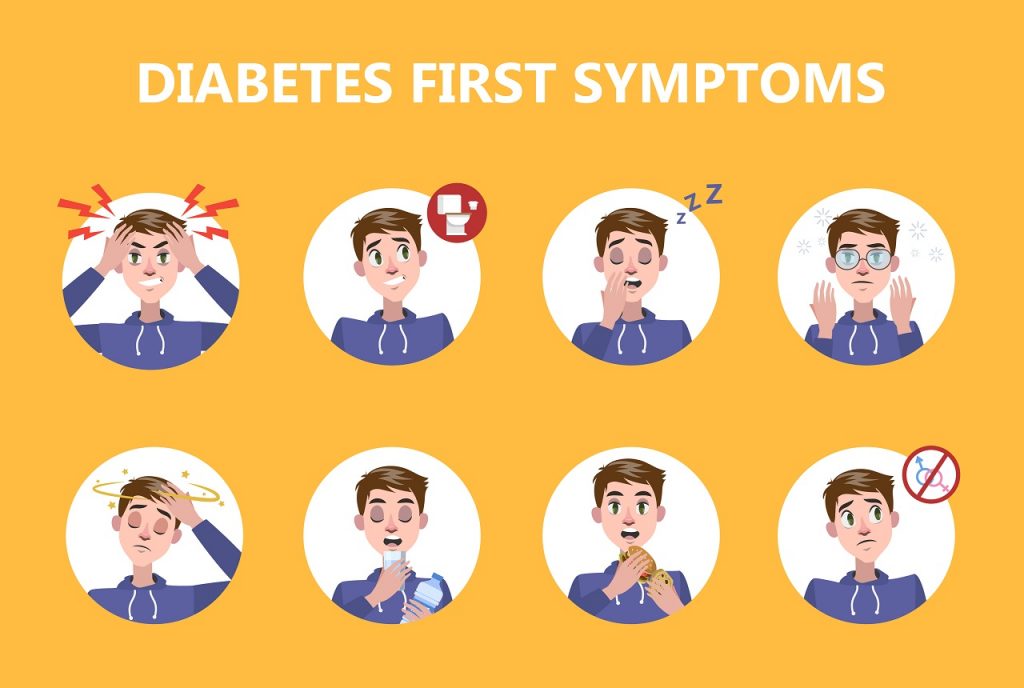
  1. 3P’s: Polyphagia (increased hunger), polydipsia (increased thirst), polyuria (increased urination). Remember these 3 P’s and look out if you are experiencing these. 
  2. Loss of weight: In spite of increased hunger, there will be a very sharp loss of weight, which again is a warning symptom. This is happening because the glucose is getting lost in the urine, also due to insufficient insulin, the available glucose is not getting utilized to provide energy and to function, the body has started utilizing the glucose which is stored in the muscles and organs. 
  3. Getting tired: Loss of weight due to this condition leads to early tiredness. The person gets tired easily both mentally and physically. 
  4. Dry mouth: Despite drinking more water, there will be dryness in the mouth. 
  5. Paleness: appears because of anemia.
  6. Frequent infections and delayed healing of wounds: happens due to excess of glucose in the blood. 
  7. Loss of libido. 

In its early stages, we can easily prevent it from progressing further to a full blown Diabetes Mellitus with: 

  • Regular exercise: for a minimum of 30 minutes to maintain optimum weight. Engage yourself in light games. 
  • Proper diet: Which includes salads with meals (this slows down digestion and prevents an immediate spike in blood sugar levels) and excluding refined sugar, alcohol, smoking and high fat foods. 
  • Yoga & meditation: take care of the stress levels and curb the disease from getting any worse. Pranayama (Breath Control) and certain yoga asanas like Cobra Pose (Bhujangasana), Shoulder Stand (Sarvangasana) and various others help in stimulating the pancreas to produce insulin . 

There are certain home remedies which can be used as a supportive measure. I want to discuss here the two most important ones. 

  1. Bitter gourd (Karela): is highly beneficial in the treatment of diabetes. It contains an insulin-like principle, known as plant-insulin which has been found effective in lowering the blood and urine sugar levels.
  2. Java Plum (Jamun): The seeds contain a glycoside ‘jamboline’ which has the power to check the pathological conversion of starch into sugar in cases of increased production of glucose. In the Homoeopathic system of medicine, we have a very effective medicine prepared from this fruit to treat diabetes. 

We hope this article helps you manage Diabetes and helps you spot the early signs and symptoms. Do leave your thoughts in the comments below! For more articles on managing Diabetes, check out Healthy Reads. 

For further guidance and motivation by certified experts, join the GOQii Diabetes Care program. It’s India’s only diabetes program that is driven by Smart Science and Personal Coaching to improve Fasting Blood Sugar (FBS), Postprandial Blood Sugar (PP), and reduce HbA1c levels. You can subscribe here: https://store.goqii.com/diabetescare.

#BeTheForce Against Diabetes! 

Disclaimer: The information provided in this blog is for general awareness and educational purposes only. It is not intended to replace professional medical advice, diagnosis, or treatment. Always consult a qualified healthcare provider for personalised medical guidance or concerns related to your health. Images shown are for representation purposes only and may not depict the exact recommendations or outcomes.

  • « Previous Page
  • 1
  • 2
  • 3
  • 4
  • 5
  • …
  • 32
  • Next Page »

Search

Recent Posts

  • Caution: Smoking is Injurious to health!!
  • The Sleep-Metabolism Connection: Why Rest is Your Best GLP-1 Partner
  • Accelerate Action for Your Health: Why Self-Care Matters This International Women’s Day
  • 4 Reasons Why Affirmations Are Not Working For You
  • The Social Side of GLP-1: Navigating “Food Culture” and Peer Pressure

Stay Updated

Archives

  • March 2026 (4)
  • February 2026 (14)
  • January 2026 (14)
  • December 2025 (19)
  • November 2025 (15)
  • October 2025 (20)
  • September 2025 (6)
  • August 2025 (6)
  • July 2025 (12)
  • June 2025 (18)
  • May 2025 (16)
  • April 2025 (22)
  • March 2025 (23)
  • February 2025 (22)
  • January 2025 (25)
  • December 2024 (22)
  • November 2024 (23)
  • October 2024 (21)
  • September 2024 (24)
  • August 2024 (30)
  • July 2024 (21)
  • June 2024 (26)
  • May 2024 (31)
  • April 2024 (27)
  • March 2024 (29)
  • February 2024 (25)
  • January 2024 (21)
  • December 2023 (15)
  • November 2023 (11)
  • October 2023 (19)
  • September 2023 (22)
  • August 2023 (18)
  • July 2023 (22)
  • June 2023 (24)
  • May 2023 (24)
  • April 2023 (23)
  • March 2023 (23)
  • February 2023 (19)
  • January 2023 (15)
  • December 2022 (11)
  • November 2022 (15)
  • October 2022 (15)
  • September 2022 (12)
  • August 2022 (10)
  • July 2022 (17)
  • June 2022 (11)
  • May 2022 (10)
  • April 2022 (6)
  • March 2022 (6)
  • February 2022 (13)
  • January 2022 (11)
  • December 2021 (7)
  • November 2021 (3)
  • October 2021 (6)
  • September 2021 (3)
  • August 2021 (8)
  • July 2021 (7)
  • June 2021 (15)
  • May 2021 (16)
  • April 2021 (10)
  • March 2021 (7)
  • February 2021 (4)
  • January 2021 (4)
  • December 2020 (3)
  • November 2020 (4)
  • October 2020 (10)
  • September 2020 (3)
  • August 2020 (3)
  • July 2020 (2)
  • June 2020 (4)
  • May 2020 (10)
  • April 2020 (12)
  • March 2020 (10)
  • February 2020 (4)
  • January 2020 (4)
  • December 2019 (3)
  • November 2019 (7)
  • October 2019 (5)
  • September 2019 (4)
  • August 2019 (9)
  • July 2019 (9)
  • June 2019 (11)
  • May 2019 (4)
  • April 2019 (8)
  • March 2019 (8)
  • February 2019 (9)
  • January 2019 (8)
  • December 2018 (9)
  • November 2018 (3)
  • October 2018 (3)
  • September 2018 (5)
  • August 2018 (10)
  • July 2018 (6)
  • June 2018 (13)
  • May 2018 (8)
  • April 2018 (18)
  • March 2018 (9)
  • February 2018 (8)
  • January 2018 (15)
  • December 2017 (12)
  • November 2017 (19)
  • October 2017 (13)
  • September 2017 (15)
  • August 2017 (4)
  • July 2017 (8)
  • June 2017 (7)
  • May 2017 (6)
  • April 2017 (8)
  • March 2017 (6)
  • February 2017 (7)
  • January 2017 (9)
  • December 2016 (10)
  • November 2016 (7)
  • October 2016 (7)
  • September 2016 (7)
  • August 2016 (11)
  • July 2016 (9)
  • June 2016 (9)
  • May 2016 (12)
  • April 2016 (17)
  • March 2016 (17)
  • February 2016 (8)
  • January 2016 (6)
  • December 2015 (2)
  • November 2015 (9)
  • October 2015 (7)
  • September 2015 (9)
  • August 2015 (11)
  • July 2015 (9)
  • June 2015 (12)
  • May 2015 (9)
  • April 2015 (13)
  • March 2015 (8)
  • February 2015 (5)
  • January 2015 (12)
  • December 2014 (14)
  • November 2014 (11)
  • October 2014 (6)
  • September 2014 (13)
  • August 2014 (12)
  • July 2014 (6)
  • June 2014 (2)
  • May 2014 (7)
  • April 2014 (4)

From “Laddu Nawin” to Fit and Fierce: How a 25-Year-Old Insurance Advisor Shed 20 Kilos and Gained His Life Back

When 25-year-old Nawin Yadav from Hyderabad walked into his office every morning, he carried more than just his files and policy papers. He had the weight of fatigue, sluggish energy, and an ever-growing belly that was becoming the butt of jokes. “People … [Read More...]

“I’ve Challenged Myself to Live 100 Years” – The Story of Chandubhai Savani’s Second Chance at Life

At 67, most people start slowing down. Not Chandubhai Savani. A resident of Surat, Chandubhai, thought life was on track. “My life was going well till I had my bypass surgery,” he says. That surgery, back in 2021, was a wake-up call.  Medication was routine, but exercise wasn’t. His diet? What he calls ‘normal.’ “I […]

From Shimla’s Slopes to Chandigarh’s Sidewalks: Surinder Kaur Bhalla’s Journey from Chaos to Control

Some journeys start with a plan. Others begin with a stumble literally. Surinder Bhalla, a government professional, born and raised in the scenic hill town of Shimla, had always lived a life of movement. “In Shimla, you walked everywhere,” she reflects. “Walking was never an exercise. It was just life.” But after shifting to Chandigarh, […]

Ananda Mukherjee Health Story

From Terminal Illness To Complete Wellness! Ananda Mukherjee Health Story

As we observe World Cancer Day under the powerful theme ‘United by Unique’ (2025-2027)**, we are reminded that every individual’s journey with cancer is distinct, yet united by shared resilience, hope, and the collective fight against this disease. This theme places people at the centre of care and their stories at the heart of the […]

  • HOME
  • HEALTHY LIVING
  • FITNESS
  • HEALTHY RECIPES
  • USER STORIES
  • KARMA
  • BUY GOQii

Copyright ©2016 GOQii
