GOQii

Blog

  • HOME
  • HEALTHY LIVING
  • FITNESS
  • HEALTHY RECIPES
  • USER STORIES
  • KARMA
  • BUY GOQii

Search Results for: fat

September 2, 2017 By Anusha Subramanian 7 Comments

Trekking is not difficult…If you know how to walk

trekking
There are all kinds of exercises that one adheres to for fitness. For me hiking or trekking is one way to remain physically and mentally fit. My friends and colleagues who are not into adventure activities like trekking or cycling always thought I was a nerd who at the drop of a hat will leave everything to take off to the mountains for 20 to 25 days or go for long distance cycling. They would always wonder what kind of a holiday is this where you go and tax yourself again instead of relaxing and enjoying yourself on a holiday.

For most of the level-headed outsider who is  unexposed to the outdoors or wilderness – trekking is normally associated as arduous task trudging on some hard and uneven ground, climbing and walking on moraines amidst hostile environment with bare shelter, food and clothing essentials. My friends and colleagues could never fathom the fact that I would come back looking more fresh, rejuvenated and happy than ever before. One can never understand the gung-ho attitude after completing a trek until one has venture into a task of this nature.

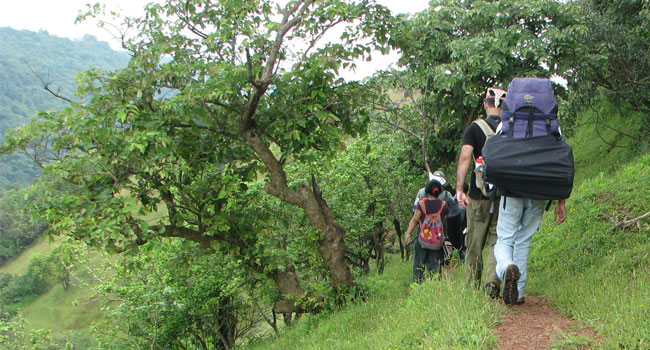
At the outset let me tell you that trekking is fun and not laborious. That’s a myth according to me. Believe me, start slow. Begin with a small hike into the wilderness over the weekend and see how happy you come back.

So what is it about trekking that makes one so happy and rejuvenated? Is trekking so difficult that only a select few can do? These questions are best answered by experiencing a trek firsthand. For those who are still trying to make up their mind and confused whether to venture into something like this or no,  let me give you a sneak preview of what hiking or trekking is but this in no way can compensate the real experience.
trekking2

Hiking applies to shorter routes and plain walks. These are simpler & controlled environment version of trek. Trekking applies to more rigorous walking along different terrains and altitudes. If you want to get used to walking in the wilderness and getting a whiff of the outdoors one can start simple with short hikes. Although these activities leads one into unknown territories and gets the environment challenging and physically uncomfortable, it still remains safe when approached with the right guides.

While trekking you might come across situations where you are stuck and most times hit by the sheer untouched beauty of the, a picture perfect image that embeds itself permanently in your memory as you are exposed to the wilderness for a longer duration in a day. This beauty can be seldom enjoyed while in a car. While trekking you confront complete new situations as the day progresses slowly. Every little thing through the journey becomes an important memory to be cherished all your life. Human togetherness becomes simple in the face of this challenging lifestyle for the otherwise confused and unprepared mind.

Having this let me assure you that trekking is not tough. Believe me if you know to walk then you can trek as well. When I say this it does not mean that you venture into unknown territories on your own to explore the unknown. Walking along a trail around with a backpack does not require exceptional skills but does require certain amount of physical fitness, planning, the right clothes, shoes and above all old common sense.

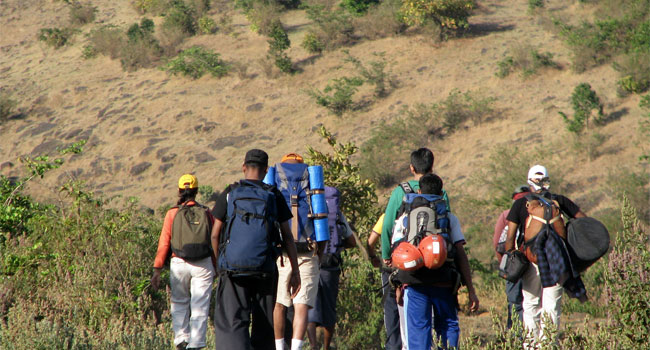
A first time trekker should start with easy effortless trails of one hour or so and then work your way up to longer, more difficult treks. The difficulty of any trek or walk depends on the hilliness of the terrain, and altitude. Most walking trips, tailored for moderately active people, cover gentle terrain at low altitudes, and many have optional shorter routes. One can also take breaks along the trails. This applies to treks in Maharashtra or anywhere in South India.

Himalayan treks where the altitude is over 8000 feet and can extend up to 18,000 feet needs mental conditioning and excellent physical fitness. Most professional outfits organizing these treks can assess your fitness levels. If in doubt, be conservative, especially when it comes to the dizziness and shortness of breath associated with high altitudes. At high altitudes, altitude sickness is one of the first and foremost things that one needs to take care of. I would recommend further reading on altitude sickness and one can also contact your organizer for the same before going on a long trek.

One basic and important thing to remember while trekking is to respect nature and environment. While on a trek you are forced to live in harmony with nature and her moods, for every pain that your limbs feel while trekking, there is this rewarding and enriching feeling of rejuvenation that you will come across due to this very harmonizing quality.

Essential Skills

Skills needed for trekking apply to any outdoor sport. A course in basic first aid wouldn’t hurt, but the least you can know is how to bandage a wound and detect the signs of dehydration and heatstroke. Learn to understand the weather conditions of the day.

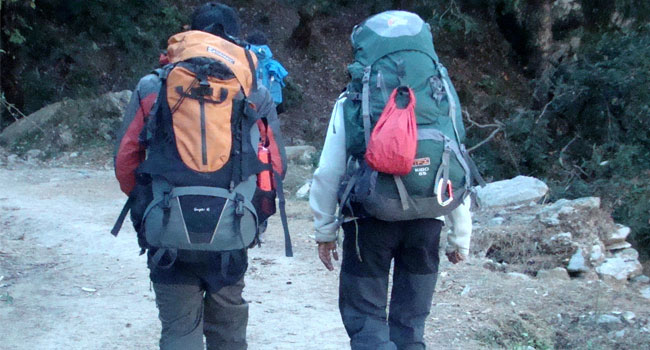
Gear Up: This is the basic that an individual should understand while trekking. The right backpack is a must. Have a backpack which fits well on your back and does not ‘hang’. Therefore choose a backpack with multiple pockets, padded shoulder straps, and large zipper closure. And make sure it’s the right size: When properly adjusted, the base should sit on your hips and the top should be at least one hand-width below the base of your neck. A fit backpack on your back is half the battle won while trekking.

The rest half of the battle is won with the right clothes and shoes. Wear loose clothes like tracks or cotton slacks or trousers with a loose T-Shirt. Avoid wearing denims especially during monsoons. If it gets wet it gets very heavy thus making it difficult for you to walk. On a Himalayan Trek a multipurpose jacket which can take the cold as well as the wind is a must.

While on a Himalayan trek it is recommended that you wear woolen or synthetic blend socks designed to wick moisture away from the feet, as wet feet is the primary cause of blisters.

Footwear designed specifically for trekking offers better support and traction. Choose a pair that’s a half-size larger than your street shoes to allow for some swelling as you walk and to accommodate slightly heavy hiking or a towel socks.

That little tingle of friction you feel on your foot before you get a blister. Don’t ignore the feeling: Take off your boot and wrap your foot with a light cloth before that tingling evolves into a full-fledged blister.

Some things to keep in your day pack: first-aid kit; water bottle; Swiss Army knife; topographic map; compass and sweater or a jacket. Jacket is advisable while trekking in the monsoons in Maharashtra and of course it is a must while on a Himalayan Trek.

On any trek avoid carrying electronic gadgets like music players or the likes. These require ample batteries and they amount to lot of weight. This is very essential to note on a Himalayan Trek. Many electronics refuse to work below freezing or in cold conditions. Cold electronics gadgets consume more battery and hence you will have to carry extra batteries and hence extra load. Each pencil cell battery will weigh about 50 gms and if you plan to carry even five extra pairs that add 500 gms, besides the problem of disposing them. Used batteries are considered to be one of the biggest environmental hazards. These also attract the attention of locals / porters and may induce them into theft. Protecting your electronics from the elements may pose another challenge.

Carry batteries only for your camera: Carry the essential amount. The rule is always that know what you want and only click those that will also save you from wasting rolls (in case you are not using a digital camera).
Benefits of Trekking

Some basics to bear in mind: 

• Walk straight and when at slopes never sit and climb down it will get more painful.
• When tired please avoid sitting down on the trail. This will only increase the tiredness further and make it difficult for you start walking again
• Always carry salt and sugar with you and mix it with your water. An easier option is to have Electoral or Glucose mixed with your bottle of water.
• Never gulp water when you halt to take a break only sip water.
• Whenever you feel uneasy immediately make it a point to tell your trek leader or your organizer. So that things do not get out of hand.
• It’s always nice to keep a small notepad with you to jot down your experiences and also details on the place.

Please Note: While most of these apply to a normal local treks, there are few specifics for Himalaya Treks. In this note I have jotted some most important things for the Himalayan Treks 

Monsoons are soon to begin and it’s the best season in Maharashtra to take to trekking in the Sahyadri ranges.
Happy Trekking!
September 1, 2017 By Anusha Subramanian 16 Comments

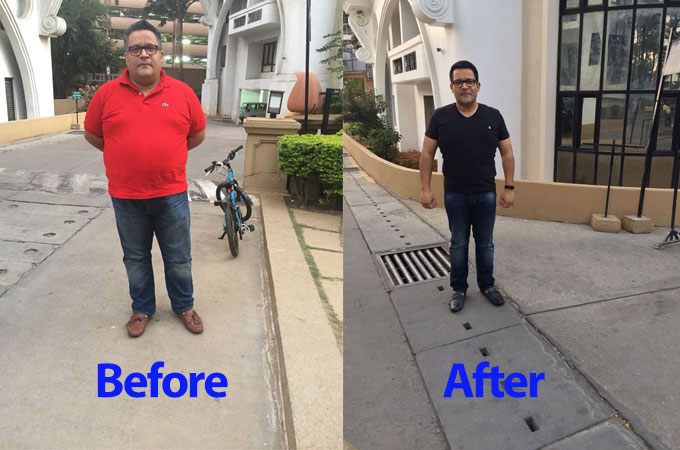
“#FitBy40: To lose 40 KGS by the time I turn 40”


Arjun-Narayan

He led a sedentary lifestyle for several years until one day he realized that he had crossed the barrier of being unhealthy. Here is Arjun Narayan’s inspirational story in his own words.

I couldn’t believe my ears when the guy at the Levi’s store said, “Sir, a 32” size jeans would be perfect for you”. I was shocked because I always wore a 44” jeans until recently!

My normal day would start pretty late. If early, I would begin my day at 8 AM or even 9 AM depending on how late I slept the previous night. I had absolutely no grip on my meals, the greasier and tastier the meal – the higher the chances that I would go for it. I led sedentary lifestyle and walked less than 2,000 steps a day. Dinner times would be erratic and could be as bad as 2 AM. Beer cans would get opened for the smallest event that called for a celebration. All in all, it was as bad as it could get. I also stated that I probably get a zero for a quiz about nutrition or what protein was, what carbohydrates are as my knowledge on this was absolute zilch.

Before a doctor could ask me to get the situation under control regarding my health, I wanted to take charge. Another thing that kept bothering me was, I could never purchase a ready to wear trouser from the market as most brands did not cater to a 44” waist size.

I decided to hire a personal gym trainer. My story was similar to many out there who join the gym to lose weight. I was regular at the gym for a period of three months, but I did not shed a single gram of weight.

When I analysed to check what was I doing wrong– I realised, despite working out in the gym there was absolutely no discipline on my diet. While, I was battling the dilemma on how to rectify the situation, I bumped into these two statements in an article – ‘Weight Loss is 80% diet and 20% exercise’ and ‘Abs are made in the kitchen’. These statements made me think about this entire weight loss program in a different way”. Now, I knew that I had to get a personal coach who can advise me on diet and be by my side if I wanted this weight loss exercise to get anywhere”.

I had been following Vishal Gondal on Twitter for about 2 years and I knew about GOQii. What made GOQii interesting was the ‘services’ component to the business in addition to the product. I never evaluated any other option as I knew it had to be GOQii. Any other band would not solve the problem as I would have the data – but the bigger concern was not knowing what to do with the data.

In Jan 2016, I took up GOQii and came up with a project for myself #FitBy40 and the goal of the project was to lose 40 KGS by the time I turn 40 (which is this month). By the 9th month – 5th September to be precise, I had lost 36 KGS! I started my GOQii journey at 115.1 KGS and by September I was at 79 KGS.

Today, diet and exercising is my pet topic. I get up at 5:30 AM and on bad days it is not later than 7:15 AM.

I attribute my success to my GOQii coach Kruti Jain. While, I have been extremely sincere and diligent about the entire process, she is the one who gave me the direction.

In the beginning she started advising me on what kind of a meal would be ideal for me, and it gradually started building from there. As I started seeing the results, I was motivated to push harder.

Now I can hold fitness sessions for an hour to a group of people and tell them how they can get a grip on stuff and the best part is that it is practical and doable. A year ago, I would have felt that this would be impossible to achieve – but trust me it is very doable. Today, people come up to me and say that I am an inspiration to them and it feels so good and if I have to look back, I don’t think I could have achieved any of this without Kruti’s assistance.

A normal day in my life ‘today’ looks like this:

My day starts with 2 hours of tennis / an hour in the gym and then I go for a swim in the evenings or for a walk. A newly opened restaurant in town doesn’t excite me anymore. What excites me is going for a run on the treadmill and running for 45 minutes or playing tennis for 2 hours. What excites me even more is going to a readymade garment store and trying out new trousers as my waist size is now down to 32″ from 44″. The last I had worn a 32″ jeans was probably in 1999 or so or maybe even earlier.

What does Coach,Kruti Jain have to say about her player Arjun Narayan?

Arjun came on board with a goal of bringing his weight down to 70 kgs (ideal body weight). He further specified the goal by saying that he would like to get to a 2 digit weight, i.e, 99 kgs within 5-6 weeks (about 10 kg loss)

Achieving such a goal would’ve required drastic dietary modifications and intense workouts. I explained to him the challenges expected on this path and tried convincing him to choose a rather easier and sustainable path of correcting the lifestyle which will automatically lead him to his health goal. He did agree to this but, only in words (for the sake of it).

As a coach, I helped him understand the nature and the nutritive quality of different foods, the trick of balancing meals, healthy snacking, and the impact of foods or lack of food / nutrients on our behaviour and food choices (cravings). These are just a few points to mention but our discussions went beyond the basics.

On the workout front, he chose his activities on his own as doing something of your interest is what keeps you going. I only helped him change and modify the workouts when his body got used to these activities.

According to me, what helped in this case was the player’s strong determination to get to his goal. He was religious in monitoring his progress and kept revising his plans and targets. Not only that, if the progress wasn’t as expected for a particular week, he had me reason it out & find out the limiting factors.

If I asked him to slow down (workouts) or to not be so strict on the diet front (to avoid its negative impact on his health), he would try to understand the “Why?” in detail and argue if not convinced. You just couldn’t stop or slow him down because he could only see the goal and the distance in between them.

Lifestyle before I came on board as his coach:

Diet: He was already following a low fat, high protein diet which was helping him lose weight.

Workout: 1- 1.5 hr of Tennis/ walking everyday

How I helped?

  1. Tried educating him about the negative impact of such diets on health (only proteins or only salads for meals)
  2. Improve satiety quotient of the meals by adding fibre and complex carbs
  3. Balance meals (right proportions of carbs, proteins, fibre& micro- nutrients)
  4. Snacking on nutrient dense foods to avoid deficiencies
  5. Satisfy taste buds without guilt (indulgence on a weekly basis, but in controlled portions)
  6. Deal with cravings and avoiding them
  7. Change the workout at the right time or modify them so that the rate of weight loss does not fall (combination of workouts like swimming/ tennis/ walking/ gym cardio).

These changes helped him sustain the diet and lose weight at such a rate (1.5 kgs/ week)

‘Want to get featured here? Click Here to tell us your story.’

August 7, 2017 By Jayshree Dhabalia 1 Comment

Let’s understand Cravings

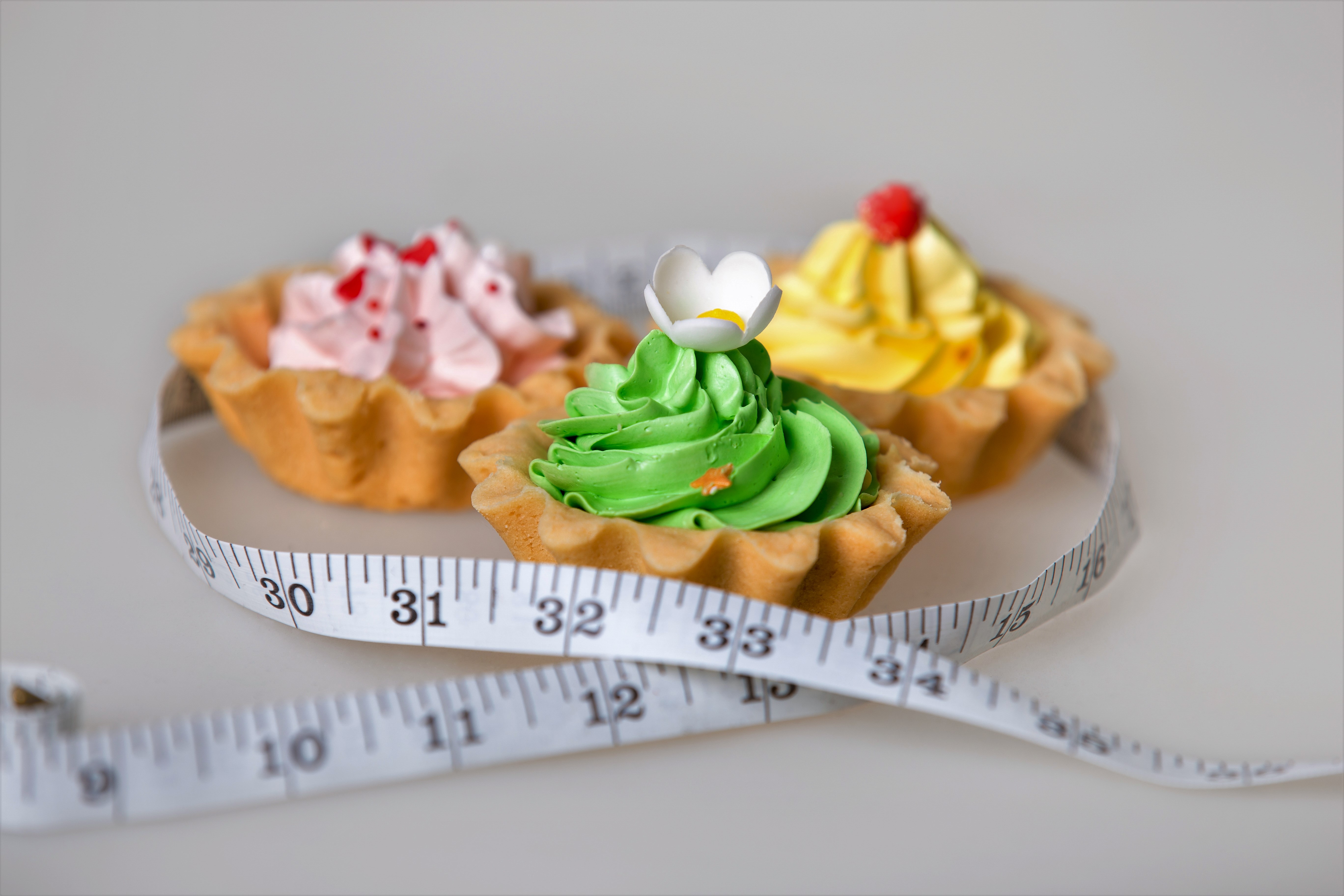
Three colorful green, pink and yellow tart cakes wrapped in measuring tape on white background, unhealthy lifestyle concept, studio

Food craving (defined as an intense desire to eat a specific food) is of interest because it is extremely common and because it influences obesity or nutritional status. It has also been suggested that food craving may be the evolutionary source for cravings of all kinds including cravings for drugs and alcohol.  “Surveys estimate that almost 100% of young women and nearly 70% of young men had food cravings during the past year,” says Mercia Levin Pelchat, of Monell Chemical Senses Center in her published article ‘Food Cravings in Young and Elderly Adults’ in the journal Appetite*

As humans, we’re biologically wired to crave for Food. The more bad food we eat, the more our body will learn to accept and want them. We become addicted to highly palatable, energy dense food. Well, yes many of the food we eat today (ready made) are extremely addictive, and we are hardwired to crave them. Anything that gives us pleasure and offers relief, our body will want more and crave.

What food am I referring to?

Processed food. They are prepared with a combination of fat, sugar, and salt and provide very fewer nutrients.

Studies have found, highly processed food have the same effect on the brain as some drugs. It helps release feel good hormone which in turn helps to relieve stress temporarily.

What about those people who have food craving even without indulging in processed foods often? The answer for this could be due to missing micro nutrients from your diet, which causes you to crave for certain foods.

amazed young woman eating popcorn

What’s the Solution to Carvings?

Let’s take a look at why we should be adding more veggies, fruits, and other unprocessed food to our diet.

I have covered here few very commonly reported cravings and deficiency associated with the same:

Food Craving Bread
Nutrient Deficiency Nitrogen
Nutritious food Green Leafy Vegetables, Nuts, Seeds, Legumes, Grains
Food Craving White Pastas, Cake, Pastries
Nutrient Deficiency Chromium
Nutritious food Onion, Lettuce, Tomatoes, Cinnamon, Grapes
Food Craving Crisps/Potato Chips, Salty foods
Nutrient Deficiency Chloride
Nutritious food Celery, Olives, Tomatoes, Kelp, Himalayan Sea Salt
Food Craving Chocolate
Nutrient Deficiency Magnesium
Nutritious food Raw Cacao, Whole Grains, Beans, Nuts, Seeds, Fruit, Green Veggies
Food Craving Fizzy/Aerated Drinks
Nutrient Deficiency Calcium
Nutritious food Broccoli, Kale, Sesame seed, legumes, mustard, turnip, greens
Food Craving Coffee / Black tea
Nutrient Deficiency Sulphur
Nutritious food Cruciferous Veggies, Cranberries, horseradish, garlic, onion
Food Craving Ice, Chilled water
Nutrient Deficiency Iron
Nutritious food Beans, Legumes, Dates, Black raisin, Jaggery, Spinach
Food Craving Sweets
Nutrient Deficiency Phosphorous
Nutritious food Citrus Fruits, Green Leafy Veggies, Banana, Tomatoes, Black Olives.

As you can see on the table, a simple mindful inclusion of certain food does not only save you from lot more cravings and its ill effect but can also provide you with lots of nutrients and minerals.

So what will you choose?

*Appetite is an international research journal specializing in cultural, social, psychological, sensory and physiological influences on the selection and intake of foods and drinks. It covers normal and disordered eating and drinking and welcomes studies of both human and non-human animal behaviour towards food


August 3, 2017 By Farida Gohil 1 Comment

Kid’s Salt intake linked to Obesity Risk & 5 ways to Use less Salt


Children who consume a high amount of salt are likely to consume more sugary beverages, putting them at risk of unhealthy weight gain and obesity, Says a new study published online in journal Pediatrics.

Researchers at Deakin University’s Centre for Physical Activity and Nutrition Research analysed data from the 2007 Australian National Children’s Nutrition and Physical Activity Survey, which collected diet and physical activity information from 4,283 children aged 2 to 16 years. The researchers looked at the children’s consumption of dietary salt, fluids and sugar sweetened drinks.

They found 62% reported consuming sugar-sweetened drinks. In this group, children who consumed more salt consumed more fluid and in particular more sugar-sweetened drinks. Children who consumed more than one sugary drink per day were 34% more likely to be overweight or obese. They also found that for every one gram of salt consumed per day, the children drank 46 grams more fluid, with those who reported consuming sugar sweetened drinks, drinking 17 grams more for every one gram of salt.

Previous Deakin research has shown children are eating around 6 grams of salt a day or four times more than is recommended. The researcher said, together with the results of this new study, it is becoming even clear that there is a need to keep a closer eye on how much salt our children eat to help ensure they lead long and healthy lives.

They also concluded that High salt diets not only put children at risk of serious long-term health problems, such as developing high blood pressure later in life which is a major cause of stroke and heart disease, they are likely to be contributing to the rates of overweight and obesity. 

So here are 5 ways to Use less Salt

Sodium chloride (salt) is essential to the body. The Sodium in salt helps transmit nerve impulses and contract muscle fibres. Working with potassium, it balances fluid levels in the body. But, you only need a tiny amount of salt to do this, less than one-tenth of a teaspoon. The Average American gets nearly 20 times that much.

The body can generally rid itself of excess sodium. In some people, though, consuming extra sodium makes the body hold onto water. This increases the amount of fluid flowing through blood vessels, which can increase blood pressure.

Most of the salt that we consume comes from prepared and processed foods. The leading culprits include snack foods, sandwich meats, smoked and cured meat, canned juices, Canned and dry soups, pizza and other fast foods, and many condiments, relishes, and sauces-for starters. But enough comes from the salt shaker that it’s worth finding alternatives.

Here are 5 ways to cut back on sodium when cooking or at the table:

  1. Use spices and other flavour enhancers: Add flavour to your favourite dishes with spices, dried and fresh Herbs, roots (such as garlic and Ginger), citrus, vinegar, and wine. From black pepper, cinnamon, and turmeric to fresh Basil, Chili Peppers, and lemon juice, these flavour enhancers create excitement for the palate – and with less sodium.
  1. Go nuts for healthy fats in the kitchen: Using the right healthy fats – from roasted nuts and avocados to Olive, canola, soybean, and other oils – can add a rich flavour to foods, minus the salt.
  1. Sear, sauté, and Roast. Searing and sautéing foods in a pan build flavour: Roasting brings out the natural sweetness of many vegetables and the taste of fish and chicken. If you do steam or microwave food, perk up these dishes with a finishing drizzle of flavourful oil and squeeze of citrus.
  1. Get your whole grains from sources other than bread: Even whole-grain bread, while a healthier choice than white, can contain considerable Sodium. And bread contains salt, not just for flavour but to ensure that the dough rises properly. You can skip that extra salt when you use whole grains outside of baking. Try a Mediterranean-inspired whole-grain salad with chopped vegetables, nuts, and legumes, perhaps a small amount of cheese, herbs and spices, and healthy oils and vinegar or citrus. For breakfast, cook up steel-cut oats, or other intact whole grains with fresh or dried fruit, and you can skip the toast (and the extra sodium).
  1. Know your Seasons, and, even better, your local farmer: Shop for raw ingredients with maximum natural flavour, thereby avoiding the need to add as much (if any) sodium. Shop for peak-of-season produce from farmers’ Markets and your local supermarket.
  • « Previous Page
  • 1
  • …
  • 157
  • 158
  • 159
  • 160
  • 161
  • …
  • 199
  • Next Page »

Search

Recent Posts

  • The Importance Of Knowing If You’re Thirsty Or Hungry
  • Best Foods To Alleviate Irritable Bowel Syndrome
  • ALL ABOUT VERTIGO!
  • PCOS and Anxiety: Discover Relief with the 54321 Technique
  • Navigating the Maze of Nutrition: Finding Clarity Amidst Confusion

Stay Updated

Archives

  • December 2025 (7)
  • November 2025 (15)
  • October 2025 (20)
  • September 2025 (6)
  • August 2025 (6)
  • July 2025 (12)
  • June 2025 (18)
  • May 2025 (16)
  • April 2025 (23)
  • March 2025 (23)
  • February 2025 (22)
  • January 2025 (26)
  • December 2024 (26)
  • November 2024 (25)
  • October 2024 (22)
  • September 2024 (24)
  • August 2024 (31)
  • July 2024 (21)
  • June 2024 (26)
  • May 2024 (31)
  • April 2024 (27)
  • March 2024 (29)
  • February 2024 (26)
  • January 2024 (25)
  • December 2023 (15)
  • November 2023 (11)
  • October 2023 (20)
  • September 2023 (22)
  • August 2023 (20)
  • July 2023 (22)
  • June 2023 (24)
  • May 2023 (24)
  • April 2023 (24)
  • March 2023 (23)
  • February 2023 (20)
  • January 2023 (16)
  • December 2022 (12)
  • November 2022 (15)
  • October 2022 (15)
  • September 2022 (12)
  • August 2022 (10)
  • July 2022 (17)
  • June 2022 (11)
  • May 2022 (10)
  • April 2022 (6)
  • March 2022 (6)
  • February 2022 (13)
  • January 2022 (12)
  • December 2021 (7)
  • November 2021 (3)
  • October 2021 (6)
  • September 2021 (3)
  • August 2021 (8)
  • July 2021 (7)
  • June 2021 (15)
  • May 2021 (16)
  • April 2021 (10)
  • March 2021 (7)
  • February 2021 (4)
  • January 2021 (4)
  • December 2020 (3)
  • November 2020 (4)
  • October 2020 (10)
  • September 2020 (3)
  • August 2020 (3)
  • July 2020 (2)
  • June 2020 (4)
  • May 2020 (10)
  • April 2020 (12)
  • March 2020 (10)
  • February 2020 (4)
  • January 2020 (4)
  • December 2019 (3)
  • November 2019 (7)
  • October 2019 (5)
  • September 2019 (4)
  • August 2019 (9)
  • July 2019 (9)
  • June 2019 (11)
  • May 2019 (4)
  • April 2019 (9)
  • March 2019 (8)
  • February 2019 (9)
  • January 2019 (8)
  • December 2018 (9)
  • November 2018 (3)
  • October 2018 (3)
  • September 2018 (5)
  • August 2018 (10)
  • July 2018 (6)
  • June 2018 (13)
  • May 2018 (8)
  • April 2018 (18)
  • March 2018 (9)
  • February 2018 (8)
  • January 2018 (15)
  • December 2017 (12)
  • November 2017 (19)
  • October 2017 (13)
  • September 2017 (15)
  • August 2017 (4)
  • July 2017 (8)
  • June 2017 (7)
  • May 2017 (6)
  • April 2017 (8)
  • March 2017 (6)
  • February 2017 (7)
  • January 2017 (9)
  • December 2016 (10)
  • November 2016 (7)
  • October 2016 (7)
  • September 2016 (7)
  • August 2016 (11)
  • July 2016 (9)
  • June 2016 (9)
  • May 2016 (12)
  • April 2016 (17)
  • March 2016 (17)
  • February 2016 (8)
  • January 2016 (6)
  • December 2015 (2)
  • November 2015 (9)
  • October 2015 (7)
  • September 2015 (9)
  • August 2015 (11)
  • July 2015 (9)
  • June 2015 (12)
  • May 2015 (9)
  • April 2015 (13)
  • March 2015 (8)
  • February 2015 (5)
  • January 2015 (12)
  • December 2014 (14)
  • November 2014 (11)
  • October 2014 (6)
  • September 2014 (13)
  • August 2014 (12)
  • July 2014 (6)
  • June 2014 (2)
  • May 2014 (7)
  • April 2014 (5)

From “Laddu Nawin” to Fit and Fierce: How a 25-Year-Old Insurance Advisor Shed 20 Kilos and Gained His Life Back

When 25-year-old Nawin Yadav from Hyderabad walked into his office every morning, he carried more than just his files and policy papers. He had the weight of fatigue, sluggish energy, and an ever-growing belly that was becoming the butt of jokes. “People … [Read More...]

“I’ve Challenged Myself to Live 100 Years” – The Story of Chandubhai Savani’s Second Chance at Life

At 67, most people start slowing down. Not Chandubhai Savani. A resident of Surat, Chandubhai, thought life was on track. “My life was going well till I had my bypass surgery,” he says. That surgery, back in 2021, was a wake-up call.  Medication was routine, but exercise wasn’t. His diet? What he calls ‘normal.’ “I […]

From Shimla’s Slopes to Chandigarh’s Sidewalks: Surinder Kaur Bhalla’s Journey from Chaos to Control

Some journeys start with a plan. Others begin with a stumble literally. Surinder Bhalla, a government professional, born and raised in the scenic hill town of Shimla, had always lived a life of movement. “In Shimla, you walked everywhere,” she reflects. “Walking was never an exercise. It was just life.” But after shifting to Chandigarh, […]

Ananda Mukherjee Health Story

From Terminal Illness To Complete Wellness! Ananda Mukherjee Health Story

As we observe World Cancer Day under the powerful theme ‘United by Unique’ (2025-2027)**, we are reminded that every individual’s journey with cancer is distinct, yet united by shared resilience, hope, and the collective fight against this disease. This theme places people at the centre of care and their stories at the heart of the […]

  • HOME
  • HEALTHY LIVING
  • FITNESS
  • HEALTHY RECIPES
  • USER STORIES
  • KARMA
  • BUY GOQii

Copyright ©2016 GOQii