GOQii

Blog

  • HOME
  • HEALTHY LIVING
  • FITNESS
  • HEALTHY RECIPES
  • USER STORIES
  • KARMA
  • BUY GOQii

Search Results for: diabetes

March 27, 2024 By Luke Coutinho Leave a Comment

Power of Your Immunity – Part 1

Power of Your Immunity

Over the years my work has led me to believe that we need a fundamentally different way of looking at health care. We need a system that works beyond simply just looking at the symptoms that brings people into the clinics and instead is actually able to look and improve health where it begins. Health does not begin in the 4 walls of a doctors’ office or a hospital, but where we live, we work, we eat, sleep, learn and play.

Are you struggling with disease, pain, taking more medicines and spending more time with the doctors? Are you still sick?

Are you scared of the onset of disease, of flu’s, of cancers ?

We may be living in a polluted world, with pesticide laden foods, water that we think is clean and pure, but may not be, breathing in oxygen that consists or several deadly carcinogens, using cosmetics and hair colours laden with chemicals, microwaves, eating toxic junk food… the list goes on..

And we keep running around, like headless chickens, searching for the next best healthiest option, getting sucked into fads, diet programs, dangerous exercise programs, believing in the media, in what our social circles say, in what Bollywood and Hollywood blinds us with.

Eminent Doctors/Nutritionists across the U.S have T.V. shows that inspire the masses with their latest take on weight loss pills that work… first there was green bean coffee extract, then there was raspberry ketones, then Garcinai Cambogia. If these worked, there would be no one struggling with weight issues.

Stop all of this, step back and really slow down.

Yes it’s a crazy world, and people are going to get sicker by the day, and there are going to be more Antibiotics, Cancer, Diabetes, Thyroid drugs that pharmas will continue to flood our communities with. But, guess what, it’s all of this that is not allowing us to get healthier.

Your body is designed to heal itself, if you give it a chance. I’m not saying stop medication. If it works, do it. But, aim to understand what got you on that medication, what’s the trigger and then sort that out so you don’t have to stay on medicines. Don’t get reliant on the medication and continue to live without making changes in your lifestyle.

The answer to disease prevention and cure is ‘IMMUNITY’. It is your body’s first and last line of defense against all diseases .

We all know that Nutrition, Exercise, Stress and Sleep are the aspects that work together to contribute towards a strong immunity.

Over and above this my first recommendation would be for everyone to understand their ‘lymphatic system, and how it works in each of our body’s.

Having a lymphatic system that works well, is the first step towards a super strong immune system.

The lymphatic system is closely related to the cardiovascular system and is sometimes referred to as the body’s secondary circulatory system. Its major function is that of a defense mechanism and it is a key to the body’s immune defenses. The lymphatic system includes the lymph vessels (four times more than blood vessels), lymph nodes, tonsils, spleen and thymus gland. Lymph is the colorless fluid containing white blood cells that bathes the tissues and drains through the lymphatic system.

The lymphatic system:

– Distributes fluid and nutrients throughout the body

– Assists in draining off excess fluids and protein left behind by capillary circulation activity, preventing tissues from swelling

– Removes toxins

Furthermore, when toxins are produced within the body faster than the body can process and release them, the body suspends those toxins in fat and interstitial spaces in an attempt to protect the organs. This toxic buildup results in soft and connective tissue inflammation and excessive buildup of lymph fluid which contributes to fibromyalgia, chronic fatigue, cancer and a multitude of immune system disorders.

To be continued ….
March 17, 2024 By Chhavi Goel Manglik 4 Comments

All you need to know about Vitamin K

Vitamin-k-foods

Most of us are aware of Vitamin A, B, C, D and E. But do you know there is Vitamin K as well?  Yes there is Vitamin K which is an essential vitamin for our body.

Vitamin K is a fat soluble Vitamin is founded by Henrick Dam in 1934. It is also referred as antihemorrhagic factor or coagulation vitamin which has been derived from the Danish word Koagulations.

It is available in two forms

Vitamin K1, also known as phylloquinone, phytomenadione, or phytonadione. It is largely found in green leafy vegetables.

Vitamin K2 is known as menaquinones and is mainly found in the bacteria of colon (Large intestine).

FUNCTIONS

  1. It helps in maintaining bone matrix (bone mineralization)
  2. It helps in cellular growth
  3. It acts as a co factor for enzyme that validates protein to bind calcium
  4. It is important for normal clotting of blood
  5. It helps in synthesis of protein in plasma, bone and kidney
  6. It reduces the risk of cardio vascular diseases
  7. It lowers down the risk of type 2 diabetes
  8. It helps in the maintaining the bone health
  9. Ministry of Japan used it in treating osteoporosis
  10. It lowers the risk of liver cancer
  11. It diminishes the risk of non-Hodgkin lymphoma
  12. It is used in treatment of Alzheimer’s disease
  13. It’s antidote treatment of poisoning byrodenticide

Daily Dietary Recommendations

Infants

  • 0-6 months: 2 mcg
  • 6-12 months: 2.5 mcg

Toddlers 

  • 1-3 years: 30 mcg
  • 4-8 years: 55 mcg
  • 9-12 years: 60 mcg 

Teenagers

  • 13 years: 60 mcg
  • 14-18 years: 75 mcg

Adults

  • 19+ years, Female: 90 mcg
  • 19+ years, Male: 120 mcg

Pregnacy and lactation

  • Pregnant or lactating women, 14-18 years: 75 mcg
  • Pregnant or lactating women, 19+ years: 90 mcg 

Food sources for K1

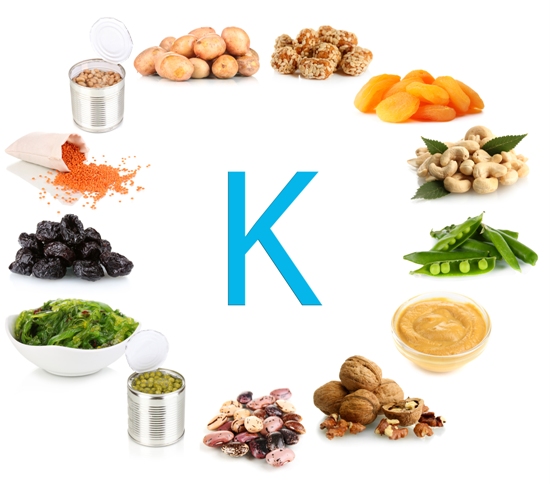
Spinach, alfalfa, cabbage, kale, mustard leaves, collard greens, lettuce, Brussels greens, turnip greens, broccoli, parsley

Food sources for K2

Egg yolk, egg white, chicken, cheddar cheese, salmon, goose liver, bacon

Necessary as supplements for

1.   It is rare in adults but common in new born

2.   People suffering from

a.  Crohn’s disease

b.   Celiac disease

c.   Malnutrition

d.  Gall bladder diseases

e.  Cystic fibrosis

f.   Burn patients

g.  On hemodialysis

3.   People who are alcoholic.

4.   People on thinners

a.  Warfarin (Coumadin)

5.  People on drug (antibiotics) that interferes with vitamin K metabolism

a.   Cefamandole (Mandol)

b.  Cefoperazone (Cefobid)

c.  Cefmetazole (Zefazone)

d.  Cefotetan (Cefotan)

6. People on anticonvulsants

a. Phenytoin (Dilantin)

7. People on cholesterol lowering medications

a. Cholestyramine (Questran)

b. Colestipol (Colestid)

c. Colsevelam (Welchol)

Deficiencies & Toxicity

The deficiency of Vitamin K results in hemorrhage and lowering of blood clotting process. Whereas, steatorrhea may occur in the case of Vitamin K toxicity, though very rare.

Understanding the importance of Vitamin K in maintaining bone health, supporting blood clotting, and reducing the risk of various diseases is crucial for overall wellness. Incorporate Vitamin K-rich foods into your diet and consult with certified expert by subscribing to GOQii’s Personalised Health Coaching here, to ensure optimal levels of this essential nutrient.

#BeTheForce

March 15, 2024 By GOQii Leave a Comment

A Dream Deferred: The Quest for Sleep Equity on World Sleep Day

Improve sleep and sleep quality

In the garden city of Bengaluru, Raj, a night-shift worker, tosses and turns in his bed, struggling to find sleep as the relentless Indian sun climbs higher into the sky. His small, shared apartment offers little respite from the cacophony of daytime noises and the sweltering heat. Meanwhile, across the world, in the quiet suburbs of Stockholm, Anna drifts into a restful slumber in her climate-controlled, noise-cancelled bedroom after a day’s work. This stark contrast in sleeping conditions underscores a profound but often overlooked issue: the global disparity in sleep health, also known as sleep equity.

The theme for World Sleep Day, “Sleep Equity for Global Health,” aims to highlight the considerable disparities in sleep quality that affect diverse populations around the globe.

It’s a day marked to bring attention to the social and environmental factors that contribute to these disparities, which can further compound existing health inequities.

Sleep: A Foundation of Health

Sleep is the cornerstone of good health, an essential process that allows our bodies and minds to recharge, healing us from the day’s toils and preparing us for the challenges ahead. Yet, the ability to obtain restorative sleep is not a privilege afforded to all. Factors like socio-economic status, employment conditions, geographical location, and even cultural attitudes towards sleep can create vast chasms in sleep health across populations.

In developing countries like India, long work hours, limited access to comfortable sleeping environments, and the burden of noise and light pollution are just some of the barriers preventing a good night’s rest. In wealthier nations, while the quality of sleep environments may be higher, the pressures of a 24/7 society and the intrusion of technology into the bedroom can similarly impair sleep.

Bridging the Sleep Divide

The concept of sleep equity goes beyond the individual, implicating the collective health of societies. Chronic sleep deprivation is linked to a myriad of health issues, including heart disease, diabetes, and weakened immune function. When whole communities are sleep-deprived, these health issues can become prevalent, increasing healthcare costs and reducing overall productivity and quality of life.

World Sleep Day aims to galvanise change, encouraging global action to bridge the sleep divide. This can take various forms, from advocating for policies that protect workers’ rights to sleep, such as regulated work hours and rest periods, to investing in urban planning that creates quieter, more restful environments in densely populated areas.

The Call for Global Action

As we observe World Sleep Day, we’re called to consider our sleep health and recognise the disparities that exist. It’s a call for researchers to deepen our understanding of the societal factors that influence sleep, for policymakers to create environments conducive to rest, and for individuals to practice and promote good sleep hygiene.

Addressing sleep equity is a multifaceted challenge that requires a concerted effort from governments, health organisations, communities, and individuals alike. It’s a global health priority that has the potential to improve not just the quality of sleep but the overall well-being and productivity of societies.

By acknowledging the importance of sleep and the disparities that exist, we can work towards a world where restful sleep is not a luxury but a common reality for all. As we champion this cause, we move closer to a world where health equity includes one of the most basic yet vital components of life—sleep.

#BeTheForce

February 29, 2024 By Divya Thampi 2 Comments

Embracing Tears: The Healing Power of Sadness

Tears need to be shed -Divya

Her voice quivered as she spoke over the phone and slowly but surely tears emerged. First gradually, then in quick succession, until they became a steady stream. By now she had disconnected the call but her body shook in uncontrollable sobs. I gently put my hand on her shoulder and checked if she was okay. She looked at me through her teary eyes, shaken out of her reverie and gave me an embarrassed nod indicating that she would manage without my help. I sat there next to her on the train, feeling pained, wondering why a stranger’s grief caused me so much suffering.

Sadness is one of the longer lasting emotions and we feel it when we have experienced loss. The loss could be anything – a breakup, death of a loved one, loss of financial security, loss of respect in the eyes of others, feeling rejected, loss of a job, regret about opportunities lost, loss of a body part or loss of health, to mention a few. We not only feel saddened but also feel the need to reach out and help, when we see someone in pain (like I did with the girl in the train), especially if it’s a loved one. According to Dr Paul Ekman, the reputed psychologist who studies emotions, this impulse is fundamental to the sense of community. This feeling is motivated by the suffering we experience when we see someone else’s suffering.

tears

However, expressing sadness and especially doing so through tears is not something that comes easily to a lot of us.

The main reasons why people may try to suppress sadness are:

       1. The fear that if we start crying or expressing sadness, we may get engulfed and may not be able to stop – This is a misconception. The reality is that strong emotions like sadness, when unaddressed, distort our thinking, prevent us from being reasonable and may drive us to make poor judgments. Hence, it is critical that we process these feelings through healthy expression. It is true that sometimes when we feel sad about a particular event, it may trigger off unexpressed pain from earlier times, making us revisit unresolved hurt. It is okay for that to happen. This may become a doorway to re-examine earlier unacknowledged losses of our lives. A good cry allows us to release the hurt and sadness through tears. It lets out the painful emotional energy and makes room for positive thoughts and feelings in our heart.

      2. Sadness can be a difficult and painful emotion to experience and one wants to avoid going through it – The best way to overcome any emotion is to acknowledge and process it, rather than trying to reject or bury it. Trying to reject sadness may lead to additional feelings of anger, shame and helplessness. Every emotion has a role to play in human life. It would help us to remember that experiencing emotions, even the painful ones, is a sign of the compassionate human heart that beats in our chest and that experiencing a healthy dose of any difficult emotion is the pathway to growth.

      3. The Social stigma attached to shedding tears – There is this idea that feeling hurt and crying is a sign of weakness. Crying is often accompanied by feelings of shame and embarrassment because many of us worry about appearing helpless, dependent and powerless. The cultural stigma around men shedding tears explains (to a certain extent) the frequency with which men turn to, substance abuse, angry outbursts, violence, bullying, isolation or emotional numbness. This is not to say that all women are comfortable with expressing sadness. Often women who cry openly are ridiculed or may be treated with indifference, making one feel weak and inferior. This makes women wary of crying as well.

While the first two reasons are something for each of us to work through individually or with a therapist, however, the third one is far more complex than it appears on the surface. Most times when we think of social stigma, we do not think of ourselves as contributors to it, but unfortunately, almost all of us may be contributing to this stigma not just in the way we treat others but more importantly in the way we treat ourselves. When children grow up watching adults shaming each other for crying or adults shying away from shedding tears and/or when they are repeatedly told that strong people don’t cry, the message becomes deeply ingrained, making its way into their words and actions as they grow into adults.

People who try to bury their feelings of sadness are not the only ones who pay the price for doing so. Deep sadness that goes unexpressed could result in long-lasting suffering. It could result in unhealthy behaviours like substance abuse, misplaced anger and may also pave the way for depression, anxiety disorders, obsessive-compulsive disorders (OCD) or mood swings, to name a few. We may withdraw, make ourselves emotionally unavailable, thus reducing our capability to form authentic meaningful relationships and shrinking our ability to experience positive emotions like joy and passion. Our loved ones would invariably feel the distance this creates. We may at times end up behaving inappropriately because these unresolved feelings may be pulling us in different directions, thus leading us away from our goals. Buried feelings lead to health issues that include high blood pressure, increased incidents of diabetes, heart diseases, stiff joints and frequent infections due to lowered immunity.

Though undoing this social stigma can take time, each one of us has the power and choice to start this process of change. Here are a few things we can do towards bringing this much-needed change:

  • Allow yourself to have a good cry when you feel sad and pained, and instead of criticizing, talk compassionately to yourself when you feel sad.
  • When your loved ones shed tears, let them know through a hug, gentle touch or just your quiet presence, that you feel their pain and that you honour their feelings.
  • Become aware of any comments you may be making or any gestures you may be displayed, which implies that crying is a sign of weakness and consciously make an effort to change them.
  • Be an ambassador of healthy expression of emotions by starting off conversations about the social stigma of shedding tears, within your family, workplaces and social circles.

In conclusion, the main function of involuntary expression of sadness through tears is to signal the need for help, so others are moved to help. But that’s not the only purpose. Acknowledging and experiencing our sadness fully, allows us to honour the thing we have lost and acknowledged the importance of what the loss signified. It helps us to process the grief in a healthy way, such that the body can rebalance and heal itself. It is an opportunity for us to connect with ourselves, to hold our experiences sacred and honour our valuable existence as individuals and as part of a community.

#BeTheForce

  • « Previous Page
  • 1
  • …
  • 33
  • 34
  • 35
  • 36
  • 37
  • …
  • 82
  • Next Page »

Search

Recent Posts

  • 4 Reasons Why Affirmations Are Not Working For You
  • The Social Side of GLP-1: Navigating “Food Culture” and Peer Pressure
  • Leaky Gut: Symptoms and Causes
  • Muscle Is Your Insurance Policy: Why Strength Predicts Lifespan More Than Cardio
  • The Fiber Gap: Managing Digestion on GLP-1 Therapy

Stay Updated

Archives

  • March 2026 (1)
  • February 2026 (14)
  • January 2026 (14)
  • December 2025 (19)
  • November 2025 (15)
  • October 2025 (20)
  • September 2025 (6)
  • August 2025 (6)
  • July 2025 (12)
  • June 2025 (18)
  • May 2025 (16)
  • April 2025 (22)
  • March 2025 (23)
  • February 2025 (22)
  • January 2025 (25)
  • December 2024 (22)
  • November 2024 (23)
  • October 2024 (21)
  • September 2024 (24)
  • August 2024 (30)
  • July 2024 (21)
  • June 2024 (26)
  • May 2024 (31)
  • April 2024 (27)
  • March 2024 (29)
  • February 2024 (25)
  • January 2024 (21)
  • December 2023 (15)
  • November 2023 (11)
  • October 2023 (19)
  • September 2023 (22)
  • August 2023 (18)
  • July 2023 (22)
  • June 2023 (24)
  • May 2023 (24)
  • April 2023 (23)
  • March 2023 (23)
  • February 2023 (19)
  • January 2023 (15)
  • December 2022 (11)
  • November 2022 (15)
  • October 2022 (15)
  • September 2022 (12)
  • August 2022 (10)
  • July 2022 (17)
  • June 2022 (11)
  • May 2022 (10)
  • April 2022 (6)
  • March 2022 (6)
  • February 2022 (13)
  • January 2022 (11)
  • December 2021 (7)
  • November 2021 (3)
  • October 2021 (6)
  • September 2021 (3)
  • August 2021 (8)
  • July 2021 (7)
  • June 2021 (15)
  • May 2021 (16)
  • April 2021 (10)
  • March 2021 (7)
  • February 2021 (4)
  • January 2021 (4)
  • December 2020 (3)
  • November 2020 (4)
  • October 2020 (10)
  • September 2020 (3)
  • August 2020 (3)
  • July 2020 (2)
  • June 2020 (4)
  • May 2020 (10)
  • April 2020 (12)
  • March 2020 (10)
  • February 2020 (4)
  • January 2020 (4)
  • December 2019 (3)
  • November 2019 (7)
  • October 2019 (5)
  • September 2019 (4)
  • August 2019 (9)
  • July 2019 (9)
  • June 2019 (11)
  • May 2019 (4)
  • April 2019 (8)
  • March 2019 (8)
  • February 2019 (9)
  • January 2019 (8)
  • December 2018 (9)
  • November 2018 (3)
  • October 2018 (3)
  • September 2018 (5)
  • August 2018 (10)
  • July 2018 (6)
  • June 2018 (13)
  • May 2018 (8)
  • April 2018 (18)
  • March 2018 (9)
  • February 2018 (8)
  • January 2018 (15)
  • December 2017 (12)
  • November 2017 (19)
  • October 2017 (13)
  • September 2017 (15)
  • August 2017 (4)
  • July 2017 (8)
  • June 2017 (7)
  • May 2017 (6)
  • April 2017 (8)
  • March 2017 (6)
  • February 2017 (7)
  • January 2017 (9)
  • December 2016 (10)
  • November 2016 (7)
  • October 2016 (7)
  • September 2016 (7)
  • August 2016 (11)
  • July 2016 (9)
  • June 2016 (9)
  • May 2016 (12)
  • April 2016 (17)
  • March 2016 (17)
  • February 2016 (8)
  • January 2016 (6)
  • December 2015 (2)
  • November 2015 (9)
  • October 2015 (7)
  • September 2015 (9)
  • August 2015 (11)
  • July 2015 (9)
  • June 2015 (12)
  • May 2015 (9)
  • April 2015 (13)
  • March 2015 (8)
  • February 2015 (5)
  • January 2015 (12)
  • December 2014 (14)
  • November 2014 (11)
  • October 2014 (6)
  • September 2014 (13)
  • August 2014 (12)
  • July 2014 (6)
  • June 2014 (2)
  • May 2014 (7)
  • April 2014 (5)

From “Laddu Nawin” to Fit and Fierce: How a 25-Year-Old Insurance Advisor Shed 20 Kilos and Gained His Life Back

When 25-year-old Nawin Yadav from Hyderabad walked into his office every morning, he carried more than just his files and policy papers. He had the weight of fatigue, sluggish energy, and an ever-growing belly that was becoming the butt of jokes. “People … [Read More...]

“I’ve Challenged Myself to Live 100 Years” – The Story of Chandubhai Savani’s Second Chance at Life

At 67, most people start slowing down. Not Chandubhai Savani. A resident of Surat, Chandubhai, thought life was on track. “My life was going well till I had my bypass surgery,” he says. That surgery, back in 2021, was a wake-up call.  Medication was routine, but exercise wasn’t. His diet? What he calls ‘normal.’ “I […]

From Shimla’s Slopes to Chandigarh’s Sidewalks: Surinder Kaur Bhalla’s Journey from Chaos to Control

Some journeys start with a plan. Others begin with a stumble literally. Surinder Bhalla, a government professional, born and raised in the scenic hill town of Shimla, had always lived a life of movement. “In Shimla, you walked everywhere,” she reflects. “Walking was never an exercise. It was just life.” But after shifting to Chandigarh, […]

Ananda Mukherjee Health Story

From Terminal Illness To Complete Wellness! Ananda Mukherjee Health Story

As we observe World Cancer Day under the powerful theme ‘United by Unique’ (2025-2027)**, we are reminded that every individual’s journey with cancer is distinct, yet united by shared resilience, hope, and the collective fight against this disease. This theme places people at the centre of care and their stories at the heart of the […]

  • HOME
  • HEALTHY LIVING
  • FITNESS
  • HEALTHY RECIPES
  • USER STORIES
  • KARMA
  • BUY GOQii

Copyright ©2016 GOQii