GOQii

Blog

  • HOME
  • HEALTHY LIVING
  • FITNESS
  • HEALTHY RECIPES
  • USER STORIES
  • KARMA
  • BUY GOQii

Search Results for: carb

November 25, 2025 By Arooshi Garg Leave a Comment

Is It Possible To Lose Weight Through Diet?

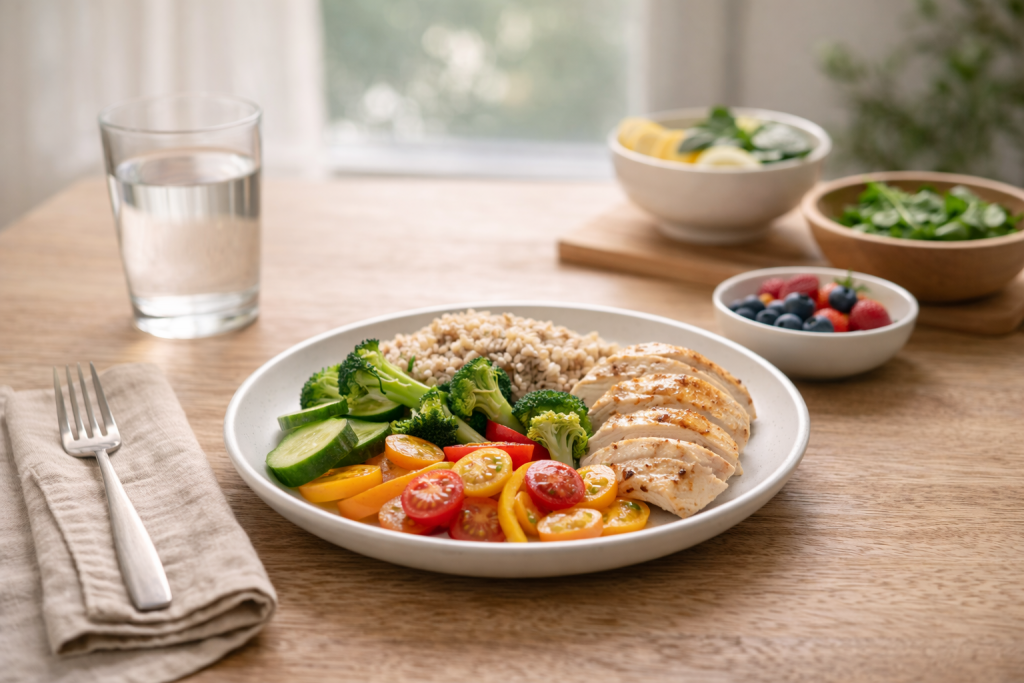
is it possible to lose weight through dietWhen it comes to weight loss, the first thing that comes to mind is slaving away on the treadmill, going for long jogs or joining a gym. But apart from physical activity, there are other factors that influence weight loss like nutrition, quality of sleep and how well you manage stress. Let’s look at some nutritional factors and determine if it is possible to lose weight through diet. 

1. Burning more calories than you consume
The most helpful approach for weight loss is to reduce the number of calories you eat and increase the number of calories you burn through physical activity. One should aim on getting into a negative calorie balance. i.e. you eat less calories and burn more calories and give a chance to stored fats to get metabolized. This can be achieved by taking small steps such as cutting down on carbs, while increasing protein rich food in your diet to meet the daily nutrition requirements. Avoiding packaged foods, high salt and sugar foods, and focussing more on seasonal fruits, vegetables and local native millets can go a long way.

2. Calorie Deficit and What You Need To Keep In Mind
Our body weight is determined by the amount of calories we consume as food and the amount of calories we burn through physical activities. If you’re gaining weight over time, most likely your daily calorie intake is more than the number of calories you are burning through your daily activities.

In order to counteract this, it is important to cut back on calorie intake and burn more calories. Over a period of time, this strategy helps in burning the stored fats and ultimately helps in weight loss. For instance, there are 7,700kcals of energy in 1kg of fat. That means in order to burn 1kg of fat, you should have a calorie deficit of 7,700 i.e. either burn this through exercise or eat less calories on a daily basis. A combination of both these ways is most successful and stable over a long period of time. Changing our eating habits along with regular exercise is the most effective way to lose weight over a period of time. It is also the best way to ensure that the weight does not bounce back with slight deviations.

3. Balancing Diet With Activity
One needs a proper combination of diet, cardio workouts and weight training. Diet definitely plays a huge role in managing weight, however, without proper training or physical activity, the weight lost will keep bouncing back. So one needs proper calorie burn though cardio activities and also lean muscle gain that can happen through weight training.

4. Include More Fiber In Your Diet
Fiber is extremely important in a weight loss journey. Fiber makes up the bulk of your meals. It helps in keeping you full for longer – not starving or feeling hungry all the time is extremely important in a weight loss journey. Eating more fiber also prevents spikes in blood sugar levels. Soluble fiber present in oats, apples, carrots and beans forms a gel-like structure in the gut and slows the absorption of sugars which helps in preventing fat build up.

Is It Possible To Lose Weight Through Diet Alone? 

A simple answer to this would be no. It is not possible to lose weight through diet alone. By eating lesser calories, you are creating a deficit but usually it is not sufficient to lose weight. Even if one loses weight by extreme dieting or food restriction, the weight quickly bounces back as what you have lost in a short period is just body water and muscle. In order to have sustainable weight loss, it is important to combine calorie deficit through reduced dietary intake and also a minimum 60 minutes’ combination of daily cardio and strength or weight training workouts to lose fat and gain lean muscle.

We hope this article helps you! For more on weight loss, check out Healthy Reads. To get expert advice and guidance on weight loss, reach out to our experts by subscribing for personalised health coaching here.

#BeTheForce

Disclaimer: The information provided in this blog is for general awareness and educational purposes only. It is not intended to replace professional medical advice, diagnosis, or treatment. Always consult a qualified healthcare provider for personalised medical guidance or concerns related to your health. Images shown are for representation purposes only and may not depict the exact recommendations or outcomes.

November 19, 2025 By Swati Savla Leave a Comment

5 Healthy Winter Vegetables For A Healthier You!

healthy winter vegetables

The chilly winters are here. This season brings us the most colorful fruits and vegetables in the market. All of them are rich in a variety of nutrients and flavors. The major reason for increasing our intake of this fresh produce is to build our immunity against the flu and cold viruses as well as stock our body with enough nutrients to last a few months post winter as well! Here’s my list of the 5 must have healthy winter vegetables! 

Must Have Healthy Winter Vegetables 

1. Mustard Greens
The famous ‘sarson ka saag’ is our go-to-immunity winter dish. Ever thought why? This low calorie, high fiber leafy green is also an excellent source of Vitamins B1, B2, B6, C, E, K, folic acid and minerals like calcium, carotenes, manganese, copper, magnesium, protein, potassium, and iron. This wide variety of Vitamins and Minerals perform many essential functions like blood clotting which makes it heart healthy, improving bone health and thus, reducing the risk of arthritis and osteoporosis. It also improves eyesight. The folic acid content is at par with levels needed for a healthy pregnancy and menopause. Last but not the least, the high fiber aids good bowel movements, easing hemorrhoids and constipation. Some other leafy greens like spinach and methi are also at their best in this season. 

2. Carrots
This crunchy powerfood, especially the red variety available during winter, contains a good amount of vitamins and nutrients such as Vitamin A, B2, B3, C, D, E and K. We all know about it’s benefits for a good eyesight and healthy skin because of it’s beta carotene. Little do we know that it contains high amounts of Lycopene, an antioxidant which helps prevent cancer, diabetes and heart diseases. Eating raw carrots or drinking carrot juice can help regularise blood flow, provide relief from pain and make you feel less fatigued during menstruation days owing to the carotene and iron content – making it a must have healthy winter vegetable. 

3. White Radish
Do you enjoy relishing hot Mooli ke Parathe in winter? Then you’re definitely benefiting from the Vitamins A, B6, C & E and minerals like potassium, phosphorus and zinc present in White Radish. This entire range of Vitamins and minerals gives our whole body an immunity boost. It has shown to have anti-congestive properties, which clear mucus from the throat and respiratory tract due to the common cold and cough in this season. The combination of phosphorus and zinc, helps get rid of dryness, acne and rashes on the skin and the high water content of radish keeps you well hydrated. Don’t forget to use the green leaves of this root vegetable to perk up the health benefits!

4. Beetroot
This vibrant and colorful veggie contains essential nutrients like folate (Vitamin B9), manganese, potassium, iron, and Vitamin C.  Plus, they’re one of the most delicious, healthy winter vegetables out there! The red color which indicates the high iron content which helps in improving the total blood count and Vitamin C boosts immunity and improves our WBC’s.

Very importantly, Betaine present in beets can protect the liver from inflammation and damage caused by toxins and chronic alcohol consumption. It helps break down fatty acids in the liver and may help in treating non-alcoholic fatty liver disease. To add to it, they’re completely safe for consumption by diabetics as well! Puzzled? Well, yes. The Glycemic Index of beets is of medium range (61) but the glycemic load they provide is only 5. Which means although they release blood sugar levels slightly fast after consumption, the total carbs present in them are comparatively very low. 

5. Sweet Potato
Winter comes and you get to see hand carts on the streets filled with this excellent and inexpensive food item. These orange-hued delights are loaded with twice the fiber when compared to other types of potatoes. B6 content in it reduces homocysteine which has been linked to heart attacks. Vitamin C and antioxidants protect us from flu viruses and common colds. They also aid in the formation of blood cells. Sweet potatoes contain a good amount of Magnesium, essential for blood pressure regulation and nerve relaxation which in turn helps reduce stress. Plus, since they’re fairly low on the glycemic index, they’re beneficial for diabetics and also great for filling up without getting weighed down. 

We hope these healthy winter vegetables help you level up your health and build immunity during this season! For more on nutrition and winter, check out Healthy Reads or reach out to our certified experts by subscribing to GOQii’s Personalised Health Coaching here.

Eat healthy and #BeTheForce 

Disclaimer: The information provided in this blog is for general awareness and educational purposes only. It is not intended to replace professional medical advice, diagnosis, or treatment. Always consult a qualified healthcare provider for personalised medical guidance or concerns related to your health. Images shown are for representation purposes only and may not depict the exact recommendations or outcomes.

November 15, 2025 By Mitali Ambekar 5 Comments

Are you running the Marathon? Here is your guide to training

marathon-running

Running is fun and enjoyable, whether it’s a trail run or a marathon.

Want to run one but in a dilemma about how to go about it?

Are you a beginner?

Never run before or haven’t run in a long time?

Have you signed up because your friends are running?

Have you taken this up as a challenge to test your own endurance or just to improve stamina?

With marathon season approaching, many people start training just a month or so before, thinking it’s an easy thing to do. More often than not, an individual is of the opinion, “What’s the big deal about long-distance running? It’s just running, after all, and I can probably do it easily if I have my headphones on with music flowing into my ears.”

But, before you start your running regime, one important thing you need to do is to motivate yourself. Building mental strength is key to any endurance sport, and a marathon is no different. It’s one thing to begin training and another to stay motivated day after day. Staying motivated and developing a proper mindset helps you to enjoy your training, thereby enabling you to cross the finish line with a smile on your face. Finishing a marathon is a great accomplishment, and you can be one of them.

But training is challenging, and it’s very important to train well without damaging your body. If you start running without taking precautionary measures, your body is likely to go through a lot of damage in the future. Motivation is not enough; having the right goals and reasons for running is equally important to be successful.

Learning and following some basics will help you get started. All you have to do is just follow these guidelines.

1. RUNNING

You begin with small strides. How much you run can be gradually increased depending upon your level of physical fitness. Beginners should start with Interval Training: run at a high speed for 2-3 minutes, followed by 1 minute of cooling down at a lower speed. Then repeat the high intensity for 2-3 minutes at a slightly higher speed than the previous interval. Continue this for about 15-30 minutes.

This routine should be practised 2-3 times a week, followed by a long, steady run once a week. After the run, you should also do proper stretching after every session. Those of you out there who have already been training for a while and are at an Intermediate level can start increasing their speed and distance slowly over time.

2. NUTRITION

Nutrition plays an important role when you decide to run a marathon. The most important nutrient is Carbohydrates, which provide the fuel runners need and supports glycogen storage (glucose in stored form). Carbohydrates should be about 50-60% of your meal on normal days and 60-70% of your meal a day prior to the long run days (Carbohydrate loading). Protein should be about 10-20% of your regular meal.

Key micronutrients include antioxidants, like Vitamin C and E. Apart from their antioxidant properties, they also boost immunity (Vit C) and can act as a muscle relaxant (Vit E). All these nutrients are necessary as they are your fuel to run (carbohydrates & proteins) and also help you recover well.

Other than this, Electrolytes are necessary to avoid cramps, which can be a major issue for a runner. A good electrolyte source can be a sports drink or an electrolyte powder; these can be used while running. Post-run, bananas are an excellent form of electrolytes and carbohydrates. Some runners can even have them during the run if needed.

3. STRENGTH TRAINING

As mentioned, most who sign up for a marathon usually just run. But this is not ideal. If you have decided to run a marathon, you should also include strength training as a part of your exercise regime. The benefits are that it can prevent injuries and reduce the impact of hard surfaces on the joints and ligaments, which can be painful for some. It also helps with better performance—for example, the last sprint to finish your marathon.

Your core also needs strengthening, as it maintains your stability, posture, and balance, all of which are necessary to run faster and avoid injuries. You can opt for strength training about 2-3 times a week, possibly under someone’s guidance if you are new to it.

4. HYDRATION

Hydration is another very important aspect of marathon training. If your body cells are dehydrated, they cannot function optimally and will not give you the required energy to run. Therefore, having water regularly before, during, and after the run is necessary. A day before the event, the same way you do carbohydrate loading, do water loading, too.

Have water about 20-30 minutes before the run; during the run, you can just keep sipping on water every 15-20 mins depending upon individual requirements. After the run, hydrate yourself well again. You can even opt for sports drinks during long runs, as these provide your body with hydration as well as energy.

5. RECOVERY

It is important to recover well, as your body needs to be ready for the next day, whether that’s work or more training. Thus, one should always keep a gap day between running days, perhaps alternating running with strength training. One complete rest day per week is also necessary, where no exercise of any sort is done on that day. Nutrition matters a great deal in recovery, as discussed above. But, do not indulge on the rest day. Keep it moderate.

6 .PROPER GEAR

Last, but not least, appropriate gear is an important aspect of running a marathon. Shoes are your most important piece of gear. You should invest in the right running shoe that fits well. People with flat feet should use supportive insoles.

Your next important gear should be your clothing. Anything that is very loose and baggy should be avoided, as it can slow you down or get in the way while running (like loose jogging bottoms). It can even cause chafing. Sweating can also make thick clothing heavier. One should opt for light clothing for running, like a moisture-wicking T-shirt and shorts or tights.

Anyone can follow these guidelines and run a marathon. But, everybody should consult a medical practitioner about any health issues or previous injuries before you begin. For further information or guidance, reach out to our certified experts by subscribing to GOQii’s Personalised Health Coaching here.

#BeTheForce

Disclaimer: The information provided in this blog is for general awareness and educational purposes only. It is not intended to replace professional medical advice, diagnosis, or treatment. Always consult a qualified healthcare provider for personalised medical guidance or concerns related to your health. Images shown are for representation purposes only and may not depict the exact recommendations or outcomes.

November 12, 2025 By Neha Sharma Leave a Comment

Can You Die From Pneumonia? 6 Serious Complications You Should Know

pneumoniaPneumonia is an infection of the lungs which can be caused by bacteria, fungi or a virus. It can range from mild to life threatening – when you require medical intervention at the earliest. When the air sac of one or both lungs are filled with some fluid or pus, it leads to inflammation which causes chest pain while breathing, cough with phlegm or pus, fever, chills and difficulty in breathing. Newborns up to 2 years of age and older people above 65 yrs of age are more prone to pneumonia as their immunity is not strong enough to fight the infection.

Types Of Pneumonia 

There are four types of Pneumonia.

  • CAP (Community Acquired Pneumonia): It is a type of pneumonia that occurs outside the hospital or other healthcare facilities and is caused by bacteria, bacteria like organisms, fungi or a virus like COVID-19 as well.
  • HAP (Hospital Acquired Pneumonia): This type of pneumonia occurs during a hospital stay and can be serious as the person is already sick.
  • Health Care Acquired Pneumonia: This type of acquired pneumonia occurs when patients stay for a long term in hospitals or go to outpatient clinics for dialysis or chemotherapy.
  • Aspiration Pneumonia: This type of pneumonia occurs when you inhale food, liquid, saliva or vomit in your lungs and that causes an infection and it also occurs when there’s a brain injury.

What Are The Complications That Occur? 

Even with treatment, some people with Pneumonia, who have other health ailments, suffer complications. Here are some of them: 

  1. Bacteremia: When infection is caused by bacteria, it travels down to the bloodstream and can lead to septic shock that lowers the blood pressure and the heart cannot pump blood into the organs and organs may stop working altogether. So, if you are having symptoms like fever with chills, low blood pressure, stomach upset, fast breathing with a fast heart rate, you need to consult a doctor immediately.
  2. Lung Abscesses: Sometimes, due to pneumonia, pus pockets are formed in the lungs and give rise to fever, fatigue, weight loss, loss of appetite and coughing. This basically happens when a person is having bacteremia, gum disease, weakened immune system and regular intake of alcohol.
  3. Pleural Effusions, Empyema and Pleurisy: There are two types of layers surrounding your lungs called pleura. One from the outer side and one lines the part of your chest where the lungs sit. They help the lungs to move smoothly when one breathes. Sometimes, pain occurs while breathing and this is because the pleura swells and sometimes a fluid forms in between the layers and that is known as PLEURA EFFUSION. And if the fluid gets infected it leads to EMPYEMA.
  4. Respiratory Failure: With pneumonia, your lungs get infected and they will not be able to transfer oxygen to organs and won’t be able to get rid of carbon dioxide from the body which leads to this condition. Symptoms are fast breathing, irregular heart rate, anxiety, fatigue, losing consciousness or bluish tint on your skin, fingertips or nails.
  5. Kidney Failure: It’s not a common complication of pneumonia but when you are having bacteremia or septic shock, your heart may not be able to pump enough blood to your kidneys and they might stop functioning. Chances of kidney failure are high if it is coupled with other metabolic disorders.
  6. Heart Failure: Chances of heart diseases are higher if you have pneumonia as the heart may not be able to pump enough blood and oxygen as the heart itself doesn’t have enough supply. 

All the complications of pneumonia are not to be taken casually. If you experience any of the above symptoms or complications, seek medical help immediately. You can also track symptoms such as low blood oxygen, low blood pressure, increased heart rate and high body temperature with Smart Devices from GOQii. Tracking these symptoms early can help you avoid any unnecessary complications and get medical assistance on time.

We hope this article helps you. For more on Pneumonia and other medical conditions, check out Healthy Reads or ask your GOQii Coach directly by subscribing for Personalised Health Coaching here.

#BeTheForce 

Disclaimer: The information provided in this blog is for general awareness and educational purposes only. It is not intended to replace professional medical advice, diagnosis, or treatment. Always consult a qualified healthcare provider for personalised medical guidance or concerns related to your health. Images shown are for representation purposes only and may not depict the exact recommendations or outcomes.

  • « Previous Page
  • 1
  • …
  • 5
  • 6
  • 7
  • 8
  • 9
  • …
  • 95
  • Next Page »

Search

Recent Posts

  • ALL ABOUT VERTIGO!
  • PCOS and Anxiety: Discover Relief with the 54321 Technique
  • Navigating the Maze of Nutrition: Finding Clarity Amidst Confusion
  • Get children active and keep them healthy
  • What Gestational Diabetes Can Do To You & Your Unborn Child

Stay Updated

Archives

  • December 2025 (5)
  • November 2025 (15)
  • October 2025 (20)
  • September 2025 (6)
  • August 2025 (6)
  • July 2025 (12)
  • June 2025 (18)
  • May 2025 (16)
  • April 2025 (23)
  • March 2025 (23)
  • February 2025 (22)
  • January 2025 (26)
  • December 2024 (26)
  • November 2024 (25)
  • October 2024 (22)
  • September 2024 (24)
  • August 2024 (31)
  • July 2024 (21)
  • June 2024 (26)
  • May 2024 (31)
  • April 2024 (27)
  • March 2024 (29)
  • February 2024 (26)
  • January 2024 (25)
  • December 2023 (15)
  • November 2023 (11)
  • October 2023 (22)
  • September 2023 (22)
  • August 2023 (20)
  • July 2023 (22)
  • June 2023 (24)
  • May 2023 (24)
  • April 2023 (24)
  • March 2023 (23)
  • February 2023 (20)
  • January 2023 (16)
  • December 2022 (12)
  • November 2022 (15)
  • October 2022 (15)
  • September 2022 (12)
  • August 2022 (10)
  • July 2022 (17)
  • June 2022 (11)
  • May 2022 (10)
  • April 2022 (6)
  • March 2022 (6)
  • February 2022 (13)
  • January 2022 (12)
  • December 2021 (7)
  • November 2021 (3)
  • October 2021 (6)
  • September 2021 (3)
  • August 2021 (8)
  • July 2021 (7)
  • June 2021 (15)
  • May 2021 (16)
  • April 2021 (10)
  • March 2021 (7)
  • February 2021 (4)
  • January 2021 (4)
  • December 2020 (3)
  • November 2020 (4)
  • October 2020 (10)
  • September 2020 (3)
  • August 2020 (3)
  • July 2020 (2)
  • June 2020 (4)
  • May 2020 (10)
  • April 2020 (12)
  • March 2020 (10)
  • February 2020 (4)
  • January 2020 (4)
  • December 2019 (3)
  • November 2019 (7)
  • October 2019 (5)
  • September 2019 (4)
  • August 2019 (9)
  • July 2019 (9)
  • June 2019 (11)
  • May 2019 (4)
  • April 2019 (9)
  • March 2019 (8)
  • February 2019 (9)
  • January 2019 (8)
  • December 2018 (9)
  • November 2018 (3)
  • October 2018 (3)
  • September 2018 (5)
  • August 2018 (10)
  • July 2018 (6)
  • June 2018 (13)
  • May 2018 (8)
  • April 2018 (18)
  • March 2018 (9)
  • February 2018 (8)
  • January 2018 (15)
  • December 2017 (12)
  • November 2017 (19)
  • October 2017 (13)
  • September 2017 (15)
  • August 2017 (4)
  • July 2017 (8)
  • June 2017 (7)
  • May 2017 (6)
  • April 2017 (8)
  • March 2017 (6)
  • February 2017 (7)
  • January 2017 (9)
  • December 2016 (10)
  • November 2016 (7)
  • October 2016 (7)
  • September 2016 (7)
  • August 2016 (11)
  • July 2016 (9)
  • June 2016 (9)
  • May 2016 (12)
  • April 2016 (17)
  • March 2016 (17)
  • February 2016 (8)
  • January 2016 (6)
  • December 2015 (2)
  • November 2015 (9)
  • October 2015 (7)
  • September 2015 (9)
  • August 2015 (11)
  • July 2015 (9)
  • June 2015 (12)
  • May 2015 (9)
  • April 2015 (13)
  • March 2015 (8)
  • February 2015 (5)
  • January 2015 (12)
  • December 2014 (14)
  • November 2014 (11)
  • October 2014 (6)
  • September 2014 (13)
  • August 2014 (12)
  • July 2014 (6)
  • June 2014 (2)
  • May 2014 (7)
  • April 2014 (5)

From “Laddu Nawin” to Fit and Fierce: How a 25-Year-Old Insurance Advisor Shed 20 Kilos and Gained His Life Back

When 25-year-old Nawin Yadav from Hyderabad walked into his office every morning, he carried more than just his files and policy papers. He had the weight of fatigue, sluggish energy, and an ever-growing belly that was becoming the butt of jokes. “People … [Read More...]

“I’ve Challenged Myself to Live 100 Years” – The Story of Chandubhai Savani’s Second Chance at Life

At 67, most people start slowing down. Not Chandubhai Savani. A resident of Surat, Chandubhai, thought life was on track. “My life was going well till I had my bypass surgery,” he says. That surgery, back in 2021, was a wake-up call.  Medication was routine, but exercise wasn’t. His diet? What he calls ‘normal.’ “I […]

From Shimla’s Slopes to Chandigarh’s Sidewalks: Surinder Kaur Bhalla’s Journey from Chaos to Control

Some journeys start with a plan. Others begin with a stumble literally. Surinder Bhalla, a government professional, born and raised in the scenic hill town of Shimla, had always lived a life of movement. “In Shimla, you walked everywhere,” she reflects. “Walking was never an exercise. It was just life.” But after shifting to Chandigarh, […]

Ananda Mukherjee Health Story

From Terminal Illness To Complete Wellness! Ananda Mukherjee Health Story

As we observe World Cancer Day under the powerful theme ‘United by Unique’ (2025-2027)**, we are reminded that every individual’s journey with cancer is distinct, yet united by shared resilience, hope, and the collective fight against this disease. This theme places people at the centre of care and their stories at the heart of the […]

  • HOME
  • HEALTHY LIVING
  • FITNESS
  • HEALTHY RECIPES
  • USER STORIES
  • KARMA
  • BUY GOQii

Copyright ©2016 GOQii