GOQii

Blog

  • HOME
  • HEALTHY LIVING
  • FITNESS
  • HEALTHY RECIPES
  • USER STORIES
  • KARMA
  • BUY GOQii

Search Results for: breathing techniques

March 18, 2024 By Arooshi Garg 4 Comments

5 Breathing exercises for boosting immunity

breathing techniques for better sleep

Breathing exercises or “PRANAYAM’, the word is derived from ‘Prana‘ which stands for ‘life force’ and ‘Ayama‘ which means ‘to lengthen or to work on it’. Prana, in yogic terms, means the force within the body that is vital for the functioning of the body as well as its vitality. Breath is our vital source of energy. Did you know that we can throw out 80 per cent of the toxins from our body by breathing correctly? The key to healthy and happy living lies in right breathing. When we attend to our breath, it can heal us from within.

Our cells regenerate all the time, and cannot regenerate without oxygen. Breathing is the fastest and most efficient way for our bodies to get oxygen. Deep breathing helps our immune system regenerate cells in order to fight infection and any other ailments that affect us. Certain breathing exercises have shown to greatly increase the efficiency of our immune system. The better the air quality and the deeper you breathe the more you can help your immune system work properly. Routinely practicing deep breathing exercises can improve your overall immune system.

Benefits of  Pranayama to Boost Immunity

  • Pranayama enhances and stimulates the immune system
  • Improves function and strengthens cells, tissue, glands and organs
  • Pranayama releases stress, anxiety and depression
  • Removes heart blockages
  • Cures heart problems
  • Boosts overall health and cures many health issues
  • Pranayama increases blood circulation
  • Cures Aasthma, Headache, Migraine, Neurological problems, Depression, Gastric problems
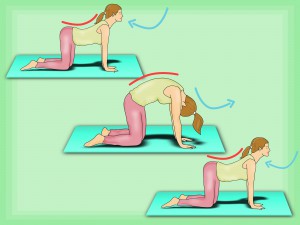
  1. Cat and Cow breathing exercise:

Cat-Cow-Pose-in-Vinyasa

This is a great yoga sequence that helps to improve circulation and clear congestion in the bronchial region and sinuses.

Benefits of Cat and Cow breathing exercise:

  • It stimulates digestion and, through muscular contraction and extension, pumps blood and lymphatic fluid through the thoracic muscle groups.
  • It increases cardiovascular fitness and helps stimulate the kidneys while relieving stress from the neck and shoulder area, and extending the lumbar spine region.

How to do it:

  • Rest your arms and knees on the floor. On the inhale breath, lift and expand the front chest up and forward, elongate your throat, draw your shoulders back, and curve your middle spine downwards as you tuck in your tailbone.
  • On a strong exhale, tuck your chin to your throat, pull in your belly, and arch your spine upwards (like an angry cat), rolling your shoulders forward and down to compress the front chest.
  • Inhale to Cow Pose and exhale to Cat Pose with a fluid up-and-down, wave-like motion of the spine and torso. Repeat the cycle 5 times.
  1. Kapal Bhati Pranayam:

kapal bhati

Kapal meaning skull, Bhati meaning shining and pranayama meaning breathing technique. It is a great breathing exercise and can improve bodily functions. This breathing exercise can remove 80% of the toxins in our body through the outgoing breath. Regular practice of Kapal Bhati Pranayama can help detoxify all the systems in our body.

Benefits of Kapal Bhati:

  • Helps in increasing the metabolic rate
  • Improves digestive functioning, absorption, and assimilation of nutrients
  • Improves blood circulation and nervous system functioning

How to do it:

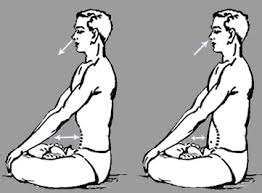
  • Sit at a comfortable place with your spine straight. Place your hands on the knees with palms open to the sky.
  • Take a deep breath in. As you exhale, pull your stomach in. Pull your navel in back towards the spine. Do as much as you comfortably can. You may keep your right hand on the stomach to feel the abdominal muscles contract.
  • As you relax the navel and abdomen, the breath flows into your lungs automatically.
  • Take 15-20 such breaths to complete one round of Kapal Bhati Pranayama.
  • After completing the round, relax with your eyes closed
  • Do two more rounds of Kapal Bhati Pranayam.

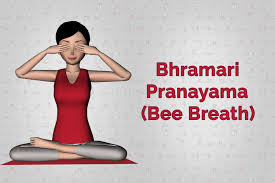
3.       Bee Breath (Bhramari Pranayam)
bee breathe

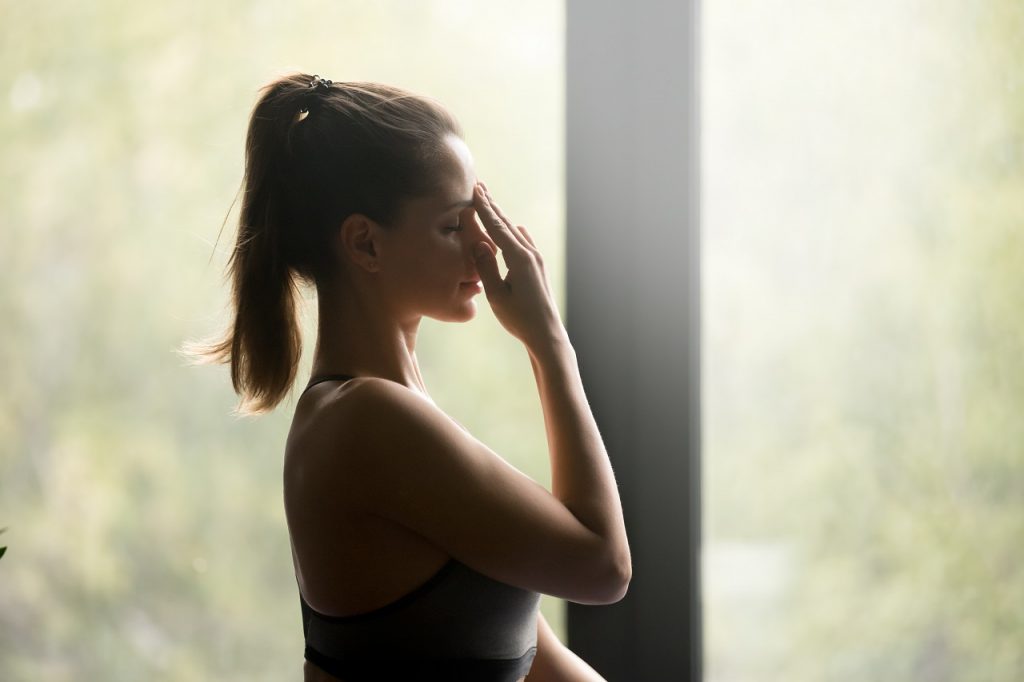
Bhramari Pranayama or the humming Bee Breath produces a sound similar to the humming of a bee. Bhramari comes from the Sanskrit word ‘Bramar’ which means a kind of black Indian bee. Bhramari pranayama has a soothing effect on the brain and calms the mind. Gives relief if you have a slight headache

 Benefits of Bhramari Pranayama (Bee Breath)

  • Helps mitigate migraines
  • Helps clear the nasal and ear canals
  • Clears the sinuses
  • Helps in improving concentration and memory
  • Effective in reducing blood pressure

How to do it:

  • Sit in a peaceful place with your spine erect
  • Place your index fingers on the cartilage between your cheek and ear
  • Take a deep breath in and as you breathe out, gently press the cartilage. You can keep the cartilage pressed or press it in and out with your fingers while making a loud humming sound like a bee
  • Breathe in again and continue the same pattern 4-5 times.

Precautions for doing Bhramari Pranayama

  • Ensure that you are not putting your finger inside the ear but on the cartilage
  • Don’t press the cartilage too hard. Gently press and release with the finger
  • While making the humming sound, keep your mouth closed
  1. Dog Breathing Exercise

Dog Breathing cleanses and detoxifies the body while expelling the toxins out from deep inside your tissues. The sharp contracting movements while practicing Dog Breathing strengthens the abdominal muscles.

Benefits of Dog breathing:

  • It beneficial in preventing fat deposition in the abdominal area,
  • Helps in improving the respiratory capacity and prevents the person from catching any respiratory disorder if practiced regularly.

How to do it:

  • Sit in Easy Pose with your chin in and your chest out. Stick your tongue all the way out and keep it out as you rapidly breathe in and out through your mouth. This is called Dog Breath. Continue this breath for 3-5 minutes.
  • To finish, inhale, and hold your breath for 15 seconds and press the tongue against the upper palate. Exhale. Repeat this sequence two more times.
  • Beginners can start with 15- 20 seconds and gradually reach up to 1 and then up to 5 minutes.
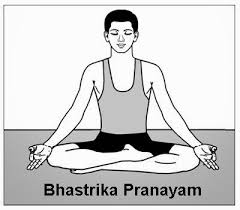
  1. Bhastrika Pranayama

bhastarika

It strengthens the immune power. Practice Bhastrika Pranayama for 10 minutes in the morning and evening on an empty stomach daily for one month.

Benefits of Bhastrika Pranayam

  • Helps reduce episodes of cold, cough and flu
  • Improves thyroid function and tonsils

How to do it:

  • Sit comfortably on the flat ground.
  • Take a deep breath through both nostrils and fill the lungs with air and then exhale with a hissing sound.
  • Inhale deeply and exhale completely.
  • Do this for 2 min to 5 minutes max

Precautions for Bhastrika Pranayama

Those suffering from lungs, heart problems and high blood pressure should practice slowly. High blood pressure patients should exhale through the mouth instead of the nose.

Incorporating these simple yet powerful breathing exercises into your daily routine can significantly boost your immunity and improve your overall health. Practice regularly and feel the transformative effects on your body and mind. For further information or guidance, reach out to our certified experts by subscribing to GOQii’s Personalised Health Coaching here.

#BeTheForce 

July 12, 2023 By Divya Thampi Leave a Comment

Three Powerful Relaxation Techniques For Immediate Relief From Stress

relief from stress

Tight deadlines, erratic working hours and sometimes being unable to manage the work-life balance can take a toll on your health. There are many factors that contribute to stress and if you find yourself feeling sad, anxious, angry, confused or scared without explanation, you are not alone. The specific reasons for stress are as varied as the people themselves but there’s hardly anyone who can escape the clutches of stress. How does one remain grounded and feel a sense of equanimity? Here’s help!

Powerful Relaxation Techniques You Can Practice 

Following are three go-to relaxation techniques that therapists use to help their clients relax. Not all techniques may work for everyone but at least one of these should work for you.

1. Progressive Muscle relaxation

This exercise is very effective in lowering stress levels and can also reduce physical problems like headaches or stomachaches that accompany feelings of stress. This practice also improves sleep. When you are stressed your muscles tighten without your conscious awareness. Regular practice of PMR helps you to become aware of the difference between a tensed muscle and a completely relaxed muscle, thus improving your ability to recognize your bodily response to anxiety and mitigate it.

  • Sit down on a chair with a backrest such that you are sitting erect but not tensed.
  • Close your eyes and take a few deep breaths.
  • Once you breath slows down, progressively tighten one muscle group (neck and shoulders or upper arm and lower arm) at a time for about 10-15 seconds.
  • Once the time is up, release the tension in the muscles completely with a long exhalation and observe the sensation in the relaxed muscles.
  • Continue this with each muscle group from head to feet.
  • You could do this 2-3 times a day and even before going to bed.
  • Avoid doing this with any part where there is a sprain or other injury.

relief from stress2. Diaphragmatic Breathing

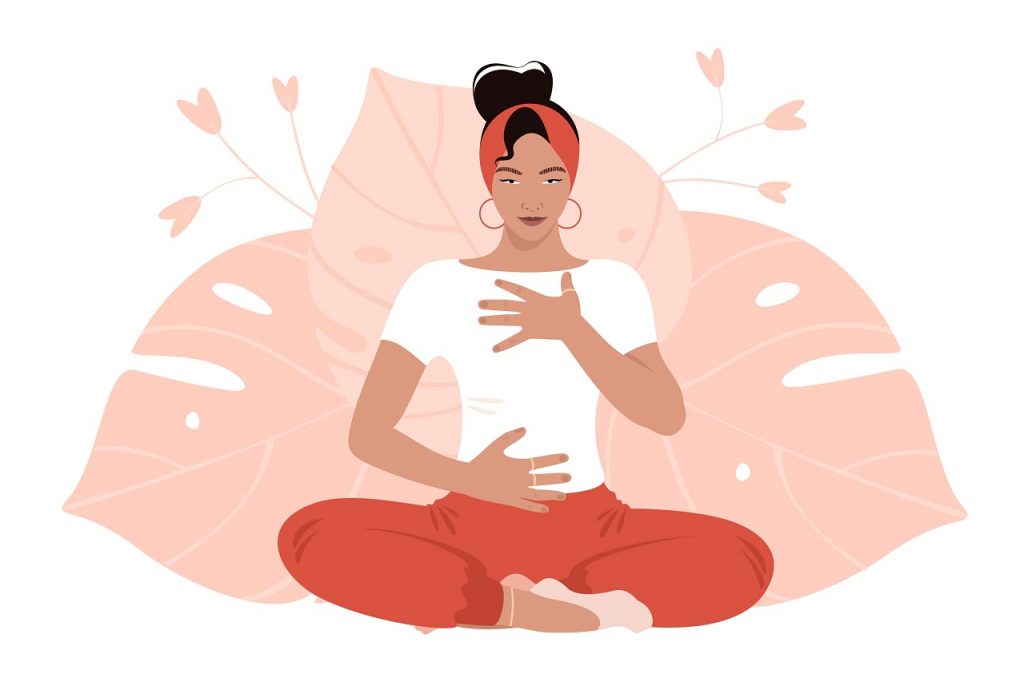
Also known as belly breathing, it is the optimal way of breathing as it actively engages your diaphragm. Belly breathing leads to improved oxygen flow to the rest of the body. This kind of breathing triggers a relaxation response by stimulating the vagus nerve, the longest nerve emanating from the brain. This nerve has a significant role to play in reducing blood pressure, heart rate, improving calmness, relaxation, and digestion. When engaging in breath based meditations most people practice belly breathing. Chest breathing is something we learned to do as a reaction to stress. For belly breathing, follow these steps:

  • Sit comfortably or lie flat on your bed or any other comfortable surface and relax your shoulders.
  • Place one hand on your chest and the other on your stomach.
  • Breathe in through your nose for 2-10 seconds (according to your capacity).
  • Feel the cool air moving through your nostrils into your abdomen, making your stomach inflate. During this type of breathing, make sure your stomach is moving outward while your chest remains relatively still.
  • Press gently on your stomach, and exhale slowly for about 2-10 seconds.
  • With every exhalation you will notice the stomach deflate under your palm
  • Repeat these steps several times and observe your body relax.

3. Guided Imagery

This is a focused practice that involves all or most of the 5 senses, to kindle calming responses in the mind and the body. Guided imagery uses imagination to take one to a calm, peaceful place, internally. This is a powerful tool that has a positive impact on blood pressure, breathing, oxygenation and heart rate. It can reduce pain and also improve the healing process of the body and mind. Our body reacts the same whether we experience something in reality or imagine it. So when you imagine yourself sitting in a beautiful green meadow and watching a clear stream of water flow over smoothened rocks, your body responds as if you were actually in the meadow.

  • Sit down or lie down comfortably and close your eyes.
  • Take a few deep breaths to help you relax.
  • Imagine a scene that is calm and peaceful. This could be a beach, a meadow, a valley, the mountains or a riverside, according to your preference.
  • Visualise the scene and slowly add some details, like a gentle breeze, fragrance of the grass, gurgling sound of water or the chirping of birds. Is the sky a clear blue or do you see fluffy white clouds?
  • It helps to visualise you walking through the scene and experiencing the beauty and serenity using all your senses.
  • And as you walk through the scene and go deeper you feel more and more relaxed.
  • Continue to breathe slowly and experience the sense of peace that envelops your body and mind. Think of a word or sound that you can use in the future to help you mentally return to this place.
  • When you feel ready, gently bring yourself back to the present. Tell yourself that you will feel relaxed and refreshed when this is done and slowly open your eyes. Notice how you feel right now.
  • You could also use a recorded guided imagery audio, which is generally available on many of the free versions of meditation apps.

If these techniques helped you, let us know in the comments below! Find more articles to help you manage stress here. For further guidance on managing stress and lifestyle, speak to a certified expert by subscribing to GOQii’s Personalised Health Coaching.

#BeTheForce 

May 9, 2023 By Megha Mahajan 4 Comments

Can Pranayama Techniques Cool Your Body During Summer?

Can pranayama cool your body during summer

Are you using lots of water, cool drinks, air-conditioning or beach parties to beat the heat this summer? Would you be interested to know about an easy and inexpensive way to chill instead? If yes, then read this article to learn three different breathing techniques to cool down your body. Yes! You read it right. All you need to do is breathe! Here’s how Pranayama techniques can cool your body during summer! 

Pranayama Techniques To Cool Your Body 

Try these breathing techniques and beat the heat naturally with Pranayama!

1. Increased Rate & Depth of Breathing

Preferably lie down in Shavasana and practice deep diaphragmatic breathing, allowing the belly to rise with each inhalation. Make sure to increase your breathing rate too. A modified version of doing it is panting like a dog. Just open your mouth and stick out your tongue as far as it can go, then start panting. Make sure that your stomach goes in or contracts immediately with each exhalation. 

Why does it work?
We sweat a lot during the summers. The evaporation of sweat cools down our body. In the same ways, with an increased rate and depth of breathing, we exhale a lot more water vapour. It enhances the cooling effect of the body. Now you know why dogs don’t sweat? They stick out their tongue and release the heat. More breaths and less movement ensures the double advantage of cooling your pace.

2. Sheetali Pranayama

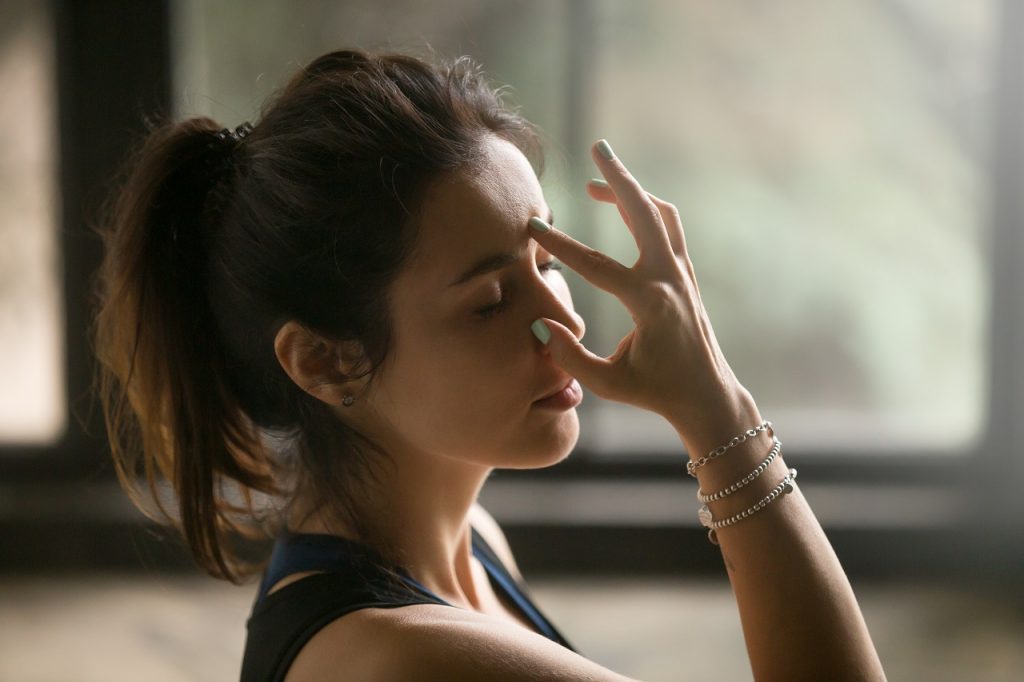
Stick your tongue out and roll it like a straw. Inhale air through this straw as if you were sipping in a cool beverage on a hot summer day. Exhale through the nose. Sheetkari pranayama is a modified version of Sheetali, which can be done if you are unable to roll your tongue. Here you have to open your mouth with clenched teeth to inhale through them and exhale through the nose.

Why does it work?
When we breathe in through the nose, the air gets warmed up on its path to the lungs to match the internal body temperature. While we breathe in through the mouth, this doesn’t happen. On the contrary, the air gets moistened when we inhale through the mouth, enhancing its cooling effects.

3. Left Nostril Breathing

Use your right-hand fingers to block the right nostril and breathe through the left nostril. An easier way to activate the left nostril breathing is to insert a cotton plug in the right ear.

Why does it work?
Our body temperature is maintained by the movement of air through the right and left channels. The right channel is associated with sun, heat and activity. Whereas the left channel is associated with the moon, cool and rest. It is like the accelerator and brake pedals of a car. Applying the brakes gently slows down and cools off the overheated car engines. Similarly, when we deliberately breathe in through the left nostril, the brakes get applied to activate the parasympathetic nervous system to produce a cooling and calming effect on the body.

And there it is! We hope these 3 pranayama techniques will help you cool your body during these hot summer days. Try them and let us know your experience in the comments below.

Get more summer tips here or you can also speak to an expert by subscribing to GOQii’s Personalised Health Coaching here.

#BeTheForce 
August 27, 2021 By Srini Leave a Comment

Breathing #2: Why Is Abdominal Breathing Important?

abdominal breathing

In my previous article, I spoke about breathing through the nose. In this article, let me take it a bit deeper and speak about abdominal breathing. It is observed that many of us breathe through our chest and our breathing is therefore shallow. 

This issue compounds when you are awake, in the office, working on something important, tense, or under stress and hyperventilate. Shallow breathing compounded with hyperventilation leads to SUBOPTIMAL gas exchange. 

We take so much care about nutrition and food, but we need to know how to burn it. Same as filling Premium Petrol, as well as knowing optimal driving techniques! Unburnt or sub-optimally burnt food is responsible for weight gain, diabetes and so many chronic lifestyle illnesses. 

The goal of good nutrition is that it is absorbed well and burnt well. So, right breathing is equally, if not more, important than eating the right food. 

Take this simple test to know how you breathe

  • Lie on your back with your knees bent
  • Place one hand or a small book on your chest and the other on your stomach.
  • Breathe normally, observe what is rising – the chest or the abdomen 

Observe which is rising up and down. If it is your chest, you are shallow breathing and if it is the abdomen more than the chest, you may be closer to what is the right breathing.

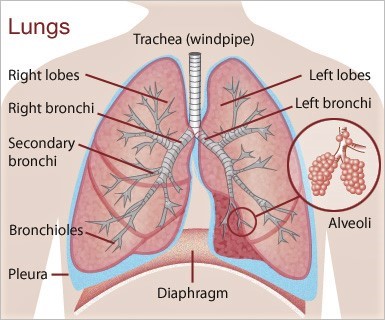
See the picture below to understand why this is important

Lungs are narrow at the top and wide at the bottom – sort of “Inverted V” shape. The blood flow at the bottom of the lungs is approx. 10 times than the top.

Most of the bunch of grapes (alveoli) which are the instruments of gas exchange (topic to be explained later) is at the bottom of the lungs. Now, if you breathe through your chest, you are leaving more than 60% of your lung’s “installed capacity” unused. 

CFOs will know that unused installed capacity is costly! Diaphragmatic breathing gives you High Return on Inhaled Air (investment)! Simple. You can observe animals breathing, for example observe a Cow – they breathe through the abdomen only. Somewhere in evolution, the modern human has forgotten the art of breathing.

The Additional Advantages Of Abdominal Breathing 

  • Abdomen movement helps the movement of lymphatic fluids – unlike the blood, there is no pump for lymphatic fluids. Only muscular movement acts as a pump
  • Abdomen movement also continuously massages the parts of stomach like liver and intestine
  • Abdominal movement makes it easy and lighter for your heart to pump blood

Shallow breathing leaves air behind in the lower parts of the lung, making it vulnerable to easy infection. So, why don’t we use the abdomen for breathing and benefit from optimal gas exchange which in turn helps in supplying efficient fuel (oxygen) to burn the food you are eating?

If you want to make diaphragmatic breathing into a habit, you can follow Conscious Breathing classes by Anders Olsson or Wim Hof method (which I follow) or from any Yoga Guru.

We hope this article on abdominal breathing helps you. Do leave your thoughts in the comments below. For more on breathing, check out Healthy Reads or get these tips directly from your GOQii Coach by subscribing to personalized coaching here: https://goqiiapp.page.link/bsr 

Breathe Right & #BeTheForce 

  • « Previous Page
  • 1
  • 2
  • 3
  • 4
  • 5
  • …
  • 13
  • Next Page »

Search

Recent Posts

  • PCOS and Anxiety: Discover Relief with the 54321 Technique
  • Navigating the Maze of Nutrition: Finding Clarity Amidst Confusion
  • Get children active and keep them healthy
  • What Gestational Diabetes Can Do To You & Your Unborn Child
  • Breathing – A Forgotten Art

Stay Updated

Archives

  • December 2025 (4)
  • November 2025 (15)
  • October 2025 (20)
  • September 2025 (6)
  • August 2025 (6)
  • July 2025 (12)
  • June 2025 (18)
  • May 2025 (16)
  • April 2025 (23)
  • March 2025 (23)
  • February 2025 (22)
  • January 2025 (26)
  • December 2024 (26)
  • November 2024 (25)
  • October 2024 (22)
  • September 2024 (24)
  • August 2024 (31)
  • July 2024 (21)
  • June 2024 (26)
  • May 2024 (31)
  • April 2024 (27)
  • March 2024 (29)
  • February 2024 (26)
  • January 2024 (25)
  • December 2023 (15)
  • November 2023 (11)
  • October 2023 (22)
  • September 2023 (22)
  • August 2023 (20)
  • July 2023 (22)
  • June 2023 (24)
  • May 2023 (24)
  • April 2023 (24)
  • March 2023 (23)
  • February 2023 (20)
  • January 2023 (16)
  • December 2022 (12)
  • November 2022 (15)
  • October 2022 (15)
  • September 2022 (12)
  • August 2022 (10)
  • July 2022 (17)
  • June 2022 (11)
  • May 2022 (10)
  • April 2022 (6)
  • March 2022 (6)
  • February 2022 (13)
  • January 2022 (12)
  • December 2021 (7)
  • November 2021 (3)
  • October 2021 (6)
  • September 2021 (3)
  • August 2021 (8)
  • July 2021 (7)
  • June 2021 (15)
  • May 2021 (16)
  • April 2021 (10)
  • March 2021 (7)
  • February 2021 (4)
  • January 2021 (4)
  • December 2020 (3)
  • November 2020 (4)
  • October 2020 (10)
  • September 2020 (3)
  • August 2020 (3)
  • July 2020 (2)
  • June 2020 (4)
  • May 2020 (10)
  • April 2020 (12)
  • March 2020 (10)
  • February 2020 (4)
  • January 2020 (4)
  • December 2019 (3)
  • November 2019 (7)
  • October 2019 (5)
  • September 2019 (4)
  • August 2019 (9)
  • July 2019 (9)
  • June 2019 (11)
  • May 2019 (4)
  • April 2019 (9)
  • March 2019 (8)
  • February 2019 (9)
  • January 2019 (8)
  • December 2018 (9)
  • November 2018 (3)
  • October 2018 (3)
  • September 2018 (5)
  • August 2018 (10)
  • July 2018 (6)
  • June 2018 (13)
  • May 2018 (8)
  • April 2018 (18)
  • March 2018 (9)
  • February 2018 (8)
  • January 2018 (15)
  • December 2017 (12)
  • November 2017 (19)
  • October 2017 (13)
  • September 2017 (15)
  • August 2017 (4)
  • July 2017 (8)
  • June 2017 (7)
  • May 2017 (6)
  • April 2017 (8)
  • March 2017 (6)
  • February 2017 (7)
  • January 2017 (9)
  • December 2016 (10)
  • November 2016 (7)
  • October 2016 (7)
  • September 2016 (7)
  • August 2016 (11)
  • July 2016 (9)
  • June 2016 (9)
  • May 2016 (12)
  • April 2016 (17)
  • March 2016 (17)
  • February 2016 (8)
  • January 2016 (6)
  • December 2015 (2)
  • November 2015 (9)
  • October 2015 (7)
  • September 2015 (9)
  • August 2015 (11)
  • July 2015 (9)
  • June 2015 (12)
  • May 2015 (9)
  • April 2015 (13)
  • March 2015 (8)
  • February 2015 (5)
  • January 2015 (12)
  • December 2014 (14)
  • November 2014 (11)
  • October 2014 (6)
  • September 2014 (13)
  • August 2014 (12)
  • July 2014 (6)
  • June 2014 (2)
  • May 2014 (7)
  • April 2014 (5)

From “Laddu Nawin” to Fit and Fierce: How a 25-Year-Old Insurance Advisor Shed 20 Kilos and Gained His Life Back

When 25-year-old Nawin Yadav from Hyderabad walked into his office every morning, he carried more than just his files and policy papers. He had the weight of fatigue, sluggish energy, and an ever-growing belly that was becoming the butt of jokes. “People … [Read More...]

“I’ve Challenged Myself to Live 100 Years” – The Story of Chandubhai Savani’s Second Chance at Life

At 67, most people start slowing down. Not Chandubhai Savani. A resident of Surat, Chandubhai, thought life was on track. “My life was going well till I had my bypass surgery,” he says. That surgery, back in 2021, was a wake-up call.  Medication was routine, but exercise wasn’t. His diet? What he calls ‘normal.’ “I […]

From Shimla’s Slopes to Chandigarh’s Sidewalks: Surinder Kaur Bhalla’s Journey from Chaos to Control

Some journeys start with a plan. Others begin with a stumble literally. Surinder Bhalla, a government professional, born and raised in the scenic hill town of Shimla, had always lived a life of movement. “In Shimla, you walked everywhere,” she reflects. “Walking was never an exercise. It was just life.” But after shifting to Chandigarh, […]

Ananda Mukherjee Health Story

From Terminal Illness To Complete Wellness! Ananda Mukherjee Health Story

As we observe World Cancer Day under the powerful theme ‘United by Unique’ (2025-2027)**, we are reminded that every individual’s journey with cancer is distinct, yet united by shared resilience, hope, and the collective fight against this disease. This theme places people at the centre of care and their stories at the heart of the […]

  • HOME
  • HEALTHY LIVING
  • FITNESS
  • HEALTHY RECIPES
  • USER STORIES
  • KARMA
  • BUY GOQii

Copyright ©2016 GOQii