GOQii

Blog

  • HOME
  • HEALTHY LIVING
  • FITNESS
  • HEALTHY RECIPES
  • USER STORIES
  • KARMA
  • BUY GOQii

July 7, 2024 By Navnee Garg 4 Comments

Why Chocolate Is So Good For You | World Chocolate Day

world chocolate day

Whatever be the season, whatever be the reason, the very thought of chocolate can make us lick our lips in eagerness. The sweetest day of the year, World Chocolate Day, sometimes called International Chocolate Day, is celebrated annually on July 7.

This day gives us the excuse to indulge in our favorite chocolate, be it milk, hot, a candy bar, a cake, brownies or something layered in chocolate. The world loves chocolate for there’s nothing a chocolate can’t do. It can lift your senses, turn your frown around, fix a heartache and can possibly turn a sad day into a good one!

Whether you’re happy, sad, celebrating, want to gift something- chocolates are what most of us prefer!

Sweet History of Chocolate 

Chocolate may be the “food of the gods,” but for most of its 4,000 year history, it was actually consumed as a bitter beverage rather than the sweet edible treat it is known as today. The creation of the first modern chocolate bar is credited to Joseph Fry, who in 1847 discovered that he could make a moldable chocolate paste by adding melted Cocoa butter back into Dutch Cocoa. By 1868, a little company called Cadbury was marketing boxes of chocolate candies in England.

Science Behind Chocolates 

We all remember the epic line from Forrest Gump – “Life is like a box of chocolates! You never know what you’re gonna get.” However, for chocolatiers, this statement may suggest more than chocolate variety. At the microscopic level, there is more than what meets the eye when it comes to the chocolate we consume.

Chocolate has its own temper, considered a polymorph, which means it can take on different shapes when it solidifies from a liquid form. It gives you the meltdown, to get into the desired shape and flavor. There are various types of chocolate – dark, milk, white and ruby being the most recent.

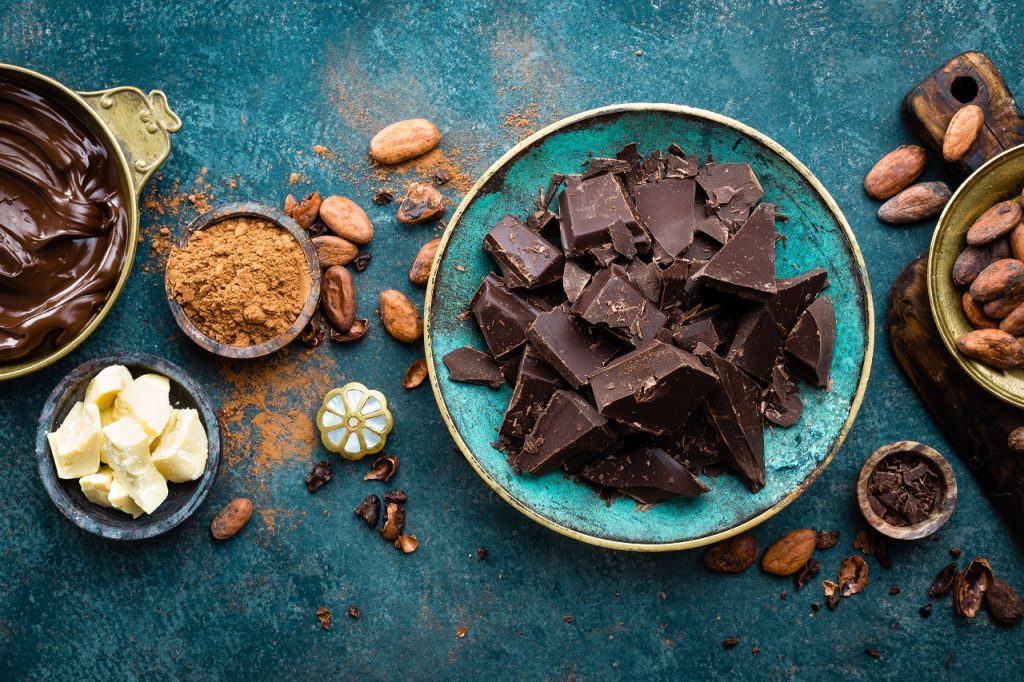
world chocolate day 2These are made with varying proportions of chocolate liquor, cocoa solids, cocoa butter, milk and sugar. Cocoa is a source of flavonoids and alkaloids such as theobromine, phenethylamine and caffeine. These acts as stimulants to the central nervous system.

The Hormonal Connect 

We crave chocolate because it is good! It tastes good, it smells good and it feels good when it melts in your mouth! And all of these ‘feelings’ arise because our brain releases chemicals in response to each chocolaty experience. The experience of eating chocolate results in feel-good neurotransmitters Dopamine.

Chocolate triggers the brain to release endorphins – hormones that cause your pulse to speed up and give you a pleasant high feeling, rather like being in love. Theobromine and Phenylethylamine in cocoa are also thought to affect levels of serotonin. This can boost your mood and ease depression.

We have to be grateful to the Mayans and the Aztecs for discovering the delight that the cocoa trees have to offer!

Feel like eating one? Go ahead! Today is World Chocolate Day and you must reap the benefits of this awesome treat to the senses. You can learn more about the benefits chocolate offers you here.

Do leave your thoughts or your best chocolate moments in the comment section below!

#BeTheForce 

July 3, 2024 By Geetika Patni 3 Comments

Mindful Eating: Connect Back with your food – Part 5

mindful-eating-1

I hope by now, you are all well aware of the do’s and don’ts of Mindful Eating through the series of four blogs. I have talked about the concept of Mindful Eating and how Mindless Eating can be harmful. I discussed why  should you eat slowly to enjoy your meal (https://goqii.com/blog/mindful-eating-slow-down-and-enjoy-your-meal-2/) and shared some tips on how can you eat slowly. Then I took you through portion control and how to be wise (https://goqii.com/blog/mindful-eating-control-portions-and-be-wise-part-3/). In the fourth blog we talked of emotional eating and how it can be avoided (https://goqii.com/blog/mindful-eating-mind-your-mood-part-4/). In the last of the blog in this 5-Part series on Mindful Eating, I will talk about connecting back with food and how one can do that.

Mindful Eating is eating with attention and right intention. It is eating with the intention to care for yourself. It is also eating with the attention necessary for noticing and enjoying your food and its effects on your body.

If you choose to eat each and everything you can lay your hands on, you indeed are disconnected from your food-the very ingredient of life that keeps you alive and going. And, when you are disconnected from your nutrition, you make yourself vulnerable to a host of illnesses, life-threatening disorders, and loss of longevity.

I was wondering-what makes us disconnected from our nutrition as we grow? For I am certain we were connected with our food when we were children (as that is how we learned that seeds sitting in an apple core can grow into an entirely new apple tree! And, that the water we drink doesn’t come from tap but, from a faraway river channel).

So, I have come to conclude that with time, our body just repeats what it has done previously as trained by the mind. These are nothing but habits. And unless our mind makes a choice, the body will not break the pattern even if it is a potentially harmful one. In terms of eating, since it’s the most repeated skill of all human behaviours, our mind has pretty much trained us to ignore eating and be on an autopilot mode while grabbing a bite. Thus, we don’t ask ourselves anymore-where do these strawberries come from? Or what goes into making a Pizza?

If we can turn around our ways and connect back with our meals, learning about the foods that will help us and those that will not, and make a conscious choice to pick the right dish at the right time by breaking the habit of eating everything at any time, a lot of our future troubles will get resolved. Turning into a mindful eater and making an informed choice-an intention to care for yourself-is what it will take.

To help you get connected, I am sharing some simple tips here with you today

mindful eating-connect

 1) Connect right from grocery shopping: Most of us go grocery shopping on weekends. And there is usually a long queue at the billing counter. In a hurry to finish our job, we just throw into our cart whatever is more attractive or convenient-which is mostly processed foods. To connect with your food, shop smart at the store itself.

 i) Fill up your cart from produce section first. Once you have half filled up your cart with fruits and veggies, you’ll be less tempted to shop for processed and ready-to-eat meals.

ii) Read ingredient list and nutritional labels. Choose food products with short ingredient list, ingredients that you can pronounce, with 0 trans fats, no sugar or if at all, appearing last on the list, mentions whole grain composition, small per serving calories (and not per 100gm) and has fiber serving size >2 units. If a food product matches these criteria, it is worthy to be nourishing you.

2) Be a food critic: You don’t need to write a review or become a fussy eater. But learn the art of analyzing your food dishes. What are you eating? What are the ingredients that go into this dish? How is it prepared? How’s the aroma, texture, color of the meal? How does it make you feel? Knowing the answers to all of these questions will help you know why you eat what you eat and thus will help you turn into a mindful eater.

i) One player once mentioned to me he can’t stop eating ‘vada-pao’ the fried snack tucked between white flour bread. On my insistence, he made the attempt to analyze how he feels while having the snack. To his own surprise, he found out that it was only the act of tearing the bread apart and tucking in the fried snack, which appealed to him. He didn’t really enjoy the taste of the snack as much as he liked the procedure of eating it!

So to know yourself and your eating habits better, be a food critic.

3) Make an attempt to learn about your nutrition

# Know major food groups like carbs, proteins and fats and the minor but essential ones like vitamins and minerals. Know which food dishes you commonly eat fall in these categories and influence you.

# Know alkaline and acidic foods- because our blood pH is slightly alkaline (7.3-7.4) and to keep our system running efficiently, we need to maintain this alkaline pH. Your food choices will play an important role in this physiological action.

# Know various benefits of different herbs-cinnamon, turmeric, coriander, cloves, ginger, garlic, fennel, cardamom, coriander, saffron, fenugreek, garam masala, varieties of pepper, and so on. You have them in each and every single dish. They deserve your attention.

# Know how to eat your fruits right, what time of the day and how much and in what combination is good enough.

# Know combination of foods that can enhance each other’s nutritional values-like Vitamin C with Iron rich foods, Vitamin D and calcium rich foods and know what food combinations can interfere with each other’s absorption in the body like Iron and Calcium heavy foods don’t go well together.

# Know what meals are best options for pre and post workout nutrition

# Learn why you should not eat white sugar, white flour or white salt. Or have an aerated drink ever

# Know replacements for sugar and white salt and what you can do to beat down your sugar cravings.

# Understand why dark chocolates or nuts are good for you despite being calorific or why eating a healthy ‘mukhwas’ (mouth freshner) after a meal can be a good habit.

And, there are many more such small and simple things to know about your everyday nutrition. Keep asking your coach or make an attempt to read and learn yourself.

Mindful eating is much more than learning about your food or food choices alone or practicing slow eating, in the moment eating itself. It encompasses having a relationship with your food wherein you respect your meals and feel gratitude towards them.

To sum up, mindful eating is a way of nurturing your physical self, harmonizing your mental state, and satisfying your soul.

If you have been missing out on mindful eating, get on the mindful eating wagon now! If you found this information valuable, share your thoughts in the comments below and for more insights, check out Healthy Reads or  for further guidance speak to a certified expert by subscribing to GOQii’s Personalised Health Coaching here.

#BeTheForce

June 27, 2024 By Luke Coutinho Leave a Comment

Your Gut Health: Why It Matters More Than You Think

You would have heard of the saying, ‘Almost all diseases begin in the gut’. Well, it’s true. Maintaining the right ‘microflora’ (balance of good bacteria) in the gut is crucial for great health, immunity and even preventing, healing and recovering from serious diseases like cancer.

Your intestines (gut) contain pounds of good bacteria that help with the absorption of nutrients from the food you eat. These ‘good bacteria’ determine the strength of your immunity, regulate weight loss, aid recovery, support colon health, manage body toxicity, and handle several other functions.

The gut also contains yeast (fungals), which, if exceeds in number compared to the good bacteria, cause serious digestive issues, affect nutrient assimilation, and can cause leaky gut, vaginal rashes, IBS and other bowel and GI tract disorders. It is crucial to maintain the proportion of good bacteria, especially in children.

A shortage of good bacteria can lead to allergies, skin problems, headaches, migraines, inability to lose weight, and even contribute to fat accumulation. Energy levels can fall when there is an imbalance.

Everything we eat and drink passes through the gut along the gastrointestinal (GI) tract. This tube-like GI tract, lined with a thin, sticky mucous, is embedded with millions of bacteria that live, grow, and metabolize (digesting and absorbing) in a complex ecosystem comprised of both beneficial and harmful bacteria.

Maintaining gut health is one of the most important and least addressed aspects of overall health. Many lifestyles choices deplete the gut of the ‘good’ bacteria’, leading to health problems ranging from acne to deadly diseases like cancer.

If you have more bad bacteria (fungus) than good bacteria in your gut, even the healthy food you eat will not be assimilated the right way. Even if you eat clean, organic, or expensive foods, it does not matter if your gut microflora is out of balance. This is where probiotics come in.

Probiotic bacteria do several things that contribute to good health and immunity.

Their most basic function is to fight harmful foreign substances that enter the body by detoxifying them and easing their elimination. Probiotics can prevent the growth of harmful bacteria, which thrive and grow within a neutral pH environment, by producing organic acids such as acetic and lactic acids that, in turn, lower the pH of the large intestine.

This lower pH also prevents the metabolism of cholesterol and bile acids in the colon. Since cholesterol and bile metabolites act as cancer-causing agents, they can play an important role in the prevention of cancers of the GI tract and other organs as well. These helpful bacteria can even lower serum cholesterol levels along with cardiovascular disease risk by preventing the activity of an enzyme involved in the synthesis of cholesterol.

Inside the gut are about 100 trillion live microorganisms that promote normal GI (gastro intestinal tracts) function, protect the body from infection, and regulate metabolism and the mucosal immune system. They comprise more than 75% of the immune system.

Also important is their role in maintaining and protecting the GI barrier. An intact GI barrier maintains gut health, while a problem with its microbiota composition will affect the body’s defense systems and can create a condition known as leaky gut syndrome, which can compromise gut health and lead to diseases such as inflammatory breast cancer, obesity, chronic fatigue syndrome, and depression.

Your diet is the most important element for building gut health. Include curds or probiotic supplement if you are vegan or cannot have yogurt. Some top natural probiotic-rich foods include:

  • Yogurt (plain kind)
  • Miso
  • Sauekraut
  • Kimchi
  • Kefir
  • Kombucha tea
  • Pickled gherkins
  • Spirulina
  • Chlorella

Ensure your diet is rich in complex carbs, fiber, fruits, vegetables, and omega – 3, with a healthy water intake and low intake of sugar, processed foods and red meat.

Avoid sodas, processed foods, and sugar as they quickly depletes the gut of good bacteria, dropping immunity almost instantly, making it the worst thing your child or you can consume. I constantly tell parents that giving your child aerated drinks is worse than drugs.

Your gut health plays a pivotal role in your overall well-being. By maintaining a balanced gut microflora through a healthy diet and probiotics, you can prevent diseases, boost immunity, and ensure optimal nutrient absorption. Prioritize your gut health to experience better health and vitality.

We hope this article helps you. For further information or guidance, reach out to our certified experts by subscribing to GOQii’s Personalised Health Coaching here.

#BeTheForce

Disclaimer: The information provided in this blog is for general awareness and educational purposes only. It is not intended to replace professional medical advice, diagnosis, or treatment. Always consult a qualified healthcare provider for personalised medical guidance or concerns related to your health.

June 23, 2024 By Geetika Patni 3 Comments

Mindful Eating: Mind your Mood – part 4

emotional-eating

My previous three blogs discussed the concept of Mindful eating and how mindless eating can be harmful. In my second blog, I talked about why you should eat slowly to enjoy your meal and shared some tips on how to do so here. The third blog covered portion control and how to be wise with it here. Continuing in this 5 part series on Mindful Eating, today, I will take you through how stress eating can be harmful and should be avoided.

Have you noticed why buttered popcorn sells out quickly during a movie intermission? Or why you might empty an entire packet of Oreos or chips when you’re feeling emotional? That’s because certain foods can be emotionally comforting. In most cases, these comfort foods are high in fat and sugar and low in nutrition. They are comforting because they trigger neurons in the brain that create a false perception of well-being.

Turning to food to make you feel better is ‘Emotional eating’.

emotional-vs-plysical-hunger

It’s not necessarily bad to eat food from time to time as a pick-me-up meal, a reward treat, or a celebration feast. However, if food becomes your primary coping mechanism for anxiety, loneliness, boredom, anger, frustration, or exhaustion, and your first impulse when upset is to dig into a tub of ice cream, it calls for your attention. Feeding your emotion with food may feel good at the moment but doesn’t resolve the underlying problem. Often, you may end up feeling worse later due to unnecessary calorie bingeing and the physical havoc it wreaks on your metabolism.

The guilt, feeling powerless over emotions, and impulse eating leads to an unhealthy cycle, causing physical and emotional turmoil. Despite the difficulty, it is possible to make a positive change. All it requires is some effort on your part.

To help you break this cycle and mindless eating habit, here are a few pointers that work best when followed in order:

  1. Be Aware: Acknowledge your habit of emotional eating. If your near or dear ones have pointed it out or you know it by yourself, take it seriously! Awareness is the first positive step. Identify the emotions that lead to binge eating. Are they positive like exhilaration, victory, or success? Or negative like frustration, loneliness, anxiety, depression, anger, or boredom? Know your comfort foods, whether sweets, chocolates, ice creams or salty ones like chips, fries or some junk food like pizza, burger, maggi etc. that drive your emotional cravings. You may come up with multiple choices for multiple emotions and it is absolutely okay. You may also notice that your choice of comfort food is entirely different from others. So accept your unique patterns.

Tip: Maintain a food journal to help identify your emotions and associated foods, or use the food log feature in the GOQii app.

  1. Know your Hunger cues: Identify why you wish to eat. Hunger cues can be physical or emotional. If your stomach is growling and it’s been a few hours since your last meal, eating a salad or any other meal will suffice. But if you can postpone your hunger, you are likely to stop once you feel full, without guilt. This is true physical hunger.

Contrarily, if your hunger is sudden, urgent, and you crave specific foods like cookies or chips, or specific types of foods like sweets and fried foods and you are likely to over consume, feeling guilty later, you are about to be snacking out of false hunger, then the head hunger is generated out of emotional cues.

Tip: Next time you reach out for a snack, check if it’s driven by physical or emotional hunger.

  1. Cross check: Once you’ve identified your hunger cue, ask yourself why you are eating. Take a deep breath and get a clear answer. This helps put a check before the binge. If you’re reaching for a snack and unsure if it’s emotional, just ask yourself, “Why am I eating this?” Pause and reflect.

Tip: If it’s justified hunger, grab something healthy-roasted or steamed. If  it’s emotional, respectfully place the dish aside.

  1. Distract: Change your location once you put the dish aside. Go to another room or head outdoors. Find an alternative to food to fulfill your emotions. If lonely, talk to someone. If depressed or frustrated, watch a comic movie. For exhaustion, get a foot massage or take a warm bath. For anger, let it out or write it out. For anxiety, listen to your favorite music. If happy and wanting to reward yourself, indulge in your hobby.

Tip: You can also do some window shopping, reading, walking, exercising, meditating, or taking a nap which will give time to pass off the emotional storm and make you a stronger self- one who has more willpower to cope up with his/her feelings.

  1. Giving In: Emotional eating is an automatic and mindless habit. Sometimes, before you know it, you’ve eaten half a tub of ice cream. If you can pause for a moment when hit with a craving, you can make a different decision next time.

Tip: When you feel the urge to give in, pause and reflect. Don’t shut out the craving. Wait and consider what’s going on in your head and how you feel. Even if you eat afterward, this reflection helps you understand why and prepares you for a better response next time.


Understanding-Hunger-Physical-vs-Emotional
If you approach your feelings with kindness, reining in emotions is not a difficult task.

Listen to your emotions, accept them even if they are negative and when you do so, your body will understand that it doesn’t need to overeat to comfort itself and/or protect itself from powerful feelings.

Learning to mind your mood this way enables you to repair your emotional responses and physical fitness. Seeking help from experts or a personal coach can bring a turning point. Reach out if you need help to enjoy a better physical and mental health.

In the last blog of the 5 part series, I will discuss connecting with your meals and share tips on transforming your relationship with food for the better.

To be continued……………

#BeTheForce

  • « Previous Page
  • 1
  • …
  • 9
  • 10
  • 11
  • 12
  • 13
  • …
  • 68
  • Next Page »

Search

Recent Posts

  • The Longevity Bank Account: Daily Deposits, Daily Withdrawals
  • 7 Nutrition Tips For A Healthy Winter
  • 5 Interesting Ways To Include Citrus Fruits In Your Diet
  • Muscle: Your Body’s Most Powerful Tool for Longevity and Healthy Ageing
  • Ideal Weekly Workout Routine For Beginners

Stay Updated

Archives

  • January 2026 (9)
  • December 2025 (19)
  • November 2025 (15)
  • October 2025 (20)
  • September 2025 (6)
  • August 2025 (6)
  • July 2025 (12)
  • June 2025 (18)
  • May 2025 (16)
  • April 2025 (22)
  • March 2025 (23)
  • February 2025 (22)
  • January 2025 (25)
  • December 2024 (22)
  • November 2024 (25)
  • October 2024 (22)
  • September 2024 (24)
  • August 2024 (31)
  • July 2024 (21)
  • June 2024 (26)
  • May 2024 (31)
  • April 2024 (27)
  • March 2024 (29)
  • February 2024 (26)
  • January 2024 (23)
  • December 2023 (15)
  • November 2023 (11)
  • October 2023 (19)
  • September 2023 (22)
  • August 2023 (20)
  • July 2023 (22)
  • June 2023 (24)
  • May 2023 (24)
  • April 2023 (24)
  • March 2023 (23)
  • February 2023 (20)
  • January 2023 (15)
  • December 2022 (11)
  • November 2022 (15)
  • October 2022 (15)
  • September 2022 (12)
  • August 2022 (10)
  • July 2022 (17)
  • June 2022 (11)
  • May 2022 (10)
  • April 2022 (6)
  • March 2022 (6)
  • February 2022 (13)
  • January 2022 (12)
  • December 2021 (7)
  • November 2021 (3)
  • October 2021 (6)
  • September 2021 (3)
  • August 2021 (8)
  • July 2021 (7)
  • June 2021 (15)
  • May 2021 (16)
  • April 2021 (10)
  • March 2021 (7)
  • February 2021 (4)
  • January 2021 (4)
  • December 2020 (3)
  • November 2020 (4)
  • October 2020 (10)
  • September 2020 (3)
  • August 2020 (3)
  • July 2020 (2)
  • June 2020 (4)
  • May 2020 (10)
  • April 2020 (12)
  • March 2020 (10)
  • February 2020 (4)
  • January 2020 (4)
  • December 2019 (3)
  • November 2019 (7)
  • October 2019 (5)
  • September 2019 (4)
  • August 2019 (9)
  • July 2019 (9)
  • June 2019 (11)
  • May 2019 (4)
  • April 2019 (9)
  • March 2019 (8)
  • February 2019 (9)
  • January 2019 (8)
  • December 2018 (9)
  • November 2018 (3)
  • October 2018 (3)
  • September 2018 (5)
  • August 2018 (10)
  • July 2018 (6)
  • June 2018 (13)
  • May 2018 (8)
  • April 2018 (18)
  • March 2018 (9)
  • February 2018 (8)
  • January 2018 (15)
  • December 2017 (12)
  • November 2017 (19)
  • October 2017 (13)
  • September 2017 (15)
  • August 2017 (4)
  • July 2017 (8)
  • June 2017 (7)
  • May 2017 (6)
  • April 2017 (8)
  • March 2017 (6)
  • February 2017 (7)
  • January 2017 (9)
  • December 2016 (10)
  • November 2016 (7)
  • October 2016 (7)
  • September 2016 (7)
  • August 2016 (11)
  • July 2016 (9)
  • June 2016 (9)
  • May 2016 (12)
  • April 2016 (17)
  • March 2016 (17)
  • February 2016 (8)
  • January 2016 (6)
  • December 2015 (2)
  • November 2015 (9)
  • October 2015 (7)
  • September 2015 (9)
  • August 2015 (11)
  • July 2015 (9)
  • June 2015 (12)
  • May 2015 (9)
  • April 2015 (13)
  • March 2015 (8)
  • February 2015 (5)
  • January 2015 (12)
  • December 2014 (14)
  • November 2014 (11)
  • October 2014 (6)
  • September 2014 (13)
  • August 2014 (12)
  • July 2014 (6)
  • June 2014 (2)
  • May 2014 (7)
  • April 2014 (5)

From “Laddu Nawin” to Fit and Fierce: How a 25-Year-Old Insurance Advisor Shed 20 Kilos and Gained His Life Back

When 25-year-old Nawin Yadav from Hyderabad walked into his office every morning, he carried more than just his files and policy papers. He had the weight of fatigue, sluggish energy, and an ever-growing belly that was becoming the butt of jokes. “People … [Read More...]

“I’ve Challenged Myself to Live 100 Years” – The Story of Chandubhai Savani’s Second Chance at Life

At 67, most people start slowing down. Not Chandubhai Savani. A resident of Surat, Chandubhai, thought life was on track. “My life was going well till I had my bypass surgery,” he says. That surgery, back in 2021, was a wake-up call.  Medication was routine, but exercise wasn’t. His diet? What he calls ‘normal.’ “I […]

From Shimla’s Slopes to Chandigarh’s Sidewalks: Surinder Kaur Bhalla’s Journey from Chaos to Control

Some journeys start with a plan. Others begin with a stumble literally. Surinder Bhalla, a government professional, born and raised in the scenic hill town of Shimla, had always lived a life of movement. “In Shimla, you walked everywhere,” she reflects. “Walking was never an exercise. It was just life.” But after shifting to Chandigarh, […]

Ananda Mukherjee Health Story

From Terminal Illness To Complete Wellness! Ananda Mukherjee Health Story

As we observe World Cancer Day under the powerful theme ‘United by Unique’ (2025-2027)**, we are reminded that every individual’s journey with cancer is distinct, yet united by shared resilience, hope, and the collective fight against this disease. This theme places people at the centre of care and their stories at the heart of the […]

  • HOME
  • HEALTHY LIVING
  • FITNESS
  • HEALTHY RECIPES
  • USER STORIES
  • KARMA
  • BUY GOQii

Copyright ©2016 GOQii