GOQii

Blog

  • HOME
  • HEALTHY LIVING
  • FITNESS
  • HEALTHY RECIPES
  • USER STORIES
  • KARMA
  • BUY GOQii

August 29, 2018 By Divya Thampi 2 Comments

Empowering Ourselves Against Hopelessness – I

What makes life meaningful?

Divya blog image 1-part 1

News about a school child who just called it quits or a financially troubled couple who decided to give it all up or then a 70-year old who reached the dismal decision to end her life seems to be commonplace these days. It doesn’t surprise us anymore to know that yet another person has resorted to suicide. The ever-increasing number of deaths due to suicide is not just alarming and confounding but also calls for immediate action from individuals, families, organisations and societies at large because it is starting to look like we as a society has lost our moorings.

So what drives people to the brink of such hopelessness? Why do people conclude that only death can save them from their misery? The reasons expressed by the people, before they take this step, are hugely varied; from not scoring high enough marks to feeling like a misfit, to being overcome by a general sense of meaninglessness, the reasons are many. But is there something more fundamental we may be missing? Let’s delve a little deeper…

We know for sure that anyone who decides to end their lives has to be deeply unhappy. Instead of looking at all the reasons why a person may be unhappy, let’s start by looking at what makes people happy. Here, by using the term “happiness” I am not referring to momentary feelings of pleasure but to a sustained sense of well-being despite the challenges that life throws at you.

There are 3 significant contributors to our overall sense of wellbeing and to our feeling of engagement in life. In his book “Drive”, the well-known author Daniel Pink talks about three factors which have a significant impact on an individual’s intrinsic motivation. They are:

  1. Autonomy
  2. Purpose and
  3. Mastery

Divya-Image 2-Part 1

  1. Autonomy – This refers to the freedom to live life on one’s own terms. It is having the ability to make choices as per one’s will (Whether this choice is real or imagined is irrelevant). To understand “Autonomy” better, let’s look at some examples. Autonomy is about the freedom to make significant life choices like what job to take up, whom to marry, where to reside, where to invest one’s money, but it is not limited to these choices. Enjoying the liberty to take day to day and moment to moment decisions like what to wear, what to have for breakfast, whether to exercise or not, how to spend our leisure time etc., goes a long way in establishing our sense of autonomy. The need for autonomy is hardwired in humans and whenever we feel forced to do something against our will, we feel oppressed. This sense of coercion that makes us unhappy may be external or even internal. For instance, when we do things out of a sense of guilt, that feels like a lack of autonomy too and lack of autonomy is one of the most important factors leading to dissatisfaction and unhappiness. Life, of course, doesn’t allow us to live a completely autonomous life because each of us is part of a larger community and compromises are an integral part of community living. However, when we feel that we are largely in charge of our lives, it gives us a sense of satisfaction and happiness, while the lack of it leaves us feeling deeply dissatisfied.
  1. Purpose – When we have a purpose in life we have something to believe in and work towards, which is larger and more important than ourselves. Purpose drives us to persist even in the face of what may seem like an insurmountable challenge and keeps us grounded. When our sense of purpose is strong we often willingly surrender our autonomy and do things we do not enjoy, to progress towards that purpose. Parents may be willing to keep their preferences aside to help move towards their own purpose of helping their child have a better life or an actor may sacrifice opportunities to make money, so as to work towards her purpose of doing great work.

divya-image 3-part 1

  1. Mastery – Mastery is the desire to improve. When we work towards improving a skill through learning and practising, we are working towards mastery. Mastery again requires us to be committed, to overcome obstacles, to practice perseverance and consciously correct our course and practice a skill. For an athlete who is working towards becoming a better runner, her daily improvement gives her a higher sense of fulfilment that does the appreciation and recognition from others. Mastery in itself motivates people to do well and as the mastery in any area of one’s life goes up, it has a knock-on effect on the other parts of their lives and raises their self-esteem. It goes without saying that self-esteem is at the heart of a meaningful and well-lived life.

There’s a fourth aspect which is critical to our happiness, especially when we live as part of a community and that is the connection we have with others.

  1. Relationship with others – A 75 year-long Harvard study on Human happiness, that involved studying the lives of 724 men from the time they were in their early teens up until the time that they reached the ripe old age of 80s and 90s, threw up a very interesting statistic, with regards to happiness. The study established that the single most important factor when it comes to happiness and health is the relationships in our lives. The study found that people who were more socially connected to friends, family and community were happier, physically healthier and lived longer. So, it is not about how many friends you have or whether you are in a committed relationship but about the quality of the close relationships in your life.

As you can see, all these four factors namely Autonomy, Purpose, Mastery and Relationships are interconnected and each has a significant role in contributing to our overall sense of balance and well-being. The absence of any of these factors may foster feelings of oppression, aimlessness, disconnection or a sense of inadequacy or then a combination of all/some of these. These missing pieces leave people feeling like rudderless boats and drive one to take extreme steps to end the feeling of desolation.

(But there is hope and we talk about the steps we can take to live more meaningful lives in Part II of this blog.)

 

June 28, 2018 By Samar Hafeez 7 Comments

Reduce Anxiety, Sleep Sound

anxiety1

Anxiety and Fear are a part of life. You may feel anxious before you take a test or walk a dark street. This kind of anxiety is useful as it can make you more alert, careful and productive, however, it usually ends soon after you are out of the situation that caused it. But, for millions of people, the anxiety does not go away and gets worse over time. This can make one, more restless, clumsy and unproductive thereby causing dysfunction in daily activities, and ultimately begins to take over lives.

Anxiety has plagued millions around the world from time immemorial. Anxiety is defined as a feeling of excessive worry, nervousness or unease about something. In this people are always preoccupied with ‘what- if’ thinking, what if something bad, dangerous or threatening could happen, what if anything bad happens to someone I love etc.

Symptoms of Anxiety:

Physical symptoms include:

  • Muscle tension, Muscle Twitching
  • Chronic indigestion, constipation, Diarrhoea
  • Increased or heavy breathing
  • Hyperventilation/Palpitations
  • Nausea
  • Cold chills, Hot flash, Frequent urination, sudden weight loss, headaches

Emotional symptoms include:

  • Feeling of dread, feeling tense and jumpy
  • Irritability
  • Restlessness
  • Sleep problems
  • Panicky most of the time

Cognitive symptoms:

  • Poor concentration Negative thoughts and Apprehension
  • Confusion
  • Poor communication, attention and memory skills

Now let’s move on to discuss how Anxiety may cause sleep problems

Many of us toss and turn and watch the clock when we can’t sleep for a night or two. But for some, a restless night is routine.

The growing cases of sleep disorders due to anxiety are not to be ignored. Indian women outnumber men when it comes to disturbed sleep due to anxiety.

Anxiety and sleep have a bidirectional relationship, meaning high amounts of anxiety tends to disrupt sleep and disruptions in sleep tend to increase anxiety.

In case of Anxiety, it begins in anticipation of an event. When you reflect on a stressful event at night, the emotional centres of brain namely Amygdala and Insular cortex get activated. This stimulates a chain of events that raise both your adrenaline and blood sugar levels. This sudden source of energy then keeps you alert, tense and restless. Ultimately disrupting your sleep.

Sleep on other hand is an integral part of emotional regulation. A lack of it leaves your emotions unstable and in disarray. You are more prone to falling sick often, show irritability and lack of patience and discontent often.

What your Anxiety at night may look like

An individual usually experiences either racing or stagnant/fixed anxious thoughts. These thoughts build on each other or spiral around making it harder and harder to fall asleep.

Some people describe this feeling as being stuck in their head.

Due to the consistent rise in adrenaline and cortisol (stress hormone) levels more and more physical symptoms may result.

Reduce Anxiety

  1. Melt Anxiety with mindfulness meditation: Focusing on your breath and physical sensations can help you stay in the present moment. This can help you recognize what your thoughts may be, allowing them to pass without reaction or judgement.
  2. Rationalize and not Awfulize: Accept the what if thinking as a projection that connects horrifying thoughts and images to anxiety. Think that a what if disaster does not validate or guarantee a disaster, Awfulizing things real or imagined situations as horrible, Awful or terrible will only make symptoms worse
  3. The shift from passive to active perspective: Talk to yourself in a realistic self- assuring way
  4. Relax your body Relax your mind: Practice Diaphragmatic breathing these exercises are simple to learn and can have relatively quick effects. This technique involves breathing in a way that your belly expands as you breathe in and contracts as you breathe out. Psychologist Jon Carlson describes belly breathing as a technique that can send calming signals to the brain and promote a feeling of relaxation and improved attention and awareness.
  5. Imagination and Relaxation: Rolodex of anxiety thoughts can be controlled by using Guided imagery, Guided imagery serves to redirect people’s attention away from what is stressing them and towards an alternative focus, this includes only visualizing pleasant and relaxing image like on a beach or on a serene hill or whatever may soothe a person. This practice is extremely portable, as it relies on nothing but one’s imagination and concentration abilities.
  6. Exercise: Regular exercise provides an outlet for frustrations and releases mood-enhancing endorphins/hormones
  7. Play music: Soft calming music can lower blood pressure and muscle agitation, usually found symptoms in people who get anxious often
  8. Direct anxiety elsewhere: Lend a hand to relative or neighbour or volunteer in your community services. Helping others will take your mind off your own anxieties and will help you count your blessings.

Sleep More Soundly

  1. Make good sleep a priority: Block out 7 hours for a full uninterrupted sleep
  2. Maintain regularity: Try to sleep and wake up on same time daily even on weekends, this helps circadian rhythm your ‘biological clock’ to tick properly.
  3. Avoid stimulants: Say no-no to alcohol, coffee, chocolate or nicotine post sunset
  4. Keep it cool: sleep in a dark room which is slightly cold, this helps the temperature in the brain to fall and help fall asleep quicker, the cool room takes your brain and body in the right temperature direction to get good sleep.
  5. Dark- deprived society: We need darkness in the evening to allow the release of a hormone called Melatonin(sleep hormone) It helps the healthy time of our sleep. In this modern era, we are severely deprived of darkness. So try to dim lights down in your home an hour before bed. Stay away from LED screens as they emit blue light that actually puts break on melatonin and fools brain into thinking it’s still daytime, even though night time.
  6. Do not stay in bed awake: If you haven’t fallen asleep within 30 mins of getting into bed or have woken up and finding difficult to fall back asleep, the advise is to get up go to another room and in dim light just read a book, no screens, no email checking, NO FOOD. And only when you feel sleepy should you return to bed and that way your brain can actually re-learn the association between bed being a place of sleep, rather than a place to stay awake.
  7. Avoid big meals before bedtime and avoid working out 2 hours before bedtime.
  8. Try magnesium-rich foods/supplements like fish or fish oil, almonds, bananas, pumpkin seeds, warm milk, cherries, mushrooms and dark green leafy veggies in dinner. Magnesium relaxes muscles and easesanxiety1 anxiety which contributes to insomnia
  9. Chamomile magic: Try having a cup of chamomile tea 30 mints before bed chamomile is regarded as a mild tranquillizer and sleep inducer, It relaxes nerves and muscles and help fall sleep quicker.

The power of sleep has always been known to be significant but now there’s more and more evidence demonstrating just how important it is for those who experience anxiety. By using above mentioned techniques you can hope for relief from anxiety and eventually will sleep your anxiety away!


October 11, 2017 By Dr Ashwin Nanda Leave a Comment

The Bipolar Journey

bipolar (1) (1)

In 2013, the celebrity world across the world was shocked when they heard that Catherine Zeta-Jones of Mask of Zorro, ‘Chicago’ and ‘Ocean’s Twelve’ fame declared she was suffering from ‘Bipolar II disorder’ and had checked into a hospital for treatment. There were a lot of discussions in media related to Bipolar Disorder- a kind of mood disorder which even the elite cannot escape away from if it grips them.

Similarly, I had a patient named Jalaj (name changed) who was detected with bipolar mood disorder. He got to know of his condition in a fairly unpleasant way. It began with him having trouble in his married life due to his unexplained aggression. Initially, his parents and wife were apprehensive to consult a psychiatrist because they considered seeking help for mental health a taboo. They thought he was stressed due to the financial burden. But, eventually, when his behaviour got worse, they consulted a psychiatrist who after diagnosing declared him to be ‘Bipolar’. His family, wife and friends stood by him in his trying times and he recovered in 6 months without medication. Unfortunately, most of us consider taking anti-depressants to be a sign of mental weakness.

When fights and Jalaj’s behaviour went out of control, it was on the insistence of his wife that the family consulted a shrink for professional help. On taking Jalaj’s history, the psychiatrist found that he had suffered a bout of depression 4 years ago also which was his first episode. He was 20 years old then.

Bipolar mood disorder typically starts in early adult life, between 18 to 22 years of age. Jalaj’s first episode of depression was also for no obvious reason. His wife Dimple reported that during the two years of their married life she did feel he had a lot of mood fluctuations. These mood fluctuations are called cyclothymic mood changes in medical terminology. The person swings between a mildly good and mildly low mood throughout the day and entire life. When his father came to know of his son’s diagnosis he confirmed that Jalaj’s grandfather was also bipolar. He used to have the bout of depression every 3 years and recover from it in 6 months. Bipolar Disorder is strongly hereditary and runs in families.

Let’s understand what is Bipolar?

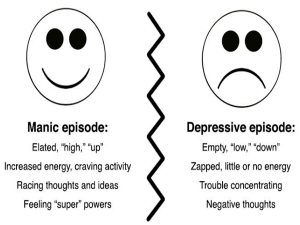
A person afflicted with bipolar mood disorder goes from mild depression into moderate and then severe depression followed by a return to normal state for few months and then goes into mild mania and then hypomania in a cyclical and periodic manner throughout adult life. The word BIPOLAR means having two extremes which are poles apart. The medical reason is that the neurotransmitters serotonin, dopamine and norepinephrine fluctuate for no explainable reason. Hence it’s a chemical imbalance.

5% of world population is estimated to be bipolar. Impulsiveness is another hallmark feature of a bipolar. They hardly think before doing most things. When in an excessive happy mode, a bipolar tends to go on a buying spree. A bipolar person is also prone to aggression, alcohol, smoking and drug addiction, hypersexuality or promiscuous behaviour in mania phase.

Bipolar image 2 (2) (1)

Treatment

Treatment for Bipolar is psychiatric counselling and regular medication to control mood swings. Jalaj was counselled by a psychiatrist who made him understand that if he doesn’t take medication he will be jeopardizing his family life and career. Bipolars need daily and regular medication to function normally. The medicines called mood stabilizers prevent the mood fluctuations and prevent mania and depression.

Jalaj takes medication as prescribed and follows up with the shrink once every 3 months. Thankfully he is leading a happy married life again and Dimple also understands what he goes through and is able to counsel him. Daily meditation also helps Jalaj deal with his mood fluctuations. 8 hrs of sound sleep is essential on a daily basis for him so that he does not lose his sanity.

It is critical that bipolars’ take treatment because there are chances of attempting suicide during a major depressive phase. Many bipolar utilize the hypomania phase to be more creative and productive and achieve professional stardom. In a way, they turn it into a gift. Bipolar can be well controlled and one can lead a healthy life. On a lighter note, a bipolar person has a happening life with lots of ups and downs.


January 29, 2017 By Dr Manali Rao Leave a Comment

Pregnancy and Depression

562668-depression-in-preg


The most wonderful time in a woman’s life is during her pregnancy. It’s a miraculous time when a little prince or princess is growing within us and for the first time in our life we are unconditionally in love with this little unknown being. We cherish every pain that we go through during these 9months. It’s as if all your happiness, your desires revolve around the yet to be born baby.


It’s a magical time. Or so everyone says. But, is it so for every pregnant woman out there?? Everyone expects the expectant mother to always be happy all the time. Pregnant woman is also told how she is not supposed to be crying or throwing tantrums or thinking negative. Well, believe me, this is easier said than done. Yes, the mother is happy, nobody could possibly be as happy as her. She is the one carrying the baby for 9 Months in her womb remember! And, yes she’s happy that she has made the entire family happy by this great news.

But,most forget that to-be-mothers are also human!!! So what’s wrong if she’s a little anxious! What’s wrong if she doesn’t feel elated every single moment of the day! What’s wrong if she weeps for some silly reason! What’s wrong if she gets upset or fusses over little things! Just because she is pregnant, it doesn’t mean she’s not a normal human any more right??!!!

Most women end up feeling guilty for being sad or upset during pregnancy! Why so?? Well, thanks to the expectations of everyone around them. They get a sense of fear towards their unborn child. They become increasingly unsure of their parenting abilities.Nobody is a perfect parent. We all learn through mistakes. Why do people forget that? Fear of the unknown is obvious. But, the unknown isn’t always bad right??

These thoughts precisely has led me to write this blog on Pregnancy and depression.

Depression during pregnancy also known as antepartum depression, and depression after delivery known as postpartum depression is a mood disorder just like clinical depression. All women experience depression and anxiety at some point of their pregnancy. During pregnancy, a woman’s body goes through many changes be it physical/mental/emotional. Hormonal changes occur during pregnancy and all these lead to mood swings which are perfectly normal during pregnancy. So when do we actually worry and differentiate between the normal pregnancy symptoms or symptoms of actual depression.

Here are few symptoms to look out for:

  1. Feeling sad and anxious all the time
  2. Loss of interest in activities
  3. Not pursuing hobbies anymore
  4. Sleeping too little or too much
  5. Feeling of hopelessness or worthlessness or guilt
  6. Thoughts of death or suicidal tendencies
  7. Inability to concentrate
  8. Withdrawal from family and friends
  9. Crying spells
  10. Recurring nightmares

Risk factors:

  • Troubled family life
  • Lack of emotional support from the family especially spouse
  • Past history of clinicaldepression
  • Family history of clinicaldepression
  • Any persisting or past psychiatric illness
  • Miscarriage in the past
  • Conception post infertility treatment
  • Any medical condition Or past illness

Apart from antepartum depression a woman can also go through Postpartum depression (PPD).
Many new moms experience the “postpartum baby blues” after childbirth, which commonly include mood swings, crying spells, anxiety, difficulty in sleeping, difficulty bonding with your baby, fear that you are not a good mother and even thoughts of harming yourself or your baby. Baby blues typically begin within the first two to three days after delivery, and may last for up to two weeks. It can affect both parents.

How does one overcome depression??

  1. Family’s support, understanding, love and care can work wonders especially the attention of your spouse. Everyone should understand that a woman goes through so many changes duringpregnancyand that the symptoms vary from one person to another. Some women may have a hassle free pregnancy, while others may not and understanding this is most important. Nobody will fake any ailment. So if a woman says she has some trouble, be it a simple backache or a headache or excessive nausea vomiting, trust her that she does.
  2. Indulgein hobbies: Indulge in activities that make you happy. If you are inclined to sketching, singing or any other hobby try pursuing these hobbies during your pregnancy and that can keep you calm and happy.
  3. Do not hesitate to seek help. Many families still think seeking help means either you are weak or something is wrong with you. And most conclude you have either gone crazy or have lost your senses, it is certainly not so. Any person may experiencedepression. That does not make the woman crazy. It’s just a phase of life. Like every other problem women have to fight it and overcome the same.
  4. Eathealthy. Nutritious diet is most important along with folic acid/iron/calcium supplements duringpregnancy.
  5. Sightseeing – going out and getting some fresh air with your spouse even if its just for walks can always cheer you up.
  6. Rest -Yes it is very important to be active to ensure normal delivery and lesser complications. But at the same time getting ample amount of rest is equally important.

Management:

Instead of jumping to drugs as the first line of treatment we must try CBT (Cognitive Behavioral Therapy) accompanied by support of the family, healthy diet, meditation and making sure the mother incorporates hobbies in her everyday routine.

Don’t ever think twice to seek help. Ignore the stigma that the society has shown towards depression during pregnancy. It’s no one’s fault. It can happen to anyone. What’s important is to recognize the symptoms, remain strong, face it and overcome the same.


  • « Previous Page
  • 1
  • …
  • 6
  • 7
  • 8
  • 9
  • Next Page »

Search

Recent Posts

  • Navigating the Maze of Nutrition: Finding Clarity Amidst Confusion
  • Get children active and keep them healthy
  • What Gestational Diabetes Can Do To You & Your Unborn Child
  • Breathing – A Forgotten Art
  • The Incredible Benefits Of Milk You Might Not Know

Stay Updated

Archives

  • December 2025 (3)
  • November 2025 (15)
  • October 2025 (20)
  • September 2025 (6)
  • August 2025 (6)
  • July 2025 (12)
  • June 2025 (18)
  • May 2025 (16)
  • April 2025 (23)
  • March 2025 (23)
  • February 2025 (22)
  • January 2025 (26)
  • December 2024 (26)
  • November 2024 (25)
  • October 2024 (22)
  • September 2024 (24)
  • August 2024 (31)
  • July 2024 (21)
  • June 2024 (26)
  • May 2024 (31)
  • April 2024 (27)
  • March 2024 (29)
  • February 2024 (26)
  • January 2024 (25)
  • December 2023 (15)
  • November 2023 (11)
  • October 2023 (22)
  • September 2023 (22)
  • August 2023 (20)
  • July 2023 (22)
  • June 2023 (24)
  • May 2023 (24)
  • April 2023 (24)
  • March 2023 (23)
  • February 2023 (20)
  • January 2023 (16)
  • December 2022 (12)
  • November 2022 (15)
  • October 2022 (15)
  • September 2022 (12)
  • August 2022 (10)
  • July 2022 (17)
  • June 2022 (11)
  • May 2022 (10)
  • April 2022 (6)
  • March 2022 (6)
  • February 2022 (13)
  • January 2022 (12)
  • December 2021 (7)
  • November 2021 (3)
  • October 2021 (6)
  • September 2021 (3)
  • August 2021 (8)
  • July 2021 (7)
  • June 2021 (15)
  • May 2021 (16)
  • April 2021 (10)
  • March 2021 (7)
  • February 2021 (4)
  • January 2021 (4)
  • December 2020 (3)
  • November 2020 (4)
  • October 2020 (10)
  • September 2020 (3)
  • August 2020 (3)
  • July 2020 (2)
  • June 2020 (4)
  • May 2020 (10)
  • April 2020 (12)
  • March 2020 (10)
  • February 2020 (4)
  • January 2020 (4)
  • December 2019 (3)
  • November 2019 (7)
  • October 2019 (5)
  • September 2019 (4)
  • August 2019 (9)
  • July 2019 (9)
  • June 2019 (11)
  • May 2019 (4)
  • April 2019 (9)
  • March 2019 (8)
  • February 2019 (9)
  • January 2019 (8)
  • December 2018 (9)
  • November 2018 (3)
  • October 2018 (3)
  • September 2018 (5)
  • August 2018 (10)
  • July 2018 (6)
  • June 2018 (13)
  • May 2018 (8)
  • April 2018 (18)
  • March 2018 (9)
  • February 2018 (8)
  • January 2018 (15)
  • December 2017 (12)
  • November 2017 (19)
  • October 2017 (13)
  • September 2017 (15)
  • August 2017 (4)
  • July 2017 (8)
  • June 2017 (7)
  • May 2017 (6)
  • April 2017 (8)
  • March 2017 (6)
  • February 2017 (7)
  • January 2017 (9)
  • December 2016 (10)
  • November 2016 (7)
  • October 2016 (7)
  • September 2016 (7)
  • August 2016 (11)
  • July 2016 (9)
  • June 2016 (9)
  • May 2016 (12)
  • April 2016 (17)
  • March 2016 (17)
  • February 2016 (8)
  • January 2016 (6)
  • December 2015 (2)
  • November 2015 (9)
  • October 2015 (7)
  • September 2015 (9)
  • August 2015 (11)
  • July 2015 (9)
  • June 2015 (12)
  • May 2015 (9)
  • April 2015 (13)
  • March 2015 (8)
  • February 2015 (5)
  • January 2015 (12)
  • December 2014 (14)
  • November 2014 (11)
  • October 2014 (6)
  • September 2014 (13)
  • August 2014 (12)
  • July 2014 (6)
  • June 2014 (2)
  • May 2014 (7)
  • April 2014 (5)

From “Laddu Nawin” to Fit and Fierce: How a 25-Year-Old Insurance Advisor Shed 20 Kilos and Gained His Life Back

When 25-year-old Nawin Yadav from Hyderabad walked into his office every morning, he carried more than just his files and policy papers. He had the weight of fatigue, sluggish energy, and an ever-growing belly that was becoming the butt of jokes. “People … [Read More...]

“I’ve Challenged Myself to Live 100 Years” – The Story of Chandubhai Savani’s Second Chance at Life

At 67, most people start slowing down. Not Chandubhai Savani. A resident of Surat, Chandubhai, thought life was on track. “My life was going well till I had my bypass surgery,” he says. That surgery, back in 2021, was a wake-up call.  Medication was routine, but exercise wasn’t. His diet? What he calls ‘normal.’ “I […]

From Shimla’s Slopes to Chandigarh’s Sidewalks: Surinder Kaur Bhalla’s Journey from Chaos to Control

Some journeys start with a plan. Others begin with a stumble literally. Surinder Bhalla, a government professional, born and raised in the scenic hill town of Shimla, had always lived a life of movement. “In Shimla, you walked everywhere,” she reflects. “Walking was never an exercise. It was just life.” But after shifting to Chandigarh, […]

Ananda Mukherjee Health Story

From Terminal Illness To Complete Wellness! Ananda Mukherjee Health Story

As we observe World Cancer Day under the powerful theme ‘United by Unique’ (2025-2027)**, we are reminded that every individual’s journey with cancer is distinct, yet united by shared resilience, hope, and the collective fight against this disease. This theme places people at the centre of care and their stories at the heart of the […]

  • HOME
  • HEALTHY LIVING
  • FITNESS
  • HEALTHY RECIPES
  • USER STORIES
  • KARMA
  • BUY GOQii

Copyright ©2016 GOQii