
GOQii

Blog

  • HOME
  • HEALTHY LIVING
  • FITNESS
  • HEALTHY RECIPES
  • USER STORIES
  • KARMA
  • BUY GOQii

October 2, 2020 By Anusha Subramanian 1 Comment

GOQii’s Mental Health Study Reveals 43% Indians Plagued With Depression

depression

The current Pandemic situation across the world has taken a toll on people and Indians are no different. It has led to fear, panic and anxiety among people. The corona-stress is taking a toll on the mental health of people world over. To add to it, social distancing – key and essential steps taken to curtail the spread, is leading to minimal human contact and negligible physical social connections. The pandemic has only intensified depression.

With the fear of losing livelihood and going out, insecurity for oneself and loved ones, anxiety, health scares and the overall volatile environment, stress levels are at an all-time high. Copious amounts of stress can lead to depression.

A recent study undertaken by GOQii indicates that 43% of Indians are depressed and are learning to cope with it. Another 26% Indians are facing mild depression, 17% face a more strenuous kind. It is concerning to note that 6% Indians are severely depressed, the study indicated.

How Has The Lockdown Affected Mental Health? 

The study was conducted by GOQii, across 10000+ Indians, to understand how COVID has changed lifestyle and how Indians are adapting to the new normal. This is a comparative study and highlights the glaring difference in lifestyle habits pre-corona and post lockdown. As per the study, a large section of the population has little interest in doing things in the current scenario.

There is a cause of concern with more than 59% of the population having little pleasure in doing things these days, out of which 38% have this feeling on a few days and 9% feel so more than half of the days. 12% of the population have little interest almost every day in these times.

“Anxiety is one of the symptoms of depression. Most people are anxious on various counts. For some it is about not having a regular routine as they did in normal times,” says Divya Thampi, an Emotional Wellness Coach on GOQii Play, the interactive video coaching platform. 

As a counsellor, she has found that for many individuals, it’s related to the work from home (WFH) situation. Work hours have invariably extended, there is lack of boundaries, lack of sleep, lack of motivation to work and lots of nervousness – all leading to anxiety.

Many are experiencing the ‘MEH’ feeling. This is an emotion that says a lot without saying much. It is a feeling where one has little interest in doing things, does not want to get up from the couch, wants to eat copious amounts of food and especially the urge to eat sugary things, procrastinating to do certain tasks that need to be done and many such things.

Key Insights of the Study 

As per the GOQii study, approximately 10% feel down and depressed more than half of the days or nearly every day.  The study further indicates that a large section of the population has little interest in doing things in the current scenario. There is a cause for concern with more than 59% of the population having little pleasure in doing things these days, out of which 38% have this feeling on a few days, 9% feel thus on more than half of the days and 12% of the population have little interest in anything almost every day.

The fact that there are no boundaries, no routine to follow and also that many have yet not been able to adjust to the new normal is creating problems for some. “Most people feel energetic when there is sense of purpose or a goal to achieve,” Thampi adds.

Counsellors and mental health practitioners say that from a pandemic perspective, the number of people reaching out for help is increasing and many are newcomers. The common feeling among most is that of ‘not feeling okay’.

Given The Situation, How Does One Cope With Depression?

What are the coping mechanisms that can ease the stress of those going through some or the other mental condition?

Coping mechanisms are varied. Under normal circumstances, walking in nature is advised, as it calms you and relaxes your mind. But in the current scenario, being indoors and not being able to step out is a challenge for many. Also, most look for a safe place to be able to talk to someone or their counsellors. Mental health practitioners say these days many are unable to do that. Given such a scenario what is the way out?

Thampi says, “When there a purpose or a goal set for yourself, you will be occupied to get that task or goal completed. Taking up something as a challenge works well as it gives you some engagement. Secondly, if you cannot go out, having plants around you is a good option as that is a connection to nature as well.”

Mental practitioners recommend that individuals in this condition should talk to people with whom they feel safe. One should also reach out for therapists if necessary. The positive factor is that people are reaching out for counselling. Counsellors and Mental Health practitioners echo one point that mental health is now being discussed openly by families, parents and even corporations. It is being taken seriously.

Mental health is an important part of overall health and wellbeing. It affects how we think, feel and act. It may also affect how we handle stress, relate to others and make choices during an emergency. We need more conversations around the issue and people need to realise its ‘okay’ to talk about it.  

September 11, 2019 By Divya Thampi Leave a Comment

Understanding Suicidal Thoughts & How to Provide Support

understanding suicidal thoughtsIn the first part of the article, we discussed common myths associated with suicidal thinking. In this article, we look to delve deeper into understanding suicidal thoughts and how you can support a person having suicidal thoughts.
According to Dr. Thomas Joiner, author of the book “Why people die by suicide”, people are motivated to die when two psychological experiences come together. One is “Perceived Burdensomeness”, the perception of being a burden to others. Here people feel that their death would be of more use to others than their life. The word “perception” is key here because the perception of the individual may be distorted by poor mental health or other life experiences.

The second is what he refers to as “Thwarted Belongingness” – the feeling of disconnection from something bigger than themselves. We humans are hardwired to be in relationships and when we lose one or more of the critical relationships in our life, whether it be with a child, partner, parent or colleague or lose a job or get separated, we experience a deep sense of distress that can make death seem desirable.

Thus, suicidal thinking is almost a problem-solving behavior, from the perspective of the person considering it (as uncomfortable as that sounds). Looking at suicide this way does not mean that we endorse suicide, instead it makes it possible for us to empathize with what may be going on with a person considering suicide. They are trying to stop the psychological pain.

Providing Support to a Person Having Suicidal Thoughts

Here are some ways in which we can provide support to people dealing with suicidal ideation:

  • Stop using the term “Committing” with suicide because suicide is a public health crisis and not a criminal act.
  • Let the person know that you care for them and want them safe.
  • If you suspect that they may be suicidal, ask them directly, to establish if they have had suicidal thoughts.
  • Listen to them non-judgmentally, allowing them to express themselves fully and acknowledge the feelings they may be experiencing, even if you don’t agree with their reasoning.
  • Resist the temptation to prove them wrong.
  • Avoid advising them to look at the brighter side of things or advising them to stop being pessimistic. This will only add to their feelings of isolation and distress.
  • Assure them that they are not alone.
  • Provide them support by helping in setting appointments with a professional or spending time with them or doing things with them that may help them feel better.
  • Identify the strengths of the person and factors that contribute to their well-being and resilience, like certain daily practices or relationships, that can be drawn on, to give them hope.
  • Help them to focus on things that help them feel a sense of control.
  • Remove any objects that they could use to harm themselves.

Suicide is a highly complex problem with multiple factors leading to it. Interventions for preventing suicide are not always simple. But it is important to remember that suicide is nearly always preventable and each one of us can play a role. Understanding suicidal thoughts and providing the right support can help us prevent the suicide of a family member, friend, colleague, classmate or neighbor. All it requires is for us to be alert and empathetic.

Know someone who should read this? Share it with them and keep your loved ones close!

#BeTheForce

April 2, 2019 By Sanjana Shah Leave a Comment

Decoding Autism and ADHD


You have probably seen movies such as Dustin Hoffman starred ‘Rainman’ and Shah Rukh Khan’s My Name is Khan. In both the films, the male lead protagonists play an autistic adult. Dyslexia, also an issue of learning disorder was beautifully talked about in ‘Amir Khan’s ‘Taare Zameer Par’.  Movies are the best way for common people to understand these medical conditions. Today, on World Autism day, we have tried to decode both Autism and ADHD. 

Attention Deficit Hyperactivity Disorder (ADHD) can seem similar. Adults and children with these conditions have a problem focusing. They can be impulsive or have a hard time communicating. These individuals are intelligent and only different than the others and in many ways special.

Autism and ADHD are neurodevelopmental disorders that impact the same brain functions. Studies have shown that two-thirds of the total affected children with ADHD show autism symptoms too. There is a thin line of difference between their characteristic symptoms, let’s learn about them in detail.

AUTISM – The Isolated Self

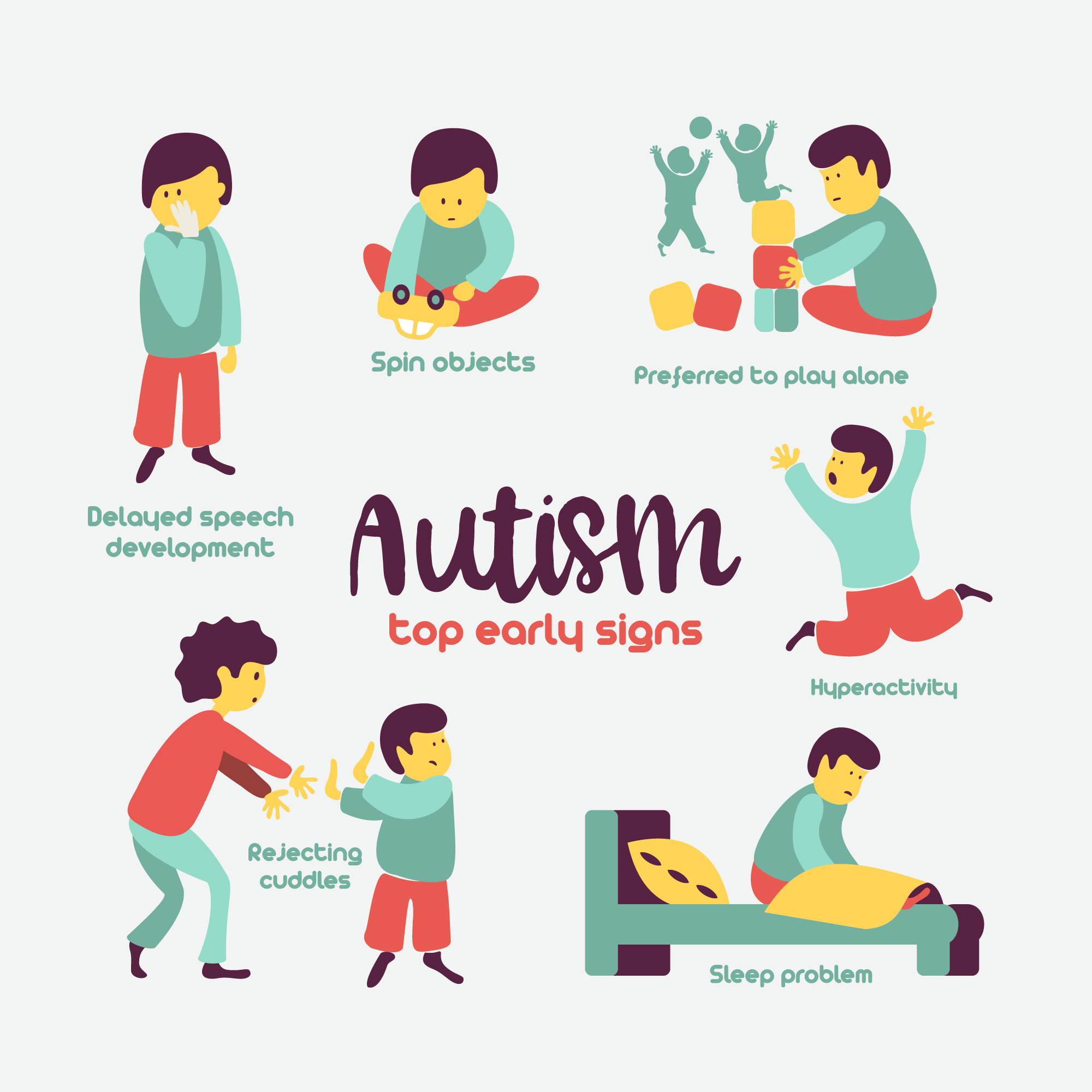
The word Autism is derived from a Greek word, ‘autos’ which means ‘self’. Autism can be diagnosed in children as early as 2 years of age and as late as 6-7 years of age. Each autistic child may show different symptoms. You cannot really categorise them into one. It is one of the syndromes that fall under the range of autism spectrum disorders.

Here are some of the distinct characteristics to look out for in an autistic child:

  • They find difficulty in communicating with others
  • They prefer to sit alone or play alone. Finds difficult to make friends.
  • Sensory Dysfunction – cannot stand loud noises, strong smell or flavour.
  • Repetitive Behaviour- Doing or saying the same things over and over again. For example, constantly clap hands.

The cause of Autism is largely genetic. So if diagnosed from start and treated well then it effectively reduces the symptoms.

How Do You Treat Autism?

– Most diagnosis is by the age of 2. Hence, an overall approach therapy- occupational, behavioural, medical, dietary and physical would help them to cope with the environment and other children better.

– Being oversensitive to touch, taste and sight, they tend to become picky eaters. They prefer to eat only a particular food item over and over again making them nutritional deficit. These deficits need to be addressed through supplements under the guidance of a doctor.

– Expose them to different varieties of the same food item. For example, if they eat apple jam, then the child will be open to trying apple pie or apple as a whole fruit.

– Usually, they are sensitive to foods containing casein (milk, paneer, curd), gluten (wheat, barley, oats) or preservatives (packaged food items). Try to eliminate these items one at a time and observe how they respond.

– Once the sensitivity is known, use substitutes for it. For example, in the case of casein, substitute their milk/paneer requirements with soybean milk/ tofu respectively.

– Gut health is compromised with a condition known as Leaky Gut (i.e. Gut is permeable to toxins and bacteria as they get absorbed or “leak” into the bloodstream). Long term studies have shown that bacteria B. Fragilis aids recovery from leaky gut and reduces the autistic syndrome.

– Medical therapy is important. The drugs that are given will not cure autism but will reduce anxiety and depression in the child. This will improve their learning and communication skills and make them more friendly and open.

ADHD

ADHD is seen in both children and adults. It is usually difficult to identify in children before the age of 5. This is because being inattentive and hyperactive are normal traits shown by any toddler or child.

Its symptoms may or may not stand out clearly. Some of the symptoms include:

  • Cannot focus on one task for a long time
  • Difficulty in paying attention in class or in any given activity or discussion
  • Always needs to move around. Cannot sit at one place.
  • Usually responds or answers back without thinking much/ Impulsive behaviour

Along with behavioural therapy, diet also plays an important role in managing ADHD. Studies have shown that a diet high in sugar worsens the hyperactive trait in ADHD children. This is because sugars provide instant energy to the brain, so they tend to overthink, overreact more.

A well-balanced diet including veggies, fruits, complex carbs like high fibre cereals and more of proteins will slowly help in easing the symptoms.

Below is the list of foods to be avoided and included-

Foods to be AVOIDED Foods to be INCLUDED
High sugar-containing foods like candies, cakes, cookies, sweetened chocolates Dark chocolates loaded with berries,

Homemade date (Khajur) rolls or pieces of almonds, raisins. Homemade carrot halwa, sheera

Fried Chips, wafers, ready to eat noodles Roasted Indian snacks like Chivda, bhel.

Plain or less of butter made popcorn.

Roasted peanuts and yellow channa.

Finger foods like sautee paneer, ragi wafers

Flavoured cereals- cornflakes, milk powder mixes. Plain cornflakes – add In bananas, berries.

Dates milkshake, fruit smoothies, yoghurt

Tetra pack fruit juices, colas, soda beverages Cut fruits and make popsicles out of it
Refined products like maida based pasta, pizzas, burgers, junk items Choose whole wheat pizzas with more veggie toppings, make up a salad of the kids choice of veggies and fruits, present veggies inside a chapati roll.

There is no cure for autism and ADHD, but early intervention using skills-training and behaviour modification can yield excellent results.

To understand Autism better, tune into GOQii Play Coach Divya Thampi’s class on ‘Common Myths about Autism Spectrum Disorder‘ tonight at 8:30 PM on the GOQii App.


August 30, 2018 By Divya Thampi Leave a Comment

Empowering Ourselves Against Hopelessness – II

Empowering Practices

What can we do to create an environment of growth and well-being? To build resilience within ourselves and others? To encourage connection and autonomy? Here are few things each of us can do depending upon the roles we play:

  • Invest in relationships

Most people in their 20s, 30s and even in their 40s are busy chasing material wealth along with all the material things that constitute the idea of success in our society. But as mentioned in Part I of this blog, human connection is at the heart of our happiness. To nurture these relationships, try and plan for time with your friends and family, listen deeply and use every opportunity to tell your loved ones how much you love them, not just because it will make them happy but also because it may remind people that they are not alone after all. You never know what magic your words and actions set off.

divya-image 1-part 2

  • Disconnect from social media

Spending a few hours on social media every now and then, every day, may seem like a harmless habit. But it is harmful in more ways than one. One of the more obvious effects of social media is that by its very nature it compels you to compare yourself with others, leaving most users feeling inadequate, isolated and unhappy. Secondly, social media aims to encourage the behaviour of seeking validation. Once you become dependent on external validation, it is almost impossible to experience any peace of mind or keep up your motivation to get through important tasks on your own. Thirdly the only way for social media companies to leverage these virtual platforms is by ensuring that people use it often and for longer periods of time – these platforms are designed to be addictive.

If you haven’t realised it already, then you would like to know that our capability to focus and pay unwavering attention to the tasks we do, is the single most important skill that allows us to grow and progress in our personal and professional life. Consequently, social media when used indiscreetly can strip us of this valuable ability to focus, learn and grow. Use it with care.

divya-image 2-part 2

  • Take care of your body

Body is the only home you have– Mind and body are connected and your body is designed to be used for tasks that activate the muscles. Today’s sedentary lifestyle is hazardous for your health. Imagine a fully powered sports car sitting in the garage. What would happen to it if it is never taken for a ride? It would rust, deteriorate and even become non-functional after a few years. We are no different. The mantra “use it or lose it” is quite apt when it comes to our physical fitness.

Get moving – do yoga, go for walks, hit the gym, play a sport, engage in domestic chores, join a trek, practice dance – do whatever it takes because those muscles and joints need the movement to keep you not just physically but also mentally fit. Besides strengthening the body, physical exercise also helps your brain release endorphins which makes your mind sharper, improves your memory and makes you feel good about yourself.

divyan-image3-part 2

  • Connect with yourself every day

Personal and professional responsibilities, big and small, leave most of us with precious little time for ourselves and whatever little time we do get, gets used up in checking messages, watching mindless TV, browsing the internet or surfing the social media sites. One of the reasons why a lot of us feel disconnected despite being so connected through technology is because we don’t etch out time for introspection – there’s no time to reflect on our daily experiences.

Just like each of us schedules time for personal hygiene, it is important that we make time for emotional and mental hygiene each day. It will not only help us to feel grounded but will also help us to learn and grow as the days come and go, rather than life passing us by in a blur. If possible maintain a notebook to jot down your thoughts about the important events of the day before going to bed or then just do a quick mental review, without getting drawn into over-analysis. Daily practices of mindfulness, even for 20 minutes a day, go a long way toward helping us sleep better and experience a sense of peace.

  • Explore your interests and strengths

Each of us has come into this world with our unique strengths, talents and skills and our most important duty in this lifetime is to use and hone those gifts productively because that’s the only way we can truly and authentically contribute to the world. Pay attention to the tasks that you find interesting and easy to do. These have to be things where you bring something into the world or something that helps your mind grow. Playing video games and watching Television doesn’t count!

Whatever activity it may be, it doesn’t matter whether others consider it valuable or not. These may include doodling, dancing, writing poetry, making origami, acting, compiling letters, writing articles, sketching, painting, growing mushrooms, training or grooming pets or a million other things that you can choose from. Whatever it is, just spend some time doing it and getting better at it every day; if not every day then every other day. Once again, if you don’t schedule time, you will never find the time. Spending even 10 minutes every day in your area of interest/strength is better than waiting for the day when you have 2 hours to spare for that activity. With this simple change, you will find yourself blossoming in ways you didn’t imagine possible!

  • Set goals

“Dreams don’t come true, goals do”

We could keep dreaming about a better life and not a thing would change unless we get up and take action. Goals do just that, they push you into action; they remind you about things that are important to you, they awaken you to the reality of time slipping through your fingers. How many times have you thought that you want to learn something only to realise that even 5 years down the line you haven’t taken any initiative towards the learning? Or you said you want to be a morning person and find yourself waking up after 8 am day after day? Just wishing that your circumstances would change will not cut it. Our mind requires a timeline, clarity, measurability and a constant reminder. Set goals for anything that’s important to you, be it relationships, art, work, interest or a lifestyle. And make sure that these goals are YOURS and not set because others think it is important for you. When there is a purpose to your day, you will see yourself get more effective, efficient and happier.

divya-image 4-part 2

  • Learn to say “no”

I recently had a client who was unhappy because he just could not walk up to people and say what was on his mind. He would keep worrying that he would be taking up their valuable against their will. After some more discussion, it became apparent that the root cause of this challenge was that he himself would never turn away people who made excessive demands on his time.

Innumerable people who feel taken for granted or unvalued do so because they inadvertently end up making themselves available for every small need that others have. Partly our culture may be to blame for this ingrained habit of putting others’ needs ahead of ours. This is not to say that you should selfishly cater only to your own needs, but just like you take care to respect others’ time and needs, you must practice respect for your own needs and time.

Once the consciousness sets in that you always have the option of saying “no” to a request, it will become easier to practice it. Start with smaller requests and before you agree to anything check with yourself if you are also being considerate to yourself. Setting boundaries without a doubt is a significant way in which we can improve our sense of self-worth and self-esteem.

We all aspire to live happy meaningful lives and do not consciously choose to be miserable. At the same time, difficulties and disappointments are an integral part of life. Ending one’s life is not just a random decision people arrive at, rather it is a desperate act resulting from acknowledged and unacknowledged fears, anxieties, disappointments and a hoard of other emotions that may feel overwhelming.

People need to be empowered to understand the fundamentals of living a meaningful life and be equipped to deal with their internal turmoil. It is important to watch out for any signs of abnormal behaviour in our loved ones and let them know that we are available in case they need to speak or just need company. Some empathy, thoughtfulness and gentle care go a long way in bringing people back from the clutches of isolation. Despite that, if someone feels trapped then they should be able to reach out for help from a professional counsellor or psychologist and we must encourage our loved ones to seek help when required.

Like they say ‘charity begins at home’ and hence each of us first needs to focus on living a healthy life ourselves because the important people in our lives are watching and learning from us. We are far more influential than we think, let us infect others with our empowering ways!


  • « Previous Page
  • 1
  • …
  • 5
  • 6
  • 7
  • 8
  • 9
  • Next Page »

Search

Recent Posts

  • Navigating the Maze of Nutrition: Finding Clarity Amidst Confusion
  • Get children active and keep them healthy
  • What Gestational Diabetes Can Do To You & Your Unborn Child
  • Breathing – A Forgotten Art
  • The Incredible Benefits Of Milk You Might Not Know

Stay Updated

Archives

  • December 2025 (3)
  • November 2025 (15)
  • October 2025 (20)
  • September 2025 (6)
  • August 2025 (6)
  • July 2025 (12)
  • June 2025 (18)
  • May 2025 (16)
  • April 2025 (23)
  • March 2025 (23)
  • February 2025 (22)
  • January 2025 (26)
  • December 2024 (26)
  • November 2024 (25)
  • October 2024 (22)
  • September 2024 (24)
  • August 2024 (31)
  • July 2024 (21)
  • June 2024 (26)
  • May 2024 (31)
  • April 2024 (27)
  • March 2024 (29)
  • February 2024 (26)
  • January 2024 (25)
  • December 2023 (15)
  • November 2023 (11)
  • October 2023 (22)
  • September 2023 (22)
  • August 2023 (20)
  • July 2023 (22)
  • June 2023 (24)
  • May 2023 (24)
  • April 2023 (24)
  • March 2023 (23)
  • February 2023 (20)
  • January 2023 (16)
  • December 2022 (12)
  • November 2022 (15)
  • October 2022 (15)
  • September 2022 (12)
  • August 2022 (10)
  • July 2022 (17)
  • June 2022 (11)
  • May 2022 (10)
  • April 2022 (6)
  • March 2022 (6)
  • February 2022 (13)
  • January 2022 (12)
  • December 2021 (7)
  • November 2021 (3)
  • October 2021 (6)
  • September 2021 (3)
  • August 2021 (8)
  • July 2021 (7)
  • June 2021 (15)
  • May 2021 (16)
  • April 2021 (10)
  • March 2021 (7)
  • February 2021 (4)
  • January 2021 (4)
  • December 2020 (3)
  • November 2020 (4)
  • October 2020 (10)
  • September 2020 (3)
  • August 2020 (3)
  • July 2020 (2)
  • June 2020 (4)
  • May 2020 (10)
  • April 2020 (12)
  • March 2020 (10)
  • February 2020 (4)
  • January 2020 (4)
  • December 2019 (3)
  • November 2019 (7)
  • October 2019 (5)
  • September 2019 (4)
  • August 2019 (9)
  • July 2019 (9)
  • June 2019 (11)
  • May 2019 (4)
  • April 2019 (9)
  • March 2019 (8)
  • February 2019 (9)
  • January 2019 (8)
  • December 2018 (9)
  • November 2018 (3)
  • October 2018 (3)
  • September 2018 (5)
  • August 2018 (10)
  • July 2018 (6)
  • June 2018 (13)
  • May 2018 (8)
  • April 2018 (18)
  • March 2018 (9)
  • February 2018 (8)
  • January 2018 (15)
  • December 2017 (12)
  • November 2017 (19)
  • October 2017 (13)
  • September 2017 (15)
  • August 2017 (4)
  • July 2017 (8)
  • June 2017 (7)
  • May 2017 (6)
  • April 2017 (8)
  • March 2017 (6)
  • February 2017 (7)
  • January 2017 (9)
  • December 2016 (10)
  • November 2016 (7)
  • October 2016 (7)
  • September 2016 (7)
  • August 2016 (11)
  • July 2016 (9)
  • June 2016 (9)
  • May 2016 (12)
  • April 2016 (17)
  • March 2016 (17)
  • February 2016 (8)
  • January 2016 (6)
  • December 2015 (2)
  • November 2015 (9)
  • October 2015 (7)
  • September 2015 (9)
  • August 2015 (11)
  • July 2015 (9)
  • June 2015 (12)
  • May 2015 (9)
  • April 2015 (13)
  • March 2015 (8)
  • February 2015 (5)
  • January 2015 (12)
  • December 2014 (14)
  • November 2014 (11)
  • October 2014 (6)
  • September 2014 (13)
  • August 2014 (12)
  • July 2014 (6)
  • June 2014 (2)
  • May 2014 (7)
  • April 2014 (5)

From “Laddu Nawin” to Fit and Fierce: How a 25-Year-Old Insurance Advisor Shed 20 Kilos and Gained His Life Back

When 25-year-old Nawin Yadav from Hyderabad walked into his office every morning, he carried more than just his files and policy papers. He had the weight of fatigue, sluggish energy, and an ever-growing belly that was becoming the butt of jokes. “People … [Read More...]

“I’ve Challenged Myself to Live 100 Years” – The Story of Chandubhai Savani’s Second Chance at Life

At 67, most people start slowing down. Not Chandubhai Savani. A resident of Surat, Chandubhai, thought life was on track. “My life was going well till I had my bypass surgery,” he says. That surgery, back in 2021, was a wake-up call.  Medication was routine, but exercise wasn’t. His diet? What he calls ‘normal.’ “I […]

From Shimla’s Slopes to Chandigarh’s Sidewalks: Surinder Kaur Bhalla’s Journey from Chaos to Control

Some journeys start with a plan. Others begin with a stumble literally. Surinder Bhalla, a government professional, born and raised in the scenic hill town of Shimla, had always lived a life of movement. “In Shimla, you walked everywhere,” she reflects. “Walking was never an exercise. It was just life.” But after shifting to Chandigarh, […]

Ananda Mukherjee Health Story

From Terminal Illness To Complete Wellness! Ananda Mukherjee Health Story

As we observe World Cancer Day under the powerful theme ‘United by Unique’ (2025-2027)**, we are reminded that every individual’s journey with cancer is distinct, yet united by shared resilience, hope, and the collective fight against this disease. This theme places people at the centre of care and their stories at the heart of the […]

  • HOME
  • HEALTHY LIVING
  • FITNESS
  • HEALTHY RECIPES
  • USER STORIES
  • KARMA
  • BUY GOQii

Copyright ©2016 GOQii