
GOQii

Blog

  • HOME
  • HEALTHY LIVING
  • FITNESS
  • HEALTHY RECIPES
  • USER STORIES
  • KARMA
  • BUY GOQii

July 1, 2024 By Aesha Mehta 1 Comment

7 Foods To Avoid If You Have Asthma

Asthma

Asthma is an ancient Greek word which means “short drawn breath”. It can be quite troublesome as it causes chest tightness, shortness of breath, and coughing. Patients suffering from asthma have more trouble exhaling carbon dioxide than inhaling oxygen because the air passages of the small bronchi become clogged, making it difficult to breathe. Most asthma patients face more difficulty breathing during the night time. 

Modern medicine has not been able to find a cure for this troublesome respiratory disease. Drugs and vaccines help in reducing symptoms and provide temporary relief. Allergy is a major cause of asthma, but it can be managed with a  proper diet and lifestyle, such as eating foods which are easy to digest and adapting lifestyle methods such as yogic kriya – which helps in proper assimilation of food, strengthening of lungs, digestive and circulatory system. 

Which Foods Should You Avoid If You Have Asthma? 

While there are foods which can help you alleviate the symptoms of asthma, here are some which you must avoid at any cost. 

  1. Sugar: Sweet carbonated drinks, candies, cakes, biscuits, and all the foods which are rich in sugar increase coughing and wheezing in children. Sugar attacks the immune system of the airway, causing narrowing of airways and mucous production. Instead of sweets, include jaggery and coconut sugar.
  2. Junk Foods: Foods like burgers, pizza, red meats, fries, etc., which are loved by a large part of the population, worsens asthma symptoms. These foods make one overweight, and the lungs have to work harder, making it difficult to breathe. Include simple, homemade foods instead of junk foods
  3. Alcohol: Sulphites, one of the allergens present in many alcoholic beverages, worsen asthma symptoms. It increases wheezing and breathing difficulty. Include more natural beverages like lemon water and coconut water instead of beer and wine.
  4. Beans: Beans cause gas in our body, putting pressure on the diaphragm and increasing acid reflux. It is better to avoid beans and other foods like cabbage, onion and garlic which are gas forming.
  5. Tea and Coffee: Another allergen, Salicylates, is found in tea and coffee. Though it is rare, some asthmatic patients are allergic to salicylates and find difficulty in breathing. As an alternative, you can include herbal teas like chamomile tea and passionflower tea instead of regular tea and coffee.
  6. Shrimp: Shrimp contains sulphites, which is an allergen. Yes, SULPHITES again! It can worsen asthma symptoms.
  7. Salt: Salt is one of the worst foods for asthma. It can tighten the airways, cause inflammation, and fluid retention, making it a very serious lung complication. Include natural flavouring ingredients like cumin, turmeric and chilli flakes instead of salt. 

We hope this article helps you understand which foods to avoid if you have asthma. By making mindful dietary choices, you can better manage your asthma symptoms and improve your overall well-being. Do leave your thoughts in the comments below.

#BeTheForce 

Disclaimer: The information provided in this blog is for general awareness and educational purposes only. It is not intended to replace professional medical advice, diagnosis, or treatment. Always consult a qualified healthcare provider for personalised medical guidance or concerns related to your health.

June 29, 2024 By Luke Coutinho 3 Comments

All you want to know about Inflammation

When you think pain, think inflammation.
 
Inflammation is a good thing. It’s your body’s way of rising up to fight out germs/bacteria/infections, heal bruises when you fall, heal torn ligaments/tissues/tendons etc.
 Once it does its job of fighting out these invaders or foreign organisms, the inflammation should reduce back down to normal.
 The problem arises when that does not happen.

Have a torn ligament or muscle pull that you are struggling to heal? Seen the best doctors, therapists, etc. and still not fixed? Struggling with arthritis and joint pain? 
Check your CRP (C-Reactive protein) levels and focus on reducing inflammation. The cure is in reducing inflammation.

Many of us live with chronic inflammation and that’s dangerous. It’s also one of the reason people struggle to lose weight, experience excruciating joint pains,
 age faster than normal, 
feel tired through the day, 
higher chances of cancer and heart disease, suffer from 
Fibromalgia/Headaches/Migraines, 
have higher chances of Alzheimer’s/Dementia, struggle with diabetes,
 feel depressed and low.

Silent inflammation like the ones described above can destroy your nerves and cellular health, suppressing and weakening your immune system, leading to deadly diseases like cancer, etc.


What’s scary is the fact that you can be extremely healthy and fit, but silent inflammation could be eating into you from inside, which is one of the many explainable reasons why cancer or heart attacks can strike down a healthy and young human being.
 Checking cholesterol levels, Vitamin D3, B12, SGOT, and SGTP is imperative, but what most people miss out on is checking their CRP levels (C-Reactive protein). This is an important protein level to check, and a simple blood test will cover that for you. This level will tell you volumes about the amount of inflammation you have in your body.

In my years of experience, what stands out in a cancer report of a person is an increase in CRP levels and white blood cells, and the immediate action is to reduce inflammation through food and lifestyle change.
 Diseases breathe in inflamed environments, in environments that are acidic, and in environments where there is less oxygen supply to the cells.

Overtraining causes inflammation.
 Vigorous exercise, inconsistent exercise, and high-intensity training that is not planned for your body type will make your CRP levels soar and kill your immunity, which is why many trainers ask their clients to take a Vitamin C and E post workouts.

Running marathons without proper nutrition causes massive inflammation.
 Stress causes inflammation (chronic stress).
 Improper nutrition (high-fat foods, sugar, artificial sweeteners, doughnuts, white sugar, aerated drinks, salty foods, packaged foods), and smoking causes inflammation. (I’ve seen CRP levels fall in a smoker’s blood report within 10 days of kicking the butt)

. 

How to keep your inflammation in check:

Smart and moderate exercise such as meditation and controlling your stress and BP levels, nuts and seeds, 
green leafy veggies and fruits,
 good fats (like nuts, olive oil, coconut oil) helps in keeping your inflammation under check. Finally, I should not be saying this, but it has been proven that a small amount of alcohol can actually lower CRP levels. Vitamin D3
 and Curcumin (turmeric extract) are some of the best spice-based inflammation fighters.

Understanding and managing inflammation is crucial for maintaining good health and preventing chronic diseases. By incorporating anti-inflammatory foods, regular exercise, and stress management into your routine, you can significantly reduce inflammation and improve your overall well-being.

We hope this article helps you. For further information or guidance, reach out to our certified experts by subscribing to GOQii’s Personalised Health Coaching here.

#BeTheForce 

Disclaimer: The information provided in this blog is for general awareness and educational purposes only. It is not intended to replace professional medical advice, diagnosis, or treatment. Always consult a qualified healthcare provider for personalised medical guidance or concerns related to your health.
January 7, 2024 By Unnati Chheda 2 Comments

Are Cruciferous Vegetables Bad For Thyroid?

cruciferous vegetables

Vegetables have always been considered healthy and they can be consumed by everyone. As vegetables are loaded with vitamins, minerals, antioxidants, fiber and the best part is they are low in calories as well, we assume that we can eat liberal amounts of this food group. But, have we ever thought that any of these vegetables can interfere or play around with our hormones as well? Yes, they do! Let’s talk about Cruciferous vegetables and how it impacts thyroid function. 

What Is Thyroid & How Does It Affect Our Health?

Thyroid hormones carry out a large number of functions in our body, like maintaining body temperature, regulating other body organs like the brain, heart and muscles as well as body metabolism which in turn regulates our body weight. The most common disorders related to the thyroid gland are hypothyroidism and hyperthyroidism.

  • Hypothyroidism: is a condition in which the thyroid gland is unable to produce a sufficient amount of thyroid hormones. One of the reasons for hypothyroidism is iodine deficiency. Iodine is required for synthesis of thyroid hormones, thus its deficiency can cause hypothyroidism. Lack of thyroid hormones leads to weight gain, feeling lethargic, constipation, hair loss, impaired memory and sensitivity to cold.
  • Hyperthyroidism: is a condition in which there is increased production and release of thyroid hormones. Excess of thyroid hormones leads to weight loss, restlessness, irritability, hair fall, muscle weakness and intolerance to heat.

How Do Cruciferous Vegetables Affect Thyroid? 

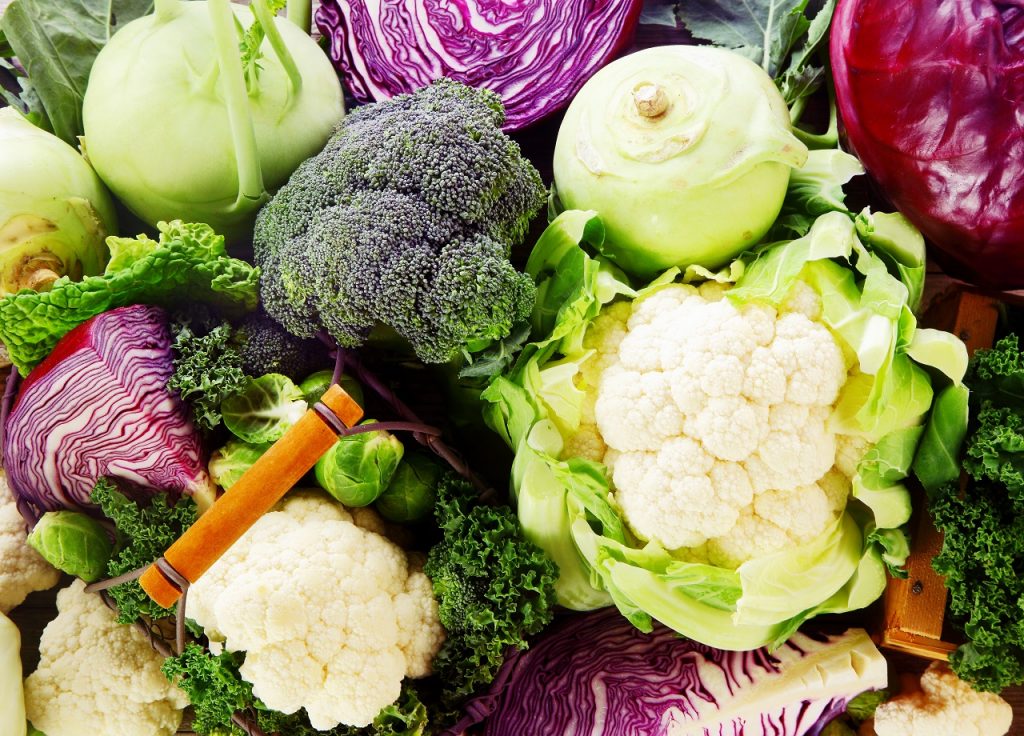
Cruciferous, also known as Brassica vegetables, come from the plant family known as Cruciferae or Brassicaceae. Most commonly consumed cruciferous vegetables include  broccoli, brussel sprouts, cabbage, cauliflower, collard greens, kale, mustard greens, turnips, bok choy, Chinese cabbage, radish, watercress, rutabagas, spinach and lettuce. These nutrient packed vegetables are loaded with Vitamin A, Vitamin C, Vitamin K and they are also good sources of antioxidants and fiber. These vegetables are beneficial for weight loss, fighting cancers and reducing inflammation. But, when we talk about thyroid, it has a negative role to play with respect to hypothyroidism.

Goitrogens are naturally occurring chemicals found in cruciferous vegetables when consumed in raw form. They are healthy and vitamin rich. But, if you have a thyroid condition, you should be aware of it. Goitrogens in cruciferous vegetables interfere with thyroid function by reducing the body’s ability to use iodine. As discussed earlier, our body needs iodine for production of thyroid hormones, hence, iodine deficiency can lead to hypothyroidism. Consumption of cruciferous vegetables increases the symptoms of hypothyroidism and people suffering from this condition should  avoid consuming cruciferous vegetables.

But, in the case of hyperthyroidism, they have a positive role to play by inhibiting the production of thyroid hormone and keeping it in check. So people suffering from hyperthyroidism can consume cruciferous vegetables without restrictions.

You Can Still Enjoy Them With Small Adjustments 

Or we can say we can minimise the negative effects of cruciferous vegetables and even people suffering from hypothyroidism can consume them in moderation. Just follow these simple tips:

  • Cooking cruciferous vegetables, instead of consuming them raw, helps in reducing the levels of goitrogens. Cooking methods like steaming, blanching and fermenting can be used.
  • Increasing iodine intake by adding iodine-rich sources like seafood, eggs, dairy products and iodized salt (less than half a teaspoon of iodized salt can fulfill our daily iodine requirement).
  • Increasing selenium intake as selenium helps in removing free radicals generated in the thyroid gland, preventing any damage to the thyroid gland. Some of the selenium-rich sources include brazil nuts, fish, meat, sunflower seeds, tofu, baked beans, portobello mushrooms, whole grain pasta and cheese.

Please Note: Even after having cooked goitrogens in the diet, if it gets difficult to balance your thyroid condition, you may have to cut out cruciferous vegetables from your diet. It is  better to consult your doctor, nutritionist or dietitian to make sure your diet is well balanced. Apart from avoiding cruciferous vegetables, maintaining an active lifestyle, a protein and fiber rich diet will help us boost metabolism and shed down extra weight gained due to hypothyroidism.

We hope this article was informative and helps you. To know more about how to manage thyroid issues with lifestyle changes, speak to an expert by subscribing for GOQii’s Personalised Health Coaching here.

#BeTheForce 

Disclaimer: The information provided in this blog is for general awareness and educational purposes only. It is not intended to replace professional medical advice, diagnosis, or treatment. Always consult a qualified healthcare provider for personalised medical guidance or concerns related to your health.

July 20, 2023 By GOQii Leave a Comment

हाइपरटेंशन को नियंत्रित करने के लिए 5 सरल जीवनशैली परिवर्तन

हाइपरटेंशन जिसे हम हाई ब्लड प्रेशर या उच्च रक्तचाप के नाम से भी जानते हैं। अब तक, जो भी अपने स्वास्थ्य के बारे में जागरूक है, वह हाइपरटेंशन के बारे में ज़रूर जनता है। यदि आप नहीं जानते हैं, तो हाइपरटेंशन मुख्य रूप से हाई ब्लड प्रेशर  (उच्च रक्तचाप) का दूसरा नाम है। ब्लड प्रेशर वो बल है जो रक्त ब्लड वेसेल्स की दीवारों के विरुद्ध लगाता है। बल ब्लड वेसेल्स (रक्त वाहिकाओं) के प्रतिरोध पर निर्भर करता है कि हृदय को कितनी मेहनत करनी पड़ेगी। हाइपरटेंशन कार्डियोवैस्कुलर डिजीज, स्ट्रोक सहित, हार्ट अटैक, हार्ट फेलियर और अनुरिस्म का प्रमुख जोखिम कारक है।

120/80mmHg के नीचे की रीडिंग को एक श्रेष्ठ ब्लड प्रेशर मन जाता है, जबकि 140/90mmHg से अधिक की रीडिंग को आमतौर पर उच्च माना जाता है। ब्लड प्रेशर को नियंत्रण में रखना बेहद जरूरी है। लाइफस्टाइल मैनेजमेंट हाइपरटेंशन के लिए मानक और फर्स्ट लाइन उपचार है।

हाइपरटेंशन को नियंत्रित करने के लिए 5 जीवनशैली परिवर्तन :

  1. शराब को छोड़ो, सिगरेट को बंद करो: बहुत अधिक शराब पीने से ब्लड प्रेशर बीमारी के स्तर तक बढ़ सकता है। एक बैठक में 3 से अधिक ड्रिंक्स (पेय) लेने से अस्थायी रूप से आपका ब्लड प्रेशर बढ़ जाता है। इसे नियमित रूप से दोहराने से लॉन्ग टर्म परिवर्तन हो सकते हैं। अत्यधिक शराब पीने वाले जो ब्लड प्रेशर को कम करना चाहते हैं उन्हें सलाह दी जाती है कि वे बहुत उच्च ब्लड प्रेशर के जोखिम से बचने के लिए 1-2 सप्ताह में शराब का सेवन धीरे-धीरे कम करें। इसके अलावा, आपके द्वारा धूम्रपान की जाने वाली प्रत्येक सिगरेट ख़तम किये जाने के बाद भी कई मिनटों तक आपके ब्लड प्रेशर को बढ़ा सकती है। इसे रोकने से आपको अपना बीपी सामान्य करने में काफी मदद मिल सकती है। धूम्रपान छोड़ने से हृदय रोग का खतरा कम हो सकता है और कुल मिलाकर आपके स्वास्थ्य में भी सुधार हो सकता है।
  2. तनाव से दूर रहें: जब आप तनावपूर्ण स्थिति में होते हैं तो आपका शरीर कई हार्मोनस का उत्पादन करता है। ये हार्मोन अस्थायी रूप से आपके ब्लड प्रेशर को बढ़ाते हैं जिससे आपका दिल तेजी से धड़कता है और आपकी ब्लड वेसल्स को सिकुड़ने पर मजबूर कर देता है। लेकिन जब आपका तनाव दूर हो जाता है तो आपका ब्लड प्रेशर सामान्य हो जाता है। हालांकि, ब्लड प्रेशर में बार-बार अस्थायी स्पाइक्स आपके ब्लड वेसल्स, हार्ट और गुर्दे को एक तरह से लॉन्ग टर्म ह्यपरटेंशन के समान नुकसान पहुंचा सकता है। सप्ताह में 3-5 बार 30 मिनट तक व्यायाम करने से ये तनाव कम हो सकता है, योग और ध्यान आजमाएं, भरपूर नींद लें और खुश रहें। अगर आपको योग और ध्यान में मदद की ज़रूरत है, तो GOQii Pro पर विशेषज्ञों द्वारा आयोजित लाइव, इंटरैक्टिव सेशंस में शामिल हो सकते हैं। आप GOQii ऐप के जरिए क्लास बुक कर सकते हैं।
  3. सोडियम का सेवन कम करें: यदि आपको ह्यपरटेंशन है तो आपके आहार में सोडियम की थोड़ी सी भी कमी आपके हृदय स्वास्थ्य में सुधार कर सकती है और ब्लड प्रेशर को 5-6mmHg तक कम कर सकती है। सामान्य तौर पर, अपने सोडियम सेवन को प्रति दिन 2300 मिलीग्राम या उससे कम तक सीमित करें। हालांकि, अधिकांश वयस्कों के लिए एक दिन में 1500 मिलीग्राम सोडियम का कम सेवन आदर्श है। 1500mg = प्रति दिन 1 चम्मच से कम नमक। अपने आहार में सोडियम को कम करने के लिए, नुट्रिशन लेबल पढ़ें, कम सोडियम वाले खाद्य पदार्थों का चयन करें, नूडल्स, सूप, चिप्स, बिस्कुट आदि जैसे प्रोसेस्ड और पैकेज्ड खाद्य पदार्थों से बचें। अपने भोजन में स्वाद लाने के लिए हर्ब्स और मसालों का उपयोग करें। सोडियम का सेवन धीरे-धीरे कम करें, आपका तालु (पेलेट) समय के साथ एडजस्ट हो जाएगा।
  4. अधिक फल और सब्जियां: सैचुरेटेड फैट और कोलेस्ट्रॉल से बचने के साथ-साथ साबुत अनाज, फलों, सब्जियों और कम फैट वाले डेयरी से भरपूर आहार खाने से आपका ब्लड प्रेशर 11 mmHg तक कम हो सकता है और यह ह्यपरटेंशन में एक राम बाण का काम करता है। इस खाने के प्लान को DASH (Dietary Approach to Stop Hypertension) डाइट के रूप में जाना जाता है। फल और सब्जियां पोटेशियम का सबसे अच्छा स्रोत हैं और यह ब्लड प्रेशर पर सोडियम के प्रभाव को कम करने में मदद कर सकते हैं। रोजाना फल और सलाद खाने की कोशिश करें। सब्जी + फलों की स्मूदी एक बेहतर विकल्प है। अपनी स्मूदी में चुकंदर भी शामिल करने की कोशिश करें, ये ब्लड प्रेशर को कम करने के लिए जाने जाते हैं। ब्लड शुगर की समस्या वाले व्यक्तियों को चुकंदर खाने से पहले अपने डॉक्टर से सलाह ले लेनी चाहिए।
  5. नियमित रूप से व्यायाम करें: व्यायाम को आदत बनाने से आपके ब्लड प्रेशर को कम करने में मदद मिल सकती है। आपको जिम जाने की ज़रूरत नहीं है, लेकिन बस इतना सक्रिय होना है कि आपकी साँसे तेज़ हो जाएँ और दिल की धड़कन थोड़ा बढ़ जाये और इसके लिए आप कुछ तरीकों का इस्तेमाल कर सकते हैं जैसे कि तेज चलना, जॉगिंग, तैराकी या बाइकिंग। सप्ताह में 5 दिनों के लिए दिन में कम से कम 30 मिनट के लिए मध्यम गतिविधि करें। यह तनाव कम करने और ऊर्जा के स्तर में सुधार करने का एक शानदार तरीका है। ह्यपरटेंशन का पता चलने पर शारीरिक गतिविधि कैसे और कब शुरू करें, इस बारे में अपने डॉक्टर या कोच से सलाह लें।

हम आशा करते हैं कि जीवनशैली में ये बदलाव आपको हाई ब्लड प्रेशर का मैनेज करने और रोकने में मदद करेंगे! नीचे टिप्पणी में अपने विचार साझा करें!

एक स्वस्थ जीवन शैली जीने के बारे में अधिक जानकारी के लिए, यहाँ GOQii कोच से बात करें।

  • « Previous Page
  • 1
  • 2
  • 3
  • 4
  • 5
  • Next Page »

Search

Recent Posts

  • Navigating the Maze of Nutrition: Finding Clarity Amidst Confusion
  • Get children active and keep them healthy
  • What Gestational Diabetes Can Do To You & Your Unborn Child
  • Breathing – A Forgotten Art
  • The Incredible Benefits Of Milk You Might Not Know

Stay Updated

Archives

  • December 2025 (3)
  • November 2025 (15)
  • October 2025 (20)
  • September 2025 (6)
  • August 2025 (6)
  • July 2025 (12)
  • June 2025 (18)
  • May 2025 (16)
  • April 2025 (23)
  • March 2025 (23)
  • February 2025 (22)
  • January 2025 (26)
  • December 2024 (26)
  • November 2024 (25)
  • October 2024 (22)
  • September 2024 (24)
  • August 2024 (31)
  • July 2024 (21)
  • June 2024 (26)
  • May 2024 (31)
  • April 2024 (27)
  • March 2024 (29)
  • February 2024 (26)
  • January 2024 (25)
  • December 2023 (15)
  • November 2023 (11)
  • October 2023 (22)
  • September 2023 (22)
  • August 2023 (20)
  • July 2023 (22)
  • June 2023 (24)
  • May 2023 (24)
  • April 2023 (24)
  • March 2023 (23)
  • February 2023 (20)
  • January 2023 (16)
  • December 2022 (12)
  • November 2022 (15)
  • October 2022 (15)
  • September 2022 (12)
  • August 2022 (10)
  • July 2022 (17)
  • June 2022 (11)
  • May 2022 (10)
  • April 2022 (6)
  • March 2022 (6)
  • February 2022 (13)
  • January 2022 (12)
  • December 2021 (7)
  • November 2021 (3)
  • October 2021 (6)
  • September 2021 (3)
  • August 2021 (8)
  • July 2021 (7)
  • June 2021 (15)
  • May 2021 (16)
  • April 2021 (10)
  • March 2021 (7)
  • February 2021 (4)
  • January 2021 (4)
  • December 2020 (3)
  • November 2020 (4)
  • October 2020 (10)
  • September 2020 (3)
  • August 2020 (3)
  • July 2020 (2)
  • June 2020 (4)
  • May 2020 (10)
  • April 2020 (12)
  • March 2020 (10)
  • February 2020 (4)
  • January 2020 (4)
  • December 2019 (3)
  • November 2019 (7)
  • October 2019 (5)
  • September 2019 (4)
  • August 2019 (9)
  • July 2019 (9)
  • June 2019 (11)
  • May 2019 (4)
  • April 2019 (9)
  • March 2019 (8)
  • February 2019 (9)
  • January 2019 (8)
  • December 2018 (9)
  • November 2018 (3)
  • October 2018 (3)
  • September 2018 (5)
  • August 2018 (10)
  • July 2018 (6)
  • June 2018 (13)
  • May 2018 (8)
  • April 2018 (18)
  • March 2018 (9)
  • February 2018 (8)
  • January 2018 (15)
  • December 2017 (12)
  • November 2017 (19)
  • October 2017 (13)
  • September 2017 (15)
  • August 2017 (4)
  • July 2017 (8)
  • June 2017 (7)
  • May 2017 (6)
  • April 2017 (8)
  • March 2017 (6)
  • February 2017 (7)
  • January 2017 (9)
  • December 2016 (10)
  • November 2016 (7)
  • October 2016 (7)
  • September 2016 (7)
  • August 2016 (11)
  • July 2016 (9)
  • June 2016 (9)
  • May 2016 (12)
  • April 2016 (17)
  • March 2016 (17)
  • February 2016 (8)
  • January 2016 (6)
  • December 2015 (2)
  • November 2015 (9)
  • October 2015 (7)
  • September 2015 (9)
  • August 2015 (11)
  • July 2015 (9)
  • June 2015 (12)
  • May 2015 (9)
  • April 2015 (13)
  • March 2015 (8)
  • February 2015 (5)
  • January 2015 (12)
  • December 2014 (14)
  • November 2014 (11)
  • October 2014 (6)
  • September 2014 (13)
  • August 2014 (12)
  • July 2014 (6)
  • June 2014 (2)
  • May 2014 (7)
  • April 2014 (5)

From “Laddu Nawin” to Fit and Fierce: How a 25-Year-Old Insurance Advisor Shed 20 Kilos and Gained His Life Back

When 25-year-old Nawin Yadav from Hyderabad walked into his office every morning, he carried more than just his files and policy papers. He had the weight of fatigue, sluggish energy, and an ever-growing belly that was becoming the butt of jokes. “People … [Read More...]

“I’ve Challenged Myself to Live 100 Years” – The Story of Chandubhai Savani’s Second Chance at Life

At 67, most people start slowing down. Not Chandubhai Savani. A resident of Surat, Chandubhai, thought life was on track. “My life was going well till I had my bypass surgery,” he says. That surgery, back in 2021, was a wake-up call.  Medication was routine, but exercise wasn’t. His diet? What he calls ‘normal.’ “I […]

From Shimla’s Slopes to Chandigarh’s Sidewalks: Surinder Kaur Bhalla’s Journey from Chaos to Control

Some journeys start with a plan. Others begin with a stumble literally. Surinder Bhalla, a government professional, born and raised in the scenic hill town of Shimla, had always lived a life of movement. “In Shimla, you walked everywhere,” she reflects. “Walking was never an exercise. It was just life.” But after shifting to Chandigarh, […]

Ananda Mukherjee Health Story

From Terminal Illness To Complete Wellness! Ananda Mukherjee Health Story

As we observe World Cancer Day under the powerful theme ‘United by Unique’ (2025-2027)**, we are reminded that every individual’s journey with cancer is distinct, yet united by shared resilience, hope, and the collective fight against this disease. This theme places people at the centre of care and their stories at the heart of the […]

  • HOME
  • HEALTHY LIVING
  • FITNESS
  • HEALTHY RECIPES
  • USER STORIES
  • KARMA
  • BUY GOQii

Copyright ©2016 GOQii