 Have you ever thought about the number of breaths you take in a lifetime? On average, we take about 675 million breaths in 80 years. Breathing patterns vary throughout our lives, influenced by age, environment, lifestyle, and health conditions such as COPD (Chronic Obstructive Pulmonary Disease). For those managing COPD or looking to maintain lung health, strengthening lung function is essential for overall well-being.
Our lungs are responsible for oxygen (O2) and carbon dioxide (CO2) exchange, ensuring that our body functions smoothly. Lung capacity and efficiency are key to respiratory health, and certain breathing exercises can help enhance this capacity. Here are three effective techniques to support lung function and improve breathing, especially beneficial for individuals with respiratory challenges like COPD.
1. Pursed Lip Breathing
This simple exercise helps slow down breathing and completely empties the lungs, which is particularly helpful during moments of shortness of breath—common among those with COPD.
How to Do it:
- Sit comfortably, relax your shoulders, neck, and close your eyes gently.
- Inhale through your nose for 2–3 seconds.
- Purse your lips as if blowing out a candle, then exhale slowly through them for 4–6 seconds.
- Repeat for about 5 minutes to experience relief and improved lung capacity.
This technique is beneficial during or after physical activity, as it lets plenty of air flow through the lungs, restoring normal breathing patterns.
2. Diaphragmatic or Belly breathing
How often in a day do we pay attention to our breathing pattern? Do you do shallow breathing or deep breathing? The diaphragm is the main sheet of muscle in between the chest and the abdomen that helps in respiration. But, usually, we develop the habit of breathing through chest, neck and shoulder muscles which limits the amount of air filling in and out of our lungs. Belly breathing strengthens the diaphragm and enhances the pulmonary efficiency. Here is the best way to train yourself for diaphragmatic breathing.
How to Do it:
- Lie down on your back on a flat surface with the knees bent or sit comfortably on a chair with neck, shoulder and head relaxed
- Place your one hand lightly on your abdomen and the other hand on the chest
- Inhale deeply through the nose for 2-3 seconds as you fill all the air towards your abdomen
- Pay attention to the hand on the abdomen moving up while making sure hand on the chest is not moving up
- Now exhale all the air through the mouth (Pursed lips) while tightening the abdomen inwards. Make sure the hand on your abdomen is moving down
- Repeat this breathing for 5-10 minutes to get the maximum benefits
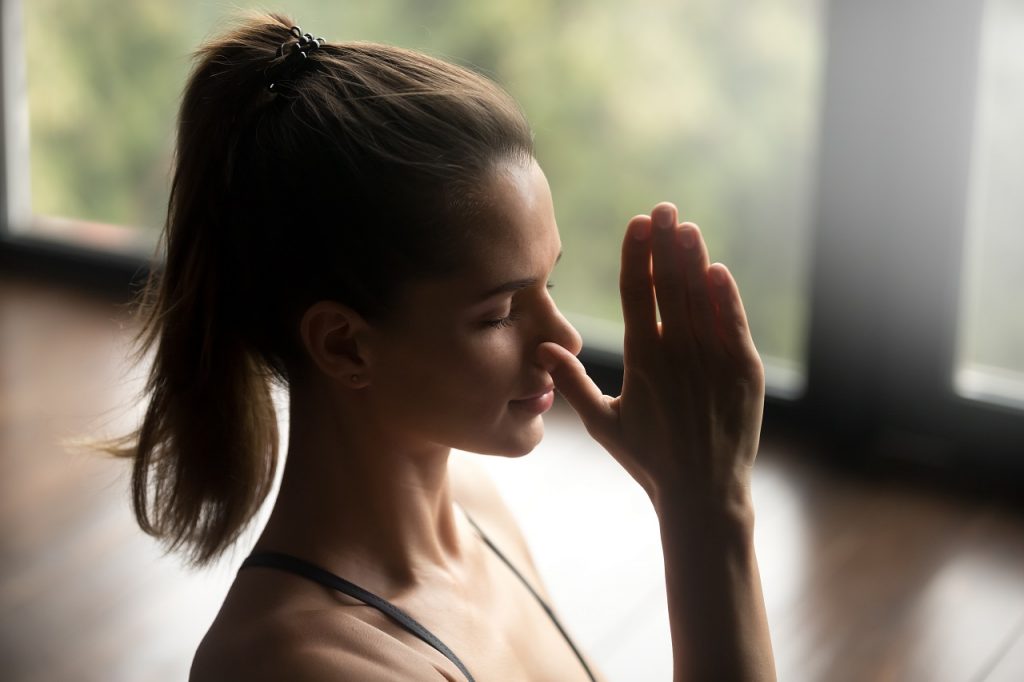
3. Alternate Nostril breathing
This is a type of deep and slow breathing in Yoga in which inhaling, and exhaling happens through alternate nostrils. Long term practice of this breathing improves the total capacity of the lungs while boosting the pulmonary function markers. It is also meant to purify the lungs and the circulatory system throughout the body.
How to Do it:
- Sit straight on a flat surface with relaxed shoulders and neck
- Start with deep inhalation and slow exhalation couple of times or for a minute
- While folding the index and middle fingers of the right hand, make Vishnu mudra to close the right nostril with right thumb and left nostril with ring finger
- At first, close the right nostril and slowly exhale through left nostril
- Keep the right nostril closed and slowly inhale through the left nostril and feel all the air going upwards while filling all the air deep down till the abdomen
- Once you inhale all the air possible, pause briefly for 2 seconds
- Now close the left nostril with the ring finger and release thumb to open the right nostril
- Exhale out all the air through the right nostril with a pause of 2 second at the end
- As your still closing the left nostril, inhale slowly through the right nostril letting all the air into right side of the body with a short pause of 2 seconds at the end
- Again, close the right nostril and open the left nostril to exhale all the air out
This is considered as one round of alternate nostril breathing. Continue this pattern for 5-10 minutes to get the maximum benefits.
Enhancing Lung Health with Breathing Exercises
Consistently practicing one or more of these breathing techniques on an empty stomach can help build lung strength and may aid in boosting immunity. These simple yet effective exercises can support your lung function, whether you’re managing COPD or simply aiming to breathe better.
Find more breathing exercises, meditation techniques and yoga here. You can also get these tips directly from your GOQii Coach by subscribing to Personalised Health Coaching here.
#BeTheForce
Disclaimer: The information provided in this blog is for general awareness and educational purposes only. It is not intended to replace professional medical advice, diagnosis, or treatment. Always consult a qualified healthcare provider for personalised medical guidance or concerns related to your health.
 Hypertension, commonly known as high blood pressure, is largely influenced by lifestyle factors. By understanding and making adjustments to five key aspects of daily life — diet, exercise, stress management, sleep quality, and hydration— you can effectively manage this condition and improve overall well-being.
 Gut health is a familiar concept, and it’s widely recognized that maintaining a healthy gut is beneficial for our overall well-being. Beyond just aiding digestion, a healthy gut supports our immune system, heart health, brain function, weight management, and numerous other facets of health.