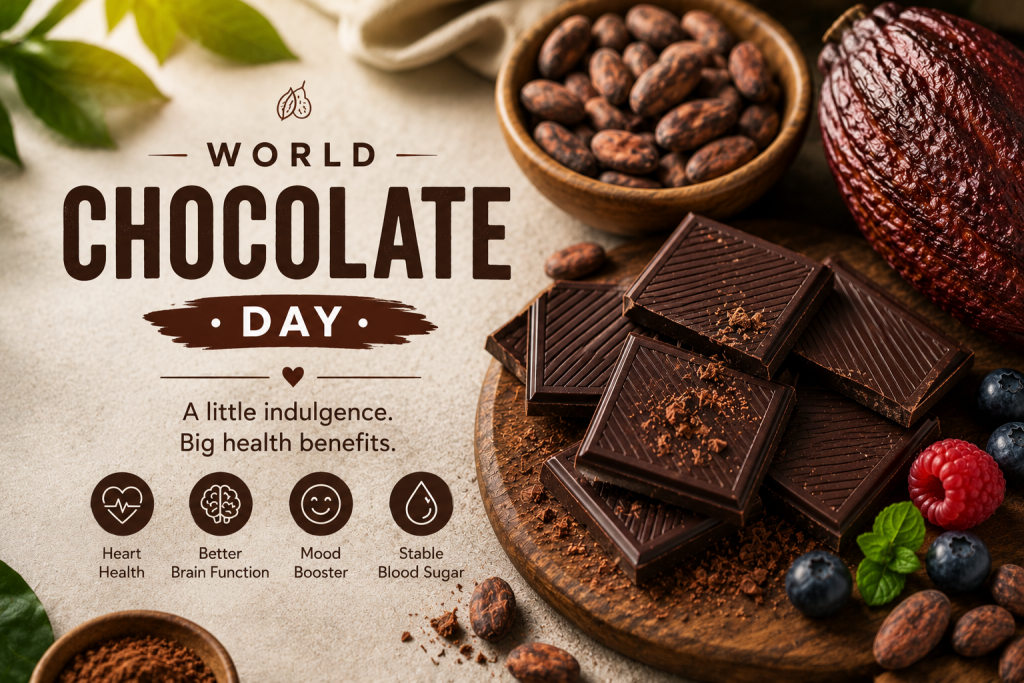
 The Big Question: Can one of the world’s most beloved indulgence habits actually be transformed into a powerful tool for cardiovascular, cognitive, and metabolic protection?
Chocolate is one of the world’s most loved treats. Whether it’s a small post-meal indulgence or a festive gift, it’s hard to resist its rich flavor and comforting appeal. But did you know that not all chocolate is created equal? While chocolates loaded with sugar and unhealthy fats should be enjoyed occasionally, high-quality dark chocolate—made with a high percentage of cocoa—offers several health benefits when eaten in moderation.
This World Chocolate Day, celebrate mindfully by learning why dark chocolate can be a smarter choice for your heart, brain, and overall well-being.
What Makes Dark Chocolate Different?
The biggest difference between dark chocolate and regular milk chocolate lies in its core cocoa content. Dark chocolate typically contains 70% or more cocoa solids, making it exceptionally rich in naturally occurring plant compounds called flavanols. These unique antioxidants help protect your cells from oxidative stress and support several important vascular and neurological functions in the body.
- The Mindful Cacao Loop: ≥ 70% Dark Cacao ⇒ Stimulates Nitric Oxide Production ⇒ Dilates Arteries ⇒ Lowers Blood Pressure naturally.
- The Destructive Sugar Loop: Refined Sugar Confection ⇒ Spikes Insulin Levels ⇒ Elevates Cortisol Release ⇒ Promotes Visceral Fat Storage.
Milk chocolate, on the other hand, usually contains very low amounts of cocoa and is diluted with high levels of refined sugar, milk solids, and added processed fats. This combination significantly reduces or eliminates many of the structural health benefits found in raw cocoa. The higher the cocoa percentage, the lower the added sugar, and the greater the potential health benefits.
4 Main Health Benefits of Dark Chocolate
-
Supports Heart Health and Circulation
Dark chocolate is rich in flavanols that help support healthy blood circulation by encouraging blood vessels to relax. Research suggests that regularly consuming small amounts of flavanol-rich dark chocolate as part of a balanced diet can help maintain healthy blood pressure and support general cardiovascular health.
Additionally, these active antioxidants help protect LDL (“bad”) cholesterol from oxidation—a primary chemical factor linked to arterial plaque formation and heart disease.
-
Improves Blood Flow and Brain Function
Your brain depends on a steady, high-volume supply of oxygen and nutrients to perform at its best. Clinical studies suggest that the flavanols found in cocoa improve blood flow directly to the brain, which supports memory, focus, and overall mental performance.
Dark chocolate also contains small amounts of natural stimulants like caffeine and theobromine. Theobromine acts as a gentle stimulant that expands blood vessels rather than constricting them, providing a smooth, lasting boost in daytime alertness without the sudden jitters or intense energy crashes associated with strong coffee.
-
Can Help Boost Your Mood Naturally
Ever wondered why a square of chocolate provides instant comfort during a stressful day? Dark chocolate contains naturally occurring compounds that stimulate the release of feel-good neurotransmitters in the brain, including endorphins (the body’s natural pain relievers).
It also serves as an excellent source of magnesium, an essential mineral that regulates normal nerve function, balances cortisol production, and supports muscle relaxation, creating a deeply satisfying and mindful eating experience.
-
Supports Healthy Blood Sugar and Weight Management
Although chocolate is traditionally associated with weight gain, high-cocoa dark chocolate is vastly different from sugary confectionery items. Because it contains minimal sugar and a surprisingly high amount of dietary fiber, a small serving is highly satiating.
The natural polyphenols in dark cacao help enhance insulin sensitivity, allowing your cells to clear glucose efficiently out of your bloodstream. When enjoyed as part of a balanced lifestyle, dark chocolate satisfies sweet cravings very quickly, preventing the impulsive overeating triggered by blood sugar crashes.
The Cacao vs. Confection Metabolic Matrix
| Chocolate Variant Type | Core Cacao Percentage | Primary Endocrine Focus | Long-Term Health Outcome |
| High-Quality Dark | 70% to 90% Cacao | Stimulates nitric oxide; enhances cellular insulin sensitivity. | Lowers arterial blood pressure and supports cognitive function. |
| Standard Milk | 10% to 30% Cacao | Causes steep blood glucose spikes; promotes insulin resistance. | Accelerates visceral fat storage and triggers systemic inflammation. |
| Commercial White | 0% Cacao Solids | Delivers empty calories from refined sugar and industrial fats. | Stalls weight loss efforts and increases tooth decay risks. |
How Much Dark Chocolate Is Healthy?
When it comes to dark chocolate, more is not automatically better. For most healthy adults, a daily portion of 20–30 grams (around 2–3 small squares) is the ideal therapeutic dose to enjoy as part of a balanced diet.
When reviewing options, select chocolate bars that feature:
- At least 70% cocoa solids or higher.
- Cacao, cocoa mass, or cocoa liquor listed as the very first ingredient on the label.
- Minimal added sugars and no artificial preservatives or industrial trans-fats.
Simple and Healthy Ways to Use Dark Chocolate
You do not have to eat dark chocolate exclusively on its own. Boost its fiber and protein content by pairing a melted or grated square with these nutritious whole foods:
- Shaved over high-fiber overnight oats or healthy millets.
- Swirled into a bowl of probiotic-rich Greek yogurt or fresh curd.
- Paired with a handful of raw almonds or walnuts for an anti-inflammatory snack.
- Dipped alongside fresh, antioxidant-dense berries or banana slices.
- Blended smoothly into your home-cooked breakfast smoothies or chia puddings.
Who Should Limit Chocolate Consumption?
While dark chocolate is safe and health-promoting for the vast majority of people, certain individuals should modify or limit their intake:
- Migraine Sufferers: Chocolate contains tyramine and beta-phenylethylamine, which can serve as a trigger for specific individual migraines.
- GERD / Severe Acid Reflux: Cacao can relax the lower esophageal sphincter, potentially worsening nighttime acid reflux symptoms.
- Caffeine Sensitivity: Those with extreme sensitivities to stimulant compounds should monitor their evening intake to protect their sleep cycles.
Chocolate does not have to be off-limits to live a vibrant, healthy lifestyle. Choosing a small portion of high-quality dark chocolate instead of highly processed sugary treats allows you to enjoy a delicious indulgence while benefiting from naturally occurring antioxidants, magnesium, and active plant flavanols. This World Chocolate Day, celebrate mindfully. Savor every bite, choose quality over quantity, and remember that healthy eating is about smart balance—not total deprivation!
Pro Tip: Successfully incorporating mindfully portioned treats into your health routine is easy when you track your daily choices. Use the GOQii App to log your meals, balance your macronutrient distributions, and monitor your physical activity. You can share this baseline health overview with your GOQii Personalised Health Coach to design a customized lifestyle plan that satisfies your cravings while keeping you cleanly on the path toward your weight loss and longevity goals!
Frequently Asked Questions (FAQs)
- Is dark chocolate genuinely healthier than standard milk chocolate?
Yes, absolutely. Dark chocolate contains a much higher percentage of raw cocoa solids, meaning it delivers a dense volume of health-boosting flavanols and magnesium with very little sugar. Milk chocolate is largely made of refined sugars, milk powders, and processed fats, which cause rapid insulin spikes and lack the beneficial plant compounds.
- How much dark chocolate can I safely consume on a daily basis?
A serving of 20–30 grams (roughly 2–3 small squares) is generally considered the optimal moderate portion for most healthy adults. Since chocolate is structurally calorie-dense due to its natural cocoa butter fats, keeping your portion controlled allows you to gain the antioxidant benefits without creating a caloric surplus.
- What specific percentage of cocoa should I look for on the ingredient label?
Always look for dark chocolate with 70% cocoa or higher. Choosing bars in the 70% to 85% range ensures that you maximize the active plant polyphenols and cardiovascular benefits while keeping the added refined sugar content to an absolute minimum.
- Can dark chocolate actively help improve my heart health?
Yes. Clinical evidence indicates that the abundant flavanols in dark chocolate support healthy blood circulation by encouraging the endothelial lining of your blood vessels to relax and dilate. When consumed in moderation as part of an active lifestyle, it helps maintain healthy blood pressure and protects circulating cholesterol from inflammatory oxidation.
#BeTheForce
Disclaimer: This article is intended for educational and informational purposes only. It is not intended to replace professional medical advice, clinical diagnosis, or personalized dietary treatment. Always consult your primary care physician or a registered dietitian before making alterations to your regular nutrition plan, especially if you manage an underlying gastrointestinal issue, severe migraines, or chronic metabolic disorders.




Leave a Reply