 How USEMA works and why diet matters?
USEMA contains semaglutide, a GLP-1 receptor agonist used to manage type 2 diabetes with obesity.
- It works by mimicking a natural hormone (GLP-1) in the body that helps control blood sugar levels.
- It reduces appetite and helps you feel full sooner, which supports healthy weight loss.
- This also contributes to better metabolic control.
- Because GLP-1 RA therapy can change how much and how often you eat, proper nutrition becomes important during treatment.
USEMA helps you:
- Feel full faster
- Feel full with smaller food portions
- Stay full for longer time
- Reduce hunger and cravings
- Control blood sugar levels
Why nutrition matters when you are on USEMA
When you begin to feel full more quickly and stay satisfied for longer, it’s natural to eat less than you did before and in smaller portions. If these meals are not balanced nutritionally, you may not get all the nutrients you need.
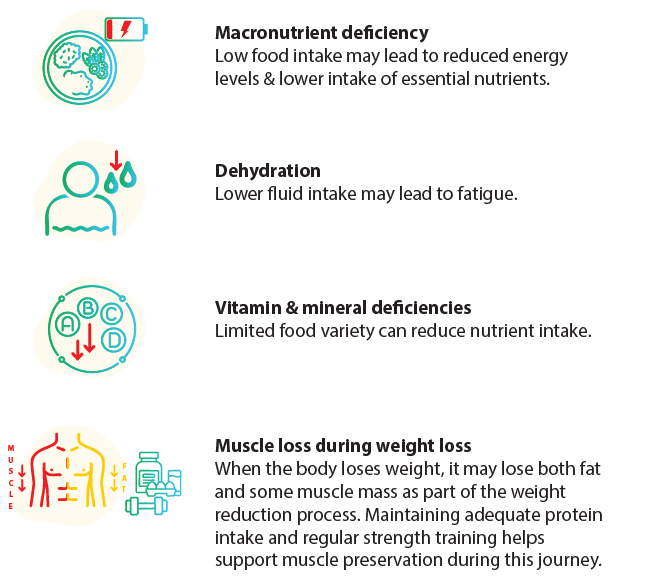
This may lead to:
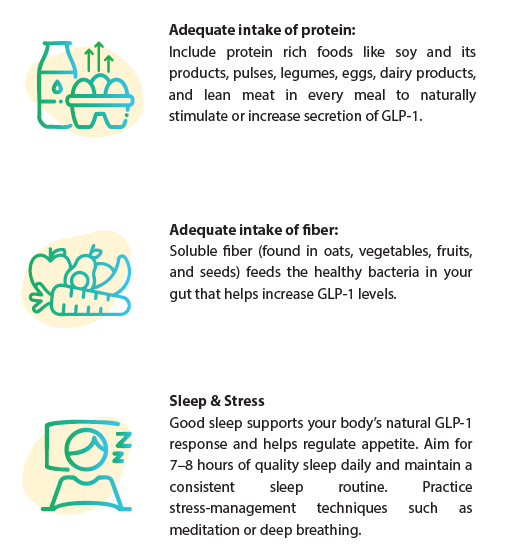
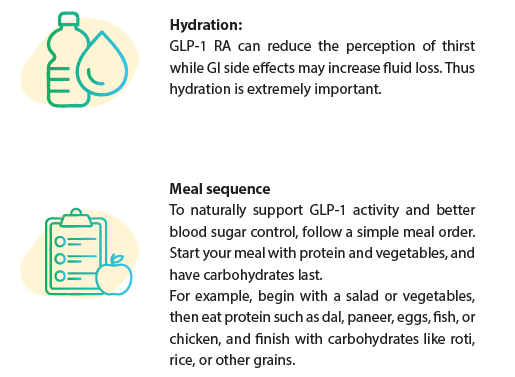
Smart habits to get the best results with USEMA
What is a healthy plate?
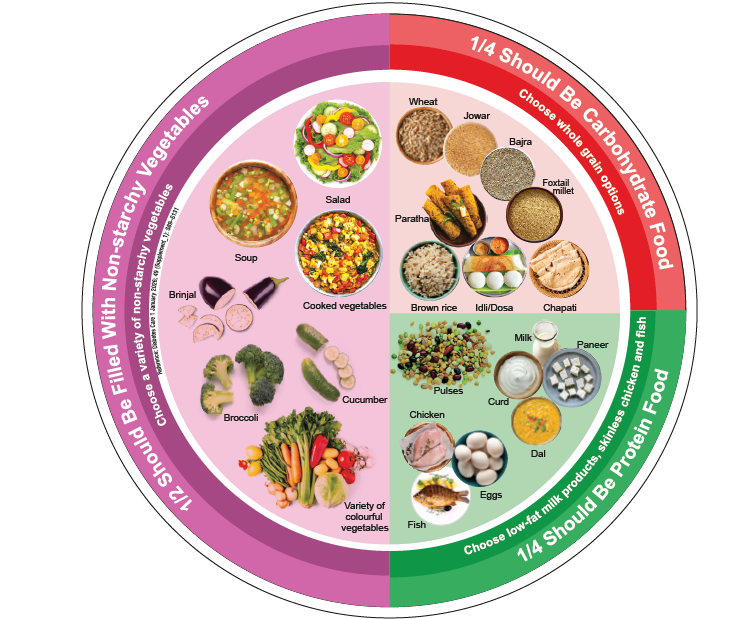
Healthy plate is a simple and practical way to plan meals that supports your overall health, energy levels, and better blood sugar control. Instead of focusing on strict calorie counting, it focuses on a well-balanced diet with the right proportions of different types of food.
Meal tips when on USEMA : (Do’s and Don’ts)
| Do’s | Don’ts |
| Consume well-balanced meals at regular intervals. | Avoid fried, oily, and very spicy foods. |
| Drink adequate water throughout the day. | Limit alcohol intake. |
| Limit consumption of processed foods. | Avoid eating fruit with lunch or dinner. |
| Eat slowly and chew food thoroughly. | Avoid lying down immediately after meals. |
| Choose fruit as a mid-morning or evening snack. | Avoid heavy exercise immediately after meals. |
| Keep a record of your food and water intake. | Do not eat in a hurry. |
| Choose healthier cooking methods like steaming, stir-frying, or baking rather than frying. |
Importance of nutrition to protect muscle and bone health during weight loss
Protect muscle during weight loss
When you lose weight, your body loses not only fat but also some muscle mass. Muscle loss can account for about 10–25% of total weight loss. This is a natural change in the body, but it can be minimized by eating enough protein by staying physcially active and strength training.
You may have a higher risk of muscle loss if you:
- have inadequate protein intake
- are older in age
- are a post-menopausal woman
- do not perform strength or resistance exercises regularly
To protect your muscles and improve strength:
- Eat adequate protein (about 60–75 g/day or up to 1.5 g/kg body weight per day).
- Include high-quality protein sources such as soy products, pulses, dals, sprouts, and dairy for vegetarian options, and eggs, chicken, and fish for non-vegetarian options.
- Include strength or resistance exercises regularly to maintain muscle mass.
Protecting bone health during weight loss
Rapid and significant weight loss (around 14% or more within 3–4 months) may also lead to some bone loss, especially in women and older adults.
Bone loss during weight reduction may depend on:
- How quickly you lose weight
- Your protein intake
- Your level of physical activity
- Your starting body weight
Loss of bone density can increase the risk of fractures and affect long-term bone health.
To keep your bones strong:
- Ensure adequate protein intake.
- Include nutrients important for bone health, such as calcium and vitamin D.
- Stay physically active, especially with weight-bearing and strength exercises.
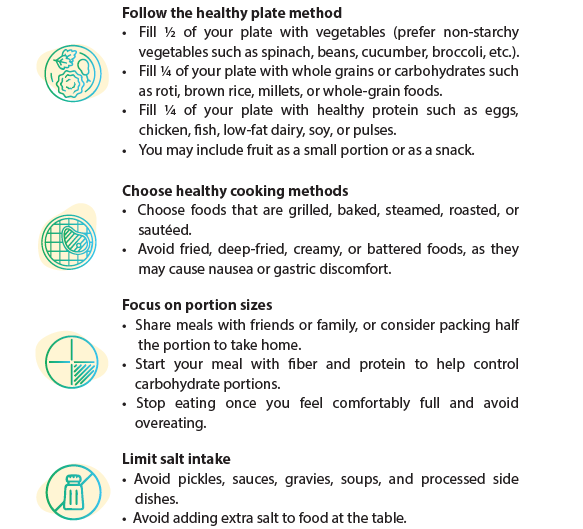
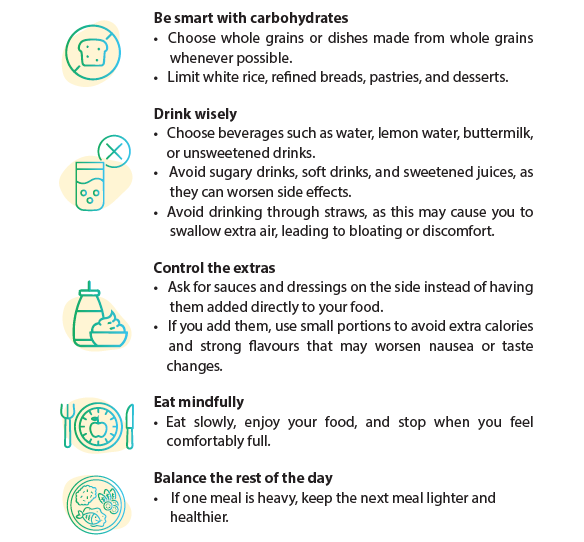
Healthy dining-out tips
Socialising and eating away from home are part of everyday life. With a few mindful choices and portion control, you can enjoy dining out occasionally. The following tips can help you make healthier and more comfortable choices while eating out.
#BeTheForce
References:
- Collins L, Costello RA. Glucagon-like peptide-1 receptor agonists. StatPearls [Internet]. Treasure Island (FL): StatPearls Publishing; 2024.
- Mozaffarian D, Agarwal M, Aggarwal M, et Nutritional priorities to support GLP-1 therapy for obesity: A joint Advisory from the American College of Lifestyle Medicine, the American Society for Nutrition, the Obesity Medicine Association, and The Obesity Society. Obesity (Silver Spring). 2025;33(8):1475-1503. doi:10.1002/oby.24336
- Almandoz JP, Wadden TA, Tewksbury C, et Nutritional considerations with antiobesity medications. Obesity (Silver Spring). 2024;32(9):1613-1631. doi:10.1002/oby.24067
- van der Klaauw AA, Keogh JM, Henning E, et al. High protein intake stimulates postprandial GLP1 and PYY release. Obesity (Silver Spring). 2013;21(8):1602-1607. doi:10.1002/oby.20154
- Leidy HJ, Armstrong CL, Tang M, Mattes RD, Campbell WW. The influence of higher protein intake and greater eating frequency on appetite control in overweight and obese men. Obesity (Silver Spring). 2010;18(9):1725-1732. doi:10.1038/oby.2010.45
- Bodnaruc, M., Prud’homme, D., Blanchet, R. et al. Nutritional modulation of endogenous glucagon-like peptide-1 secretion: a review. Nutr Metab (Lond) 13, 92 (2016). https://doi.org/10.1186/s12986-016-0153-3
- How to Activate GLP-1 Ohio State University. (2025 July 1). Accessed February 21, 2026.
- Joslin Diabetes Healthy Plate Method. Joslin Diabetes Center. Accessed December 29, 2025.
- Gentinetta S, Sottotetti F, Manuelli M, Cena H. Dietary Recommendations for the Management of Gastrointestinal Symptoms in Patients Treated with GLP-1 Receptor Agonist. Diabetes Metab Syndr 2024;17:4817-4824. Published 2024 Dec 19. doi:10.2147/DMSO.S494919
- Pamela Kushner, Carlos Campos, Aaron King, Davida Kruger, Javier Morales; Clinician Guidance on the Benefits of Healthy Nutrition and Increased Physical Activity for People With Type 2 Diabetes Following Glucagon-Like Peptide 1 Receptor Agonist Initiation. Clin Diabetes 15 December 2025; 43 (5): 681–695
- Figueiredo VC. Revisiting the roles of protein synthesis during skeletal muscle hypertrophy induced by Am J Physiol Regul Integr Comp Physiol. 2019;317(5):R709-R718. doi:10.1152/ajpregu.00162.2019
- American Diabetes Association. What can I eat? Healthy eating away from home (WCIE Participant Guide, Class 3)
.https://professional.diabetes.org/sites/default/files/media/wcie_participant_guide_class_3_lr.pdf
Disclaimer: The information provided herein is prepared based on articles provided under reference and reviewed by a quali ed dietitian intended for bringing general awareness and are/is not intended to replace professional medical advice. Seek advice from the quali ed health care professional before adopting the suggestions or if you have a doubt regarding your health condition. USV Private Ltd., (“USV”) disclaims all liabilities or damages arising directly or indirectly from the advisory services. Copying, circulation and distribution of this content is strictly prohibited.




Leave a Reply