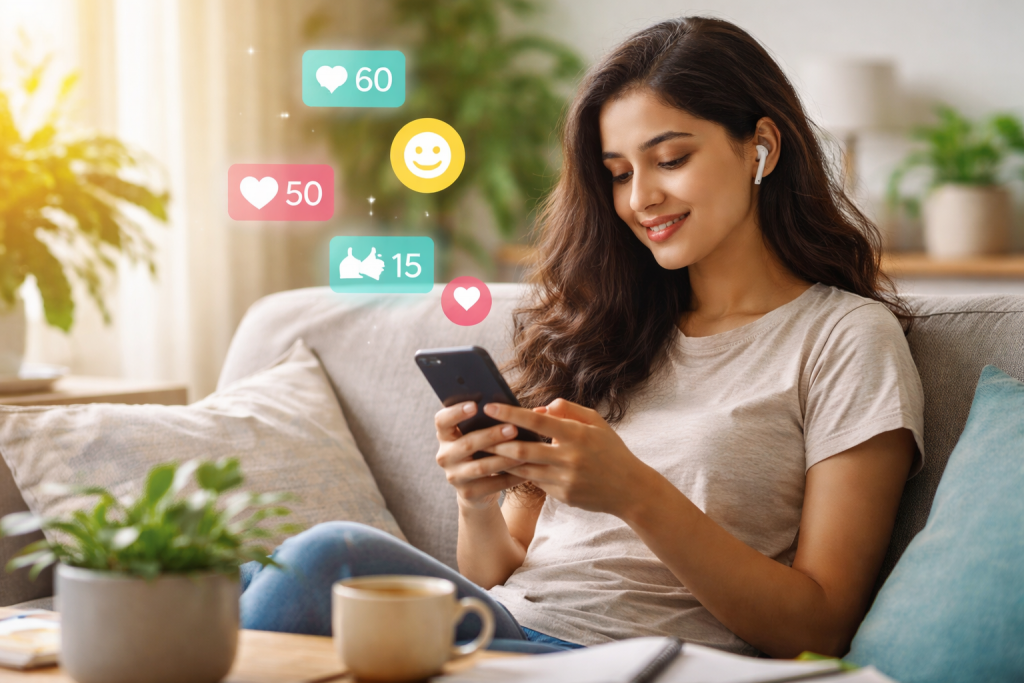
 Social media and happiness are more connected than we realise. The way you use your phone daily can influence your stress levels, sleep quality and long-term health.
On March 20th, the International Day of Happiness, the global theme “Social Media and Happiness” shifts the spotlight to something we interact with every day: our screens.
At GOQii, we believe longevity is not just about lifespan it’s about healthspan. And your digital behaviour plays a bigger role in that than most people realise.
What Are Digital Habits?
Digital habits refer to how individuals interact with smartphones, social media and digital platforms on a daily basis. These behaviours influence mental wellbeing, stress levels, sleep patterns and overall long-term health outcomes.
In simple terms, your scrolling patterns are health behaviours.
The Science: How Social Media Affects Your Brain and Body
Your brain responds to digital stimuli through hormonal signals. Depending on how you use social media, this can either support or disrupt your internal balance.
The Negative Loop: Doom Scrolling and Stress
Constant exposure to negative content, comparison and information overload triggers:
- Increased cortisol (stress hormone)
- Activation of the fight-or-flight response
- Disrupted sleep cycles
- Mental fatigue and anxiety
Over time, chronic exposure to this state contributes to:
- systemic inflammation
- insulin resistance
- accelerated biological ageing
Studies have linked excessive social media use with higher stress levels and poorer sleep quality both key factors that influence long-term health outcomes.
The Positive Loop: Connection and Wellbeing
When used intentionally, digital platforms can stimulate:
- Oxytocin (connection hormone)
- Serotonin (mood stabiliser)
These contribute to:
- improved emotional resilience
- stronger immunity
- better mental wellbeing
The impact of social media is not inherently negative it depends on how it is used.
The Longevity Link: Why Digital Habits Matter
Longevity is driven by daily behaviours.
Your digital habits directly influence:
- how well you sleep
- how stressed your body remains
- how active or sedentary you are
- how connected or isolated you feel
These are not surface-level effects. They are core drivers of healthspan.
Poor digital hygiene does not create immediate illness but over time, it compounds into measurable health risks.
3 Practical Ways to Build Healthier Digital Habits
- Set Boundaries: The 20-Minute Rule
Treat social media like a controlled input, not passive consumption.
- Limit usage to intentional 15–20 minute sessions
- Avoid scrolling before bedtime
- Maintain a 60-minute digital cut-off before sleep
This protects sleep, one of the most critical pillars of recovery and longevity.
- Replace Passive Scrolling with Real Connection
Engagement is not connection.
Instead of passive actions:
- send a voice note
- make a phone call
- engage in real conversations
Human connection remains one of the strongest predictors of long-term health and happiness.
- Curate Your Digital Environment
Your feed is your mental ecosystem.
Evaluate your content:
- Does it trigger stress or comparison?
- Does it inspire action or growth?
Remove what drains you. Follow what supports:
- physical activity
- learning
- positive behaviour change
At GOQii, we call this “Bloom Scrolling” building a digital environment that supports growth.
Happiness, Behaviour and Healthspan
Insights from global wellbeing research consistently highlight three drivers of long-term happiness:
- meaningful relationships
- purpose
- balance
Your digital habits influence all three.
What you consume daily shapes your mental state. Your mental state influences your physiology. And over time, that physiology determines your health outcomes.
Final Thought: Awareness Drives Longevity
You don’t need to eliminate social media.
You need to use it with intent.
Because longevity is not built through extreme actions. It is built through consistent daily behaviours including the ones that happen on your screen.
Today, use your device to:
- schedule movement
- connect with someone
- learn something useful
Not just scroll.
Be intentional with your habits. Be aware of your inputs. Be the force of positivity online and offline.
Frequently Asked Questions
How do digital habits affect health?
Digital habits influence stress levels, sleep quality and mental wellbeing, all of which impact long-term health and longevity.
Does social media increase stress?
Excessive or negative content consumption can increase cortisol levels, leading to chronic stress and reduced recovery.
Can reducing screen time improve sleep?
Yes. Limiting screen exposure before bed supports melatonin production and improves sleep quality.
What is the best way to use social media for wellbeing?
Use social media intentionally focus on meaningful interaction, limit passive scrolling and curate positive, growth-oriented content.
#BeTheForce




Leave a Reply