GOQii

Blog

  • HOME
  • HEALTHY LIVING
  • FITNESS
  • HEALTHY RECIPES
  • USER STORIES
  • KARMA
  • BUY GOQii

Archives for February 2025

February 21, 2025 By Saba Mirza 4 Comments

5 Yoga Asanas to Strengthen the Back

strengthen the backIf long working hours, incorrect posture, and less exposure to sunlight sound familiar, you’ve likely experienced back pain at some point. Whether it’s from sitting at a desk or traveling, back pain is a common issue, even among younger individuals. The solution? Strengthening your back muscles through yoga!

Why Do You Need a Strong Back?

The back muscles are the backbone of the body. They help maintain correct posture, improve balance, and prevent injuries. Weak back muscles can lead to stiffness, aches, cramps, and long-term issues. To strengthen your back, avoid long sitting hours, improve calcium and Vitamin D intake, and focus on flexibility. Yoga is one of the best ways to build both flexibility and strength. Let’s explore five effective yoga asanas to strengthen your back.

Asanas to Strengthen the Back

1. Tadasana (Mountain Pose):
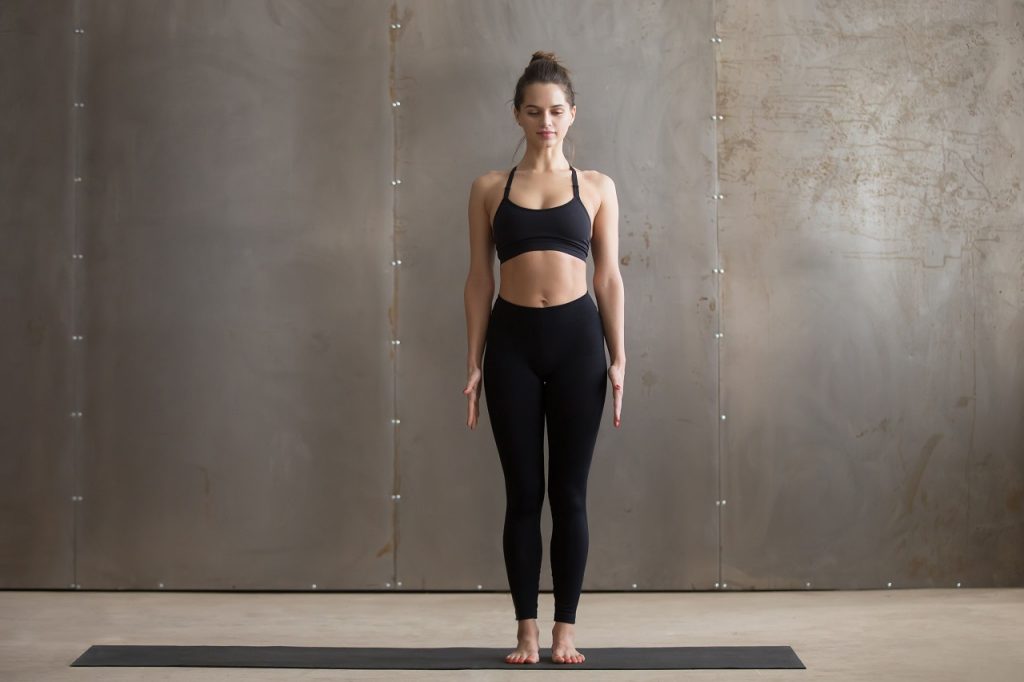
strengthen the backTadasana is a basic asana for various standing yoga poses! It is excellent for improving posture, maintaining the curvature of your back and strengthening the hips and thigh muscles.

  1. Stand straight with a small gap between your feet
  2. Keep your hands straight at your sides, stretching your wrists and fingers
  3. Elongate and stretch your back, widen your collar bone and straighten your shoulder blade, relaxing them down the back
  4. Stand on your toes, stretching your knees, thighs and hips without tightening your belly.
  5. Hold for 20-30 seconds while breathing easily.

 2. Virabhadrasana (Warrior Pose):
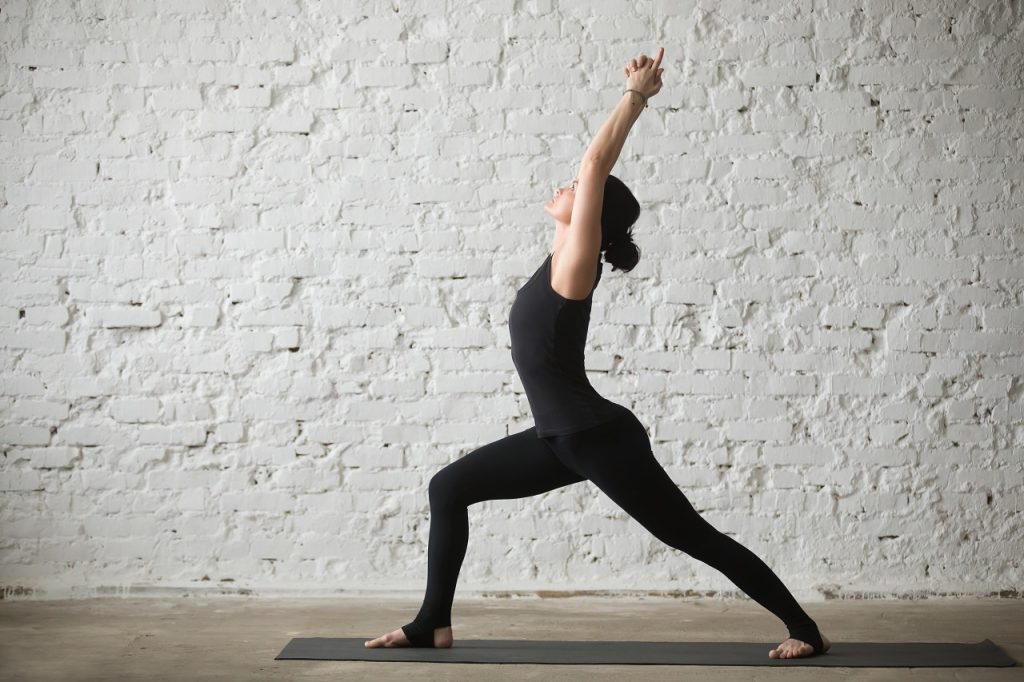
VirbhadrasanaWidely known as the warrior pose, Virabhadrasana strengthens the knees, thigh muscles, opens the hips and chest as well as stretches the back and leg muscles.

  1. Stand in Tadasana and keep your feet 4 feet apart
  2. Turn your left foot out by 90 degrees and your right foot in 15 degrees
  3. Raise your arms above your head, join your palms and look up at your thumbs
  4. Rotate your torso to the left, bend your knees while keeping them above the ankle (avoid bending more than that). Exhale.
  5. Stand in this posture for around 30 seconds.
  6. Straighten the knee while you inhale and bring your hand down
  7. Exhale and come back to the Tadasana pose.

 3. Trikonasana (Triangle Pose):
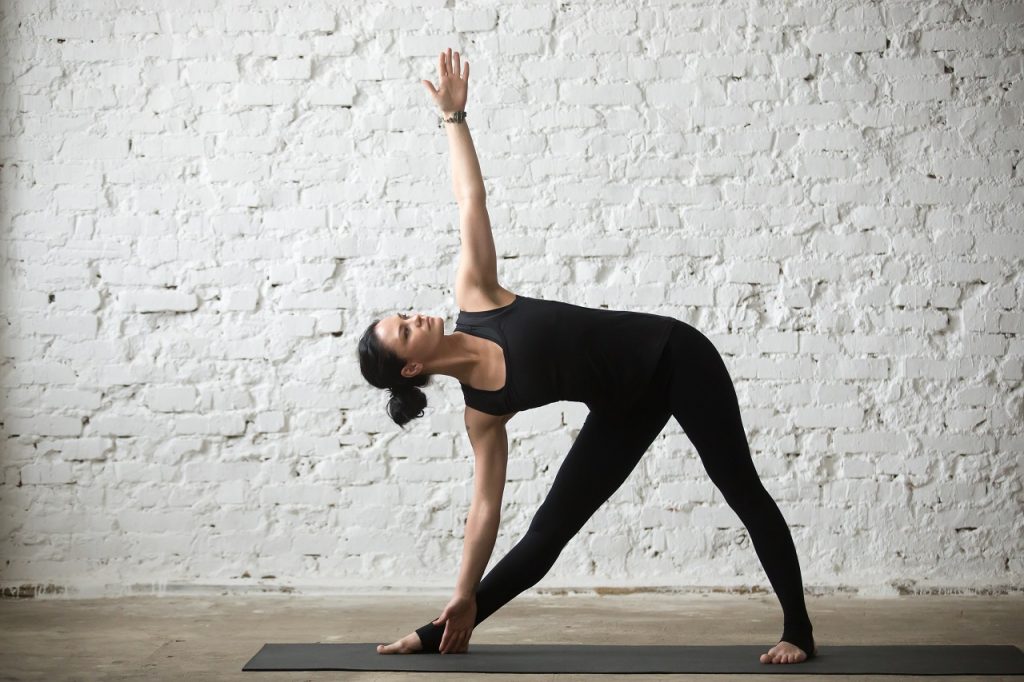
trikonasanaAs the name suggests, it’s a triangle posture which stretches the spine, opens up the chest and shoulder as well as reduces tension on the hip and thigh muscles. It helps in improving physical and mental equilibrium.

  1. Stand in Tadasana pose and separate the feet wide apart, around four feet from each other
  2. Turn your right foot out 90 degrees and left foot in by 15 degrees. Now align the center of your right heel with the center of your arch of the left foot
  3. Inhale deeply and as you exhale, bend your body to the right, downward from the hips, keeping the waist straight, allowing your left hand to come up in the air while your right hand comes down towards the floor. Keep both arms in a straight line
  4. Rest your right hand on your shin, ankle, or the floor outside your right foot, whatever is possible without distorting the sides of the waist. Stretch your left arm toward the ceiling, in line with the top of your shoulders. Keep your head in a neutral position or turn it to the left, eyes gazing softly at the left palm.
  5. Ascertain that your body is bent sideways and not backward or forward. Pelvis and chest are wide open.
  6. Stretch maximum and be steady. Keep taking in long, deep breaths. With each exhalation, relax the body more and more. Just be with the body and the breath.
  7. As you inhale, come up, bring your arms down to your sides, and straighten your feet.
  8. Repeat the same on the other side.

 4. Matsyendrasana (Lord of the Fishes Pose):
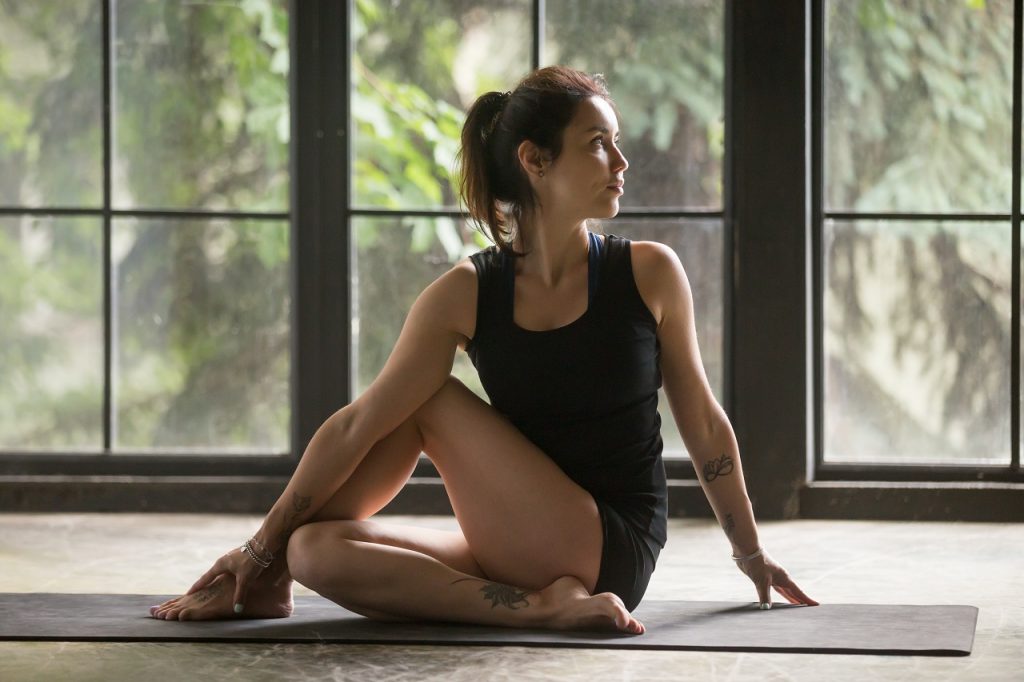
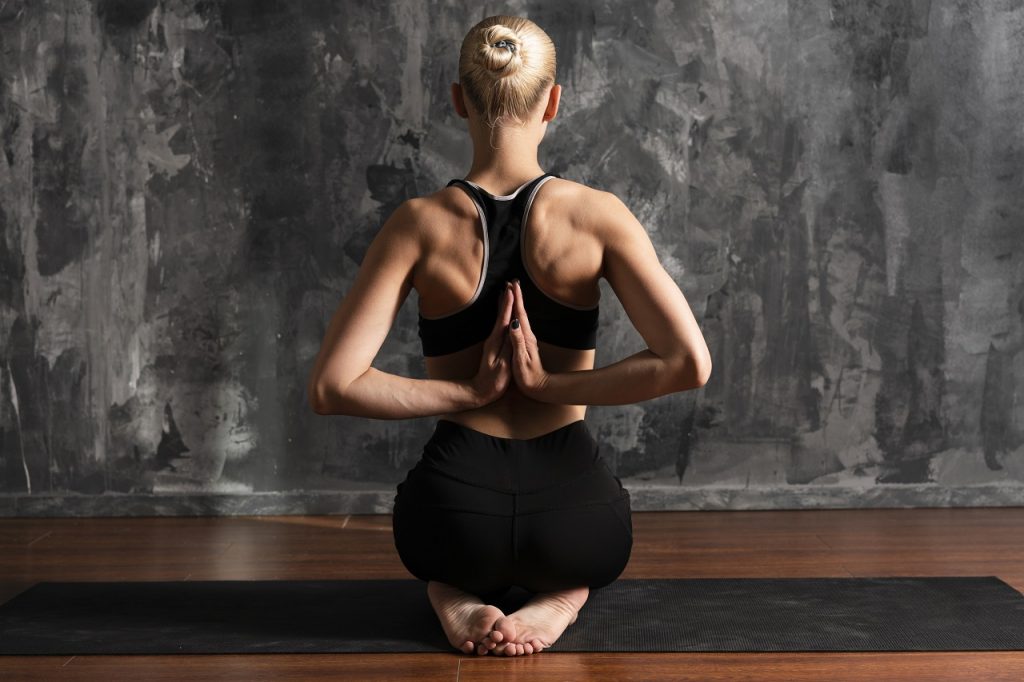
lord of the fish poseOne of the best asanas to improve spinal health. It provides excellent compression and extension to the nerves and muscles supporting the back, increases elasticity of the spine, tones the spinal nerves and reduces the stiffness in the spinal muscles.

  1. Sit on the floor with legs straight in front of you. Keep the back erect
  2. Bend the left leg and place the heel of the left foot beside the right hip (optionally, you can keep the left leg straight)
  3. Take the right leg over the left knee
  4. Place the left hand on the right knee and the right hand behind you.
  5. Twist the waist, shoulders and neck in this sequence to the right and look over the right shoulder.
  6. Keep the spine erect.
  7. Hold and continue with gentle long breaths in and out
  8. Breathing out, release the right hand first (the hand behind you), release the waist, then the chest
  9. Release the neck and repeat on the other side
  10. Breathing out, come back to the front and relax

 5. Salabhasana (Locust Pose or Grasshopper Pose)
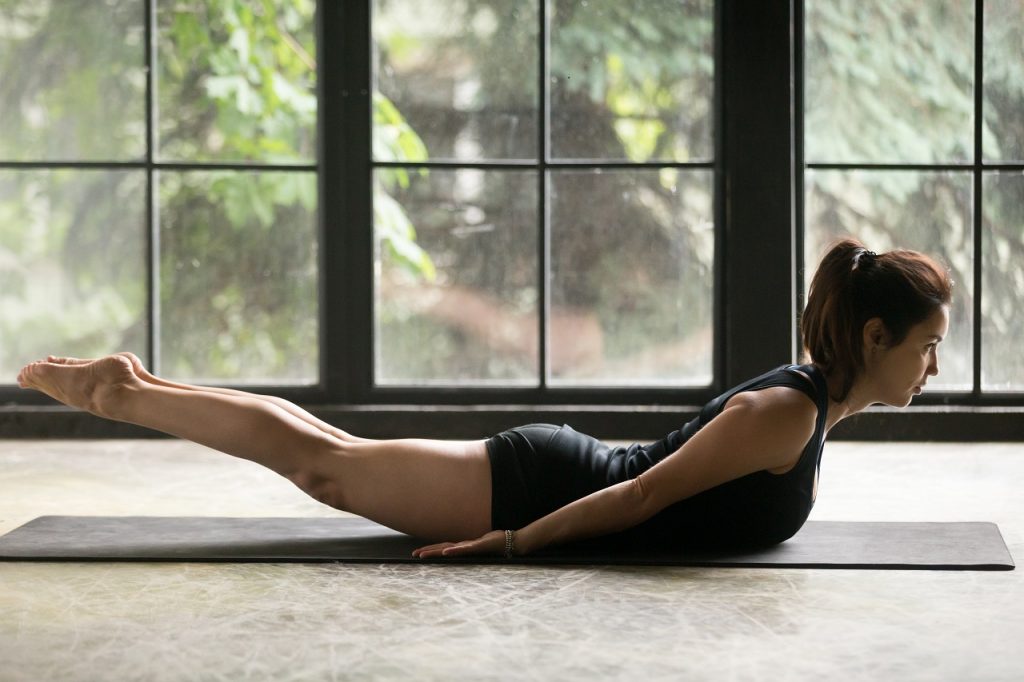
Salabhasana prepares beginners for a deeper backbend, strengthening the muscles of the entire torso from the nape of the neck, spine, chest, and legs to the back of the heels. It is a part of Hatha Yoga which stimulates the functioning of abdominal organs and relieves stress.

  1. Lie on your belly with your arms along the torso, palms up, forehead resting on the floor (use a yoga mat)
  2. Turn your big toes towards each other inwardly rotating your thighs and firm your buttocks
  3. Exhale and lift your head, upper torso, arms and legs away from the floor. You will be resting your entire weight on your lower ribs, belly and front pelvis
  4. Raise your arms parallel to the floor and stretch back actively through your fingertips. Press your scapula firmly into your back
  5. Keep the base of the skull lifted and back of the neck nicely long
  6. Stay in this asana for 15-30 seconds then release slowly with exhalation.

Practicing these asanas regularly can help strengthen your back, improve posture, and reduce pain. However, before starting, consult your doctor, physiotherapist, or yoga coach to ensure these poses are suitable for you. For expert guidance, book a GOQii Pro class through the GOQii App.

Have you tried these yoga asanas for back pain? Share your experience in the comments below! For more tips on yoga and wellness, explore Healthy Reads or connect with a GOQii Coach for personalized guidance here.

#BeTheForce 

February 20, 2025 By Sindhu Ashwin 4 Comments

Interesting facts about Salt you should know

SaltWe all know that salt is an essential ingredient in our food. It’s hard to imagine a meal without it! But what exactly is salt, and why is it so important? While most of us are familiar with table salt, there are some fascinating facts about salt that you might not know. Let’s dive into the world of salt and uncover its role in our lives.
What is Salt?

Salt is made from sodium, a naturally occurring mineral, and is a major ingredient used worldwide. Most of the sodium we consume is in the form of sodium chloride, commonly known as table salt. But salt is more than just a seasoning—it plays a vital role in our health and daily lives.

Interesting facts about Salt

  1. Widely used Additive
    • Salt is one of the first food additives and seasonings used by humans. Today, it’s one of the most widely used additives, second only to sugar in the amount added to food.
  2. Too much salt is harmful
    • While salt is necessary for human life, over consumption can lead to health issues like high blood pressure, hypertension, and heart disease. On the other hand, consuming too little salt can cause hypotension.
    • High blood pressure is a major risk factor for heart disease, stroke, and kidney disease. However, sodium intake alone isn’t the sole cause—factors like family history, weight, race, physical fitness, and smoking also play a role.
  3. How Much Salt Should You Consume?
    • Under normal conditions, a person needs about 2500 milligrams of sodium daily, which is roughly half a teaspoon of salt.
  4. Replenishing Salt
    • During conditions like excessive sweating (from workouts, sports, or trekking), diarrhea, or vomiting, sodium is lost, and the body’s need for it increases. This increased need can usually be met through diet, as the average diet already contains more sodium than required.

Sources of Sodium

  1. Table salt and seasoning:
    • Sodium is often added to foods during preparation in the form of table salt, monosodium glutamate (MSG), sea salt, black salt, or rock salt. One level teaspoon of salt contains about 2000 milligrams of sodium.
  2. Processed foods:
    • Salt and sodium-containing additives are commonly found in processed foods like chips, salted nuts, pickles, sauces, and ketchup. These additives also help preserve food.
  3. Natural sources:
    • All animal-based foods naturally contain sodium. Most fresh fruits and vegetables also have small amounts of sodium.
  4. Medicines:
    • Some over-the-counter drugs and medications contain sodium, so it’s important to check labels if you’re monitoring your sodium intake.

The Role of Salt in Health

Experts believe that while cutting down on salt may not prevent high blood pressure, it can help lower blood pressure for people who are “salt-sensitive.” A low-salt diet, combined with weight loss, medication, or other lifestyle changes, can effectively control high blood pressure.

Salt is a tasty and essential ingredient in our daily cooking, but moderation is key. Use it wisely to stay healthy. For instance, switching to rock salt can help keep blood pressure in check.

We hope this article equips you with valuable insights into the role of salt in your life. If you found this information helpful, we’d love to hear your thoughts in the comments below.

#BeTheForce

Disclaimer: The information provided in this blog is for general awareness and educational purposes only. It is not intended to replace professional medical advice, diagnosis, or treatment. Always consult a qualified healthcare provider for personalised medical guidance or concerns related to your health.

February 19, 2025 By Akanksha Khullar 1 Comment

5 Life Hacks to Stay Motivated

motivatedSetting goals is easy but achieving them can be quite difficult. In between working towards your goals or giving up, the thing that keeps you going is motivation! That’s why knowing how to stay motivated is very important! Whether it is your health or career, you must focus on the long term. Here are some tips that will help you stay motivated and achieve your goals!



 1. Set SMART Goals

Try and set goals which are SMART (Specific, Measurable, Achievable, Reasonable, Tangible and Time bound). Be very clear as to what you actually want to achieve in how much time and keep your goal realistic. Try not setting larger goals in an impractical time period to be completed in as it can cause unwanted stress and demotivation. Here are more details on setting SMART Goals.

 2. Divide Goals into Smaller Parts

Try and take small steps which will facilitate fulfilling the long term goal set by you. If your smaller goals are achieved, it motivates you to move forward and accomplish the other goals which bring you closer to your main goal!

 3. Tap into People with Common Goals and Positive Attitude

When you feel demotivated or have just begun following your long term goal, try looking for people with similar goals as energy is something which is definitely transferred from one person to another. If the other person is performing well and is motivated, it motivates us as well! You can also read articles of people who have set goals and achieved them! It will motivate you.

 4. Take Responsibility

Once you have set a goal, talk to yourself every day about achieving it so your path isn’t hindered. It’s a little difficult to restart habits once they are left in between. Always tell yourself that it is a part of your everyday schedule and you can achieve the same. Taking responsibility gives you a sense of ownership over your health and can help you remain motivated.

5. Adopt a Positive Vocabulary

Your body listens to what you think and say. All words carry a certain amount of emotional baggage. So instead of saying or thinking of phrases such as, “I may not be able to do it”, “not sure if I can”, or “I hate and dislike doing this”, try changing your vocabulary to “Yes I can do it”, “I am trying my best” and “I love doing this!” It will help you boost your motivation levels. Keep a positive attitude, use weak words for negative feelings and strong words for positive ones. 

If you have lost motivation at some point, try to follow the above points to help you get back into the groove! It’s not about how hard you fall but how fast you stand up. Remember that nothing is impossible!

Still low on motivation? Get the right guidance and motivation directly from a GOQii Coach by subscribing for Personalized Health Coaching here.

#BeTheForce

February 18, 2025 By Parwage Alam 3 Comments

Sitting Too Much? Here’s How It’s Shortening Your Life

How sitting for long hours at work can shorten your life

We spend more time sitting than sleeping. The average office worker sits for 9–10 hours a day, far more than the recommended 7–8 hours of sleep. But did you know that prolonged sitting is linked to obesity, heart disease, diabetes, and even early death?

You may have heard the phrase “Sitting is the new smoking”, and for good reason. Research suggests that excessive sitting can be as dangerous as smoking, increasing your risk of serious health issues even if you exercise regularly. With the modern workplace being largely desk-based, it’s crucial to understand how excessive sitting affects your body and what you can do to counteract it.

How Sitting For Long Hours Can Affect Your Health

  • Poor Blood Circulation – Sitting for long periods slows down blood flow, increasing the risk of blood clots and varicose veins.
  • Increased Risk of Diabetes & Heart Disease – Studies show that prolonged sitting doubles the risk of diabetes and raises the likelihood of heart disease.
  • Eye Strain & Digital Fatigue – Constantly staring at screens causes dry eyes, blurred vision, and headaches.
  • Back, Neck & Joint Pain – Poor posture and lack of movement contribute to chronic pain in the back, neck, and joints.
  • Weakened Heart & Lung Function – Sitting too long reduces cardiovascular efficiency, making the heart and lungs work harder.
  • Digestive Problems – Poor posture can slow digestion, leading to bloating, acid reflux, and constipation.
  • Mental Fatigue & Mood Changes – Reduced movement can affect mental health, leading to increased stress, anxiety, and fatigue.

How Can You Stay Active At Your Workplace? 

While it may not be possible to completely avoid sitting, you can incorporate small changes into your routine to minimise its negative effects.

  • Take Small & Frequent Breaks – Stand up and stretch every 30–45 minutes to improve circulation and prevent stiffness.
  • Use the Stairs Instead of the Lift – A quick way to get your heart rate up and strengthen leg muscles.
  • Take a Walk After Lunch – Even a 5–10 minute walk after eating helps digestion and boosts energy.
  • Blink & Rinse Your Eyes Regularly – Combat screen fatigue by following the 20-20-20 rule (look away from the screen every 20 minutes, for 20 seconds, at something 20 feet away).
  • Try Simple Desk Exercises – Stretch your neck, shoulders, and legs while sitting to relieve tension.
  • Adjust Your Chair for Better Posture – Keep your back straight, feet flat on the floor, and screen at eye level to avoid slouching.
  • Consider a Standing Desk or Active Workstation – Alternate between sitting and standing to reduce strain on your body.
  • Move While You Work – Take calls while standing or walking, or use a stability ball instead of a chair for better core engagement.

Try to avoid it by taking short breaks and being active! If you experience any pain, here’s what you can do to avoid any further injuries.

Sitting for long hours is unavoidable for many, but small lifestyle adjustments can make a significant difference. By being more aware of your sitting habits and incorporating movement into your daily routine, you can protect your health and improve your overall well-being.

💡 Takeaway: Stand more, move more, and prioritise an active lifestyle to reduce the risks associated with prolonged sitting.

💬 What’s your favourite way to stay active at work? Share your tips in the comments!

#BeTheForce

  • « Previous Page
  • 1
  • 2
  • 3
  • 4
  • …
  • 6
  • Next Page »

Search

Recent Posts

  • PCOS and Anxiety: Discover Relief with the 54321 Technique
  • Navigating the Maze of Nutrition: Finding Clarity Amidst Confusion
  • Get children active and keep them healthy
  • What Gestational Diabetes Can Do To You & Your Unborn Child
  • Breathing – A Forgotten Art

Stay Updated

Archives

  • December 2025 (4)
  • November 2025 (15)
  • October 2025 (20)
  • September 2025 (6)
  • August 2025 (6)
  • July 2025 (12)
  • June 2025 (18)
  • May 2025 (16)
  • April 2025 (23)
  • March 2025 (23)
  • February 2025 (22)
  • January 2025 (26)
  • December 2024 (26)
  • November 2024 (25)
  • October 2024 (22)
  • September 2024 (24)
  • August 2024 (31)
  • July 2024 (21)
  • June 2024 (26)
  • May 2024 (31)
  • April 2024 (27)
  • March 2024 (29)
  • February 2024 (26)
  • January 2024 (25)
  • December 2023 (15)
  • November 2023 (11)
  • October 2023 (22)
  • September 2023 (22)
  • August 2023 (20)
  • July 2023 (22)
  • June 2023 (24)
  • May 2023 (24)
  • April 2023 (24)
  • March 2023 (23)
  • February 2023 (20)
  • January 2023 (16)
  • December 2022 (12)
  • November 2022 (15)
  • October 2022 (15)
  • September 2022 (12)
  • August 2022 (10)
  • July 2022 (17)
  • June 2022 (11)
  • May 2022 (10)
  • April 2022 (6)
  • March 2022 (6)
  • February 2022 (13)
  • January 2022 (12)
  • December 2021 (7)
  • November 2021 (3)
  • October 2021 (6)
  • September 2021 (3)
  • August 2021 (8)
  • July 2021 (7)
  • June 2021 (15)
  • May 2021 (16)
  • April 2021 (10)
  • March 2021 (7)
  • February 2021 (4)
  • January 2021 (4)
  • December 2020 (3)
  • November 2020 (4)
  • October 2020 (10)
  • September 2020 (3)
  • August 2020 (3)
  • July 2020 (2)
  • June 2020 (4)
  • May 2020 (10)
  • April 2020 (12)
  • March 2020 (10)
  • February 2020 (4)
  • January 2020 (4)
  • December 2019 (3)
  • November 2019 (7)
  • October 2019 (5)
  • September 2019 (4)
  • August 2019 (9)
  • July 2019 (9)
  • June 2019 (11)
  • May 2019 (4)
  • April 2019 (9)
  • March 2019 (8)
  • February 2019 (9)
  • January 2019 (8)
  • December 2018 (9)
  • November 2018 (3)
  • October 2018 (3)
  • September 2018 (5)
  • August 2018 (10)
  • July 2018 (6)
  • June 2018 (13)
  • May 2018 (8)
  • April 2018 (18)
  • March 2018 (9)
  • February 2018 (8)
  • January 2018 (15)
  • December 2017 (12)
  • November 2017 (19)
  • October 2017 (13)
  • September 2017 (15)
  • August 2017 (4)
  • July 2017 (8)
  • June 2017 (7)
  • May 2017 (6)
  • April 2017 (8)
  • March 2017 (6)
  • February 2017 (7)
  • January 2017 (9)
  • December 2016 (10)
  • November 2016 (7)
  • October 2016 (7)
  • September 2016 (7)
  • August 2016 (11)
  • July 2016 (9)
  • June 2016 (9)
  • May 2016 (12)
  • April 2016 (17)
  • March 2016 (17)
  • February 2016 (8)
  • January 2016 (6)
  • December 2015 (2)
  • November 2015 (9)
  • October 2015 (7)
  • September 2015 (9)
  • August 2015 (11)
  • July 2015 (9)
  • June 2015 (12)
  • May 2015 (9)
  • April 2015 (13)
  • March 2015 (8)
  • February 2015 (5)
  • January 2015 (12)
  • December 2014 (14)
  • November 2014 (11)
  • October 2014 (6)
  • September 2014 (13)
  • August 2014 (12)
  • July 2014 (6)
  • June 2014 (2)
  • May 2014 (7)
  • April 2014 (5)

From “Laddu Nawin” to Fit and Fierce: How a 25-Year-Old Insurance Advisor Shed 20 Kilos and Gained His Life Back

When 25-year-old Nawin Yadav from Hyderabad walked into his office every morning, he carried more than just his files and policy papers. He had the weight of fatigue, sluggish energy, and an ever-growing belly that was becoming the butt of jokes. “People … [Read More...]

“I’ve Challenged Myself to Live 100 Years” – The Story of Chandubhai Savani’s Second Chance at Life

At 67, most people start slowing down. Not Chandubhai Savani. A resident of Surat, Chandubhai, thought life was on track. “My life was going well till I had my bypass surgery,” he says. That surgery, back in 2021, was a wake-up call.  Medication was routine, but exercise wasn’t. His diet? What he calls ‘normal.’ “I […]

From Shimla’s Slopes to Chandigarh’s Sidewalks: Surinder Kaur Bhalla’s Journey from Chaos to Control

Some journeys start with a plan. Others begin with a stumble literally. Surinder Bhalla, a government professional, born and raised in the scenic hill town of Shimla, had always lived a life of movement. “In Shimla, you walked everywhere,” she reflects. “Walking was never an exercise. It was just life.” But after shifting to Chandigarh, […]

Ananda Mukherjee Health Story

From Terminal Illness To Complete Wellness! Ananda Mukherjee Health Story

As we observe World Cancer Day under the powerful theme ‘United by Unique’ (2025-2027)**, we are reminded that every individual’s journey with cancer is distinct, yet united by shared resilience, hope, and the collective fight against this disease. This theme places people at the centre of care and their stories at the heart of the […]

  • HOME
  • HEALTHY LIVING
  • FITNESS
  • HEALTHY RECIPES
  • USER STORIES
  • KARMA
  • BUY GOQii

Copyright ©2016 GOQii

