GOQii

Blog

  • HOME
  • HEALTHY LIVING
  • FITNESS
  • HEALTHY RECIPES
  • USER STORIES
  • KARMA
  • BUY GOQii

Archives for June 2024

June 25, 2024 By GOQii Leave a Comment

GOQii Revolutionizes UK Healthcare: Indian Health Coaches Transform Patient Care

The UK’s National Health Service (NHS), a multi-billion dollar government enterprise, has long been a cornerstone of healthcare provision for millions of citizens. In an innovative turn of events, the NHS is now benefiting from the expertise of an Indian company, GOQii, through digital health coaching. This partnership marks a significant evolution in how healthcare is delivered, with Indian health coaches operating remotely to help improve the health of UK citizens.

Traditionally, Western markets have utilised Indian talent primarily for call centres and back-office operations. However, GOQii is shifting this paradigm by leveraging Indian health coaches to provide direct patient care. This model reduces costs and brings a new level of personalised health management to the NHS.

In collaboration with the Modality Partnership, a leading provider of primary and community care services in the UK, GOQii has made significant strides in enhancing patient care. Over the past year, this partnership has reached over 3,000 patients across 44 GP practices and introduced 24 specialized condition management programs targeting non-communicable diseases (NCDs).

The synergy between GOQii’s innovative healthcare technologies and Modality’s extensive care delivery network is driving remarkable outcomes. The partnership is dedicated to reducing the burden on the NHS by revolutionizing the management of lifestyle-related diseases, which cost the UK economy over £13 billion annually. With a focus on prevention and personalised care, GOQii’s approach is yielding impressive results. Patients have reported an average reduction of 5.5 mmol/mol in their HbA1c levels, and 90% of patients have been able to reduce their medication thanks to tailored personal coaching.

At the heart of GOQii’s strategy is its robust digital health ecosystem, which integrates personal coaches, health experts, doctors, and diagnostic tools onto a single platform. This comprehensive approach ensures that each patient receives care tailored to their specific needs. The GOQii App, a cornerstone of this ecosystem, facilitates seamless interaction between medical devices, diagnostics, doctors, and personal coaches. This integrated model provides continuous support, transforming complex healthcare needs into manageable, effective solutions.

Abhishek Sharma, Co-Founder & CEO of GOQii UK, emphasizes the impact of this approach: “We started operations in the UK to collectively pioneer a holistic approach that empowers individuals to take ownership of their health journey. GOQii integrates personalised, real-time insights into the daily lives of people living with NCDs, enabling improved quality of life and clinical outcomes.”

The collaboration between GOQii and Modality is not just about technology; it’s about bringing hope and better health outcomes to patients. Dr. Vipan Bhardawaj, Modality’s National Lifestyle Medicine Director, states, “Our Care Management Programmes are unique in the UK. We offer our patients hope that they can reverse aspects of ill health, come off medication, and look forward to adding life to years as well as years to life.”

Since announcing its UK operations in 2022, GOQii has committed to investing £10 million in the UK’s healthcare sector over the next five years. This investment underscores GOQii’s dedication to fostering innovation and excellence in patient care, fully aligning with the NHS’s values and long-term plans for promoting healthier living and prevention.

As GOQii continues to expand its footprint in the UK, its commitment to pioneering innovative, effective healthcare solutions remains steadfast. This collaboration exemplifies how technology and global talent can be leveraged to create more efficient, patient-centered care models. GOQii is not just treating conditions; it is fundamentally transforming lives and leading the charge towards a healthier, more sustainable future.

The integration of Indian health coaches into the NHS framework represents a significant step forward in global healthcare. By providing high-quality, cost-effective care, GOQii is setting a new standard for international health collaborations and proving that the future of healthcare lies in the seamless blend of technology, expertise, and compassion.

#BeTheForce

June 23, 2024 By Geetika Patni 3 Comments

Mindful Eating: Mind your Mood – part 4

emotional-eating

My previous three blogs discussed the concept of Mindful eating and how mindless eating can be harmful. In my second blog, I talked about why you should eat slowly to enjoy your meal and shared some tips on how to do so here. The third blog covered portion control and how to be wise with it here. Continuing in this 5 part series on Mindful Eating, today, I will take you through how stress eating can be harmful and should be avoided.

Have you noticed why buttered popcorn sells out quickly during a movie intermission? Or why you might empty an entire packet of Oreos or chips when you’re feeling emotional? That’s because certain foods can be emotionally comforting. In most cases, these comfort foods are high in fat and sugar and low in nutrition. They are comforting because they trigger neurons in the brain that create a false perception of well-being.

Turning to food to make you feel better is ‘Emotional eating’.

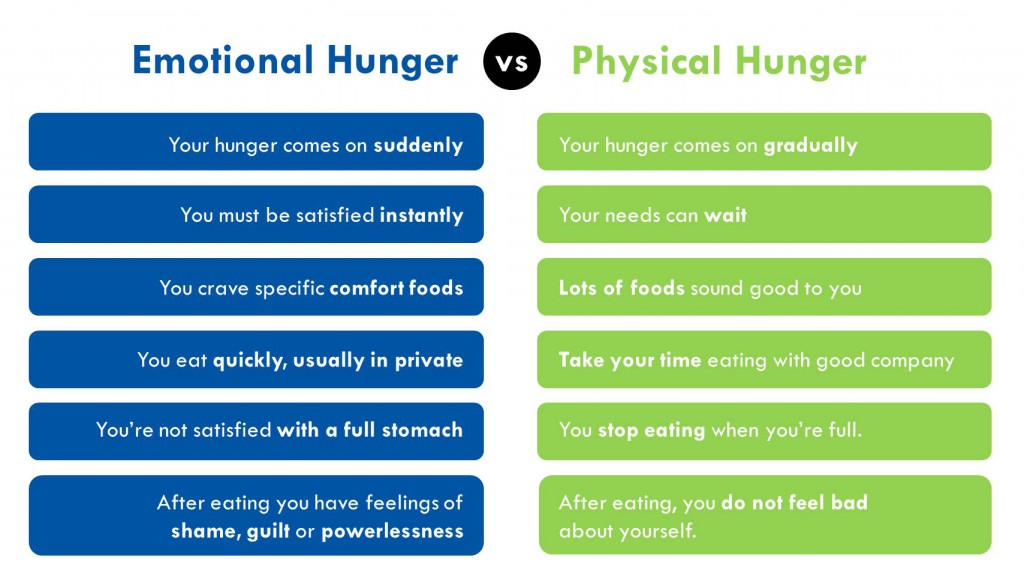
emotional-vs-plysical-hunger

It’s not necessarily bad to eat food from time to time as a pick-me-up meal, a reward treat, or a celebration feast. However, if food becomes your primary coping mechanism for anxiety, loneliness, boredom, anger, frustration, or exhaustion, and your first impulse when upset is to dig into a tub of ice cream, it calls for your attention. Feeding your emotion with food may feel good at the moment but doesn’t resolve the underlying problem. Often, you may end up feeling worse later due to unnecessary calorie bingeing and the physical havoc it wreaks on your metabolism.

The guilt, feeling powerless over emotions, and impulse eating leads to an unhealthy cycle, causing physical and emotional turmoil. Despite the difficulty, it is possible to make a positive change. All it requires is some effort on your part.

To help you break this cycle and mindless eating habit, here are a few pointers that work best when followed in order:

  1. Be Aware: Acknowledge your habit of emotional eating. If your near or dear ones have pointed it out or you know it by yourself, take it seriously! Awareness is the first positive step. Identify the emotions that lead to binge eating. Are they positive like exhilaration, victory, or success? Or negative like frustration, loneliness, anxiety, depression, anger, or boredom? Know your comfort foods, whether sweets, chocolates, ice creams or salty ones like chips, fries or some junk food like pizza, burger, maggi etc. that drive your emotional cravings. You may come up with multiple choices for multiple emotions and it is absolutely okay. You may also notice that your choice of comfort food is entirely different from others. So accept your unique patterns.

Tip: Maintain a food journal to help identify your emotions and associated foods, or use the food log feature in the GOQii app.

  1. Know your Hunger cues: Identify why you wish to eat. Hunger cues can be physical or emotional. If your stomach is growling and it’s been a few hours since your last meal, eating a salad or any other meal will suffice. But if you can postpone your hunger, you are likely to stop once you feel full, without guilt. This is true physical hunger.

Contrarily, if your hunger is sudden, urgent, and you crave specific foods like cookies or chips, or specific types of foods like sweets and fried foods and you are likely to over consume, feeling guilty later, you are about to be snacking out of false hunger, then the head hunger is generated out of emotional cues.

Tip: Next time you reach out for a snack, check if it’s driven by physical or emotional hunger.

  1. Cross check: Once you’ve identified your hunger cue, ask yourself why you are eating. Take a deep breath and get a clear answer. This helps put a check before the binge. If you’re reaching for a snack and unsure if it’s emotional, just ask yourself, “Why am I eating this?” Pause and reflect.

Tip: If it’s justified hunger, grab something healthy-roasted or steamed. If  it’s emotional, respectfully place the dish aside.

  1. Distract: Change your location once you put the dish aside. Go to another room or head outdoors. Find an alternative to food to fulfill your emotions. If lonely, talk to someone. If depressed or frustrated, watch a comic movie. For exhaustion, get a foot massage or take a warm bath. For anger, let it out or write it out. For anxiety, listen to your favorite music. If happy and wanting to reward yourself, indulge in your hobby.

Tip: You can also do some window shopping, reading, walking, exercising, meditating, or taking a nap which will give time to pass off the emotional storm and make you a stronger self- one who has more willpower to cope up with his/her feelings.

  1. Giving In: Emotional eating is an automatic and mindless habit. Sometimes, before you know it, you’ve eaten half a tub of ice cream. If you can pause for a moment when hit with a craving, you can make a different decision next time.

Tip: When you feel the urge to give in, pause and reflect. Don’t shut out the craving. Wait and consider what’s going on in your head and how you feel. Even if you eat afterward, this reflection helps you understand why and prepares you for a better response next time.


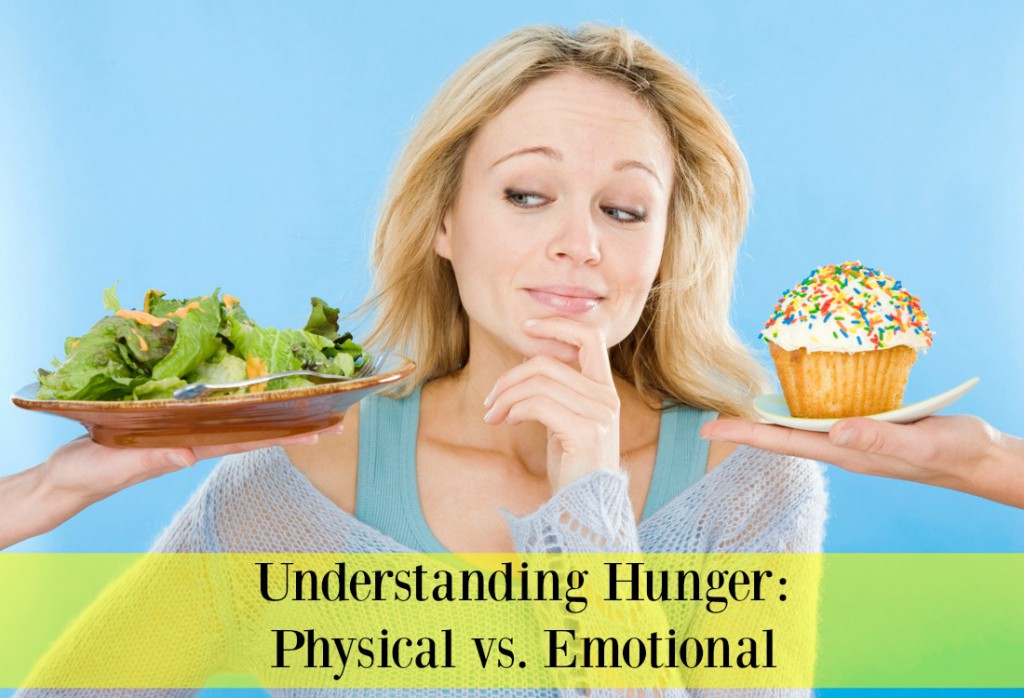
Understanding-Hunger-Physical-vs-Emotional
If you approach your feelings with kindness, reining in emotions is not a difficult task.

Listen to your emotions, accept them even if they are negative and when you do so, your body will understand that it doesn’t need to overeat to comfort itself and/or protect itself from powerful feelings.

Learning to mind your mood this way enables you to repair your emotional responses and physical fitness. Seeking help from experts or a personal coach can bring a turning point. Reach out if you need help to enjoy a better physical and mental health.

In the last blog of the 5 part series, I will discuss connecting with your meals and share tips on transforming your relationship with food for the better.

To be continued……………

#BeTheForce

June 22, 2024 By Jyoti Kumawat 1 Comment

Heal yourself with the magic of “MUSIC THERAPY”

musik

There is nothing more soothing than music. If you’re stressed, tired or unable to sleep, listening to music can make you feel better almost immediately. This effect is a type of Music Therapy.

The concept of music therapy is not new, especially in India. Music has long been an integral part of Ayurveda, the holistic science promoting a happy and healthy lifestyle. The Vedas, particularly the Samveda, are rich in music mantras and ragas.

Great composers of Indian classical music have practiced music therapy for centuries. It is even said that the classical music maestro Thyagaraja brought a dead person back to life with his composition.

How does it work?

Music stimulates the pituitary gland, which in turn affects the nervous system and the blood flow. Healing with music is believed to work by vibrating the cells of the body, which can effectively change a person’s consciousness and promote health.

Personally, I love music and have always considered it my medicine. Whether I am stressed or confused, music always gives me the right direction. Having experienced a lot of positivity through Music, I wanted to share how music can be a positive healer.

The Power of Music Therapy

Music therapy uses music and sounds to:

  • Help express emotions
  • Cope with symptoms of a disease and its treatment
  • Improve emotional and physical well being
  • Develop self-confidence and self-esteem
  • Re-kindle a sense of creativity
  • Help relax and feel comfortable

You don’t need to have musical expertise to benefit from music therapy. The technique consists of various interventions and planned programs that vary depending on the situation. The type of music is important—soothing music, ragas, relaxing music, and motivational music all have different effects.

Types of Interventions:

A typical music therapy session may include different interventions, which can be grouped into four types:

  1. Performing/Playing: This can include singing or playing an instrument
  2. Composing: This includes any group or individual songwriting process, which can be simple or complex as needed
  3. Improvising: Creating music on the spot or in the moment
  4. Receiving/Listening: This can include a music and relaxation experience, a lyric analysis intervention, or a “moving to music” experience, such as gait training

A “typical” music therapy session may incorporate multiple interventions or just one long, in-depth one. The key is that each intervention is designed to target a specific therapeutic goal and objective.

Benefits of Music Therapy :

The right kind of music helps one relax and refresh. Even while working, light music can improve efficiency. It helps control negative aspects of our personalities like worry, bias, and anger, and can help cure headaches, abdominal pain, and tension. Music therapy is one of the most effective ways of controlling emotions, blood pressure, and restoring liver function. It can also reduce insomnia, schizophrenia, and epilepsy.

Here are some additional benefits:

  1. Coping with work-related stress
  2. Enhancing social skills in children with autism
  3. Symptom management in cancer care
  4. Treatment of tension headaches
  5. Promoting health and wellness
  6. Helping people undergoing chemotherapy and radiotherapy
  7. Providing physical and psychological support for people with cancer
  8. Assisting people at the end of life
  9. Alleviating cancer pain
  10. Supporting children and young people
  11. Reducing stress
  12. Improving parent-child interactions
  13. Encouraging conversation among people with middle to late-stage Alzheimer’s disease

Music therapy is a powerful tool for healing and improving well-being. Whether you are dealing with stress, health issues, or just need a way to relax, music can be a wonderful companion and healer.

I would like to end this blog with a quote:

“If I should ever die, God forbid, let this be my epitaph:
THE ONLY PROOF HE NEEDED
FOR THE EXISTENCE OF GOD
WAS MUSIC”

― Kurt Vonnegut

We hope this article has enlightened you on the incredible healing power of music therapy. If you have any personal experiences with music therapy or have questions, please feel free to share your thoughts in the comments below.

#BeTheForce

June 21, 2024 By Trupti Hingad 6 Comments

Best yoga poses with Attitudes!

IYD

Yoga is a Way of life. It aims at overcoming all our dis-qualities like attachments, aversions, hatred, jealousy, and likes and dislikes.

I am here today to share my best yoga poses which have helped me to shape my attitude from negative to a positive and had a great impact on my personality. I don’t do yoga postures just for strength and flexibility. I do yoga postures with a feeling of emotions which have, in turn, helped me imbibe some good qualities within me.

When a dancer dances with the feeling and emotion, that experience is translated down to the audience watching the performance.

“Where goes the hand, there goes the eye,

Where goes the eyes, there goes the mind

From my mind, I create (bhava) feeling

When I create bhava, the observer creates the essence (Rasa)

Rasa is experienced.”

When you do yoga asana, you cannot isolate the body from the mind. You have to apply your mind and feel the asana. This is better done with the below four attitudes.

Let me share what these are.

  1. Dharma is Right to conduct (DUTY)

This is recognized as a duty, faith, and acceptance. Self-direction is our duty. It is a state of preparedness. It’s an initiative towards being quiet and peaceful and enjoying one’s own company. The asana which can be practiced with this Dharma attitude is Sukhasana, Padmanasa, and Vajrasana.

image 1 first yoga pose

When you sit in the Sukhasana position, your mind starts to wander the moment you close your eyes. Now it’s your duty towards yourself to develop the silence, develop awareness, become introvert, self-direct, and observe peace.

Apart from asana, it can also be acquired using the following techniques:

  • Looking at nature – sea, sky, greenery, flowing river water.
  • Listen to nature – soft music, stream flowing, birds chirping, breeze
  • Reading stories like Panchatantra, Hatha Yoga Pradipika, or any other books with a positive message
  • Prayers
  1. Jnana (Knowledge)

Image 2- second pose

Jnana is knowledge and is recognized as concentration, coordination, body awareness, self-knowledge and clarity.

Do you desire to have a good concentration? How much? How often are you able to balance your work and home life? If you find this challenging, follow these techniques:

The asanas which helps to achieve the same are Utkatasana, Ekpadasana, Stithprarthasana, Pranayama, and Tadasana.

Other techniques include focusing on one point, playing brain games, and self-analysis.

  1. Vairagya (Humble)

Vairagya is objectivity. This is recognized as humbleness, relaxation, Letting go attitude, and surrender. It is an ability to view things from a distance. It helps to rise above the situation and view things in a detached way.

Few asanas which helps are Trikonasana, Yog-Mudra, Vakrasana, Konasana-3, and Shavasana.

3rd pose

Other techniques include

  • Scream loudly
  • Share jokes
  • Play physically aggressive games
  1. Aishwariya (Self-reliance)

Aishwariya is freedom and power. This is recognized as one’s willpower, determination, free from ignorance, fight for justice and higher motives.

It helps to build qualities like strength, effort, willpower, confidence, self-esteem and a sense of achievement.

Asanas include — Bhujangasana, Veerbhadrasana, back-bending postures, and nasal cleaning process.

The attitude of Aishwariya creates a feeling of enthusiasm.

image 4

Next time when you do asanas, generate these feelings in you. It works as a reminder all the time and that helps in faster and better growth.

Wish you All A very Happy International Yoga Day!

If this article helped you, let us know in the comments below! You can find more articles on yoga here. You can also join our live, interactive sessions on GOQii PRO where you will be guided in real time by an expert. Book a class now from the GOQii App.

#BeTheForce

  • « Previous Page
  • 1
  • 2
  • 3
  • 4
  • …
  • 7
  • Next Page »

Search

Recent Posts

  • PCOS and Anxiety: Discover Relief with the 54321 Technique
  • Navigating the Maze of Nutrition: Finding Clarity Amidst Confusion
  • Get children active and keep them healthy
  • What Gestational Diabetes Can Do To You & Your Unborn Child
  • Breathing – A Forgotten Art

Stay Updated

Archives

  • December 2025 (4)
  • November 2025 (15)
  • October 2025 (20)
  • September 2025 (6)
  • August 2025 (6)
  • July 2025 (12)
  • June 2025 (18)
  • May 2025 (16)
  • April 2025 (23)
  • March 2025 (23)
  • February 2025 (22)
  • January 2025 (26)
  • December 2024 (26)
  • November 2024 (25)
  • October 2024 (22)
  • September 2024 (24)
  • August 2024 (31)
  • July 2024 (21)
  • June 2024 (26)
  • May 2024 (31)
  • April 2024 (27)
  • March 2024 (29)
  • February 2024 (26)
  • January 2024 (25)
  • December 2023 (15)
  • November 2023 (11)
  • October 2023 (22)
  • September 2023 (22)
  • August 2023 (20)
  • July 2023 (22)
  • June 2023 (24)
  • May 2023 (24)
  • April 2023 (24)
  • March 2023 (23)
  • February 2023 (20)
  • January 2023 (16)
  • December 2022 (12)
  • November 2022 (15)
  • October 2022 (15)
  • September 2022 (12)
  • August 2022 (10)
  • July 2022 (17)
  • June 2022 (11)
  • May 2022 (10)
  • April 2022 (6)
  • March 2022 (6)
  • February 2022 (13)
  • January 2022 (12)
  • December 2021 (7)
  • November 2021 (3)
  • October 2021 (6)
  • September 2021 (3)
  • August 2021 (8)
  • July 2021 (7)
  • June 2021 (15)
  • May 2021 (16)
  • April 2021 (10)
  • March 2021 (7)
  • February 2021 (4)
  • January 2021 (4)
  • December 2020 (3)
  • November 2020 (4)
  • October 2020 (10)
  • September 2020 (3)
  • August 2020 (3)
  • July 2020 (2)
  • June 2020 (4)
  • May 2020 (10)
  • April 2020 (12)
  • March 2020 (10)
  • February 2020 (4)
  • January 2020 (4)
  • December 2019 (3)
  • November 2019 (7)
  • October 2019 (5)
  • September 2019 (4)
  • August 2019 (9)
  • July 2019 (9)
  • June 2019 (11)
  • May 2019 (4)
  • April 2019 (9)
  • March 2019 (8)
  • February 2019 (9)
  • January 2019 (8)
  • December 2018 (9)
  • November 2018 (3)
  • October 2018 (3)
  • September 2018 (5)
  • August 2018 (10)
  • July 2018 (6)
  • June 2018 (13)
  • May 2018 (8)
  • April 2018 (18)
  • March 2018 (9)
  • February 2018 (8)
  • January 2018 (15)
  • December 2017 (12)
  • November 2017 (19)
  • October 2017 (13)
  • September 2017 (15)
  • August 2017 (4)
  • July 2017 (8)
  • June 2017 (7)
  • May 2017 (6)
  • April 2017 (8)
  • March 2017 (6)
  • February 2017 (7)
  • January 2017 (9)
  • December 2016 (10)
  • November 2016 (7)
  • October 2016 (7)
  • September 2016 (7)
  • August 2016 (11)
  • July 2016 (9)
  • June 2016 (9)
  • May 2016 (12)
  • April 2016 (17)
  • March 2016 (17)
  • February 2016 (8)
  • January 2016 (6)
  • December 2015 (2)
  • November 2015 (9)
  • October 2015 (7)
  • September 2015 (9)
  • August 2015 (11)
  • July 2015 (9)
  • June 2015 (12)
  • May 2015 (9)
  • April 2015 (13)
  • March 2015 (8)
  • February 2015 (5)
  • January 2015 (12)
  • December 2014 (14)
  • November 2014 (11)
  • October 2014 (6)
  • September 2014 (13)
  • August 2014 (12)
  • July 2014 (6)
  • June 2014 (2)
  • May 2014 (7)
  • April 2014 (5)

From “Laddu Nawin” to Fit and Fierce: How a 25-Year-Old Insurance Advisor Shed 20 Kilos and Gained His Life Back

When 25-year-old Nawin Yadav from Hyderabad walked into his office every morning, he carried more than just his files and policy papers. He had the weight of fatigue, sluggish energy, and an ever-growing belly that was becoming the butt of jokes. “People … [Read More...]

“I’ve Challenged Myself to Live 100 Years” – The Story of Chandubhai Savani’s Second Chance at Life

At 67, most people start slowing down. Not Chandubhai Savani. A resident of Surat, Chandubhai, thought life was on track. “My life was going well till I had my bypass surgery,” he says. That surgery, back in 2021, was a wake-up call.  Medication was routine, but exercise wasn’t. His diet? What he calls ‘normal.’ “I […]

From Shimla’s Slopes to Chandigarh’s Sidewalks: Surinder Kaur Bhalla’s Journey from Chaos to Control

Some journeys start with a plan. Others begin with a stumble literally. Surinder Bhalla, a government professional, born and raised in the scenic hill town of Shimla, had always lived a life of movement. “In Shimla, you walked everywhere,” she reflects. “Walking was never an exercise. It was just life.” But after shifting to Chandigarh, […]

Ananda Mukherjee Health Story

From Terminal Illness To Complete Wellness! Ananda Mukherjee Health Story

As we observe World Cancer Day under the powerful theme ‘United by Unique’ (2025-2027)**, we are reminded that every individual’s journey with cancer is distinct, yet united by shared resilience, hope, and the collective fight against this disease. This theme places people at the centre of care and their stories at the heart of the […]

  • HOME
  • HEALTHY LIVING
  • FITNESS
  • HEALTHY RECIPES
  • USER STORIES
  • KARMA
  • BUY GOQii

Copyright ©2016 GOQii