GOQii

Blog

  • HOME
  • HEALTHY LIVING
  • FITNESS
  • HEALTHY RECIPES
  • USER STORIES
  • KARMA
  • BUY GOQii

December 6, 2025 By Sweta Jaiswal Leave a Comment

PCOS and Anxiety: Discover Relief with the 54321 Technique

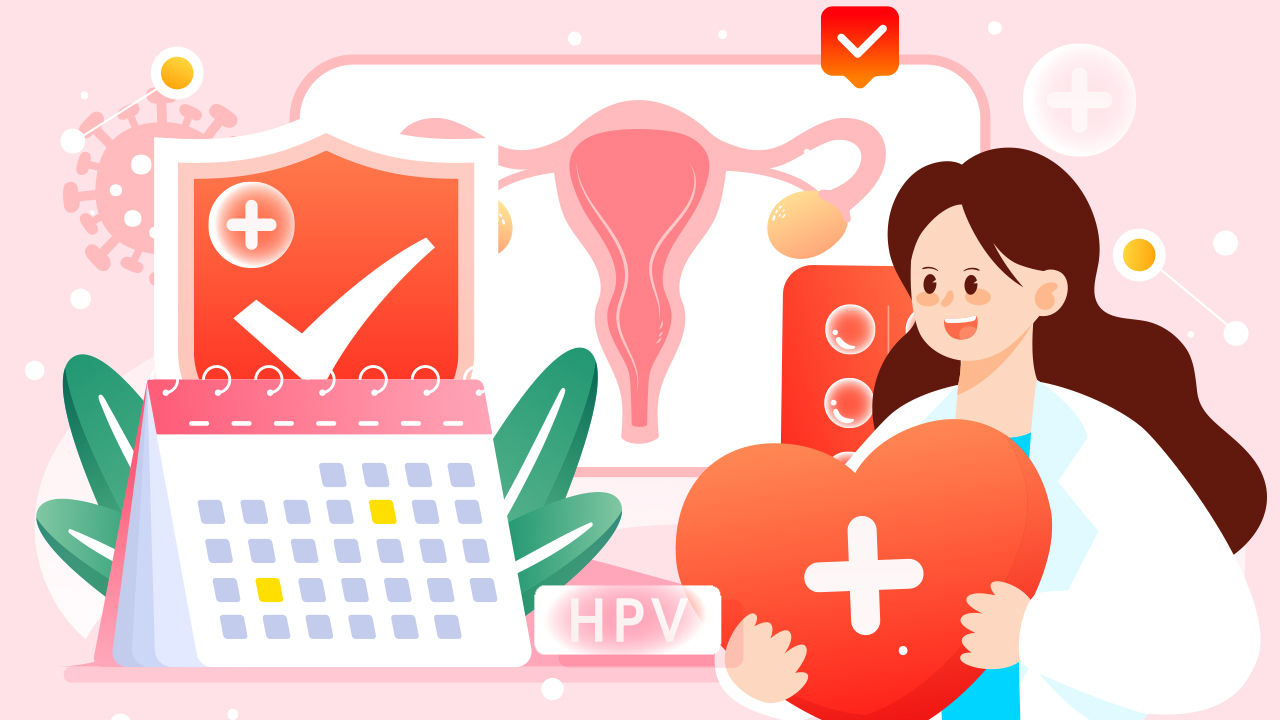
PCOS and Anxiety: Discover Relief with the 54321 TechniqueA huge section, which is 70% of women and girls of reproductive age, remains undiagnosed in the primary (stage 1) care of PCOS globally. The recent WHO (World Health Organization) data suggests that 116 million women (3.4%) are affected globally. In India itself, the range is 3.7-22.5% of the female population. Though there is a rapid rise in cases, not much is given or taken in terms of awareness.

PCOS (Polycystic Ovary/Ovarian Syndrome) is the most prevalent female endocrine disorder and the preeminent cause of infertility. It is not only characterized by a cystic ovary but also by ovarian dysfunction and androgen excess. It is a combination of signs and symptoms related to an imbalance of hormones. This imbalance leads to hirsutism (hair growing in areas where men typically grow hair, e.g.- face, abdomen, chest, and back), balding, acne, and oily skin. Ovarian dysfunction looks like a complete absence of menstruation (amenorrhea) to menstruation delayed to 35 days or more (oligomenorrhea) to heavy bleeding (menorrhagia).

Due to all these dermatological, metabolic, and reproductive disturbances, PCOS affects the psychological and sleep areas in a woman’s life, leading to acute anxiety, depression, sleep apnea, disturbed sleep, and obesity. Women with PCOS are four times more likely to be at risk for depression compared with women without PCOS.

If you’ve been told you have PCOS, you may feel frustrated and sad as well, but then there will be relief that there are reasons and possible treatments for the symptoms that you have been having such a hard time dealing with— e.g., keeping a healthy weight, managing stress related to it, hirsutism, acne, or irregular periods. It can be difficult to have a diagnosis without an exact cure. However, it’s important for women with PCOS to know they are not alone.

Finding a support network and a healthcare provider who knows a lot about PCOS and is someone you feel comfortable talking with is very important. Even though the results may take a long time, it is important to keep working on a healthy lifestyle and not let PCOS get you down. Many PCOS sufferers claim that discussing their worries with a counsellor can be beneficial because it lowers their burden.

Along with diet and lifestyle modifications to maintain a healthy weight, the 54321 technique can really help battle the high levels of anxiety and depression in women facing PCOS. This technique is the best form of self-care for females who find it hard to focus on other important issues apart from the everyday mental struggles that PCOS offer.

PCOS and Anxiety: Discover Relief with the 54321 Technique

The 54321 technique is a fun and easy way to practice mindfulness. It is so much more than the counts of breathing which we use to calm anger and nervousness. It keeps the 5 senses in play like the eyes, nose, ears, skin and tongue. It is Simple, Practical and Therapeutic.

Let’s understand it. You need to Focus on –

  1. 5 things you see – From the 1000 things that you see, zero it down to five which relate well to your present situation and how it does wonders to the environment/surroundings.
  2. 4 things you can touch – Give priority to touches that give you comfort like massaging your ears, your water bottle, a plant, or a pen. Feel its texture, weight and shape.
  3. 3 things you Hear – This can be a challenge as you will tend to listen to the loudest sounds /noise first. Listen to quieter and soft sounds or music/songs that you enjoy.
  4. 2 things you Smell – Differentiate between pleasant and unpleasant smells. Smell the only 2 things that will make you feel relaxed, like perfume in your napkin, your favourite hand lotion or an odour that you want to move away from.
  5. 1 thing you can taste – This is just as easy as popping a mint or gum in your mouth or drinking your plain/flavoured water.

Being able to apply this natural, easy-to-remember remedy for anxiety and being grounded will help interrupt the nervousness and make you feel instantly re-energised and supported.

In conclusion, the 54321 technique is a powerful mindfulness practice that offers significant relief from the anxiety and depression often experienced by women with PCOS. It provides a simple yet effective way to reconnect with the present moment, using our senses to ground ourselves and break free from the grip of anxiety.

Living with PCOS can be challenging, but it’s crucial to remember that you’re not alone in this journey. Finding a support network and seeking guidance from healthcare providers who specialise in PCOS can make a world of difference. While there may not be a definitive cure, there are ways to manage and alleviate the symptoms, allowing you to lead a fulfilling and healthy life.

At GOQii, we believe in holistic well-being, and that includes mental health. If you’ve found this information helpful, we’d love to hear your thoughts in the comments below. Remember, you can explore more articles on topics like these in our Healthy Reads section. For personalised guidance and support on managing PCOS, consider subscribing to GOQii’s Personalised Health Coaching here.

#BeTheForce 

Disclaimer: The information provided in this blog is for general awareness and educational purposes only. It is not intended to replace professional medical advice, diagnosis, or treatment. Always consult a qualified healthcare provider for personalised medical guidance or concerns related to your health. Images shown are for representation purposes only and may not depict the exact recommendations or outcomes.

November 22, 2025 By Monika Raj Leave a Comment

Why Is Folic Acid Necessary During Prenancy?

folic acid during pregnancyHaving a healthy baby means ensuring you’re healthy too. One of the most important things you can do to prevent birth defects in your baby is to get enough folic acid in a day, especially before conception and during early pregnancy. Most birth defects occur during the first 28 days of pregnancy, usually before a woman even knows she’s pregnant. If you’re pregnant or trying to get pregnant, it’s critically important to have enough folic acid, a synthetic sort of vitamin B9, also referred to as folate.

Why Is Folic Acid So Important? 

Folic acid helps prevent ectoderm defects (NTD) – serious birth defects of the medulla spinalis (like spina bifida) and therefore, the brain (anencephaly). The ectoderm is a part of the embryo from which the spine and brain develop. Neural tube defects occur at an early stage of development, before many ladies even know they are pregnant, which is why it is vital to start taking folic before you start trying to conceive.

Your body also needs it to form normal red blood cells and stop a kind of anaemia. It is also essential for the assembly, repair, and functioning of DNA, our arrangement, and a basic building block of cells. It is particularly important for the rapid cell growth of the foetus.

The CDC recommends that you simply start taking folic acid tablets a day, for a minimum of a month before you become pregnant, and each day while you’re pregnant. When getting pregnant, women who have already had a pregnancy suffering from an ectoderm defect, should consult their healthcare provider.

How Much Of It Do You Need? 

Every woman of reproductive age must get Folic acid per day , whether she is planning pregnancy or not. The recommended dose for all women of childbearing age is 400 mcg of folate every day . If you’re taking a multivitamin a day , check to ascertain if it’s the recommended amount.

  • While you’re trying to conceive: 400 mcg
  • For the primary three months of pregnancy: 400 mcg
  • For months four to nine of pregnancy: 600 mcg
  • While breastfeeding: 500 mcg

If you’ve already had a baby with an ectoderm defect, getting enough vitamin B9 may reduce your risk of getting another child with a ectoderm defect by as much as 70%. When taken before and through pregnancy, Folic acid  also protect your baby against:

  • Cleft lip and palate
  • Premature birth
  • Low birth weight
  • Miscarriage
  • Poor growth in the womb

Some rice, pasta, bread, and breakfast cereals are fortified with folic acid. These foods are labelled “enriched.”  may be a specific sort of folate that doesn’t generally occur naturally. Foods rich in folic acid include leafy vegetables like spinach, lettuce, etc. and fruits like oranges, tomatoes, papaya and avocado. In addition to eating foods with folate from a varied diet, women can get the required dosage from: 

  • Supplements that have folic acid 
  • Eating fortified foods
  • Getting a combination of the two: taking a vitamin that has folic acid in it and eating fortified foods.

If you are taking folic acid every day, take it at the same time each day, either in the morning or in the evening. Take your  tablets with a glass of water. You can take  them with or without food.

If you forget to take the required dose, take it as soon as possible.  Proper and adequate intake of folate rich foods makes a healthy baby and a cheerful family. Eat right and stay healthy.

If this article helped you, let us know in the comments below! Don’t forget to share it with someone who may need it. You can find more articles on Women’s Health here. You can also use the Women’s Care feature in the GOQii App to track your menstrual cycles, pregnancy and more. Download the app now. 

#BeTheForce 

Disclaimer: The information provided in this blog is for general awareness and educational purposes only. It is not intended to replace professional medical advice, diagnosis, or treatment. Always consult a qualified healthcare provider for personalised medical guidance or concerns related to your health. Images shown are for representation purposes only and may not depict the exact recommendations or outcomes.

July 8, 2025 By GOQii Leave a Comment

From Shimla’s Slopes to Chandigarh’s Sidewalks: Surinder Kaur Bhalla’s Journey from Chaos to Control

Some journeys start with a plan. Others begin with a stumble literally.


Surinder Bhalla, a government professional, born and raised in the scenic hill town of Shimla, had always lived a life of movement. “In Shimla, you walked everywhere,” she reflects. “Walking was never an exercise. It was just life.” But after shifting to Chandigarh, that quiet rhythm changed. Here, everything was mechanised. Walking became optional, even avoidable—relegated to an “exercise” slot, if at all.

But Surinder’s story is not one of stagnation—it’s one of incredible personal transformation.

The Wake-Up Call

Life, for Surinder, used to be a whirlwind starting at 4 a.m., rushed meals, erratic routines, work stress, and hardly any time for self-care. “Everything was on the go. Health took a backseat,” she admits. As a teacher, not very tech-savvy, she had no idea something like GOQii—a health coaching platform—existed.

That changed in 2019 when, after a painful knee injury, her orthopaedic consultation led her to a free three-month GOQii subscription. A blessing in disguise, as she calls it.

It was just in time.

The Right Time, The Right Nudge

The timing was serendipitous. Soon after joining in Dec 2019, COVID-19 hit. While the world came to a standstill, Surinder found stability in her new virtual coach. “The chats, the daily motivation, it kept me anchored,” she recalls. With her coach’s support, she began reworking her routines, improving her eating habits, incorporating daily walks, and experimenting with decoctions, all while cutting through old habits one step at a time.

The changes were subtle at first, but soon added up—better sleep, improved digestion, increased stamina, and something far more profound: self-belief.

From Medications to Mindset

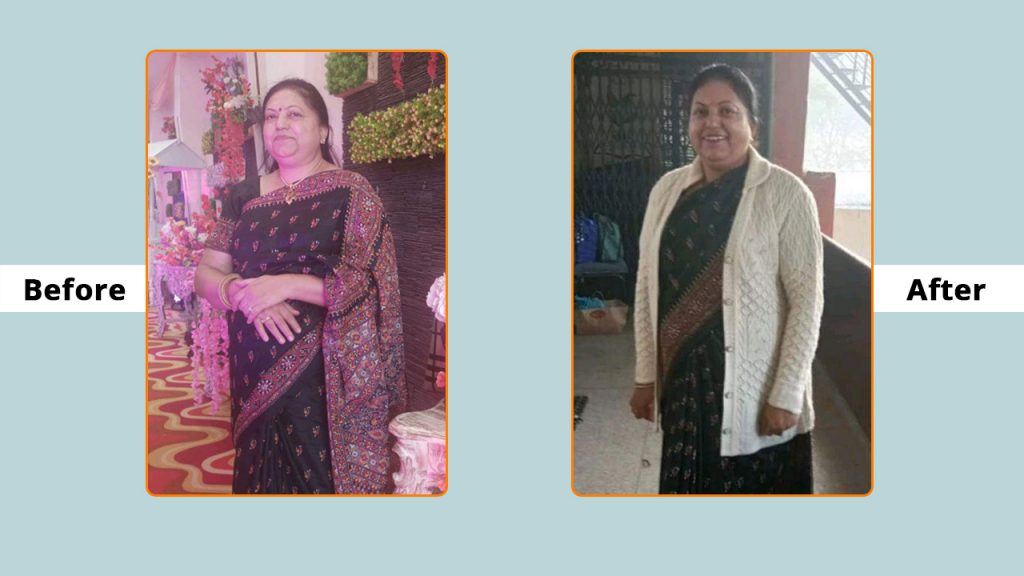
Diagnosed with diabetes in 2013, Surinder had been on medication for years. She consciously chose not to start insulin. With consistency and coaching, her sugar levels stabilised. Today, her medications have drastically reduced, and her diabetes is under control. “My willpower is the strongest it has ever been,” she says proudly.

Friends and colleagues now look at her transformation in disbelief. “They’re shocked when I tell them I’ve had diabetes for 13 years. No one believes my age, or the energy I bring.”

A New Taste of Life

Apart from walking her health journey, Surinder has also rediscovered her joy in cooking. A passionate home chef, she now experiments with healthy, sattvik recipes, adding her unique twists. “I’ve been a sattvik eater for the past 6-7 months. It feels lighter, better,” she shares.

What Keeps Her Going?

“Blessings,” she smiles. “They play a vital role. I feel blessed to have a coach who reminds me daily that I can be better. I don’t do anything out of force—I do it because I want to. I follow my mind, and now my body follows too.”

Her Message to Others

If Surinder’s journey says anything, it’s this: You don’t need a perfect start. You just need the courage to take the first step,  no matter how small, or even how accidental. Sometimes, the most powerful transformations come not when you plan for them, but when life nudges you toward your own better version.

Does her Health Story inspire you? Do you want to make a radical lifestyle shift as well? Subscribe for GOQii’s Personalised Health Coaching and start now: https://goqiiapp.page.link/bsr

For more inspiring Health Stories, check out Healthy Reads.

#BeTheForce

Disclaimer: The information provided in this blog is for general awareness and educational purposes only. It is not intended to replace professional medical advice, diagnosis, or treatment. Always consult a qualified healthcare provider for personalised medical guidance or concerns related to your health. Images shown are for representation purposes only and may not depict the exact recommendations or outcomes.

June 2, 2025 By Meenakshi Sharma 2 Comments

What Is Visceral Fat & Why It Is Dangerous

visceral fat

You might have heard of the term belly fat, but you might not be aware of terms like subcutaneous and visceral fat. Subcutaneous fat is the kind you can grasp with your hand on any part of your body. It sits under the skin. Belly fat, or what experts call visceral fat, is a particularly dangerous type of fat that forms inside the abdomen. It surrounds internal organs like the liver and intestines, and is also known as ‘active fat’ because it influences how hormones function in the body.

You can have too much belly fat even with a normal BMI. So, pay attention to your waist circumference rather than the number on the scale.

How To Measure It

  1. Waist size: This is an easy way to get a rough estimate. Wrap a tape measure around your waist over your belly button (don’t suck in your stomach). For women, 35 inches or more is a sign of visceral fat. For men, it’s 40 inches.
  2. BMI: Body mass index is a formula for how much you weigh relative to your height. A BMI of 30 or higher is overweight. That could be a sign of visceral fat. In Asia, a BMI of 23 or higher could be a concern.
  3. Waist-to-hip ratio: Divide your waist size by your hip size. Some doctors think this gives a good indication of your risk for visceral fat. But studies suggest it may be no better than a simple waist measurement.
  4. Body shape: Look in the mirror. If you’re an apple – a big trunk and slimmer legs – it often means more visceral fat, which is more common among men. Women are more likely to be pears with bigger hips and thighs. Research shows that upper body fat is more dangerous to your health, which might be one reason why women usually live longer than men.
  5. Imaging tests: These scans are the only way to check the exact amount of visceral fat you have. If your doctor orders a CT scan or an MRI for another medical condition, they can also assess your visceral fat.

Risks & Dangers Of Excess Visceral Fat

  • Increased Inflammation: If you have more fat stored than needed, especially around visceral organs like the liver, heart, kidneys, pancreas, and intestines, your body becomes inflamed. This fat stores inflammatory white blood cells and is linked with cognitive decline, arthritis, diabetes, and more.
  • Higher Risk of Diabetes: Visceral fat plays a significant role in insulin resistance, heightening the risk of developing diabetes. Abdominal fat is viewed as a bigger health risk than hip or thigh fat. While men are more likely to store visible visceral fat, women are also at risk.
  • Makes It Harder to Lose Weight: Stored body fat, especially visceral fat, affects hunger levels. Leptin, a hormone released by stored fat, regulates appetite, metabolism, and weight. When you eat refined carbs such as white flour and sugar, fat-storing hormones are produced in excess, raising your body’s “set point” and making it hard to follow a moderate, healthy diet.
  • Higher Risk for Heart Disease and Strokes: Inflammatory cytokines produced by fat contribute to heart disease and other inflammatory disorders. Visceral fat is linked to cardiovascular risk factors like high triglycerides, high blood pressure, and high cholesterol.
  • More Likely to Battle Dementia: Studies show that people with larger waistlines have a higher risk of dementia. In fact, many experts believe visceral fat levels (rather than BMI) are a more relevant risk factor in dementia development.
  • Increased Risk of Depression and Mood Disorders: Visceral fat is metabolically active and can interfere with hormones and neurotransmitter function. Depression is especially associated with greater fat storage in women. In one study, visceral fat – not subcutaneous belly fat or waist circumference – was linked with depressive symptoms in women over 50.

How Can You Reduce Visceral Fat? 

  • Exercise: A mix of cardiovascular exercise (e.g. running, cycling, swimming, aerobics, circuit training) and strength training (e.g. squats, weights, push-ups) helps reduce visceral fat.
  • Manage Stress: Chronic stress raises cortisol, which increases fat storage around the abdomen. Relaxation techniques like meditation, deep breathing, and other stress management practices can support fat loss.
  • Balance Diet: Focus on whole foods—fruits, vegetables, whole grains (quinoa, millets, oats), and lean proteins (skinless chicken, fish, eggs, beans). Calcium and Vitamin D are also associated with lower visceral fat. Include leafy greens, tofu, sardines, and low-fat dairy products.

Boiling, steaming, baking, and grilling are healthier cooking methods. Avoid trans fats (often found in processed foods and deep-fried items) and reduce sugar intake. Check labels for ingredients like “partially hydrogenated oils” or “high-fructose corn syrup.”

We hope this article helps you! If you are keen on losing weight in a healthy, sustainable way, you can reach out to an expert by subscribing for Personalised Health Coaching here.

For more articles on weight loss, check out Healthy Reads.

#BeTheForce 

Disclaimer: The information provided in this blog is for general awareness and educational purposes only. It is not intended to replace professional medical advice, diagnosis, or treatment. Always consult a qualified healthcare provider for personalised medical guidance or concerns related to your health. Images shown are for representation purposes only and may not depict the exact recommendations or outcomes.

  • 1
  • 2
  • 3
  • …
  • 6
  • Next Page »

Search

Recent Posts

  • ALL ABOUT VERTIGO!
  • PCOS and Anxiety: Discover Relief with the 54321 Technique
  • Navigating the Maze of Nutrition: Finding Clarity Amidst Confusion
  • Get children active and keep them healthy
  • What Gestational Diabetes Can Do To You & Your Unborn Child

Stay Updated

Archives

  • December 2025 (5)
  • November 2025 (15)
  • October 2025 (20)
  • September 2025 (6)
  • August 2025 (6)
  • July 2025 (12)
  • June 2025 (18)
  • May 2025 (16)
  • April 2025 (23)
  • March 2025 (23)
  • February 2025 (22)
  • January 2025 (26)
  • December 2024 (26)
  • November 2024 (25)
  • October 2024 (22)
  • September 2024 (24)
  • August 2024 (31)
  • July 2024 (21)
  • June 2024 (26)
  • May 2024 (31)
  • April 2024 (27)
  • March 2024 (29)
  • February 2024 (26)
  • January 2024 (25)
  • December 2023 (15)
  • November 2023 (11)
  • October 2023 (22)
  • September 2023 (22)
  • August 2023 (20)
  • July 2023 (22)
  • June 2023 (24)
  • May 2023 (24)
  • April 2023 (24)
  • March 2023 (23)
  • February 2023 (20)
  • January 2023 (16)
  • December 2022 (12)
  • November 2022 (15)
  • October 2022 (15)
  • September 2022 (12)
  • August 2022 (10)
  • July 2022 (17)
  • June 2022 (11)
  • May 2022 (10)
  • April 2022 (6)
  • March 2022 (6)
  • February 2022 (13)
  • January 2022 (12)
  • December 2021 (7)
  • November 2021 (3)
  • October 2021 (6)
  • September 2021 (3)
  • August 2021 (8)
  • July 2021 (7)
  • June 2021 (15)
  • May 2021 (16)
  • April 2021 (10)
  • March 2021 (7)
  • February 2021 (4)
  • January 2021 (4)
  • December 2020 (3)
  • November 2020 (4)
  • October 2020 (10)
  • September 2020 (3)
  • August 2020 (3)
  • July 2020 (2)
  • June 2020 (4)
  • May 2020 (10)
  • April 2020 (12)
  • March 2020 (10)
  • February 2020 (4)
  • January 2020 (4)
  • December 2019 (3)
  • November 2019 (7)
  • October 2019 (5)
  • September 2019 (4)
  • August 2019 (9)
  • July 2019 (9)
  • June 2019 (11)
  • May 2019 (4)
  • April 2019 (9)
  • March 2019 (8)
  • February 2019 (9)
  • January 2019 (8)
  • December 2018 (9)
  • November 2018 (3)
  • October 2018 (3)
  • September 2018 (5)
  • August 2018 (10)
  • July 2018 (6)
  • June 2018 (13)
  • May 2018 (8)
  • April 2018 (18)
  • March 2018 (9)
  • February 2018 (8)
  • January 2018 (15)
  • December 2017 (12)
  • November 2017 (19)
  • October 2017 (13)
  • September 2017 (15)
  • August 2017 (4)
  • July 2017 (8)
  • June 2017 (7)
  • May 2017 (6)
  • April 2017 (8)
  • March 2017 (6)
  • February 2017 (7)
  • January 2017 (9)
  • December 2016 (10)
  • November 2016 (7)
  • October 2016 (7)
  • September 2016 (7)
  • August 2016 (11)
  • July 2016 (9)
  • June 2016 (9)
  • May 2016 (12)
  • April 2016 (17)
  • March 2016 (17)
  • February 2016 (8)
  • January 2016 (6)
  • December 2015 (2)
  • November 2015 (9)
  • October 2015 (7)
  • September 2015 (9)
  • August 2015 (11)
  • July 2015 (9)
  • June 2015 (12)
  • May 2015 (9)
  • April 2015 (13)
  • March 2015 (8)
  • February 2015 (5)
  • January 2015 (12)
  • December 2014 (14)
  • November 2014 (11)
  • October 2014 (6)
  • September 2014 (13)
  • August 2014 (12)
  • July 2014 (6)
  • June 2014 (2)
  • May 2014 (7)
  • April 2014 (5)

From “Laddu Nawin” to Fit and Fierce: How a 25-Year-Old Insurance Advisor Shed 20 Kilos and Gained His Life Back

When 25-year-old Nawin Yadav from Hyderabad walked into his office every morning, he carried more than just his files and policy papers. He had the weight of fatigue, sluggish energy, and an ever-growing belly that was becoming the butt of jokes. “People … [Read More...]

“I’ve Challenged Myself to Live 100 Years” – The Story of Chandubhai Savani’s Second Chance at Life

At 67, most people start slowing down. Not Chandubhai Savani. A resident of Surat, Chandubhai, thought life was on track. “My life was going well till I had my bypass surgery,” he says. That surgery, back in 2021, was a wake-up call.  Medication was routine, but exercise wasn’t. His diet? What he calls ‘normal.’ “I […]

From Shimla’s Slopes to Chandigarh’s Sidewalks: Surinder Kaur Bhalla’s Journey from Chaos to Control

Some journeys start with a plan. Others begin with a stumble literally. Surinder Bhalla, a government professional, born and raised in the scenic hill town of Shimla, had always lived a life of movement. “In Shimla, you walked everywhere,” she reflects. “Walking was never an exercise. It was just life.” But after shifting to Chandigarh, […]

Ananda Mukherjee Health Story

From Terminal Illness To Complete Wellness! Ananda Mukherjee Health Story

As we observe World Cancer Day under the powerful theme ‘United by Unique’ (2025-2027)**, we are reminded that every individual’s journey with cancer is distinct, yet united by shared resilience, hope, and the collective fight against this disease. This theme places people at the centre of care and their stories at the heart of the […]

  • HOME
  • HEALTHY LIVING
  • FITNESS
  • HEALTHY RECIPES
  • USER STORIES
  • KARMA
  • BUY GOQii

Copyright ©2016 GOQii