GOQii

Blog

  • HOME
  • HEALTHY LIVING
  • FITNESS
  • HEALTHY RECIPES
  • USER STORIES
  • KARMA
  • BUY GOQii

May 31, 2026 By GOQii Leave a Comment

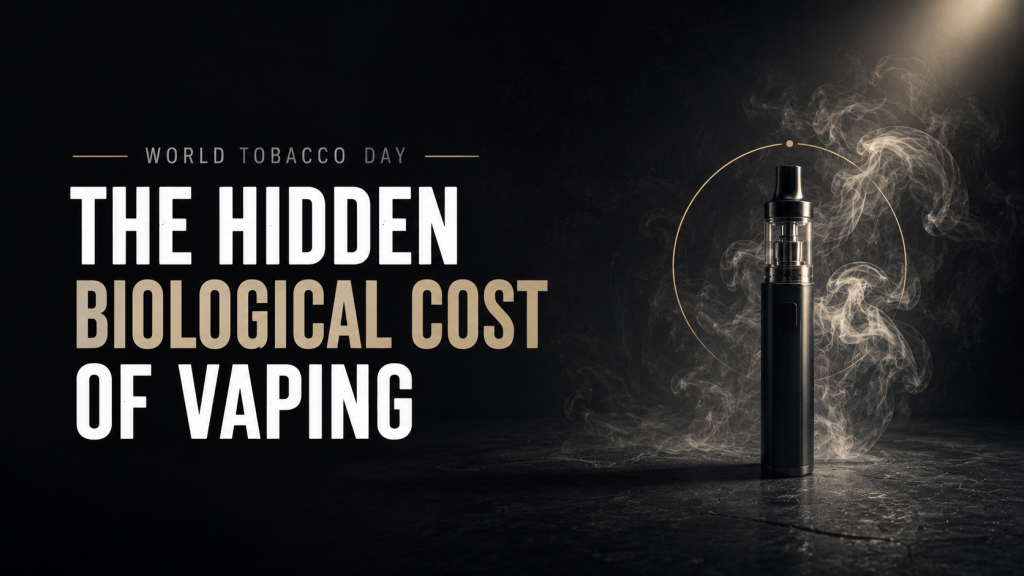
The Hidden Biological Cost of Vaping

The Big Question: If e-cigarettes don’t have tobacco, how do they accelerate biological ageing?

The World No Tobacco Day 2026 theme, “Unmasking the Appeal,” highlights how vaping and modern nicotine products are marketed to younger audiences through sleek branding and social media. While many believe e-cigarettes are safer than smoking, research shows that vaping exposes the body to severe oxidative stress, heavy metals, and ultrafine chemical particles. This combination damages blood vessels, impairs lung function, and accelerates cellular biological ageing, actively reducing your long-term healthspan.

Observed every year on May 31st, World No Tobacco Day is a global initiative led by the World Health Organization (WHO) to raise awareness about the dangers of tobacco and nicotine addiction.

But nicotine culture today no longer looks the way it once did.

The 2026 campaign theme “Unmasking the Appeal” directly challenges how vaping is being normalised among younger generations. Lured by candy flavours, sleek designs, and influencer-driven marketing, many young adults have bought into the biggest myth surrounding vaping: that it is “just harmless water vapour.”

It is not. Here is the hidden biological cost of the modern vaping epidemic.

Vaping Is Banned in India – But the Problem Remains

India took a massive step for public health by banning e-cigarettes in 2019 under the Prohibition of Electronic Cigarettes Act, which prohibits the manufacture, import, sale, distribution, storage, and advertisement of vape products.

However, despite the strict ban, vaping devices remain accessible through illegal online channels and informal retail networks. The danger here is not just nicotine addiction; it is the growing normalisation of vaping among younger populations who are entirely unaware of the oxidative stress, cardiovascular strain, and long-term cellular damage these devices cause.

Why Vaping Is Not Harmless

Unlike traditional combustible cigarettes, vape devices heat chemical liquids into an aerosol that is inhaled deep into the lungs. This aerosol contains a toxic payload of nicotine salts, ultrafine particles, artificial flavouring chemicals, heavy metals, and inflammatory compounds.

While vaping may expose users to fewer combustion-related toxins (like tar) than traditional cigarettes, it still places massive, unnatural stress on the human body.

3 Ways Vaping Accelerates Biological Ageing

Biological age reflects how efficiently your cells and organs function not simply how many birthdays you have had chronologically. Vaping actively accelerates that cellular ageing process in three distinct ways:

  1. Oxidative Stress and Cellular Damage

The heated chemicals inhaled during vaping increase oxidative stress throughout the body. Oxidative stress introduces free radicals that directly damage your DNA, blood vessels, cell membranes, and mitochondrial function. Over time, this accelerates cellular ageing and increases the risk of cardiovascular disease and metabolic dysfunction. Vaping-related oxidative stress also impairs cellular energy production, affecting how efficiently your body recovers and performs.

  1. Blood Vessel and Lung Damage

Nicotine is a potent vasoconstrictor it causes blood vessels to physically shrink and tighten, reducing healthy circulation and increasing strain on the heart. Simultaneously, repeated exposure to heated aerosol particles inflames the lung tissue and reduces oxygen exchange. Over time, this contributes to:

  • Breathlessness and reduced endurance
  • Elevated resting blood pressure
  • Delayed workout recovery
  • Premature skin ageing (due to reduced oxygen flow to the epidermis)
  1. Dopamine Addiction and Constant Nicotine Exposure

Vaping often becomes highly addictive because of how easily and frequently it can be used. Vapes utilize “nicotine salts,” which absorb rapidly into the bloodstream, creating intense, repeated dopamine spikes that reinforce dependency patterns.

Unlike traditional cigarettes, vape devices allow for continuous micro-dosing, discreet indoor usage, and frequent consumption throughout the day. This strengthens behavioural addiction loops linked to stress, boredom, and anxiety. Supporting stress regulation becomes an essential part of long-term nicotine recovery.

What Happens When You Quit?

The most encouraging news is that the human body is remarkably resilient. It begins repairing itself surprisingly quickly after nicotine exposure stops:

  • Within 20 Minutes: Your elevated heart rate and blood pressure begin returning toward normal levels.
  • Within 24 Hours: Nicotine levels in the bloodstream drop significantly, flushing out the toxin.
  • Within 2–12 Weeks: General circulation and lung function begin to measurably improve, making physical movement easier.
  • Within 1–9 Months: Breathing, cardiovascular endurance, and respiratory recovery continue improving as the cilia in your lungs stabilize and clear out mucus.

The Bigger Picture

Modern vaping culture is relentlessly marketed as cleaner, safer, more advanced, and socially acceptable. But beneath the slick branding, vaping exposes the body to severe addiction, systemic inflammation, oxidative stress, and accelerated biological wear.

Protecting your long-term health is not just about avoiding disease decades later. It is about protecting your daily energy, your cardiovascular endurance, and your healthy ageing right now.

Pro Tip: Breaking the cycle of nicotine addiction requires more than just willpower. Use the GOQii App to track your recovery, movement, sleep quality, and heart rate variability (HRV) trends while reducing nicotine use. Your GOQii Personalised Health Coach can help you build healthier routines to manage cravings and support long-term behavioural change naturally!

Frequently Asked Questions (FAQs)

  1. Is vaping safer than smoking?

While vaping may expose users to fewer combustion-related toxins (like tar and carbon monoxide) than traditional cigarettes, it is not harmless. It still carries significant health risks, including severe oxidative stress, lung inflammation, and cardiovascular strain.

  1. Why are vapes so addictive?

Vapes often contain “nicotine salts” that absorb rapidly into the bloodstream without the harsh throat burn of traditional tobacco. This creates faster dopamine reinforcement and stronger, more frequent dependency patterns.

  1. Does vaping affect fitness and workouts?

Yes. Vaping directly reduces lung efficiency, constricts blood vessels, and limits oxygen delivery to the muscles. This severely impairs cardiovascular endurance and delays post-workout recovery.

  1. Can the body recover after quitting vaping?

Yes. Circulation, lung function, and recovery capacity begin improving within just weeks after quitting nicotine exposure, drastically reducing your long-term disease risk.

#BeTheForce

Disclaimer: This article is intended for educational purposes only. Nicotine addiction is a medical condition. If you are struggling with smoking or vaping cessation, consult a healthcare professional for evidence-based support.

May 5, 2026 By GOQii Leave a Comment

World Asthma Day 2026: How to Stop Letting Asthma Control Your Life

Imagine trying to breathe through a crushed drinking straw.
For over 260 million people worldwide living with asthma, that is exactly what a flare-up feels like. The airways in the lungs become inflamed, swollen, and constricted, making the most natural act in the world breathing feel like an exhausting battle.

Because asthma can be scary, it is often surrounded by a culture of fear. Many asthmatics are told to avoid exercise, stay indoors, and live a “careful” life.

But modern respiratory medicine tells a very different story.

Today, May 5th, is World Asthma Day. This year, the Global Initiative for Asthma (GINA) has set a powerful theme: “Access to anti-inflammatory inhalers for everyone with asthma – still an urgent need.” With over 450,000 preventable asthma-related deaths occurring annually, the message is clear: having asthma does not mean your life has to shrink, but you must have access to the right tools.

Here is how to outsmart your triggers, upgrade your treatment, and take back control of your breath.

Stop Believing These 3 Dangerous Asthma Myths

The biggest barriers to living well with asthma aren’t just physical; they are psychological. Let’s clear the air on three major myths:

Myth 1: “I only need my inhaler when I can’t breathe.”

The Reality: This is exactly what the 2026 World Asthma Day theme is trying to change! Relying only on a blue rescue inhaler when you are gasping for air doesn’t treat the underlying problem: inflammation. The modern gold standard of care is the 2-in-1 combination inhaler. These contain both an inhaled corticosteroid (to safely reduce daily inflammation) and a quick-acting reliever (to open airways fast). Using an anti-inflammatory preventer is the key to stopping attacks before they start.

Myth 2: “People with asthma shouldn’t exercise.”

The Reality: Avoiding exercise actually makes your lungs weaker. Cardiovascular exercise trains your lungs to use oxygen more efficiently. While sudden, intense cold-weather running might trigger symptoms, swimming, brisk walking, and properly warmed-up strength training are incredibly beneficial. Fact: Many Olympic gold medalists are diagnosed asthmatics!

Myth 3: “Asthma is just a childhood phase.”

The Reality: While many children experience improved symptoms as their airways grow larger, asthma is a chronic, lifelong condition. It can go dormant for years and suddenly reappear in your 30s or 40s due to stress, a bad respiratory infection, or moving to a highly polluted city.

3 Steps to Outsmart Your Asthma

Managing asthma isn’t about living in fear of your next attack; it is about proactive protection.

  1. Advocate for the Right Inhaler

In alignment with the GINA 2026 campaign, review your medication with your doctor. If you are constantly reaching for your quick-relief inhaler multiple times a week, your asthma is not controlled. Ask your healthcare provider if a combination 2-in-1 inhaler containing an inhaled corticosteroid is right for you.

  1. Track Your Invisible Enemies

Asthma is a highly reactive condition. Your job is to become a detective.

  • Is it triggered by the sudden drop in temperature when you enter an air-conditioned office?
  • Is it the heavy smog during your evening commute? (Discover 5 actionable ways to keep your lungs healthy here).
  • Is it the dust mites in your old mattress?

Once you identify the trigger, you can manage the exposure.

  1. Check Your Inhaler Technique

Did you know that nearly 70% of people use their inhalers incorrectly? If you just spray and swallow, the medicine hits the back of your throat and goes into your stomach, not your lungs. Always use a spacer device if recommended by your doctor, and inhale slowly and deeply, holding your breath for 10 seconds afterward to let the medicine settle into your airways.

Asthma is a part of your life, but it doesn’t have to be the boss of it.

By understanding your triggers, upgrading to anti-inflammatory controller medications, and strengthening your lungs through safe, regular exercise, you can flip the script.

You don’t have to “learn to live with” bad breathing. You deserve to breathe freely.

Stop waiting for an attack to happen. Be proactive. Speak to your doctor about 2-in-1 anti-inflammatory inhalers, start safely incorporating cardiovascular exercise to strengthen your lungs, and join the global conversation today using #WorldAsthmaDay2026.

Frequently Asked Questions (FAQs)

  1. What is the theme for World Asthma Day 2026?
    The 2026 theme is “Access to anti-inflammatory inhalers for everyone with asthma still an urgent need,” focusing on ensuring equitable access to essential, life-saving 2-in-1 combination inhalers.
  2. Can asthma be completely cured?
    Currently, there is no permanent cure for asthma. However, it is a highly manageable condition. With the right combination of daily anti-inflammatory medications and trigger avoidance, most people with asthma can live completely symptom-free lives.
  3. Is it safe to exercise if I have exercise-induced asthma?
    The key is preparation. Always do a slow, 10-15 minute warm-up before intense activity to let your lungs adjust. Many doctors also recommend taking a puff of your combination inhaler before you start working out to keep your airways open.

#BeTheForce

Disclaimer: This content is for educational purposes only and is not a substitute for professional medical advice. Asthma can be a life-threatening condition. Always consult your pulmonologist or healthcare provider before changing your medication regimen or starting a new exercise program.

March 11, 2026 By Luke Coutinho 9 Comments

Caution: Smoking is Injurious to health!!

No Smoking

With No Smoking Day upon us, there is no better time to evaluate the true impact of this habit. We are all incredibly familiar with this warning. Research consistently indicates that smoking is the number one cause of preventable death globally. By now, most of us are acutely aware of the severe toll it takes on the body.

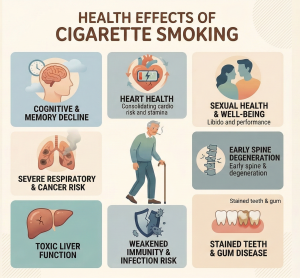
Chronic smoking is directly linked to:

  • Cardiovascular disease
  • Impotence, lack of sexual desire, and inability to perform
  • Various forms of cancer
  • A weakened immune system
  • Severely stained teeth
  • Early degeneration of bones (especially the spine)
  • Reduced lung function and capacity
  • Liver toxicity
  • Reduced stamina and endurance
  • Premature aging

Besides the above, there are several benefits of kicking the butt, apart from of course saving loads of money and time.

Interesting fact: 75% to 85% of smokers want to quit, but simply don’t know how, or find the withdrawal process too daunting.

One of the main reasons it is so hard to stop is because the dangers of continuing, and the benefits of quitting, seem very far away. However, your body begins to heal almost instantly.

The Healing Timeline: What Happens Right Now?

Here is a timeline detailing the immediate and long-term effects of quitting smoking, showing exactly how your body recovers minute by minute, and year by year.

  • In 20 minutes: Your blood pressure and heart rate will drop back down to normal levels.
  • In 8 hours: The carbon monoxide (a toxic gas) levels in your bloodstream will drop by half. Oxygen levels will return to normal, and your metabolism will begin to stabilize.
  • In 48 hours: Your chances of having a heart attack will have already decreased. All nicotine will have left your body. You will also notice your sense of taste and smell returning to normal levels.
  • In 72 hours: Your bronchial tubes will relax. You will notice an increase in your energy levels and lung volume.
  • In 2 weeks: Your blood circulation will increase, and it will continue to improve over the next 10 weeks.
  • In 3 to 9 months: Coughs, wheezing, and breathing problems will dissipate as your lung capacity improves by an impressive 10%.
  • In 1 year: Your risk of suffering a heart attack will have dropped by half compared to a smoker.
  • In 5 years: Your risk of having a stroke returns to that of a non-smoker.
  • In 10 years: Your risk of developing lung cancer will have dropped to that of a non-smoker.
  • In 15 years: Your overall risk of a heart attack will have entirely returned to that of someone who has never smoked.

You have far more immediate benefits to look forward to than you might realize. The healing starts the moment you put out your last cigarette. Make this No Smoking Day the day you finally kick the habit. Quit now!

Nutritional Support for Smokers

If you are currently smoking or in the process of quitting, nutritional support is vital. Smokers should ensure they take Vitamin C regularly, as smoking heavily depletes the body’s natural levels of this crucial antioxidant. Additionally, regular consumption of Curcumin (turmeric extract) is known to help clear nicotine patches from the lungs and is widely studied for its role in possible cancer prevention.

#BeTheForce

Disclaimer: GOQii is committed to providing accurate, up-to-date, and comprehensive health information. This article is intended for informational purposes only and should not be used as a substitute for professional medical advice, diagnosis, or treatment. Always consult a qualified healthcare professional before starting or changing any medication or supplement. Individual responses to treatment may vary.

November 29, 2025 By Srini Leave a Comment

Breathing – A Forgotten Art

breathingWe eat 3-4 times a day, about 1.5kg of food, but we breathe 20,000 to 25,000 times a day – we intake about 20-25kg of air – We are not fully knowledgeable on breathing. Since it is an autonomous process, we do not – My research with Sleep naturally took me to research about “Breathing” and what I found out, woke me up (pun intended) and I decided to continue my blogs on Breathing.

3 external physical objects are consumed by us regularly. Life critically depends on them. Food, Water and Air. Food and Water can be paused through fasting for some time. But breathing cannot be paused beyond 10 minutes. Life will cease.

Only Free Divers can hold their breath for a maximum time of 10 minutes. We cannot and should not. Unlike eating food or drinking water, which are conscious activities, breathing is an  autonomous process. It is controlled by the medulla oblongata, a part of the brain stem. 

However, Both Indian and Chinese ancient wisdom has clearly found out that “Conscious Breathing” is the only process which can be used by human action to influence the brain functions and hence, the mind.

As evolving human beings, we have forgotten what is the natural and correct way of breathing. 

Our modern lifestyle has robbed us of natural breathing. We have got to relearn 

  • Correct Breathing 
  • Conscious Breathing

Unfortunately, there is little or no focus on breathing from modern medical science. 

Other than just asking you to breathe deep while checking heart/lung function using the stethoscope, I am not aware of any doctor visually observing or inquiring about how the patient is breathing!

My research into sleep took me naturally to breathing. So, I read James Nestor, the author of a recent bestseller on “Breath, the New Science of a Last Art”, Anders Olsson on “Conscious Breathing” and Wim Hof about the Wim Hof Method of breathing. 

I acknowledge the above authors in taking up the cause of breathing and explaining lucidly about the science behind breathing, the anatomy concerning breathing and some breathing techniques which have given me massive improvement in my health and attitude to life over the past few months.

Correct Breathing 

First let us learn about Correct Breathing and then I will talk about Conscious Breathing. So, what exactly is incorrect about breathing? All 3 aspects: 

  1. Breathing through the Nose
  2. Using Abdomen and Diaphragm for breathing
  3. Breathing Rhythmically and Slowly

Breathing through the Nose:
I wonder why I even should talk about this. Is this such a big thing? Then I really started observing the world around me – Shocking when I observed that my wife was breathing through her mouth during sleep (how I worked on it and corrected is a separate story).

We believe that it is ok to breathe through the mouth – this is as correct as eating through your nose! Nose is created to be the sole instrument of breathing! Period. Google it or look around when people are sleeping. Surveys and research says that at least 50% of people are breathing through their mouth during sleep! Add to this the percentage of people who have choked noses, COPD and other breathing issues! 

We are talking about a VERY LARGE proportion of the human population incorrectly breathing.

How do you breathe? Do you know? Ask your partner to observe while you breathe.

If you have a dry mouth when you wake up, if you  have a V-shaped upper palate (as against a U-shaped palate), If your tonsils are removed when you were a child, if you are snoring then IT IS QUITE LIKELY THAT YOU ARE BREATHING THROUGH YOUR MOUTH.

See what you are missing out if you breathe through your mouth?

  • Your nose captures impurities, particles, bacteria and viruses using the hair mucous surface in the nose when the inhaled air is going through.
  • Your nose heats up the air and moistens it using the moist mucous surface. Why is this important? The incredible process of Gas exchange in the lungs happens optimally only when the air is hot and humid (more about Gas exchange and the process/chemistry of breathing later).
  • It also adds the magical element of Nitric Oxide which is secreted in the sinuses. Nitric Oxide dilates the blood vessels as well as the air tubes of lungs, reducing blood pressure.

Tip: When you do Bhramari Pranayam (humming), you are releasing 15 times more Nitric Oxide into the breathed air and hence, practicing Bhramari Pranayama a few times a day during these days of the pandemic, can help you avoid getting infected. 

So, why not simply hum and breathe through your nose?

PS: All of what is stated above is a summary of reading so many research articles and you can google about any of them.

I will be sharing more on breathing in the articles to come! Stay tuned. For more breathing exercises, check out Healthy Reads. To learn breathing techniques with the right guidance from a certified expert, subscribe to Personalised Health Coaching here.

#BeTheForce 

Disclaimer: The information provided in this blog is for general awareness and educational purposes only. It is not intended to replace professional medical advice, diagnosis, or treatment. Always consult a qualified healthcare provider for personalised medical guidance or concerns related to your health. Images shown are for representation purposes only and may not depict the exact recommendations or outcomes.

  • 1
  • 2
  • Next Page »

Search

Recent Posts

  • 5 Healthy Smoothies to Support Weight Loss: The Power of Fiber
  • Inspired By Nature: How the Environment Shapes Your Biological Age
  • Does Sugar Really Make Kids Hyperactive? The Facts Every Parent Should Know
  • Cycling for a Greener Future: One Habit That Benefits Both You and the Planet
  • The Great Dairy Dilemma: Is Milk Driving Your Chronic Inflammation?

Stay Updated

Archives

  • June 2026 (5)
  • May 2026 (20)
  • April 2026 (24)
  • March 2026 (18)
  • February 2026 (14)
  • January 2026 (14)
  • December 2025 (19)
  • November 2025 (15)
  • October 2025 (20)
  • September 2025 (6)
  • August 2025 (6)
  • July 2025 (12)
  • June 2025 (18)
  • May 2025 (16)
  • April 2025 (22)
  • March 2025 (27)
  • February 2025 (21)
  • January 2025 (25)
  • December 2024 (22)
  • November 2024 (23)
  • October 2024 (21)
  • September 2024 (23)
  • August 2024 (30)
  • July 2024 (20)
  • June 2024 (25)
  • May 2024 (28)
  • April 2024 (27)
  • March 2024 (27)
  • February 2024 (23)
  • January 2024 (21)
  • December 2023 (14)
  • November 2023 (10)
  • October 2023 (19)
  • September 2023 (22)
  • August 2023 (18)
  • July 2023 (22)
  • June 2023 (23)
  • May 2023 (20)
  • April 2023 (19)
  • March 2023 (23)
  • February 2023 (19)
  • January 2023 (15)
  • December 2022 (11)
  • November 2022 (15)
  • October 2022 (15)
  • September 2022 (12)
  • August 2022 (10)
  • July 2022 (17)
  • June 2022 (11)
  • May 2022 (10)
  • April 2022 (6)
  • March 2022 (6)
  • February 2022 (13)
  • January 2022 (11)
  • December 2021 (7)
  • November 2021 (3)
  • October 2021 (6)
  • September 2021 (3)
  • August 2021 (8)
  • July 2021 (7)
  • June 2021 (15)
  • May 2021 (16)
  • April 2021 (10)
  • March 2021 (7)
  • February 2021 (4)
  • January 2021 (4)
  • December 2020 (3)
  • November 2020 (4)
  • October 2020 (10)
  • September 2020 (3)
  • August 2020 (3)
  • July 2020 (2)
  • June 2020 (4)
  • May 2020 (10)
  • April 2020 (12)
  • March 2020 (10)
  • February 2020 (4)
  • January 2020 (4)
  • December 2019 (3)
  • November 2019 (7)
  • October 2019 (5)
  • September 2019 (4)
  • August 2019 (9)
  • July 2019 (9)
  • June 2019 (11)
  • May 2019 (4)
  • April 2019 (8)
  • March 2019 (8)
  • February 2019 (9)
  • January 2019 (8)
  • December 2018 (9)
  • November 2018 (3)
  • October 2018 (3)
  • September 2018 (5)
  • August 2018 (10)
  • July 2018 (6)
  • June 2018 (13)
  • May 2018 (8)
  • April 2018 (18)
  • March 2018 (9)
  • February 2018 (8)
  • January 2018 (15)
  • December 2017 (12)
  • November 2017 (19)
  • October 2017 (13)
  • September 2017 (15)
  • August 2017 (4)
  • July 2017 (8)
  • June 2017 (7)
  • May 2017 (6)
  • April 2017 (8)
  • March 2017 (6)
  • February 2017 (7)
  • January 2017 (9)
  • December 2016 (10)
  • November 2016 (7)
  • October 2016 (7)
  • September 2016 (7)
  • August 2016 (11)
  • July 2016 (9)
  • June 2016 (9)
  • May 2016 (12)
  • April 2016 (17)
  • March 2016 (17)
  • February 2016 (8)
  • January 2016 (6)
  • December 2015 (2)
  • November 2015 (9)
  • October 2015 (7)
  • September 2015 (9)
  • August 2015 (11)
  • July 2015 (9)
  • June 2015 (11)
  • May 2015 (9)
  • April 2015 (13)
  • March 2015 (8)
  • February 2015 (5)
  • January 2015 (12)
  • December 2014 (14)
  • November 2014 (11)
  • October 2014 (6)
  • September 2014 (13)
  • August 2014 (12)
  • July 2014 (6)
  • June 2014 (2)
  • May 2014 (7)
  • April 2014 (4)

From “Laddu Nawin” to Fit and Fierce: How a 25-Year-Old Insurance Advisor Shed 20 Kilos and Gained His Life Back

When 25-year-old Nawin Yadav from Hyderabad walked into his office every morning, he carried more than just his files and policy papers. He had the weight of fatigue, sluggish energy, and an ever-growing belly that was becoming the butt of jokes. “People … [Read More...]

“I’ve Challenged Myself to Live 100 Years” – The Story of Chandubhai Savani’s Second Chance at Life

At 67, most people start slowing down. Not Chandubhai Savani. A resident of Surat, Chandubhai, thought life was on track. “My life was going well till I had my bypass surgery,” he says. That surgery, back in 2021, was a wake-up call.  Medication was routine, but exercise wasn’t. His diet? What he calls ‘normal.’ “I […]

From Shimla’s Slopes to Chandigarh’s Sidewalks: Surinder Kaur Bhalla’s Journey from Chaos to Control

Some journeys start with a plan. Others begin with a stumble literally. Surinder Bhalla, a government professional, born and raised in the scenic hill town of Shimla, had always lived a life of movement. “In Shimla, you walked everywhere,” she reflects. “Walking was never an exercise. It was just life.” But after shifting to Chandigarh, […]

Ananda Mukherjee Health Story

From Terminal Illness To Complete Wellness! Ananda Mukherjee Health Story

As we observe World Cancer Day under the powerful theme ‘United by Unique’ (2025-2027)**, we are reminded that every individual’s journey with cancer is distinct, yet united by shared resilience, hope, and the collective fight against this disease. This theme places people at the centre of care and their stories at the heart of the […]

  • HOME
  • HEALTHY LIVING
  • FITNESS
  • HEALTHY RECIPES
  • USER STORIES
  • KARMA
  • BUY GOQii

Copyright ©2016 GOQii