GOQii

Blog

  • HOME
  • HEALTHY LIVING
  • FITNESS
  • HEALTHY RECIPES
  • USER STORIES
  • KARMA
  • BUY GOQii

October 31, 2026 By GOQii Leave a Comment

Healthier Diwali Snacks: Baked and Air-Fried Namkeen Recipes

In most Indian homes, Diwali smells of hot oil. Trays of chakli, mathri, sev and chivda come out of the kadhai a week before the festival, and the steel dabbas stay full until well after it. A handful here, a handful with every cup of chai, a box for every guest: it adds up quickly.

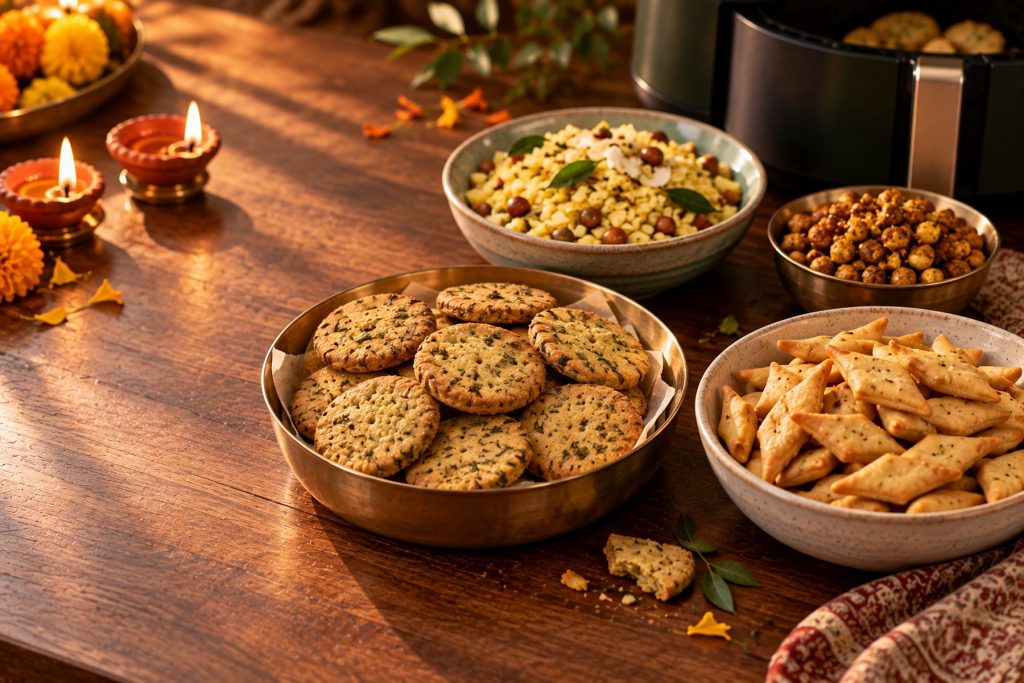
You don’t have to give up namkeen to eat better this Diwali. Baking, air-frying and dry-roasting can give you the crunch and the masala with a fraction of the oil, especially if you also go easy on salt and portions. Below are four simple recipes, plus what these methods do and don’t change.

At a glance

  • Deep-fried namkeen is very energy-dense: a popular packaged aloo bhujia lists about 38 g of fat and 562 kcal per 100 g.
  • Salt is the hidden problem: Indians eat about 11 g of salt a day, more than twice the WHO limit of 5 g, and namkeen is a common source.
  • Baking and air-frying use far less oil: a teaspoon or two instead of a kadhai full.
  • They aren’t magic: a baked snack is still a snack, and browning starchy foods too much can form acrylamide, so aim for golden, not dark brown.
  • Avoid reusing frying oil: ICMR–NIN advises against frying again in used oil.
  • Four recipes: baked methi mathri, air-fried whole wheat namak pare, roasted poha chivda and air-fried masala chana.

Why regular namkeen weighs heavy

There is nothing wrong with enjoying festive snacks. The issue is how they’re usually made and how much of them we eat over a fortnight of celebrations.

Deep-frying adds a lot of fat. Dough and batter soak up oil as they fry, which is why fried namkeen is so calorie-dense. Using the aloo bhujia label above as an example, a 50 g bowl (roughly two small katoris) provides about 280 kcal and 19 g of fat, before the chai and sweets alongside it.

Reused oil is a bigger worry. At home and at many sweet shops, the same kadhai of oil is often used batch after batch. Repeated heating breaks oil down and forms harmful compounds, including trans fats and free radicals. The ICMR–National Institute of Nutrition advises that oil used once for frying can be filtered and used for curries within a day or two, but shouldn’t be used for frying again.

Salt sneaks in. An ICMR–National Institute of Epidemiology analysis puts average intake in India at about 11 g of salt a day, and names namkeen, papad, pickles and chips among the hidden sources. The WHO recommends less than 5 g a day for adults. Too much salt raises blood pressure, the leading risk factor for stroke and heart disease.

Portions creep up. Namkeen is easy to eat without noticing: straight from the dabba, in front of the TV, at every house you visit. Over two weeks, those handfuls add up.

Baked, air-fried or fried: what really changes

What improves:

  • Much less oil. An air fryer circulates very hot air around the food, so a recipe needs about a tablespoon of oil rather than the cups used for deep-frying, and studies of fries found the air-fried versions had substantially less fat. Baking works the same way. Dry-roasting in a kadhai, as for chivda, needs only a little oil for the tadka.
  • No reused oil. Each batch starts with fresh oil, in teaspoons.
  • More control. At home you choose the flour, the oil, the salt and the spices.

What doesn’t change:

  • A baked mathri with a heaped teaspoon of salt is still salty. The recipes below use less salt than most, and lean on ajwain, methi, pepper, amchur and curry leaves for flavour.
  • Baking maida-based snacks doesn’t add fibre. Swapping in whole wheat atta, besan, poha, makhana or chickpeas does.
  • Lower-fat snacks are easy to eat in larger amounts. A small katori is still a sensible serving.

A note on browning. Starchy foods form acrylamide, a compound best kept low, when they’re cooked to a dark brown at high heat. A 2024 study found air-frying potatoes didn’t produce less acrylamide than deep- or oven-frying. Whatever the method, cook snacks to light golden, not dark brown, and throw away any burnt pieces.

4 healthier namkeen recipes for Diwali

Oven and air fryer temperatures vary, so check the first batch a few minutes early and adjust. All four keep well in an airtight container once fully cooled.

1. Baked methi mathri

Flaky, savoury and lightly bitter from the methi. Whole wheat atta and a little besan replace maida, and they’re baked instead of fried.

Makes: about 30 mathris | Prep: 15 minutes, plus 20 minutes resting | Bake: 15–20 minutes per tray

Ingredients

  • 1 cup (120 g) whole wheat atta
  • ¼ cup (30 g) besan
  • 3 tbsp kasuri methi, crushed between your palms
  • ½ tsp ajwain
  • ½ tsp cumin seeds
  • ¼ tsp turmeric
  • ½ tsp red chilli powder
  • ½ tsp salt
  • 2 tbsp oil or ghee, plus ½ tsp for brushing
  • About ⅓ cup (70–80 ml) water

Method

  1. Mix the atta, besan, methi, spices and salt. Add 2 tbsp oil or ghee and rub it in with your fingertips until the flour holds together when pressed.
  2. Add water a little at a time to make a stiff dough, firmer than roti dough. Cover and rest for 20 minutes.
  3. Preheat the oven to 180°C. Roll the dough to about 3 mm thick and cut 5 cm rounds. Re-roll the scraps.
  4. Prick each mathri several times with a fork so it doesn’t puff up. Place on a lined tray and brush very lightly with oil.
  5. Bake for 15–20 minutes, turning once halfway, until firm and light golden at the edges. They crisp up further as they cool on a rack.

Air fryer: 170°C for 8–10 minutes in a single layer, turning once.

2. Air-fried whole wheat namak pare

The classic diamond-shaped teatime crunch, made with atta and a little suji for bite.

Serves: 6 (a small katori each) | Prep: 15 minutes, plus 15 minutes resting | Cook: 10–12 minutes per batch

Ingredients

  • 1 cup (120 g) whole wheat atta
  • ¼ cup (40 g) fine suji (semolina)
  • ½ tsp ajwain
  • ¼ tsp crushed black pepper
  • ½ tsp salt (scant)
  • 1½ tbsp oil, plus 1 tsp for tossing
  • About ⅓ cup (70–80 ml) water

Method

  1. Mix the atta, suji, ajwain, pepper and salt. Rub in 1½ tbsp oil, then add water gradually to make a stiff dough. Cover and rest for 15 minutes so the suji softens.
  2. Roll out to about 3 mm thick. Cut into 1.5 cm strips, then cut across at an angle to make small diamonds.
  3. Toss with 1 tsp oil so each piece has a light coating.
  4. Air-fry at 170°C for 10–12 minutes in a single layer, shaking the basket every 3–4 minutes, until golden and crisp. Cook in batches; crowding makes them chewy.

Oven: 180°C for 15–18 minutes on a lined tray, stirring halfway.

3. Roasted poha chivda

The Diwali staple, roasted instead of fried. Thin poha crisps up beautifully in a dry kadhai.

Makes: about 4 cups (8 servings of ½ cup) | Time: 20 minutes

Ingredients

  • 2 cups (about 100 g) thin poha (patla or nylon poha)
  • 2 tbsp (20 g) peanuts
  • 2 tbsp (20 g) roasted chana dal (dalia)
  • 1 tbsp oil
  • ½ tsp mustard seeds
  • 12–15 curry leaves
  • 1–2 green chillies, slit
  • ¼ tsp turmeric
  • A pinch of hing
  • ½ tsp salt
  • ½ tsp amchur (optional)

Method

  1. Dry-roast the poha in a wide kadhai on low heat for 6–8 minutes, stirring constantly, until it’s crisp and crumbles when pressed. It shouldn’t brown. Tip it onto a plate.
  2. Heat the oil and roast the peanuts on low heat for 2–3 minutes. Add the dalia for a minute.
  3. Add the mustard seeds; when they splutter, add the curry leaves, chillies, turmeric and hing.
  4. Return the poha to the kadhai, sprinkle in the salt and amchur, and toss gently on low heat for 2 minutes to coat.
  5. Cool completely before storing, or it will turn soft.

Tip: for a crunchier mix with more protein, add roasted makhana and chana, as in the makhana chivda from our trending healthy recipes.

4. Air-fried masala chana

Crunchy chickpeas with real protein and fibre, and a good swap for fried dal moth.

Serves: 4 | Prep: overnight soaking, plus 20 minutes | Cook: 15–20 minutes

Ingredients

  • 1 cup (about 200 g) dried kabuli chana, soaked for 8 hours
  • 2 tsp oil
  • ½ tsp red chilli powder
  • ½ tsp roasted cumin powder
  • ½ tsp amchur
  • ¼ tsp black pepper
  • ¼ tsp salt, or to taste

Method

  1. Pressure-cook the soaked chana for 2–3 whistles until just tender but holding their shape. Mushy chana won’t crisp.
  2. Drain and spread on a clean kitchen towel. Pat completely dry and leave for 15 minutes; any surface moisture stops them crisping.
  3. Toss with the oil and air-fry at 190°C for 15–20 minutes, shaking every 5 minutes, until they’re crunchy and rattle in the basket.
  4. Toss with the spices and salt while still warm.

Oven: 200°C for 30–40 minutes on a lined tray in a single layer, stirring every 10 minutes.

Tip: roasted chana lose their crunch within a day or two. Store them airtight and re-crisp for 3–4 minutes in the air fryer if needed. Pulses like chana are a great everyday food too; read more about why pulses are good for you.

Smart snacking through the festive season

  • Serve, don’t graze. Put a small katori on a plate instead of eating from the dabba. About 30 g (a small handful) is a sensible serving of most namkeen.
  • Pair it with protein or fibre. A bowl of roasted chana or a few mathris with a plate of cut fruit or cucumber is more filling than namkeen alone.
  • Go lighter on salt everywhere else that day if you’ve had a few snacks: less pickle and papad at dinner, and no extra salt on the salad.
  • Mind the chaat masala. It’s mostly salt (including black salt), so a sprinkle on top can double the salt in a snack.
  • Keep portions for guests small, and offer fruit, dry fruit or a lighter homemade sweet, such as our dates roll with seeds, alongside the namkeen.
  • Store well. Cool everything completely before closing the jar, and keep it airtight. Roasted chivda and baked mathri keep for 1–2 weeks; roasted chana are best within a few days.

Buying ready-made namkeen?

Turn the pack over and check the nutrition table, not just the front label. Compare products per 100 g: look for lower fat, lower sodium and fewer ingredients you don’t recognise. Words like “baked”, “roasted” or “multigrain” on the front don’t guarantee less salt, and many still use refined flour and palm oil. Check the serving size too; a small pack is often more than one serving.

The bottom line

Diwali namkeen doesn’t have to mean a kadhai of reused oil. Baking, air-frying and dry-roasting keep the crunch and the masala with a fraction of the fat, and making snacks at home puts you in charge of the flour and the salt. Just remember that a healthier snack is still a snack: serve it in a katori, enjoy it slowly, and save the extra handful for tomorrow. For more ideas you can make in minutes after the festivities, try these 5-minute healthy snacks for work and home.

Pro Tip: Log your festive snacks and meals in the GOQii App to keep an eye on portions and salt through the celebrations. Your GOQii Personalised Health Coach can help you plan a balanced Diwali week, so you can enjoy every get-together without the post-festival slump.

Frequently asked questions

Is baked namkeen healthier than fried namkeen?

Generally, yes. Baked namkeen uses far less oil, so it’s lower in fat and calories, and it avoids reused frying oil. But it can be just as salty, so check the salt and keep portions small.

Is air-fried food healthy?

Air-frying uses much less oil than deep-frying, which cuts fat and calories. It’s a healthier cooking method, but what you cook still matters: an air-fried snack made with refined flour and lots of salt isn’t automatically healthy.

Does air-frying cause acrylamide?

Acrylamide can form when starchy foods are cooked to a dark brown at high heat, whether they’re air-fried, baked or deep-fried. Cook snacks to light golden rather than dark brown and discard burnt pieces.

Which Diwali namkeen is the healthiest?

Snacks made from whole foods and cooked with little oil are the best choices, such as roasted chana, roasted makhana, dry-roasted poha chivda and baked whole wheat mathri. Watch the salt in all of them.

How much namkeen can I eat in a day?

There’s no fixed limit, but about 30 g, a small handful or katori, is a sensible serving. Remember that namkeen adds to your daily salt, which the WHO advises keeping below 5 g for adults.

Can people with diabetes or high blood pressure eat namkeen?

In small portions, homemade low-salt versions such as roasted chana or baked mathri can fit into most meal plans. Packaged and fried namkeen are often high in salt, fat and refined flour, so keep those occasional. Check with your doctor or dietitian about your own plan.

How long does homemade baked namkeen last?

Cooled completely and stored in an airtight container, baked mathri, namak pare and roasted poha chivda usually keep for one to two weeks. Air-fried chana are best eaten within a few days.

#BeTheForce

Disclaimer: The information provided in this blog is for general awareness and educational purposes only. It is not intended to replace professional medical advice, diagnosis, or treatment. Always consult a qualified healthcare provider for personalised medical guidance or concerns related to your health.
October 19, 2026 By GOQii Leave a Comment

5-Minute Healthy Snacks for Work & Home

A healthy snack doesn’t need cooking or planning. A handful of nuts, a bowl of curd with fruit or a few spoons of roasted chana takes less than five minutes and keeps you going far better than biscuits or a packet of chips.
For many of us, snack time means whatever is closest: biscuits with chai at 4 pm, namkeen from the office pantry, or something from the fridge late in the evening. Those snacks are quick, but most packaged ones are high in fat, sugar or salt, and they rarely keep you full until dinner.

This guide explains what makes a snack worth eating, gives you a list of no-cook and 5-minute Indian snacks for your desk and your kitchen, and shows simple swaps for the snacks you already reach for.

Healthy snacking at a glance

  • Pair protein or fibre with your snack. Nuts, chana, curd, sprouts, fruit and vegetables keep you fuller than biscuits or chips.
  • Keep it small. A snack should tide you over to your next meal, not replace it. Use a small bowl, not the packet.
  • Plan it. Stock your desk drawer and fridge with good options so the office pantry isn’t your only choice.
  • Read the label on packaged snacks. Many “healthy” snacks are high in sugar, salt or fat.
  • Watch what you drink with it. Two or three cups of sweetened chai a day add up in sugar.

What makes a snack healthy

A good snack does a simple job: it keeps you comfortable until your next meal and adds something useful to your day. Four things help.

  • Protein or fibre. Foods such as nuts, roasted chana, sprouts, curd, paneer, eggs, fruit and vegetables are more filling than refined snacks, so you’re less likely to keep reaching back into the packet.
  • A sensible portion. Even healthy snacks add up. A small handful of nuts, one fruit or a small bowl of chana is usually enough.
  • Whole foods first. Snacks you put together from basic ingredients are usually lower in salt, sugar and fat than packaged ones.
  • A snack is most useful when there is a long gap between meals, such as mid-afternoon. If you’re not actually hungry, a glass of water or a short walk may be all you need.

What to watch in packaged snacks

India’s dietary guidelines advise limiting ultra-processed foods, which are often high in fat, sugar and salt and low in fibre. Biscuits, namkeen, chips, instant noodles and many “health” bars fall into this group. The guidelines treat more than about 25 g of added sugar or 5 g of salt a day as above the healthy range, and the WHO advises limiting salty snacks and pre-packaged fried and baked foods.

When you do buy a packaged snack, check the label:

  • Sugar: look at sugar per serving and the ingredients list. Sugar, jaggery, honey, glucose and syrups near the top mean it is a sweet snack, whatever the front of the pack says.
  • Salt or sodium: namkeen and chips can carry a large share of your daily salt in one packet.
  • Fat: watch for palm oil, “hydrogenated” or “partially hydrogenated” fats, and frying as the main cooking method.
  • Serving size: many packets contain two or three servings. Check what the numbers refer to.

Words like “multigrain”, “baked”, “natural” or “no added sugar” don’t make a snack healthy on their own. The label tells you more than the front of the pack.

12 healthy snacks you can make in 5 minutes

No-cook snacks for your desk

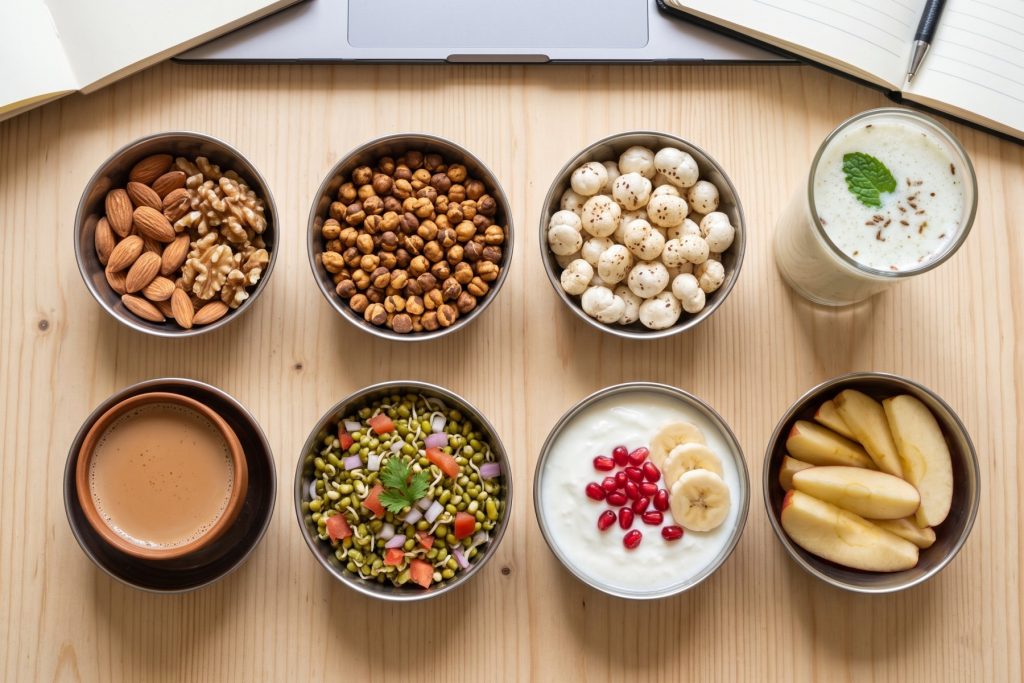
These keep for days without a fridge, so they’re easy to stock at work.

Snack Portion Why it works
Mixed nuts (almonds, walnuts, peanuts) A small handful, about 20–30 g Protein, fibre and healthy fats. Eating about 20 g of nuts a day is linked to a lower risk of heart disease. Choose unsalted.
Roasted chana 2–3 tablespoons High in protein and fibre, cheap and filling. Mix with a few peanuts for variety.
Roasted makhana A small bowl Light and crunchy. Roast at home with a little ghee and spices, or check the salt on packaged ones.
Whole fruit 1 medium fruit, or a bowl of seasonal fruit Banana, apple, guava, orange or pear travel well. Whole fruit is more filling than juice.
Fruit with peanut butter 1 fruit with 1 tablespoon peanut butter Apple or banana slices with a little unsweetened peanut butter add protein and fat to keep you full.
Puffed rice bhel A small bowl Murmura with chopped onion, tomato, cucumber, roasted peanuts and lemon. Skip the sev and sweet chutney.

5-minute snacks at home

Snack Portion Why it works
Curd with fruit and seeds A small bowl of plain curd, fruit, 1 teaspoon seeds Protein and calcium from curd, fibre from fruit. Use plain curd rather than flavoured, which is often sweetened.
Sprouts chaat A small bowl Moong sprouts with onion, tomato, cucumber, lemon and chaat masala. Steam the sprouts lightly if you prefer them cooked.
Boiled eggs 1–2 eggs Boil a batch and keep them in the fridge for up to a few days. Add pepper and a pinch of salt.
Paneer or tofu cubes A small bowl Sauté briefly with pepper, chaat masala or a little chutney. High in protein.
Vegetable sticks with dip A bowl of carrot, cucumber and capsicum with 2 tablespoons hummus or hung-curd dip Crunchy, filling and very low in calories.
Masala chaas 1 glass Buttermilk with roasted jeera, mint and a pinch of salt. A good swap for a second cup of chai, especially in hot weather.

Simple snack swaps

You don’t have to give up the snacks you enjoy. Swapping the ones you eat most often makes the biggest difference.

Instead of Try What changes
Biscuits with chai A handful of nuts or roasted chana with chai Less sugar and refined flour, more protein
Namkeen or bhujia Roasted chana, peanuts or makhana Much less salt and fried fat
Potato chips Puffed rice bhel or vegetable sticks with a dip Lower in salt and fat, more fibre
Packaged fruit juice A whole fruit More fibre, less sugar, more filling
Flavoured yoghurt Plain curd with fresh fruit Far less added sugar
Samosa or pakora Sprouts chaat or a boiled egg Not deep-fried, more protein
Sweetened chai, third cup Masala chaas or water Less sugar and caffeine late in the day
“Health” or granola bar A banana with a few nuts Fewer added sugars and syrups

Making healthy snacking a habit

The easiest way to snack well is to make the healthy option the closest one.

Stock your desk drawer

  • Unsalted nuts and roasted chana in small boxes, portioned for the week
  • Roasted makhana or puffed rice in an airtight jar
  • One or two pieces of whole fruit, brought in each morning
  • A water bottle you refill through the day

Stock your fridge at home

  • Plain curd and a few boiled eggs
  • Washed and cut vegetable sticks in a box with a lid
  • Sprouts, hummus or hung-curd dip
  • Seasonal fruit where you can see it

Snack with intention

  • Check you’re hungry. Thirst, tiredness and boredom can feel like hunger. Try water first, or take a short walk.
  • Portion it out. Put your snack in a bowl and put the packet away.
  • Step away from the screen. Eating while working or scrolling makes it easy to eat more than you meant to.
  • Notice stress snacking. If you find yourself reaching for food when you’re stressed rather than hungry, our guide on why stress triggers unhealthy eating explains what is going on and how to break the cycle.
  • Go easy late at night. If you snack after dinner, keep it light, such as curd, fruit or a glass of warm milk.

The bottom line

Healthy snacking is mostly about having the right food within reach. Keep nuts, roasted chana, fruit and curd where you’ll see them, pair your snack with protein or fibre, keep portions small, and read the label on anything packaged. Five minutes is all it takes, and the payoff is steadier energy through the afternoon and less temptation from the biscuit jar.

Pro Tip: Use the GOQii App to log your snacks for a week. It’s an easy way to spot patterns, such as the 4 pm biscuits or the late-night fridge visit. Your GOQii Personalised Health Coach can help you plan snacks that suit your routine, tastes and health goals.

Frequently Asked Questions (FAQs)

  1. Is snacking between meals healthy?

It can be. A planned snack helps when there is a long gap between meals and stops you arriving at dinner very hungry. It is less helpful if you snack out of habit or boredom, or if the snack is mostly sugar, salt or fried food.

  1. What is a good portion size for a snack?

Think small: a handful of nuts (about 20–30 g), one fruit, a small bowl of chana or curd, or 1–2 eggs. A snack should keep you going until your next meal, not replace it.

  1. What are good high-protein snacks?

Roasted chana, nuts, sprouts, paneer or tofu cubes, plain curd, buttermilk and boiled eggs are all simple Indian options. Eggs are an easy source of good-quality protein if you eat them.

  1. Are packaged “healthy” snacks a good choice?

Some are, many aren’t. Words like “baked”, “multigrain” or “no added sugar” don’t guarantee a healthy snack. Check the label for sugar, salt and fat, and look at the serving size.

  1. How many nuts should I eat a day?

A small handful, about 20–30 g, is a good amount. Large studies link around 20 g a day with a lower risk of heart disease. Choose unsalted nuts and keep the portion in check, as nuts are high in calories.

  1. Is makhana a healthy snack?

Roasted makhana is a light, crunchy snack that is easy to make at home with a little ghee and spices. Packaged versions can be high in salt or flavourings, so check the label.

  1. What can I snack on at night?

If you’re genuinely hungry after dinner, choose something light such as plain curd, a piece of fruit, a few nuts or a glass of warm milk. Avoid heavy, fried or very sweet snacks close to bedtime.

#BeTheForce

Disclaimer: The information provided in this blog is for general awareness and educational purposes only. It is not intended to replace professional medical advice, diagnosis, or treatment. Always consult a qualified healthcare provider for personalised medical guidance or concerns related to your health.

July 24, 2026 By Urvi Gohil 2 Comments

Healthy Eating: Crispy Monsoon Corn Tikkis

Healthy RecipeThe Big Question: Can you enjoy crispy monsoon snacks without compromising your health goals?There’s something undeniably comforting about the aroma of roasted corn during the rainy season. Whether it’s a steaming boiled cob or a smoky street-side bhutta, sweet corn has long been one of the highlights of the monsoon. But along with the rains come intense cravings for deep-fried pakodas, cutlets, and other indulgent snacks.
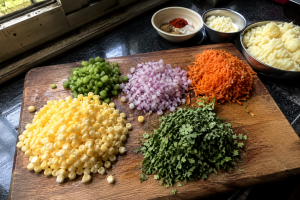
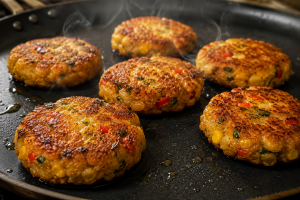
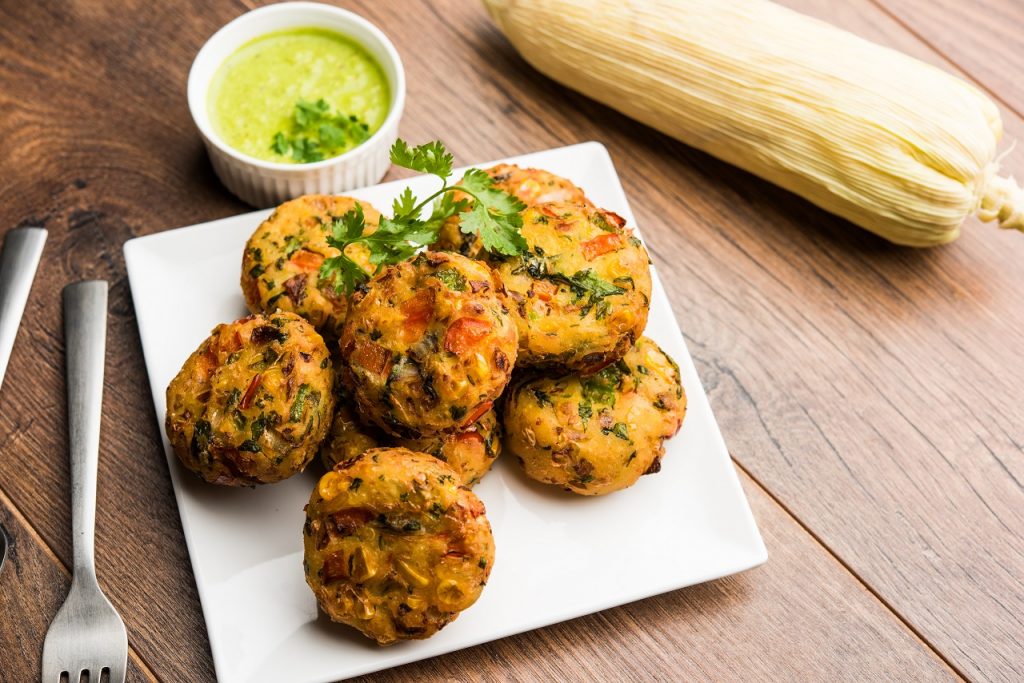
The good news? You don’t have to give up the crunch to make a healthier choice. These pan-roasted Corn Tikkis deliver the exact same satisfying texture and comforting flavours while using wholesome ingredients and significantly less oil than traditional deep-fried versions.

Why You’ll Love These Healthy Corn Tikkis

These tikkis are not only delicious but also packed with ingredients that contribute to a balanced diet:

  • Supports Eye Health: Sweet corn contains lutein and zeaxanthin, two naturally occurring carotenoids that help support eye health and may contribute to protecting vision as we age.
  • Provides Dietary Fibre: Corn and added vegetables contribute dietary fibre, which supports healthy digestion and promotes satiety, helping you stay fuller for longer.
  • Adds Colour and Nutrients: Capsicum, carrots, and fresh coriander add colour, flavour, and a variety of vitamins, minerals, and antioxidants that support overall immune health.
  • A Healthier Way to Enjoy Comfort Food: Instead of deep-frying, these tikkis are pan-roasted using minimal oil, helping reduce the overall fat content while still achieving a perfect, crisp exterior.

Recipe Overview

  • Preparation Time: 20 minutes
  • Cooking Time: 15 minutes
  • Total Time: 35 minutes
  • Makes: 8 tikkis
  • Serves: 4

Ingredients

The Base

  • 1 cup boiled sweet corn kernels (coarsely ground)
  • 2 tbsp whole boiled corn kernels
  • ½ cup mashed boiled potatoes
  • 2 tbsp wheat rusk powder (for coating)
  • 1 tsp oil (for roasting)

The Vegetables

  • 2 tbsp finely chopped capsicum
  • 2 tbsp finely chopped onion
  • 2 tbsp grated carrot
  • 2 tbsp chopped fresh coriander

The Flavouring

  • 1 tbsp ginger paste
  • 1 tsp green chilli paste (adjust to taste)
  • 1 tsp red chilli powder
  • 1 tsp coriander-cumin powder
  • ½ tsp garam masala
  • Salt to taste
  • Chaat masala (optional)

Method

Step 1: Cook the Corn Mixture – Heat a teaspoon of oil in a non-stick pan. Add the ginger paste and sauté briefly. Add the coarsely ground corn and cook over medium heat for 4–5 minutes until most of the moisture evaporates. This helps prevent the tikkis from becoming soft or breaking during cooking.

Step 2: Prepare the Mixture – In a large bowl, combine the mashed potatoes, whole corn kernels, cooked corn mixture, capsicum, onion, carrot, and fresh coriander. Mix well.

Step 3: Season – Add the green chilli paste, red chilli powder, coriander-cumin powder, garam masala, salt, and chaat masala. Mix thoroughly until everything comes together into a soft, pliable dough.

Step 4: Shape the Tikkis – Lightly grease your palms. Shape the mixture into evenly sized round tikkis (cutlets). Roll each one gently in the wheat rusk powder for a light, crispy coating.

Step 5: Pan Roast – Heat a non-stick tawa or pan and brush it lightly with oil. Cook each tikki for about 4–5 minutes per side over medium heat until golden brown and crisp.

Step 6: Serve – Serve hot with fresh mint chutney, a mint-yoghurt dip, or coriander chutney. (Skip sugary ketchup if you’re trying to keep added sugar low!)

Approximate Nutrition (Per Serving – 2 Tikkis)

  • Calories: ~170 kcal
  • Protein: ~5 g
  • Carbohydrates: ~28 g
  • Fat: ~4 g
  • Fibre: ~4–5 g

(Values are approximate and may vary depending on the specific ingredients used.)

Healthy Variations & Swaps

Want to customise the recipe? Try these easy swaps:

Replace Potatoes With:

  • Sweet potato
  • Boiled raw banana
  • Mashed pumpkin

Add More Protein: These additions make the tikkis more filling while increasing the protein content:

  • Crumbled paneer or Tofu
  • Cooked quinoa
  • Boiled chickpeas (lightly mashed)

Gluten-Free Version: Replace the wheat rusk powder with:

  • Oats powder (certified gluten-free, if required)
  • Roasted poha (flattened rice) powder
  • Rice flakes powder

Air Fryer & Oven Methods:

  • Air Fryer: Cook at 180°C for 12–15 minutes, turning halfway through.
  • Oven: Bake at 180°C for 18–20 minutes, flipping once for even browning.

Storage Tips

Perfect for quick weekday snacks!

  • Refrigerate uncooked tikkis for up to 2 days in an airtight container.
  • Freeze shaped tikkis for up to 1 month. Thaw them overnight in the refrigerator before pan-roasting.

Healthy eating doesn’t mean giving up the foods you enjoy. Simple swaps—like pan-roasting instead of deep-frying, adding colourful vegetables, and choosing wholesome ingredients—can make traditional favourites more nutritious without compromising on taste. These crispy Corn Tikkis are proof that comfort food and healthy eating can go hand in hand.

Pro Tip: Cravings are easier to manage when you plan ahead. Track your meals on the GOQii App and connect with your GOQii Personalised Health Coach for customised snack ideas, healthier recipes, and nutrition guidance that fits your goals and lifestyle.

Frequently Asked Questions (FAQs)

  1. Is sweet corn good for weight management?

Yes. Sweet corn provides fibre that promotes fullness and contains important vitamins and minerals. Since it is a starchy vegetable, portion size remains important as part of a balanced diet.

  1. Can I prepare these tikkis in advance?

Yes. Shape the tikkis and refrigerate them for up to two days before cooking. They also freeze well for up to one month.

  1. Why are my tikkis falling apart?

The mixture may contain excess moisture. Cook the corn thoroughly before mixing to evaporate the water. If needed, add a tablespoon of roasted besan (chickpea flour) or oats powder to improve binding.

  1. Can people with diabetes eat these Corn Tikkis?

Yes, in moderation. Since sweet corn contains carbohydrates, portion control is important. Pair the tikkis with a protein-rich accompaniment such as yoghurt or paneer and avoid sugary sauces. Individual dietary needs vary, so consult your healthcare provider or dietitian for personalised advice.

Eat Healthy and #BeTheForce

Disclaimer: This recipe is intended for educational purposes only. Nutritional needs vary from person to person. If you have diabetes, kidney disease, or other medical conditions requiring specialised dietary advice, consult a qualified healthcare professional or registered dietitian before making significant dietary changes.

January 23, 2025 By Akanksha Khullar 2 Comments

5 Easy Ways to Make Eating Healthy!

eating healthyLet’s face it! We all struggle to eat healthy sometimes and after a while, we turn to fad diets or some “miracle food” to help us ease the guilt of having eaten something unhealthy. While a lot of information is available on the internet about eating healthy, it also causes a lot of confusion as most of the content isn’t authentic and could do more harm than good. So what exactly is Eating Healthy comprised of?


Tips to Eating Healthy

To simplify what eating healthy should consist of, we’re sharing some simple tips which will help you eat healthy, clean and provide you with all the nutrients you need!

  1. Consume Whole Foods: Whole foods are foods that are unprocessed and unrefined, or processed or refined as minimum as possible to retain their nutritional value. They have a lot of fibre, good fats, no added sugar or bad fats or salt. A few examples for whole grains are whole wheat, barley, quinoa, beans, legumes and nuts, seeds, fruits, and vegetables.
  2. Go for Healthy Snacking: Healthy snacking is very important to keep energy constant throughout the day, to decrease hunger pangs and keep one away from overeating during the next meal. Healthy snacking, as per the options suggested, also refrains one from having junk foods which are high in sugars and fats that can lead to various metabolic disorders in the body like diabetes, heart ailments etc. Some healthy foods that can be included are fruits, nuts and seeds, roasted chana, peanuts, coconut water, buttermilk, lemon water, and whole wheat/multigrain sandwich with no butter or cheese.
  3. Never Skip Meals: Always make sure to have meals on time to regulate the metabolic rate of the body and keep hunger pangs away. It also keeps you energized. Hence, a 5 meal pattern should be followed i.e. breakfast, mid meal, lunch, mid meal and dinner. Ideally, try and have meals in intervals of 2-3 hours.
  4. Eat Mindfully: Whenever having a meal, try to enjoy every bite, eating slowly while savouring the taste. It takes about 20 minutes for the brain to realize that the stomach is full. If we eat a lot of food at one time and totally stuff the belly, it leads to digestion issues in the future.
  5. Go for Baked or Roasted Foods When Eating Out: During grilling or frying, several harmful compounds like Polycyclic Aromatic Hydrocarbons (PAHs), Advanced Glycation End Products (AGEs) and Heterocyclic Amines (HCAs) are formed. These compounds have been linked to diseases like cancer and heart ailments. So avoid grilled or fried foods and go for baked and roasted!

Sometimes we set ambitious healthy eating goals and get overwhelmed by it. Eating healthy is certainly not about being perfect. So, take small steps by adding the habits discussed above to your current diet regime and work towards a healthier you!

We hope this article helps. If you want diet plans or want to understand more facets of eating healthy, ask your GOQii Coach directly by subscribing to Personalised Health Coaching here.

Do leave your thoughts in the comments below!

#BeTheForce

  • 1
  • 2
  • 3
  • 4
  • Next Page »

Search

Recent Posts

  • Vegetarian protein guide
  • Warming winter soups: 3 protein-rich recipes
  • World AMR Awareness Week 2026: when you need antibiotics, and simple steps to prevent AMR
  • PCOS: diet, exercise and the myths to stop believing
  • Cholesterol numbers explained: LDL, HDL and triglycerides

Stay Updated

Archives

  • November 2026 (23)
  • October 2026 (23)
  • September 2026 (5)
  • August 2026 (8)
  • July 2026 (24)
  • June 2026 (22)
  • May 2026 (20)
  • April 2026 (24)
  • March 2026 (18)
  • February 2026 (14)
  • January 2026 (14)
  • December 2025 (19)
  • November 2025 (14)
  • October 2025 (17)
  • September 2025 (6)
  • August 2025 (5)
  • July 2025 (9)
  • June 2025 (18)
  • May 2025 (16)
  • April 2025 (22)
  • March 2025 (25)
  • February 2025 (21)
  • January 2025 (25)
  • December 2024 (21)
  • November 2024 (21)
  • October 2024 (15)
  • September 2024 (22)
  • August 2024 (27)
  • July 2024 (14)
  • June 2024 (23)
  • May 2024 (26)
  • April 2024 (27)
  • March 2024 (27)
  • February 2024 (23)
  • January 2024 (21)
  • December 2023 (14)
  • November 2023 (10)
  • October 2023 (18)
  • September 2023 (20)
  • August 2023 (16)
  • July 2023 (16)
  • June 2023 (21)
  • May 2023 (20)
  • April 2023 (19)
  • March 2023 (23)
  • February 2023 (19)
  • January 2023 (15)
  • December 2022 (11)
  • November 2022 (15)
  • October 2022 (15)
  • September 2022 (12)
  • August 2022 (9)
  • July 2022 (17)
  • June 2022 (11)
  • May 2022 (10)
  • April 2022 (6)
  • March 2022 (6)
  • February 2022 (13)
  • January 2022 (11)
  • December 2021 (7)
  • November 2021 (3)
  • October 2021 (6)
  • September 2021 (3)
  • August 2021 (8)
  • July 2021 (7)
  • June 2021 (15)
  • May 2021 (16)
  • April 2021 (10)
  • March 2021 (7)
  • February 2021 (4)
  • January 2021 (4)
  • December 2020 (3)
  • November 2020 (4)
  • October 2020 (10)
  • September 2020 (3)
  • August 2020 (3)
  • July 2020 (2)
  • June 2020 (4)
  • May 2020 (10)
  • April 2020 (12)
  • March 2020 (10)
  • February 2020 (4)
  • January 2020 (4)
  • December 2019 (3)
  • November 2019 (7)
  • October 2019 (5)
  • September 2019 (4)
  • August 2019 (9)
  • July 2019 (9)
  • June 2019 (11)
  • May 2019 (4)
  • April 2019 (8)
  • March 2019 (8)
  • February 2019 (9)
  • January 2019 (8)
  • December 2018 (9)
  • November 2018 (3)
  • October 2018 (3)
  • September 2018 (5)
  • August 2018 (10)
  • July 2018 (6)
  • June 2018 (13)
  • May 2018 (8)
  • April 2018 (17)
  • March 2018 (9)
  • February 2018 (8)
  • January 2018 (15)
  • December 2017 (12)
  • November 2017 (19)
  • October 2017 (13)
  • September 2017 (15)
  • August 2017 (4)
  • July 2017 (8)
  • June 2017 (7)
  • May 2017 (6)
  • April 2017 (8)
  • March 2017 (6)
  • February 2017 (7)
  • January 2017 (9)
  • December 2016 (10)
  • November 2016 (7)
  • October 2016 (7)
  • September 2016 (7)
  • August 2016 (11)
  • July 2016 (9)
  • June 2016 (9)
  • May 2016 (12)
  • April 2016 (17)
  • March 2016 (17)
  • February 2016 (8)
  • January 2016 (6)
  • December 2015 (2)
  • November 2015 (9)
  • October 2015 (7)
  • September 2015 (9)
  • August 2015 (11)
  • July 2015 (9)
  • June 2015 (11)
  • May 2015 (9)
  • April 2015 (13)
  • March 2015 (8)
  • February 2015 (5)
  • January 2015 (12)
  • December 2014 (14)
  • November 2014 (11)
  • October 2014 (6)
  • September 2014 (13)
  • August 2014 (12)
  • July 2014 (6)
  • June 2014 (2)
  • May 2014 (7)
  • April 2014 (4)

From Burnout to Balance: How Dr. Ranjit Reclaimed His Health

Dr Ranjit Bhatt has spent years tending to others. A practising doctor in Odisha, his days were packed with patients, surgeries, and emergencies. From the outside, it looked like a life lived in service. But on the inside, something wasn’t right. “I had no … [Read More...]

From Shimla’s Slopes to Chandigarh’s Sidewalks: Surinder Kaur Bhalla’s Journey from Chaos to Control

Some journeys start with a plan. Others begin with a stumble literally. Surinder Bhalla, a government professional, born and raised in the scenic hill town of Shimla, had always lived a life of movement. “In Shimla, you walked everywhere,” she reflects. “Walking was never an exercise. It was just life.” But after shifting to Chandigarh, […]

“I’ve Challenged Myself to Live 100 Years” – The Story of Chandubhai Savani’s Second Chance at Life

At 67, most people start slowing down. Not Chandubhai Savani. A resident of Surat, Chandubhai, thought life was on track. “My life was going well till I had my bypass surgery,” he says. That surgery, back in 2021, was a wake-up call.  Medication was routine, but exercise wasn’t. His diet? What he calls ‘normal.’ “I […]

Ananda Mukherjee Health Story

From Terminal Illness To Complete Wellness! Ananda Mukherjee Health Story

As we observe World Cancer Day under the powerful theme ‘United by Unique’ (2025-2027)**, we are reminded that every individual’s journey with cancer is distinct, yet united by shared resilience, hope, and the collective fight against this disease. This theme places people at the centre of care and their stories at the heart of the […]

  • HOME
  • HEALTHY LIVING
  • FITNESS
  • HEALTHY RECIPES
  • USER STORIES
  • KARMA
  • BUY GOQii

Copyright ©2016 GOQii