GOQii

Blog

  • HOME
  • HEALTHY LIVING
  • FITNESS
  • HEALTHY RECIPES
  • USER STORIES
  • KARMA
  • BUY GOQii

August 7, 2025 By GOQii Leave a Comment

Hypertension and Obesity: Connecting the dots

Hypertension and Obesity: Connecting the dotsYou’ve been taking your blood pressure tablets for years. You rarely miss a dose. Yet, every time you check, those numbers stubbornly stay high.

Ideally, an individual’s blood pressure should be around 120/80 mmHg. But yours? It hovers around 140/90 mmHg or higher. Some days, it’s only within a normal range because of the medication. Sounds familiar?

Now, imagine this: You visit your doctor, expecting yet another tweak in your prescription, but instead, they ask about something else, your weight. You sigh, thinking, Not again. But what if your weight is playing a bigger role in your hypertension than you realise?

Many of us focus on treating hypertension with medication alone, but what if the missing link is something else something closer to home, like the extra pounds we carry? Let’s connect the dots between hypertension and obesity and uncover why tackling this could be the key to managing both conditions.

What is Hypertension? And Its Biggest Triggers

Hypertension occurs when the pressure inside your blood vessels runs too high, putting extra strain on your heart. It’s often called the silent killer because, most of the time, there are no obvious symptoms until you check your blood pressure. And if left unchecked? It can quietly pave the way for heart disease, stroke, and kidney problems.

What causes it? Some factors, like genetics and ageing, are beyond our control. But others such as lack of exercise, too much salt, excessive alcohol consumption, and obesity are within our reach.

Here’s the game-changer: while you can’t turn back time or change your genetics, you can take charge of your weight. Obesity and hypertension are deeply connected and tackling one can be the key to controlling the other.

Are You Obese? Here’s How to Find Out

We often associate obesity with being “overweight”, but not all extra weight is a problem. A few extra kilos won’t necessarily harm you. However, when excess fat starts affecting your health, that’s when it turns into obesity a condition that raises the risk of hypertension, heart disease, diabetes, and more.

How to Check If You’re Obese

  • Body Mass Index (BMI):

✔ BMI = Weight (kg) ÷ Height (m²)

✔ A BMI over 30 is classified as obese.

  • Waist Circumference:

✔ Men: Over 102 cm (40 inches)

✔ Women: Over 88 cm (35 inches)

Note: For people of Middle Eastern or Asian descent, some health experts recommend lower cutoff points (e.g., >90 cm for men, >80 cm for women) due to different body compositions. It’s best to discuss your personal risk with your doctor.

If you fall into these categories, it’s time to take action.

How Obesity Raises Your Blood Pressure

Obesity isn’t just about carrying extra weight it puts your entire cardiovascular system under strain, making it harder for your heart to function properly. Here’s how:

  • Clogged Arteries & Increased Pressure: Excess weight raises cholesterol levels, leading to plaque build-up in the arteries. This narrows blood vessels, forcing the heart to work harder resulting in high blood pressure.
  • More Weight = More Work for Your Heart: Your heart has to pump blood for your entire body. The more weight you carry, the harder it has to work, increasing blood pressure levels.
  • Insulin Resistance & Nerve Overload: Obesity can lead to insulin resistance, which raises insulin levels in your blood. This triggers nerve activity in the brain, causing blood pressure to rise.
  • Kidneys Under Pressure: Excess belly fat compresses your kidneys, making it harder for them to flush out waste and excess fluid. More fluid = higher blood pressure.
  • Stress Hormones & Water Retention: Being overweight often raises cortisol (the stress hormone). High cortisol leads to more salt and water retention, which in turn leads to higher blood pressure.
  • Inflammation & Poor Heart Health: Obesity fuels chronic inflammation, which damages blood vessels and increases oxidative stress one of the main drivers of high blood pressure.

The bottom line? Obesity is a major driver of hypertension, affecting your entire body. But here’s the good news—you can take control and reduce your risk!

How to Control Hypertension & Lose Weight Naturally

Eat Smart, Stay Healthy

The key to weight loss? Burn more calories than you consume. This is called a calorie deficit.

  • Control Your Portions: Eating smaller meals helps keep calorie intake in check.
  • Choose Low-Calorie Foods: Load up on vegetables, lean protein, and whole grains.

Boost Your Metabolism with Protein

Protein is one of the most essential nutrients for weight loss because it helps burn more calories and keeps you full for longer.

  • Include lean meats, fish, eggs, dairy, soy, lentils, and legumes.
  • Reduce refined carbohydrates like white flour and sugary foods, which lead to fat accumulation.

Ditch the Sugar Trap

Fast food and sugary snacks contribute to insulin resistance, a major factor in high blood pressure.

  • Processed foods contain hidden sugars, so check labels and choose whole, natural foods.

Less Salt, Less Weight, Better Blood Pressure

Reducing salt intake can help with weight loss and blood pressure control.

  • Processed foods, ready meals, and salty snacks add excess sodium, leading to bloating and water retention.
  • Opt for fresh, home-cooked meals whenever possible.

Finding the Right Diet for You

Intermittent fasting, keto, low-carb, or plant-based diets can all be effective—but not every diet suits everyone.

  • Consult a nutritionist or your doctor before making major dietary changes to find what works best for your body.

Get Moving – Exercise Regularly

One of the best ways to lose weight and lower blood pressure is simple: move more!

    • Aim for at least 30 minutes of activity per day.
    • Try brisk walking, cycling, swimming, dancing, or strength training.
    • Start small, stay consistent – every little movement counts!

Think of it like this: Imagine carrying a 10-pound backpack all the time sounds exhausting, right? That’s what obesity does to your body. At first, moving more might feel tough, but your stamina will build, and every step will get easier. One pound at a time.

Manage Stress & Sleep Well

Lack of sleep and high stress levels contribute to weight gain & high blood pressure.

  • Prioritise 7-9 hours of quality sleep.
  • Practise mindfulness, deep breathing, or yoga.
  • Limit screen time before bed.

Take Charge of Your Health Today

Now you know the secret: losing weight is one of the most effective ways to manage blood pressure. The best part? It all starts with two things eating better and moving more. Set your target weight, make a plan, and start today. Your future self will thank you! 

If you’re currently on blood pressure medication, don’t stop it abruptly.Instead, use this blog as a guide to complement your medical care, and talk to your doctor before making any major lifestyle or diet changes.

#BeTheForce

Disclaimer: The information provided in this blog is for general awareness and educational purposes only. It is not intended to replace professional medical advice, diagnosis, or treatment. Always consult a qualified healthcare provider for personalised medical guidance or concerns related to your health. Images shown are for representation purposes only and may not depict the exact recommendations or outcomes.
July 24, 2025 By GOQii 3 Comments

Homemade Remedy For Monsoon Illnesses – Decoction Syrup or Kadha Recipe

Homemade Remedy For Monsoon Illnesses - Decoction Syrup or Kadha Recipe
Amidst the joy of rain-soaked moments and the pleasant ambiance, monsoons also bring along their unwelcome companions: fever, cough, cold, infections, and stomach disorders. While antibiotics may offer a quick fix, they can compromise our immunity, leading to relapses. Thankfully, our ancestors bequeathed us with a timeless solution – a Decoction syrup or Kadha!

Incorporating this age-old elixir into your routine can alleviate cough, cold, fever, and stomach pain, providing relief when you need it most. With its simple preparation, delightful taste, and appeal to kids, the Decoction Syrup or Kadha, saves you from chasing after them with medicines.

So, get ready to unlock the secret of Grandma’s healing elixir and discover the natural way to combat monsoon illnesses. Let’s dive into the world of this magical remedy passed down through generations, bringing you the best of traditional wisdom and holistic wellness.

What You Will Need 

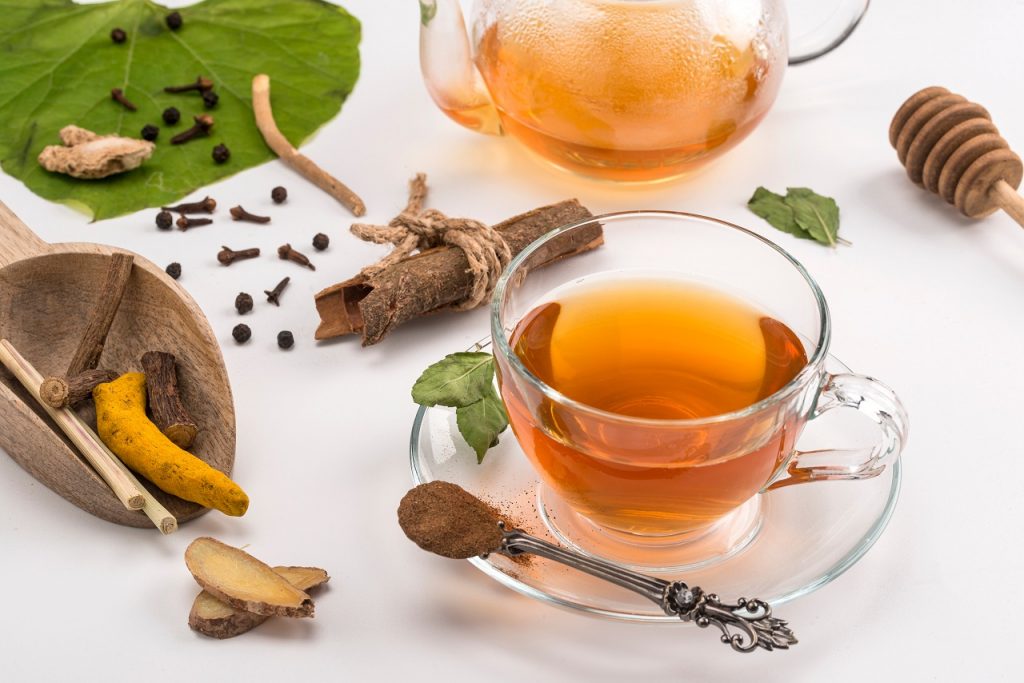
  • Garlic – 1 clove, crushed or sliced. It contains a sulfur compound known as Allicin which is anti-viral, antibiotic, and antiseptic.
  • Ginger – 1 inch, washed, peeled and lightly crushed. It is an excellent anti-microbial and anti-inflammatory herb known for suppressing nausea and vomiting, reducing fever and coughing, treating inflammation, congestion, cold, diarrhea, indigestion, and flatulence.
  • Cardamom – 2 to 3. It stimulates digestion. It also helps to reduce body temperature and congestion of lungs.
  • Black Pepper – 3 whole or crushed. It is loaded with antioxidants and relieves many pains including headaches.
  • Jeshtimadh/Jyeshtamadhu (Liquorice Root) – 1 small stick. It is an excellent herb for getting relief from cough.
  • Cloves – 2. It contains an anti-inflammatory chemical called Eugenol. The combination of anti-inflammatory and antioxidant properties spells heaps of health benefits.
  • Black Tulsi (Basil) – 4 to 5 leaves. Black Tulsi or Basil leaves have excellent anti-fungicidal, anti-bacterial and anti-biotic properties which fight fever. It is also known to reduce fever.
  • Raw Honey/Jaggery – 1 teaspoon. Honey is antibacterial, antimicrobial, and antiseptic.
  • Lemon – Half lemon. High in vitamin C, lemon may help decrease the strength of the cold and flu virus in the body and reduce phlegm.

How To Prepare The Decoction Syrup or Kadha 

  1. Take 2 cups of water in a vessel
  2. Add all the above ingredients (except honey/jaggery and lemon) to the water
  3. Let the mixture boil, till the amount of water reduces to half
  4. Switch the gas off and now, add honey/jaggery and squeeze the lemon
  5. Strain it and sip it hot

Note: In case of severe illness, please visit a doctor. If you feel things are under control, try managing them with natural sources. Your body is designed to heal by itself.

We hope you try this Decoction Syrup or Kadha to help you fight monsoon illnesses and build your immunity! Let us know your experience in the comments below.

You can find more healthy recipes here. If you’re looking for more information to fight monsoon illnesses naturally or to simply build your immunity, speak to a GOQii Coach by subscribing for Personalised Health Coaching here.

#BeTheForce

Disclaimer: The information provided in this blog is for general awareness and educational purposes only. It is not intended to replace professional medical advice, diagnosis, or treatment. Always consult a qualified healthcare provider for personalised medical guidance or concerns related to your health. Images shown are for representation purposes only and may not depict the exact recommendations or outcomes.
June 27, 2025 By GOQii Leave a Comment

All You Need To Know About Visceral Fat

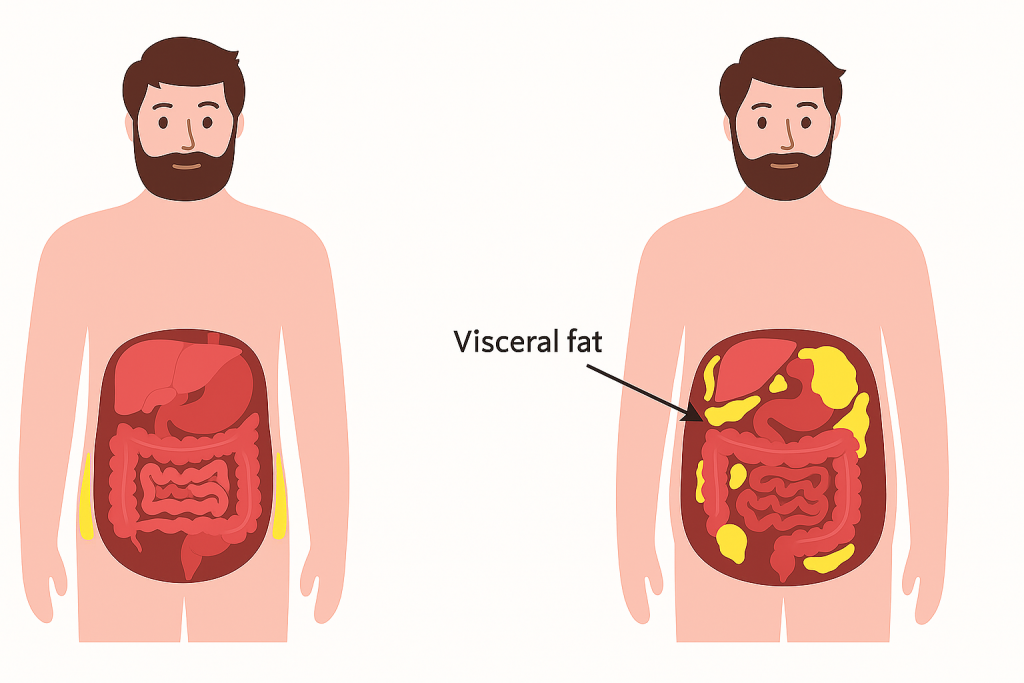
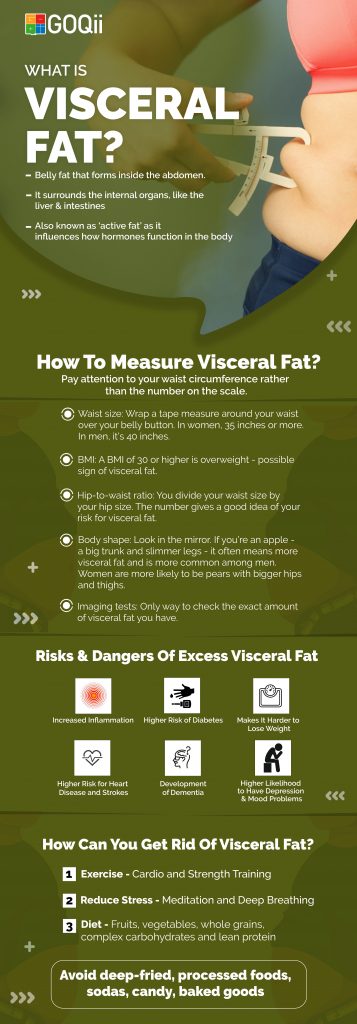
Have you come across the term visceral fat? You’ve likely heard it mentioned. It refers to the unwanted belly fat that forms deep inside the abdomen. This type of fat is considered particularly dangerous because it surrounds your vital internal organs, including the liver and intestines. It’s often referred to as active fat because it directly influences how hormones function within the body.

Why Visceral Fat Is a Concern

Visceral fat can pose a number of health risks. If you have more fat stored than your body requires, especially around the liver, heart, kidneys, pancreas, and intestines, your body becomes inflamed. This kind of fat stores inflammatory white blood cells, which is why belly fat has been linked to cognitive decline, arthritis, diabetes, and more.

The inflammatory substances generated by excess fat known as cytokines, are major contributors to heart disease and other inflammatory conditions. When the body is inflamed, the liver struggles to process cholesterol and toxins effectively, leading to plaque build-up in the arteries. Visceral fat is also associated with an increased risk of cardiovascular disease markers such as:

  • High triglycerides
  • Raised blood pressure
  • Elevated cholesterol levels

In addition, visceral fat plays a significant role in insulin resistance, increasing the risk of developing type 2 diabetes.

Refer to the image below to know more:

Visceral Fat

Lifestyle Factors That Influence Visceral Fat

While regular exercise, stress management, and a balanced diet are essential to keeping visceral fat in check, how you cook your meals also matters.

Healthier Cooking Methods:

✔️ Boiling
✔️ Steaming
✔️ Baking
✔️ Grilling

These methods help reduce excess fat in meals while preserving nutrients.

Foods That Encourage Belly Fat:

❌ Trans fats (found in some meats, dairy, deep-fried and processed foods)
❌ Sugary drinks like sodas
❌ Confectionery, baked goods, and other foods sweetened with fructose

Managing visceral fat is not just about aesthetics — it’s about protecting your long-term health. Small, sustainable changes to your eating habits, cooking style, and daily routine can go a long way in reducing this harmful fat.

To understand more about visceral fat and how to lose it effectively, connect with your GOQii Coach by subscribing to Personalised Health Coaching here. For more articles on weight loss, check out Healthy Reads.

#BeTheForce 

Disclaimer: The information provided in this blog is for general awareness and educational purposes only. It is not intended to replace professional medical advice, diagnosis, or treatment. Always consult a qualified healthcare provider for personalised medical guidance or concerns related to your health. Images shown are for representation purposes only and may not depict the exact recommendations or outcomes.
June 26, 2025 By Luke Coutinho Leave a Comment

Everything You Need To Know About Fiber, Fat Loss and Your Health

fat lossEvery nutritionist will tell you to improve your fibre intake, particularly because of the role it plays in supporting fat loss, reducing the risk of heart disease, and certain cancers. It plays a key role in digestive health and creating a sense of fullness which essentially means that enough fibre can help you manage your weight effectively!



Women should aim for around 25 grams of fibre per day, while men should aim for at least 35 to 40 grams. Yet, the average person consumes just 15 grams a day. The best way to increase your fibre intake is by eating fibre-rich whole foods, not heavily processed options with “added fibre” claims. Simply increasing your intake of fruits, vegetables and wholegrains can naturally boost your daily fibre intake.

How Fibre Supports Fat Loss and Weight Management

Fibre is one of the most natural ways to reduce high cholesterol levels in the body. If you have diabetes, consuming the right amount of fibre can help regulate blood sugar levels, allowing you to enjoy a variety of foods that might otherwise be restricted.

A lack of fibre is a common reason why people experience constipation and we all know constipation isn’t just uncomfortable; it can lead to toxic build-up in the body, sluggish digestion, fat gain, and has even been linked to a higher risk of colon and other cancers.

Why We’re Consuming Less Fibre

One of the main reasons is food processing. Modern methods often strip fibre from food entirely, which is why many packaged foods are considered unhealthy. A useful tip: if a food label shows less than 2 grams of fibre per serving, it’s best avoided. Low-fibre foods can cause blood sugar spikes, leading to fat gain over time.

Another reason is that many people don’t consume enough fibrous carbohydrates. Ideally, your main source of carbohydrates should be fibrous – these typically contain fewer overall carbs, but their high fibre content helps balance insulin response, making them ideal for fat loss.

Best Sources of Fibrous Carbohydrates

Here’s a list of some of the best naturally fibrous foods to include in your daily diet, all easily available in supermarkets:

  • Broccoli
  • Lettuce
  • Cabbage
  • Cauliflower
  • Mushrooms
  • Green beans
  • Onions
  • Asparagus
  • Cucumber
  • Spinach
  • Bell Peppers
  • Courgette
  • Popcorn (plain, air-popped)
  • Apples
  • Oats
  • Brown rice
  • Wholemeal pasta
  • Lentils
  • Beans and Pulses (e.g., kidney beans, chickpeas)

Beans are a fantastic source of dietary fibre and protein, keeping you full for longer. The same applies to fruits, nuts, and seeds – all of which should be a regular part of your meals.

Psyllium husk (commonly known as Isabgol in Asian stores) is another fantastic fibre source. It helps detox the body and removes excess cholesterol and fat. As always, moderation is key.

Not All Grains Are Equal

While grains contain fibre, the amount can vary significantly. For example:

Food Item Fibre Content (approx.)
White bread (1 slice) 0.5 grams
Wholemeal bread (1 slice) 2 grams
Kidney beans (1 cup) 17 grams
Mixed berries (1 cup) 8 grams

As you can see, focusing on whole, natural food sources will boost your fibre intake far more than relying on refined or packaged foods.

Fibre is essential for good health and should be part of every weight-loss strategy. It aids digestion, balances blood sugar, reduces cholesterol, and keeps you feeling satisfied for longer – all of which support healthy fat loss.

It’s time to make a conscious effort to add more fibre to your meals – your body will thank you for it.

We hope this article helps you. Do let us know your thoughts in the comments below. For more on fiber and fat loss, check out Healthy Reads or reach out to a GOQii Coach for the right guidance and motivation by subscribing for Personalised Health Coaching here.

#BeTheForce

Disclaimer: The information provided in this blog is for general awareness and educational purposes only. It is not intended to replace professional medical advice, diagnosis, or treatment. Always consult a qualified healthcare provider for personalised medical guidance or concerns related to your health. Images shown are for representation purposes only and may not depict the exact recommendations or outcomes.

  • 1
  • 2
  • 3
  • …
  • 175
  • Next Page »

Search

Recent Posts

  • India Leads in Longevity: GOQii Sanjeevini Named Top 40 in $101M XPRIZE
  • The Importance Of Knowing If You’re Thirsty Or Hungry
  • Best Foods To Alleviate Irritable Bowel Syndrome
  • ALL ABOUT VERTIGO!
  • PCOS and Anxiety: Discover Relief with the 54321 Technique

Stay Updated

Archives

  • December 2025 (8)
  • November 2025 (15)
  • October 2025 (20)
  • September 2025 (6)
  • August 2025 (6)
  • July 2025 (12)
  • June 2025 (18)
  • May 2025 (16)
  • April 2025 (23)
  • March 2025 (23)
  • February 2025 (22)
  • January 2025 (26)
  • December 2024 (26)
  • November 2024 (25)
  • October 2024 (22)
  • September 2024 (24)
  • August 2024 (31)
  • July 2024 (21)
  • June 2024 (26)
  • May 2024 (31)
  • April 2024 (27)
  • March 2024 (29)
  • February 2024 (26)
  • January 2024 (25)
  • December 2023 (15)
  • November 2023 (11)
  • October 2023 (20)
  • September 2023 (22)
  • August 2023 (20)
  • July 2023 (22)
  • June 2023 (24)
  • May 2023 (24)
  • April 2023 (24)
  • March 2023 (23)
  • February 2023 (20)
  • January 2023 (16)
  • December 2022 (12)
  • November 2022 (15)
  • October 2022 (15)
  • September 2022 (12)
  • August 2022 (10)
  • July 2022 (17)
  • June 2022 (11)
  • May 2022 (10)
  • April 2022 (6)
  • March 2022 (6)
  • February 2022 (13)
  • January 2022 (12)
  • December 2021 (7)
  • November 2021 (3)
  • October 2021 (6)
  • September 2021 (3)
  • August 2021 (8)
  • July 2021 (7)
  • June 2021 (15)
  • May 2021 (16)
  • April 2021 (10)
  • March 2021 (7)
  • February 2021 (4)
  • January 2021 (4)
  • December 2020 (3)
  • November 2020 (4)
  • October 2020 (10)
  • September 2020 (3)
  • August 2020 (3)
  • July 2020 (2)
  • June 2020 (4)
  • May 2020 (10)
  • April 2020 (12)
  • March 2020 (10)
  • February 2020 (4)
  • January 2020 (4)
  • December 2019 (3)
  • November 2019 (7)
  • October 2019 (5)
  • September 2019 (4)
  • August 2019 (9)
  • July 2019 (9)
  • June 2019 (11)
  • May 2019 (4)
  • April 2019 (9)
  • March 2019 (8)
  • February 2019 (9)
  • January 2019 (8)
  • December 2018 (9)
  • November 2018 (3)
  • October 2018 (3)
  • September 2018 (5)
  • August 2018 (10)
  • July 2018 (6)
  • June 2018 (13)
  • May 2018 (8)
  • April 2018 (18)
  • March 2018 (9)
  • February 2018 (8)
  • January 2018 (15)
  • December 2017 (12)
  • November 2017 (19)
  • October 2017 (13)
  • September 2017 (15)
  • August 2017 (4)
  • July 2017 (8)
  • June 2017 (7)
  • May 2017 (6)
  • April 2017 (8)
  • March 2017 (6)
  • February 2017 (7)
  • January 2017 (9)
  • December 2016 (10)
  • November 2016 (7)
  • October 2016 (7)
  • September 2016 (7)
  • August 2016 (11)
  • July 2016 (9)
  • June 2016 (9)
  • May 2016 (12)
  • April 2016 (17)
  • March 2016 (17)
  • February 2016 (8)
  • January 2016 (6)
  • December 2015 (2)
  • November 2015 (9)
  • October 2015 (7)
  • September 2015 (9)
  • August 2015 (11)
  • July 2015 (9)
  • June 2015 (12)
  • May 2015 (9)
  • April 2015 (13)
  • March 2015 (8)
  • February 2015 (5)
  • January 2015 (12)
  • December 2014 (14)
  • November 2014 (11)
  • October 2014 (6)
  • September 2014 (13)
  • August 2014 (12)
  • July 2014 (6)
  • June 2014 (2)
  • May 2014 (7)
  • April 2014 (5)

From “Laddu Nawin” to Fit and Fierce: How a 25-Year-Old Insurance Advisor Shed 20 Kilos and Gained His Life Back

When 25-year-old Nawin Yadav from Hyderabad walked into his office every morning, he carried more than just his files and policy papers. He had the weight of fatigue, sluggish energy, and an ever-growing belly that was becoming the butt of jokes. “People … [Read More...]

“I’ve Challenged Myself to Live 100 Years” – The Story of Chandubhai Savani’s Second Chance at Life

At 67, most people start slowing down. Not Chandubhai Savani. A resident of Surat, Chandubhai, thought life was on track. “My life was going well till I had my bypass surgery,” he says. That surgery, back in 2021, was a wake-up call.  Medication was routine, but exercise wasn’t. His diet? What he calls ‘normal.’ “I […]

From Shimla’s Slopes to Chandigarh’s Sidewalks: Surinder Kaur Bhalla’s Journey from Chaos to Control

Some journeys start with a plan. Others begin with a stumble literally. Surinder Bhalla, a government professional, born and raised in the scenic hill town of Shimla, had always lived a life of movement. “In Shimla, you walked everywhere,” she reflects. “Walking was never an exercise. It was just life.” But after shifting to Chandigarh, […]

Ananda Mukherjee Health Story

From Terminal Illness To Complete Wellness! Ananda Mukherjee Health Story

As we observe World Cancer Day under the powerful theme ‘United by Unique’ (2025-2027)**, we are reminded that every individual’s journey with cancer is distinct, yet united by shared resilience, hope, and the collective fight against this disease. This theme places people at the centre of care and their stories at the heart of the […]

  • HOME
  • HEALTHY LIVING
  • FITNESS
  • HEALTHY RECIPES
  • USER STORIES
  • KARMA
  • BUY GOQii

Copyright ©2016 GOQii
