GOQii

Blog

  • HOME
  • HEALTHY LIVING
  • FITNESS
  • HEALTHY RECIPES
  • USER STORIES
  • KARMA
  • BUY GOQii

July 12, 2016 By Luke Coutinho 1 Comment

This Molecule – ‘Nitric Oxide’ can change your health

Did you know there is a molecule our Body produces which is called ‘Nitric oxide’ (NO)?

Well then let me enlighten you about NO. This is a molecule that our body produces to help its 50 trillion cells communicate with each other by transmitting signals throughout the entire body. This molecule is also the ‘fountain of youth’ secret. The more nitric oxide your body produces naturally, the younger you stay, mentally and physically.

  • help memory and behavior by transmitting information between nerve cells in the brain
    • assist the immune system at fighting off bacteria and defending against tumors
    • regulate blood pressure by dilating arteries
    • reduce inflammation
    • improve sleep quality
    • increase your recognition of sense (i.e. smell)
    • increase endurance and strength
    • assist in gastric motility

Nitric oxide is one of the main ‘ingredients’ behind erections, and without the molecule, you simply couldn’t’ have a healthy one.

Simply put, nitric oxide makes the body run more smoothly, as oxygen, nutrients, and red blood cells can reach their target tissue and cells faster. This to me is what makes nitric oxide extremely important, when it comes to immunity, prevention and cure of diseases and maintenance of well-being.

The most common way to increase nitric oxide is through exercise. When you run or lift weights, your muscles need more oxygen which is supplied by the blood. As the heart pumps with more pressure to supply the muscles with blood, the lining in your arteries releases nitric oxide into the blood, which relaxes and widens the vessel wall, allowing for more blood to pass though.

As we age, our blood vessels and nitric oxide system become less efficient due to free radical damage, inactivity, and poor diet, causing our veins and arteries to deteriorate. Think of a fire hose as water rushes through it to put out a fire – it needs to expand enough to handle the pressure, still keeping enough force to put out the fire. Athletes and youth have the most optimal nitric oxide systems, reflecting their energy and resilience.

When you eat foods that contain natural nitrates, the bacteria in your tongue converts them into nitritines… …And once you swallow the food, the bacteria in your gut converts the nitritines into nitric oxide. And fortunately, nitrate rich foods are easy to obtain and they’re also quite cheap.

Here’s a list of few great foods packed with natural nitrates:

Spinach, beets, celery, aragula lettuce, iceberg lettuce, carrots, parsley, cabbage, radishes, collard greens, etc. It’s a well-known medical fact that vitamin C increases nitric oxide production in the body, and that it also protects the molecules. Garlic on the other hand is filled with nitrates, and it also contains a compound called quercetin, which is linked to increased NO levels.
eat plenty of grapes, red wine, onions, and garlic.

Get plenty of safe sunlight

CQ10 from food sources, such as from: salmon, grassfed red meat, animal organs, egg yolks, Brazil nuts, and spinach.

Remember in the tip number #1 how I said that the bacteria in your tongue converts nitrates into nitritines, and then your gut continues the process by converting the nitritines into NO? Well, that process never occurs if you’re a ‘heavy user’ of mouthwashes. Listerine and the likes, tend to destroy all of the bacteria in your mouth (remember not all bacteria is bad) so that the nitrates can’t convert into nitritines.

Exercising and staying active is amazingly awesome for pretty much everything. After all, we were never meant to sit around all day.

We should be constantly on the move, walking, climbing, etc. And pretty much all kinds of exercise (all the way from walking into furious strength training) has been shown to increase nitric oxide levels, both, temporarily and the baseline. Something as simple as increasing nitrix oxide in your body can make you feel healthy, strong and fit.

 

July 12, 2016 By Neha Kapoor 1 Comment

Can we replace white rice?

Millet-literacy-head

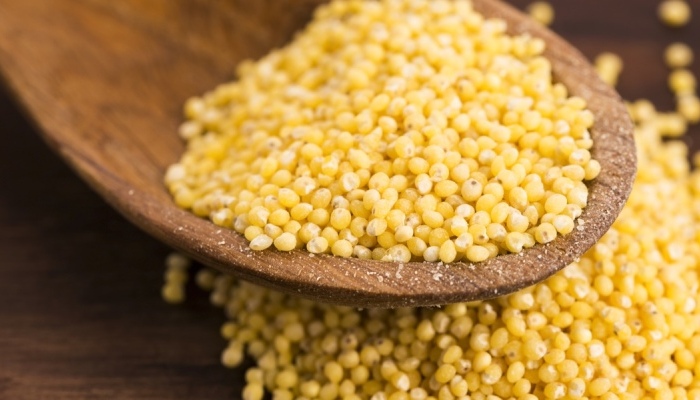
Are you a white rice eater and looking to cut your rice intake but, findings it hard to do so? The best way to cut down on rice is to replace it with millets. Millets are also called wonder or magical grains. However, these wonder grains are not much recognized and used in today’s world of junk food and where refined flour has captured the whole market. Millet is full of nutrients your body needs, such as: Magnesium, Calcium, Manganese, Tryptophan, Phosphorus, Fiber, B vitamins, Antioxidants.

Most people have not even heard of millet forget knowing the benefits of millet nutrition. And yet, millet is one of the best-kept secrets of our ancient ancestors. Traced back to its origin, millet has been used throughout the ages and across many countries.

For centuries millet has been a prized crop in China, India, Greece, Egypt and Africa, used in everything from bread to couscous, and as cereal grain.

Some of the key reasons millet is part of your healthy Body Ecology diet is because it is:

*Highly nutritious – ideal for children

*Acts as a prebiotic to feed important micro-flora in your inner ecosystem

*Provides serotonin to calm and soothe your moods.

*Helps hydrate your colon to keep you regular.

*Great energy source – ideal for athletes

*Complete protein source when combined with legumes – ideal for a vegetarian diet

*Is alkaline.

*High amounts of fiber

*Rich in photochemicals including phytic acid, which is believed to lower cholesterol, and phytate, which is associated with reducing cancer risks.

*All Millet varieties show high antioxidant activity.

*Millet helps to control Blood sugar and Cholesterol.

*Digests easily.

*Millet Consumption decreases Triglycerides and C-Reactive Protein.

VARAGU/KODU MILLET The fiber content of this whole grain is very high. Varagu rice has around 11% protein, and the nutritional value of the protein has been found to be slightly better than that of Thinai but, comparable to that of other small millets. As with other food grains, the nutritive value of Varagu rice protein could be improved by supplementation with legume protein. It has high source of Protein, Calcium, fiber and Minerals. It can reduce body weight. Varagu increases Liver functionality and good for lympatic disorder. 

THINNAI RICE/ FOXTAIL MILLET: Thinai is fairly tolerant of drought; it can escape some droughts because of early maturity. Due to its quick growth, it can be grown as a short-term cash crop. It is adapted to a wide range of elevations, soils and temperatures. Its grain is used for human consumption. Rich in protein and minerals, increases kidney functionality. Best for muscle strength and hormonal imbalances.

FINGER MILLET/RAGI- Foxtail millets are ideal for reducing the cholesterol of the body, controlling blood sugar and aiding metabolism rate. It is highly rich in anti-oxidation, which removes all the acidic elements away from the body. Foxtail millets are also high in dietary fiber, which aids in proper breakdown of food and complete digestion. Ragi flour can be used in many different ways to make Roti, porridge and dosa or idli (steamed panckaes). It has thirty times as much calcium as rice, more than ten times as much fiber.

KUTHIRAIVALI RICE/PEARL MILLET: This particular variety is 6 times more nutritious than wheat. Rich in Protein, fiber, minerals and iron compared to all other grains. Good for Heart related problems, Anemic, Menstural Disorder and Diabetics.

SAAMAI RICE/LITTLE MILLET Samai is another reliable cash crop in view of its earliness and resistance to adverse agro-climatic conditions. Samai is suitable for all ages. Samai trend constipation. Stomach related diseases and improves Men’s sperm production. Diabetic patients and in women it could be a good idea for all periods and imaginary problems. Samai is rich in fiber, helps reducing fat, good for bones and muscles. 

Millets can be used to make many simple and easy recipes to replace white rice and has many healthy nutrients that makes the dishes more yummy by adding new flavor to them.

June 30, 2016 By Tasneem Jawadwala 12 Comments

All about Snacking

It’s a very common suggestion from most nutritionists to eat “small frequent meals”. Well, however most of the people get confused about what we should eat in-between breakfast –lunch and lunch-dinner.

Ideally, we should keep eating every 2-3 hours so that our metabolism stays high throughout the day but, the question is, ‘IS IT OK TO EAT ANYTHING’?

I am sharing a few points that could help us make right choices to munch on in-between meals.

  1.  Avoid consuming cereal based products in-between meals – This is the most common mistake which I have observed in a lot of people that they snack on cereal items like Sandwich, biscuits, noodles, Puffed Rice, Steamed Rice Cakes (Idli) etc. Some of them may not be unhealthy but they add on to our servings of cereals per day. If we are looking towards weight reduction we should avoid such a mistake.However, adding cereals in-between meals would be a good option for healthy weight gain.
  1.  Add on fruits and vegetables as snacks before meals– Snacking on fruits and salads before meals help us keep our belly full and prevent overeating during main meals.
  1.  Snacks should not always be a solid– Yes we can snack on healthy drinks like coconut water, barley water, lemon water or even vegetable juices like cucumber &tomato juice or radish& lemon juice etc.They make great snack. These liquids hydrate us, therefore they are especially good for people who are not much fond of drinking water.
  1.  Pulses – like Roasted Chick Pea (Chana), Peas, Kidney beans, Whole Sprouts (moong)can be a good protein rich evening snack, if we are looking forward to have light dinners.
  1.  Dried Fruits – Serve as filling and nutritious snacks too. However, we should limit its quantity. For example if we are having almonds then 4-5 almonds would be enough. 7 raisins would make a serving or just 1-2 dates would be a good dose of energy.
  1.  Curd – Homemade curd, I would always say is the best option if you are going through any digestion problems. It also adds to our protein intake and at the same time increases our gut micro flora. Fruit yogurt or buttermilk are other options that could be considered.
  1.  This is my favourite snacking option. It looks filling and tasty but gives minimum calories. I am sure many people opt for them. These are Popcorn, Puffed rice, dried lotus seeds (Makhana) or Roasted grains. Having 1 fistful of them may not give us much calories but it satisfies our gut. They fall in the cereal group however the quantity of cereal is so less that if may not even make ½ a serving when weighed.

Snacking has a lot of benefits, but all we need to do is, keep these points in mind while selecting our snacks. So, next time, when we plan a 6 meal pattern, this is what we shall, consider for best results.

June 24, 2016 By Trupti Hingad 2 Comments

Best Yoga Asanas for Hypothyrodism

3

One of the biggest battle for most people is ‘Weight Loss’. 90 % of the people are stressed and spend sleepless nights over not losing weight. The question in most individual’s mind is despite doing exercise and eating right why is it that I am unable to lose weight or maintain it?

Healthy foods, controlled portion sizes, regular exercise and peaceful sleep — these are the ingredients for losing weight.

One of the reason for not being able to lose weight could also be –Hypothyroidism, a condition where your thyroid gland function is impaired. Underactive thyroid gland plays a vital role in affecting the weight reduction journey.

It’s difficult for someone with hypothyroidism to lose or maintain a healthy weight balance as T3, the active thyroid hormone is low. T3 is a powerful hormone that regulates the body’s metabolism. The most important thing you can do for weight loss and for your overall health —is to get proper treatment for your hypothyroidism.

Losing weight is never easy, but, people can control it and shouldn’t struggle to lose weight. However, making a few dietary changes and regular exercise or Yoga may help in weight loss.

Here are some of the important yoga asanas which boosts the function of your thyroid gland and helps in weight loss.

To learn more about making positive changes in life get GOQii Subscription.

1.  VIPRITKARNI:

It is a Mudra.Viprit means: reverse and karni means “by which”. Viparitakarni helps to balance the functioning of thyroid and eases the complication caused by hypoactive thyroid. This is also one of the important Asanas for thyroid disorder. This can be done for 2minutes maximum.It is also called as half shoulder stand.

Method: 

Lie down on your back. Arms alongside of the body. As you inhale bend your knees and raise the legs and buttocks. Bring the palms under your hips to support the buttocks. Elbows remain on the floor. Straighten the legs vertically upwards. Relax the muscles of feet, legs, and hips. Shoulder and neck relaxed on the mat. Breathe normal. Remain in the position for few seconds and gradually increase it to 1-2min. Exhale, bend the knees towards your forehead and slowly lower the buttocks and legs and return to the starting position.

Limitation: Avoid with High BP and dizziness

viparita_karani_mudra-184x300

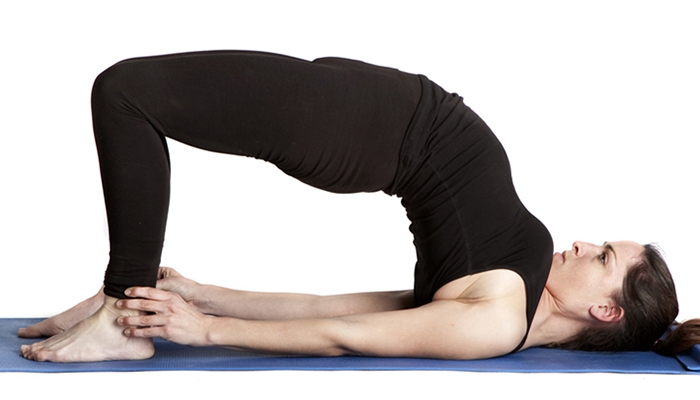
2. SETUBHANDASANA (BRIDGE POSE)

This asana provides appropriate stretch on the back and suitable massage to the neck. It helps to regulate the functions of thyroid gland thereby helpful in releasing thyroxin hormone.This can be done for 2-3 min maximum.

Lie flat on your back with arms at your sides, palms down. Bend your knees and place your feet flat on the floor. Keep your feet hip width apart, parallel to each other, and as close to the buttocks as possible. Simultaneously, press your upper arms and feet into the floor and begin lifting your hips towards the ceiling. Try to distribute your weight equally on the inside and outside of your feet.

Now, move your breastbone towards your chin, keeping your chin lifted only slightly as not to flatten the back of the neck. Firm your tailbone in towards the pubis and move your pubis slightly towards the belly. In order to keep the lower back extended, keep the knees over the ankles, perpendicular to the floor. Your buttocks should be firm, but not clasped.

Lift your hips as high as you are able without breaking position. If you are having trouble holding posture, you can clasp your hands behind your back and firm you arms into the floor, shoulder blades shifted down along the spine. Hold this pose for 5 to 15 breaths.

To come out of Bridge Pose, release on an exhalation, rolling your spine slowly down onto the floor.

Limitations: Avoid doing this pose if you are suffering from neck and back injuries.

setu-bandhasana

3. MATSYASANA (Fish pose):

Matsya means fish, in the final pose, the asana take the form of fish. Hence the name is Matsyasana. Matsyasana provides adequate stretching to the neck region thereby stimulate the thyroid gland. It increases blood supply to trunk and neck region.

This can be done for 1-2 minute maximum

Method:

Sit in Padmasana, lean back,using elbow and arms to help balance yourself, until your had rest comfortably on the mat and your body forms a low arc. Use a low cushion for comfort at first, if necessary. Now extend your arms and grasp your toes on either side. Breathe normal. Rest till you can hold the posture. Exhale using the support of elbow come to the original position.

Limitations: Knee joint problems, piles, dislocation of knee joints.

5732d9a9ab3cd

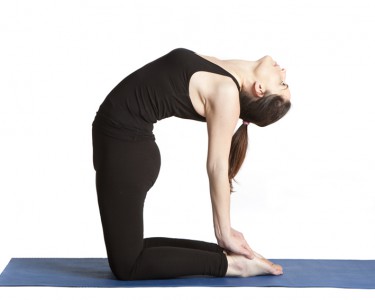
4. USTRASANA (Camel pose): This can be done maximum for 2 minutes.

Method: This asana also give stretch to the neck.

Assume a sitting posture as in kneeling. Support the body on the toes and knees and gradually lean backward, after having fixed the arms from behind, the palms to the ground, the fingers pointing outward and the thumbs towards the toes. Keep arms straight then slowly life the pelvis while taking in the breath. Press the body above the waist slowly both outward and upward, throwing the neck downward. Breathe normal. Exhaling slowly come back to original position.

Limitations: Those who have undergone any recent operation at the chest or abdomen, people with hernia problems, severe hypertension and low back must be cautious.

MG_8461-as-Smart-Object-1

5.  SARVANGASANA (Shoulder stand pose): Sarvangasana is the most important pose to stimulate thyroid gland and control thyroxin. This is the most effective yoga pose where blood flow from legs to head region due to its inverted condition thereby helps in curing of thyroid. This can be done maximum for 3 minutes.

Method:

Lie flat on the back with the feet together, the arms by the sides, and palms flat on the ground.Using the arms as levers, raise the legs and back to a vertical position.

Bend the elbows and use the arms as props to steady the back by pressing it with the palms.The trunk and legs should extend straight up, forming a right angle with the neck, the chest pressing against the chin.

Limitations: Excess obesity, Myopia, severe spinal problems, pregnancy.

sarvangasana9

6. SIMHASANA: Simhasana or the Lion Pose resembles a squatting lion in the final pose. In Sanskrit, ‘Simha’ means ‘Lion’ and ‘asana’ means ‘pose. It is an excellent pose for thyroid gland.

Sit in the kneeling position or Vajrasana. Move the knees apart so that they make almost a right angle between them.Tuck your palms, under your thighs. The palms should face downwards and point towards the body. An alternate way is to keep the palms on the knees stretched and spread wide apart.

Bend forward slightly, resting the weight of the body on the arms.Now, tilt the head backwards. Keep the eyes wide open. Open your mouth and draw the tongue forward and downwards as much as you can.

Gaze at the space between the eyebrows with eyes wide open. This is called Bhrumadhya Drishti. In Hatha Yoga Pradeepika, an alternate gaze for the eyes is given as Nasikagra Drishti or gazing at the tip of the nose.

Breathe normally and deeply in this position. During exhalation make a sound ‘ahhh…’, to imitate the breathing of a lion with tongue outside. You may also roar like a lion, few times in this position. Relax your muscles in the back, abdomen and chest in the final position.

Remain in this final position for as long as comfortable.In some variations, the tongue can also be moved from side to side making the sound ‘ahhh…’

Limitations: For those with weak knee or ankle joints, this asana should be practiced with caution.

This can be practiced for maximum 3 minutes.

Diet is equally important and utmost care should be paid to it. I have herewith chalked out diet tips which is a mix of yogic and modern diet.

Simhasana-yoga-pose

Yogic Diet tips for thyroid disorders

  • Diet with high fiber content should be taken.
  • Avoid excess eating of fats and carbohydrates.
  • Give more and more thrust on green and leafy vegetables.
  • Focus on eating seasonal fruits.
  • Ginger greatly enhances thyroid function. Chew ginger or have ginger tea.
  • Black walnut contains iodine, which nourishes the thyroid gland.
  • Foods like curd, fish, meat, eggs, radish, and oatmeal contain good amount of iodine. So take these foods regularly to control thyroid problems
  • It is recommended that you have Gomutra (Cow urine):Its anti-inflammatory, Anti- Bacterial, antibiotic and antimicrobial. It acts as an antidote. 10-15drops can be taken on an empty stomach in the morning. It works best if taken with Ashwagandha.
  • Bask in Sun: take sunlight /sun bath between 7am -8am.
  • Have 1 tbsp cold pressed virgin Coconut oil. It improves the function of thyroid hormone
  • Take foods such as carrots, pumpkin, sprouts, spinach, wheat grass seaweeds because of its iodine content.

Thyroid diet prevention & precaution

  • Cruciferous veggies can be eaten in limited quantity and should be cooked.Non veg foods such as fish —healthy omega 3 fatty acids present in oily fishes like salmon, tuna, sardines can be eaten. Even eggs are healthy protein rich options to be taken in meals.
  • Spicy foods should by far be avoided as they are tamasic and interferes with keeping the mind calm and in a balance state which is very necessary to deal emotionally with the people having thyroid.
  • Refined and Preserved foods should be avoided to keep the weight in check.
  • Caffiene should be avoided because it hampers the healing properties of thyroid medications. 

Begin with these yoga practices and maintain your thyroid hormones function and achieve a successful weight loss. Bring on a “new you” with these yoga Asanas.

Please Note: Sarvangasana and Vipritkarni needs to practice under guidance.

  • « Previous Page
  • 1
  • …
  • 7
  • 8
  • 9
  • 10
  • 11
  • 12
  • Next Page »

Search

Recent Posts

  • ALL ABOUT VERTIGO!
  • PCOS and Anxiety: Discover Relief with the 54321 Technique
  • Navigating the Maze of Nutrition: Finding Clarity Amidst Confusion
  • Get children active and keep them healthy
  • What Gestational Diabetes Can Do To You & Your Unborn Child

Stay Updated

Archives

  • December 2025 (5)
  • November 2025 (15)
  • October 2025 (20)
  • September 2025 (6)
  • August 2025 (6)
  • July 2025 (12)
  • June 2025 (18)
  • May 2025 (16)
  • April 2025 (23)
  • March 2025 (23)
  • February 2025 (22)
  • January 2025 (26)
  • December 2024 (26)
  • November 2024 (25)
  • October 2024 (22)
  • September 2024 (24)
  • August 2024 (31)
  • July 2024 (21)
  • June 2024 (26)
  • May 2024 (31)
  • April 2024 (27)
  • March 2024 (29)
  • February 2024 (26)
  • January 2024 (25)
  • December 2023 (15)
  • November 2023 (11)
  • October 2023 (22)
  • September 2023 (22)
  • August 2023 (20)
  • July 2023 (22)
  • June 2023 (24)
  • May 2023 (24)
  • April 2023 (24)
  • March 2023 (23)
  • February 2023 (20)
  • January 2023 (16)
  • December 2022 (12)
  • November 2022 (15)
  • October 2022 (15)
  • September 2022 (12)
  • August 2022 (10)
  • July 2022 (17)
  • June 2022 (11)
  • May 2022 (10)
  • April 2022 (6)
  • March 2022 (6)
  • February 2022 (13)
  • January 2022 (12)
  • December 2021 (7)
  • November 2021 (3)
  • October 2021 (6)
  • September 2021 (3)
  • August 2021 (8)
  • July 2021 (7)
  • June 2021 (15)
  • May 2021 (16)
  • April 2021 (10)
  • March 2021 (7)
  • February 2021 (4)
  • January 2021 (4)
  • December 2020 (3)
  • November 2020 (4)
  • October 2020 (10)
  • September 2020 (3)
  • August 2020 (3)
  • July 2020 (2)
  • June 2020 (4)
  • May 2020 (10)
  • April 2020 (12)
  • March 2020 (10)
  • February 2020 (4)
  • January 2020 (4)
  • December 2019 (3)
  • November 2019 (7)
  • October 2019 (5)
  • September 2019 (4)
  • August 2019 (9)
  • July 2019 (9)
  • June 2019 (11)
  • May 2019 (4)
  • April 2019 (9)
  • March 2019 (8)
  • February 2019 (9)
  • January 2019 (8)
  • December 2018 (9)
  • November 2018 (3)
  • October 2018 (3)
  • September 2018 (5)
  • August 2018 (10)
  • July 2018 (6)
  • June 2018 (13)
  • May 2018 (8)
  • April 2018 (18)
  • March 2018 (9)
  • February 2018 (8)
  • January 2018 (15)
  • December 2017 (12)
  • November 2017 (19)
  • October 2017 (13)
  • September 2017 (15)
  • August 2017 (4)
  • July 2017 (8)
  • June 2017 (7)
  • May 2017 (6)
  • April 2017 (8)
  • March 2017 (6)
  • February 2017 (7)
  • January 2017 (9)
  • December 2016 (10)
  • November 2016 (7)
  • October 2016 (7)
  • September 2016 (7)
  • August 2016 (11)
  • July 2016 (9)
  • June 2016 (9)
  • May 2016 (12)
  • April 2016 (17)
  • March 2016 (17)
  • February 2016 (8)
  • January 2016 (6)
  • December 2015 (2)
  • November 2015 (9)
  • October 2015 (7)
  • September 2015 (9)
  • August 2015 (11)
  • July 2015 (9)
  • June 2015 (12)
  • May 2015 (9)
  • April 2015 (13)
  • March 2015 (8)
  • February 2015 (5)
  • January 2015 (12)
  • December 2014 (14)
  • November 2014 (11)
  • October 2014 (6)
  • September 2014 (13)
  • August 2014 (12)
  • July 2014 (6)
  • June 2014 (2)
  • May 2014 (7)
  • April 2014 (5)

From “Laddu Nawin” to Fit and Fierce: How a 25-Year-Old Insurance Advisor Shed 20 Kilos and Gained His Life Back

When 25-year-old Nawin Yadav from Hyderabad walked into his office every morning, he carried more than just his files and policy papers. He had the weight of fatigue, sluggish energy, and an ever-growing belly that was becoming the butt of jokes. “People … [Read More...]

“I’ve Challenged Myself to Live 100 Years” – The Story of Chandubhai Savani’s Second Chance at Life

At 67, most people start slowing down. Not Chandubhai Savani. A resident of Surat, Chandubhai, thought life was on track. “My life was going well till I had my bypass surgery,” he says. That surgery, back in 2021, was a wake-up call.  Medication was routine, but exercise wasn’t. His diet? What he calls ‘normal.’ “I […]

From Shimla’s Slopes to Chandigarh’s Sidewalks: Surinder Kaur Bhalla’s Journey from Chaos to Control

Some journeys start with a plan. Others begin with a stumble literally. Surinder Bhalla, a government professional, born and raised in the scenic hill town of Shimla, had always lived a life of movement. “In Shimla, you walked everywhere,” she reflects. “Walking was never an exercise. It was just life.” But after shifting to Chandigarh, […]

Ananda Mukherjee Health Story

From Terminal Illness To Complete Wellness! Ananda Mukherjee Health Story

As we observe World Cancer Day under the powerful theme ‘United by Unique’ (2025-2027)**, we are reminded that every individual’s journey with cancer is distinct, yet united by shared resilience, hope, and the collective fight against this disease. This theme places people at the centre of care and their stories at the heart of the […]

  • HOME
  • HEALTHY LIVING
  • FITNESS
  • HEALTHY RECIPES
  • USER STORIES
  • KARMA
  • BUY GOQii

Copyright ©2016 GOQii