GOQii

Blog

  • HOME
  • HEALTHY LIVING
  • FITNESS
  • HEALTHY RECIPES
  • USER STORIES
  • KARMA
  • BUY GOQii

June 19, 2025 By GOQii 3 Comments

How to Burn Fat With Exercise

burning fat with exerciseDon’t be misled by the so-called fat-burning zone. This widely held belief suggests that working at a lower intensity (e.g. walking) is better for fat burning than exercising at a higher effort level (e.g. running). The reality is quite the opposite – the harder you exercise, the more calories you burn, and it’s the total calories burned that truly count when it comes to fat loss.

Choosing the Right Fat Loss Exercise

There’s no one-size-fits-all ‘ultimate’ calorie-burning activity. The energy you expend depends on the effort you apply, your skill level, duration and how consistently you do it. Choose an activity that you can stick with regularly. That means picking something you genuinely enjoy and can access easily – because no one wants their workouts to be a chore.

Exercise Larger Muscles For Greater Calorie Burn

Effective fat-burning activities engage large muscle groups – such as the thighs, glutes, chest, and back. The greater the overall muscle recruitment, the higher the calorie burn. For example, rowing – which engages the upper and lower body – burns significantly more calories than arm-only cardio machines at the gym.

Sustainable Exercise is Key

To ignite your body’s calorie furnace, your workout needs to be sustainable over time. Skipping is a brilliant cardiovascular activity, but if you only do it for a few minutes, the benefits are limited. According to the American College of Sports Medicine, aim for 20–60 minutes per session, three to five times per week. This doesn’t have to be continuous—you can break it up into manageable chunks.

Maximise Fat Burn With Interval Training

Interval training – alternating between high-effort bursts and rest – is one of the best ways to burn more calories efficiently. It boosts aerobic fitness and is time-effective. To get started, try a 2:2 work-to-rest ratio: push beyond your comfort zone during effort periods and ease off during recovery.

Weight-Bearing Activities Burn More

Exercises like walking and running, where you carry your own bodyweight, typically burn more calories than supported activities like cycling or swimming. Why? Because you’re working against gravity. That added resistance increases your energy expenditure.

Should You Exercise on an Empty Stomach?

There’s a belief that morning fasted workouts burn more fat because the body taps into fat stores for fuel. While that may be true in theory, lack of energy could reduce workout intensity or duration. It’s important to listen to your body and choose what works best for you.

The ‘After Burn’ Effect

One of the most exciting benefits of exercise is that fat burning continues even after your workout. This is known as the after burn or excess post-exercise oxygen consumption (EPOC). Research shows this effect is significantly higher after working out at 75% or more of your maximum heart rate – another reason to prioritise intensity.

Progressively Increase Intensity

To keep seeing results, you must keep progressing. This doesn’t necessarily mean pushing harder—it means increasing workload as your fitness improves. If you stay in your comfort zone, your results will plateau.

Move More Throughout the Day

Research from the Mayo Clinic shows that leaner individuals tend to move more throughout the day than those who are overweight. Their non-exercise activity thermogenesis (NEAT) – the energy burned during daily movement like standing, fidgeting, or walking – can account for up to 350 extra calories a day. So stand up, stretch, take the stairs – it all adds up!

Sample Calorie Burn Per Hour (values approximate for a 70kg adult)

Activity

Calories Burned/hour

Running (8-minute mile pace)

720–910 kcal

Swimming (continuous laps)

630–730 kcal

Uphill walking (10% incline)

590–690 kcal

Fat loss through exercise is not about gimmicks – it’s about consistency, variety, and effort. Choose activities you enjoy, aim for progression, and remember that small movements throughout the day matter too.

Did you find this article helpful? Let us know in the comments below! For more on weight loss, click here.

#BeTheForce

Disclaimer: The information provided in this blog is for general awareness and educational purposes only. It is not intended to replace professional medical advice, diagnosis, or treatment. Always consult a qualified healthcare provider for personalised medical guidance or concerns related to your health. Images shown are for representation purposes only and may not depict the exact recommendations or outcomes.

June 18, 2025 By Soni Thakur 2 Comments

Reasons Why You Are Not Losing Weight!

losing weightHas your scale been stuck at the same number? No matter how hard you try, it doesn’t budge? Staying motivated becomes difficult when you’re eating healthy, exercising regularly, and still not seeing results. There may be several hidden factors working against your weight loss journey. Let’s explore them.

Factors That Prevent You From Losing Weight 

  1. You Are Not Eating Enough: Your body needs fuel to function—just like a car. You cannot expect it to work efficiently or burn fat if you’re running on empty. Under-eating, just like overeating, can disrupt metabolism and stall weight loss. Stick to a realistic calorie budget that supports your activity level and health.
  2. Compromised Gut Health: Nutrition isn’t just about what you eat – it’s also about what your body absorbs. A healthy gut is essential for digestion, nutrient uptake, and overall metabolic efficiency. Poor gut health can block your progress despite eating the right foods.
  3. Less Supply Of Fat To The Body: Fats are essential – not enemies. They aid in vitamin absorption and support brain, heart, and cell health. Choose plant-based sources like avocados, olives, almonds, walnuts, and flaxseeds, which provide healthy fatty acids your body needs.
  4. You Are Stressed: Chronic stress increases cortisol, which raises blood sugar and leads to insulin spikes. More insulin means more fat storage. Managing stress through mindfulness, physical activity, or breathing exercises can positively impact weight loss.
  5. You Aren’t Sleeping Enough: Sleep is when the body repairs, detoxifies, and balances hormones. Without adequate rest, the body prioritises fighting inflammation over fat loss. Aim for 7–9 hours of quality sleep per night to support metabolism and recovery.
  6. You Are Overtraining: More isn’t always better. Exercising rigorously for over an hour daily without rest can lead to inflammation and stress, slowing down weight loss. A balanced routine of 45–60 minutes, six days a week with one rest day is optimal.
  7. Vitamin D3 and B12 Deficiencies: Low levels of these vitamins are common, especially during winter. Vitamin D helps reduce fat accumulation, while B12 supports energy and metabolism. Consider checking your levels and supplementing appropriately.
  8. Underactive Thyroid: An underactive thyroid slows down metabolism, making weight loss more difficult. If you’re struggling despite lifestyle changes, a thyroid test may reveal underlying issues.
  9. Food Sensitivities: Many individuals experience sensitivity to dairy or gluten, leading to inflammation that can block weight loss. If you often feel bloated, fatigued, or inflamed after meals, consider speaking to a nutritionist about elimination diets or testing.
  10. Unbalanced Meals: Fad diets may offer short-term weight loss, but cutting out entire food groups can damage your metabolism. A balanced plate with complex carbohydrates, protein, healthy fats, and fibre is key for long-term results and better energy levels.
  11. Unrealistic Expectations:It’s common to want quick results—but healthy, sustainable weight loss takes time. Setting unrealistic deadlines increases stress and often leads to disappointment. If it took months or years to gain the weight, it will take time and consistency to lose it too.

We hope this article helps you uncover the real reasons behind your weight loss plateau.

To read more articles on weight loss, click here. 

#BeTheForce 

Disclaimer: The information provided in this blog is for general awareness and educational purposes only. It is not intended to replace professional medical advice, diagnosis, or treatment. Always consult a qualified healthcare provider for personalised medical guidance or concerns related to your health. Images shown are for representation purposes only and may not depict the exact recommendations or outcomes.

July 10, 2023 By GOQii 11 Comments

Planks: The Quick and Easy Way to Stay Fit!

Benefits of Planks

With everyone’s busy schedule, even squeezing in a 15 minute workout seems like a stretch. Quite honestly, we all want to be fit, lose weight, gain muscle, reduce belly fat or increase stamina and so on, but very rarely find the time to do it. In such a scenario, it is necessary to think about which workouts consume less time but are more effective. There are many exercises that you can perform at any time, anywhere and with no equipment. One such workout is Planks.

Planks strengthen your mid-section, upper-body and lower-body muscles along with the front of your body. It also strengthens the inner core muscles that support your joints. At a time, it works on all your core muscles. It can also help you improve posture, balance and overall fitness.

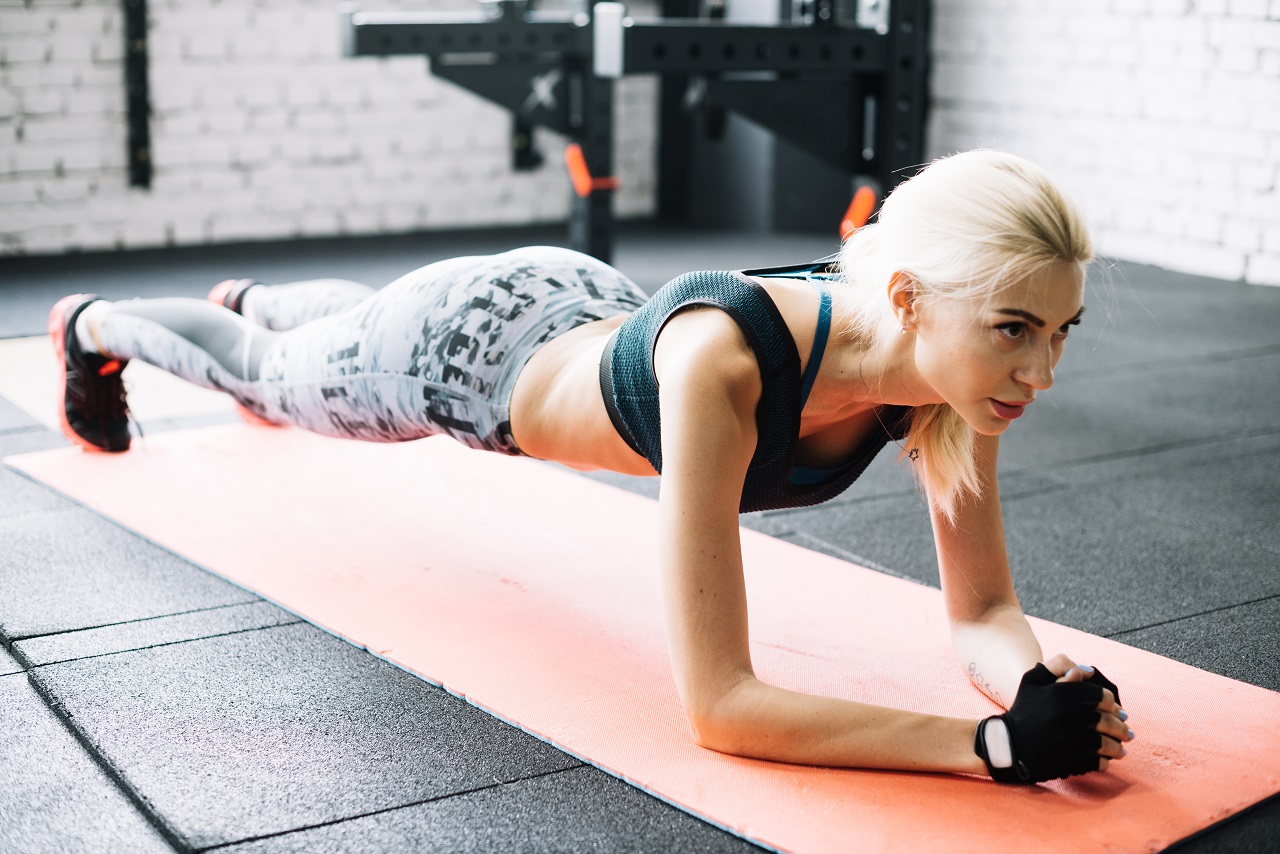
How To Hold A Plank

  • Lie face down with forearms on the floor and hands clasped
  • Extend your legs behind the body and rise up on the toes
  • Keeping your back straight, tighten the core and hold the position for 30-60 seconds (or as long as you can)

Plank Variations and How to Perform Them

There are different variations for the plank which are a little difficult to perform. Let’s explore them!

  1. Side Plank: Roll to the side and come up on one foot and elbow. Make sure your hips are lifted and the core is engaged. Hang tight for 30-60 seconds (or as long as you can)
  2. Reverse Plank: Start by sitting on the floor with your legs straight out in front of you. Place your palms on the floor, below your shoulders, squeeze your buttocks and thighs, and then push your body up into a reverse plank position. Alternatively, you can begin by placing your elbows rather than your hands on the floor, for a less dramatic lift. Keep your body in a straight diagonal line from your shoulders to heels. Ensure that your hips are in line
  3. Dynamic Prone Plank: Starting with a standard plank position, raise the hips as high as they can go and then lower them back down. Continue this movement for as long as possible. Make sure the Back stays straight and the hips don’t droop.
  4. Plank to Push-Up: Starting in a plank position, place down one hand at a time to lift up into a push-up position, with the back straight and the core engaged. Then, move one arm at a time back into the plank position (forearms on the ground). Repeat alternating the arm that makes the first move
  5. Jumping Jack Planks: There are planks, and then there are planks with pop! Start in a traditional plank (shoulders over the wrists and the body in one straight line) but keep your feet together. Then, simply do jumping jacks with the legs, moving them out to the sides, then back together. Aim for 12-15 hops (out and in is one)

Fun Fact: Just by holding a plank for 30 secs a day, you can make your core stronger. It also helps you lose fat!

One word of caution is being careful when performing planks. Overdoing it could lead to injury. This is important if you have back pain or an injury. If you’re trying it for the first time, get into it slowly and gradually till you can hold the plank for longer duration. The duration can be increased with  practice.

Points to Remember

  • Keep breathing while doing the Plank. In essence, don’t hold your breath
  • Ensure that your hips, head or shoulders do not drop
  • Don’t place your hands very close, it can create internal rotation and instability in your shoulder joint
  • Try to hold the Plank in a proper position for a short duration rather than holding it in a wrong position for a longer time

What do you think? Try out planks and its variations and let us know your thoughts in the comments below!

You can find more articles on fitness here. You can also join our certified experts for a live, interactive session on GOQii PRO. Book a class now from the GOQii App.

#BeTheForce

May 8, 2023 By Farhat Khan 14 Comments

Active Rest For Muscle Building

Active Rest

Yes, you heard it right. Rest is an essential part of any training program. Even when it comes to classes or work, we recognize that a few days leave can be recharging and renewing. For athletes, this can be harder, as they may feel guilty for taking a day, a week or a month off their training plan. Whether you are training for a competition or feeling extra motivated, more is not always better. Rest days are just as important as exercise. In fact, a successful fitness regimen isn’t complete without rest days.

What is Active Rest?

In terms of Rest days, there are 2 types of rest days

  • Passive Rest
  • Active Rest

Passive rest means a day of total rest without any physical activity, whereas Active rest means including low-intensity exercise that promotes blood flow to the muscles, helping them to recover better and faster.

Active rest is the sweet spot between being idle and training intensely. The goal of Active rest is to help your body heal from exercising by reducing the likelihood of inflammation and soreness. It allows your body to recover and repair. On your Active rest day you need to be active enough to increase blood flow, but gentle enough to allow your muscles to heal. 

Benefits of Active Rest

Whenever we use our muscles for exercising, our body turns glucose into Lactic acid; this is how our muscles get the energy to perform. Once our muscles stop working, the lactic acid our body remains in our muscles and causes that dreaded post-workout soreness. Active rest helps lactic acid move out of our muscles and dissolve into our bloodstream, so it’s not around to cause us pain afterward. The increased blood flow also makes it to our joints, reducing the chance of joint and muscle inflammation. It is essential for muscle growth. Exercise creates microscopic tears in your muscle tissues. But during rest, cells called fibroblasts repair it. This helps the tissue heal and grow, resulting in stronger muscles.

Active rest is also known to improve our mood and keep us from getting the post-workout blues, while also alleviating any fatigue. Plus, it’s great for our heart since it increases our heart rate and builds endurance.

Planning an Active Rest Day

An active rest day should include a different activity from your usual workout at the gym. You shouldn’t be working at maximum effort. Rather, go slow and don’t push yourself too hard.

Examples of active recovery exercises include:

  1. Stretching: is a simple and effective way to maintain increased blood flow and relaxation.
  2. Yoga: lengthens our muscles and tendons, aids in their recovery, and helps our body develop better mobility and flexibility.
  3. Meditation: is a great way to rest and refresh your mind. If sitting still for extended periods isn’t for you, there are alternative ways of meditating that keep your body busy and your mind free, such as doing the dishes or knitting.
  4. Swimming: is a low-impact exercise that’s easy on your joints and muscles.
  5. Walking or Jogging: is one of the best forms of Active Rest. Walking or jogging at a leisurely pace can enhance blood flow and help with recovery.
  6. Cycling: at a leisurely pace is an excellent way to get in an active recovery. It is low-impact and doesn’t put pressure on the joints. One can cycle either on a stationary bike or on a bicycle outdoors.
  7. Myofascial release with a foam roller: Active rest doesn’t only include movement. One also can stretch and roll a foam roller over parts of your body and get many of the same benefits. If your muscles are sore, foam rolling can help relieve tightness, reduce inflammation, and increase your range of motion.

A Word of Caution

Active rest day exercises are generally considered safe. During active recovery, make sure you aren’t working harder than about 50 percent of your maximum effort. This will give your body the chance it needs to rest. You may find that you feel less tight, sore, and even have more energy to exercise after active recovery. If you’re injured, in pain, or very fatigued, your body may need passive recovery which means total rest.

We hope this article helps you make the most of your workout and recovery. Do let us know your thoughts in the comments below.

You can find more information on muscle building here. You can also get these tips and know more about Active Rest or set up your own fitness routine by speaking to a GOQii Coach. All you need to do is subscribe to GOQii’s Personalised Health Coaching here.

#BeTheForce 

  • 1
  • 2
  • 3
  • Next Page »

Search

Recent Posts

  • PCOS and Anxiety: Discover Relief with the 54321 Technique
  • Navigating the Maze of Nutrition: Finding Clarity Amidst Confusion
  • Get children active and keep them healthy
  • What Gestational Diabetes Can Do To You & Your Unborn Child
  • Breathing – A Forgotten Art

Stay Updated

Archives

  • December 2025 (4)
  • November 2025 (15)
  • October 2025 (20)
  • September 2025 (6)
  • August 2025 (6)
  • July 2025 (12)
  • June 2025 (18)
  • May 2025 (16)
  • April 2025 (23)
  • March 2025 (23)
  • February 2025 (22)
  • January 2025 (26)
  • December 2024 (26)
  • November 2024 (25)
  • October 2024 (22)
  • September 2024 (24)
  • August 2024 (31)
  • July 2024 (21)
  • June 2024 (26)
  • May 2024 (31)
  • April 2024 (27)
  • March 2024 (29)
  • February 2024 (26)
  • January 2024 (25)
  • December 2023 (15)
  • November 2023 (11)
  • October 2023 (22)
  • September 2023 (22)
  • August 2023 (20)
  • July 2023 (22)
  • June 2023 (24)
  • May 2023 (24)
  • April 2023 (24)
  • March 2023 (23)
  • February 2023 (20)
  • January 2023 (16)
  • December 2022 (12)
  • November 2022 (15)
  • October 2022 (15)
  • September 2022 (12)
  • August 2022 (10)
  • July 2022 (17)
  • June 2022 (11)
  • May 2022 (10)
  • April 2022 (6)
  • March 2022 (6)
  • February 2022 (13)
  • January 2022 (12)
  • December 2021 (7)
  • November 2021 (3)
  • October 2021 (6)
  • September 2021 (3)
  • August 2021 (8)
  • July 2021 (7)
  • June 2021 (15)
  • May 2021 (16)
  • April 2021 (10)
  • March 2021 (7)
  • February 2021 (4)
  • January 2021 (4)
  • December 2020 (3)
  • November 2020 (4)
  • October 2020 (10)
  • September 2020 (3)
  • August 2020 (3)
  • July 2020 (2)
  • June 2020 (4)
  • May 2020 (10)
  • April 2020 (12)
  • March 2020 (10)
  • February 2020 (4)
  • January 2020 (4)
  • December 2019 (3)
  • November 2019 (7)
  • October 2019 (5)
  • September 2019 (4)
  • August 2019 (9)
  • July 2019 (9)
  • June 2019 (11)
  • May 2019 (4)
  • April 2019 (9)
  • March 2019 (8)
  • February 2019 (9)
  • January 2019 (8)
  • December 2018 (9)
  • November 2018 (3)
  • October 2018 (3)
  • September 2018 (5)
  • August 2018 (10)
  • July 2018 (6)
  • June 2018 (13)
  • May 2018 (8)
  • April 2018 (18)
  • March 2018 (9)
  • February 2018 (8)
  • January 2018 (15)
  • December 2017 (12)
  • November 2017 (19)
  • October 2017 (13)
  • September 2017 (15)
  • August 2017 (4)
  • July 2017 (8)
  • June 2017 (7)
  • May 2017 (6)
  • April 2017 (8)
  • March 2017 (6)
  • February 2017 (7)
  • January 2017 (9)
  • December 2016 (10)
  • November 2016 (7)
  • October 2016 (7)
  • September 2016 (7)
  • August 2016 (11)
  • July 2016 (9)
  • June 2016 (9)
  • May 2016 (12)
  • April 2016 (17)
  • March 2016 (17)
  • February 2016 (8)
  • January 2016 (6)
  • December 2015 (2)
  • November 2015 (9)
  • October 2015 (7)
  • September 2015 (9)
  • August 2015 (11)
  • July 2015 (9)
  • June 2015 (12)
  • May 2015 (9)
  • April 2015 (13)
  • March 2015 (8)
  • February 2015 (5)
  • January 2015 (12)
  • December 2014 (14)
  • November 2014 (11)
  • October 2014 (6)
  • September 2014 (13)
  • August 2014 (12)
  • July 2014 (6)
  • June 2014 (2)
  • May 2014 (7)
  • April 2014 (5)

From “Laddu Nawin” to Fit and Fierce: How a 25-Year-Old Insurance Advisor Shed 20 Kilos and Gained His Life Back

When 25-year-old Nawin Yadav from Hyderabad walked into his office every morning, he carried more than just his files and policy papers. He had the weight of fatigue, sluggish energy, and an ever-growing belly that was becoming the butt of jokes. “People … [Read More...]

“I’ve Challenged Myself to Live 100 Years” – The Story of Chandubhai Savani’s Second Chance at Life

At 67, most people start slowing down. Not Chandubhai Savani. A resident of Surat, Chandubhai, thought life was on track. “My life was going well till I had my bypass surgery,” he says. That surgery, back in 2021, was a wake-up call.  Medication was routine, but exercise wasn’t. His diet? What he calls ‘normal.’ “I […]

From Shimla’s Slopes to Chandigarh’s Sidewalks: Surinder Kaur Bhalla’s Journey from Chaos to Control

Some journeys start with a plan. Others begin with a stumble literally. Surinder Bhalla, a government professional, born and raised in the scenic hill town of Shimla, had always lived a life of movement. “In Shimla, you walked everywhere,” she reflects. “Walking was never an exercise. It was just life.” But after shifting to Chandigarh, […]

Ananda Mukherjee Health Story

From Terminal Illness To Complete Wellness! Ananda Mukherjee Health Story

As we observe World Cancer Day under the powerful theme ‘United by Unique’ (2025-2027)**, we are reminded that every individual’s journey with cancer is distinct, yet united by shared resilience, hope, and the collective fight against this disease. This theme places people at the centre of care and their stories at the heart of the […]

  • HOME
  • HEALTHY LIVING
  • FITNESS
  • HEALTHY RECIPES
  • USER STORIES
  • KARMA
  • BUY GOQii

Copyright ©2016 GOQii


