GOQii

Blog

  • HOME
  • HEALTHY LIVING
  • FITNESS
  • HEALTHY RECIPES
  • USER STORIES
  • KARMA
  • BUY GOQii

May 27, 2024 By Geetika Patni 7 Comments

Mindful Eating: Slow down and enjoy your meal – 2

Untitled-1

In my previous blog, I talked about the concept of Mindful Eating and how often we instead of being mindful become mindless. (https://goqii.com/blog/mindful-eating-the-best-habit-ever/). Mindless eating is when we overeat, eat fast, do some emotional eating while we are not really hungry and disconnect with food. The first blog summarised the fact that it is extremely important to make the ‘connect’ with your food choices. Attempt to learn or acknowledge the ingredients of the dish you are eating, which food group it belongs to, combining it in ways you can enhance (or deplete) it’s nutritional quotient, and most importantly how you truly feel having it. 

Today, I am going to talk about the art of eating slow. Eating is a biologically natural and pleasurable act of nourishment.

More often than not, most of us may not even recall everything that we ate in last few hours, let alone-the sensation associated with it. That is largely because we indulge in other things most times along with eating – working, driving, reading, watching television, surfing the net, social networking or simultaneously feeding a child, a pet or an emotion.

This act of mindless eating –lack of awareness of the food we are consuming- may becontributing to the national obesity epidemic and the lifestyle diseases and disorders prevalent around.

Mindful eating is nothing but, an act of eating our food with attention. Sensing the flavours, recognizing the ingredients and enjoying the dish and thus feeling gratitude towards the meal. Following mindful eating pattern you will not only reverse your weight issues, but also fix them up for life.

chew-slowly

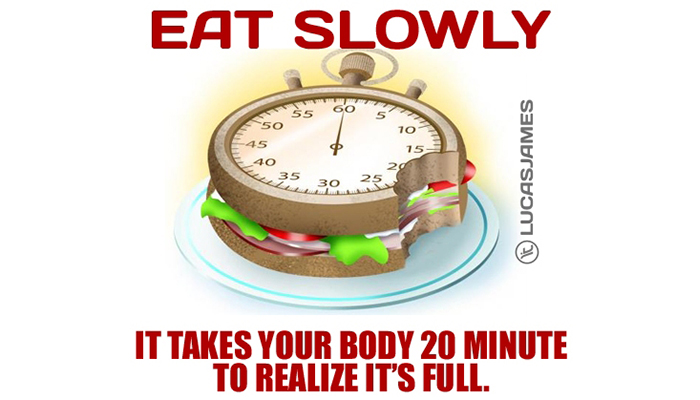
Eating fast is a habit in disorder. If you eat fast, you are just one step away from digestive troubles, weight gain and other metabolic dysfunctions. Here is what happens when you eat fast?

One is you skip the first step of digestion of the food, which happens when enzymes in the saliva break down the morsels when you are chewing them. This Bolus which is softened food morsel is much easier to get digested by the acids of the stomach.

Second – since you are rushing through – large chunks of undigested food is filling up your stomach – too much and too quickly. The stretch receptors of your stomach are slow acting fibres (can’t help -that is how they are made!) so when they can’t match up with the speed, the spill over happens, leading to acid reflux, burn in the chest, food regurgitation, and acid after taste in mouth.

What is supposed to be an act of pleasure turns out to be a painful experience!

Third – The delicate hormonal cross talk which happens between hunger, satiety and fullness hormones doesn’t happen that smoothly when you are gobbling down your meal, leaving one having more food but yet not satisfied.

That is why adopting slow eating as a good habit for life is necessary, to eliminate the digestive disorders, fix up weight struggles and feel satisfied with our meals, with our life.

In this article, I’ll share ways to build up your innate capability to eat slowly. As you’ll go down the pointers, pick up only one or two that you can follow easily and when you return back to this article, gradually learn more ways to practice slow eating as way of life.

Here are some tips to help you eat slowly 

  • Chew well: Digestion of your food begins from the mouth. Gulping down your food will prevent your stomach to match up with your tongue. And, do you also know that you can’t taste your food until its mixed with saliva. Hence chewing your food thoroughly not only improves digestion but enhances perceptibility of the flavor of your food as well.

To practice chewing well and long, take smaller bites and designate number of chew per bite. Anything more than your current number till you reach over 20 is perfect. 20 seconds to every chew is also a wise idea.

  • Engage all your sense while eating: Sniffing the food morsel before putting it in your mouth and appreciating its taste brings in more satisfaction from the food. Also notice colours in your food and feel its texture in your mouth. Chew well then and you’ll find yourself turning into a slow eater automatically.
  • Deep breathe after every few bites: By following this tip, you’ll buy some more time for your tummy to assimilate all the previous morsels. The excess O2 taken in by extra breathing will also aid in better oxidation of the fats in the food.
  • Add fibers to your meal: They take a long time to chew. Crunching salads after every few bites will additionally supply raw enzymes to digest cooked portions of your meals.
  • Take intermission break: Put down your spoon and fork once your done with half your meal. This break can last till you have finished a mini conversation or taken 24-30 breaths.

# Or push away from table, get up for the second helping, take some sips of water in between, to take a break.

  • Pace with a slow eater: Rather than a ferocious one. We unconsciously imitate people we are close to. So eating with a slow eater will also slow you down.
  • Use non dominant hand to eat or use chopsticks for a week: If you make the task difficult it automatically forces you to pace down.
  • Eat with a baby spoon/fork: By law of volume metrics, eating with a baby spoon will put a speed breaker on your food ride.
  • Work up your food: Shell your pistachios or peanuts or seeds and peel your oranges yourself. Shelling, peeling or individual unwrapping of your snack will also help slow you down and reduce the tendency to over consume any snack.
  • Refuel-every 3-4 hours: Keeping long gaps between meals will prevent you from following slow eating, as mind is weak in the knees when we are famished. Hence, eat frequently to prevent over eating and practice slow eating at any meal time.

Practicing slow eating takes time. If you are a super fast eater, and you are trying these methods to change your habit for good, don’t punish yourself if you don’t succeed in the first few weeks. Try and try till you succeed. And, if you still fail, take help of your coach, to make you practice and push towards rewiring your old habit into a new one of slow mindful eating.

In my next blog in this five part series, I will be talking about Portion Control. I shall share some good tricks and hacks which will help you prevent over eating and the need to diet ever.

To be continued …………..

#BeTheForce 

February 20, 2024 By Sunita Arora 1 Comment

Benefits of Fennel Seeds (Part 2)

Benefits of Fennel Seeds 2In my previous blog, we talked about the amazing Benefits of Fennel Seed Water. In this blog, I am going to tell you about different ways of using Fennel Seeds for good digestion, eyes, hair and skin.
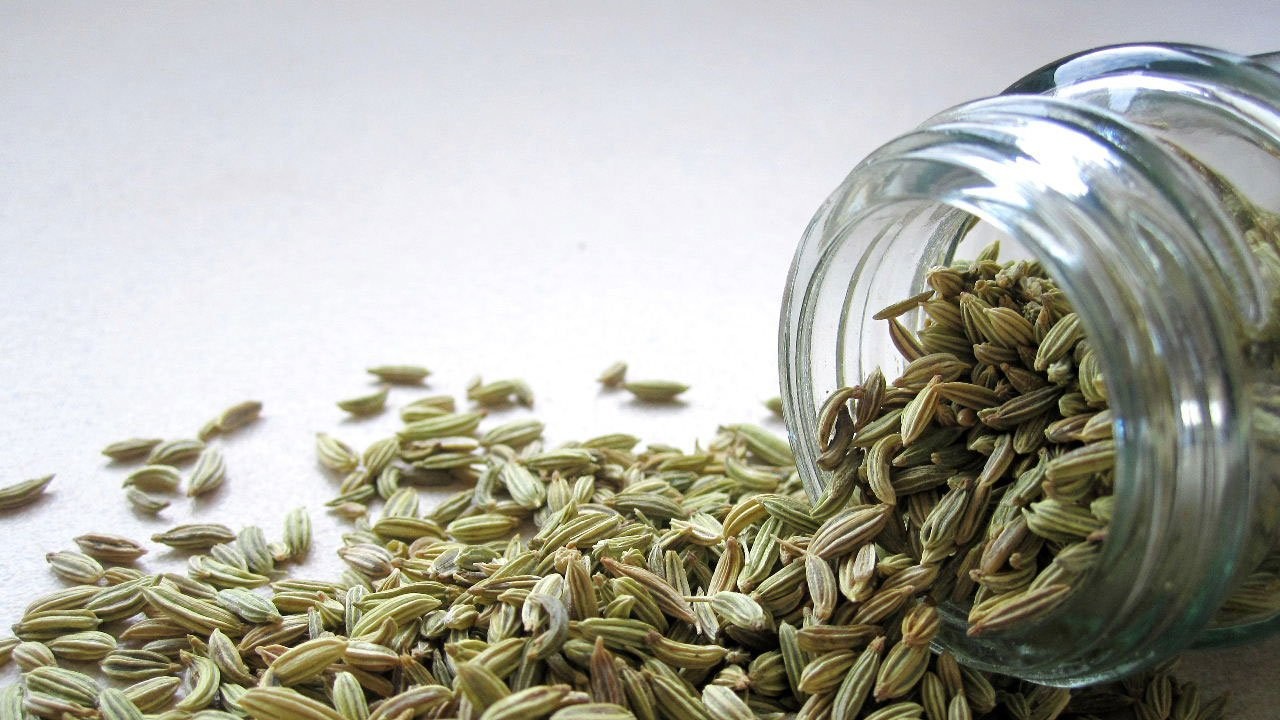
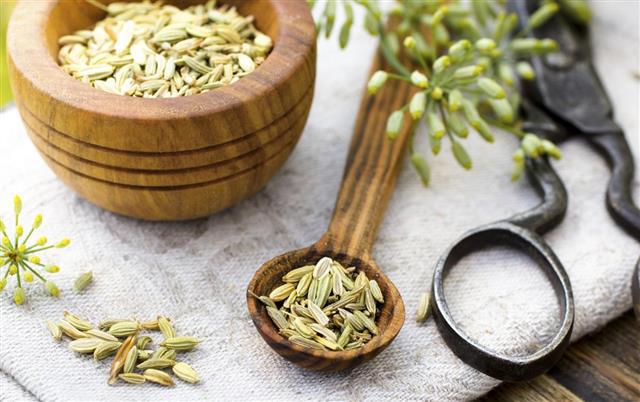
Fennel Seeds contain many useful, active ingredients such as:

  • Anethole: This is the main active ingredient of Fennel. It is antimicrobial (kills germs), mimics estrogen, and increases prolactin
  • Flavonoids like Quercetin and Apigenin: These are antioxidant, antibacterial and anti-inflammatory
  • Phenolic compounds such as Rosmarinic Acid and Chlorogenic Acids: These are antioxidant and anti-inflammatory
  • Terpenes such as Fenchone and Limonene, which improve wound healing
  • Water-soluble vitamins like Ascorbic Acid (vitamin C), Thiamine(vitamin B1), Riboflavin (vitamin b2), Niacin (vitamin B3), and Pyridoxine (vitamin B6)
  • Fat-soluble vitamins such as vitamins A, E, and K
  • Trace minerals and other elements like Aluminum, Barium, Calcium, Cadmium, Cobalt, Chromium, Copper, Iron, Magnesium, Manganese, Nickel, Lead, Strontium, and Zinc
  • Essential Amino Acids like Leucine, Isoleucine, Phenylalanine, and Tryptophan
  • Dietary Fiber

Uses of Fennel Seeds:

a) Fennel Seeds after Meals: If you have acidity, indigestion problem, take ½ tsp of fennel seeds after meals. It helps in digesting food and reducing acidity.

b) Fennel Seeds Paste for Puffy Eyes: Make a paste by mixing Fennel Seeds Powder with cold water. Apply the paste under your eyes and wait for 5-7 minutes. Rinse with cold water and you’ll notice the difference immediately.

c) Fennel Seeds Paste for Acne: Make a paste of Fennel Seeds powder, Honey and Yoghurt. Apply the paste on the affected areas and let it sit for a good 10-15 minutes. Next, rinse with cold water.

d) Fennel Seeds Water for Hair Fall: Boil some water with a few spoons of Fennel Seeds in it. Once boiled, strain the water and let it cool down. Next, rinse your hair thoroughly with the water. Repeat this twice a week for quick results.

e) Fennel Seeds Paste to Hydrate Itchy Scalp: Make a paste of Fennel Seeds Powder with Yoghurt and apply the paste evenly on your scalp. Let it sit for 15-20 minutes before rinsing it off.

f) Fennel Seeds & Oatmeal Anti-Aging Mask: Take 1 tablespoon of fennel seeds, 2 tablespoons of oatmeal, and 1/4 cup of boiled water and mix well. Apply this mask on your face and leave it on for 20 minutes.

g) Fennel Seeds as Mouth-Freshener: Roast Fennel Seeds with equal quantities of Fenugreek and store it in a jar. Use this mix as a mouth-freshener. This mix can be used as a replacement for your sugar cravings – extremely helpful for Diabetics.

h) Fennel Seeds Toner for Puffy Eyes: Take 2 tsp of Fennel Seeds and  ¼ cup of hot water, combine them and let the mixture steep for 10 minutes, strain and pour in an airtight container , keep refrigerated for up to one week .

i) Fennel Seeds to Improve Eyesight: Take 100gm each of Fennel Seeds, Almonds, Rock Sugar and grind them well in a mixer.  Have 10gm of this mixture every night before bedtime you will notice your eyesight getting better.

How to Store:
Store dry Fennel Seeds as you do in case of other seeds. Place whole seeds in a clean, air-seal container and store in a cool, humid-free and dark place. Ground and powdered Fennel Seeds should be stored in the refrigerator in airtight containers and should be used sooner since it loses flavor quickly due to evaporation of its essential oils.
I hope these suggestions are useful to you and will help you utilize this versatile seeds better.

How do you use Fennel Seeds? Let us know in the comments below! For further information or guidance, reach out to our certified experts by subscribing to GOQii’s Personalised Health Coaching here.

#BeTheForce

February 19, 2024 By Sunita Arora 8 Comments

Benefits of Fennel Seed Water

Benefits of Fennel Seeds WaterThe age-old secrets of health can be found in the simplest of ingredients in our kitchens. We just need to unveil them. Fennel Seeds are used in traditional rituals and celebrations as a symbol of Nature. In Ayurveda, Fennel Seeds are considered very beneficial. It is used to increase stamina and promote longevity, also used by nursing mothers in order to increase breast milk. Fennel Seeds are extensively used in Indian recipes.  It is an effective aid to digestion, treating bloating, gas, or cramps and also acts as a diuretic.  In foods and beverages, Fennel Oil and Fennel Seeds are used as flavoring agents.


Health benefits of Fennel Seeds:

1) Fennel Seeds for Constipation, Indigestion, Acidity, Bloating and IBS: Fennel Seeds are very useful in treating these disorders because it contains Estragole, Fenchone and Anethole. For those with IBS, the volatile oils found in Fennel Seeds can help kick-start digestion by promoting the production of gastric enzymes.

2) Managing Blood Pressure: Fennel Seeds are also a very rich source of Potassium, which is an essential component of cells and body fluids. Hence, it helps regulate heart rate and blood pressure.

3) Improves Eyesight: A handful of these seeds can do wonders for your eyesight as well.  Fennel Seeds contain Vitamin A, which is essential for good eyesight. The extracts of these seeds were used in ancient times to improve the symptoms of Glaucoma.

4)  Purify Blood: The essential oils and fiber in these seeds are very useful to flush out toxins and sludge from our bodies, thus helping to cleanse the blood and clear the skin.

5) Relieves Menstrual Pain: Fennel Seeds help in reducing menstrual pains, alleviates symptoms of menopause, shorten the length of the menstruation cycle, reduced period-related nausea due to the presence of estrogen.

6) Promotes Breast Milk Production: It has estrogen which increases Prolactin levels and increases breast milk production.

7) Reduces Hair fall: The antioxidants and nutrients present in Fennel Seeds strengthen the roots of your hair and give your follicles extra strength.

8) Reduces Cholesterol: It contains high amounts of fiber, which decreases re-absorption of cholesterol, and thus, lowers the risk of heart related diseases.

9) Improves Brain Functioning: Fennel Seeds are rich in potassium, which stimulates electrical conduction throughout the body.  Which in turn improves brain functioning and cognitive skills. It acts as a great brain booster and improves brain-based skills.

10) Improves Vision: It helps improve eyesight, alleviate high eye pressure, pink eyes, dry eyes, tired, watery eyes and almost all eye related problems.

Some Other Benefits:

  • Gargling Fennel Tea can relieve inflamed gums and treat bad breath
  • It eases muscular pain
  • Fennel Water is used to relieve colic pain in newborn babies
  • Fennel Water eases morning sickness in expecting moms
  • Used as a spice in many different cuisines all over the world
  • Sugarcoated Fennel Seeds (Saunf) have been used as a condiment after food to improve digestion

How to use Fennel Seeds:

a)  Fennel Tea: Extract of Fennel Seeds is not the same thing as fennel tea. Fennel tea is less processed and more likely to be pure and the measurable, beneficial impacts of fennel tea suggest multiple reasons for drinking it.

Here is a recipe for Fennel Tea:

  • Take 1 teaspoon of dried Fennel Seeds per cup of tea and pour hot water over it
  • Make sure you do not boil the Fennel Seeds as this will kill most of its nutrients
  • Cover and let it rest for 10 minutes. You will get a light yellow infusion
  • Drink it 2-3 times a day
  • The best time to drink this tea is after meals to help treat digestion problems and its sweet taste, much similar to that of licorice, can serve as a wonderful after dinner treat

b) Fennel Water: Take one glass of water and add one tsp of Fennel Seeds and soak it overnight. Drink it early in the morning. This water helps in reducing acidity and constipation.

Do you want to know more about Fennel Seeds? Stay tuned for the second part on the Benefits of Fennel Seeds.

We hope this article helps you. If you have your own special style of using Fennel Seeds, let us know in the comments below! For further information or guidance, reach out to our certified experts by subscribing to GOQii’s Personalised Health Coaching here.

#BeTheForce

October 20, 2023 By Farida Gohil 7 Comments

10 foods with super qualities that will help in healthy living

image of fruits and brocolli

All foods are unique in their calorie count, and unique in the way they are digested. Those foods with negative calories burn more calories than they contain. These foods are usually plant-derived foods that are high in water content and rich in fiber: grains, legumes, vegetables, and fruits, except for fatty fruits like avocados and olives. Since your body takes a longer time to burn off fibrous foods, your metabolism continues to stay revved up, giving you a jump start to your weight loss.

While these foods may be an important source of micronutrients, they are not sources of fat packing calories.That works because your stomach senses when it is physically full, and it will trigger your brain to stop eating when you can’t handle more food.

This is why, believe it or not, the simple act of drinking a glass of water before each meal is a proven weight loss strategy. It fills your belly with water, thereby reducing the amount of space left for other foods.

This is the common property among all: They all contain a lot of water locked in a fibrous matrix. Apples are essentially “water fruits,” as are grapes and watermelons (hence the name). Many vegetables are also “water vegetables,” meaning that they’re loaded with water. Celery, for example, is the classic example of a water-rich negative-calorie food. I am providing you with the examples of negative calorie foods:

  1. Apple:Apple contain amazingly powerful nutrients that improve your quality of life. Studies have also shown some evidence that the quercetin found in apples could lower the risk of Alzheimer’s disease by protecting your body from the damage that can be caused by dangerous free radicals.
  2. Lettuce and leafy Veggies:Lettuce and other leafy greens, including kale and spinach, are extremely low in calories. These contain 50% water to 50% fiber. As a result, leafy greens are an excellent source of energy, and definitely help to reduce the urge to eat sweet treats.Dark greens are packed with Vitamins and nutrients as well.
  3. Broccoli:Broccoli has a couple of different properties that make it an ally of those who are trying to lose weight. The fibre content is huge, helping to keep you feeling full and satisfied after you eat broccoli, and the protein is equal to that found in rice (while it contains just a fraction of the calorie content of rice). You should either steam the Broccoli or consume it raw if you want to make sure that you preserve all of the nutrients that make this vegetable a superfood.
  4. Papaya:Papaya’s also like Oranges are just as rich as oranges in vitamin C and contain 15 times more of the antioxidant beta-cryptoxanthin. Papaya’s fibre is also good for combating constipation and keeping cholesterol in check.
  5. Celery: About 75% of a celery stick is actually water; the other 25% is fibre and other roughage. The high water content of celery means that you will burn more calories eating it than it actually contains.
  6. Cucumber:Cucumbers are mostly made up of water. The cucumber is one of the best vegetables when it comes to providing vitamin C, and there is plenty of evidence suggesting that a high intake of vitamin C is linked to an improved ability to resist invasion by bacteria and viruses.
  7. Tomato:This veggie is more than 90 percent water. t has small amounts of carbohydrate, protein and fat, and it is rich in vitamin C, B, E and K, carotenoids and lycopene.The chromium that they contain might help your body to regulate blood sugar levels, keeping them within healthy limits by controlling the amount of sugar that gets absorbed in your blood.
  8. Radish: Radish has an extremely low calorific value. It has good amount of of vitamin C, B and A. It is interesting that in the same amount of radishes there is 2 mg of iron and other minerals.
  9. Watermelon: This fruit is extremely low in calories and contains no fat. It is a rich source of B vitamins, which increase your energy levels and reduce your need to eat extra foods.
  10. Orange: Oranges are wonderful for heart health in a couple of different ways. Firstly, they contain magnesium and potassium, which naturally regulate blood pressure. They are also a source of something called herperidin, which lowers levels of bad cholesterol. .

Having talked about negative calorie foods, please understand that eating negative calories will not replace exercise.In GOQii, we do not believe in Calorie intake and we do not cunt calories, what we encourage is to eat a balanced diet and exercise to live a healthy life.

To sum up, these super foods with negative calorie qualities can significantly benefit your journey to healthy living. If you’ve found this information helpful or have any thoughts to share on these foods, please feel free to do so in the comments below. Remember, embracing a balanced diet and regular exercise is the key to achieving and maintaining a healthy lifestyle. For more articles and guidance on holistic well-being, explore our Healthy Reads or speak to a certified expert by subscribing to GOQii’s Personalised Health Coaching here.

#BeTheForce

  • « Previous Page
  • 1
  • 2
  • 3
  • 4
  • Next Page »

Search

Recent Posts

  • Best Foods To Alleviate Irritable Bowel Syndrome
  • ALL ABOUT VERTIGO!
  • PCOS and Anxiety: Discover Relief with the 54321 Technique
  • Navigating the Maze of Nutrition: Finding Clarity Amidst Confusion
  • Get children active and keep them healthy

Stay Updated

Archives

  • December 2025 (6)
  • November 2025 (15)
  • October 2025 (20)
  • September 2025 (6)
  • August 2025 (6)
  • July 2025 (12)
  • June 2025 (18)
  • May 2025 (16)
  • April 2025 (23)
  • March 2025 (23)
  • February 2025 (22)
  • January 2025 (26)
  • December 2024 (26)
  • November 2024 (25)
  • October 2024 (22)
  • September 2024 (24)
  • August 2024 (31)
  • July 2024 (21)
  • June 2024 (26)
  • May 2024 (31)
  • April 2024 (27)
  • March 2024 (29)
  • February 2024 (26)
  • January 2024 (25)
  • December 2023 (15)
  • November 2023 (11)
  • October 2023 (22)
  • September 2023 (22)
  • August 2023 (20)
  • July 2023 (22)
  • June 2023 (24)
  • May 2023 (24)
  • April 2023 (24)
  • March 2023 (23)
  • February 2023 (20)
  • January 2023 (16)
  • December 2022 (12)
  • November 2022 (15)
  • October 2022 (15)
  • September 2022 (12)
  • August 2022 (10)
  • July 2022 (17)
  • June 2022 (11)
  • May 2022 (10)
  • April 2022 (6)
  • March 2022 (6)
  • February 2022 (13)
  • January 2022 (12)
  • December 2021 (7)
  • November 2021 (3)
  • October 2021 (6)
  • September 2021 (3)
  • August 2021 (8)
  • July 2021 (7)
  • June 2021 (15)
  • May 2021 (16)
  • April 2021 (10)
  • March 2021 (7)
  • February 2021 (4)
  • January 2021 (4)
  • December 2020 (3)
  • November 2020 (4)
  • October 2020 (10)
  • September 2020 (3)
  • August 2020 (3)
  • July 2020 (2)
  • June 2020 (4)
  • May 2020 (10)
  • April 2020 (12)
  • March 2020 (10)
  • February 2020 (4)
  • January 2020 (4)
  • December 2019 (3)
  • November 2019 (7)
  • October 2019 (5)
  • September 2019 (4)
  • August 2019 (9)
  • July 2019 (9)
  • June 2019 (11)
  • May 2019 (4)
  • April 2019 (9)
  • March 2019 (8)
  • February 2019 (9)
  • January 2019 (8)
  • December 2018 (9)
  • November 2018 (3)
  • October 2018 (3)
  • September 2018 (5)
  • August 2018 (10)
  • July 2018 (6)
  • June 2018 (13)
  • May 2018 (8)
  • April 2018 (18)
  • March 2018 (9)
  • February 2018 (8)
  • January 2018 (15)
  • December 2017 (12)
  • November 2017 (19)
  • October 2017 (13)
  • September 2017 (15)
  • August 2017 (4)
  • July 2017 (8)
  • June 2017 (7)
  • May 2017 (6)
  • April 2017 (8)
  • March 2017 (6)
  • February 2017 (7)
  • January 2017 (9)
  • December 2016 (10)
  • November 2016 (7)
  • October 2016 (7)
  • September 2016 (7)
  • August 2016 (11)
  • July 2016 (9)
  • June 2016 (9)
  • May 2016 (12)
  • April 2016 (17)
  • March 2016 (17)
  • February 2016 (8)
  • January 2016 (6)
  • December 2015 (2)
  • November 2015 (9)
  • October 2015 (7)
  • September 2015 (9)
  • August 2015 (11)
  • July 2015 (9)
  • June 2015 (12)
  • May 2015 (9)
  • April 2015 (13)
  • March 2015 (8)
  • February 2015 (5)
  • January 2015 (12)
  • December 2014 (14)
  • November 2014 (11)
  • October 2014 (6)
  • September 2014 (13)
  • August 2014 (12)
  • July 2014 (6)
  • June 2014 (2)
  • May 2014 (7)
  • April 2014 (5)

From “Laddu Nawin” to Fit and Fierce: How a 25-Year-Old Insurance Advisor Shed 20 Kilos and Gained His Life Back

When 25-year-old Nawin Yadav from Hyderabad walked into his office every morning, he carried more than just his files and policy papers. He had the weight of fatigue, sluggish energy, and an ever-growing belly that was becoming the butt of jokes. “People … [Read More...]

“I’ve Challenged Myself to Live 100 Years” – The Story of Chandubhai Savani’s Second Chance at Life

At 67, most people start slowing down. Not Chandubhai Savani. A resident of Surat, Chandubhai, thought life was on track. “My life was going well till I had my bypass surgery,” he says. That surgery, back in 2021, was a wake-up call.  Medication was routine, but exercise wasn’t. His diet? What he calls ‘normal.’ “I […]

From Shimla’s Slopes to Chandigarh’s Sidewalks: Surinder Kaur Bhalla’s Journey from Chaos to Control

Some journeys start with a plan. Others begin with a stumble literally. Surinder Bhalla, a government professional, born and raised in the scenic hill town of Shimla, had always lived a life of movement. “In Shimla, you walked everywhere,” she reflects. “Walking was never an exercise. It was just life.” But after shifting to Chandigarh, […]

Ananda Mukherjee Health Story

From Terminal Illness To Complete Wellness! Ananda Mukherjee Health Story

As we observe World Cancer Day under the powerful theme ‘United by Unique’ (2025-2027)**, we are reminded that every individual’s journey with cancer is distinct, yet united by shared resilience, hope, and the collective fight against this disease. This theme places people at the centre of care and their stories at the heart of the […]

  • HOME
  • HEALTHY LIVING
  • FITNESS
  • HEALTHY RECIPES
  • USER STORIES
  • KARMA
  • BUY GOQii

Copyright ©2016 GOQii