GOQii

Blog

  • HOME
  • HEALTHY LIVING
  • FITNESS
  • HEALTHY RECIPES
  • USER STORIES
  • KARMA
  • BUY GOQii

October 30, 2025 By Priyanka Mangla 3 Comments

The Early Signs & Symptoms of Diabetes

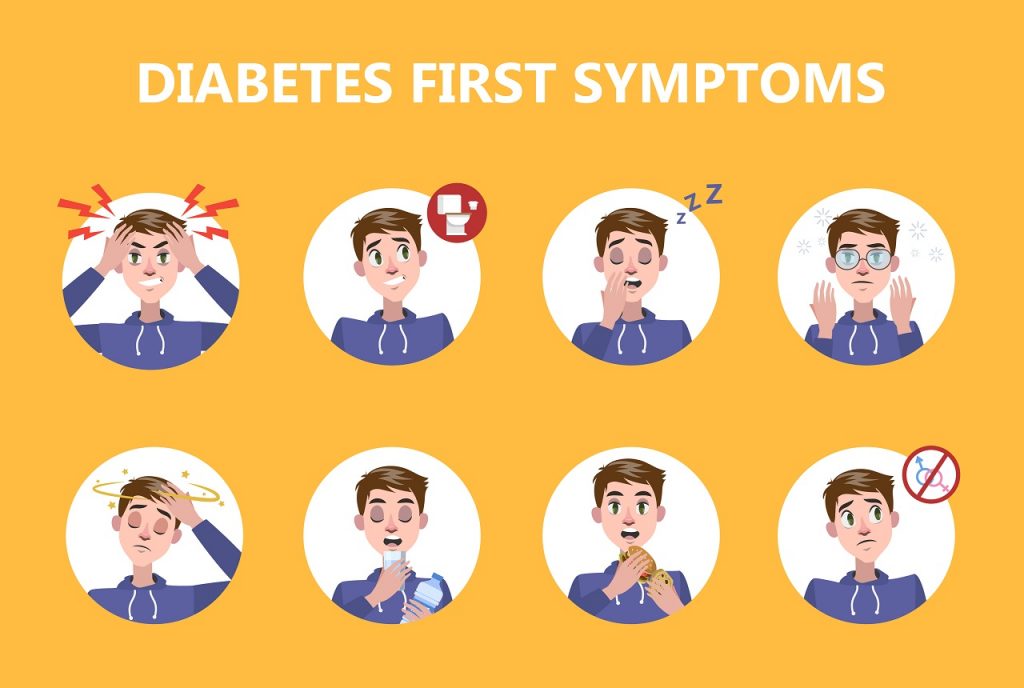
symptoms of diabetesDiabetes has become one of the most common lifestyle disorders affecting both, urban and rural areas alike. You can attribute this to overeating, obesity, stressful, busy and sedentary lifestyles which lead to the early symptoms of diabetes. This also includes lack of proper nutrition which leads to disturbed glucose metabolism. Heredity is also a major factor in the development of the disease. It is usually misunderstood that eating only refined sugar in excess will lead to diabetes but that’s not the case. Excess intake of proteins and fats also leads to development of diabetes because ultimately they are also metabolized and converted to glucose.

Diabetes is characterized by the elevated levels of glucose in the blood and urine. It is of 2 types:

  • Type 1: is present since birth due to complete absence of insulin 
  • Type 2: Develops later in life due to the deficiency of insulin

There are other variants too like gestational diabetes which occur during  pregnancy. Read more about it here: https://goqii.com/blog/what-gestational-diabetes-can-do-to-you-your-unborn-child/ 

Since untreated or uncontrolled diabetes gradually starts affecting the functioning of major organs of the body, like the heart, kidneys, brain, nervous system, eyes, etc. it is important to diagnose and manage diabetes as early as possible.  

How Can You Diagnose It? 

It is diagnosed by a blood test, in which the blood glucose in the fasting state (normal values range between 80-120 mg/100 ml of blood) and 2 hours after having the meal (normal values, 140 mg/100 ml of blood) are measured. Now, even before getting your blood glucose tested, there are certain signs and symptoms which our body shows which indicate the development of diabetes. 

Early Signs and Symptoms of Diabetes

  1. 3P’s: Polyphagia (increased hunger), polydipsia (increased thirst), polyuria (increased urination). Remember these 3 P’s and look out if you are experiencing these. 
  2. Loss of weight: In spite of increased hunger, there will be a very sharp loss of weight, which again is a warning symptom. This is happening because the glucose is getting lost in the urine, also due to insufficient insulin, the available glucose is not getting utilized to provide energy and to function, the body has started utilizing the glucose which is stored in the muscles and organs. 
  3. Getting tired: Loss of weight due to this condition leads to early tiredness. The person gets tired easily both mentally and physically. 
  4. Dry mouth: Despite drinking more water, there will be dryness in the mouth. 
  5. Paleness: appears because of anemia.
  6. Frequent infections and delayed healing of wounds: happens due to excess of glucose in the blood. 
  7. Loss of libido. 

In its early stages, we can easily prevent it from progressing further to a full blown Diabetes Mellitus with: 

  • Regular exercise: for a minimum of 30 minutes to maintain optimum weight. Engage yourself in light games. 
  • Proper diet: Which includes salads with meals (this slows down digestion and prevents an immediate spike in blood sugar levels) and excluding refined sugar, alcohol, smoking and high fat foods. 
  • Yoga & meditation: take care of the stress levels and curb the disease from getting any worse. Pranayama (Breath Control) and certain yoga asanas like Cobra Pose (Bhujangasana), Shoulder Stand (Sarvangasana) and various others help in stimulating the pancreas to produce insulin . 

There are certain home remedies which can be used as a supportive measure. I want to discuss here the two most important ones. 

  1. Bitter gourd (Karela): is highly beneficial in the treatment of diabetes. It contains an insulin-like principle, known as plant-insulin which has been found effective in lowering the blood and urine sugar levels.
  2. Java Plum (Jamun): The seeds contain a glycoside ‘jamboline’ which has the power to check the pathological conversion of starch into sugar in cases of increased production of glucose. In the Homoeopathic system of medicine, we have a very effective medicine prepared from this fruit to treat diabetes. 

We hope this article helps you manage Diabetes and helps you spot the early signs and symptoms. Do leave your thoughts in the comments below! For more articles on managing Diabetes, check out Healthy Reads. 

For further guidance and motivation by certified experts, join the GOQii Diabetes Care program. It’s India’s only diabetes program that is driven by Smart Science and Personal Coaching to improve Fasting Blood Sugar (FBS), Postprandial Blood Sugar (PP), and reduce HbA1c levels. You can subscribe here: https://store.goqii.com/diabetescare.

#BeTheForce Against Diabetes! 

Disclaimer: The information provided in this blog is for general awareness and educational purposes only. It is not intended to replace professional medical advice, diagnosis, or treatment. Always consult a qualified healthcare provider for personalised medical guidance or concerns related to your health. Images shown are for representation purposes only and may not depict the exact recommendations or outcomes.

March 27, 2025 By GOQii Leave a Comment

Type 1 vs Type 2 Diabetes: What’s the Real Difference?

Have you ever wondered if there’s a real difference between Type 1 and Type 2 diabetes? Maybe you’ve heard the terms tossed around but never really got the full picture. You’re not alone! Diabetes is often misunderstood, but knowing the difference between the two types could be a game-changer—for yourself or someone you care about.


So, let’s break it down in a simple, no-jargon way—because understanding your health shouldn’t feel like solving a puzzle.

What Exactly Is Diabetes?

Imagine this: your body runs on glucose (sugar) for energy, like a car runs on fuel. To get that fuel into your cells, your body uses a key—insulin—produced by your pancreas. But when that key either doesn’t exist or doesn’t work properly, glucose stays in your bloodstream, causing blood sugar to rise. That’s diabetes in a nutshell.

Let’s Meet Type 1 Diabetes: Autoimmune & Unexpected

Think of Type 1 as your immune system going rogue—mistaking your healthy insulin-producing cells for enemies and attacking them. As a result, your body stops making insulin altogether.

Who Gets It?

It often shows up in children or young adults, but it can surprise anyone at any age. It’s not caused by lifestyle, and you can’t prevent it.

Signs to Look For:

⚡ Constant thirst
⚡ Frequent urination
⚡ Sudden weight loss
⚡ Fatigue
⚡ Blurred vision

Treatment?

Insulin for life—via injections or a pump. And with proper care, people with Type 1 diabetes can live full, vibrant lives.

Type 2 Diabetes: The Lifestyle-Linked One

Now, Type 2 is more like your cells ignoring the key. Your body still makes insulin, but your cells don’t respond properly—a condition called insulin resistance.

Who’s at Risk?

Mostly adults over 40, but it’s becoming common in younger people due to poor diet, lack of exercise, and weight gain.

What You Might Notice:

⚠️ Tiredness
⚠️ Slow-healing cuts
⚠️ Tingling in hands/feet
⚠️ Frequent infections
⚠️ Subtle weight gain

Treatment?

  • Lifestyle changes: diet + exercise
  • Medication (e.g., Metformin)
  • Insulin (in later stages for some)

Here’s the good news: Type 2 is often preventable and reversible with the right lifestyle tweaks.

Quick Comparison: Type 1 vs Type 2

Feature

Type 1 Diabetes

Type 2 Diabetes

Cause

Autoimmune destruction

Insulin resistance

Onset Age

Usually younger people

Usually 40+, but now younger

Insulin Production

None

Reduced/ineffective

Treatment

Insulin only

Lifestyle, meds ± insulin

Preventable?

No

Often, yes

Onset Speed

Sudden

Gradual

Can You Prevent or Reverse Type 2 Diabetes?

Absolutely.
Here’s how you can stay ahead:

  • Eat balanced, whole foods
  • Stay active—150 minutes a week does wonders
  • Maintain a healthy weight
  • Sleep well, stress less
  • Get regular health check-ups

Remember: small steps today can lead to big wins tomorrow.

Understanding the difference between Type 1 and Type 2 diabetes helps you make better choices and support others on their health journey. Whether you’re managing the condition or simply staying informed, awareness is your superpower.

💬 Have tips or a personal experience with diabetes? Share it in the comments—we’d love to hear from you!

#BeTheForce

Disclaimer: The information provided in this blog is for general awareness and educational purposes only. It is not intended to replace professional medical advice, diagnosis, or treatment. Always consult a qualified healthcare provider for personalised medical guidance or concerns related to your health.

November 14, 2016 By Dr Ashwin Nanda 2 Comments

DECODING DIABETES

Diabetes-Day

Last month, I had 2 patients on the same day diagnosed with Diabetes- one an overweight 34 year old IT professional and the other a 6-year-old girl. The reason, why this incident comes to my mind today is because they were both diabetics but, had different diabetes and even their course of treatments was different.

But, the first question I was asked in both the cases was whether they will need to be put on insulin injections immediately. Well, this is a common question asked by patients. To understand this condition better, let me try and explain a bit about the different types of diabetes on the basis of which the required treatment is normally recommended.

Diabetes is a group of metabolic disorders in which the person has high blood glucose (blood sugar), either because insulin production is inadequate, or because the body’s cells do not respond properly to insulin or both. Common symptoms of either diabetes are unexplained weight loss, excess hunger, and excess thirst and delayed wound healing.

Today, I would like to take you through specifically 3 major types of diabetes namely, Type 1, Type 2 and gestational Diabetes.

Let’s talk about

Type 1 Diabetes: is caused by a loss or malfunction of the insulin-producing cells in the pancreas, called beta cells. Damage to beta cells results in absence or insufficient production of insulin. Most cases of Type 1 Diabetes have an autoimmune basis in which immune system mistakenly attacks and destroys its own beta cells. These cases are detected either in childhood or teenage years. There are many theories about what causes type 1 diabetes like autoimmune disease, viral infection, genetic predisposition and environmental factors may also play a role.

Whatever be the cause, this missing insulin has to be replaced as insulin is necessary to sustain life. It is responsible for entry of glucose into the body cells from where the glucose is further utilized for energy and other activities. This glucose which is not entering the cells is circulating in the blood which gets detected as high blood sugar. The replacement insulin is administered by injection using a syringe or an insulin pump. Thanks to the invention of Insulin clubbed with a healthy lifestyle, a Type 1 diabetic is able to lead a happy good quality life.

Coming to Type 2 diabetes most often than not your tissues will be resistant to insulin, so the insulin is being produced but unfortunately not being utilized properly. It is the most common form of diabetes worldwide and accounts for 90-95% of the cases.

Insulin resistance in type 2 diabetes means the signal insulin gives to a cell is weakened. This results in less glucose uptake by muscle and fat cells and a reduction in insulin mediated activities inside cells.

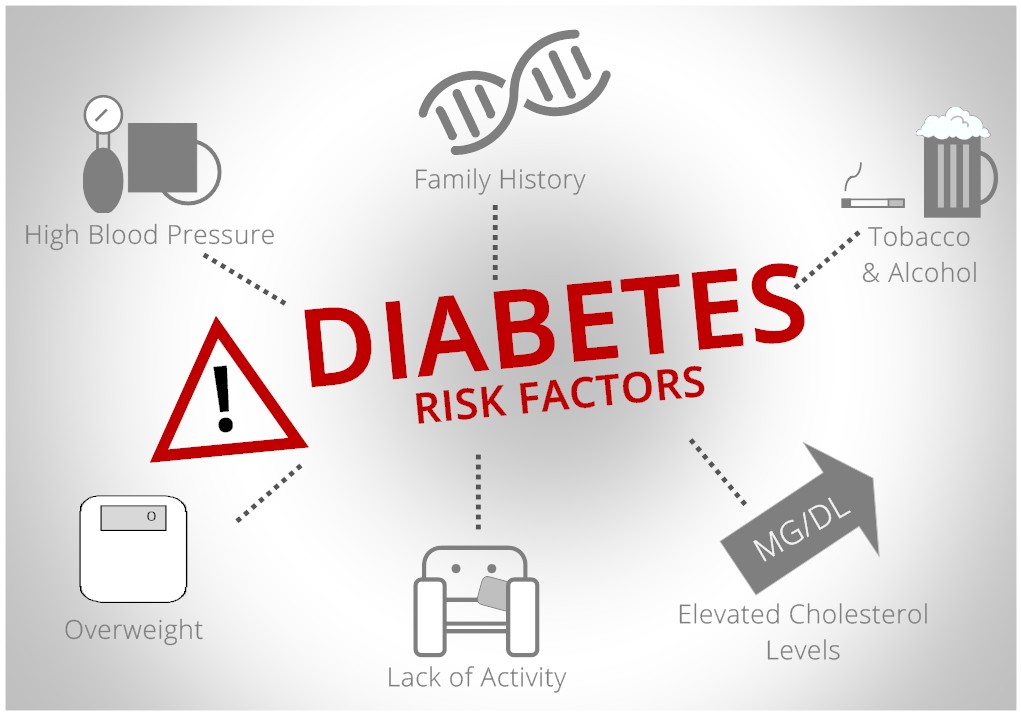
Risk factors for Type 2 Diabetes include an Unhealthy Lifestyle (being physically inactive or less active, erratic food and sleep habits, stress), being overweight or obese and importantly family history of diabetes in close relatives.

Diabetes-Risk

We have ample medicine combinations for type 2 diabetes like tablets which keep the blood sugar under control. But if sufficient sugar control is not achieved in spite of oral medications and a healthy lifestyle, then insulin might be required for further management.

Another type of Diabetes I would like to talk about is Gestational diabetes which basically refers to diabetes diagnosed during pregnancy.

Pregnancy hormones can interfere with the way insulin works in the mother’s body which can lead to elevated blood glucose levels during pregnancy. Women are typically screened for gestational diabetes at 24-28 weeks of pregnancy, however, women who have risk factors may be screened earlier.

Risk factors for developing gestational diabetes include having a family history of diabetes, being overweight, or over 28 years old. Blood glucose control during pregnancy is critical as elevated maternal glucose levels can lead to pregnancy complications and pose risks to the health of the baby. Gestational diabetes is likely to recur during subsequent pregnancies.

Gestational diabetes requires specialized treatment for the rest of the pregnancy. After the pregnancy is over, most women will have normal blood sugars again; however, up to 20-50 % can develop type 2 diabetes within 10 years. Regular screening is recommended.

A study conducted on people at risk of type 2 diabetes, it was seen that those who lost just 7% of their weight and exercised about 30 minutes a day cut their risk of diabetes by nearly 60%. In a nutshell, irrespective of the type of diabetes the best prevention or diabetes management strategy is to eat healthy, stay active and keep a check on your weight.

Reference: University of California, San Francisco – Diabetes online Education website.

Search

Recent Posts

  • PCOS and Anxiety: Discover Relief with the 54321 Technique
  • Navigating the Maze of Nutrition: Finding Clarity Amidst Confusion
  • Get children active and keep them healthy
  • What Gestational Diabetes Can Do To You & Your Unborn Child
  • Breathing – A Forgotten Art

Stay Updated

Archives

  • December 2025 (4)
  • November 2025 (15)
  • October 2025 (20)
  • September 2025 (6)
  • August 2025 (6)
  • July 2025 (12)
  • June 2025 (18)
  • May 2025 (16)
  • April 2025 (23)
  • March 2025 (23)
  • February 2025 (22)
  • January 2025 (26)
  • December 2024 (26)
  • November 2024 (25)
  • October 2024 (22)
  • September 2024 (24)
  • August 2024 (31)
  • July 2024 (21)
  • June 2024 (26)
  • May 2024 (31)
  • April 2024 (27)
  • March 2024 (29)
  • February 2024 (26)
  • January 2024 (25)
  • December 2023 (15)
  • November 2023 (11)
  • October 2023 (22)
  • September 2023 (22)
  • August 2023 (20)
  • July 2023 (22)
  • June 2023 (24)
  • May 2023 (24)
  • April 2023 (24)
  • March 2023 (23)
  • February 2023 (20)
  • January 2023 (16)
  • December 2022 (12)
  • November 2022 (15)
  • October 2022 (15)
  • September 2022 (12)
  • August 2022 (10)
  • July 2022 (17)
  • June 2022 (11)
  • May 2022 (10)
  • April 2022 (6)
  • March 2022 (6)
  • February 2022 (13)
  • January 2022 (12)
  • December 2021 (7)
  • November 2021 (3)
  • October 2021 (6)
  • September 2021 (3)
  • August 2021 (8)
  • July 2021 (7)
  • June 2021 (15)
  • May 2021 (16)
  • April 2021 (10)
  • March 2021 (7)
  • February 2021 (4)
  • January 2021 (4)
  • December 2020 (3)
  • November 2020 (4)
  • October 2020 (10)
  • September 2020 (3)
  • August 2020 (3)
  • July 2020 (2)
  • June 2020 (4)
  • May 2020 (10)
  • April 2020 (12)
  • March 2020 (10)
  • February 2020 (4)
  • January 2020 (4)
  • December 2019 (3)
  • November 2019 (7)
  • October 2019 (5)
  • September 2019 (4)
  • August 2019 (9)
  • July 2019 (9)
  • June 2019 (11)
  • May 2019 (4)
  • April 2019 (9)
  • March 2019 (8)
  • February 2019 (9)
  • January 2019 (8)
  • December 2018 (9)
  • November 2018 (3)
  • October 2018 (3)
  • September 2018 (5)
  • August 2018 (10)
  • July 2018 (6)
  • June 2018 (13)
  • May 2018 (8)
  • April 2018 (18)
  • March 2018 (9)
  • February 2018 (8)
  • January 2018 (15)
  • December 2017 (12)
  • November 2017 (19)
  • October 2017 (13)
  • September 2017 (15)
  • August 2017 (4)
  • July 2017 (8)
  • June 2017 (7)
  • May 2017 (6)
  • April 2017 (8)
  • March 2017 (6)
  • February 2017 (7)
  • January 2017 (9)
  • December 2016 (10)
  • November 2016 (7)
  • October 2016 (7)
  • September 2016 (7)
  • August 2016 (11)
  • July 2016 (9)
  • June 2016 (9)
  • May 2016 (12)
  • April 2016 (17)
  • March 2016 (17)
  • February 2016 (8)
  • January 2016 (6)
  • December 2015 (2)
  • November 2015 (9)
  • October 2015 (7)
  • September 2015 (9)
  • August 2015 (11)
  • July 2015 (9)
  • June 2015 (12)
  • May 2015 (9)
  • April 2015 (13)
  • March 2015 (8)
  • February 2015 (5)
  • January 2015 (12)
  • December 2014 (14)
  • November 2014 (11)
  • October 2014 (6)
  • September 2014 (13)
  • August 2014 (12)
  • July 2014 (6)
  • June 2014 (2)
  • May 2014 (7)
  • April 2014 (5)

From “Laddu Nawin” to Fit and Fierce: How a 25-Year-Old Insurance Advisor Shed 20 Kilos and Gained His Life Back

When 25-year-old Nawin Yadav from Hyderabad walked into his office every morning, he carried more than just his files and policy papers. He had the weight of fatigue, sluggish energy, and an ever-growing belly that was becoming the butt of jokes. “People … [Read More...]

“I’ve Challenged Myself to Live 100 Years” – The Story of Chandubhai Savani’s Second Chance at Life

At 67, most people start slowing down. Not Chandubhai Savani. A resident of Surat, Chandubhai, thought life was on track. “My life was going well till I had my bypass surgery,” he says. That surgery, back in 2021, was a wake-up call.  Medication was routine, but exercise wasn’t. His diet? What he calls ‘normal.’ “I […]

From Shimla’s Slopes to Chandigarh’s Sidewalks: Surinder Kaur Bhalla’s Journey from Chaos to Control

Some journeys start with a plan. Others begin with a stumble literally. Surinder Bhalla, a government professional, born and raised in the scenic hill town of Shimla, had always lived a life of movement. “In Shimla, you walked everywhere,” she reflects. “Walking was never an exercise. It was just life.” But after shifting to Chandigarh, […]

Ananda Mukherjee Health Story

From Terminal Illness To Complete Wellness! Ananda Mukherjee Health Story

As we observe World Cancer Day under the powerful theme ‘United by Unique’ (2025-2027)**, we are reminded that every individual’s journey with cancer is distinct, yet united by shared resilience, hope, and the collective fight against this disease. This theme places people at the centre of care and their stories at the heart of the […]

  • HOME
  • HEALTHY LIVING
  • FITNESS
  • HEALTHY RECIPES
  • USER STORIES
  • KARMA
  • BUY GOQii

Copyright ©2016 GOQii


