
GOQii

Blog

  • HOME
  • HEALTHY LIVING
  • FITNESS
  • HEALTHY RECIPES
  • USER STORIES
  • KARMA
  • BUY GOQii

July 7, 2025 By GOQii Leave a Comment

Reframing Obesity as a Disease: From Blame to Biology

“Just eat less and move more.” It’s a phrase people living with obesity have heard far too often. It sounds simple. And that’s the problem.

This outdated, oversimplified narrative continues to frame obesity as a failure of willpower, a personal shortcoming, a lifestyle choice. But science tells us a very different story, one that calls for a global shift in mindset, medicine, and policy.

Obesity Isn’t a Choice. It’s a Chronic Disease.

Obesity is not about laziness or lack of discipline. It’s a complex, chronic condition shaped by biology, environment, genetics, metabolism, hormones, and more. And like any other disease, it requires medical attention, structured care, and above all, empathy.

Way back in 2011, The Lancet laid out five clear messages to tackle the obesity crisis:

  1. Government leadership is non-negotiable.
  2. Business as usual will lead to rising costs and falling health.
  3. Quick-fix weight loss assumptions are deeply flawed.
  4. Accurate monitoring and evaluation are critical.
  5. A multi-sectoral, systemic response is the only way forward.

A decade later, not much has changed, except the numbers. They’ve only grown worse.

A Global Crisis with Unequal Burden

Today, over 1 billion people are living with obesity, and the numbers are rising fast, not just in high-income countries, but across India, Brazil, China, and Sub-Saharan Africa. Often, those hardest hit are also the ones with the least access to healthcare, support, or treatment.

The 2013 Global Burden of Disease Study showed a 28% rise in obesity among adults and a staggering 47% rise among children since 1980. And this trend hasn’t slowed.

Obesity isn’t just a weight issue. It’s a health time bomb, closely linked to:

  • Type 2 diabetes
  • Hypertension
  • Cardiovascular disease
  • Certain cancers
  • Depression and anxiety

Despite this, many health systems still don’t officially classify obesity as a disease, an omission with real consequences for diagnosis, insurance coverage, and stigma.

Why Defining Obesity as a Disease Matters

When we call obesity a disease, we shift the narrative:

  • From shame to science
  • From blame to biology
  • From “try harder” to evidence-based treatment

This means acknowledging that:

  • Weight gain isn’t always voluntary.
  • Weight loss is often biologically resisted.
  • Genetics and environment play a major role.
  • Medical interventions—like GLP-1 receptor agonists, nutrition therapy, behavioural counselling, and even bariatric surgery—must be on the table.

And yet, even in clinical settings, people with obesity face discrimination. Studies show they often receive less time, less empathy, and less evidence-based care from healthcare providers.

From Individual Burden to Systemic Action

If obesity is a disease, the solution cannot rest solely on the individual. We need:

  • Urban design that encourages active living
  • Policy reform to restrict junk food marketing to children
  • Inclusive school programs that promote health without body shaming
    Affordable access to obesity care, mental health support, and treatment, regardless of postcode or income

We also need to stop equating weight with worth. Health is more than a number on a scale.

A Matter of Equity

Obesity disproportionately affects:

  • Low- and middle-income populations
  • Women and girls
  • Communities experiencing food insecurity

Reframing obesity as a disease is not just a medical imperative; it’s a moral and equity imperative. It pushes systems to deliver care, not judgment. It ensures that treatment becomes a right, not a luxury.

We don’t tell people with cancer to “try harder.”
We don’t shame people with asthma for needing medication.
So why do we still treat obesity with blame instead of care?

The Time for Change Is Now

We need to reframe obesity not just in our medical textbooks, but in our minds, our policies, and our everyday conversations.

-It’s time to stop shaming and start treating.

– To move from bias to biology.

– To recognise that no one should have to fight a disease and a stigma.

Only when we treat obesity like a chronic disease, it is can we begin to build a world that heals.

#BeTheForce

Disclaimer: The information provided in this blog is for general awareness and educational purposes only. It is not intended to replace professional medical advice, diagnosis, or treatment. Always consult a qualified healthcare provider for personalised medical guidance or concerns related to your health. Images shown are for representation purposes only and may not depict the exact recommendations or outcomes.
October 29, 2021 By Dr. Viral Thakkar Leave a Comment

Stroke: Warning Signs, Causes & Prevention

stroke“Doctor please help! Half of my body does not move anymore” came a slurry cry from a helpless Vinod Agrawal, a businessman. His wife stood next to him in the emergency department weeping profusely and their 16 year old son watched his parents helplessly.
When examined thoroughly, Agrawal was diagnosed with STROKE. Thanks to the lifestyles that most people lead these days, this is a common site in hospitals.

A stroke strikes when the blood supply to the brain is affected either due to blockage leading to ischemia or rupturing of vessels. Due to this the brain does not receive enough oxygen and nutrition causing cell death, which is the ideal condition for stroke.

How Does a Stroke Happen?

  1. Ischemia: Occurs due to narrowing or blockage of blood vessels due to blood clots formed either in arteries connecting brains or other vessels or due to dislodgment of fatty deposits called plaques (atherosclerosis).
  2. Haemorrhagic: Bursting or leaking of blood vessels which compresses the brain cells. This leakage of blood puts pressure on brain cells which is accumulated in brain due to trauma, hypertension or some blood thinning medication.
  3. TIA – Transient Ischemic Attack (Mini Stoke): Brief episodes of stroke which is self-limiting. Blood flow is briefly interrupted and these are the warning signs of future stroke. It is like an alarm from the body.

Common Presentation of Stroke

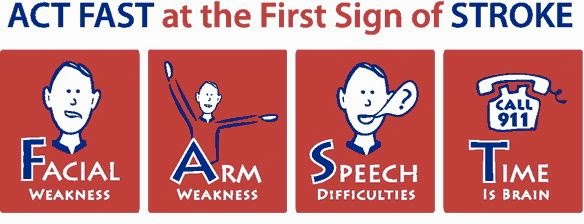
  • Weakness or tingling in half or full body depending on the involved artery
  • Deviation of face with difficulty in speech and closure of one eye
  • Mental Confusion, severe headache, loss of power in the limbs

When any of the above symptoms are seen, the patient must be rushed to the hospital.

Stroke

After thoroughly understanding the history and general examination, few specific tests and examination like CT scan are done to find out the cause of the stroke. The treatment is very complicated and management is done in ICU and Neuro-physician may be required.

As there are two major causes of stroke – ischemia and haemorrhage – both have different management.

  • If ischemic– the focus is to restore adequate blood flow-clot is broken or dissolved.
  • If haemorrhagic – stop bleeding or leakage of blood, to reduce the pressure of brain cells. Surgical intervention may be required if there is any arterial malformation or rupture of vessels.

Rehabilitation activities like physiotherapy, speech therapy, etc. help to restore physical activities gradually.

Prevent It!

All the above symptoms and complications can be prevented if a healthy lifestyle is followed.

  • Eat a healthy – diet which includes fresh fruits, vegetables, avoiding processed meat and avoid junk food.
  • Yoga, especially Pranayama, ensures that every cell of the body receives adequate oxygen for appropriate functioning. Pranayama rejuvenates the body cells which ensures the ideal functioning of the body.
  • Stress kills! Accept what life offers happily and keep working towards your goal without killing yourself.
  • Remember Smoking Kills – all advertisements shown are true. STOP smoking.
  • Avoid alcohol, if you do consume it, make it minimal.
  • If you are hypertensive, keep an absolute check on blood pressure and follow all dietary and physical discipline so that blood pressure is controlled.
  • If one is diabetic, regular check of sugar is important.

Listen to your body. It always warns you before the disease sets in.

Stroke is an acute emergency but the root cause lies in chronic habits and patterns of life. Every moment, even at this moment of reading the blog, we can choose health or disease. Either you choose to pick up alarming signals of body and employ the necessary preventive measures to live a healthy life or be undisciplined and get hospitalized. THE CHOICE IS YOURS!

We hope this article helps you. For more on stroke and prevention, check out Healthy Reads or ask a GOQii Coach for guidance by subscribing for Personalised Health Coaching here.

#BeTheForce 

Disclaimer: The information provided in this blog is for general awareness and educational purposes only. It is not intended to replace professional medical advice, diagnosis, or treatment. Always consult a qualified healthcare provider for personalised medical guidance or concerns related to your health.

July 3, 2018 By Urvashi Malhotra - GOQii Coach 1 Comment

Role of social media / internet on our kid’s lifestyle and habits

social-media

Recently a girl came to me for consultation, asking specifically for a weight reduction diet. You will be surprised to know that the girl is just about 15 years old and yet to appear for her 10th-grade examination and can easily pass off as being on the heavier side (obese). While I was talking to her, she casually happened to mention that she has a habit of “munching snacks late at night while surfing the internet”. My observation says that this has become a common trend in today’s times.

Social media is now used for a host of different reasons and gone beyond just social interaction. It’s extended to information and even to seek entertainment. A life without internet seems next to impossible and unimaginable, but an excess of anything is bad and that is quite visible in the society in the recent times.

Social networking sites like Facebook, Instagram, Twitter are increasingly becoming popular among adolescents. Numerous studies have shown that Internet addiction has an adverse effect on several lifestyle-related factors in adolescents. Some important ill effects of the same are:-

  • Irregular dietary habits
  • Physical inactivity
  • Increased use of alcohol and tobacco
  • Adverse impact on the growth and development
  • Indirect negative effects through sleep deprivation
  • Obesity

Studies have shown that people are more likely to have meals while sitting at the computer than at the dining table. Majority of people are multitasking by working on different things at the same time such as eating food while surfing on internet, chatting with friends (Facebook) and writing emails etc. This multitasking is making us less efficient and productive.

Children are socializing through media channels and direct communication has now become limited. I know of a boy who is a champion in some of the online games while he simply hates to play anything in its physical form. He can almost be termed as a “couch potato” at the age of 8, which is very harmful for his overall development. Today, there is an increase in Child, Teenage and adult obesity than ever before. Excess weight issues or Obesity increases the risk of many other chronic diseases such as diabetes and cardiovascular diseases.

Research indicates that the light from the screens of TV/computer affects melatonin production, a key hormone in the body’s clock, or circadian system. This causes sleep deprivation as it interrupts deep, restorative sleep eventually causing an increase in stress and depressive symptoms. Thus, teaching adolescents to develop healthy eating habits is of critical importance.

Parents should act as a role model for their children by adopting a healthy lifestyle themselves. Providing nutritious meals and snacks, daily physical activity, and nutrition education can prevent many a life style disorders. Also meal time should be the family time as it provides children great opportunity to learn about healthy foods, balanced meals, and table manners and offers good time to spend with family. Parents should be vigilant on the use of internet by their children. To avoid the conflicts clear guidelines should be set regarding the time of the day your child is allowed to be online and for how long.

November 23, 2017 By Dr. Viral Thakkar 2 Comments

Identify Slow Poisons in your Life


chronicXdisease

According to the EURO Symposium, a chronic disease has been defined as “An impairment and/or function that necessitates a modification of patient’s normal life, and has persisted over an extended period of time”. According to a report by WHO, the total number of people dying from chronic diseases is double that of all infectious diseases (including HIV/AIDS, tuberculosis and malaria), maternal and perinatal conditions, and nutritional deficiencies combined. The exact cause of any chronic disorder is not yet known, though it is concluded that it is multifactorial and many theories have proved there are associated risk factors.

slow poison-1

Prominent of chronic diseases are

  • Coronary artery disease including blood pressure
  • Ischemic stroke
  • Mental disease
  • Diabetes
  • Thyroid
  • Some Cancers

Main causes for these are

  • Over-nutrition
  • Lack of physical activity
  • Addictions like smoking, alcohol, tobacco etc.
  • Poor sleeping habits
  • Stressful lives

These lead to raised blood pressure, glucose levels, abnormal blood lipids, overweight and obesity. If you indulge in the above, you are at risk! There are numerous other factors which cause chronic disorders and are beyond your control, for instance:

Conditions before birth and in early childhood influence health later. E,g, low birth weight is known to be associated with high blood pressure, heart disease, stroke and diabetes.

  1. The impact of risk factors increases with age.
  2. Social, economic and cultural change – globalization, urbanization, pollution, population ageing, and the general policy environment have impacted health.
  3. Psychosocial and genetic factors also play a role.


healt check up-diagnosis

Listen to your Body– Meet a medical practitioner if you have the below symptoms –

  • Unusual pain/ discomfort in your chest, neck, jaw or arms, pressure or tightness in the chest usually points towards a heart attack
  • Dizziness, lightheadedness, or fainting with exercise or exertion
  • Shortness of breath with mild exertion, at rest, or when lying down or going to bed
  • Ankle swelling, especially at night
  • A rapid or pronounced heartbeat
  • Lower leg pain when you walk, which goes away with rest
  • Frequent urination, excessive thirst, increased hunger, weight loss, tiredness, lack of interest and concentration, a tingling sensation or numbness in the hands or feet usually point towards diabetes.

What can be done?

You can’t blame the government for your health! You play a VERY IMPORTANT role in being healthy

  1. Eating healthy won’t kill you! Include fruits & green vegetables in your meals. Indulge, but complement it with exercising & prevent risk factors like cholesterol, diabetes and all metabolic syndromes
  2. Get Moving! People don’t swear by Yoga, gym workouts and walk for nothing! Exercise delivers oxygen and nutrients to your tissues and helps your cardiovascular system to work efficiently.
  3. Tobacco, alcohol and drugs run havoc with your system. The nicotine makes your heart beat faster; the particulates will make it harder for your lungs to exchange gasses; the carbon monoxide will make it harder for your blood to carry oxygen efficiently, and the carcinogens make it harder for your body to keep itself cancer-free.  Illegal drugs can damage the brain, heart, and other important organs.
  4. It is a good practice to conduct basic medical tests. The symptoms discussed are just a tip of the iceberg. Many times when symptoms set in, all the physiological compensatory mechanisms also set in, so to pick up a disease early in an annual checkup plays a major role. To know more, read the blog “A stitch in time saves nine”.

A detailed account of all chronic disorders is difficult to mention in this blog, but be rest assured, you are shaping your health every moment. Your attitude, mental health, physical habits and way of living life at this moment decide your next. So you take a call whether you want to stay healthy and cherish this creation or be a victim of chronic disorder tsunami which is engulfing us today. CHOICE IS YOURS…….

Search

Recent Posts

  • India Leads in Longevity: GOQii Sanjeevini Named Top 40 in $101M XPRIZE
  • The Importance Of Knowing If You’re Thirsty Or Hungry
  • Best Foods To Alleviate Irritable Bowel Syndrome
  • ALL ABOUT VERTIGO!
  • PCOS and Anxiety: Discover Relief with the 54321 Technique

Stay Updated

Archives

  • December 2025 (8)
  • November 2025 (15)
  • October 2025 (20)
  • September 2025 (6)
  • August 2025 (6)
  • July 2025 (12)
  • June 2025 (18)
  • May 2025 (16)
  • April 2025 (23)
  • March 2025 (23)
  • February 2025 (22)
  • January 2025 (26)
  • December 2024 (26)
  • November 2024 (25)
  • October 2024 (22)
  • September 2024 (24)
  • August 2024 (31)
  • July 2024 (21)
  • June 2024 (26)
  • May 2024 (31)
  • April 2024 (27)
  • March 2024 (29)
  • February 2024 (26)
  • January 2024 (25)
  • December 2023 (15)
  • November 2023 (11)
  • October 2023 (20)
  • September 2023 (22)
  • August 2023 (20)
  • July 2023 (22)
  • June 2023 (24)
  • May 2023 (24)
  • April 2023 (24)
  • March 2023 (23)
  • February 2023 (20)
  • January 2023 (16)
  • December 2022 (12)
  • November 2022 (15)
  • October 2022 (15)
  • September 2022 (12)
  • August 2022 (10)
  • July 2022 (17)
  • June 2022 (11)
  • May 2022 (10)
  • April 2022 (6)
  • March 2022 (6)
  • February 2022 (13)
  • January 2022 (12)
  • December 2021 (7)
  • November 2021 (3)
  • October 2021 (6)
  • September 2021 (3)
  • August 2021 (8)
  • July 2021 (7)
  • June 2021 (15)
  • May 2021 (16)
  • April 2021 (10)
  • March 2021 (7)
  • February 2021 (4)
  • January 2021 (4)
  • December 2020 (3)
  • November 2020 (4)
  • October 2020 (10)
  • September 2020 (3)
  • August 2020 (3)
  • July 2020 (2)
  • June 2020 (4)
  • May 2020 (10)
  • April 2020 (12)
  • March 2020 (10)
  • February 2020 (4)
  • January 2020 (4)
  • December 2019 (3)
  • November 2019 (7)
  • October 2019 (5)
  • September 2019 (4)
  • August 2019 (9)
  • July 2019 (9)
  • June 2019 (11)
  • May 2019 (4)
  • April 2019 (9)
  • March 2019 (8)
  • February 2019 (9)
  • January 2019 (8)
  • December 2018 (9)
  • November 2018 (3)
  • October 2018 (3)
  • September 2018 (5)
  • August 2018 (10)
  • July 2018 (6)
  • June 2018 (13)
  • May 2018 (8)
  • April 2018 (18)
  • March 2018 (9)
  • February 2018 (8)
  • January 2018 (15)
  • December 2017 (12)
  • November 2017 (19)
  • October 2017 (13)
  • September 2017 (15)
  • August 2017 (4)
  • July 2017 (8)
  • June 2017 (7)
  • May 2017 (6)
  • April 2017 (8)
  • March 2017 (6)
  • February 2017 (7)
  • January 2017 (9)
  • December 2016 (10)
  • November 2016 (7)
  • October 2016 (7)
  • September 2016 (7)
  • August 2016 (11)
  • July 2016 (9)
  • June 2016 (9)
  • May 2016 (12)
  • April 2016 (17)
  • March 2016 (17)
  • February 2016 (8)
  • January 2016 (6)
  • December 2015 (2)
  • November 2015 (9)
  • October 2015 (7)
  • September 2015 (9)
  • August 2015 (11)
  • July 2015 (9)
  • June 2015 (12)
  • May 2015 (9)
  • April 2015 (13)
  • March 2015 (8)
  • February 2015 (5)
  • January 2015 (12)
  • December 2014 (14)
  • November 2014 (11)
  • October 2014 (6)
  • September 2014 (13)
  • August 2014 (12)
  • July 2014 (6)
  • June 2014 (2)
  • May 2014 (7)
  • April 2014 (5)

From “Laddu Nawin” to Fit and Fierce: How a 25-Year-Old Insurance Advisor Shed 20 Kilos and Gained His Life Back

When 25-year-old Nawin Yadav from Hyderabad walked into his office every morning, he carried more than just his files and policy papers. He had the weight of fatigue, sluggish energy, and an ever-growing belly that was becoming the butt of jokes. “People … [Read More...]

“I’ve Challenged Myself to Live 100 Years” – The Story of Chandubhai Savani’s Second Chance at Life

At 67, most people start slowing down. Not Chandubhai Savani. A resident of Surat, Chandubhai, thought life was on track. “My life was going well till I had my bypass surgery,” he says. That surgery, back in 2021, was a wake-up call.  Medication was routine, but exercise wasn’t. His diet? What he calls ‘normal.’ “I […]

From Shimla’s Slopes to Chandigarh’s Sidewalks: Surinder Kaur Bhalla’s Journey from Chaos to Control

Some journeys start with a plan. Others begin with a stumble literally. Surinder Bhalla, a government professional, born and raised in the scenic hill town of Shimla, had always lived a life of movement. “In Shimla, you walked everywhere,” she reflects. “Walking was never an exercise. It was just life.” But after shifting to Chandigarh, […]

Ananda Mukherjee Health Story

From Terminal Illness To Complete Wellness! Ananda Mukherjee Health Story

As we observe World Cancer Day under the powerful theme ‘United by Unique’ (2025-2027)**, we are reminded that every individual’s journey with cancer is distinct, yet united by shared resilience, hope, and the collective fight against this disease. This theme places people at the centre of care and their stories at the heart of the […]

  • HOME
  • HEALTHY LIVING
  • FITNESS
  • HEALTHY RECIPES
  • USER STORIES
  • KARMA
  • BUY GOQii

Copyright ©2016 GOQii



