GOQii

Blog

  • HOME
  • HEALTHY LIVING
  • FITNESS
  • HEALTHY RECIPES
  • USER STORIES
  • KARMA
  • BUY GOQii

Search Results for: sleep

January 7, 2026 By GOQii Leave a Comment

Muscle: Your Body’s Most Powerful Tool for Longevity and Healthy Ageing

Usually, when we talk about muscles, it is with a mindset akin to how we think about biceps or abdominals. However, let me share with you a reality that most people do not realise: muscles are among the most potent factors in ensuring healthy ageing and longevity.

Recently discovered research shows that your muscles work in an organ-like system. Think of your muscles not just with a focus on developing them for aesthetic qualities, but also with a thought to developing them because you want to live a longer life.

Why Muscle Matters More Than You Think

  • Metabolic powerhouse: Muscle tissue is a major glucose burner and a site of insulin sensitivity. Increased muscle mass promotes resistance to both diabetes and metabolic syndrome.
  • Hormonal regulator: It affects hormones such as IGF-1 and Testosterone, which are relevant in repair and recovery.
  • Immune System Support: Muscles secrete myokines, which are signalling proteins that have anti-inflammatory and immune system-supporting effects.
  • Balance and movement: Strong muscles help to prevent falling, which can aid in maintaining a degree of independence in old age.

“Muscle is not just strength; it’s healthspan insurance.”

Sarcopenia Begins Around Age 30: Here’s Why

Sarcopenia is a progressive loss of strength and muscle mass with increasing age. The sneaky thing is it starts way before most people think it does often as early as age 30.
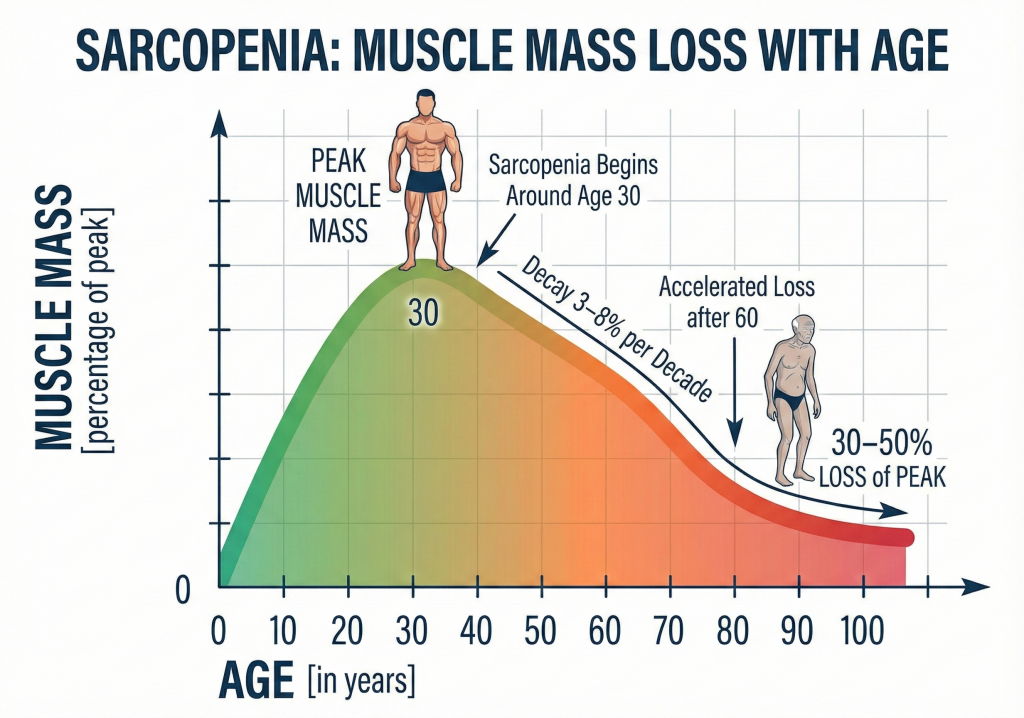
After your early 30s, your muscle mass will decay at a rate of 3–8% each decade, accelerating after you reach 60 years of age. So, when you reach your 70s and 80s, you may have lost a staggering 30–50% of your muscular peak.

Why does this happen?

  1. Sedentary lifestyles: A reduction in activity informs your muscles that they are not required.
  2. Hormonal Changes: Testosterone, estrogen, and growth hormones decrease with each passing year, affecting the body’s capacity to produce muscular tissue.
  3. Protein intake declines: Not many people consume adequate good-quality protein, especially senior citizens.
  4. Inflammation and insulin resistance: Chronic low-grade inflammation, a consequence of ageing, can affect the repair and regeneration of muscle.

The effects go beyond reduced strength. They include lower metabolism, increased fat storage, high chances of falling, and reduced resistance to diseases.

Muscle Mass Is a Better Predictor of Life Span Than BMI

You have likely seen BMI charts which classify you into underweight, normal, overweight, or obese categories depending on your height and weight. However, BMI remains notoriously blind to one important factor: it fails to separate muscular mass from fatty mass.

Two people with equal BMI can have vastly different health statuses based on this factor. Studies have found that higher muscle mass and strength are better predictors of life span than BMI. Those with higher levels of lean mass have better survival rates and fewer disabilities later in life.

It’s not how much you weigh, it’s what your weight is made of.

The Micro-Workouts That Restore Strength After 50

The good news is muscles can be rebuilt and made stronger at all ages. Even if you are over 50, you can reverse muscle loss. Long workout sessions aren’t required; the intensity of your effort matters more.

Here are micro-workouts that work:

  1. Daily Strength Circuit (10 minutes)

Perform this activity 3–5 times a week.
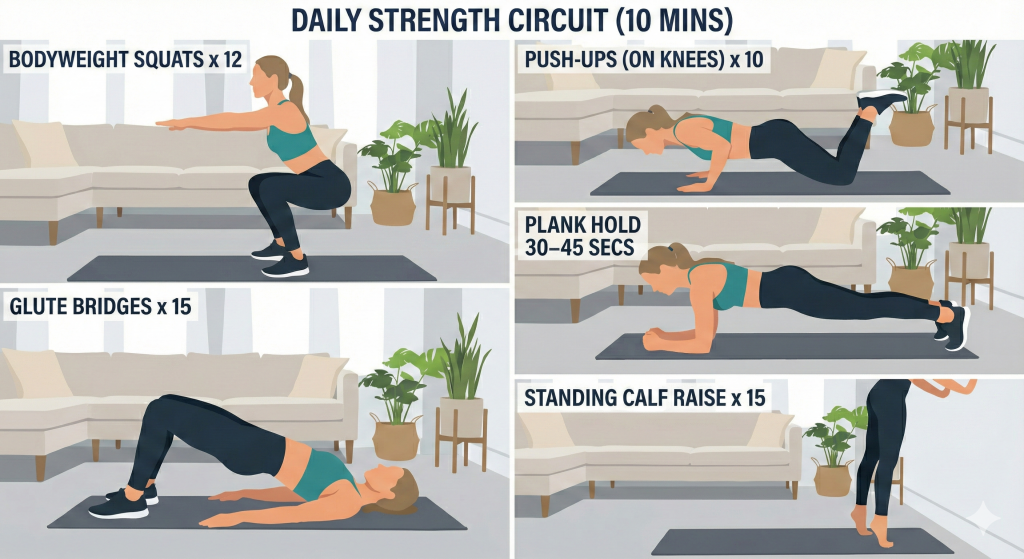
  • Bodyweight squats x 12
  • Push-ups (on knees if necessary) x 10
  • Glute bridges x 15
  • Plank hold 30–45 seconds
  • Standing calf raise x 15
  • Rest for 60 seconds. Repeat if you have more time.
  1. Grip Strength Enhancers

Grip strength is an excellent predictor of longevity.
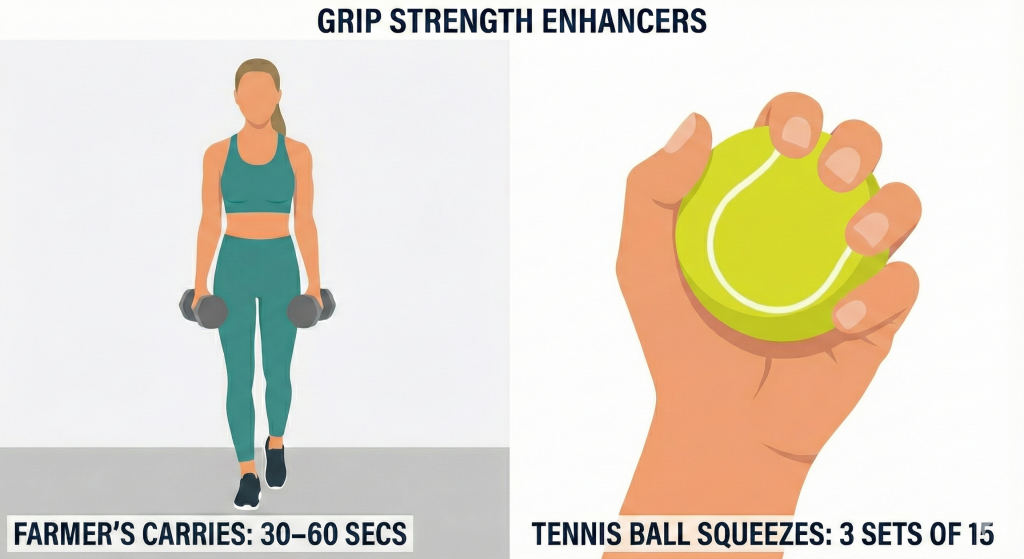
  • Farmer’s carries: Hold two weights in each hand, walk for 30–60 seconds.
  • Tennis ball squeezes: Perform 3 sets of 15 squeezes.
  1. Functional Strength with Resistance Bands

Bands are gentle on joints and very effective.
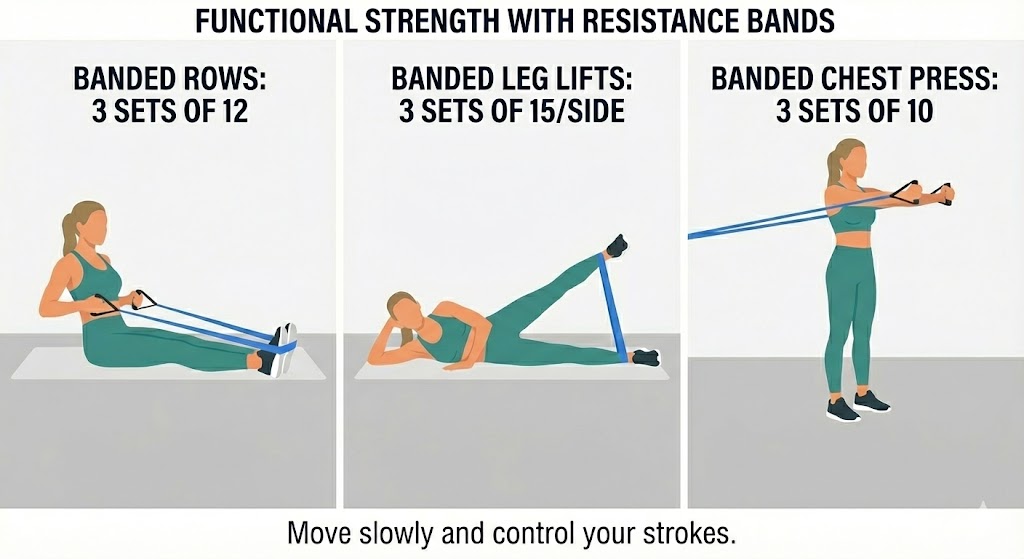
  • Banded rows: 3 sets of 12
  • Banded leg lifts: 3 sets of 15 on each side
  • Banded Chest Press: 3 sets of 10
  • Move slowly and control your strokes.
  1. Interval Walks

Pacing is not all; intensity variation matters too.

  • Warm-up 5 minutes
  • Alternate 1 minute brisk walk with 1 minute comfortable walk for 12–15 minutes
  • Cool down 3–5 minutes

Nutrition & REST: You Can’t Ignore This

Exercise is only half the equation. The other half is nutrition and recovery.

  • Protein: Having protein in each meal is important. The goal is to consume at least 20–30g of good-quality protein per meal to promote muscle protein synthesis. Foods such as eggs, milk, legumes, fish, poultry, tofu, and lentils will work wonders.
  • Sleep: Growth and repair occur in sleep. Disrupted sleep affects hormones that regulate appetite and muscle formation.

The New Longevity Organ Isn’t a Myth

Muscles don’t exist simply for strength and aesthetics. They are a major hub for your metabolism, immune system, and life energy. Preserving and developing your muscles is the most important thing you can do to promote healthy ageing.

Losing muscle doesn’t have to be an inevitability. With proper habits and support structures in place, you can keep your strength and independence well into your senior years.

Age is real, but your ageing physiology? Negotiable. With your muscles at the core of your approach to living a long life, you will write your own playbook when it comes to ageing.

We hope this article helps you. For further information or guidance, reach out to our certified experts by subscribing to GOQii’s Personalised Health Coaching here.

#BeTheForce

Disclaimer: The information provided in this blog is for general awareness and educational purposes only. It is not intended to replace professional medical advice, diagnosis, or treatment. Always consult a qualified healthcare provider for personalised medical guidance or concerns related to your health. Images shown are for representation purposes only and may not depict the exact recommendations or outcomes.
January 6, 2026 By Dr. Naina Sudarshan 1 Comment

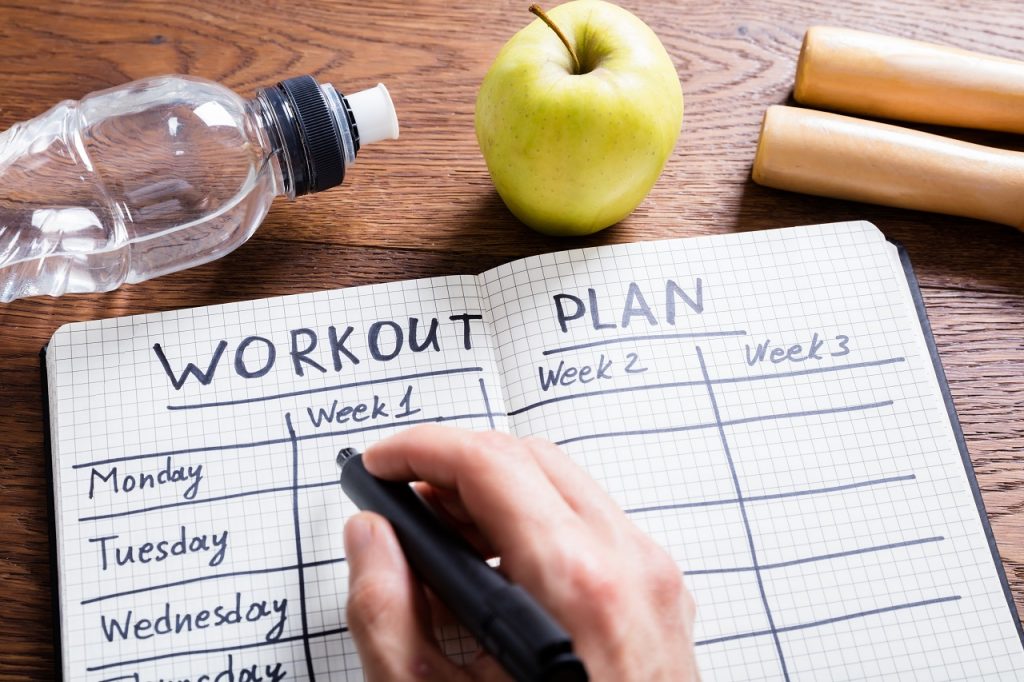
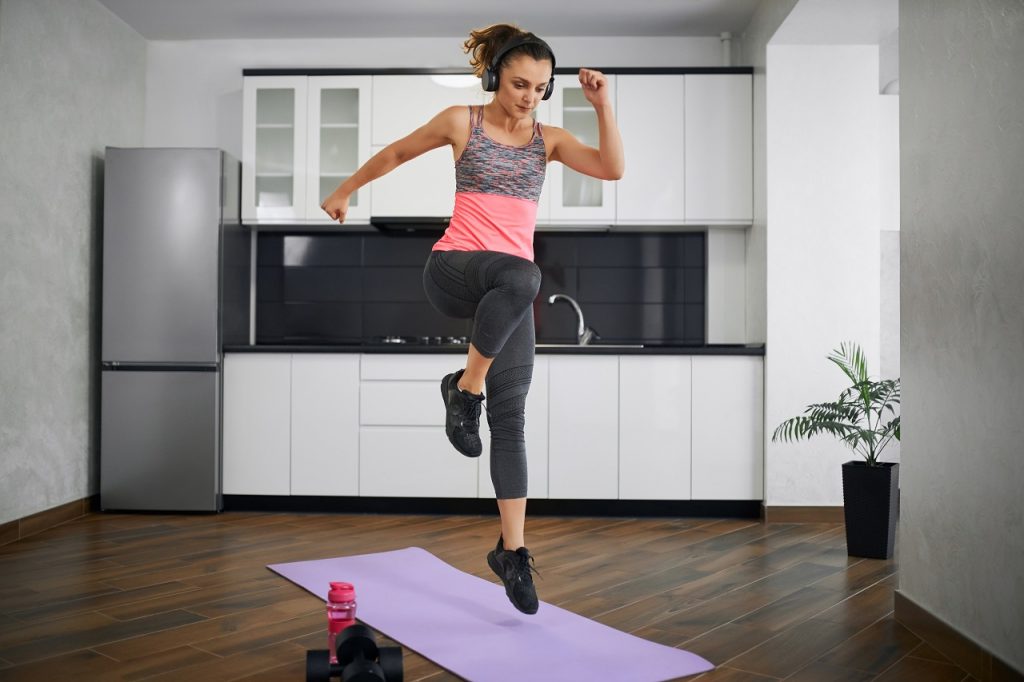
Ideal Weekly Workout Routine For Beginners

weekly workout routine for beginners

As health is among the top priorities in our life, being healthy, immune to all types of infections, diseases and getting fit are the avenues for the same now. If you’re thinking about getting fit, and as we have stepped into the new year, don’t just take up a gym membership but work on consistency and have a plan.

As per the American College of Sports Medicine recommendation, a healthy person needs at least 30 mins of exercise every day to maintain physical health, mental health, immunity, and prevent chronic diseases for all age groups. So, here’s an ideal weekly workout routine for beginners you can follow and stick to!

Get Motivated For Your Weekly Workout Routine 

Every day of the week may not go as we plan. But if we are determined to be fit, we can set aside some time for exercise every day. If you are a beginner, creating a workout schedule for every week would be a better choice than just having a vague idea about staying active every day. Find out a strong reason for yourself as to why you need to workout every day. This should be a reminder to maintain consistency in order to achieve your goal.

Getting Started On Your Weekly Workout Routine 

Beginning a workout can be confusing and intimidating as to where and how to start. Once you find out the ideal time, duration, and location for you to exercise, think about the obstacles that can come your way. Slot a backup time to avoid missing the workout.

For example, if you set a goal to walk for 30 mins, completing about 5-6k steps, and that doesn’t happen due to some unplanned situations, walk more at work, take the steps instead of the elevator, walk while you talk over the phone just to complete the intended number of steps for the day.

Here are some points to remember before you begin:

  • Start with short duration but be consistent: It can be 15-20 mins workout rather than an hour of workout at a stretch in a day. Make sure to plan your workout for at least 5 days in a week with a short term specific, measurable goal.
  • Keep a track of how your energy levels are getting better: Notice what other benefits you are getting out of exercise like improved quality of sleep, reduced stress, and increased appetite instead of just keeping a track of numbers on your weighing scale or inch loss.
  • Plan your workout: Schedule it according to your entire week’s schedule taking into consideration your work, personal life and family time, etc.
  • Choose different types of workouts: Pick activities that you are interested in and you are comfortable doing. Make a list of physical activities that you enjoy. It can be dance, running, walking, sports like football, badminton, tennis, volleyball, basketball, cricket, weight training, or yoga.

Week 1

weekly workout routine for beginnersDay 1: Cardio exercises

  • Start with 5 minutes warm-up exercises at a slow to moderate pace to slowly increase the heart rate 
  • Switch to 20 mins of cardio exercise. It can include aerobic exercises, brisk walk, interval running outside, cycling, stationary bike, swimming, Zumba or any type of dance, or any type of sport. Pay attention to your energy level and breath. You should ideally be able to talk without going out of breath while exercising to know your comfortability. People who want to do running can begin with 1 min of running and 3 mins of walking initially. 
  • Stretch for 5 mins to cool down to gradually bring down the heart rate back to normal 

Day 2: Strength training

  • Warm-up exercises for 5 Minutes 
  • Easy Strength training exercises for 25 mins: As a beginner, it’s better, to begin with, bodyweight training initially. Some of the exercises that come under this can be jumping jacks, push-ups, squats, lunges, burpees, mountain climbers, shoulder bridge, crunches, planks and reverse lunges with just one set each and about 10 repetitions each. There can be 10 seconds of rest in between each set. 
  • Cooldown workout for 5 mins

Day 3: Yoga/Dance

  • Warm-up with 5 Surya namaskars/ jumping jacks
  • Easy Standing and sitting Yoga postures or Dance of your choice for 25 mins. It’s always better to learn yoga postures through a trainer to learn about breathing patterns and the correct postures.
  • Cooldown workout for 5 mins  

Day 4: Strength training

  • Warm-up exercises for 5 Minutes 
  • Easy Strength training exercises for 25 mins. This can be repeated the same as day 2.
  • Cooldown workout for 5 mins 

Day 5: Cardio exercises

  • Warm-up exercises for 5 Minutes 
  • Easy Cardio exercise for 25 mins. This can be repeated the same as day 1. 
  • Cooldown workout for 5 mins 

Day 6: Strength training

  • Warm-up exercises for 5 Minutes 
  • Easy Strength training exercises for 25 mins. This can be repeated the same as day 2
  • Cooldown workout for 5 mins

Day 7: Rest day 

Active rest, which means low-intensity exercise like stretching and casual walking, are suggested on this day to stay active, increase the blood flow to the muscles for good healing, and reduce soreness. 

Week 2

workout The routine of week 1 can be repeated on week 2 as well. People who are training for running can increase the duration of running to 3 mins of running and 1 min of walk.
  • Day 1: Cardio exercise for 25 mins with warm-up and cool down 
  • Day 2: Strength training exercise for 25 mins (15 reps of 1 set each) with warm-up and cool down
  • Day 3: Yoga, Pilates, dance, or stretching for 25 mins with warm-up and cool down
  • Day 4: Strength training exercises for 25 mins (15 reps of 1 set each) with warm-up and cool down
  • Day 5: Cardio exercise for 25 mins with warm-up and cool down
  • Day 6: Strength training exercise for 25 mins (15 reps of 1 set each) with warm-up and cool down
  • Day 7: Rest day

Week 3 and Week 4

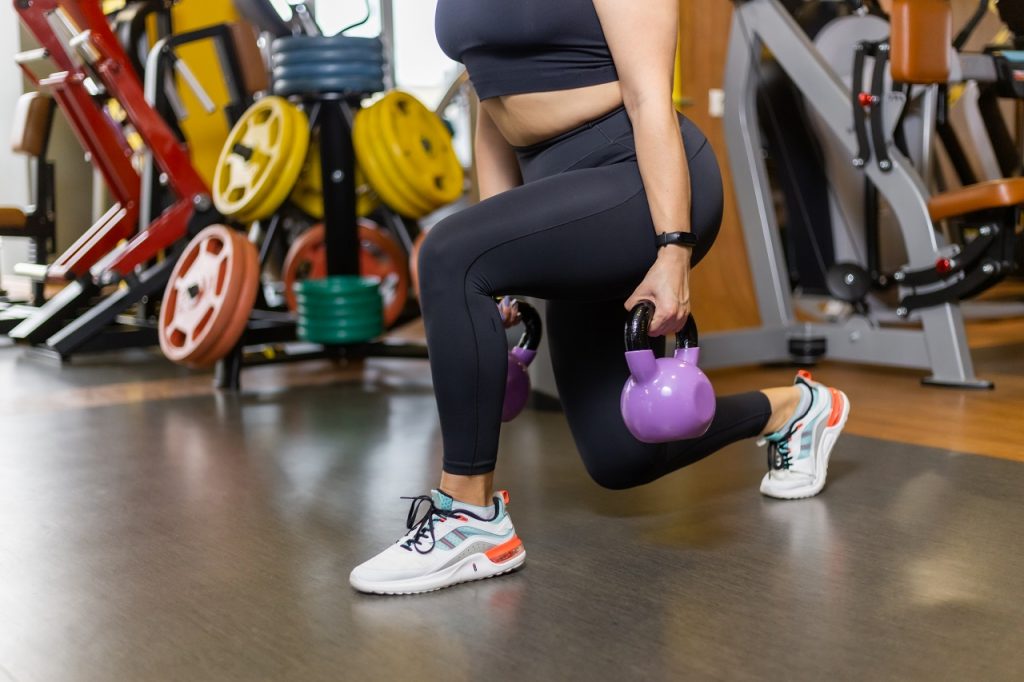
kettlebellRepeat the same routine for week 3 while increasing the duration, speed, and intensity of the workout this week. Small changes can be made with your workout to keep it interesting. For strength training, 2 sets can be done with 12 repetitions. If you feel this routine is easy one can also try other workouts like HIIT, kettlebell, resistance band workout, and weight training depending on their energy level and comfortability. This can include exercises that involve different muscle groups of the body like shoulder, arms, chest, abdomen, back, hips, glutes, thigh, and legs. 
These workouts have to be done again with the combination of cardio workouts on alternate days with one day as a Rest day. People who are running can switch to 4 mins running and 1 min walking, if they are comfortable. The idea here is to gradually increase the intensity of the workout so that the body is getting adjusted to the workouts easily without any injuries and exhaustion. 

  • Day 1: Cardio exercise for 25 mins with warm-up and cool down 
  • Day 2: Strength training exercise for 25 mins (15 reps of 2 set each) with warm-up and cool down
  • Day 3: Yoga, Pilates, dance, or stretching for 25 mins with warm-up and cool down
  • Day 4: Strength training exercise/HIIT for 25 mins (15 reps of 2 sets each) with warm-up and cool down
  • Day 5: Cardio exercise for 25 mins with warm-up and cool down
  • Day 6: Strength training exercise  for 25 mins (15 reps of 2 sets each) with warm-up and cool down
  • Day 7: Rest day

Proper warm-up and cool-down exercises are critical here to prevent injuries and for better healing. Muscle soreness can be common during the first week of exercise. But don’t give up. You will slowly get over it as you continue the workouts. 

One needs to pay attention to their diet with good protein, complex carbs, and fibers. Not to forget good hydration and quality sleep. If you have any health conditions like heart problems, diabetes, back pain, neck pain, knee pain, vertigo, arthritis, post-COVID or balance-related issues, get the clearance from your doctor. Certain types of exercises can be contraindicated in some of the conditions. It’s always ideal to have a personal coach or fitness trainer to learn how to go about a proper exercise routine, balanced diet, and healthy lifestyle tailored for your health condition and body type. 

For any additional help on getting started from the comfort of your home, you can sign up for our live, interactive GOQii Pro Classes where our fitness experts will guide and motivate you. You can book a class now from the GOQii App. 

Hope this weekly workout routine for beginners helps you. Do let us know your thoughts in the comments below!  

#BeTheForce 

Disclaimer: The information provided in this blog is for general awareness and educational purposes only. It is not intended to replace professional medical advice, diagnosis, or treatment. Always consult a qualified healthcare provider for personalised medical guidance or concerns related to your health. Images shown are for representation purposes only and may not depict the exact recommendations or outcomes.

January 2, 2026 By GOQii Leave a Comment

Your Body’s Real Age: Why Biological Age Matters More Than Your Birthday

Most of us are pretty familiar with our age, which we celebrate every year on our special day. Here’s an interesting thought, though: this number does not necessarily indicate how well our bodies are ageing. Two people, both aged 50, can have vastly different health profiles.

What matters most to your health over time is not the number of candles on your cake, but rather how your body is ageing on the inside. That’s where your biological age comes in.

Chronological Age vs. Biological Age

  • Chronological Age simply calculates the years you have lived since birth.
  • Biological Age takes into consideration the state of your body—how your organs, cells, and systems are functioning in relation to your actual age.

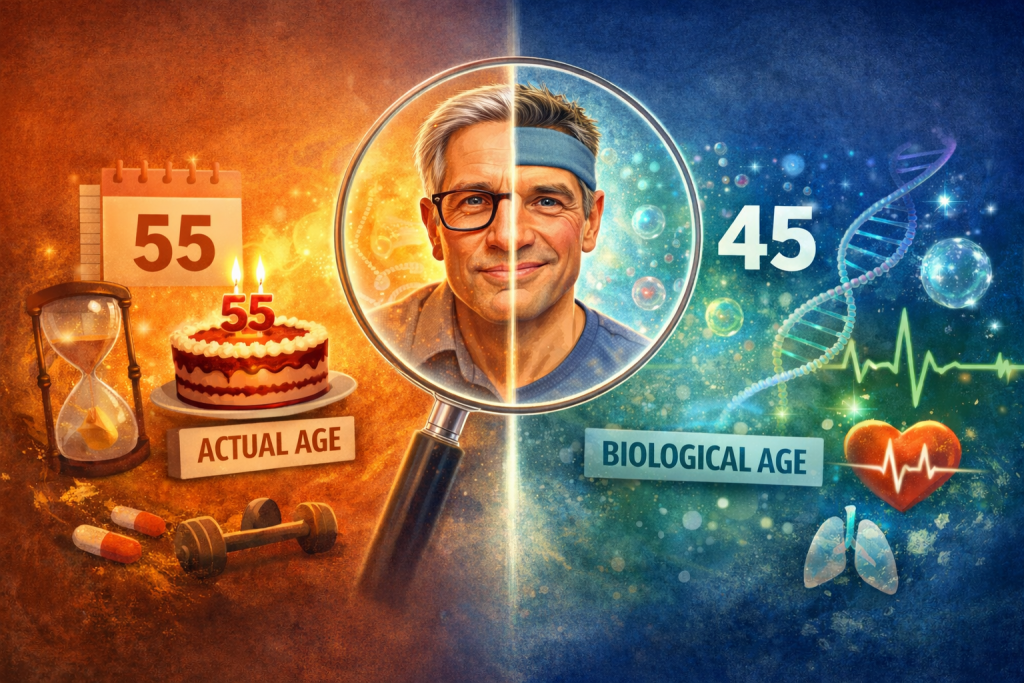
Research shows that those with a lower biological age tend to have a lower risk of chronic disease, higher energy, and a better quality of life. Your biological age can be older or younger than your real age based on factors like lifestyle, environment, and genetics. You could be 55 years old chronologically but biologically closer to 45, or the other way around.

The Ageing Clocks Scientists Use

Tools in this area include ageing clocks, which are models based on patterns in biological data to estimate your real age.

  1. Epigenetic Clocks

These measure changes to your DNA (known as methylation), a way your genes are turned on and off over time. It acts like a biological timestamp. These clocks can more accurately predict your risk for disease and mortality because they reflect how your cells respond to life stressors. A younger epigenetic age means you are ageing more slowly; an older one means your body is under significant wear and tear.

  1. VO₂ Max Age

This is your body’s maximum capacity to use oxygen during intense activity, making it a great measure of heart and lung fitness. A higher VO₂ max is linked to better metabolism, longer life, and even brain health. Regular cardio, especially exercises that challenge your heart, can significantly reduce your VO₂ max age.

  1. Grip Strength & Functional Age

One of the simplest but most reliable signs of how well you are ageing is grip strength. It correlates with muscle mass, nerve function, and overall vitality. If your grip is weaker than normal for your age, it could mean accelerated ageing. If it’s strong or improving, you are biologically younger than the average.

Why Biological Age Is More Important Than Birthday Age

Biological age predicts your health future better than your birthday. Why? Because it reflects real-time changes inside your body, not just the calendar.

It is the story your daily habits tell your cells. Everything from your meals, stress levels, sleep, and activity contributes to your biological age. That’s why platforms like GOQii are putting biological age at the centre of health tracking.

How GOQii Helps You Track & Improve Your Biological Age

GOQii’s whole ecosystem is built around this exact idea, that health is dynamic and can be improved through coaching, data, and small changes. It’s not just about logging steps or calories. It’s about helping you track how your body is really ageing and reversing that trend.

  1. GOQii Age: Your Longevity Score

Inside the GOQii app, your GOQii Age reflects how young or old your body truly is, based on key factors like:

  • Activity (steps, workouts, calories burned)
  • Sleep (duration and quality)
  • Nutrition and hydration
  • Resting heart rate and recovery
  • Stress patterns and mood

As your habits improve like better sleep or cleaner eating your GOQii Age can literally drop, showing your body is becoming biologically younger.

  1. Real-Time Coaching for Longevity Habits

GOQii’s certified health coaches analyse your data and guide you through simple, science-backed habits that can lower your biological age:

  • Strength training to maintain muscle and grip.
  • Personalised nutrition for improved metabolic age.
  • Sleep and stress strategies to reduce internal wear.

This isn’t a one-time fix. It’s a dynamic, ongoing approach rooted in real behavioural change the kind that sticks.

  1. Wearables for Deeper Insights

Wearable devices synced to the app track heart rate, sleep, steps, and powerful indicators of biological age. These numbers reflect your recovery, cardiovascular health, and resilience to stress. As you improve, your GOQii Age trends downward a visual sign your body is functioning younger.

A New Way to Think About Ageing

Ageing isn’t a countdown timer; it’s a process you can shape. Your biological age isn’t your fate, it’s your dashboard.

With tools like GOQii Age, real-time coaching, and habit tracking, you can literally watch your healthspan grow. It’s not about living forever. It’s about living younger, longer, in every possible way. For further information or guidance, reach out to our certified experts by subscribing to GOQii’s Personalised Health Coaching here.

#BeTheForce

Disclaimer: The information provided in this blog is for general awareness and educational purposes only. It is not intended to replace professional medical advice, diagnosis, or treatment. Always consult a qualified healthcare provider for personalised medical guidance or concerns related to your health. Images shown are for representation purposes only and may not depict the exact recommendations or outcomes.

December 29, 2025 By GOQii Leave a Comment

Beyond the Injection: Building Healthy Habits That Work with GLP-1

A calm walking path symbolising everyday habits that support long-term health.Starting a GLP-1 medication can feel like turning a new page in your health journey. For many people, hunger feels more manageable, weight loss becomes possible, and the risk of long-term health conditions may begin to shift. But the benefits don’t come from the injection or pill alone.



Lasting health is built through the habits that surround treatment. The way you eat, move, rest, and respond to stress all shape whether early progress turns into long-term change.

GLP-1 can support the journey — but habits are what help it last.

Nourish, Don’t Just Eat

GLP-1 medications slow digestion and influence appetite, which means food choices matter even more. Heavy or greasy meals may feel uncomfortable, especially in the early weeks.

Lighter, balanced meals tend to work better. Including protein at every meal such as lentils, eggs, paneer, fish, or lean meats can help you feel fuller for longer and support muscle health. Fibre from vegetables, fruits, and whole grains supports digestion and helps keep energy levels steadier.

Staying well hydrated is equally important. Drinking enough water can support digestion and may help reduce side effects such as constipation as your body adjusts.

Move in Ways You Enjoy

While GLP-1 may support weight loss, strength, stamina, and resilience come from movement.

The most effective activity is the one you’ll return to consistently, whether that’s a brisk morning walk, yoga, cycling, swimming, or strength training at home. Movement supports metabolism, heart health, and muscle mass, and it plays an important role in how the body adapts to weight change.

It’s not about intensity or perfection. Even 30 minutes of movement most days can make a meaningful difference.

Respect Sleep

Sleep is often underestimated, yet it plays a critical role in appetite regulation, recovery, and emotional balance.

Aim for 7–8 hours of quality sleep each night. Creating simple routines, going to bed at similar times, keeping the room dark and quiet, and limiting screen use before sleep can support deeper rest.

When sleep improves, hunger hormones tend to stabilise, and the body is better able to repair and reset.

Mindfulness and Stress

Stress can quietly undermine progress, often driving emotional or mindless eating.

Simple practices such as deep breathing, journaling, or short moments of guided meditation can help bring awareness back into daily routines. Even pausing briefly before meals to check in with hunger and fullness cues can begin to change your relationship with food.

Mindfulness isn’t about control; it’s about awareness.

Where GOQii Fits In

Habits tend to stick better when there’s support.

GOQii brings personalised coaching into the picture not just to track steps or meals, but to help you understand how your body responds and how habits evolve over time. Coaches provide encouragement during slow phases, celebrate progress, and offer practical guidance when motivation dips.

Many members share that it’s not just the app it’s the presence of a real human who understands their journey that makes the difference.

The GOQii ecosystem brings together movement, nutrition, mindfulness, and preventive health, tailoring habits to individual lives and goals rather than offering one-size-fits-all advice.

The Bigger Picture

GLP-1 medication can be a powerful ally, but it’s not the whole story. Daily choices shape how far and how well the journey goes.

When nourishment, movement, rest, and mindfulness come together, medication has the best chance to support lasting change. And with the right guidance, you don’t have to navigate that journey alone.

Health isn’t just about reducing risk it’s about rebuilding energy, balance, and trust in your body. Beyond the injection lies the opportunity to create a life that feels healthier, steadier, and more sustainable.

#BeTheForce

Disclaimer: GOQii is committed to providing accurate, up-to-date, and comprehensive health information. This article is intended for informational purposes only and should not be used as a substitute for professional medical advice, diagnosis, or treatment. Always consult a qualified healthcare professional before starting or changing any medication. Individual responses to treatment may vary.

  • « Previous Page
  • 1
  • …
  • 9
  • 10
  • 11
  • 12
  • 13
  • …
  • 132
  • Next Page »

Search

Recent Posts

  • 4 Reasons Why Affirmations Are Not Working For You
  • The Social Side of GLP-1: Navigating “Food Culture” and Peer Pressure
  • Leaky Gut: Symptoms and Causes
  • Muscle Is Your Insurance Policy: Why Strength Predicts Lifespan More Than Cardio
  • The Fiber Gap: Managing Digestion on GLP-1 Therapy

Stay Updated

Archives

  • March 2026 (1)
  • February 2026 (14)
  • January 2026 (14)
  • December 2025 (19)
  • November 2025 (15)
  • October 2025 (20)
  • September 2025 (6)
  • August 2025 (6)
  • July 2025 (12)
  • June 2025 (18)
  • May 2025 (16)
  • April 2025 (22)
  • March 2025 (23)
  • February 2025 (22)
  • January 2025 (25)
  • December 2024 (22)
  • November 2024 (23)
  • October 2024 (21)
  • September 2024 (24)
  • August 2024 (30)
  • July 2024 (21)
  • June 2024 (26)
  • May 2024 (31)
  • April 2024 (27)
  • March 2024 (29)
  • February 2024 (25)
  • January 2024 (21)
  • December 2023 (15)
  • November 2023 (11)
  • October 2023 (19)
  • September 2023 (22)
  • August 2023 (18)
  • July 2023 (22)
  • June 2023 (24)
  • May 2023 (24)
  • April 2023 (23)
  • March 2023 (23)
  • February 2023 (19)
  • January 2023 (15)
  • December 2022 (11)
  • November 2022 (15)
  • October 2022 (15)
  • September 2022 (12)
  • August 2022 (10)
  • July 2022 (17)
  • June 2022 (11)
  • May 2022 (10)
  • April 2022 (6)
  • March 2022 (6)
  • February 2022 (13)
  • January 2022 (11)
  • December 2021 (7)
  • November 2021 (3)
  • October 2021 (6)
  • September 2021 (3)
  • August 2021 (8)
  • July 2021 (7)
  • June 2021 (15)
  • May 2021 (16)
  • April 2021 (10)
  • March 2021 (7)
  • February 2021 (4)
  • January 2021 (4)
  • December 2020 (3)
  • November 2020 (4)
  • October 2020 (10)
  • September 2020 (3)
  • August 2020 (3)
  • July 2020 (2)
  • June 2020 (4)
  • May 2020 (10)
  • April 2020 (12)
  • March 2020 (10)
  • February 2020 (4)
  • January 2020 (4)
  • December 2019 (3)
  • November 2019 (7)
  • October 2019 (5)
  • September 2019 (4)
  • August 2019 (9)
  • July 2019 (9)
  • June 2019 (11)
  • May 2019 (4)
  • April 2019 (8)
  • March 2019 (8)
  • February 2019 (9)
  • January 2019 (8)
  • December 2018 (9)
  • November 2018 (3)
  • October 2018 (3)
  • September 2018 (5)
  • August 2018 (10)
  • July 2018 (6)
  • June 2018 (13)
  • May 2018 (8)
  • April 2018 (18)
  • March 2018 (9)
  • February 2018 (8)
  • January 2018 (15)
  • December 2017 (12)
  • November 2017 (19)
  • October 2017 (13)
  • September 2017 (15)
  • August 2017 (4)
  • July 2017 (8)
  • June 2017 (7)
  • May 2017 (6)
  • April 2017 (8)
  • March 2017 (6)
  • February 2017 (7)
  • January 2017 (9)
  • December 2016 (10)
  • November 2016 (7)
  • October 2016 (7)
  • September 2016 (7)
  • August 2016 (11)
  • July 2016 (9)
  • June 2016 (9)
  • May 2016 (12)
  • April 2016 (17)
  • March 2016 (17)
  • February 2016 (8)
  • January 2016 (6)
  • December 2015 (2)
  • November 2015 (9)
  • October 2015 (7)
  • September 2015 (9)
  • August 2015 (11)
  • July 2015 (9)
  • June 2015 (12)
  • May 2015 (9)
  • April 2015 (13)
  • March 2015 (8)
  • February 2015 (5)
  • January 2015 (12)
  • December 2014 (14)
  • November 2014 (11)
  • October 2014 (6)
  • September 2014 (13)
  • August 2014 (12)
  • July 2014 (6)
  • June 2014 (2)
  • May 2014 (7)
  • April 2014 (5)

From “Laddu Nawin” to Fit and Fierce: How a 25-Year-Old Insurance Advisor Shed 20 Kilos and Gained His Life Back

When 25-year-old Nawin Yadav from Hyderabad walked into his office every morning, he carried more than just his files and policy papers. He had the weight of fatigue, sluggish energy, and an ever-growing belly that was becoming the butt of jokes. “People … [Read More...]

“I’ve Challenged Myself to Live 100 Years” – The Story of Chandubhai Savani’s Second Chance at Life

At 67, most people start slowing down. Not Chandubhai Savani. A resident of Surat, Chandubhai, thought life was on track. “My life was going well till I had my bypass surgery,” he says. That surgery, back in 2021, was a wake-up call.  Medication was routine, but exercise wasn’t. His diet? What he calls ‘normal.’ “I […]

From Shimla’s Slopes to Chandigarh’s Sidewalks: Surinder Kaur Bhalla’s Journey from Chaos to Control

Some journeys start with a plan. Others begin with a stumble literally. Surinder Bhalla, a government professional, born and raised in the scenic hill town of Shimla, had always lived a life of movement. “In Shimla, you walked everywhere,” she reflects. “Walking was never an exercise. It was just life.” But after shifting to Chandigarh, […]

Ananda Mukherjee Health Story

From Terminal Illness To Complete Wellness! Ananda Mukherjee Health Story

As we observe World Cancer Day under the powerful theme ‘United by Unique’ (2025-2027)**, we are reminded that every individual’s journey with cancer is distinct, yet united by shared resilience, hope, and the collective fight against this disease. This theme places people at the centre of care and their stories at the heart of the […]

  • HOME
  • HEALTHY LIVING
  • FITNESS
  • HEALTHY RECIPES
  • USER STORIES
  • KARMA
  • BUY GOQii

Copyright ©2016 GOQii