
GOQii

Blog

  • HOME
  • HEALTHY LIVING
  • FITNESS
  • HEALTHY RECIPES
  • USER STORIES
  • KARMA
  • BUY GOQii

Search Results for: muscle

April 24, 2024 By Luke Coutinho 4 Comments

STAIR climbing – One of the best exercises

how-to-train-for-a-stair-climbing-race

You can run a 5k but running up a couple of flights of stairs tires you out?  You can squat heavy and lunge with weights, yet walking up a couple of flights of steps makes it feel like a whole other workout?

Here’s a workout that can actually challenge your body, endurance and actual strength and stamina.

Climbing stairs is one of the best exercises when it comes to pure FAT BURN, strengthening the lower body, toning the butt, thighs, calves, losing inches from those love handles and belly and building great abs. Along with these benefits is the immense good it does for your lungs and cardio vascular system.

  • It is totally free and just about all of us can get access to a set of stairs
  • It leverages gravity and the heavier we are, the harder we’re forced to work and the more calories we burn
  • It is a relatively intense exercise that quickly increases our heart rate and in doing so can greatly improve our cardiovascular fitness
  • It helps strengthen and shape our most common problem areas like calves, thighs, buttocks and tummy
  • It is a very efficient way of burning maximum calories and is great for those of us with limited time to exercise
  • It can easily be mixed with other exercises, like walking, skipping and weight training, to maximize results and stair-climbing workouts are easy to build progression into
  • It can be done by almost anyone, regardless of fitness level
  • Because it is weight bearing, it helps build bone strength
  • It is low impact and safe for the knees (providing correct technique is used and a preexisting condition doesn’t exist)

The way forward with exercise is quality over quantity. Too many people fix a ‘one hour’ work out in their mind and if they can’t find time for that ‘1 hour’ they just don’t do it.

Aim for power workouts, 25 to 30 mins max, where you max out your reps, burn those muscles and really get your heart rate up. 35 to 40 minutes should include a great warm up and an extremely important cool down.

You can burn more calories walking/running up steps in 30 mins than a 1 hour run or walk, plus it challenges your body.

Start off with a couple of flights, Walk and run slowly. As you get better, run and then skip 2 steps at a time and run or walk.

In a nutshell –

Burns more calories: Stair climbing engages your body’s largest muscle groups to repeatedly lift your body weight up, step after step. Thus using your muscles to carry your own weight is far higher to running as compared.

Maximises your cardio efforts: It also raises your heart rate immediately thus maximizing your cardio benefits.

Increases core muscle strength: Climbing stairs is a great way to amp your core muscle strength.

Tones and sculpts your body: It also engages every major muscle in your lower body – glutes, hamstrings, quadriceps, abs and calves to exercise and thus tones your body better.

Low impact workout: You don’t have to ideally sweat it out while climbing stairs. Just a few stairs every day will give you a good workout.

Safety first: Never run down the stairs, be confident while running up, take a break when needed.

Start doing this regularly and soon, you will be running up flights of stairs, feeling fitter, younger, stronger and leaner.

We hope this article helps you. For further information or guidance, reach out to our certified experts by subscribing to GOQii’s Personalised Health Coaching here.

#BeTheForce 

April 21, 2024 By Vaishali Khanna 2 Comments

Sleep Apnea, its symptoms and how you can prevent it?

Sleep-Apnea-700x400

Has anyone ever told you that you have a tendency to snore? Or maybe you don’t…but you have a partner or family member who does? Do you find that you tend to wake up throughout the night? Or maybe you think you get good sleep, but you consistently find yourself with a dry mouth in the morning?

These are all signs that could suggest that you (or…your beloved snoring family member) may have something called “Sleep Apnea.” Well, there are people who cannot sleep without a machine and that is because they suffer from a medical condition called ‘Sleep Apnea’.

Let’s actually break this down. What is Sleep Apnea?

The most common type of Sleep Apnea is ‘Obstructive Sleep Apnea’ (OSA). OSA is a potentially life-altering and life-threatening breathing disorder that occurs during sleep.

The upper airway repeatedly collapses, causing cessation of breathing (apnea) or inadequate breathing (hypopnea) and sleep fragmentation. The breathing stops during sleep for 10 seconds to a minute or longer. Oxygen levels in the blood decrease.

One challenge with something like this is that you may not necessarily wake up entirely. So it’s not always easy to self-diagnose. BUT – Sleep fragmentation results in chronic daytime sleepiness (which you would expect if you’re constantly getting interrupted throughout the night). This disrupts healthy sleep and causes a number of short-term and long-lasting effects that threaten the health and well-being of those who suffer from the condition.

How many people have OSA? The prevalence of OSA in the general population is still unclear. Several epidemiological studies have attempted to examine this issue. Epidemiological data from Young, Palta, Dempsey, et. Al (1993) in a study paper titled:- Obstructive sleep apnea syndrome: natural history, diagnosis, and emerging treatment options, estimated that in a group of 602 middle-aged individuals 2% of women and 4% of men meet the minimal diagnostic criteria for sleep apnea with excessive daytime sleepiness.

People most likely to have or develop OSA may have any of the following:

  • Obesity, especially in the upper body
  • Small upper airway due to excess throat tissue or abdominal jaw structure
  • Nasal Obstruction
  • High Blood Pressure
  • Family History of OSA
  • Overweight Obese individuals

Obesity, particularly abdominal and upper body obesity is the most significant risk factor for obstructive sleep apnea. Excess body fat on the neck and chest constricts the air passageways and sometimes the lungs – thus setting the stage for interrupted breathing during the night. And according to the research…The more obese a person, the greater the risk of apnea.

The good news is that there are some general things that can make a big difference.

This includes:

Losing some weight, if you are overweight or obese (even as little as 5% of your body weight can make a change)

Avoid alcohol, sedatives, and hypnotics (as they can sedate the very muscles we need to breathe)

Sleeping on your side or in a semi propped position

If you have sleep apnea, do not take sleep medicines or sedatives. These chemicals will increase the relaxation in the tissues of the upper airway and make the obstruction worse. The specific treatment for obstructive sleep apnea is usually a mask worn at night to keep the airway open or using a sleep machine that can help you breathe and sleep properly.

If OSA is left untreated, it can increase the risk of developing:

  • Hypertension
  • Cardiac Arrhythmias
  • Myocardial Ischemia
  • Stroke Pre-diabetes
  • Decreased quality of life (because who wants to feel sleep deprived?)

Weight loss is frequently recommended to improve OSA among obese patients. Not only does sustained weight loss improve OSA, it also improves many other independently linked comorbidities such as Hypertension, High Cholesterol, and Diabetes. The greater the change in body weight or waist circumference, the greater is the improvement in OSA

Prioritize your sleep health by recognizing the symptoms of sleep apnea and implementing preventative measures. Share your experiences and insights on managing sleep apnea in the comments below. For personalised advice and support, consult a healthcare professional specializing in sleep disorders or reach out to our certified experts by subscribing to GOQii’s Personalised Health Coaching here.

#BeTheForce
April 14, 2024 By Komilla Pareek 26 Comments

Simple guide to Protein – Uric Acid Connection

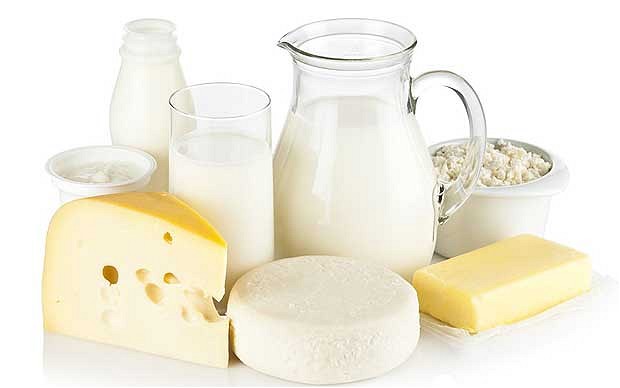
dairy-products

When Rohit came to me for consultation, he was suffering from hyperuricemia- a condition which is associated with high levels of uric acid in the blood. Increased levels of blood uric acid predispose to gouts and very high levels may lead to kidney failure. Uric acid is produced from the natural breakdown of body’s cells and from the foods rich in purines. Thus, in hyperuricemia, purine rich foods are avoided.

Though purines are present in all living things (and food) as they provide part of the chemical structure of our genes, some foods contain concentrated amounts of purines. For the most part, these high-purine foods are also high-protein foods and thus purine restriction gets wrongly translated as protein restriction in most cases.

A detailed discussion around Rohit’s food intake revealed that his diet was very low in protein. He was avoiding all pulses, milk and milk products and meat & eggs. In addition, to that, he was doing one hour of intense workout to reduce weight. He reported muscle soreness, weakness, and cramping which I could easily relate to his visible signs of protein deficiency – sparse hair, pot belly, and swollen hands.

Contrary to the notion that protein is necessary only in growing age, we need protein at every age for normal wear and tear of tissues. Most of the enzymes involved in important metabolic processes are proteins. Thus, like everyone, hyperuricemia patients too need this nutrient in adequate quantities.

Let’s make this complex protein -uric acid connection simpler through this guide on what to include and what not – 

Dairy products – Not only do they provide good quality proteins, scientific studies have demonstrated that milk when taken in moderate quantities actually help in reducing and managing gouts. However, fermented milk products such as yogurt, buttermilk, curds and aged cheese have purines from the nucleic acids of the bacterial cells that proliferate during fermentation. They should be avoided. Non-fermented milk products such as cottage cheese, paneer, whey protein can be taken.

Eggs– The yolk of an egg contains the nucleic acids, but the egg white is pure protein without purines.

Nuts – Nuts are naturally low in purines and can be eaten daily by those on a low purine diet.  Good sources of low-purine nuts and seeds include walnuts, almonds, flaxseeds and cashew nuts. Keep in mind that nuts are rich in calories, so eating too many of them could cause you to gain weight.

Pulses– Beans and pulses contain low to moderate amount of purines. However, researchers prove that purine from plant sources are less likely to harm and one serving of pulses per day can be safely taken by gout patients.

Meat – Meats including bacon, beef, pork, and lamb; Organ meats, such as brains, heart, kidney, liver, and sweetbreads; anchovies, sardines, herring, mackerel, and scallops are high in purine and should be avoided.

Epidemiological research has demonstrated that all purine-containing foods are not the same, and that plant purines are far safer than meat and fish purines in terms of gout risk.

Hope this information helps you meet protein requirements and lead a normal active healthy life on a low purine diet. For further information or guidance, reach out to our certified experts by subscribing to GOQii’s Personalised Health Coaching here.

#BeTheForce
April 13, 2024 By GOQii 1 Comment

Fitness for women over 40

women fitness @40
Turning 40 is the new 20s. But, remember your body is not what it used to be in its 20s. At 40 and over, women’s bodies go through several challenges. The older you grow the more the challenges. Which is even more reason to ensure you’re getting the nutrients you need through a healthy diet.

Now, despite all the exercise and fitness regime and being careful with your diet, you find that your waistline is expanding and don’t know what to do. Let me tell there is no magic formula, but certainly, I can say there is hope.

Did you know? When a woman is her 30s, the body’s metabolism (the rate that helps you burn calories) begins to slow down. In turn, means that she turns 40, she needs about 6 per cent fewer calories than when she was younger. This leaves little less room for that extra piece of pie those oily and carbohydrates filled French fries.

Most women fret over the fact that they are unable to maintain their beauty and body after their first pregnancy. This is because most turn to be careless towards their health, diet and medication. During pregnancy women generally face problems like the weakness of bones because of the deficiency of calcium, lower back pain due to lack of strength of lower back muscles same applies for knee pain as well.

Well, it’s not too late… You can be in your 40s and still be fit and feel good about yourself. Good food choices and exercise in your 40s and 50s can have a significant effect on your health and quality of life in your 60s, 70s and 80s. It’s never too late to start.

In my neighbourhood, I had a woman who was in her early 40s and she was detected with diabetes and blood pressure. Further due to weak knees she wasn’t able to do any kind of physical workout and that led her to become very lethargic and inactive. She knew I was in the fitness industry and a personal trainer and so approached me for some tips on how she can be fit at her age.

1women@40

Her is what I suggested to her …

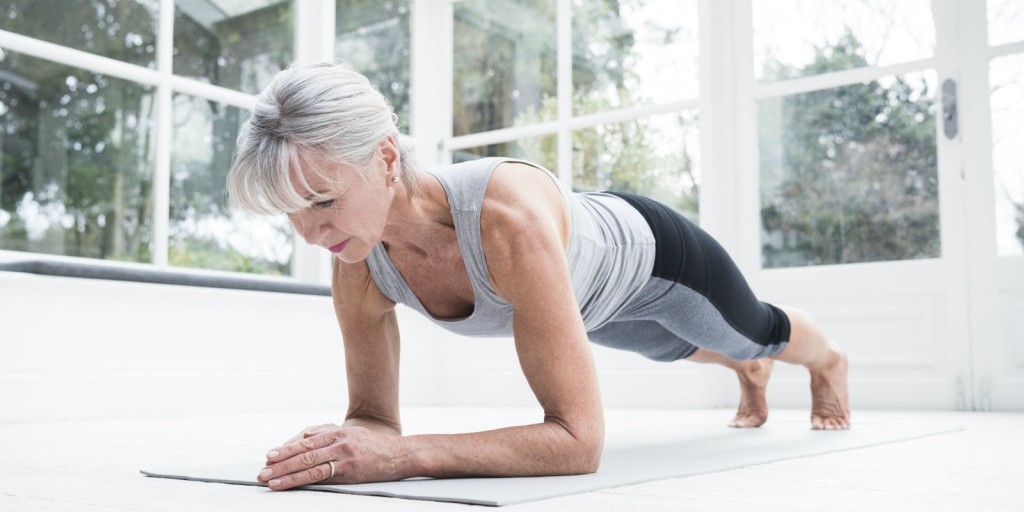
Exercise – When you are over 40 and if you haven’t been fitness training then lifting any kind of weights or doing cardio in the gym might become strenuous … so here’s a solution …

* Walking – is better than any exercise… it helps to maintain and build your lost muscles as we age and also increases metabolism in the body. WALKING & EXERCISE also helps us to keep our heart more healthy and prevent illness.

*Yoga – Yoga is good for adults of all ages. Studies have shown that yoga can be extremely helpful when it comes to combating stress, fatigue and pain. Some yoga poses increase core strength and balance, which reduces the risk of fall-related injuries. Other poses can alleviate senior women-related health issues such as menopause. Above all, yoga is a form of exercise that can help senior women feel better and younger. Here are some of the yoga asanas which can help

(1)  Pranayama: Yoga Sutra cites Pranayama as a means to accomplishing higher status of awareness. The holding of breath is an important practice of reaching ultimate salvation or Samadhi. “Prana” is Breath or vital energy in the body. On subtle levels, prana represents the pranic energy responsible for life or life force, and “ayama” means control. Pranayama means the holding up of the process of exhaling and inhaling.

(2)  Surya Namaskara: Surya Namaskara has its origins in Hindu worship of the solar deity. It is a completely safe set of yoga poses that will not cause strain or injury. Surya Namaskar provides all of the key health benefits of yoga in a very concise package. This holistic exercise provides not only physical health benefits but also mental or emotional as well as spiritual benefits. The apparent gain of Surya Namaskar is the workout it provides for the muscles, but it also benefits joints, ligaments and the skeletal system by improving posture, flexibility and balance. 

(3)  Yoga Mudra: Yoga mudra in an entwined contemplative posture and cures constipation; exercises the intestines and has beneficial effects for asthmatics. It is a perfect asana for women who want to hang on to their beauty and youthfulness. It activates and exercises the lungs, cures loss of appetite, ulcer, indigestion and constipation. It also makes spine, waist, veins and muscles flexible, cures diabetes and reduces obesity

Spice it up: As you grow older, your taste buds decrease, causing many people to eat more bitter and sweet foods. Adding, natural herbs and spices to meals can keep the food healthy and appealing without adding more fat, salt and/or sugar.

Fruits and veggies: Eat two cups of fruit like oranges, apple and watermelon and 2 ½ cups of vegetables with variety each day. One serving can be a cup of frozen or fresh fruit or half a cup of dried fruit. If you have difficulty chewing raw fruits and vegetables, consider adding soups, vegetable juice, tomato sauce, stir fry or a cup of fresh fruits and vegetables to your diet.

Stay hydrated: Ageing diminishes thirst perception. Drink fluids throughout the day. Water is probably the best calorie-free beverage and best for a flawless skin, but don’t go for soda’s and those carbohydrate drinks can be harmful to your blood sugar level.

Women in their 40s and above should never feel old but, feel good about themselves. You can feel energized and fit by doing these simple exercises. You follow this regime you will achieve your goal. All you need some willpower and dedication to follow a routine.  

As you embrace the journey of aging, remember that wellness knows no age limit. With dedication to exercise, yoga, and a balanced diet, women over 40 can thrive in both body and spirit. Take charge of your health today and unlock the vitality that lies within you.

We hope this article helps you! For more articles on Women’s Health, check out Healthy Reads or speak to an expert by subscribing for GOQii’s Personalised Health Coaching here.

#BeTheForce
  • « Previous Page
  • 1
  • …
  • 31
  • 32
  • 33
  • 34
  • 35
  • …
  • 113
  • Next Page »

Search

Recent Posts

  • How to Survive Festive Celebrations Without the Extra Pounds: A Low-Carb Guide for Healthier Living
  • How to Use Mounjaro: Essential Guidelines for Your Weekly Dose
  • Water Intake Pre, During and Post Workout
  • India Leads in Longevity: GOQii Sanjeevini Named Top 40 in $101M XPRIZE
  • The Importance Of Knowing If You’re Thirsty Or Hungry

Stay Updated

Archives

  • December 2025 (11)
  • November 2025 (15)
  • October 2025 (20)
  • September 2025 (6)
  • August 2025 (6)
  • July 2025 (12)
  • June 2025 (18)
  • May 2025 (16)
  • April 2025 (22)
  • March 2025 (23)
  • February 2025 (22)
  • January 2025 (26)
  • December 2024 (24)
  • November 2024 (25)
  • October 2024 (22)
  • September 2024 (24)
  • August 2024 (31)
  • July 2024 (21)
  • June 2024 (26)
  • May 2024 (31)
  • April 2024 (27)
  • March 2024 (29)
  • February 2024 (26)
  • January 2024 (25)
  • December 2023 (15)
  • November 2023 (11)
  • October 2023 (20)
  • September 2023 (22)
  • August 2023 (20)
  • July 2023 (22)
  • June 2023 (24)
  • May 2023 (24)
  • April 2023 (24)
  • March 2023 (23)
  • February 2023 (20)
  • January 2023 (16)
  • December 2022 (12)
  • November 2022 (15)
  • October 2022 (15)
  • September 2022 (12)
  • August 2022 (10)
  • July 2022 (17)
  • June 2022 (11)
  • May 2022 (10)
  • April 2022 (6)
  • March 2022 (6)
  • February 2022 (13)
  • January 2022 (12)
  • December 2021 (7)
  • November 2021 (3)
  • October 2021 (6)
  • September 2021 (3)
  • August 2021 (8)
  • July 2021 (7)
  • June 2021 (15)
  • May 2021 (16)
  • April 2021 (10)
  • March 2021 (7)
  • February 2021 (4)
  • January 2021 (4)
  • December 2020 (3)
  • November 2020 (4)
  • October 2020 (10)
  • September 2020 (3)
  • August 2020 (3)
  • July 2020 (2)
  • June 2020 (4)
  • May 2020 (10)
  • April 2020 (12)
  • March 2020 (10)
  • February 2020 (4)
  • January 2020 (4)
  • December 2019 (3)
  • November 2019 (7)
  • October 2019 (5)
  • September 2019 (4)
  • August 2019 (9)
  • July 2019 (9)
  • June 2019 (11)
  • May 2019 (4)
  • April 2019 (9)
  • March 2019 (8)
  • February 2019 (9)
  • January 2019 (8)
  • December 2018 (9)
  • November 2018 (3)
  • October 2018 (3)
  • September 2018 (5)
  • August 2018 (10)
  • July 2018 (6)
  • June 2018 (13)
  • May 2018 (8)
  • April 2018 (18)
  • March 2018 (9)
  • February 2018 (8)
  • January 2018 (15)
  • December 2017 (12)
  • November 2017 (19)
  • October 2017 (13)
  • September 2017 (15)
  • August 2017 (4)
  • July 2017 (8)
  • June 2017 (7)
  • May 2017 (6)
  • April 2017 (8)
  • March 2017 (6)
  • February 2017 (7)
  • January 2017 (9)
  • December 2016 (10)
  • November 2016 (7)
  • October 2016 (7)
  • September 2016 (7)
  • August 2016 (11)
  • July 2016 (9)
  • June 2016 (9)
  • May 2016 (12)
  • April 2016 (17)
  • March 2016 (17)
  • February 2016 (8)
  • January 2016 (6)
  • December 2015 (2)
  • November 2015 (9)
  • October 2015 (7)
  • September 2015 (9)
  • August 2015 (11)
  • July 2015 (9)
  • June 2015 (12)
  • May 2015 (9)
  • April 2015 (13)
  • March 2015 (8)
  • February 2015 (5)
  • January 2015 (12)
  • December 2014 (14)
  • November 2014 (11)
  • October 2014 (6)
  • September 2014 (13)
  • August 2014 (12)
  • July 2014 (6)
  • June 2014 (2)
  • May 2014 (7)
  • April 2014 (5)

From “Laddu Nawin” to Fit and Fierce: How a 25-Year-Old Insurance Advisor Shed 20 Kilos and Gained His Life Back

When 25-year-old Nawin Yadav from Hyderabad walked into his office every morning, he carried more than just his files and policy papers. He had the weight of fatigue, sluggish energy, and an ever-growing belly that was becoming the butt of jokes. “People … [Read More...]

“I’ve Challenged Myself to Live 100 Years” – The Story of Chandubhai Savani’s Second Chance at Life

At 67, most people start slowing down. Not Chandubhai Savani. A resident of Surat, Chandubhai, thought life was on track. “My life was going well till I had my bypass surgery,” he says. That surgery, back in 2021, was a wake-up call.  Medication was routine, but exercise wasn’t. His diet? What he calls ‘normal.’ “I […]

From Shimla’s Slopes to Chandigarh’s Sidewalks: Surinder Kaur Bhalla’s Journey from Chaos to Control

Some journeys start with a plan. Others begin with a stumble literally. Surinder Bhalla, a government professional, born and raised in the scenic hill town of Shimla, had always lived a life of movement. “In Shimla, you walked everywhere,” she reflects. “Walking was never an exercise. It was just life.” But after shifting to Chandigarh, […]

Ananda Mukherjee Health Story

From Terminal Illness To Complete Wellness! Ananda Mukherjee Health Story

As we observe World Cancer Day under the powerful theme ‘United by Unique’ (2025-2027)**, we are reminded that every individual’s journey with cancer is distinct, yet united by shared resilience, hope, and the collective fight against this disease. This theme places people at the centre of care and their stories at the heart of the […]

  • HOME
  • HEALTHY LIVING
  • FITNESS
  • HEALTHY RECIPES
  • USER STORIES
  • KARMA
  • BUY GOQii

Copyright ©2016 GOQii



