GOQii

Blog

  • HOME
  • HEALTHY LIVING
  • FITNESS
  • HEALTHY RECIPES
  • USER STORIES
  • KARMA
  • BUY GOQii

Search Results for: muscle

February 26, 2025 By GOQii Leave a Comment

The Rise of Recovery: How Prioritising Rest Can Boost Your Fitness Goals

4 Reasons Why Rest Is As Important As TrainingThe Modern Fitness Paradigm: More is Not Always Better

In today’s fitness culture, there’s an unspoken belief that the harder you push, the better your results. High-intensity workouts, back-to-back training sessions, and relentless progress tracking have become the norm. But as more athletes, trainers, and wellness experts start to shift their approach, a new reality is emerging: recovery isn’t just important—it’s essential.

The era of glorifying overtraining is fading, making way for a smarter, more holistic approach to fitness that values recovery as much as the workout itself. It’s time to stop seeing rest as a break from training and start viewing it as a fundamental part of progress.

Why Recovery is the Secret to Better Performance

Many people associate ‘rest days’ with laziness, but true fitness gains happen during recovery, not just during training. Every time you push your body through a challenging workout, you create tiny tears in your muscle fibres. It’s not the workout that makes you stronger—it’s the repair process that follows. Without proper recovery, you’re not allowing your body to rebuild, which can actually make you weaker over time.

Let’s break it down:

  1. Prevents Injury and Overtraining

Neglecting recovery can lead to chronic fatigue, burnout, and overuse injuries such as tendonitis, stress fractures, and muscle strains. When you allow your body time to heal, you reduce inflammation and strengthen tissues, lowering your risk of long-term setbacks.

  1. Boosts Performance and Strength

Think of your body as a battery—if you’re always running on low charge, you’ll never reach your full potential. Rest days allow your muscles to restore glycogen levels, helping you come back stronger, faster, and more energised for your next session.

  1. Supports Mental Well-being

The mind and body are deeply connected. Overtraining can lead to mood swings, increased anxiety, and even depression. Taking time to rest allows your nervous system to reset, improving mental clarity, focus, and motivation.

What Happens to Your Body During Recovery?

When you prioritise rest, your body initiates several key processes to optimise performance:

  • Muscle Repair & Growth – Tiny tears in muscle fibres rebuild stronger, leading to increased strength and endurance.
  • Hormonal Balance – Rest days regulate cortisol (the stress hormone) and boost testosterone and growth hormone for better muscle repair.
  • Improved Sleep Quality – Recovery lowers stress levels and helps you achieve deeper, more restorative sleep.
  • Reduced Inflammation – A well-rested body processes inflammation more efficiently, decreasing soreness and stiffness.

The Right Kind of Recovery: Passive vs. Active

Not all recovery looks the same, and finding the right balance is key to maximising results.

  1. Passive Recovery (Complete Rest)

Sometimes, doing absolutely nothing is the best thing you can do for your body. This type of recovery is ideal after intense training sessions, competitions, or when dealing with extreme fatigue.

  • Full rest days
  • Deep sleep
  • Massage therapy
  • Cold therapy (ice baths)
  • Sauna & heat therapy
  1. Active Recovery (Gentle Movement)

On lighter training days, low-impact movement can help reduce stiffness and promote circulation without overloading your muscles.

  • Walking or gentle hiking
  • Yoga & stretching
  • Swimming
  • Light mobility work
  • Foam rolling

How to Optimise Recovery for Maximum Gains

1. Listen to Your Body –
If you’re experiencing extreme soreness, chronic fatigue, or lack of motivation, your body is asking for rest. Ignoring these signs can lead to burnout.

2. Prioritise Sleep –
Sleep is the most effective natural recovery tool. Aim for 7-9 hours of high-quality sleep to support muscle repair, mental clarity, and overall health.

3. Fuel Properly –
Nutrition plays a vital role in recovery. Ensure your diet includes:

  • High-quality protein for muscle repair
  • Healthy fats to reduce inflammation
  • Complex carbohydrates to replenish glycogen stores
  • Hydration to flush out toxins and aid muscle function

4. Schedule Recovery Days –
Make recovery a planned part of your training, not an afterthought. At least one to two rest days per week should be non-negotiable, based on your training intensity.

5. Incorporate Mobility Work –
Stretching, foam rolling, and yoga can keep muscles flexible and improve range of motion, helping prevent injuries.

The Future of Fitness: Smarter, Not Harder

The fitness industry is evolving. More professionals are now embracing the concept of working smarter, not harder—and it’s paying off. Recovery is no longer seen as a luxury but a necessity for sustainable progress.

Instead of pushing through exhaustion, start recognising that rest is an essential component of success. By giving your body the recovery it deserves, you’re not only preventing injuries—you’re unlocking the full potential of your strength, endurance, and mental well-being.

Next time you’re tempted to skip a rest day, remember: rest isn’t weakness—it’s strategy. Prioritise recovery, and watch your performance soar.

Do you prioritise recovery in your fitness routine? Share your thoughts in the comments below!

#BeTheForce
February 21, 2025 By Saba Mirza 4 Comments

5 Yoga Asanas to Strengthen the Back

strengthen the backIf long working hours, incorrect posture, and less exposure to sunlight sound familiar, you’ve likely experienced back pain at some point. Whether it’s from sitting at a desk or traveling, back pain is a common issue, even among younger individuals. The solution? Strengthening your back muscles through yoga!

Why Do You Need a Strong Back?

The back muscles are the backbone of the body. They help maintain correct posture, improve balance, and prevent injuries. Weak back muscles can lead to stiffness, aches, cramps, and long-term issues. To strengthen your back, avoid long sitting hours, improve calcium and Vitamin D intake, and focus on flexibility. Yoga is one of the best ways to build both flexibility and strength. Let’s explore five effective yoga asanas to strengthen your back.

Asanas to Strengthen the Back

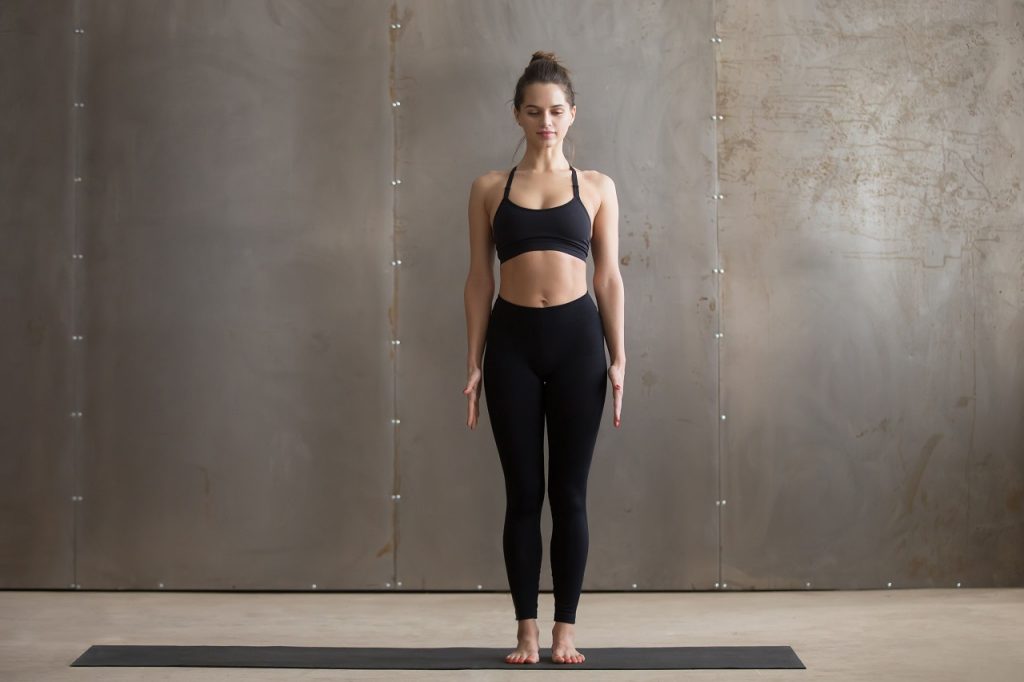
1. Tadasana (Mountain Pose):

strengthen the backTadasana is a basic asana for various standing yoga poses! It is excellent for improving posture, maintaining the curvature of your back and strengthening the hips and thigh muscles.
  1. Stand straight with a small gap between your feet
  2. Keep your hands straight at your sides, stretching your wrists and fingers
  3. Elongate and stretch your back, widen your collar bone and straighten your shoulder blade, relaxing them down the back
  4. Stand on your toes, stretching your knees, thighs and hips without tightening your belly.
  5. Hold for 20-30 seconds while breathing easily.

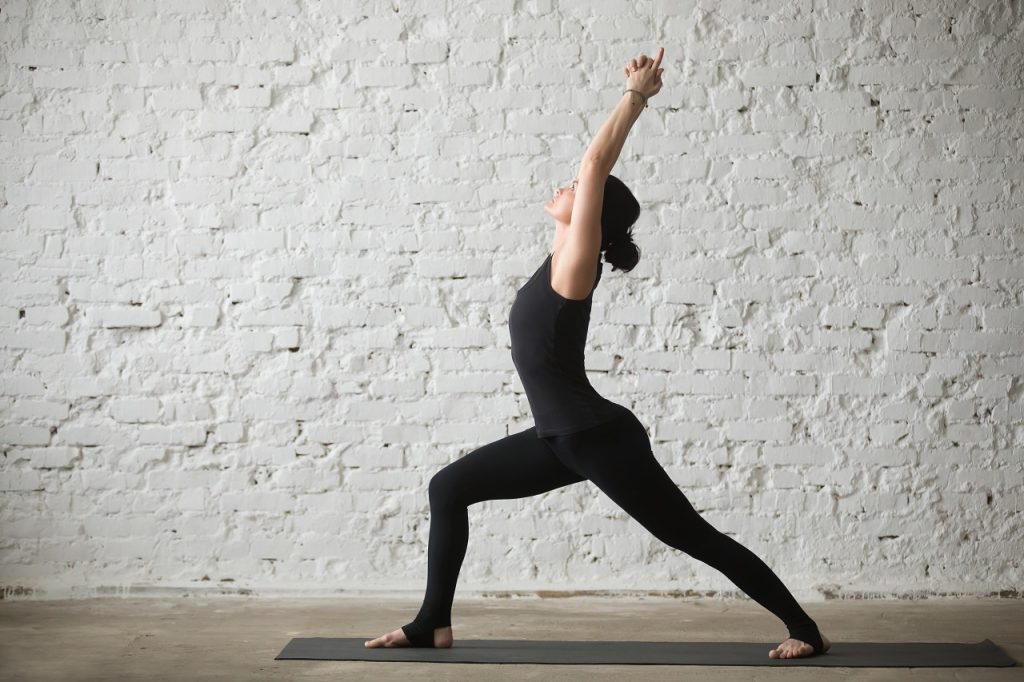
 2. Virabhadrasana (Warrior Pose):

VirbhadrasanaWidely known as the warrior pose, Virabhadrasana strengthens the knees, thigh muscles, opens the hips and chest as well as stretches the back and leg muscles.
  1. Stand in Tadasana and keep your feet 4 feet apart
  2. Turn your left foot out by 90 degrees and your right foot in 15 degrees
  3. Raise your arms above your head, join your palms and look up at your thumbs
  4. Rotate your torso to the left, bend your knees while keeping them above the ankle (avoid bending more than that). Exhale.
  5. Stand in this posture for around 30 seconds.
  6. Straighten the knee while you inhale and bring your hand down
  7. Exhale and come back to the Tadasana pose.

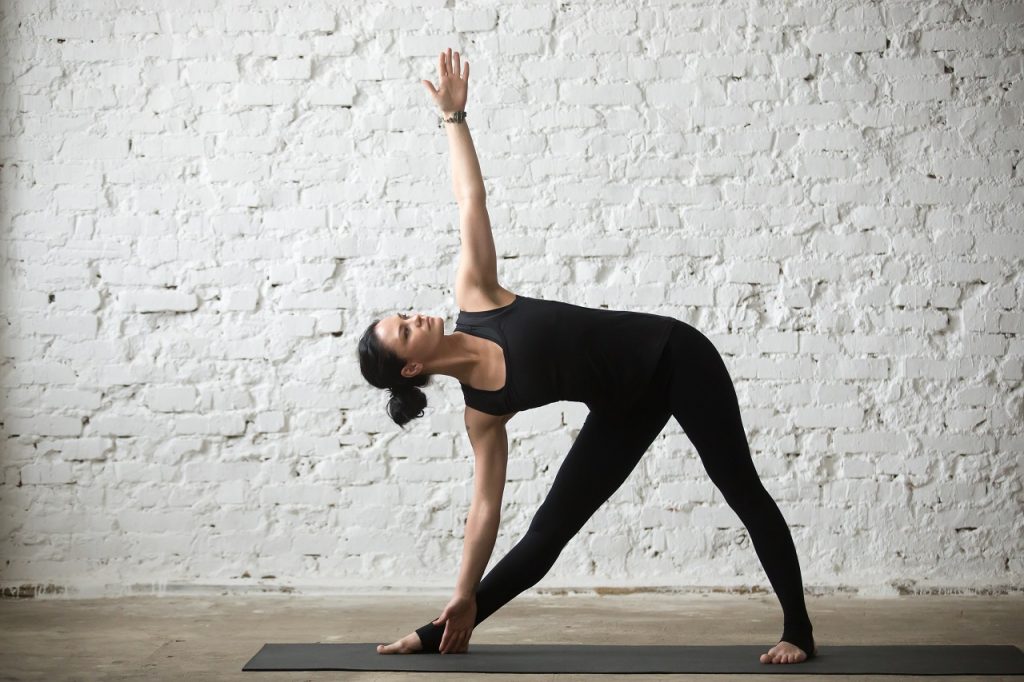
 3. Trikonasana (Triangle Pose):

trikonasanaAs the name suggests, it’s a triangle posture which stretches the spine, opens up the chest and shoulder as well as reduces tension on the hip and thigh muscles. It helps in improving physical and mental equilibrium.
  1. Stand in Tadasana pose and separate the feet wide apart, around four feet from each other
  2. Turn your right foot out 90 degrees and left foot in by 15 degrees. Now align the center of your right heel with the center of your arch of the left foot
  3. Inhale deeply and as you exhale, bend your body to the right, downward from the hips, keeping the waist straight, allowing your left hand to come up in the air while your right hand comes down towards the floor. Keep both arms in a straight line
  4. Rest your right hand on your shin, ankle, or the floor outside your right foot, whatever is possible without distorting the sides of the waist. Stretch your left arm toward the ceiling, in line with the top of your shoulders. Keep your head in a neutral position or turn it to the left, eyes gazing softly at the left palm.
  5. Ascertain that your body is bent sideways and not backward or forward. Pelvis and chest are wide open.
  6. Stretch maximum and be steady. Keep taking in long, deep breaths. With each exhalation, relax the body more and more. Just be with the body and the breath.
  7. As you inhale, come up, bring your arms down to your sides, and straighten your feet.
  8. Repeat the same on the other side.

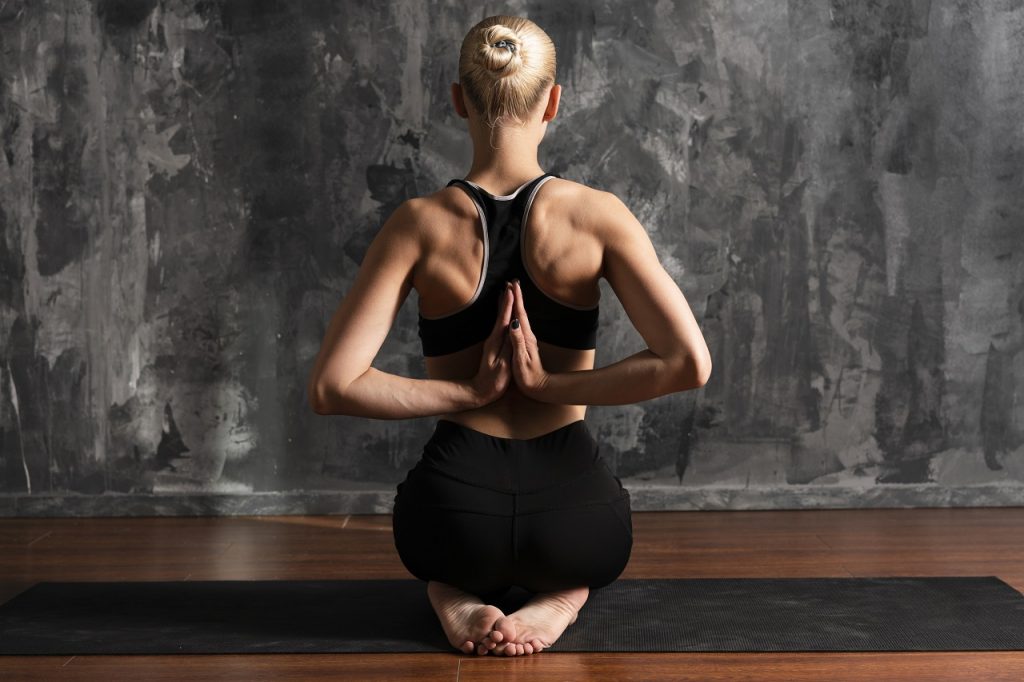
 4. Matsyendrasana (Lord of the Fishes Pose):

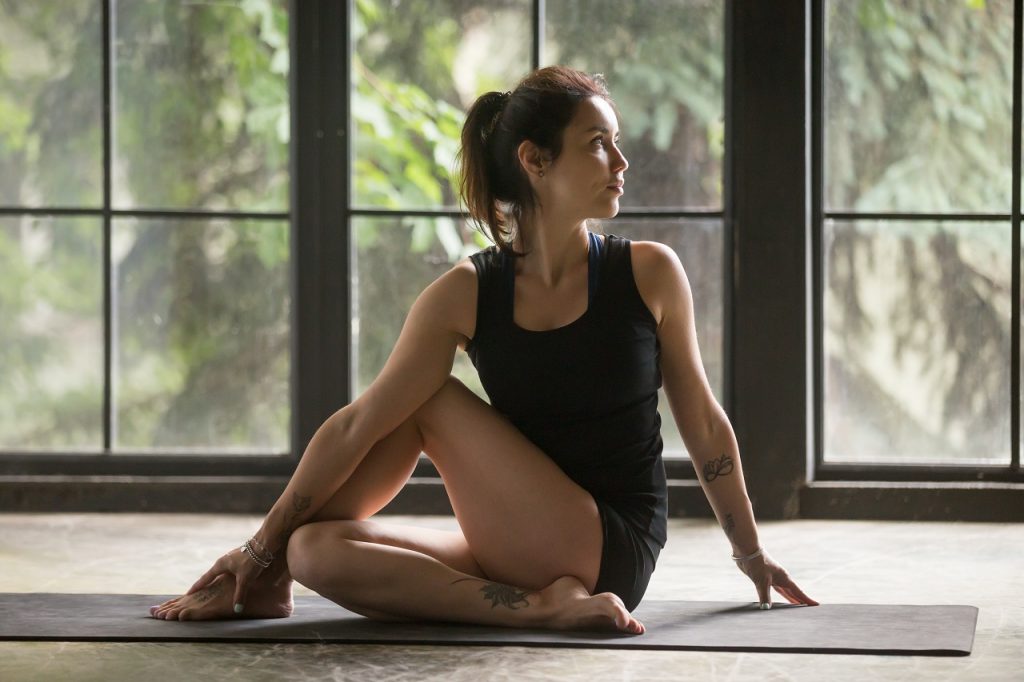
lord of the fish poseOne of the best asanas to improve spinal health. It provides excellent compression and extension to the nerves and muscles supporting the back, increases elasticity of the spine, tones the spinal nerves and reduces the stiffness in the spinal muscles.
  1. Sit on the floor with legs straight in front of you. Keep the back erect
  2. Bend the left leg and place the heel of the left foot beside the right hip (optionally, you can keep the left leg straight)
  3. Take the right leg over the left knee
  4. Place the left hand on the right knee and the right hand behind you.
  5. Twist the waist, shoulders and neck in this sequence to the right and look over the right shoulder.
  6. Keep the spine erect.
  7. Hold and continue with gentle long breaths in and out
  8. Breathing out, release the right hand first (the hand behind you), release the waist, then the chest
  9. Release the neck and repeat on the other side
  10. Breathing out, come back to the front and relax

 5. Salabhasana (Locust Pose or Grasshopper Pose)

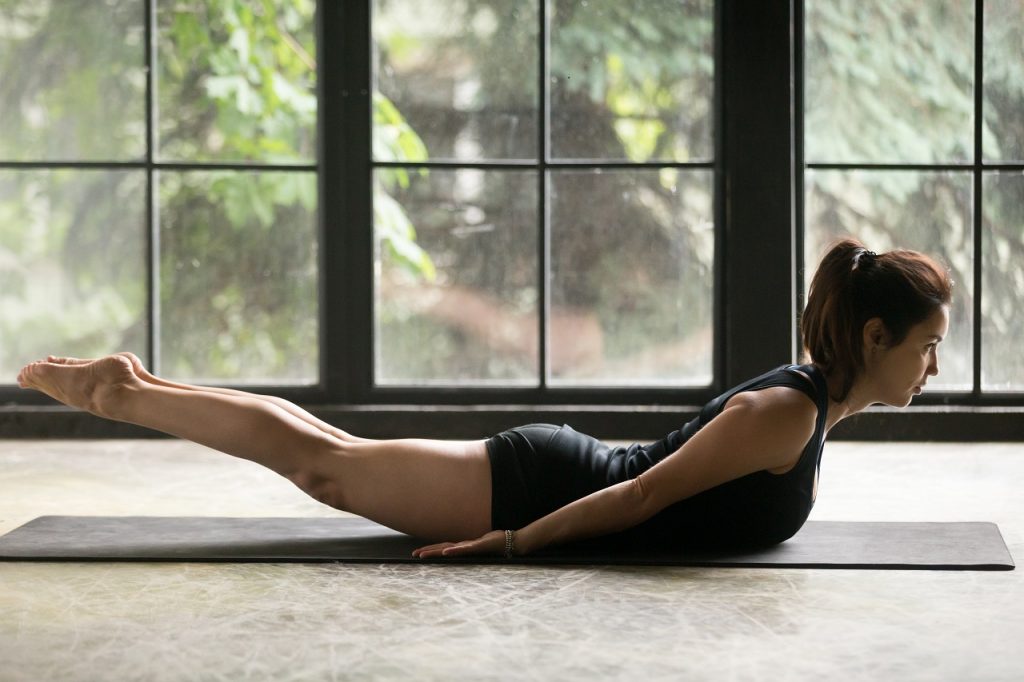
Salabhasana prepares beginners for a deeper backbend, strengthening the muscles of the entire torso from the nape of the neck, spine, chest, and legs to the back of the heels. It is a part of Hatha Yoga which stimulates the functioning of abdominal organs and relieves stress.

  1. Lie on your belly with your arms along the torso, palms up, forehead resting on the floor (use a yoga mat)
  2. Turn your big toes towards each other inwardly rotating your thighs and firm your buttocks
  3. Exhale and lift your head, upper torso, arms and legs away from the floor. You will be resting your entire weight on your lower ribs, belly and front pelvis
  4. Raise your arms parallel to the floor and stretch back actively through your fingertips. Press your scapula firmly into your back
  5. Keep the base of the skull lifted and back of the neck nicely long
  6. Stay in this asana for 15-30 seconds then release slowly with exhalation.

Practicing these asanas regularly can help strengthen your back, improve posture, and reduce pain. However, before starting, consult your doctor, physiotherapist, or yoga coach to ensure these poses are suitable for you. For expert guidance, book a GOQii Pro class through the GOQii App.

Have you tried these yoga asanas for back pain? Share your experience in the comments below! For more tips on yoga and wellness, explore Healthy Reads or connect with a GOQii Coach for personalized guidance here.

#BeTheForce 

February 18, 2025 By Parwage Alam 3 Comments

Sitting Too Much? Here’s How It’s Shortening Your Life

How sitting for long hours at work can shorten your life

We spend more time sitting than sleeping. The average office worker sits for 9–10 hours a day, far more than the recommended 7–8 hours of sleep. But did you know that prolonged sitting is linked to obesity, heart disease, diabetes, and even early death?

You may have heard the phrase “Sitting is the new smoking”, and for good reason. Research suggests that excessive sitting can be as dangerous as smoking, increasing your risk of serious health issues even if you exercise regularly. With the modern workplace being largely desk-based, it’s crucial to understand how excessive sitting affects your body and what you can do to counteract it.

How Sitting For Long Hours Can Affect Your Health

  • Poor Blood Circulation – Sitting for long periods slows down blood flow, increasing the risk of blood clots and varicose veins.
  • Increased Risk of Diabetes & Heart Disease – Studies show that prolonged sitting doubles the risk of diabetes and raises the likelihood of heart disease.
  • Eye Strain & Digital Fatigue – Constantly staring at screens causes dry eyes, blurred vision, and headaches.
  • Back, Neck & Joint Pain – Poor posture and lack of movement contribute to chronic pain in the back, neck, and joints.
  • Weakened Heart & Lung Function – Sitting too long reduces cardiovascular efficiency, making the heart and lungs work harder.
  • Digestive Problems – Poor posture can slow digestion, leading to bloating, acid reflux, and constipation.
  • Mental Fatigue & Mood Changes – Reduced movement can affect mental health, leading to increased stress, anxiety, and fatigue.

How Can You Stay Active At Your Workplace? 

While it may not be possible to completely avoid sitting, you can incorporate small changes into your routine to minimise its negative effects.

  • Take Small & Frequent Breaks – Stand up and stretch every 30–45 minutes to improve circulation and prevent stiffness.
  • Use the Stairs Instead of the Lift – A quick way to get your heart rate up and strengthen leg muscles.
  • Take a Walk After Lunch – Even a 5–10 minute walk after eating helps digestion and boosts energy.
  • Blink & Rinse Your Eyes Regularly – Combat screen fatigue by following the 20-20-20 rule (look away from the screen every 20 minutes, for 20 seconds, at something 20 feet away).
  • Try Simple Desk Exercises – Stretch your neck, shoulders, and legs while sitting to relieve tension.
  • Adjust Your Chair for Better Posture – Keep your back straight, feet flat on the floor, and screen at eye level to avoid slouching.
  • Consider a Standing Desk or Active Workstation – Alternate between sitting and standing to reduce strain on your body.
  • Move While You Work – Take calls while standing or walking, or use a stability ball instead of a chair for better core engagement.

Try to avoid it by taking short breaks and being active! If you experience any pain, here’s what you can do to avoid any further injuries.

Sitting for long hours is unavoidable for many, but small lifestyle adjustments can make a significant difference. By being more aware of your sitting habits and incorporating movement into your daily routine, you can protect your health and improve your overall well-being.

💡 Takeaway: Stand more, move more, and prioritise an active lifestyle to reduce the risks associated with prolonged sitting.

💬 What’s your favourite way to stay active at work? Share your tips in the comments!

#BeTheForce

February 17, 2025 By Sunita Arora 3 Comments

Deep Breathing Techniques to Help You Beat Stress

deep breathingPicture this: You’re sitting at your desk, tackling mountains of paperwork and crunching numbers on Excel like a keyboard wizard. Just when you thought you had it all under control, bam! You’re summoned to a meeting and bombarded with even more projects. Your desk is now drowning in a sea of paperwork, and you find yourself juggling tasks like a stressed-out circus performer. Deadlines loom ominously, and stress levels skyrocket. It’s like being trapped in a never-ending desk nightmare. Yikes! But fear not, for there is a simple solution to vanquish stress in this chaotic scenario: Deep Breathing!



Deep breathing is the secret weapon you’ve been searching for, and it doesn’t require any fancy equipment or a specific time and place. It’s a stress-busting technique that works wonders! When you take a moment to breathe deeply, your brain sends signals to your body, coaxing it to relax. By incorporating deep breathing into your routine, you can reap all the incredible benefits it has to offer.

What Are These Magical Benefits?

  • Zen-like Calm: Deep breathing has the power to soothe your mind and nervous system. You can literally feel the stress melt away!
  • Oxygen Boost: Ah, sweet oxygen! Deep breathing helps you take in more of this life-giving gas, nourishing your body and brain.
  • Heart Party: Your heart deserves some love, and deep breathing delivers. It lowers your heart rate, respiratory rates, and blood pressure, giving your ticker a much-needed break.
  • Sleepy Time: Need to catch some Z’s? Deep breathing is your go-to sandman. It helps you drift off to dreamland, soothes your muscles, and even speeds up your meditation mojo.
  • Stress Ninja: When tension strikes during exams, interviews, or dreaded deadlines, deep breathing comes to the rescue. Consider it your trusty stress-busting sidekick.
  • Energy Flow: Deep breathing helps clean and rejuvenate your body’s energy channels, like a refreshing spa day for your inner chi. It keeps your heating and cooling cycles in check, so you can stay balanced and invigorated.
  • Breath of Fresh Air: Say goodbye to shortness of breath! Deep breathing prevents pesky air from getting trapped in your lungs, making you feel refreshed, centered, and ready to take on the world.

Now that you’re armed with this knowledge, let’s dive into two simple yet effective deep breathing exercises.

1. Simple Abdominal Breathing Exercise

Feeling anxious? No problem! Try this relaxation technique that you can perform anywhere, anytime – standing, sitting, or lying down.

To practice this technique, you need to:

  • Inhale slowly and deeply through your nose. Keep your shoulders relaxed. Your abdomen should expand and your chest should rise slightly.
  • Exhale slowly through your mouth. As you blow the air out, purse your lips slightly, but keep your jaw relaxed. You may hear a soft “whooshing” sound as you exhale.
  • Repeat this breathing exercise for several minutes.

Begin with just 5 minutes. If you feel 5 minutes are too long, you can start with just 2 minutes. Increase the time when you begin finding it easier and comfortable. You can practice this multiple times a day.

2. Equal Breathing

Now, let’s take deep breathing to the next level with some equal breathing magic. This technique focuses on inhales and exhales of the same duration, usually between 3 and 5 counts. Once you’ve mastered it, you can do it during yoga, or even while conquering your daily activities.

To practice this technique:

  • Take a comfortable seated position and breathe in and out through your nose only.
  • Count during each inhale and exhale to make sure they are even in duration. Alternatively, choose a word or short phrase to repeat during each inhale and exhale.
  • You can take a slight pause after each inhale and exhale if you feel comfortable (normal breathing involves a natural pause).
  • Continue practicing this breathing technique for at least 5 minutes and you can increase the duration up to 10-15 minutes.

So there you have it! Deep breathing is your ticket to a calmer, more relaxed you. Remember, stress may try to trap you at your desk, but with these breathing exercises in your arsenal, you’ll be the master of stress, deadlines, and paperwork mayhem. Take a deep breath and let the relaxation flow through your veins like a cool breeze on a sunny day. You’ve got this!

If this article helped you, let us know your thoughts in the comments below. You can find more articles and techniques to beat stress here. You can also reach out to a GOQii Coach for expert guidance by subscribing to Personalised Health Coaching here.

#BeTheForce  

  • « Previous Page
  • 1
  • …
  • 14
  • 15
  • 16
  • 17
  • 18
  • …
  • 113
  • Next Page »

Search

Recent Posts

  • 12 Tips For a Healthy Christmas Week
  • How to Survive Festive Celebrations Without the Extra Pounds: A Low-Carb Guide for Healthier Living
  • How to Use Mounjaro: Essential Guidelines for Your Weekly Dose
  • Water Intake Pre, During and Post Workout
  • India Leads in Longevity: GOQii Sanjeevini Named Top 40 in $101M XPRIZE

Stay Updated

Archives

  • December 2025 (12)
  • November 2025 (15)
  • October 2025 (20)
  • September 2025 (6)
  • August 2025 (6)
  • July 2025 (12)
  • June 2025 (18)
  • May 2025 (16)
  • April 2025 (22)
  • March 2025 (23)
  • February 2025 (22)
  • January 2025 (26)
  • December 2024 (23)
  • November 2024 (25)
  • October 2024 (22)
  • September 2024 (24)
  • August 2024 (31)
  • July 2024 (21)
  • June 2024 (26)
  • May 2024 (31)
  • April 2024 (27)
  • March 2024 (29)
  • February 2024 (26)
  • January 2024 (25)
  • December 2023 (15)
  • November 2023 (11)
  • October 2023 (20)
  • September 2023 (22)
  • August 2023 (20)
  • July 2023 (22)
  • June 2023 (24)
  • May 2023 (24)
  • April 2023 (24)
  • March 2023 (23)
  • February 2023 (20)
  • January 2023 (16)
  • December 2022 (12)
  • November 2022 (15)
  • October 2022 (15)
  • September 2022 (12)
  • August 2022 (10)
  • July 2022 (17)
  • June 2022 (11)
  • May 2022 (10)
  • April 2022 (6)
  • March 2022 (6)
  • February 2022 (13)
  • January 2022 (12)
  • December 2021 (7)
  • November 2021 (3)
  • October 2021 (6)
  • September 2021 (3)
  • August 2021 (8)
  • July 2021 (7)
  • June 2021 (15)
  • May 2021 (16)
  • April 2021 (10)
  • March 2021 (7)
  • February 2021 (4)
  • January 2021 (4)
  • December 2020 (3)
  • November 2020 (4)
  • October 2020 (10)
  • September 2020 (3)
  • August 2020 (3)
  • July 2020 (2)
  • June 2020 (4)
  • May 2020 (10)
  • April 2020 (12)
  • March 2020 (10)
  • February 2020 (4)
  • January 2020 (4)
  • December 2019 (3)
  • November 2019 (7)
  • October 2019 (5)
  • September 2019 (4)
  • August 2019 (9)
  • July 2019 (9)
  • June 2019 (11)
  • May 2019 (4)
  • April 2019 (9)
  • March 2019 (8)
  • February 2019 (9)
  • January 2019 (8)
  • December 2018 (9)
  • November 2018 (3)
  • October 2018 (3)
  • September 2018 (5)
  • August 2018 (10)
  • July 2018 (6)
  • June 2018 (13)
  • May 2018 (8)
  • April 2018 (18)
  • March 2018 (9)
  • February 2018 (8)
  • January 2018 (15)
  • December 2017 (12)
  • November 2017 (19)
  • October 2017 (13)
  • September 2017 (15)
  • August 2017 (4)
  • July 2017 (8)
  • June 2017 (7)
  • May 2017 (6)
  • April 2017 (8)
  • March 2017 (6)
  • February 2017 (7)
  • January 2017 (9)
  • December 2016 (10)
  • November 2016 (7)
  • October 2016 (7)
  • September 2016 (7)
  • August 2016 (11)
  • July 2016 (9)
  • June 2016 (9)
  • May 2016 (12)
  • April 2016 (17)
  • March 2016 (17)
  • February 2016 (8)
  • January 2016 (6)
  • December 2015 (2)
  • November 2015 (9)
  • October 2015 (7)
  • September 2015 (9)
  • August 2015 (11)
  • July 2015 (9)
  • June 2015 (12)
  • May 2015 (9)
  • April 2015 (13)
  • March 2015 (8)
  • February 2015 (5)
  • January 2015 (12)
  • December 2014 (14)
  • November 2014 (11)
  • October 2014 (6)
  • September 2014 (13)
  • August 2014 (12)
  • July 2014 (6)
  • June 2014 (2)
  • May 2014 (7)
  • April 2014 (5)

From “Laddu Nawin” to Fit and Fierce: How a 25-Year-Old Insurance Advisor Shed 20 Kilos and Gained His Life Back

When 25-year-old Nawin Yadav from Hyderabad walked into his office every morning, he carried more than just his files and policy papers. He had the weight of fatigue, sluggish energy, and an ever-growing belly that was becoming the butt of jokes. “People … [Read More...]

“I’ve Challenged Myself to Live 100 Years” – The Story of Chandubhai Savani’s Second Chance at Life

At 67, most people start slowing down. Not Chandubhai Savani. A resident of Surat, Chandubhai, thought life was on track. “My life was going well till I had my bypass surgery,” he says. That surgery, back in 2021, was a wake-up call.  Medication was routine, but exercise wasn’t. His diet? What he calls ‘normal.’ “I […]

From Shimla’s Slopes to Chandigarh’s Sidewalks: Surinder Kaur Bhalla’s Journey from Chaos to Control

Some journeys start with a plan. Others begin with a stumble literally. Surinder Bhalla, a government professional, born and raised in the scenic hill town of Shimla, had always lived a life of movement. “In Shimla, you walked everywhere,” she reflects. “Walking was never an exercise. It was just life.” But after shifting to Chandigarh, […]

Ananda Mukherjee Health Story

From Terminal Illness To Complete Wellness! Ananda Mukherjee Health Story

As we observe World Cancer Day under the powerful theme ‘United by Unique’ (2025-2027)**, we are reminded that every individual’s journey with cancer is distinct, yet united by shared resilience, hope, and the collective fight against this disease. This theme places people at the centre of care and their stories at the heart of the […]

  • HOME
  • HEALTHY LIVING
  • FITNESS
  • HEALTHY RECIPES
  • USER STORIES
  • KARMA
  • BUY GOQii

Copyright ©2016 GOQii