GOQii

Blog

  • HOME
  • HEALTHY LIVING
  • FITNESS
  • HEALTHY RECIPES
  • USER STORIES
  • KARMA
  • BUY GOQii

Search Results for: heart health

May 26, 2024 By Geetika Patni 8 Comments

Mindful Eating: The best habit ever!

Mindful-eating

Most humans eat more than their bodies require. Especially with the massive choice of culinary delights available, the eye appealing desserts, the way food is plated etc…it works on our minds to a level that we crave it. And that’s OK. Everyone loves good food too, who doesn’t.

The problem is, we eat too much of it and there reaches a point when the body does not know what to do with the crazy amounts of food we eat, so when you see your belly/tummy, mid riff, waist starting to expand, that’s your body telling you, ‘you are eating too much’. 

What next? Fad Diets? Time and again it has been proved that fad diets don’t work. With a fad diet plan, you will lose weight – and gain it back eventually, and in between you may end up even damaging your metabolism, digestion and your wonderful relationship with food.

But then isn’t it true? that ‘Abs are made in the Kitchen’ and that ‘Weight Management is 70% nutrition’. Indeed it is! The hidden answer to this dilemma lies in – Mindful Eating.
mindful-eating

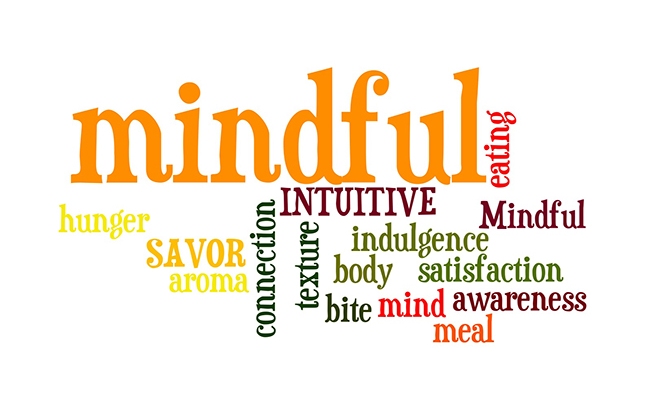
Technical definition says, “Mindful eating is allowing yourself to become aware of the positive and nurturing opportunities that are available through food selection and preparation by respecting your own inner wisdom”. 

In easier terms – It is an art of staying aware of, not only-what you are eating, but also how you are eating. In this article, I’ll help you understand the broad prospects of nurturing yourself with the art of mindful eating. And to do so, let’s first understand the contradiction – Mindless eating.

You are eating mindless when you are –

1) Overeating (Unable to practice portion control) –

Over eating is the most common act of mindless eating and in my experience, 90% of the players who want to lose weight – overeat during one or the other meal.

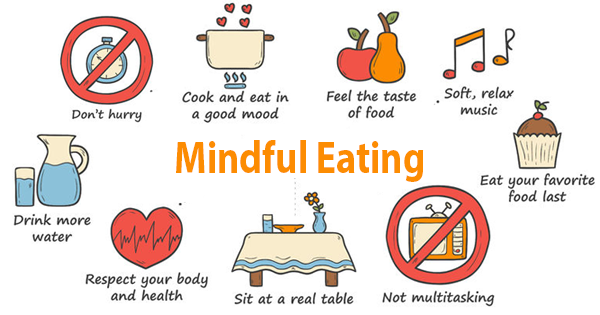
Portion control is very important but why is practicing portion control so difficult? That’s because we miss recognizing the internal cues our body provides (and yes it does send those signals!) to make us stop eating when it’s time. And why does this happen? That’s because we fail to pay attention to the task we are doing, in this context it is – eating. Implementing simple habits like keeping away gadgets while eating, using smaller plates, and taking a deep breath before you start your meal, can help you to practice portion control effectively.

2) Eating Fast

This one doesn’t need an example. If you are a fast eater you know it. Eating at your best speed to win a 1 minute food challenge is entirely different than doing it every day for every meal. Eating fast can also lead to weight gain and metabolic disorders like insulin resistance and arthritis. Small discomforts such as teeth bites and ulcers in the mouth, dental cavities, and acne outbursts can also be traced back to the habit of eating fast. And you may be blaming your gassy gut to your food choices, but do ponder upon if it’s related to your speed of eating too. Ideally you must aim to finish every meal in 20 minutes. This is the time range for our fullness hormones – Leptin, Ghrelin and some neuropeptides – to reach our brain and signal the satiety centre to feel full and stop eating.

Tricks like taking an intermission break after every few bites, using your non dominant hand to eat, chewing every bite thoroughly (32 times is dramatic, I know, 20 will do), using chopsticks for a change and/or using baby forks/spoons to finish your meal, can help you learn the art of eating slow and mindfully.

3) Emotional Eating

Emotional eating is as simple as the term sounds – eating to fulfil an emotion and not the stomach. It is also termed as ‘Head hunger’. If your hunger feels sudden and urgent and you have a craving for only fries or sugary treats, you can’t stop yourself to eat and then feel guilty afterwards, it is Head hunger – caused by emotions like boredom, anger, frustration, anxiety etc.

On the other hand if you are ‘Stomach Hungry’ you will know it easily for it will come gradually and you can still postpone it. There will be a stomach growl and it will get satisfied with any food (yes even salads!) You won’t feel guilty even after eating it heartily. And best part is you’ll know when to stop when you are feeding your body (but cannot- when fuelling your emotions).

Staying mindful of your hunger triggers and enjoying the meals to nourish your system, rather than feelings, is important, as this can make or break your relationship with food. Emotional eating whereas can cultivate poor self-esteem, unwanted weight gain and the plethora of troubles related to Obesity. Overcoming emotional eating requires a good amount of practice, patience and discipline and some tricks like distraction through work to pass off the emotional storm.

4) Disconnecting 

Eating each and every food that you can lay your hands on, without making a choice is what I call as ‘Disconnecting’. That’s odd! This doesn’t correlate.

Let me explain – If you belong to a club excelling in eating each and every ‘thing’ without knowing what it can do to you, where it came from and without acknowledging the feelings it produces in you (whether good or bad) you are disconnected from your foods, your meals and your nourishment – the very thing which helps you run your day and which prevents you from sufferings and sicknesses.

Disconnecting is a very subtle mindless eating practice but has profound effect on your weight and most importantly on your vital organs and their metabolic functioning. (Like a seemingly harmless can of diet-coke can wreak havoc on your pancreas and production of Insulin!)

Moreover, as we age, the mindless habit of Disconnecting does rapid harm to our system, to the extent of jeopardizing our longevity!

Hence, it is extremely important to make the ‘connect’ with your food choices. Attempt to learn or acknowledge the ingredients of the dish you are eating, which food group it belongs to, combining it in ways you can enhance (or deplete) it’s nutritional quotient, and most importantly how you truly feel having it.

In this 5 part series on ‘Mindful Eating’, I will take you through all the aspects of Mindful eating. In the second part tomorrow I will talk about slowing down while eating, how helpful can it be and some tips to help you eat slowly.

In essence, food is meant to be enjoyed and to nourish you. Adding the seasoning of Mindful eating to it, will pique up your health and wellness quotient.

To be Continued…………………

#BeTheForce 

May 25, 2024 By Palak Mittal 2 Comments

How smartphones and other electronic gadgets affects our sleep quality

For most of us, our smartphone is the first thing we look at in the morning and the last thing we check before going to bed. But, is it a right practice? Well, it is not. As per a study published by the Brigham and Women’s Hospital in Boston, Massachusetts, using a smartphone right before bedtime actually reduces the overall quality of sleep.

Here’s how:

  • Difficulty in falling asleep – We feel sleepy when our brain releases a hormone called melatonin, which is determined by the body’s circadian rhythm. The blue light emitted by the screen of the smartphone interferes with this rhythm and the secretion of melatonin, which makes it difficult for us to fall asleep, even after we keep our phone aside.
  • Poor quality of sleep – Using a smartphone before going to bed also hampers the overall quality of sleep because, when we check an office email or a text message as the last thing before we sleep, it gets difficult for our brain to relax, due to which we are unable to sleep peacefully.
  • Decreased attention span – Our productivity suffers during the day, due to lack of proper sleep at night. Also, not getting enough sleep is known to hamper our decision-making skills, impair our long & short-term memory, which leads to unnecessary stress and anxiety
  • Increased risk of weight gain – Our body is more likely to feel hungry when we don’t get our due share of sleep, as sleep deprivation slows down our metabolism. Thus, use of smartphone right before bedtime can induce cravings, which lead to snacking and weight gain.
  • Weak immune system – While we are asleep our immune system produces antibodies that help fight infections, it also releases a protein known as cytokines. This protein not only promotes sleep but also fights inflammation and other problems caused by stress. Lack of sound sleep decreases the production of cytokines and increases the risk of falling sick, it also slows down our recovery cycle. Further, long-term sleep deprivation can raise the risk of diseases, such as diabetes, heart problems and obesity.
  • Skin damage – Sleeping late at night and not getting enough sleep can lead to dark circles, puffy eyes and fine lines across our face. The blue light emitted by our smartphones triggers the secretion of cortisol, which can damage our skin’s smoothness and elasticity.

Thus, even if we are spending only some time on our smartphone before going to bed, it affects our overall mental and physical well-being.

We hope this article sheds light on the detrimental effects of smartphone usage on sleep quality and overall health. If you found this information helpful, we’d love to hear your thoughts in the comments below. For more insights on improving sleep and maintaining a healthy lifestyle speak to a certified expert by subscribing to GOQii’s Personalised Health Coaching here.

#BeTheForce

May 18, 2024 By Vaishali Vibhute Leave a Comment

What Happens To Your Body When You Eat Too Much Sugar

too much sugar

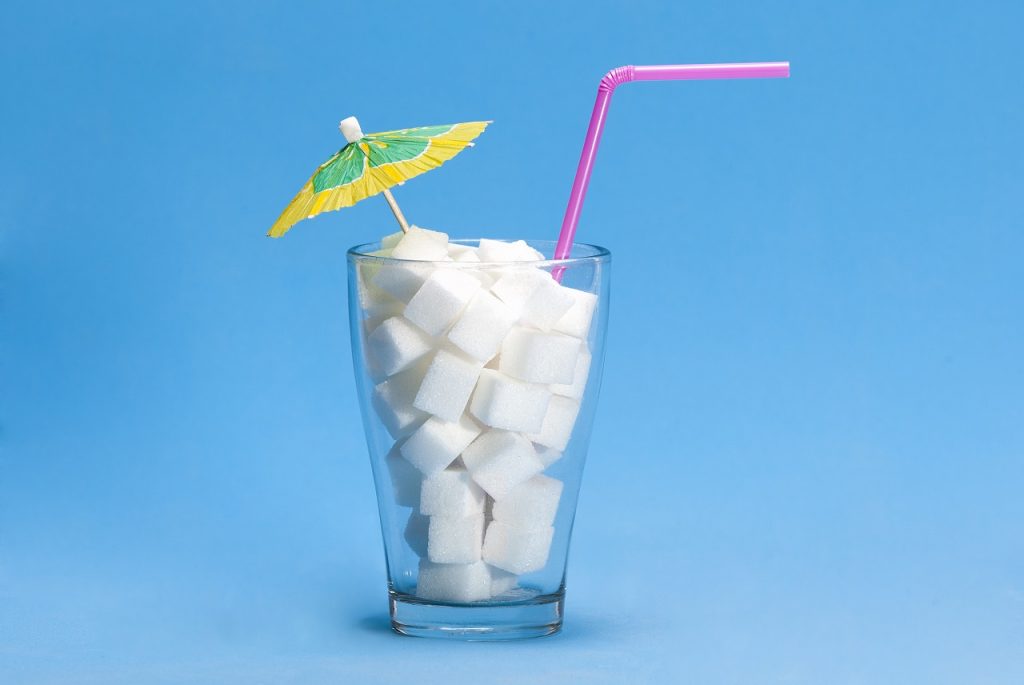
“You are what you eat, so eat something sweet” is a very sweet quote but has a bittersweet reputation when it comes to health! Did you know that carbohydrate, an essential micro nutrient, is a producer of sugar? Sugars, in fact, are simple carbohydrates which are easily absorbed and digested by the body. It is an empty calorie food, has zero nutritional value and provides only energy. It is naturally found in lots of foods. For instance, as fructose in fruits, as lactose in dairy and dairy products and different cereals and grains. 

Is It Really A Villain Of Good Health? 

Along with negatives, sugar has many positives: 

  • It makes anything taste better
  • Provides immediate energy to your body 
  • Naturally found sugars in foods like fruits and vegetables have little effect on blood sugar and are considered healthy
  • It increases happy hormones

Adverse Effects Of Eating Too Much Sugar 

Too much of anything is bad, and the same goes for sugar! Here are some ill-effects it can have on your body: 

  • Weight Gain or Obesity: Too much consumption of white sugar can contribute to weight gain or obesity, due to it’s high calorie content. When eaten in excess, it gets dumped into cells and gets stored as fat and results in weight gain.
  • Type 2 Diabetes: Excessive intake creates problems for pancreas. Body monitors blood glucose levels and produces insulin to help control it. When blood glucose level is high and has more glucose than your body needs, cells become insulin resistant, the control breaks down, blood sugar rises to dangerous levels and leads to Type 2 Diabetes.
  • Hurt your Heart: There is a clear relation between sugar consumption and high BP. Eating too much can harden the arteries and damage heart tissues, which is a major risk factor for heart disease and stroke.
  • Tooth Decay: It is the primary food source for bacteria that can grow in your mouth and cause tooth decay.
  • Non Alcoholic Fatty Liver Disease (NAFLD): is a metabolic stress related liver disease. A diet high in sugar and specially fructose, can trigger your liver to store fat which can lead to NALFD.
  • Hampers Immune Function: It can interfere with the immune system as bacteria and yeast feed on sugar. So excessive glucose in the body causes these organisms to build and cause infections.
  • Accelerates Ageing: When it enters your bloodstream, it attaches to protein. The mix of these proteins with sugar causes loss of elasticity and increases premature ageing. Thus, it can mess with your skin by contributing to wrinkles and sagging.
  • Increases Risk of Developing Gout: Gout is an inflammatory condition that causes pain in the joints. Added sugars raise uric acid levels in the blood and increases risk of developing and worsening gout.
  • Damages Kidneys: When blood sugar is too high, the kidneys spill it into urine, which can cause permanent damage.
  • Fertility: High blood sugar impairs reproduction function in both men and women. Excessive consumption can rob essential vitamins and minerals.

How Can You Cut Down The Intake? 

Daily recommended limit of sugar for women is 6 tsp (30gms), men 7tsp (35gms) and for children 3tsp(15gms). Apart from this recommended limit, you can also do the following:  

  • Avoid sugary drinks such as sodas, energy/sports drinks, etc. That will reduce sugar intake and could help you lose weight. Homemade sherbet’s like lemon, kokum or amla, etc. can be a better alternative to sugary drinks.
  • Avoid packaged or processed food in favour of whole foods like fresh fruits, vegetables, seeds, whole grains, legumes and nuts.
  • When you buy ready to eat foods, read nutrition labels. If you know how much sugar is in a product, you can limit the intake of that food. Some of the common names of hidden sugars on packaged food labels are corn syrup, cane sugar, dextrose, agave, high fructose corn syrup, coconut palm sugar, etc. Food manufacturers add sugars in foods like ice-cream, cookies, candy, soda, ketchup, sauces, bread, yogurt, etc.
  • Instead of adding sugar in cereals or oats, try fresh fruits like banana, strawberry, sapota and apple, etc.
  • Avoid protein/granola bars which contain lots of added sugar. Eat low sugar snacks such as nuts and fruits.
  • Don’t store desserts like ice cream, cakes, different sauces in the fridge and biscuits and cookies on shelves to reduce cravings. 
  • Natural sweeteners such as stevia and xylitol can be healthy alternatives to sweet sugar.

Sugary or sweet products are sweet to the tongue but not for the body. Consuming small quantities is the key to healthy eating. For least harm to the body and fullest enjoyment, eat it in moderation. 

We hope this article helps you make healthy eating choices. Do leave your thoughts in the comments below! For more on nutrition, check out Healthy Reads or ask a GOQii Coach by subscribing for personalized health coaching here: https://goqiiapp.page.link/bsr

#BeTheForce 

May 16, 2024 By Dr Darshana Salve 2 Comments

Navigating Pregnancy: A Journey of Transformation

PREGNANT-women

Seeing two pink lines (positive) on the pregnancy test strip and confirming the pregnancy after the doctor’s visit knew no boundaries to their happiness.

But, with each passing week of the pregnancy came not only new excitement but, also doubts whether the changes taking place inside the body were normal or not.

Here’s an insight into Pregnancy.

The entire pregnancy is about 38 weeks plus minus 7 days. If the baby is born before 37 weeks then it is a pre-term delivery whereas if the delivery happens after 42 weeks then it is called a post-term delivery.

Pregnancy is divided into 3 trimesters and each trimester is 3 months.

The first trimester is the most crucial to your baby’s development. During this period, your baby’s body structure and organ systems develop. Most miscarriages and birth defects occur during this period. Inculcating a healthy lifestyle during this period is very important as the foetus depends on its mother for nourishment. During this period have a balanced diet, compromised of proteins, carbohydrates, fats, vitamins and minerals. Make sure you include Folic acid tablets which are essential for normal brain development of the baby.

In this period the expectant mother may not put on weight, rather she may lose some due to morning sickness. She needs 300-350 calories more than her normal requirement during this period. Do not stop eating because you feel nauseated but, try and include foods that you like and that are light on your stomach. Proper diet and exercise ensures foetal health and growth.

 Physical changes that normally occur during the First Trimester (1-3 months).

– Nausea (morning sickness) with or without vomiting
– Increased frequency of urination
– Food cravings
– Breast heaviness and darkening of the areola
– Constipation, gases or heartburn
– Occasional headaches
– Fetal heart sounds can be heard during the Sonography by the 5th week of pregnancy.

Emotional changes

– Happiness, euphoria, fear or irritability
– Frequent mood swings
– Confused mental state if the pregnancy was unplanned

The Second trimester

The Second trimester of pregnancy is often called the “golden period” because many of the unpleasant effects of early pregnancy disappear. During the second trimester, you’re likely to experience decreased nausea, better sleep patterns, and increased energy levels. You need to supplement with Iron and Calcium tablets as prescribed by your Doctor.

Physical changes that normally occur during Second Trimester (3-6 months).

– Decreased nausea and vomiting and increased appetite
– Fatigue and giddiness
– Constipation and bloating
– White discharge from the vagina
– Mild swelling of ankles and feet and leg cramps
– Weight gain 4-6 kgs
– Lower abdomen and back discomfort
– Darkening of skin and stretch marks on tummy

Emotional changes

– Joy of looking pregnant due to enlarging tummy
– Excitement about feeling the fetal movements.

It is advisable to get the Anomaly Scan by the 20th week of pregnancy to check if there are any congenital defects in the baby like Down’s syndrome, cleft lip or palate and heart and spine abnormalities.

Along with the Anomaly scan, if the Mother is less than 30 years of age then the Double Marker blood test is recommended and if she is more than 30 years of age then the Triple Marker test is recommended which is used for detecting chromosomal abnormalities that might occur after the conception. 1 in 700 births can have chromosomal abnormalities.

You have now reached your final stretch of pregnancy and are probably very excited and anxious at the same time for the birth of your baby. Some of the physical symptoms you may experience during this period include;

– Large, itchy abdomen and breasts with protruding umbilicus (navel)
– Gentle uterine contractions (Braxton Hicks Contractions) (false labor)
– Leaking of breast milk from the nipples
– Shortness of breath
– Difficulty in sleeping
– Increased constipation and occasionally piles
– Increased in foetal activity (kicking)
– Fatigue and breathing difficulty

Emotional changes

– Anxiety about labour and baby care
– Excitement about shopping for baby and preparing for the baby nursery
– Irritability and impatience about reaching the due date
– “Nesting instinct” – Nesting is the act of preparing your home (cleaning, stockpiling and organizing) for your baby’s arrival

How do you know you are in labour?

  1. Blood tinged or brownish vaginal discharge
  2. Diarrhoea
  3. Fluid gushing or leaking from the vagina means the membranes of the amniotic sac that surrounded and protected the baby have ruptured
  4. More frequent and intense painful Contractions.

Look out for these signs and know that your baby is on its way. Contact your Doctor and prepare for the delivery. Labour can be absolutely exhausting extending anywhere between 12 to 36 hours but, always remember the end result is the joy of holding your precious baby in your arms and knowing that this is your perfect creation. It’s not the end but the beginning of a beautiful journey.

We hope this article helps you. For further information or guidance, reach out to our certified experts by subscribing to GOQii’s Personalised Health Coaching here.

#BeTheForce 

  • « Previous Page
  • 1
  • …
  • 71
  • 72
  • 73
  • 74
  • 75
  • …
  • 136
  • Next Page »

Search

Recent Posts

  • Beyond the Screen: How Your Digital Habits Are Impacting Your Longevity
  • Healthy Eating: Vegetable Stuffed Ragi Paratha
  • Sustaining the “GLP-1 Glow”: Nutrition for Skin and Tissue Elasticity
  • Nutritional Deficiencies That Can Cause Hair Loss (And How to Fix Them)
  • The Recovery Gap: Sleep Debt, Overwork and Silent Burnout Are Ageing You Faster

Stay Updated

Archives

  • March 2026 (11)
  • February 2026 (14)
  • January 2026 (14)
  • December 2025 (19)
  • November 2025 (15)
  • October 2025 (20)
  • September 2025 (6)
  • August 2025 (6)
  • July 2025 (12)
  • June 2025 (18)
  • May 2025 (16)
  • April 2025 (22)
  • March 2025 (23)
  • February 2025 (22)
  • January 2025 (25)
  • December 2024 (22)
  • November 2024 (23)
  • October 2024 (21)
  • September 2024 (24)
  • August 2024 (30)
  • July 2024 (21)
  • June 2024 (26)
  • May 2024 (31)
  • April 2024 (27)
  • March 2024 (27)
  • February 2024 (25)
  • January 2024 (21)
  • December 2023 (15)
  • November 2023 (11)
  • October 2023 (19)
  • September 2023 (22)
  • August 2023 (18)
  • July 2023 (22)
  • June 2023 (24)
  • May 2023 (24)
  • April 2023 (23)
  • March 2023 (23)
  • February 2023 (19)
  • January 2023 (15)
  • December 2022 (11)
  • November 2022 (15)
  • October 2022 (15)
  • September 2022 (12)
  • August 2022 (10)
  • July 2022 (17)
  • June 2022 (11)
  • May 2022 (10)
  • April 2022 (6)
  • March 2022 (6)
  • February 2022 (13)
  • January 2022 (11)
  • December 2021 (7)
  • November 2021 (3)
  • October 2021 (6)
  • September 2021 (3)
  • August 2021 (8)
  • July 2021 (7)
  • June 2021 (15)
  • May 2021 (16)
  • April 2021 (10)
  • March 2021 (7)
  • February 2021 (4)
  • January 2021 (4)
  • December 2020 (3)
  • November 2020 (4)
  • October 2020 (10)
  • September 2020 (3)
  • August 2020 (3)
  • July 2020 (2)
  • June 2020 (4)
  • May 2020 (10)
  • April 2020 (12)
  • March 2020 (10)
  • February 2020 (4)
  • January 2020 (4)
  • December 2019 (3)
  • November 2019 (7)
  • October 2019 (5)
  • September 2019 (4)
  • August 2019 (9)
  • July 2019 (9)
  • June 2019 (11)
  • May 2019 (4)
  • April 2019 (8)
  • March 2019 (8)
  • February 2019 (9)
  • January 2019 (8)
  • December 2018 (9)
  • November 2018 (3)
  • October 2018 (3)
  • September 2018 (5)
  • August 2018 (10)
  • July 2018 (6)
  • June 2018 (13)
  • May 2018 (8)
  • April 2018 (18)
  • March 2018 (9)
  • February 2018 (8)
  • January 2018 (15)
  • December 2017 (12)
  • November 2017 (19)
  • October 2017 (13)
  • September 2017 (15)
  • August 2017 (4)
  • July 2017 (8)
  • June 2017 (7)
  • May 2017 (6)
  • April 2017 (8)
  • March 2017 (6)
  • February 2017 (7)
  • January 2017 (9)
  • December 2016 (10)
  • November 2016 (7)
  • October 2016 (7)
  • September 2016 (7)
  • August 2016 (11)
  • July 2016 (9)
  • June 2016 (9)
  • May 2016 (12)
  • April 2016 (17)
  • March 2016 (17)
  • February 2016 (8)
  • January 2016 (6)
  • December 2015 (2)
  • November 2015 (9)
  • October 2015 (7)
  • September 2015 (9)
  • August 2015 (11)
  • July 2015 (9)
  • June 2015 (12)
  • May 2015 (9)
  • April 2015 (13)
  • March 2015 (8)
  • February 2015 (5)
  • January 2015 (12)
  • December 2014 (14)
  • November 2014 (11)
  • October 2014 (6)
  • September 2014 (13)
  • August 2014 (12)
  • July 2014 (6)
  • June 2014 (2)
  • May 2014 (7)
  • April 2014 (4)

From “Laddu Nawin” to Fit and Fierce: How a 25-Year-Old Insurance Advisor Shed 20 Kilos and Gained His Life Back

When 25-year-old Nawin Yadav from Hyderabad walked into his office every morning, he carried more than just his files and policy papers. He had the weight of fatigue, sluggish energy, and an ever-growing belly that was becoming the butt of jokes. “People … [Read More...]

“I’ve Challenged Myself to Live 100 Years” – The Story of Chandubhai Savani’s Second Chance at Life

At 67, most people start slowing down. Not Chandubhai Savani. A resident of Surat, Chandubhai, thought life was on track. “My life was going well till I had my bypass surgery,” he says. That surgery, back in 2021, was a wake-up call.  Medication was routine, but exercise wasn’t. His diet? What he calls ‘normal.’ “I […]

From Shimla’s Slopes to Chandigarh’s Sidewalks: Surinder Kaur Bhalla’s Journey from Chaos to Control

Some journeys start with a plan. Others begin with a stumble literally. Surinder Bhalla, a government professional, born and raised in the scenic hill town of Shimla, had always lived a life of movement. “In Shimla, you walked everywhere,” she reflects. “Walking was never an exercise. It was just life.” But after shifting to Chandigarh, […]

Ananda Mukherjee Health Story

From Terminal Illness To Complete Wellness! Ananda Mukherjee Health Story

As we observe World Cancer Day under the powerful theme ‘United by Unique’ (2025-2027)**, we are reminded that every individual’s journey with cancer is distinct, yet united by shared resilience, hope, and the collective fight against this disease. This theme places people at the centre of care and their stories at the heart of the […]

  • HOME
  • HEALTHY LIVING
  • FITNESS
  • HEALTHY RECIPES
  • USER STORIES
  • KARMA
  • BUY GOQii

Copyright ©2016 GOQii