GOQii

Blog

  • HOME
  • HEALTHY LIVING
  • FITNESS
  • HEALTHY RECIPES
  • USER STORIES
  • KARMA
  • BUY GOQii

Search Results for: heart health

January 28, 2026 By GOQii Leave a Comment

The Hidden Longevity Divide in India: How Urban Health Expectations Are Declining

The life expectancy in India has steadily increased over the years. We live longer lives compared to our past generations, and that is something to be proud of. However, a hidden reality lies beneath these figures.

The years that remain free from illness known as Healthy Life Expectancy haven’t increased at the same rate as our lifespan.

World Health Organisation (WHO) data from 2021 indicates that our healthy life expectancy at birth was approximately 58 years, a slight increase from 54 years in 2000, despite our overall life expectancy rising much faster.

The implication is clear: Urban Indians are living an increasingly larger portion of their lives afflicted by diseases. We aren’t just adding years to life; we are adding years of life with conditions like diabetes, hypertension, and cardiac issues.

To understand the forces creating this hidden divide and how to close it, let’s look at the “Four Horsemen” of urban health.

  1. Pollution: The Invisible Ager

The air pollution problem in India is vast. According to the landmark Global Burden of Disease (GBD) Study, an estimated 1.67 million deaths in India were associated with air pollution.

The effects of breathing toxic air in cities like Delhi, Mumbai, and Kolkata are not restricted to the lungs. It leads to systemic inflammation, accelerating ageing from within. It increases the risk of:

  • Heart attacks and strokes
  • Insulin resistance
  • Metabolic disturbances

Toxic air is an everyday stress factor that your body fights 24/7.

  1. The Urban Plate: Stuffed with Calories, Starved of Nutrients

The food environment in our cities has transformed. Traditional, home-cooked meals are being replaced by ultra-processed foods, sugary drinks, and industrial bakery products.

These foods interfere with your metabolism long before you see changes on the weighing scale. They cause spikes in insulin and inflammation—major drivers of Metabolic Syndrome.

In select cities, over 30% of the adult population faces metabolic syndrome (a combination of obesity, hypertension, and high cholesterol). This isn’t just a statistic; it is a warning that the disease burden looms large.

  1. The “Sitting” Epidemic

Physical inactivity is a public health crisis. Worldwide, almost 31% of adults do not fulfil the lowest standards of physical activity. In India, the urban corporate culture of long commutes and desk jobs exacerbates this.

Inactivity accelerates:

  • Glucose metabolism deterioration
  • Muscle wasting
  • Obesity

A 30-minute workout is great, but it cannot fully reverse the consequences of sitting in a chair for 10 hours. We need to move throughout the day, not just at the gym.

  1. The Reactive Trap: Late Diagnosis

The most devious aspect of this health shift is its timing. Issues like fatty liver or insulin resistance can lie latent for years before symptoms appear.

Most urban Indians visit a doctor only after symptoms develop. This “reactive approach” means we miss the golden window for early intervention and reversal.

Flipping the Script: How Digital Health Can Help

Here is where the picture stops being dark. Digital health isn’t just a tech trend; it is the tool we need to close the longevity gap.

  • Wearables & AI: Continuous Glucose Monitors (CGM) and fitness trackers make invisible patterns visible. You can see exactly how that samosa or that stressful meeting affects your body in real-time.
  • Upstream Care: We need to move from episodic care (hospital visits) to daily awareness. Postponing the progression of diabetes by even a few years can drastically improve your quality of life.

Conclusion: From “Living Longer” to “Living Well”

There is a strong urge to celebrate increased life expectancy, but a lifespan without vitality is not a success. A nation that lives longer but stays sick for longer incurs a heavy cost—both financial and physical.

Closing this gap demands broad changes: cleaner cities, better food choices, and intelligent workplaces. But it also requires you.

India’s hidden longevity divide is not inevitable. It is the consequence of choices we can change. The goal is to ensure your Healthspan (years of health) increases at the same rate as your Lifespan.

That is the point when “to live longer” will finally mean “to live well.”

Ready to close the gap and take control of your healthspan? Reach out to our certified experts by subscribing to GOQii’s Personalised Health Coaching here.

#BeTheForce

Disclaimer: The information provided in this blog is for general awareness and educational purposes only. It is not intended to replace professional medical advice, diagnosis, or treatment. Always consult a qualified healthcare provider for personalised medical guidance or concerns related to your health.
January 21, 2026 By GOQii Leave a Comment

Ageing and Habit Stacking: How to Upgrade Your Health without Adding New Activities

The thing with ageing well is that it’s never unwound by one bad habit, nor ever made good on in one glorious resolution. Healthy lifestyles are made every day through good habits.

Everyone already knows what they should be doing. Move more. Eat better. Breathe deeper. Sleep well. The issue isn’t a lack of understanding or knowledge of what needs to change. The problem is bandwidth.

Already by the middle-aged years, life is a juggling act of work, family, caregiving responsibilities, health care visits, and a thousand other open tabs floating around in the brain that rarely get closed. The thought of putting more things on the to-do list is just draining before the day even starts.

That’s where Habit Stacking helps. Habit stacking does not involve accomplishing more; it involves achieving this through smarter methods.

What is Habit Stacking?

Habit Stacking is adding a small health habit to an activity you already do every day, with no negotiating and no need to be motivated. No additional time blocks.

Habit stacking relies on existing routines for consistency. Think of it as upgrading the routines that you already have.

You brush your teeth. You boil water. You wait for lifts, traffic lights, or meetings to begin. All of these things are already part of your routine. Habit stacking is just using them for good, and with increasing age, this is even more relevant for us.

Why Habit Stacking Works Particularly Well As We Age

Ageing isn’t just about lines and a lower metabolic rate. It is about muscle loss, stiffness, insulin resistance, loss of balance, reduced lung function, and recovery time. None of this happens in a day. Everything occurs gradually.

On the bright side, small and steady efforts will definitely decelerate the progression of most such processes. On the other hand, drastic changes in one’s lifestyle are rarely sustainable.

Habit Stacking occupies the golden zone. It honors the real world. It builds strength, range of motion, metabolism, and nervous system vitality without requiring a daily battle of wills.

Consider a couple of examples:

  1. Add Strength to Your Hygiene Practices

After 40 years, most adults lose muscle mass every year unless actions are taken to counter it. Losing muscle mass influences balance, metabolism, posture, and even bone mass.

  • The Stack: Perform Calf Raises while brushing your teeth. Keep an erect posture while standing at the sink. Gradually raise yourself onto your toes. Come down slowly. Continue the exercise for two minutes.
  • What It Does: It strengthens the calf and ankle muscles, which adds to balance and reduces the risk of falling – a concern that escalates with advancing years. You won’t need gym clothes or an exercise program. Just a toothbrush.
  1. Stack Breathing During “Waiting Time”

Chronic stress and shallow breathing are silently ageing your body. They trigger inflammation, poor sleep, a surge in blood sugar, and tiredness.

  • The Stack: Perform slow breathing drills during the waiting period for the kettle to boil, the food to heat up, or during page loading.
  • Try This: Inhale for four counts through your nose. Exhale slowly for six counts. Repeat for one to two minutes.
  • What It Does: This stimulates the parasympathetic nervous system, reduces stress hormones like cortisol, enhances heart rate variability, and helps promote sound digestion and quality sleep. In the long run, it helps the body recover from both physical and psychological stress.

You’re not adding meditation to your to-do list; you’re utilising dead time.

  1. Stack Nutritional Rules Instead of Calorie Counting

The truth is, the more we age, the more calorie obsession tends to be a source of harm to our bodies.

  • The Stack: Use a protein and fibre guideline for your meals instead of focusing on calories. Every time you eat a major meal, ask one simple question: “Where is my protein? Where is my fibre?”
    • Protein sources: Dal, egg, fish, curd, paneer, tofu, and chicken.
    • Fibre sources: Vegetables, fruits, legumes, whole grains, and seeds.
  • What It Does: This works well to control sugar in the blood, maintain muscle mass, improve gut health, and control portions naturally without completely limiting an individual. This works best for someone in midlife when the goal is both the loss of weight and increased insulin sensitivity.

No apps. No math. Just better defaults.

The Power of Accumulation

None of these will go viral on social media. The habits do not look dramatic. None of these will give you an instant transformation picture. They do something much more valuable, however. They keep you consistent.

Ageing well is not about intensity; it is about accumulation.

  • Two minutes of calf raises a day becomes over 12 hours of strength training per year.
  • Breathing one minute a day conditions your nervous system to shift gears.
  • Making protein and fibre choices on most days can impact your metabolic profile.

These are small deposits into what you might think of as your Longevity Bank Account.

How to Start Without Overwhelm

  1. Begin with one stack. Just one.
  2. Make it hook into something you always do (like brushing teeth).
  3. Make it simple enough that it feels almost too easy.
  4. Be consistent.
  5. Once that one is automatic, you could add another. Not that you should, just that it belongs there.

Ageing does not require that you change your life. It simply requires that you pay attention. Habit stacking honours the fact of a busy life but simultaneously improves the underlying level of health from the inside out.

No additional tasks. No guilt. No requirement to be perfect. Just small, intentional choices layered on top of the life you’re already living.

And over time, these layers accumulate to create strength, resilience, and the capacity to continue to do what matters most to you well into the future.

We hope this article helps you upgrade your routine! For further information or guidance, reach out to our certified experts by subscribing to GOQii’s Personalised Health Coaching here.

#BeTheForce

Disclaimer: The information provided in this blog is for general awareness and educational purposes only. It is not intended to replace professional medical advice, diagnosis, or treatment. Always consult a qualified healthcare provider for personalised medical guidance or concerns related to your health.

December 29, 2025 By GOQii Leave a Comment

Beyond the Injection: Building Healthy Habits That Work with GLP-1

A calm walking path symbolising everyday habits that support long-term health.Starting a GLP-1 medication can feel like turning a new page in your health journey. For many people, hunger feels more manageable, weight loss becomes possible, and the risk of long-term health conditions may begin to shift. But the benefits don’t come from the injection or pill alone.


Lasting health is built through the habits that surround treatment. The way you eat, move, rest, and respond to stress all shape whether early progress turns into long-term change.

GLP-1 can support the journey — but habits are what help it last.

Nourish, Don’t Just Eat

GLP-1 medications slow digestion and influence appetite, which means food choices matter even more. Heavy or greasy meals may feel uncomfortable, especially in the early weeks.

Lighter, balanced meals tend to work better. Including protein at every meal such as lentils, eggs, paneer, fish, or lean meats can help you feel fuller for longer and support muscle health. Fibre from vegetables, fruits, and whole grains supports digestion and helps keep energy levels steadier.

Staying well hydrated is equally important. Drinking enough water can support digestion and may help reduce side effects such as constipation as your body adjusts.

Move in Ways You Enjoy

While GLP-1 may support weight loss, strength, stamina, and resilience come from movement.

The most effective activity is the one you’ll return to consistently, whether that’s a brisk morning walk, yoga, cycling, swimming, or strength training at home. Movement supports metabolism, heart health, and muscle mass, and it plays an important role in how the body adapts to weight change.

It’s not about intensity or perfection. Even 30 minutes of movement most days can make a meaningful difference.

Respect Sleep

Sleep is often underestimated, yet it plays a critical role in appetite regulation, recovery, and emotional balance.

Aim for 7–8 hours of quality sleep each night. Creating simple routines, going to bed at similar times, keeping the room dark and quiet, and limiting screen use before sleep can support deeper rest.

When sleep improves, hunger hormones tend to stabilise, and the body is better able to repair and reset.

Mindfulness and Stress

Stress can quietly undermine progress, often driving emotional or mindless eating.

Simple practices such as deep breathing, journaling, or short moments of guided meditation can help bring awareness back into daily routines. Even pausing briefly before meals to check in with hunger and fullness cues can begin to change your relationship with food.

Mindfulness isn’t about control; it’s about awareness.

Where GOQii Fits In

Habits tend to stick better when there’s support.

GOQii brings personalised coaching into the picture not just to track steps or meals, but to help you understand how your body responds and how habits evolve over time. Coaches provide encouragement during slow phases, celebrate progress, and offer practical guidance when motivation dips.

Many members share that it’s not just the app it’s the presence of a real human who understands their journey that makes the difference.

The GOQii ecosystem brings together movement, nutrition, mindfulness, and preventive health, tailoring habits to individual lives and goals rather than offering one-size-fits-all advice.

The Bigger Picture

GLP-1 medication can be a powerful ally, but it’s not the whole story. Daily choices shape how far and how well the journey goes.

When nourishment, movement, rest, and mindfulness come together, medication has the best chance to support lasting change. And with the right guidance, you don’t have to navigate that journey alone.

Health isn’t just about reducing risk it’s about rebuilding energy, balance, and trust in your body. Beyond the injection lies the opportunity to create a life that feels healthier, steadier, and more sustainable.

#BeTheForce

Disclaimer: GOQii is committed to providing accurate, up-to-date, and comprehensive health information. This article is intended for informational purposes only and should not be used as a substitute for professional medical advice, diagnosis, or treatment. Always consult a qualified healthcare professional before starting or changing any medication. Individual responses to treatment may vary.

November 19, 2025 By Swati Savla Leave a Comment

5 Healthy Winter Vegetables For A Healthier You!

healthy winter vegetables

The chilly winters are here. This season brings us the most colorful fruits and vegetables in the market. All of them are rich in a variety of nutrients and flavors. The major reason for increasing our intake of this fresh produce is to build our immunity against the flu and cold viruses as well as stock our body with enough nutrients to last a few months post winter as well! Here’s my list of the 5 must have healthy winter vegetables! 

Must Have Healthy Winter Vegetables 

1. Mustard Greens
The famous ‘sarson ka saag’ is our go-to-immunity winter dish. Ever thought why? This low calorie, high fiber leafy green is also an excellent source of Vitamins B1, B2, B6, C, E, K, folic acid and minerals like calcium, carotenes, manganese, copper, magnesium, protein, potassium, and iron. This wide variety of Vitamins and Minerals perform many essential functions like blood clotting which makes it heart healthy, improving bone health and thus, reducing the risk of arthritis and osteoporosis. It also improves eyesight. The folic acid content is at par with levels needed for a healthy pregnancy and menopause. Last but not the least, the high fiber aids good bowel movements, easing hemorrhoids and constipation. Some other leafy greens like spinach and methi are also at their best in this season. 

2. Carrots
This crunchy powerfood, especially the red variety available during winter, contains a good amount of vitamins and nutrients such as Vitamin A, B2, B3, C, D, E and K. We all know about it’s benefits for a good eyesight and healthy skin because of it’s beta carotene. Little do we know that it contains high amounts of Lycopene, an antioxidant which helps prevent cancer, diabetes and heart diseases. Eating raw carrots or drinking carrot juice can help regularise blood flow, provide relief from pain and make you feel less fatigued during menstruation days owing to the carotene and iron content – making it a must have healthy winter vegetable. 

3. White Radish
Do you enjoy relishing hot Mooli ke Parathe in winter? Then you’re definitely benefiting from the Vitamins A, B6, C & E and minerals like potassium, phosphorus and zinc present in White Radish. This entire range of Vitamins and minerals gives our whole body an immunity boost. It has shown to have anti-congestive properties, which clear mucus from the throat and respiratory tract due to the common cold and cough in this season. The combination of phosphorus and zinc, helps get rid of dryness, acne and rashes on the skin and the high water content of radish keeps you well hydrated. Don’t forget to use the green leaves of this root vegetable to perk up the health benefits!

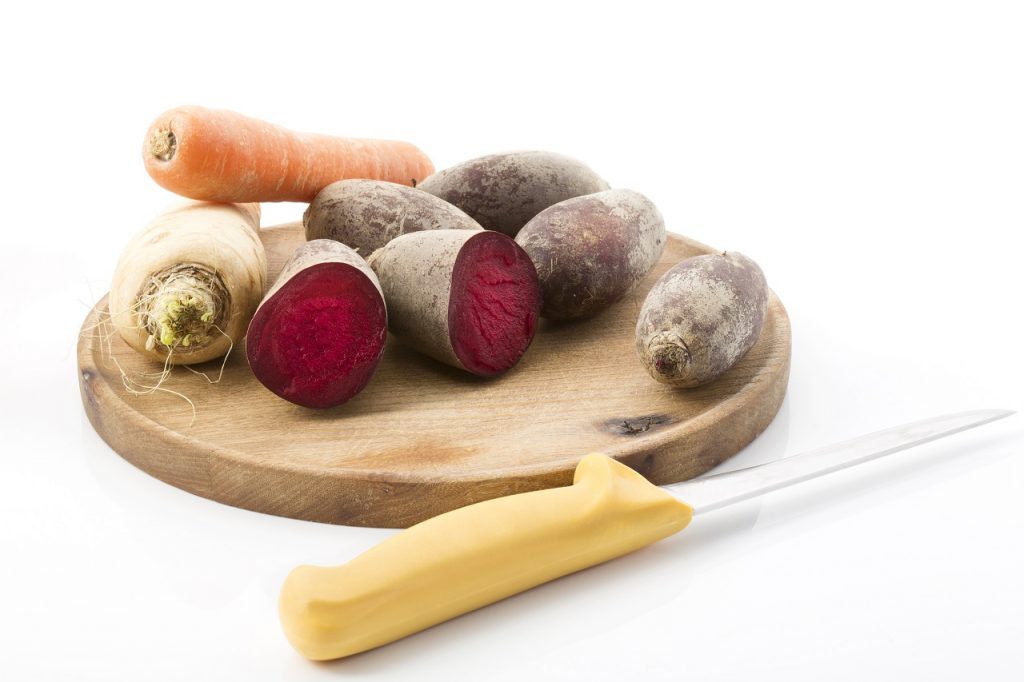
4. Beetroot
This vibrant and colorful veggie contains essential nutrients like folate (Vitamin B9), manganese, potassium, iron, and Vitamin C.  Plus, they’re one of the most delicious, healthy winter vegetables out there! The red color which indicates the high iron content which helps in improving the total blood count and Vitamin C boosts immunity and improves our WBC’s.

Very importantly, Betaine present in beets can protect the liver from inflammation and damage caused by toxins and chronic alcohol consumption. It helps break down fatty acids in the liver and may help in treating non-alcoholic fatty liver disease. To add to it, they’re completely safe for consumption by diabetics as well! Puzzled? Well, yes. The Glycemic Index of beets is of medium range (61) but the glycemic load they provide is only 5. Which means although they release blood sugar levels slightly fast after consumption, the total carbs present in them are comparatively very low. 

5. Sweet Potato
Winter comes and you get to see hand carts on the streets filled with this excellent and inexpensive food item. These orange-hued delights are loaded with twice the fiber when compared to other types of potatoes. B6 content in it reduces homocysteine which has been linked to heart attacks. Vitamin C and antioxidants protect us from flu viruses and common colds. They also aid in the formation of blood cells. Sweet potatoes contain a good amount of Magnesium, essential for blood pressure regulation and nerve relaxation which in turn helps reduce stress. Plus, since they’re fairly low on the glycemic index, they’re beneficial for diabetics and also great for filling up without getting weighed down. 

We hope these healthy winter vegetables help you level up your health and build immunity during this season! For more on nutrition and winter, check out Healthy Reads or reach out to our certified experts by subscribing to GOQii’s Personalised Health Coaching here.

Eat healthy and #BeTheForce 

Disclaimer: The information provided in this blog is for general awareness and educational purposes only. It is not intended to replace professional medical advice, diagnosis, or treatment. Always consult a qualified healthcare provider for personalised medical guidance or concerns related to your health. Images shown are for representation purposes only and may not depict the exact recommendations or outcomes.

  • « Previous Page
  • 1
  • 2
  • 3
  • 4
  • 5
  • …
  • 136
  • Next Page »

Search

Recent Posts

  • Healthy Eating: Vegetable Stuffed Ragi Paratha
  • Sustaining the “GLP-1 Glow”: Nutrition for Skin and Tissue Elasticity
  • Nutritional Deficiencies That Can Cause Hair Loss (And How to Fix Them)
  • The Recovery Gap: Sleep Debt, Overwork and Silent Burnout Are Ageing You Faster
  • Sleep Well, Live Better: Lifestyle Habits That Improve Sleep Quality

Stay Updated

Archives

  • March 2026 (10)
  • February 2026 (14)
  • January 2026 (14)
  • December 2025 (19)
  • November 2025 (15)
  • October 2025 (20)
  • September 2025 (6)
  • August 2025 (6)
  • July 2025 (12)
  • June 2025 (18)
  • May 2025 (16)
  • April 2025 (22)
  • March 2025 (23)
  • February 2025 (22)
  • January 2025 (25)
  • December 2024 (22)
  • November 2024 (23)
  • October 2024 (21)
  • September 2024 (24)
  • August 2024 (30)
  • July 2024 (21)
  • June 2024 (26)
  • May 2024 (31)
  • April 2024 (27)
  • March 2024 (27)
  • February 2024 (25)
  • January 2024 (21)
  • December 2023 (15)
  • November 2023 (11)
  • October 2023 (19)
  • September 2023 (22)
  • August 2023 (18)
  • July 2023 (22)
  • June 2023 (24)
  • May 2023 (24)
  • April 2023 (23)
  • March 2023 (23)
  • February 2023 (19)
  • January 2023 (15)
  • December 2022 (11)
  • November 2022 (15)
  • October 2022 (15)
  • September 2022 (12)
  • August 2022 (10)
  • July 2022 (17)
  • June 2022 (11)
  • May 2022 (10)
  • April 2022 (6)
  • March 2022 (6)
  • February 2022 (13)
  • January 2022 (11)
  • December 2021 (7)
  • November 2021 (3)
  • October 2021 (6)
  • September 2021 (3)
  • August 2021 (8)
  • July 2021 (7)
  • June 2021 (15)
  • May 2021 (16)
  • April 2021 (10)
  • March 2021 (7)
  • February 2021 (4)
  • January 2021 (4)
  • December 2020 (3)
  • November 2020 (4)
  • October 2020 (10)
  • September 2020 (3)
  • August 2020 (3)
  • July 2020 (2)
  • June 2020 (4)
  • May 2020 (10)
  • April 2020 (12)
  • March 2020 (10)
  • February 2020 (4)
  • January 2020 (4)
  • December 2019 (3)
  • November 2019 (7)
  • October 2019 (5)
  • September 2019 (4)
  • August 2019 (9)
  • July 2019 (9)
  • June 2019 (11)
  • May 2019 (4)
  • April 2019 (8)
  • March 2019 (8)
  • February 2019 (9)
  • January 2019 (8)
  • December 2018 (9)
  • November 2018 (3)
  • October 2018 (3)
  • September 2018 (5)
  • August 2018 (10)
  • July 2018 (6)
  • June 2018 (13)
  • May 2018 (8)
  • April 2018 (18)
  • March 2018 (9)
  • February 2018 (8)
  • January 2018 (15)
  • December 2017 (12)
  • November 2017 (19)
  • October 2017 (13)
  • September 2017 (15)
  • August 2017 (4)
  • July 2017 (8)
  • June 2017 (7)
  • May 2017 (6)
  • April 2017 (8)
  • March 2017 (6)
  • February 2017 (7)
  • January 2017 (9)
  • December 2016 (10)
  • November 2016 (7)
  • October 2016 (7)
  • September 2016 (7)
  • August 2016 (11)
  • July 2016 (9)
  • June 2016 (9)
  • May 2016 (12)
  • April 2016 (17)
  • March 2016 (17)
  • February 2016 (8)
  • January 2016 (6)
  • December 2015 (2)
  • November 2015 (9)
  • October 2015 (7)
  • September 2015 (9)
  • August 2015 (11)
  • July 2015 (9)
  • June 2015 (12)
  • May 2015 (9)
  • April 2015 (13)
  • March 2015 (8)
  • February 2015 (5)
  • January 2015 (12)
  • December 2014 (14)
  • November 2014 (11)
  • October 2014 (6)
  • September 2014 (13)
  • August 2014 (12)
  • July 2014 (6)
  • June 2014 (2)
  • May 2014 (7)
  • April 2014 (4)

From “Laddu Nawin” to Fit and Fierce: How a 25-Year-Old Insurance Advisor Shed 20 Kilos and Gained His Life Back

When 25-year-old Nawin Yadav from Hyderabad walked into his office every morning, he carried more than just his files and policy papers. He had the weight of fatigue, sluggish energy, and an ever-growing belly that was becoming the butt of jokes. “People … [Read More...]

“I’ve Challenged Myself to Live 100 Years” – The Story of Chandubhai Savani’s Second Chance at Life

At 67, most people start slowing down. Not Chandubhai Savani. A resident of Surat, Chandubhai, thought life was on track. “My life was going well till I had my bypass surgery,” he says. That surgery, back in 2021, was a wake-up call.  Medication was routine, but exercise wasn’t. His diet? What he calls ‘normal.’ “I […]

From Shimla’s Slopes to Chandigarh’s Sidewalks: Surinder Kaur Bhalla’s Journey from Chaos to Control

Some journeys start with a plan. Others begin with a stumble literally. Surinder Bhalla, a government professional, born and raised in the scenic hill town of Shimla, had always lived a life of movement. “In Shimla, you walked everywhere,” she reflects. “Walking was never an exercise. It was just life.” But after shifting to Chandigarh, […]

Ananda Mukherjee Health Story

From Terminal Illness To Complete Wellness! Ananda Mukherjee Health Story

As we observe World Cancer Day under the powerful theme ‘United by Unique’ (2025-2027)**, we are reminded that every individual’s journey with cancer is distinct, yet united by shared resilience, hope, and the collective fight against this disease. This theme places people at the centre of care and their stories at the heart of the […]

  • HOME
  • HEALTHY LIVING
  • FITNESS
  • HEALTHY RECIPES
  • USER STORIES
  • KARMA
  • BUY GOQii

Copyright ©2016 GOQii

